Technology Adoption Resistance: A Systems Perspective
Why Do People Resist Useful Technology? A Systems View of Technology Adoption
The introduction of new technology into an organizational environment routinely precipitates a confounding paradox: digital systems that are demonstrably superior in efficiency, computational capability, and strategic utility are frequently met with profound, sometimes fatal, user resistance. For decades, the prevailing paradigm among technologists, deployment teams, and executive leadership was rooted in an assumption of objective rationality. This perspective assumed that utility alone would act as the primary engine for adoption. If a new software platform or enterprise resource planning (ERP) system was objectively useful and logically sound, users would naturally recognize its value and willingly integrate it into their daily workflows.
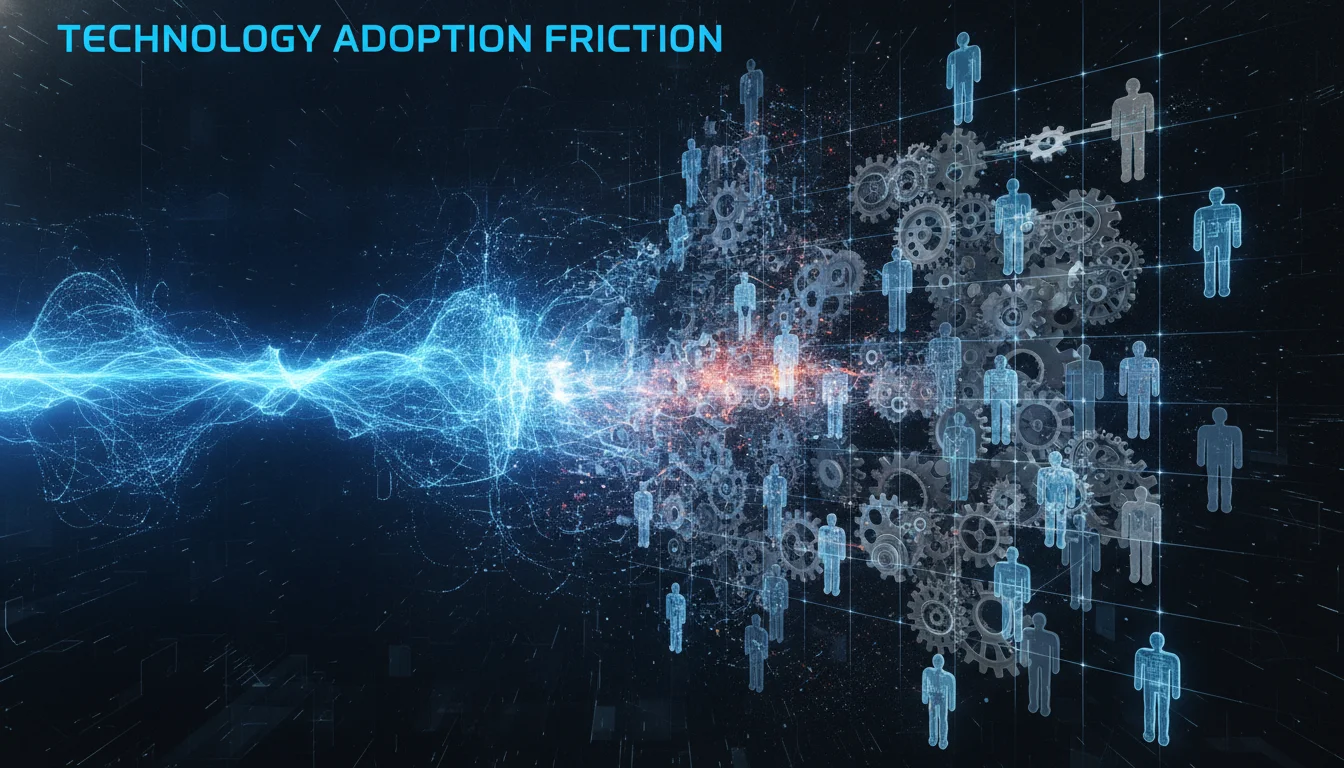
However, the expansive graveyard of failed enterprise software implementations, stalled digital transformation initiatives, and abandoned legacy modernizations tells a markedly different story. Organizations invest billions of dollars annually in complex digital ecosystems, yet a significant percentage of these capital-intensive investments fail to yield their anticipated return on investment. These failures rarely stem from fundamentally flawed code, inadequate server infrastructure, or poor user interface design. Rather, they are precipitated by an inability to manage the human, psychological, and systemic complexities inherent in widespread adoption.
To decode the architecture of why people resist useful technology, one must categorically abandon purely reductionist and techno-centric viewpoints. An organization is not a mechanistic structure where parts can be effortlessly swapped out without generating friction. It is, instead, a complex, adaptive socio-technical system. Introducing a new technology does not merely alter a superficial business process; it aggressively disrupts existing power dynamics, challenges established cognitive schemas, alters interpersonal social networks, and threatens deeply ingrained cultural norms. Consequently, technological resistance should never be viewed as an irrational anomaly or a mere behavioral nuisance. Resistance is a highly predictable, systemic feedback response designed to maintain equilibrium and protect the organization’s existing carrying capacity.
This comprehensive analysis systematically deconstructs the phenomenon of technology adoption and user resistance. By traversing foundational adoption models, the psychological underpinnings of resistance, structural change management methodologies, and the holistic lens of system dynamics, this report establishes a unified theoretical and practical framework. Through the integration of empirical case studies—ranging from catastrophic ERP failures to highly successful global transformations—it becomes evident that successfully navigating the modern digital landscape requires a strategy that seamlessly integrates individual psychological transitions, robust organizational culture, and the dynamic feedback loops that govern systemic behavioral shifts.
The Cognitive Architecture of Technology Acceptance
The rigorous study of how and why individuals choose to interact with new technologies has generated several highly influential theoretical models over the past four decades. These models provide the foundational vocabulary and cognitive frameworks for understanding the individual variables that precede technology use and adoption.
The Technology Acceptance Model (TAM)
Developed in the late 1980s by researcher Fred Davis, the Technology Acceptance Model (TAM) remains one of the most widely cited, empirically tested, and foundational frameworks in the field of information systems and behavioral research. Rooted deeply in the psychological Theory of Reasoned Action, TAM was explicitly designed to predict the likelihood of an individual or an organization successfully adopting a new computing system. The model emerged as a direct response to the concerns of business leaders regarding unfavorable employee attitudes toward early personal computers and the frequent failure of new systems to function as intended within the workplace.
TAM posits that an individual’s behavioral intention to use a technological system is determined primarily by two core cognitive beliefs:
- Perceived Usefulness (PU): Defined as the degree to which a person believes that using a particular system would enhance their overall job performance.
- Perceived Ease of Use (PEOU): Defined as the degree to which a person believes that using a particular system would be entirely free of cognitive and physical effort.
In the original TAM architecture, these two factors combine to create a generalized attitude toward using the technology, which closely predicts the actual likelihood of system use. While TAM is highly parsimonious and theoretically justified, its intrinsic simplicity has also proven to be its primary limitation. As digital technologies became increasingly embedded in complex, mandatory, or socially driven environments—such as modern hospital networks or global supply chains—researchers recognized that Perceived Usefulness and Perceived Ease of Use alone were insufficient to explain the full spectrum of user behavior.
Consequently, the model evolved significantly. TAM2 was developed to incorporate external social influence processes (e.g., subjective norm, image, and voluntariness) and cognitive instrumental processes (e.g., job relevance, output quality). Later, TAM3 was introduced to expand upon the specific determinants influencing Perceived Ease of Use, incorporating psychological factors such as computer anxiety, playfulness, and objective usability. Despite these robust extensions, TAM fundamentally assumes a rational actor carefully evaluating a technology in a vacuum, often failing to adequately account for organizational politics, deep-seated emotional resistance, or systemic environmental constraints.
The Unified Theory of Acceptance and Use of Technology (UTAUT)
Recognizing the increasing fragmentation of technology adoption research across various theoretical silos, Venkatesh et al. conducted a massive synthesis of elements from eight prominent behavioral models—including TAM, the Theory of Planned Behavior, and Innovation Diffusion Theory—to create the Unified Theory of Acceptance and Use of Technology (UTAUT). UTAUT provides a more cohesive and comprehensive lens for analyzing the acceptance of technology by outlining four key constructs that act as direct determinants of usage intention and actual behavior:
- Performance Expectancy: The degree to which an individual believes the system will help them attain gains in job performance. If users do not clearly see a direct, measurable benefit to their specific daily output, resistance will form regardless of executive mandates.
- Effort Expectancy: The degree of ease associated with the use of the system. High cognitive load during the initial learning phase drastically suppresses adoption unless mitigated by robust training and support structures.
- Social Influence: The degree to which an individual perceives that important peers, managers, and organizational leaders believe they should use the new system. This highlights the sociopolitical reality of adoption; individual choices are heavily swayed by the attitudes of departmental opinion leaders and culture.
- Facilitating Conditions: The degree to which an individual believes that an organizational and technical infrastructure exists to support the use of the system. This addresses systemic readiness. Without reliable helpdesks, dedicated learning time, and operational alignment, adoption inevitably fails.
UTAUT provides a far more nuanced analytical framework than TAM, particularly through its inclusion of Social Influence and Facilitating Conditions, which begin to bridge the gap between individual cognition and organizational culture. However, recent empirical reviews, particularly in critical and highly regulated sectors like healthcare, indicate that even UTAUT requires contextual modification. To fully capture the dynamics of user resistance in complex environments, frameworks must also integrate context-specific variables such as institutional trust, specialized psychological barriers, and targeted educational interventions.
The Sociology of Diffusion and the Adoption Chasm
While TAM and UTAUT maintain a micro-level focus on individual cognitive acceptance, Everett Rogers’ Diffusion of Innovations (DOI) Theory provides a macro-level sociological explanation for how, why, and at what rate new ideas and technologies spread throughout cultures and organizational systems. Originally proposed in 1962, DOI suggests that adoption is not a uniform occurrence but a highly staggered process dependent on the relationship between the characteristics of the innovation and the risk tolerance of the target population.
DOI measures the systemic readiness for adoption based on five perceived attributes of the innovation itself: relative advantage (superiority over the status quo), compatibility (alignment with existing values and practices), complexity (ease of understanding), trialability (the ability to experiment on a limited basis), and observability (the visibility of positive results).
Crucially, DOI categorizes individuals within any social system into a standard normal distribution of adopter profiles, segmented by their inherent innovativeness and psychological readiness for change:
-
Innovators (2.5%): Highly risk-tolerant, technology-focused individuals who actively seek out new ideas and are willing to endure early-stage software bugs.
- Early Adopters (13.5%): Visionaries, creative professionals, and opinion leaders who quickly recognize the strategic, long-term value of an innovation.
- Early Majority (34%): Pragmatists who require definitive proof of utility, proven return on investment, and reliable infrastructure before committing to adoption.
- Late Majority (34%): Skeptics who adopt a new technology primarily due to economic necessity, intense peer pressure, or because the legacy option is simply no longer supported.
- Laggards (16%): Traditionalists who are highly resistant to change, deeply suspicious of innovations, and only adopt when the new technology has become the absolute industry standard.
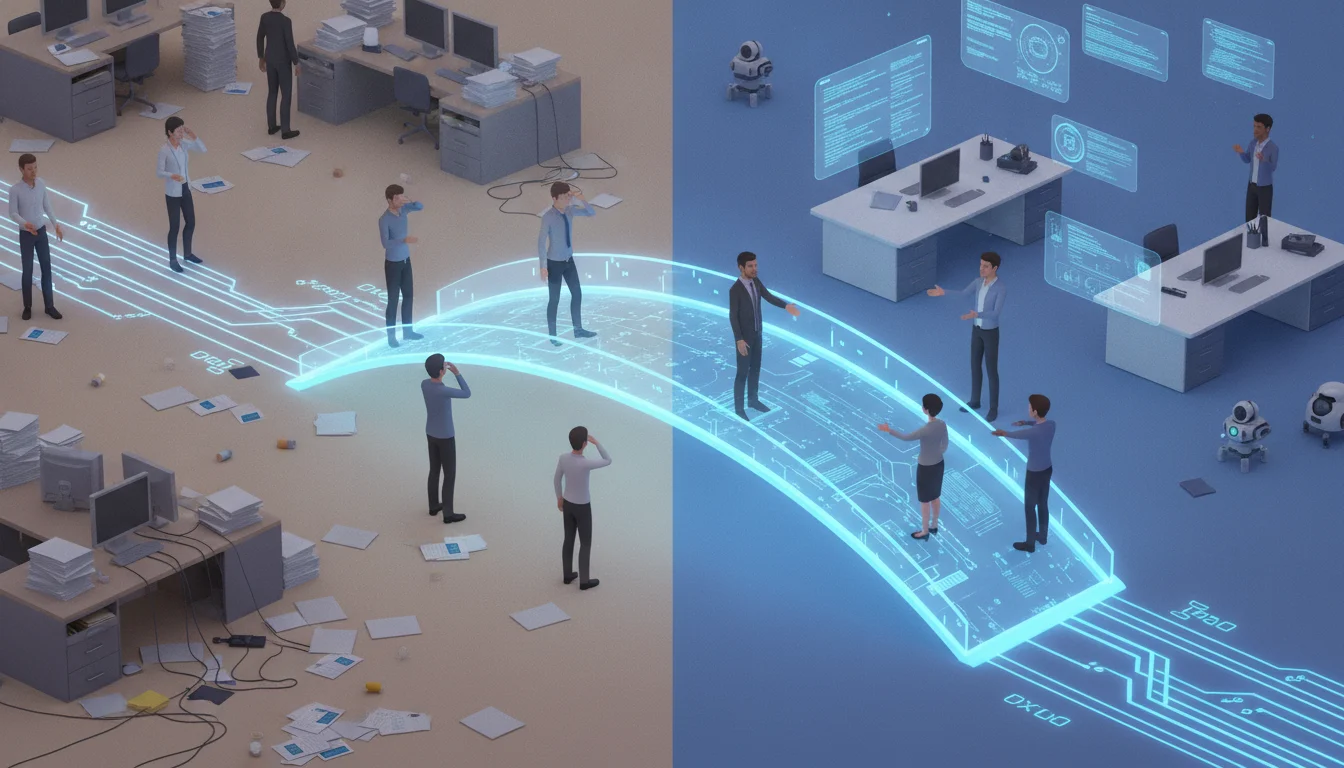
A critical systemic insight derived from DOI was introduced by management consultant Geoffrey Moore in his concept of “The Chasm”. Moore theorized that there is a highly dangerous, frequently fatal gap between the Early Adopters (the visionaries) and the Early Majority (the pragmatists). These two groups hold fundamentally different psychological expectations. Visionaries are willing to overhaul processes for a strategic leap forward, while pragmatists see visionaries as lacking respect for existing infrastructure and taking too great an interest in technology for its own sake rather than industry stability.
Many digital transformation initiatives fail precisely because leadership attempts to force technology onto the Early Majority using the same messaging, lack of support, and disruptive zeal that successfully appealed to the Early Adopters. To successfully cross the chasm, organizations cannot present the innovation to the pragmatic majority in the same way they did to the visionaries; they must shift their strategy from marketing the disruptive features of the technology to rigorously guaranteeing the systemic reliability, ease of integration, and cultural compatibility of the solution.
The Psychology of Resistance: Bias, Rigidity, and Multilevel Dynamics
Linear, rational-actor models of adoption often treat resistance merely as the absence of acceptance. However, a deeper psychological examination reveals that resistance is an active, multifaceted, and deeply emotional phenomenon driven by profound cognitive biases and cultural forces. When users reject a highly useful technology, they are frequently not rejecting the software’s functionality; they are actively rejecting the psychological discomfort of learning, the perceived threat to their professional identity, and the destabilization of systemic equilibrium.
Status Quo Bias Theory (SQB)
One of the most potent theoretical frameworks for understanding the anatomy of user resistance is Status Quo Bias (SQB). Coined in 1988 by researchers William Samuelson and Richard Zeckhauser, SQB describes the irrational human preference for maintaining their current environment and state of affairs, viewing any deviation from the baseline as an inherent risk or a loss. Under the influence of status quo bias, people perceive change as inherently dangerous, adhering to mentalities such as “better safe than sorry” or “if it is not broken, do not fix it”.
In the context of Information Systems (IS), researchers like Kim and Kankanhalli have extensively leveraged SQB to explain why users actively resist new software implementations even when the new system is objectively superior and organizational support is provided. SQB in technology adoption is driven by an intricate interaction of several psychological mechanisms:
- Cognitive Misperception (Loss Aversion): Derived from Kahneman and Tversky’s Prospect Theory. Posits that the psychological pain associated with a loss is significantly greater than the pleasure of an equivalent gain. Users disproportionately focus on the temporary loss of productivity, speed, or familiar interfaces, weighing these immediate losses far more heavily than the promised future gains in efficiency.
- Rational Decision Making (Transition & Sunk Costs): The logical calculation that the costs of switching (cognitive load, training time, potential data errors) fundamentally outweigh the immediate benefits of the new system. When uncertainty costs are high, users act “rationally” by clinging to known legacy systems where their proficiency, speed, and output quality are guaranteed.
- Psychological Commitment: Users become deeply invested in their current way of working, often having spent years mastering the intricate workarounds of legacy systems. Relinquishing old systems invalidates the user’s hard-earned expertise, leading to profound ego threat. Mastery of the old system is a source of pride; the new system renders them a novice.
- Effort to Feel in Control: The inherent human psychological desire for autonomy, agency, and control over one’s immediate work environment. Top-down technological mandates strip users of their agency. Actively maintaining the status quo or circumventing the new system becomes a psychological mechanism for reasserting control.
Furthermore, the components of SQB manifest specifically in the workplace as perceived inertia (user attachment to the existing system despite the availability of better alternatives), perceived threat, and regret avoidance (the fear that choosing the new system will result in a worse outcome, leading to professional regret). These biases act as massive cognitive barriers, ensuring that technological superiority alone can rarely overcome the gravity of human habit.
Threat-Rigidity Theory
When a new technology fundamentally threatens a user’s status, competence, or daily routine, the subsequent psychological response can be elegantly explained by Threat-Rigidity Theory. Originally formulated by Staw, Sandelands, and Dutton, this theory suggests that in threatening, highly stressful, or crisis situations, individuals and organizations experience restricted information processing, narrowing their cognitive field. Consequently, they tend to exhibit extreme risk-averse behaviors, reverting to familiar, well-learned, and highly rigid routines.
If a digital transformation is introduced in a highly disruptive, mandatory, or poorly communicated manner, it induces severe anxiety. The resulting threat-rigidity response causes users to subconsciously shut down their capacity for learning. Instead of exploring the new technology, they double down on the very legacy processes the organization is attempting to eliminate, often hiding old workflows in spreadsheets or paper files. This theory highlights that ambivalence toward digital-AI transformation negatively impacts proactive taking-charge behaviors; it transcends mere technological adoption, demanding fundamental, high-stress shifts in mindset.
The Multilevel Model of Resistance to Information Technology
Operationalizing these psychological phenomena into a structural flow, Lapointe and Rivard developed the Multilevel Model of Resistance to Information Technology. Moving away from treating resistance as a static, binary trait, this model conceptualizes resistance as a dynamic, socially constructed, cyclical process. Based heavily on their studies of IT implementation in hospital settings, Lapointe and Rivard identified five basic, interacting components of resistance:
- Initial Conditions: The pre-existing organizational context, encompassing established routines, historical grievances, and deeply entrenched distributions of power.
- Object of Resistance: The specific feature, workflow change, or systemic implication of the technology that is being actively rejected by the user.
- Perceived Threats: The negative consequences users expect the technology to impose upon them. This includes fears of job loss, deskilling, loss of autonomy, or increased surveillance.
- Subject of Resistance: The specific entity, whether an individual user or a cohesive departmental group, that is adopting resistance behaviors.
- Resistance Behaviors: The actual manifestations of rejection, which operate on a spectrum ranging from passive uncooperative avoidance (apathy) to aggressive, intentional sabotage of the system.
Crucially, Lapointe and Rivard’s longitudinal model demonstrated that resistance is rarely an isolated individual act; it is socially constructed through group interaction and power dynamics. A single user’s perception of a threat is quickly amplified through group interactions, breakroom conversations, and shared narratives, transforming individual apprehension into collective, systemic resistance.
If the early consequences of the implementation actually validate the initial threats—for example, if the system crashes on day one, creating massive administrative backlogs—this negative feedback is immediately fed back into the initial conditions. This restarts the cycle with amplified intensity, permanently solidifying a culture of defiance that becomes incredibly difficult for management to dismantle.
Organizational Culture and Political Power Dynamics
Digital transformation is fundamentally incompatible with a toxic, highly siloed, or misaligned organizational culture. Culture provides the essential psychological safety required for users to successfully traverse the highly vulnerable process of learning a new system while temporarily losing their operational competence.
A comprehensive study on organizational trust revealed that fear of failure significantly predicts an employee’s unwillingness to adapt to change. Mentally, it is far safer for an employee to avoid engaging with a new technology entirely than it is to invest significant cognitive effort into learning it and potentially fail, thereby exposing themselves to professional reprimand or public embarrassment.
If an organization lacks authentic communication, transparency, and collaborative values, structural resistance is an inevitable outcome. When communication patterns are unpredictable or historically punitive, the sudden introduction of a new technology is immediately viewed with deep suspicion. Furthermore, organizational culture enables crucial dynamic capabilities; it dictates whether the organization supports values like experiment orientation and a tolerance for iterative failure.
Operational daily activities generate immense, tangible friction against transformation because they consume finite employee time. Therefore, cultures that do not proactively allocate protected time for learning, or that penalize the inevitable, temporary drop in productivity during the transition phase, inadvertently trigger the threat-rigidity response. Newman and Noble further highlight the critical significance of political power dynamics in understanding resistance; implementing a new Information System is frequently viewed as a form of a game where different departments fight to retain their influence, leading to resistance born from a preference for retaining existing power structures rather than an objection to the software itself.
Systems Thinking and Causal Loop Dynamics in Adoption
While psychological theories and sociological models provide excellent tactical guidance regarding user behavior, they often rely heavily on mechanistic, linear thinking—assuming that applying a specific force (e.g., intensive training) will result in a guaranteed, proportional outcome (e.g., high adoption). Systems Theory demands a radical paradigm shift. It recognizes that organizations are defined not by their isolated parts or individual employees, but by their intricate interdependencies, historical contexts, and internal feedback loops.
In the systems view, technology adoption is not a distinct, standalone event; it is a continuous perturbation of an interconnected network. Causal Loop Diagrams (CLDs) provide a vital visual mapping tool for researchers and change managers to understand how interventions create cascading ripple effects that can either sustainably reinforce adoption or trigger profound, systemic resistance.
Reinforcing and Balancing Feedback Loops
System dynamics are fundamentally governed by two primary structural loops that dictate behavior over time:
- Reinforcing Loops (Positive Feedback): These loops amplify change, driving either exponential growth or catastrophic, rapid decline. In successful technology adoption, a reinforcing loop is often characterized by the network effect: as more users adopt a system, the inherent value of the system increases for everyone, which builds organizational trust, reduces the perceived threat, and encourages even more users to adopt. A virtuous cycle forms when early successes (short-term wins) reduce status quo bias, accelerating diffusion. Conversely, a vicious reinforcing loop occurs when poor initial training leads to data entry errors, which destroys trust in the system’s output, leading to further abandonment and even worse data quality.
- Balancing Loops (Negative Feedback): These loops counteract change to maintain equilibrium, stability, and the system’s baseline. Resistance is essentially a balancing loop functioning exactly as it was designed to—protecting the organization’s current carrying capacity and preventing systemic overload. For example, as executive pressure to adopt a new system increases, cognitive load and anxiety inevitably rise among the staff. This triggers a threat-rigidity response, which drastically decreases daily productivity. To stabilize this dangerous drop in productivity, users actively abandon the new tool and secretly revert to their legacy system workflows. This successfully balances the system back to its original state, frustrating leadership but protecting the operational output of the organization.
By utilizing systems thinking, leaders move away from the mechanistic view of blaming users for “failing to adapt” and instead focus on analyzing the structural forces that are producing the puzzling behavior.
System Archetypes Driving Resistance
Understanding specific system archetypes allows organizational leaders to anticipate the unintended consequences of their deployment strategies.
- Fixes that Fail: A structural dynamic where a balancing loop provides a quick symptomatic fix. However, a delayed side effect (a reinforcing loop) undermines the entire system later, leading to equal or worse relapses. In technology adoption, if usage is low, management may mandate use under threat of penalty. The immediate result is a temporary spike in logins. However, the delayed side effect—a reinforcing loop of resentment and psychological reactance—destroys trust. Users engage in malicious compliance, permanently damaging adoption.
- Shifting the Burden (The Customization Trap): An underlying problem is addressed with a symptomatic solution rather than a fundamental solution, creating an addiction to the quick fix. When a new technology clashes with existing workflows, organizations may choose to customize the software rather than change their culture. This relieves immediate pain. However, the software becomes unstable and unscalable, shifting the burden entirely onto IT maintenance, ultimately destroying the software’s value.
- Overshoot and Collapse: A reinforcing growth loop connected to a delayed balancing loop that erodes carrying capacity. Growth exceeds sustainable limits, triggering a crash. Technology is pushed too rapidly without allowing the workforce to transit the psychological “Neutral Zone.” The capacity to absorb change is exceeded, leading to a catastrophic collapse of employee morale, burnout, and total project failure.
Structural Change Management and Transition Methodologies
To systematically counteract the psychological forces of SQB, mitigate threat-rigidity, and manage the feedback loops of systemic resistance, organizations must employ structured change management methodologies. The critical distinction between project management (the technical installation of the software) and change management (ensuring human adoption and proficiency) is frequently the primary determinant of digital transformation success.
The Bridges Transition Model: Navigating the Psychological Shift
William Bridges formulated a critical distinction that underpins highly effective change management: Change is the external event (e.g., deploying a new ERP system, restructuring a department), whereas Transition is the internal, deeply psychological process people must go through to come to terms with the new situation. Transition is inherently non-linear; it is emotional, messy, and highly personal.
The Bridges Transition Model outlines three vital stages of the human journey through change:
- Ending, Losing, and Letting Go: Transition does not begin with a start; it begins with an ending. Users must be allowed to acknowledge what they are losing—relationships, familiar routines, and their deeply embedded legacy expertise. Failure by leadership to formally recognize, respect, and manage this loss leads to immediate, fierce resistance.
- The Neutral Zone: This is the critical, disorienting, in-between space where the old way is officially gone, but the new way is not yet fully realized, understood, or functional. It is characterized by high anxiety, confusion, and unavoidable performance dips. However, if managed with extreme empathy and targeted support, it holds tremendous potential for creativity and structural repatterning. Openly acknowledging that performance will temporarily drop during this phase directly prevents the threat-rigidity response.
- The New Beginning: The final phase where users begin to develop a new identity, experience renewed energy, and fully embrace and commit to the new roles and behaviors.
By utilizing the Bridges framework, organizational leaders learn to communicate explicitly in terms of endings and uncertainties, providing intensive hands-on support through the Neutral Zone rather than demanding immediate, flawless execution of the new system.
Lewin and Kotter: Macro-Organizational Restructuring
For broader, systemic organizational restructuring, macro-level frameworks provide the essential scaffolding.
Kurt Lewin’s foundational Three-Stage Model describes the process simply as Unfreeze (dismantling the status quo, creating readiness, and analyzing current flaws), Change (the actual implementation phase, requiring continual support), and Refreeze (solidifying the new behaviors, adjusting KPIs, and reviewing metrics so users do not revert to old habits).
John Kotter significantly expanded upon this structural view with his highly influential 8-Step Model for Leading Change. Kotter’s steps—creating a sense of urgency, building a guiding coalition, forming a strategic vision, enlisting a volunteer army, enabling action by removing barriers, generating short-term wins, sustaining acceleration, and instituting change—provide a comprehensive, sequential roadmap for transforming organizational culture. Kotter’s model is particularly effective at mitigating Status Quo Bias; by artificially inducing a strong sense of urgency, leadership can override the comfort of inertia. Furthermore, building a “guiding coalition” directly harnesses the influence of the “Early Adopters” from Rogers’ DOI theory, leveraging their sociopolitical capital to successfully bridge the chasm to the pragmatic majority.
Prosci’s ADKAR Model: Driving Individual Adoption
While Kotter addresses macro-organizational strategy, the Prosci ADKAR model is heavily leveraged worldwide to drive individual user adoption, recognizing the fundamental truth that organizational transformation is merely the aggregate of individual human transitions. ADKAR represents five sequential goals that an individual must achieve for a change to be successful:
- Awareness of the critical business need for change (answering the fundamental question: “Why are we doing this?”).
- Desire to participate and support the change (addressing the individual’s concern: “What is in it for me?”).
- Knowledge on exactly how to change (providing robust training and skill development).
- Ability to reliably implement the desired skills and behaviors (achieved through coaching, practice, and removing systemic organizational barriers).
- Reinforcement to sustain the change long-term (celebrating wins, adjusting financial incentives, and preventing regression to the mean).
ADKAR is fundamentally a diagnostic tool. If an implementation stalls, leadership can assess exactly where the psychological breakdown occurred. Supplying rigorous “Knowledge” (training manuals) will completely fail if the user lacks “Desire” due to unaddressed fears of job loss or severe status quo bias. Global technology giants have pivoted aggressively toward ADKAR specifically to ensure their software is actually utilized post-deployment, moving away from purely feature-driven implementation to human-centric enablement.
Aladwani’s Think-Feel-Do Model for ERP Systems
Enterprise Resource Planning (ERP) systems represent massive, highly disruptive technological upheavals that touch every facet of an organization. To address the specific, intense resistance generated by ERP implementations, Aladwani developed the Think-Feel-Do conceptual framework, neatly integrating the cognitive, affective, and conative dimensions of user attitudes toward enterprise software.
- Think (Cognitive Component): Formulating knowledge and addressing the ideas a person has about the system through targeted communication, specifically defining the business case and highlighting benefits much like a marketing campaign.
- Feel (Affective Component): Actively managing emotional reactions, reducing perceived threats, building trust, and influencing the emotional resonance of the change to ensure users feel supported rather than targeted.
- Do (Conative Component): The actual behavioral execution, heavily supported by job aids, personal coaching, hands-on training, and workflow integration to ensure physical capability.

Empirical Case Studies in Systemic Failure and Success
The theoretical constructs of adoption readiness, psychological resistance, change management, and systems dynamics are best illustrated and validated through empirical application. Analyzing both catastrophic failures and sustained successes highlights the paramount, non-negotiable importance of aligning technological architecture with human psychology and systemic structures.
The Anatomy of Systemic Failure: Lidl’s €500 Million SAP Debacle
One of the most profound, highly publicized examples of digital transformation failure resulting directly from a systemic clash of operating logics and unmanaged resistance is the Lidl SAP implementation program (internally dubbed project “Elwis”). Launched in 2011, the initiative was designed to completely replace an internally developed, highly fragmented legacy system (built in a “Gupta” environment) composed of 90 custom modules. The SAP rollout aimed to standardize purchasing, logistics, and store control for over 10,000 retail stores internationally. After seven agonizing years and approximately €500 million ($580 million) in expenditures, the project was decisively canceled in 2018.
The failure was emphatically not due to flawed software; SAP Retail operates highly successfully in thousands of organizations, including Lidl’s direct competitor, Aldi Nord. Instead, it was a textbook, multi-billion-dollar manifestation of Status Quo Bias, Threat-Rigidity, and destructive systemic feedback loops.
- 1. The Structural Clash of Logics: Lidl’s highly customized legacy system was essentially an encoded version of its fiercely successful, low-margin, high-volume business model. A fundamental, insurmountable mismatch arose around the concept of inventory valuation: Lidl insisted on valuing its inventory based on retail selling prices. However, standard SAP software natively calculates inventory valuation using only purchasing/cost prices.
- 2. The Customization Spiral (Fixes that Fail): Confronted with this fundamental mismatch, Lidl faced a choice: adapt its corporate business processes to the standard software, or force the software to mimic its legacy methods. Driven by an intense Status Quo Bias at the executive level and a profound fear of losing its competitive edge, Lidl chose the latter. This triggered a vicious, uncontrollable reinforcing loop: every custom modification required to force SAP to calculate via retail prices added exponential layers of technical complexity, completely stripping away the core benefits of standardization (scalability and ease of maintenance) and rendering the system structurally unstable.
- 3. The Illusion of Progress: The system successfully launched in smaller, low-volume subsidiary markets (Austria, Northern Ireland, US), providing false positive feedback to the implementation team and generating external industry awards. However, when applied to the immense, unforgiving transaction volumes of Lidl’s core, high-revenue markets, the heavily customized architecture simply could not handle the processing load, buckling under its own engineered complexity.
- 4. The Economic Breaking Point: By 2018, the corporate board recognized that bridging the vast gap between the customized system design and the business reality could no longer be achieved with “reasonable effort”. Realizing that they were trapped in the “Shifting the Burden” system archetype, they executed a massive half-billion-euro write-off and reverted to modernizing their legacy system, effectively starting from scratch.
Lidl’s monumental failure highlights an inescapable truth: enterprise technology adoptions are not IT upgrades; they are fundamental business model and cultural decisions. Clinging desperately to legacy paradigms while attempting to deploy modern tools guarantees systemic collapse.
Dynamics of Success: Overcoming Resistance in Healthcare and Enterprise Environments
In stark contrast to the customization trap and executive hubris seen in failed deployments, successful transformations intentionally leverage psychological change management and directly address the psychosocial barriers to adoption from day one.
Navigating Healthcare Complexities
The healthcare sector is notoriously, systemically resistant to technological change.
This resistance is highly rational, born from the extreme high stakes of clinical workflows, severe time pressures, deeply ingrained professional autonomy, and complex interpersonal power dynamics. Research applying the Multilevel Model of Resistance in hospital environments demonstrates that when digital tools (like Electronic Health Records, automated record keeping, or health clouds) are imposed top-down without consultation, physicians experience acute cognitive load, perceive a direct threat to their professional autonomy, and exhibit highly aggressive resistance behaviors. TAM’s inherent simplicity critically fails here because a tool can be objectively “useful” but simultaneously disrupt a delicate, high-stress socio-technical balance.
Successful healthcare implementations universally rely heavily on extensive educational interventions, establishing psychological safety, and fostering a “bottom-up” innovation climate. By allowing frontline clinical staff to safely navigate the psychological “Neutral Zone” without fear of reprisal, and providing them direct input on workflow design, hospital management converts the balancing loop of active resistance into a reinforcing loop of shared ownership and localized innovation.
Enterprise Enablement at Scale
Recognizing that software delivery without high user adoption generates absolutely no long-term renewal revenue, major global technology providers like Microsoft and Adobe have completely embedded human change management into their core business models. In shifting from selling boxed software to subscription-based cloud services, Microsoft integrated the Prosci ADKAR model to guide millions of global users and hundreds of thousands of internal employees.
Rather than focusing exclusively on feature training (the Knowledge phase), Microsoft’s methodology focuses heavily on the initial psychological stages of individual transition—Awareness and Desire—while aggressively utilizing the Reinforcement phase to systematically prevent user regression to legacy workarounds. Similarly, companies like Mateco utilized the ADKAR model to directly address individual concerns and mobilize local change agents (the early adopters). This personalized engagement ensured adoption was not forced, but fueled by user desire, resulting in a 30% reduction in administrative time and achieving an 85% global alignment across disparate systems. In the logistics sector, companies like N&N Moving Supplies achieved an 84% reduction in payroll processing time by focusing heavily on employee morale, providing personalized dashboards to ensure users felt a sense of buy-in before the system even launched. By carefully matching the technological rollout speed to the human transition speed, these successful organizations bypass the threat-rigidity response entirely, ensuring that their technological investments translate into actual operational superiority.
Conclusion
The persistent, widespread phenomenon of user resistance to useful technology represents a highly rational, systemic, and predictable human response to environmental disruption. When individuals actively resist a new digital implementation, they are rarely objecting to the technical elegance or the theoretical utility of the new tool; rather, they are reacting defensively to the cognitive taxation of learning, the painful loss of historical mastery, the perceived threat to their professional identity, and the destabilization of a delicate socio-technical equilibrium.
As definitively demonstrated through the limitations of foundational models like TAM and UTAUT, cognitive beliefs regarding usefulness and ease of use are necessary but highly insufficient predictors of adoption in complex, modern organizational environments. The profound psychological realities outlined by Status Quo Bias and Threat-Rigidity Theory illustrate that humans are biologically and psychologically wired to weigh losses significantly heavier than gains, and to quickly revert to entrenched, rigid routines when placed under the duress of change.
Therefore, effectively overcoming resistance requires executives, project managers, and IT leaders to transition fundamentally from a mechanistic implementation paradigm to a holistic, systems-based approach. Frameworks such as the Bridges Transition Model, Kotter’s 8-Steps, and Prosci’s ADKAR must be deployed not as superficial afterthoughts or HR exercises, but as critical, parallel architectures to the technological deployment itself. These frameworks are specifically designed to guide vulnerable users safely through the psychological “Neutral Zone.” Furthermore, the application of Systems Thinking and Causal Loop Diagrams allows leadership to accurately visualize the long-term ripple effects of their deployment strategies, avoiding highly destructive archetypal traps like “Fixes that Fail” or the catastrophic, multi-million-dollar customization spiral observed in the Lidl SAP case study.
Ultimately, successful digital transformation is never defined by the technical go-live date of a new software system. It is defined entirely by the organization’s systemic capacity to absorb change. Organizations that master technology adoption are those that possess the emotional intelligence and structural discipline to align the architecture of their software with the authentic culture and psychological needs of their workforce, thereby transforming systemic resistance into a self-reinforcing engine of sustained, resilient innovation.