Google Tag Manager in Nepal: Ownership & Duplicate Tags (2026)
Client-owned GTM containers, WhatsApp/call events, and stopping double-firing on Nepal WordPress ...
Complete course materials for IT 231 IT and Application including syllabus notes, laboratory worksheets, practice questions, and presentation slides
The main objective of this course is to provide students knowledge of fundamental concepts of computers and information technology and its applications in the real world. Students are expected to learn to use MS Office for word processing, spreadsheets, PowerPoint, Access, and the internet.
This course introduces students to the basic concepts of computers and information technology including introduction, hardware, software, memory, input/output, database, networks and data communication, internet, multimedia, computer security, and contemporary technologies.
After completing this course, students should have practical knowledge of:
Foundational introduction to computers: definition, characteristics, history, and digital vs. analog.
Understanding the fundamental components of a computer system: hardware, software, data, procedures, and people.
The five generations of computers: from vacuum tubes to artificial intelligence and quantum computing.
The four primary functions of a computer: input, processing, output, and storage.
Classification of computers: microcomputers, minicomputers, mainframes, and supercomputers.
Explanation of binary system (bits/bytes), ASCII, and Unicode for data representation.
Overview of computer applications in business, education, healthcare, entertainment, and government.
IT versus IS, data versus information, the Information Age, the components of an information system, and how businesses use IS for strategic advantage.
Information Age overview: data as a strategic asset and the role of knowledge workers.
Mutual influence of Information Systems and Organizations: structure, culture, and processes.
Evolution of IS: TPS, MIS, and DSS explained.
Overview of Business Information Systems (BIS) in Finance, Marketing, HR, and Manufacturing.
Introduction to E-Business and Enterprise Systems (ERP, SCM, CRM).
Role and importance of IT for businesses and individuals: efficiency, decisions, reach, and convenience, plus negative impacts and Nepali examples.
How organizations used computers then versus now: batch processing, PCs, networks, and always-on digital business. Generations of hardware stay in Unit 1.
How the CPU, memory unit, and buses work together as the core of computer hardware, with the block diagram, instruction cycle, and factors that affect performance.
Inside the Computer Cabinet: Motherboard, CPU, RAM, and Expansion Slots.
Computer Memory Hierarchy: Registers, Cache, RAM, and Storage trade-offs.
Understanding RAM and ROM: types, characteristics, and differences between volatile and non-volatile memory.
Secondary Storage: HDDs, SSDs, and Optical Drives explained.
CPU & Memory Interaction: Fetch-Decode-Execute cycle explained.
Input and output devices explained: keyboards, pointing and scanning devices, OMR, MICR, barcode and biometric readers, monitors, printers, and business uses.
I/O Ports & System Bus: Connecting peripherals and internal components.
What software is, why hardware is useless without it, the main types and examples, and how software is licensed.
System vs Application Software: Functions and Examples explained.
Software Acquisition: Build vs Buy, COTS, Custom, and SaaS options.
Programming Languages: High-level vs Low-level, Compilers vs Interpreters.
Operating System Functions: Hardware management, GUI, and examples.
Understanding utility software: system maintenance, security, file management, and optimization tools.
Software Trends: AI, Cloud Computing, SaaS, and Low-Code.
What a database is, why file systems fail at scale, the components and users of a database system, and the role of a DBMS.
Data Hierarchy: Character, Field, Record, File, Database explained.
Database vs File System: Redundancy, Consistency, and Centralization.
An overview of the different types of database models, including the hierarchical, network, and relational models, with a focus on the structure and importance of the relational model.
An introduction to the Database Management System (DBMS), the software that acts as an interface to a database, and its key functions like data definition, manipulation, and security.
An overview of the key business-level advantages of adopting a database approach, including improved decision making, enhanced customer service, and increased operational efficiency.
Business Intelligence (BI): how data flows from source systems through ETL and a data warehouse into dashboards, with KPIs, tools, benefits, challenges, and Nepali business examples.
Why organizations network computers, the five components of data communication, and the benefits and risks of networking for business.
An overview of data communication media, including guided (wired) media like twisted-pair and fiber optic cables, and unguided (wireless) media. Also covers the basics of data transmission, including bandwidth and signals.
An introduction to the basics of computer networking, covering the main network types (LAN, WAN) and the common physical network topologies (Bus, Star, Ring).
An overview of the essential protocols (TCP/IP, Ethernet) and hardware (switches, routers, modems) that make computer networking possible.
Wireless networking basics: types of wireless networks (WPAN, WLAN, WMAN, WWAN), Wi-Fi components and standards, Bluetooth and NFC, wired vs wireless, and how to secure Wi-Fi with WPA2/WPA3.
How the internet grew from research networks, who manages it, how it reached Nepal, and how it differs from the Web.
Ways to connect to the internet: dial-up, DSL, cable, fiber (FTTH), leased lines, Wi-Fi, cellular, and satellite, with the equipment needed, a comparison table, Nepali context, and how businesses choose a connection.
An explanation of IP addresses, the unique identifiers for devices on the internet, and the Domain Name System (DNS), which translates human-readable domain names into IP addresses.
An introduction to the client-server architecture, the fundamental model of the internet, explaining the roles of clients and servers and how they interact.
An overview of three fundamental internet application protocols: HTTP for the World Wide Web, the protocols for email (SMTP, POP3, IMAP), and FTP for file transfer.
An introduction to the World Wide Web, its key components like web browsers and web servers, and the crucial role of search engines in navigating its vast amount of information.
E-commerce models, m-commerce, electronic payment systems in Nepal, and e-governance services, with advantages, challenges, and exam questions.
An examination of the major ethical and social issues associated with the internet, including censorship, the erosion of privacy, and the digital divide.
Multimedia elements (text, graphics, sound, video, animation), linear vs interactive multimedia, raster vs vector graphics, and common image, audio, and video file formats for exams.
An overview of web-based multimedia and the future trends shaping the field, including virtual reality (VR), augmented reality (AR), and the metaverse.
How businesses use multimedia in training, marketing, sales, tourism, real estate, banking, and communication, with Nepali examples, tools, benefits, and limitations.
CIA triad, threats, vulnerabilities and risk, types of security controls, and how this unit maps to access, crime, malware, ethics, and law.
An overview of the threat of unauthorized access to computer systems and the primary methods of protection, including authentication methods like passwords, biometrics, and two-factor authentication.
Computer sabotage and cybercrime: types of perpetrators, forms of sabotage and computer crime, how to protect against them, and how cybercrime is handled in Nepal.
Software piracy and its types, why it harms users and businesses, and the technical, legal, and business measures used to prevent it, including licence keys, online activation, DRM, and subscriptions.
An overview of malware (malicious software), covering the main types including viruses, worms, Trojan horses, and ransomware, and how to protect against them.
Professionalism, ethics, and morality for IT professionals: key ethical issues, codes of ethics, the Ten Commandments of Computer Ethics, and how to reason through ethical dilemmas.
Cyber law and digital literacy, with a Nepal overview of the Electronic Transactions Act, 2063, and copyright, designs, and patents. Educational, not legal advice.
Network security fundamentals: types of firewalls, hardware vs software firewalls, symmetric and asymmetric encryption with a worked example, and how HTTPS and VPNs protect data in transit.
What AI is at course level, and how it affects jobs, firms, and everyday life in Nepal and globally.
Data Science, Machine Learning (supervised, unsupervised, reinforcement), and Neural Networks explained with business examples, the data science process, and limitations.
Cloud computing (service and deployment models), green computing practices, and virtualization explained with comparison tables, benefits, risks, and Nepali examples.
Introduction to Big Data and Blockchain: key characteristics (3Vs) and distributed ledgers.
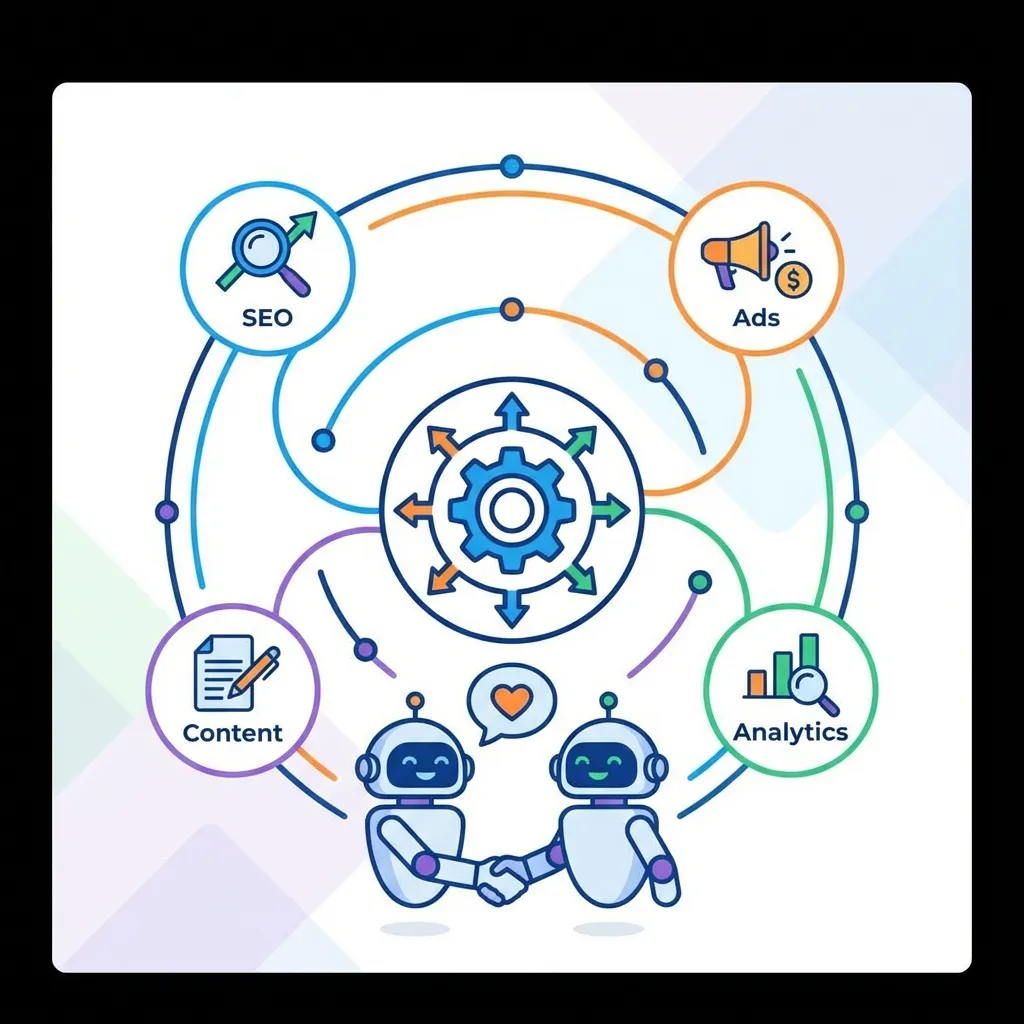
Introduction to social media and digital marketing channels such as SEO, content, social, email, and paid ads, with Nepali examples and key metrics.
Introduction to IoT: how connected devices and sensors work, business applications in Nepal, benefits, and privacy and security risks.
Compact lab worksheets matching the syllabus Laboratory Works. These are original practice tasks, not a substitute for faculty-supervised lab sessions.
Identify cabinet components, ports, and input/output devices on a real PC.
Use Windows GUI essentials and a short set of Command Prompt commands.
Format a one-page business memo in Microsoft Word or a compatible word processor.
Build a small sales sheet with formulas, formatting, and a chart in Excel or equivalent.
Build a six-slide deck with a consistent theme, notes, and one simple animation.
Create two related tables, enter sample data, and run a simple query in Microsoft Access or equivalent.
Use browser, search, email concepts, and a safe download checklist.
Original practice sets written for this course. They are not Tribhuvan University past papers.
Original practice questions covering computer basics, IS in business, hardware, software, and databases. Not a TU past paper.
📊 50 marks ⏱️ 2.5 hoursOriginal practice questions covering networking, internet, multimedia, security, and contemporary technologies. Not a TU past paper.
📊 50 marks ⏱️ 2.5 hoursModel question paper for BBA IT 231: IT and Applications covering all units.
📊 100 marks ⏱️ 3 hours
Client-owned GTM containers, WhatsApp/call events, and stopping double-firing on Nepal WordPress ...

Search vs Meta vs Maps for Nepali lead gen — qualified lead definition, CPL planning, and offline...

How Nepali SMEs align Google Ads, Meta, landing pages, and WhatsApp scripts on one NPR offer — wi...
Have questions about digital marketing in Nepal? Let's connect and discuss how data-driven strategies can grow your business.