Maximizing Supply Chain ROI with Digital Workflows
From Theory to ROI: Teaching Supply Chain Management Through Digital Workflows
The Epistemological Shift in Supply Chain Pedagogy
The discipline of supply chain management operates at the highly volatile intersection of global physical logistics, complex financial modeling, and rapid technological innovation. Historically, the pedagogical approaches utilized to instruct future supply chain professionals and corporate strategists have relied heavily on static observation and retrospective analysis. Educational frameworks predominantly utilized historical case studies, theoretical textbook discussions, and guest lectures to convey foundational concepts such as procurement, demand forecasting, inventory control, and supplier relationship management. While these traditional methods provided a necessary theoretical baseline for understanding logistical operations, they possess severe inherent limitations in an era defined by real-time data orchestration, geopolitical instability, and artificial intelligence. Retrospective case studies, which are often several years old by the time they are codified into academic or corporate curricula, frequently fail to encapsulate current real-world challenges or the rapid velocity of modern market disruptions. Furthermore, guest lectures, while occasionally inspiring, are often loosely connected to the rigorous, underlying mathematical and theoretical frameworks necessary for systemic operational design.
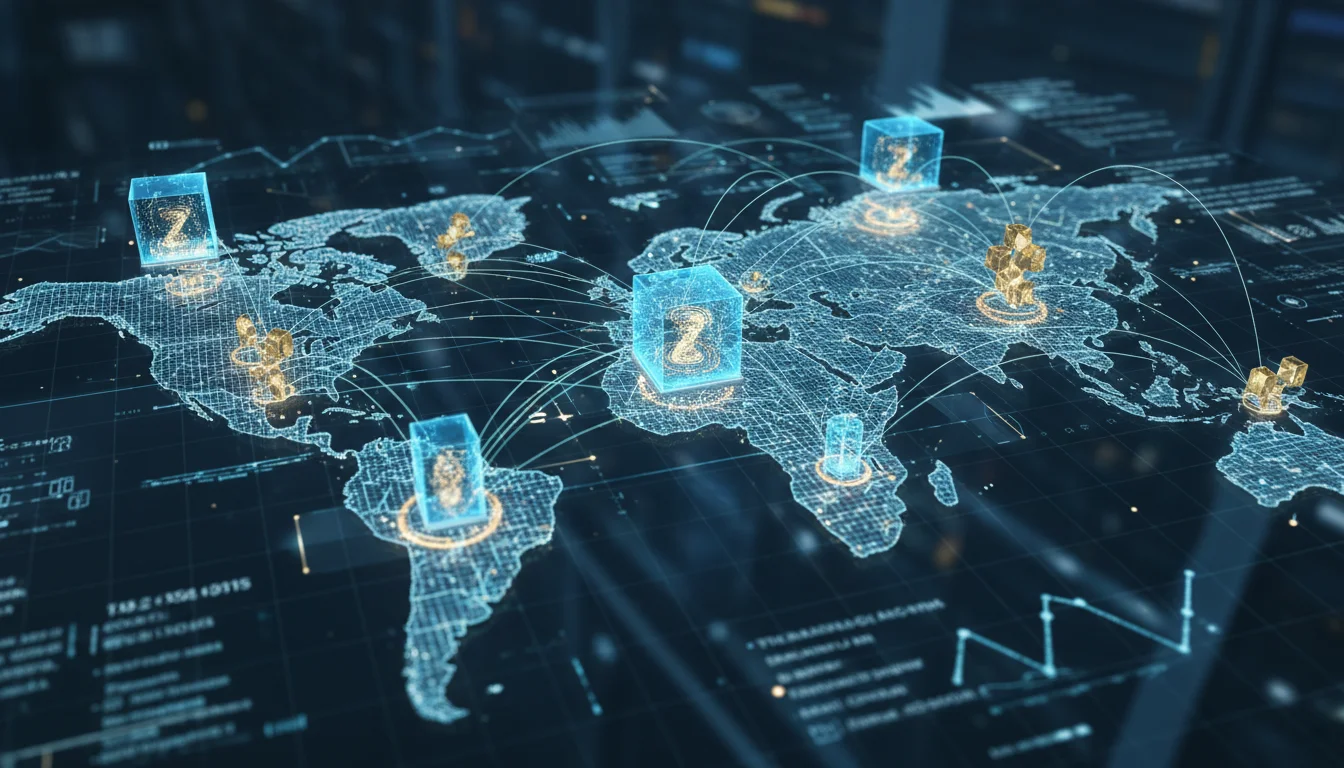
The contemporary supply chain is no longer a linear, predictable sequence of deterministic physical events; it is a highly stochastic, interconnected ecosystem governed almost entirely by digital workflows. Consequently, the transition from theoretical academic understanding to measurable Return on Investment (ROI) in the corporate sphere requires an educational paradigm that perfectly mirrors the technological sophistication of the industry. The absolute mandate for modern supply chain pedagogy is to move beyond the mere dissemination of historical knowledge and toward the active, experiential cultivation of digital agility. This paradigm shift involves teaching students, corporate trainees, and executive leadership how to design, deploy, and govern automated workflows, thereby transforming abstract operational theories into concrete, cost-saving strategies with immediate and measurable business impact.
The integration of advanced digital systems—ranging from deep learning neural networks and computer vision to natural language processing, blockchain ledgers, and agentic artificial intelligence—has fundamentally altered the operational landscape. To effectively teach supply chain management today, curricula must embed these technologies not as abstract IT concepts relegated to computer science departments, but as the central, indispensable components of modern operational strategy. When education successfully bridges the gap between theoretical frameworks and active digital deployment, organizations experience an accelerated path to ROI, validating the transition from traditional, static, certificate-based learning models to dynamic, outcome-driven, experiential training. To build upon legacy techniques and support the development of truly engaged scholarship, institutional programs must partner directly with global procurement leadership—such as the collaborations observed with Moet Hennessy in formulating advanced course designs—to ensure that the curriculum remains tethered to the bleeding edge of corporate reality.
Systematizing Complexity via the SCOR Model and Experiential Simulations
The stark deficiencies of traditional, linear instructional methods have catalyzed a vital movement toward experiential, simulation-based learning in supply chain education. The sheer complexity of global supply networks cannot be adequately conceptualized through two-dimensional process diagrams or spreadsheet analysis; it demands immersive environments where learners can experience the immediate, cascading consequences of their operational decisions under simulated pressure.
Digitizing the Supply Chain Operations Reference Framework
A critical step in modernizing supply chain education is the integration of established, industry-standard frameworks into dynamic classroom simulations. The Supply Chain Operations Reference (SCOR) model, which systematically categorizes the supply chain into foundational processes—plan, source, make, deliver, and return—provides an essential structural taxonomy for learners. When adapted into a digital classroom simulation, the SCOR model allows students to actively manipulate these interconnected nodes within a controlled environment. This simulation-based approach is particularly crucial for teaching supply chain resilience, a theoretical topic that has gained paramount existential importance following recent global macroeconomic disruptions. By utilizing SCOR-based simulations, educators can mathematically demonstrate how a disruption in the “source” phase exponentially impacts the “deliver” phase, forcing students to construct buffer algorithms and alternative routing logic rather than merely writing essays on the concept of resilience.
Gamification and Digital Escape Rooms
Recent pedagogical advancements have demonstrated the profound efficacy of gamified environments in fostering the specific cognitive skills required for modern, high-velocity supply chain management. The implementation of digital escape room games and role-playing simulations has emerged as a highly effective methodology for teaching complex information flow, reverse logistics, and crisis mitigation. The utilization of systems such as TagScan within role-playing scenarios provides a dynamic, high-pressure environment that forces learners to synthesize vast amounts of data rapidly.
Empirical correlation analysis regarding these digital escape rooms indicates that participants perceive them as highly effective in fostering deep concentration, establishing clear operational goals, and delivering timely, automated feedback. Furthermore, the data reveals that knowledge improvement and long-term retention have significant positive associations with the level of challenge presented and the autonomy granted to the user within the simulation. By placing learners in high-stakes, simulated environments where they must navigate logistical puzzles—such as a sudden port closure or a catastrophic supplier failure—educators facilitate a much deeper, visceral understanding of supply chain dynamics. These results underscore the pivotal role of autonomous decision-making and immediate consequence in enhancing knowledge acquisition, ensuring that future professionals develop robust crisis-response reflexes rather than relying on static reference manuals.
Neuro-Symbolic Reasoning and the Digital Twin Imperative
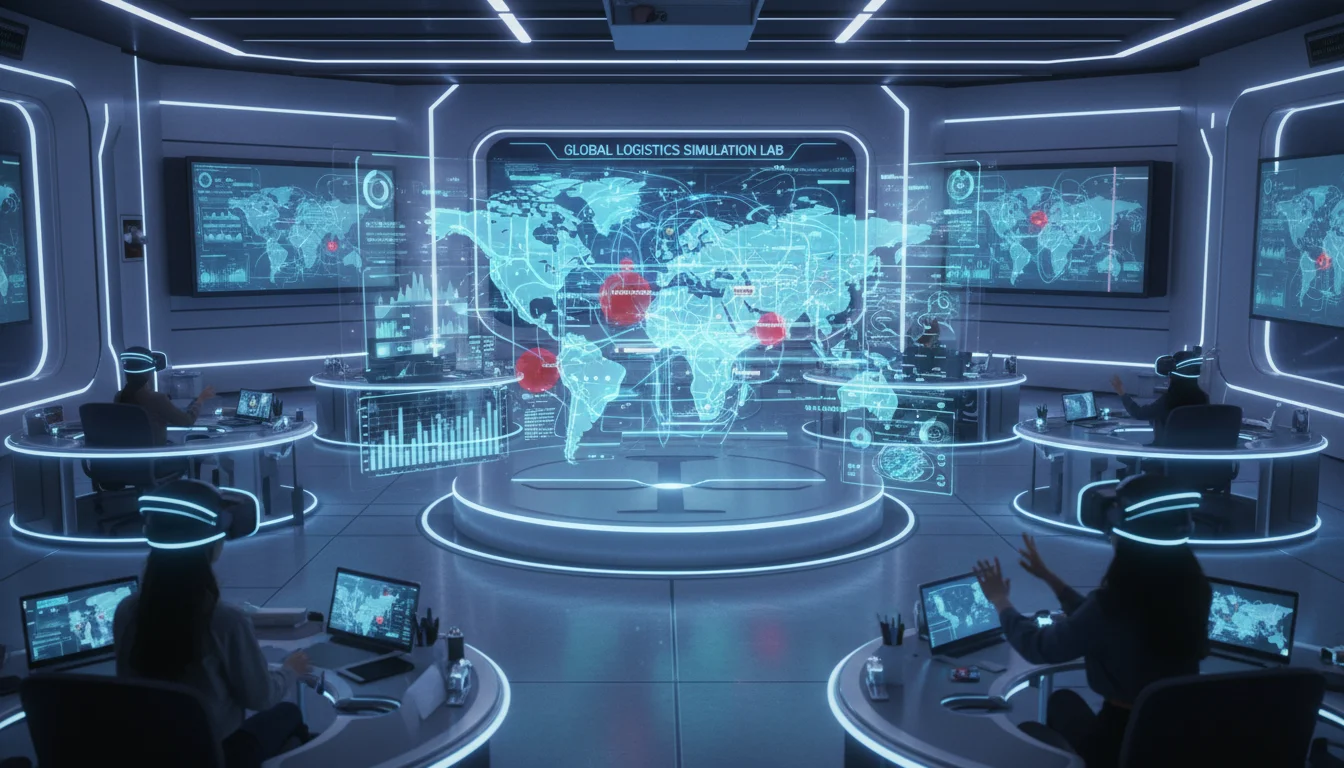
Beyond gamified escape rooms, the convergence of simulation technologies with advanced visual interfaces, such as Virtual Reality (VR) and Industrial Digital Twins, represents the absolute vanguard of supply chain education. A digital twin—a highly accurate, real-time virtual representation of a physical asset, factory floor, or entire global logistics network—allows students to interact with industrial processes without the catastrophic financial risks associated with altering live operational environments.
In advanced Industry 4.0 environments, learners are taught to interact with these digital twins utilizing neuro-symbolic reasoning, which combines the pattern recognition capabilities of neural networks with the logical, rule-based reasoning of traditional symbolic AI. For example, learners can interact with a simulated supply chain scenario encompassing big data from a metal processing value chain, testing sustainable practices, enhancing demand forecasting algorithms, or optimizing reverse logistics pathways. As they adjust the variables, AI tools provide enhanced, real-time visibility and data updates, allowing the student to observe the immediate, data-driven financial results of their interventions. This transition from theoretical mathematical modeling to active digital simulation ensures that learners are prepared to manage the complexities of modern manufacturing and logistics, where automated guided vehicle platforms and neural network-driven machinery dictate operational flow.
-
Traditional Case Studies
- Implementation Mechanism: Retrospective document analysis and group discussion.
- Primary Cognitive Benefit: Foundational theory comprehension and vocabulary acquisition.
- Operational SCM Application: Historical benchmarking and high-level strategy formulation.
-
SCOR Model Simulations
- Implementation Mechanism: Classroom-based active modeling of plan, source, make, deliver, return.
- Primary Cognitive Benefit: Systems thinking, process mapping, and structural awareness.
- Operational SCM Application: Supply chain resilience engineering and structural network optimization.
-
Digital Escape Rooms
- Implementation Mechanism: Gamified problem-solving using systems like TagScan under severe time constraints.
- Primary Cognitive Benefit: Rapid decision-making, cross-functional communication, and sustained concentration.
- Operational SCM Application: Real-time crisis management, disruption mitigation, and information flow control.
-
Digital Twins & VR
- Implementation Mechanism: Interaction with virtual industrial replicas utilizing neuro-symbolic reasoning.
- Primary Cognitive Benefit: Spatial awareness, complex predictive modeling, and big data synthesis.
- Operational SCM Application: Industry 4.0 factory design, metal processing value chain optimization, and continuous process improvement.
The Algorithmic Foundation: Teaching Deep Learning and Blockchain Mechanics
To effectively teach the translation of operational theory into hard financial ROI, the supply chain curriculum must deeply explore the underlying digital architectures that govern modern automated decision-making.
It is no longer sufficient to teach supply chain professionals merely how to navigate the user interface of an enterprise resource planning software; they must understand the foundational logic, capabilities, and limitations of the algorithms driving the software.
Handcrafted Neural Networks vs. Off-the-Shelf Limitations
The instruction of artificial intelligence within supply chain contexts must heavily emphasize the necessity of bespoke, industry-specific applications. Deep learning models, which have evolved significantly from basic computer vision to highly sophisticated Generative AI, Large Language Models (LLMs), and complex recommender systems, cannot be effectively deployed as generic, off-the-shelf algorithms. Educational frameworks must convey that actual business value—the critical transition from a theoretical idea to measurable execution—requires the development of handcrafted, domain-specific neural networks tailored to the unique constraints, historical data biases, and operational variables of a given enterprise.
When teaching supply chain risk management, for instance, learners must understand the mechanics of how an AI continuously scans the entire global supply chain ecosystem, identifying geopolitical anomalies, weather patterns, and supplier financial distress to spot trouble before it impacts the bottom line. This involves training models on vast, unstructured datasets to discover optimal routing solutions or dynamic inventory allocations that were previously considered computationally impossible to resolve in real-time. By integrating the concepts of Machine Learning Operations (MLOps) and Edge AI into the syllabus, students learn not just the theory of predictive analytics, but the rigorous continuous deployment pipelines and performance tuning required to maintain these neural systems in highly volatile, real-world environments. This understanding demystifies the software development lifecycle (SDLC) for supply chain managers, enabling them to communicate effectively with data scientists and engineers to build systems that fit the business like a Savile Row suit.
Blockchain Traceability and Identity Governance
Parallel to the instruction of artificial intelligence, blockchain technology represents a critical, foundational digital workflow component that must be integrated into modern supply chain training. The theoretical understanding of decentralized, cryptographic ledgers must be explicitly translated into practical use cases that deliver operational ROI and mitigate multi-party risk. Blockchain offers profound, systemic advantages for end-to-end supply chain traceability, ensuring data integrity and establishing mathematical trust across disparate, potentially adversarial industry participants.
Educational modules must focus intensely on how the immutable nature of blockchain architectures safeguards sensitive commercial information, particularly in global logistics networks where multiple untrusted parties—from raw material suppliers to maritime shippers and customs officials—must interact securely. Furthermore, the instruction should comprehensively cover the deployment of smart contracts. Students must learn how these self-executing lines of code residing on the blockchain can automate complex financial transactions, escrow releases, and compliance verifications instantly once predefined logistical conditions (such as a GPS confirmation of delivery or a temperature sensor reading within acceptable bounds) are met. By teaching the integration of blockchain-based identity management alongside scalable ledge technologies, educators equip future professionals with the architectural knowledge necessary to build transparent, audit-proof supply networks that support long-term enterprise growth and eliminate costly reconciliation delays.
Re-engineering Maintenance Pedagogy: The Gearbox PdM Paradigm
Perhaps the most concrete, empirically provable example of moving from legacy supply chain theory to immediate, calculable ROI lies in the instruction of physical asset management, specifically the transition toward Predictive Maintenance (PdM) workflows. The traditional educational models for industrial maintenance and reliability engineering often focused on two primary, diametrically opposed strategies: run-to-failure (a reactive approach) and calendar-based (a preventive approach). However, teaching these legacy frameworks as viable modern strategies is increasingly obsolete and financially detrimental in a highly digitized manufacturing environment.
Deconstructing the Calendar-Based Fallacy and Infant Mortality
The theoretical premise of traditional preventive maintenance assumes that mechanical components degrade in a linear, predictable fashion over time, theoretically justifying scheduled interventions just before the wear-out phase is predicted to begin. However, empirical supply chain instruction must now aggressively incorporate seminal reliability studies—such as the foundational work conducted by United Airlines and the US Navy—which definitively demonstrate that only a marginal fraction (approximately 11% to 23%) of mechanical components actually adhere to this predictable, age-related wear-out pattern.
Educators must teach that the vast majority of catastrophic mechanical failures, such as the sudden, jarring sound of a critical gearbox seizing and grinding production to a halt, are entirely random. These high-cost failures are frequently triggered by stochastic operational events—sudden shock loads, microscopic lubricant contamination, or improper installation procedures—parameters about which a calendar-based schedule knows absolutely nothing. Furthermore, students must rigorously analyze the inherent financial and mechanical risks of unnecessary intervention. Performing major service on a perfectly healthy gearbox based strictly on a calendar date is not just economically wasteful; it introduces severe operational risk. Every time a sealed gearbox is opened for inspection, the maintenance team introduces the risk of external contamination, incorrect reassembly tolerances, or inadvertent damage to seals. This action can easily induce an “infant mortality” failure on a component that would have otherwise run flawlessly for thousands of additional hours. For instance, a technician might replace a perfectly seated, healthy bearing with a new component that harbors an undetectable, microscopic manufacturing defect, thereby inadvertently starting the failure cascade they were attempting to prevent.

Teaching the Modalities of Condition-Based Foresight
Because of these documented failures in traditional theory, the modern supply chain curriculum must heavily pivot to teaching data-driven foresight through the orchestration of Industrial Internet of Things (IIoT) sensors and AI diagnostic platforms. This requires deep technical instruction on the specific physical diagnostic technologies utilized to monitor asset health in real-time.
A foundational step in designing this digital workflow is the establishment of regular inspection routes utilizing digital thermography. Students must learn how to capture and interpret thermal imaging alongside standard digital photographs to provide operational context. Thermography serves as an excellent initial screening tool; the identification of a localized “hot spot” on an asset automatically warrants and triggers a deeper diagnostic investigation using more granular methods, such as vibration or oil analysis.
Beyond basic temperature variances, the advanced curriculum must delve into highly specialized predictive technologies such as Acoustic Emission (AE) testing. Learners must fully understand the tribological mechanics of AE testing: when a microscopic subsurface crack initiates or propagates in a gear tooth, or when bearing surfaces make high-friction contact under heavy load, the material releases a localized burst of ultrasonic energy. AE sensors are specifically designed to “hear” these high-frequency stress waves at the absolute earliest stages of material failure, long before traditional vibration analysis equipment could register the anomaly. The pedagogical emphasis here is critical for specific supply chain workflows involving very slow-speed applications (e.g., machinery operating under 10 RPM). At these low velocities, the kinetic energy generated from mechanical impacts is simply too low to be effectively measured by standard vibration analysis. By comprehensively teaching these advanced diagnostic theories, students grasp exactly how to intercept material failure at its absolute inception, thereby preventing cascading catastrophic failures, frantic calls for emergency repairs, and the skyrocketing costs of unplanned downtime.
Automating the Maintenance Workflow and Dynamic Alarms
The educational process regarding predictive maintenance is severely incomplete if it stops at mere data collection and sensor theory; the critical leap from theory to ROI occurs entirely in the design of the automated workflow that responds to the data. Instruction must meticulously guide students through the complex process of setting dynamic alarms and seamlessly integrating them into enterprise work order software. Initially, learners may apply theoretical industry standards, such as the ISO 10816 vibration severity charts, to establish simple threshold alarms. However, the ultimate pedagogical goal is to demonstrate how an AI platform utilizes machine learning to continuously analyze the baseline operating data of a specific asset and generate its own dynamic, multi-variate alarms that offer vastly superior sensitivity to operational deviations.
Crucially, students must learn to architect the workflow for when an alarm is triggered, carefully balancing human-in-the-loop oversight with automated execution.
The workflow design must definitively answer specific operational questions: Who receives the initial notification (e.g., the maintenance planner or the reliability engineer)? What constitutes the first verification step (e.g., reviewing the trend data or taking a confirmatory manual reading)? At what precise severity threshold does the system bypass human review and automatically generate a work order within the enterprise system? By explicitly defining these processes within the curriculum, educators ensure that future supply chain leaders understand how to make digital alerts strictly actionable, guaranteeing that the theoretical capability of AI translates directly into the prevention of unplanned downtime and ensuring nothing falls through the cracks.
Maintenance Strategy
Run-to-Failure (Reactive)
- Theoretical Premise: Components are utilized until complete functional loss occurs.
- Diagnostic Technology Taught: None (relies on post-incident analysis).
- ROI Impact & SCM Educational Focus: Highly negative ROI due to cascading failures and halted production. Taught primarily as a baseline anti-pattern.
Calendar-Based (Preventive)
- Theoretical Premise: Degradation is linear; scheduled intervention prevents failure.
- Diagnostic Technology Taught: Calendar tracking and usage hour logging.
- ROI Impact & SCM Educational Focus: Often results in unnecessary intervention, wasted parts, and risks infant mortality failures.
Predictive Maintenance (PdM)
- Theoretical Premise: Data-driven foresight intercepts failure based on actual physical condition.
- Diagnostic Technology Taught: Thermography, Vibration Analysis, Acoustic Emission (<10 RPM).
- ROI Impact & SCM Educational Focus: Extremely high ROI. Prevents emergency repairs. Focuses on setting AI alarms and automated work orders.
Agentic Enterprise Operations: Overcoming the AI Readiness Trap
The rapid, unprecedented evolution of artificial intelligence necessitates an urgent educational update from passive, purely analytical AI to proactive, Agentic AI. The concept of Agentic Enterprise Operations represents a massive leap in digital workflow automation, moving beyond simple, repetitive task execution to complex, goal-oriented autonomy across the supply chain. Teaching this transition is paramount for enterprises seeking to maintain competitive viability in the coming decade.
The Readiness Trap and Accelerated Deployment Frameworks
A critical issue addressed in modern supply chain instruction is the “AI readiness trap.” This phenomenon describes a scenario where enterprise organizations expend excessive, endless cycles on theoretical discovery, internal debates, and enablement initiatives without ever executing live integration into their actual workflows. Academic and corporate training programs must directly attack this paralysis. The pedagogical premise is stark: every day that an enterprise fails to embed Agentic AI into its operational workflows represents a direct, measurable win for their competitors. Therefore, curricula must prioritize rapid-development frameworks, such as 30-day accelerator programs, which are explicitly designed to move operations from theoretical potential to measurable ROI at extreme speed.
The instructional structure for teaching Agentic AI implementation involves guiding students through a rigorously compressed validation process. Learners practice identifying high-automation-potential business processes and architecting outcome-driven agents tailored to specific datasets, software tools, and corporate goals. The educational deliverable for such a module is not a generalized essay on AI ethics, but the development of a functional agentic ecosystem architecture. Students must produce integration plans, rapid assessments detailing the necessary metrics for a strong business case, and governance-ready rollout strategies for enterprise-wide adoption. This outcome-driven approach—validating three functional AI agents in live workflows within a simulated 30-day sprint—ensures that AI deployment is not merely experimental, but built specifically for enterprise scale and immediate business value from Day One.
Applied Agentic Workflows: Contract Intelligence and E-Commerce Dynamics
To anchor the abstract theory of Agentic AI in tangible supply chain ROI, the curriculum must explore highly specific application vectors, such as upstream contract management and downstream dynamic e-commerce fulfillment. As supply chains scale globally, the management of supplier contracts, complex partnership agreements, and terms of service updates becomes exponentially complicated. Students must be trained to deploy AI-powered legal review tools that autonomously parse extensive contract repositories. These specialized, agentic tools are trained to scan contracts for problematic clauses, enforce legal consistency, and highlight liability terms that disproportionately favor suppliers. By learning to configure systems that analyze the organization’s specific risk preferences and business requirements, future professionals can preemptively flag terms in new agreements that might negatively impact cash flow or lack sufficient intellectual property protections.
In the downstream supply chain—specifically e-commerce operations, retail distribution, and inventory workflows optimized by tools like Best Ops Chain AI and Fishbowl—the deployment of AI agents transforms inventory holding and pricing strategies into highly optimized, automated engines. Dynamic pricing, once viewed strictly as a theoretical economic concept taught in microeconomics, has evolved into a definitive ROI machine. The educational focus must shift to configuring AI tools that continuously monitor real-time demand fluctuations, aggressive competitor pricing movements, and precise conversion rates. Students learn how to tune algorithms that automatically adjust pricing variables to maximize profit margins without sacrificing sales velocity, thereby avoiding the detrimental race to the bottom. The expected outcomes taught in this workflow include the significant reduction of capital-draining overstock scenarios, the mitigation of stockouts to keep customers satisfied, and the precise calibration of automated reorder points that align seamlessly with predicted campaign or seasonal demand spikes.
Furthermore, agentic workflows are highly instrumental in direct customer engagement, performing tasks that traditionally burdened human support teams. Students analyze real-time shopper engagement models where AI agents utilize behavior-based triggers to assist customers with natural language product searches, recommend sophisticated cross-sells during browsing, and deploy proactive messaging to recover abandoned carts. By mastering the orchestration of these agents, students learn how to systematically reduce customer support ticket volume while simultaneously increasing the average order value—a direct, measurable contribution to the supply chain’s end-to-end profitability.
The “Learn -> Sprint -> Case Study” Methodology for Organizational Resilience
For small and medium-sized enterprise (SME) leaders, as well as rigorous academic institutions, the justification for technological training expenditure hinges entirely on the ability to prove immediate business value. Traditional online courses that culminate in a static certificate are fundamentally misaligned with this economic requirement. Completing isolated modules, passing theoretical quizzes, or building simplified demo projects does not equate to the capability to architect a resilient, highly secure digital supply chain. For SME owners with limited budgets, constrained staff resources, and zero tolerance for theoretical learning that fails to translate to ROI, the pedagogical structure itself must be entirely re-engineered.
Moving Beyond the Illusion of Certificates
A proven, highly effective methodology for achieving this alignment is the implementation of the “Learn -> Sprint -> Case Study” model, as utilized in advanced technical training paradigms. This structured educational path explicitly transforms abstract knowledge acquisition into immediate, practical execution. In the initial “Learn” phase, participants are exposed to the fundamental theories of cloud computing infrastructure, distributed architectures, caching strategies, and machine learning models. However, the critical pedagogical intervention occurs during the subsequent “Sprint” phase. Here, learners are required to apply the theoretical knowledge within a highly constrained, intensive period to build functional prototypes or map out concrete network integrations specific to their actual operational reality.
This hands-on practice transforms highly abstract IT concepts into concrete cost-saving methodologies with measurable business impact. Finally, the “Case Study” phase forces the learner to rigorously analyze the results of their sprint, meticulously documenting the exact business impact, security enhancements, or workflow efficiencies achieved. This continuous, iterative loop addresses the gap left by traditional certificates, ensuring that learning is inextricably linked to the production of immediate business value and satisfying the stringent financial constraints typical of SME environments.
System Design, DevOps, and Zero Trust Architecture
A core, non-negotiable component of the “Learn -> Sprint -> Case Study” framework is the rigorous instruction of system design and organizational resilience. As supply chains become entirely digitized, they become inherently vulnerable to both systemic IT infrastructure failures and highly targeted, state-sponsored geopolitical cyber threats. Consequently, modern supply chain education can no longer be decoupled from advanced cybersecurity and cloud infrastructure management.
Future supply chain leaders must be explicitly taught how to build digital continuity.
This involves mastering advanced architectural principles such as Zero Trust Architecture, which operates on the fundamental premise that no entity—whether internal to the corporate network or an external logistics partner—should be inherently trusted without continuous, cryptographic verification. Given that network security and Zero Trust initiatives now account for approximately 28% of overall organizational technology budgets, understanding these complex architectures is a mandatory, core competency for strategic foresight, not a peripheral IT concern.
The curriculum must approach these highly technical subjects through a strict business continuity lens. Students must be challenged with questions critical to scaling enterprise operations: How exactly is a digital logistics system architected to ensure it will not suffer catastrophic failure when scaling exponentially during peak seasons? How are Role-Based Access Controls (RBAC) and robust data protection strategies integrated seamlessly when deploying untrusted third-party AI vendor tools across the global supply chain network? By instilling this level of DevOps proficiency and architectural planning—enabling small teams to manage cloud infrastructure efficiently—the educational framework prevents the accumulation of massive technical debt and avoids the necessity of exorbitantly expensive re-engineering processes in the future, functioning as critical long-term operational insurance for the enterprise.
Optimizing Peripheral Workflows: Global Localization and Owned Media
To completely solidify the efficacy of teaching digital workflows, educational programs must dissect and analyze public case studies where the transition from theory to ROI is demonstrably quantified, even in workflows historically considered peripheral to physical logistics. Supply chains encompass the entire value chain, including international legal communication and downstream market demand generation.
The Document Management and Translation Workflow
Consider the critical integration of specialized AI engines for document management and global communication within complex corporate supply chains. Supply chains operating across disparate global geographic regions generate immense volumes of highly sensitive regulatory, financial, and logistical documentation that require rapid, perfectly accurate translation and legal alignment. The legacy theoretical approach suggests utilizing multiple human vendors or generic translation services; however, the practical reality of this approach often results in severe terminological inconsistency, missed regulatory compliance deadlines, and rapidly escalating operational costs.
A pedagogical deep dive into a documented case study—such as the digital transformation experienced by Caldwell Investments, heavily analyzed by institutions like HEC Montréal—brilliantly illustrates the mechanics of ROI in this sector. The organization faced severe operational inefficiencies and risk with a fragmented vendor approach. The instructional solution involved pivoting entirely to a single-vendor, specialized AI platform (such as Alexa Translations) where the neural engines were explicitly trained on the organization’s highly specific historical documentation and specialized industry lexicon. The vital educational takeaway here is the absolute necessity of workflow integration; the AI is not merely a standalone text-translation tool, but a central, heavily integrated node in efficient enterprise document management. By analyzing the reported, verified cost savings and the total elimination of regulatory bottlenecks achieved through this targeted AI training, students learn how to evaluate vendor capabilities critically and calculate the financial impact of consolidating workflows through specialized machine learning models.
Orchestrating Market Demand and Overlooked Owned Channels
While procurement, manufacturing, and legal compliance form the operational backbone of the supply chain, the demand-generation workflows at the front end are equally susceptible to massive digital transformation. Instructing supply chain professionals on the mechanics of AI in the advertising and marketing space reveals how downstream market velocity dictates upstream inventory requirements. The explosive growth of the global AI marketing sector, which is projected to reach an astounding $47.32 billion in 2025, underscores a massive structural shift in how consumer demand is synthesized and manipulated.
The curriculum must outline a strict implementation framework that safely balances algorithmic automation with strategic human oversight. Successful AI integration in demand generation requires a rigid data foundation, the establishment of highly realistic performance expectations, and continuous algorithmic optimization based on measurable conversion outcomes. For example, AI tools that analyze platform-specific capabilities (such as Google Ads optimizations) can deliver extraordinary ROI boosts—with data indicating that 60% of businesses experience substantial, measurable improvements in content creation and campaign performance—provided the initial implementation quality is rigorously controlled.
Furthermore, students should explore highly overlooked, high-ROI digital workflows, such as the strategic utilization of programmable email signatures across the enterprise. Rather than treating corporate email signatures as static, meaningless decor, they can be programmatically transformed into dynamic, targeted placements. In a vast supply chain or manufacturing context involving thousands of daily outward-facing emails, this capability allows an organization to organically amplify Corporate Social Responsibility (CSR) messages, spotlight new product launches, or boost attendance at critical trade shows and community events without incurring a single dollar of additional media spend. This illustrates a fundamental, highly elegant lesson in SCM resource optimization: extracting maximum workflow utility from existing, owned digital real estate to generate measurable engagement and definitive ROI.
Second and Third-Order Implications of Digitally Fluent SCM Leadership
When educational frameworks successfully and rigorously transition students from abstract theoretical understanding to the practical, hard-skills mastery of digital workflows, the ramifications extend far beyond the immediate optimization of a single corporate process. There are profound second and third-order macroeconomic and structural effects that fundamentally reshape the enterprise ecosystem.
Firstly, the widespread mastery of predictive maintenance models and agentic AI fundamentally alters human capital requirements within the global supply chain. As students learn to configure AI platforms to set dynamic, multi-variate alarms and automatically generate work orders based on highly technical acoustic emission data, the traditional role of the physical maintenance technician undergoes a massive paradigm shift. The role transitions away from dangerous, manual, calendar-based inspection toward sophisticated data analysis and system governance. The immediate second-order effect of this education is a drastic reduction in manual, hazardous labor, accompanied by a simultaneous, massive increase in the demand for hybrid professionals who deeply understand both mechanical engineering limits and cloud-based AI parameter tuning. The third-order implication is the necessary, total restructuring of corporate HR and training budgets; organizations must redirect funds away from traditional mechanical compliance training and aggressively toward continuous digital upskilling, algorithmic auditing, and cyber-resilience.
Secondly, teaching the rigorous application of Zero Trust Architecture and scalable, distributed microservices instills a pervasive culture of security-by-design among future supply chain architects. A profound second-order consequence of this educational focus is that procurement decisions for new logistics and supply chain software are no longer based solely on surface-level feature sets or initial cost. Instead, procurement becomes predominantly predicated on API security, data encryption standards, and the vendor’s total alignment with the enterprise’s strict Zero Trust framework. This permanently shifts the power dynamic in enterprise software procurement, forcing global SCM vendors to prioritize deep architectural security to win enterprise contracts. The subsequent third-order effect is a massive macroeconomic stabilization of global supply chains against state-sponsored cyber disruptions and ransomware attacks, as a generation of digitally fluent supply chain managers systematically identifies and permanently closes the vulnerabilities inherent in legacy IT systems.
Finally, the shift toward instructing the mechanics of dynamic pricing algorithms and automated, agentic contract review engines accelerates the overall velocity of business transactions. The second-order effect of hyper-optimized, real-time margin adjustments is a vast reduction in working capital unnecessarily locked in static, defensive safety stock. With AI ensuring highly accurate reorder points perfectly synchronized to seasonal spikes and competitor weakness, massive amounts of capital are freed for aggressive global market expansion or critical Research & Development. The ultimate third-order effect is an epistemic, permanent shift in how corporate supply chain strategy is formulated: strategy moves entirely away from long-term, rigid, highly inaccurate quarterly planning cycles toward a fluid, continuous, algorithmic orchestration of autonomous agents that react and adjust to global market signals in milliseconds.
Conclusion
The instruction of supply chain management currently stands at a critical, unforgiving historical juncture.
The Evolution of Supply Chain Education
The historical reliance on abstract academic theories, retrospective paper-based case studies, and generic, participation-based certifications is wholly insufficient to prepare logistics professionals for the extreme complexities of an AI-driven, highly volatile, interconnected global market. The definitive trajectory for modern supply chain education is the rigorous, hands-on, deeply technical integration of digital workflows, focusing relentlessly on the translation of conceptual theory into measurable, irrefutable Return on Investment.
By moving decisively toward experiential learning environments—utilizing highly advanced digital twins, neuro-symbolic reasoning simulations, SCOR model adaptations, and high-pressure digital escape rooms—educators can effectively foster the critical systems thinking and rapid decision-making required in modern logistics. More importantly, the curriculum must embed deep, operational instruction on the core technologies actively driving the industry:
- The bespoke deployment of specialized neural networks for global risk analysis;
- The intricate utilization of acoustic emission and thermography for mechanical predictive maintenance;
- The architecture of proactive Agentic AI for automated enterprise operations; and
- The implementation of Zero Trust microservices for total organizational cyber-resilience.
Outcome-Driven Frameworks and Future Outlook
Through the absolute adoption of outcome-driven frameworks, such as the intensive “Learn -> Sprint -> Case Study” model, both academic institutions and corporate training programs can guarantee that their educational expenditures translate directly into tangible, immediate business value. Ultimately, teaching supply chain management through the lens of digital workflows is not merely a superficial update to a syllabus; it is the fundamental re-engineering of the professional supply chain mindset. It equips the next generation of operational leaders with the architectural foresight, the mathematical rigor, and the technological fluency necessary to build and govern the fully autonomous, fiercely resilient supply chains of the future.