Singapore Data Centers for Asian Market Expansion
Top Enterprise Data Center Providers in Singapore: Scaling Your Business for the Asian Market
The Southeast Asian digital economy is entering a period of transformative expansion, with Singapore serving as the primary anchor for data-intensive infrastructure across the Asia-Pacific region. The data center construction market in Southeast Asia is projected to exceed USD 17.65 billion by 2031, reflecting a compound annual growth rate (CAGR) of 17.83% from 2025. This surge is driven by the rapid adoption of artificial intelligence, ongoing digital transformation, and burgeoning data consumption across e-commerce, fintech, and streaming platforms. Within this regional context, the Singapore data center market, valued at approximately USD 4.33 billion in 2025, is expected to reach USD 5.88 billion by 2031. For enterprises aiming to scale in Asia, Singapore offers an unparalleled combination of strategic geography, political stability, and a sophisticated regulatory environment, even as the city-state navigates physical constraints related to land and power.
Market Valuation and Growth Projections
The Singapore data center market has transitioned into a high-investment phase following the lifting of the data center construction moratorium in 2022. This new era of growth is defined by a commitment to high-efficiency and sustainable facilities. While the base year market size for 2025 was established at USD 2.97 billion in some assessments, broader investment valuations place the 2025 market at USD 3.25 billion, with projections reaching USD 5.11 billion by 2031 at a CAGR of 7.84%.
| Market Attribute | 2025 Value | 2031 Projected Value | CAGR |
|---|---|---|---|
| Singapore Data Center Market (Revenue) | USD 4.33 Billion | USD 5.88 Billion | 5.22% |
| Singapore Data Center Market (Investment) | USD 3.25 Billion | USD 5.11 Billion | 7.84% |
| SE Asia Construction Market Size | USD 6.59 Billion | USD 17.65 Billion | 17.83% |
| Singapore IT Load Capacity | 2.97 GW | 3.01 GW (by 2030) | 0.28% |
| Colocation Market Size (Revenue) | USD 2.16 Billion | USD 3.24 Billion | ~7% |
The disparity between the growth of investment (7.84%) and the growth of raw IT load capacity (0.28%) indicates a critical market evolution: the focus is shifting from adding physical footprint to increasing the technological density and efficiency of existing and new sites. This is particularly evident in the rise of wholesale colocation demand, which accounted for approximately 58.3% of revenue in 2025 and is expected to surpass 67.2% by 2030.
The Regulatory Framework and Sustainability Mandates
Singapore’s Infocomm Media Development Authority (IMDA) and the Economic Development Board (EDB) have implemented a stringent selection framework for data center expansion. This approach prioritizes sustainability and strategic economic value over pure capacity. The lifting of the moratorium came with the condition that new facilities must meet best-in-class efficiency standards to manage the city’s limited resource pool.
The Green Data Centre Roadmap
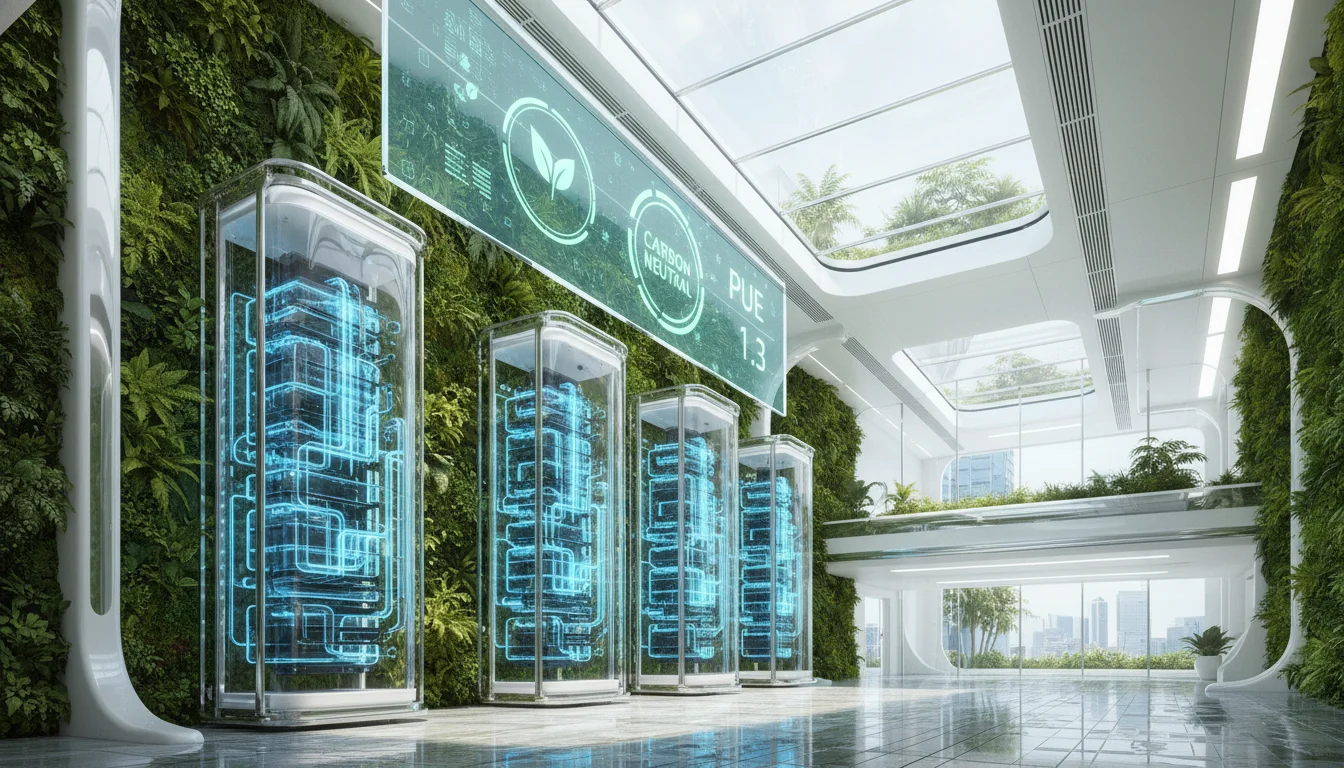
Launched in May 2024, the Green Data Centre Roadmap (GDCR) outlines Singapore’s strategy to pioneer sustainable growth while meeting the insatiable demand for AI and digital services. The roadmap aims to provide at least 300 MW of additional capacity in the near term, with further growth unlocked through green energy deployments.
Key parameters under the GDCR include a mandate for facility-level energy efficiency, where data centers are targeted to achieve a Power Usage Effectiveness (PUE) of 1.3 or lower at 100% IT load. Furthermore, the roadmap emphasizes water efficiency, aiming to reduce the median Water Usage Effectiveness (WUE) from 2.2 recorded in 2021 to 2.0 or lower within ten years.
BCA-IMDA Green Mark for Data Centres
The Building and Construction Authority (BCA) and IMDA jointly developed the Green Mark for Data Centres (GMDC) scheme to recognize operators that successfully deploy green best practices. The certification, refreshed in 2024 as GMDC:2024, scores facilities on energy performance, carbon efficiency, sustainable operations, and digital innovation.
| Green Mark Rating | Required Performance Standards |
|---|---|
| Platinum | Highest tier; typically requires 60%+ energy savings and holistic sustainability |
| GoldPLUS | Significant efficiency; typically requires 50-60% energy savings |
| Gold | Baseline for high-efficiency recognition |
| SLE (Super Low Energy) | Specialized focus on achieving up to 60% energy savings |
Compliance with the Green Mark is often a prerequisite for receiving power allocations in new bidding rounds. Operators like Digital Realty, Keppel, and Singtel have consistently sought the Platinum award for their flagship facilities.
Top Enterprise Data Center Providers
The Singaporean market is categorized by a medium level of concentration, where a few major global players and strong local champions dictate industry trends. These providers are categorized into hyperscalers, colocation specialists, and regional infrastructure leaders.
Equinix
Equinix continues to dominate the interconnection segment, maintaining its status as a central hub for carrier-neutral connectivity. In Singapore, Equinix operates five facilities (SG1 through SG5) and recently announced the development of SG6 with an initial USD 260 million investment. SG6 is planned as a 20 MW build, awarded under the pilot DC-CFA framework and expected to open in 2027.
Technical specifications for Equinix facilities focus on extreme reliability and ecosystem density. SG1, located in the One-North tech corridor, provides 109,211 square feet of colocation space with 2N power redundancy and N+1 cooling redundancy. SG3, also in One-North, is certified to Green Mark and ISO 27001 standards and features liquid cooling solutions, specifically direct-to-chip cooling to manage heat from high-density CPU and GPU clusters. Equinix differentiates itself through its Platform Equinix ecosystem, which hosts over 3,000 cloud and IT services.
ST Telemedia Global Data Centres (STT GDC)
Headquartered in Singapore, STT GDC is recognized for its operational resilience and focus on AI-ready infrastructure. The company’s Singapore portfolio includes major hubs like STT Singapore 5 and STT Singapore 6. STT GDC has pioneered sustainable operations by shifting backup generators to hydrotreated vegetable oil (HVO) and piloting AI-powered cooling optimization.
In April 2026, STT GDC launched an AI Innovation Centre at its STT Singapore 5 facility in Tai Seng. This center provides direct access to the latest NVIDIA Blackwell GPU infrastructure, featuring 192GB HBM3e VRAM per GPU and 400G InfiniBand networking. STT Singapore 6 is also certified under the NVIDIA DGX-Ready Data Center program, ensuring that the facility can support the extreme power and cooling requirements of dense AI clusters.
Digital Realty
Digital Realty operates a vast footprint in Singapore, focusing on the “Digital Loyang” campus and its Jurong East facility. The company has achieved 100% renewable energy coverage across its Singapore operations. Its SIN11 facility at Loyang offers 183,000 square feet and 13.2 MW of critical IT capacity, while SIN10 in Jurong East provides 377,000 square feet and 2N+2 cooling redundancy.
A major strategic development for Digital Realty was the expansion of its Innovation Lab (DRIL) to Singapore in early 2026. This lab serves as a hub for testing AI and hybrid cloud deployments, supporting rack densities of up to 150 kW per cabinet. Digital Realty also uses its ServiceFabric platform to enable secure, low-latency integration of AI workloads across distributed environments.
Singtel Nxera
Singtel’s regional data center arm, Nxera, is positioning Singapore as a global AI hub through its high-density, liquid-cooled facilities. The 58 MW DC Tuas facility, which opened in February 2026, is the highest power-density and most energy-efficient multi-tenanted data center in Singapore, achieving a PUE of 1.25.
DC Tuas is integrated with a subsea cable landing station, providing direct access to international and domestic networks. The facility features the largest direct-to-chip liquid cooling deployment in the country, allowing customers to deploy next-generation AI infrastructure at scale. Singtel has also launched a GPU-as-a-Service (GPUaaS) offering, powered by NVIDIA H100 Tensor Core GPUs and orchestrated through its patented Paragon platform.
Keppel Data Centres
Keppel is a leading global asset manager and operator headquartered in Singapore. Its Genting Lane campus includes Keppel DC Singapore 7 and 8, both of which have received the Green Mark Platinum award. Keppel DC Singapore 8, which became operational in phases starting in 3Q 2024, is a Tier 3 equivalent facility offering an overall PUE of approximately 1.3.
Keppel is also an innovator in non-traditional data center designs. Its Floating Data Centre Park (FDCP) project aims to address land and water constraints by utilizing seawater cooling, which can improve PUE by up to 80% compared to traditional air-cooling. Furthermore, Keppel has signed a multi-year strategic agreement with AWS to collaborate on renewable energy, subsea cables, and AI-enabled data center capacity.
AirTrunk
AirTrunk specializes in hyperscale data centers and operates the SGP1 campus in Loyang.
SGP1 is the largest independent data center in Singapore by megawatts, with a total capacity exceeding 78 MW across 18 data halls. The facility is carrier-neutral and located close to the Changi North Cable Landing Station. AirTrunk has achieved a design PUE of 1.25 at this site and holds the Green Mark Platinum certification. In 2025, AirTrunk secured a USD 1.7 billion green loan for expansion, underlining the market’s appetite for sustainability-linked financing.
Technical Infrastructure and AI Readiness
The rise of generative AI is driving a fundamental shift in data center architecture. Traditional designs centered on airflow are being replaced by facilities that can accommodate the high power and heat density of GPU-based systems.
Rack Density and Power Management
Traditional enterprise workloads typically required 5-8 kW per rack. However, modern AI training environments are pushing these requirements to 30-50 kW and even 100-200 kW per rack. Leading operators are provisioning for these fluctuations to prevent instability in diesel generators and battery systems, as AI training workloads can shift between high and low power draw within milliseconds.
| Feature | Conventional Data Center | AI-Ready Data Center |
|---|---|---|
| Rack Power Density | 5 - 15 kW per rack | 30 - 200 kW per rack |
| Cooling System | Air cooling (CRAC/CRAH) | Liquid cooling (Direct-to-Chip, Immersion) |
| Networking | Standard Ethernet | InfiniBand / High-speed Ethernet (400G/800G) |
| Space Efficiency | High footprint for compute | Dense compute clusters (up to 40x footprint reduction) |
| Energy Management | Traditional PUE (1.5 - 1.6) | Optimized PUE (< 1.3 in tropics) |
Cooling Innovations in the Tropics
Managing the thermal demands of high-performance computing (HPC) in Singapore’s humid climate is a significant engineering challenge. Operators are increasingly adopting:
- Direct-to-Chip Cooling: Circulating cooling fluid directly over CPUs and GPUs, which is more efficient than air cooling.
- Immersion Cooling: Submerging servers in a non-conductive dielectric fluid.
- Rear-Door Heat Exchangers: Replacing the back of a server rack with a liquid-cooled radiator.
These systems require significant facility changes, such as reinforced floor loading to handle the weight of cooling fluids and high-density racks. For instance, Equinix SG1 features a raised floor load capacity of 251 psf, while Digital Realty’s SIN10 uses an N+2 cooling redundancy architecture to ensure zero downtime.
Connectivity: Subsea Cables and Cloud On-Ramps
Singapore’s status as a digital gateway to Asia is underpinned by its dense network of 32 active subsea cables, with more under construction. These cables provide low-latency links to major markets, including the US, Europe, and Japan.
Subsea Cable Systems
Key subsea developments include:
- Bifrost Cable System: Co-developed by Keppel, it will be the largest capacity high-speed transmission cable across the Pacific Ocean.
- NCC and INSICA: Cables set to strengthen the Singapore-Batam link. The NCC (1.6 Pbps) is expected in Q4 2025, followed by the INSICA cable (up to 20 Tbps per fiber pair) in Q4 2026.
Cloud On-Ramp and Hybrid Multi-Cloud
Enterprises scaling in Asia often utilize a hybrid cloud strategy. Cloud on-ramps provide direct, secure, and private connectivity to major cloud service providers (CSPs) like AWS, Azure, and Google Cloud, bypassing the public internet.
| On-Ramp Service | Connectivity Mechanism | Key Advantage |
|---|---|---|
| AWS Direct Connect | Physical port in Meet-Me-Room | Lowest latency, high security |
| Azure ExpressRoute | Private, dedicated bandwidth | Guaranteed performance, reduced egress costs |
| Google Cloud Interconnect | Strategic partnership links | Private access to GCP services |
| NaaS (e.g., Megaport) | Software-defined networking | Quick multi-cloud provisioning |
From Singapore, businesses can achieve sub-50 ms latency to most major Asian markets, and sub-millisecond cross-connect latency within high-density facilities like Equinix or STT GDC. Hosting in Singapore can reduce Time to First Byte (TTFB) by 100-250 ms for users across Malaysia, Indonesia, and Thailand compared to hosting on the US West Coast.
The Regional Corridor: Singapore-Johor-Batam (SJB)
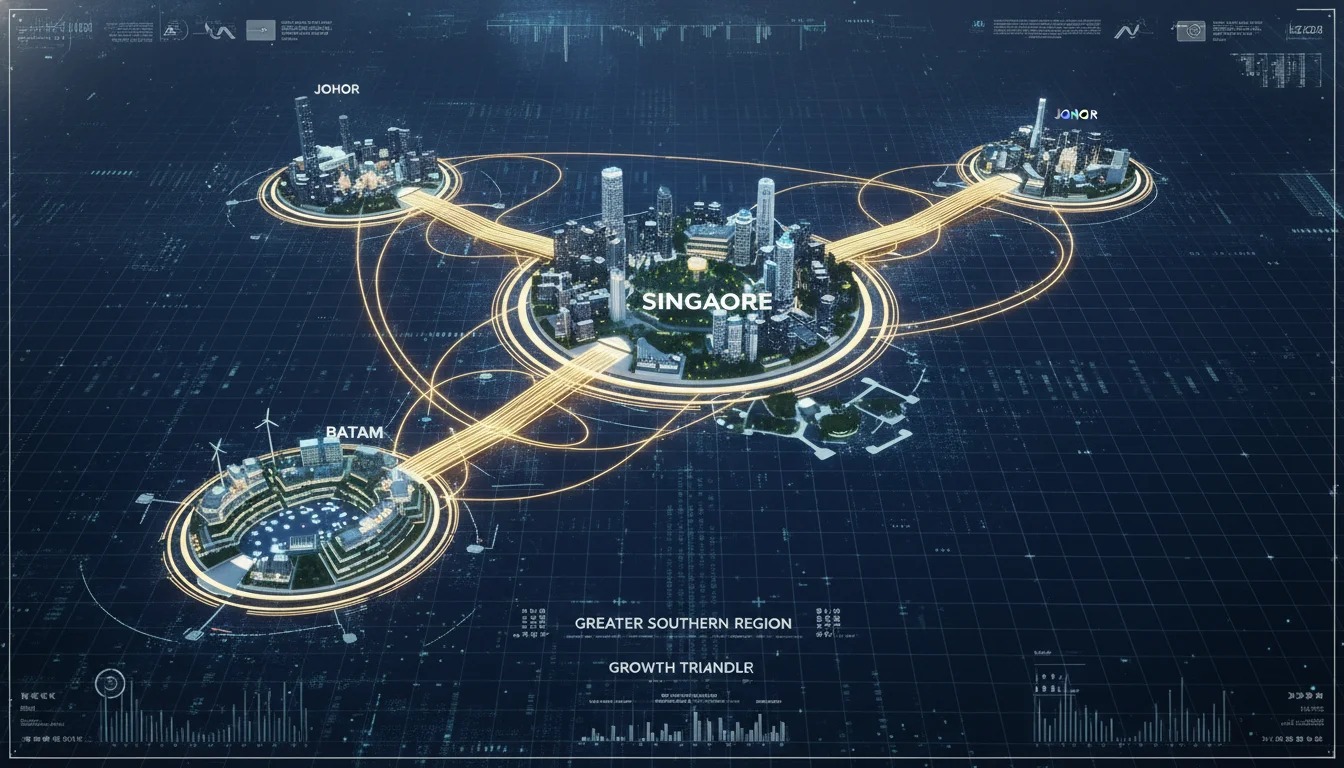
The concept of a “trusted data corridor” is emerging to address Singapore’s land and power constraints. The Singapore-Johor-Batam (SJB) ecosystem allows enterprises to distribute workloads across three jurisdictions while maintaining a unified digital footprint.
Johor: The Scalable Extension
Johor has become Southeast Asia’s fastest-growing data center hub, with over 47 facilities in development. Sedenak Tech Park alone exceeds 1 GW in power capacity. Johor offers the land and renewable energy needed for large-scale AI training, while its proximity to Singapore (sub-3 ms latency) ensures that latency-sensitive workloads can still be managed effectively.
Batam: The Strategic Backup
Batam, Indonesia, located just 20 km from Singapore, provides cost-efficient operations within a Special Economic Zone (SEZ). Batam currently has 12 operational subsea cables and offers tax incentives and streamlined regulatory support for data center operators. The Nongsa Digital Park (NDP) is a primary site for high-performance computing and hyperscale cloud deployments in Batam.
SJB Corridor Dynamics
| Location | Role in Ecosystem | Primary Advantages |
|---|---|---|
| Singapore | Governance & Latency Hub | High trust, financial regulation, fiber density |
| Johor | Scalable AI Training | Abundant land, 1 GW+ power capacity, lower cost |
| Batam | Redundancy & Cost Hub | SEZ incentives, subsea diversity, Java Island access |
This hub-and-spoke model enables enterprises to host AI training in Johor, ensure compliance through Singaporean standards, and maintain redundancy in Batam. Racks Central is one such operator building a seamless “regional AI corridor” across all three markets.
Future Outlook: Jurong Island and Low-Carbon Initiatives
Singapore is not merely managing its constraints but is actively innovating to create new capacity. In October 2025, the EDB and JTC Corporation announced 20 hectares on Jurong Island for a 700 MW low-carbon data center park. This project will integrate hydrogen-ready plants, battery storage, and ammonia power to enable sustainable growth.
The Jurong Island initiative alone could increase Singapore’s total data center supply by approximately 50%. This move, combined with the development of the Keppel Sakra Cogen Plant (expected to be operational in 1H 2026 as Singapore’s first hydrogen-compatible power plant), ensures that the country remains a competitive base for the next generation of AI-driven digital infrastructure.
Conclusion: Strategic Recommendations for Scaling
Scaling a business in the Asian market requires a nuanced understanding of Singapore’s evolving data center landscape. The city-state is no longer just a provider of raw space; it is a high-trust, high-efficiency hub for AI innovation and regional connectivity.
- 1. Prioritize AI-Ready Colocation: For enterprises deploying complex modeling or large-scale data simulations, facilities certified under the NVIDIA DGX-Ready program (like STT GDC Singapore 6) or featuring direct-to-chip liquid cooling (like Singtel DC Tuas) are essential.
- 2. Adopt a Corridor Strategy: Businesses should leverage the SJB (Singapore-Johor-Batam) corridor to balance cost and performance. Critical, latency-sensitive applications should remain in Singapore, while resource-intensive AI training can be moved to Johor to take advantage of greater power availability.
- 3. Embed Sustainability into Procurement: As the Green Data Centre Roadmap and Green Mark Platinum standards become industry benchmarks, enterprises must align with operators that prioritize energy efficiency and renewable energy procurement to mitigate long-term regulatory and cost risks.
- 4. Optimize Connectivity with Cloud On-Ramps: Utilizing private interconnects and software-defined networking (NaaS) will provide the necessary agility to manage multi-cloud environments effectively while ensuring the security and performance required for enterprise-grade workloads.
- 5. Utilize Singapore as a Multi-Cloud Launchpad: With the densest concentration of cloud on-ramps and subsea cable landing stations in the region, Singapore remains the most predictable and lowest-friction environment for entering the broader Southeast Asian market.
By aligning infrastructure strategies with Singapore’s move toward green, high-density, and cross-border digital integration, enterprises can successfully navigate the complexities of the Asian market and scale their operations to meet the demands of the next decade.