Logistics APIs for Startups: Route Optimization & Telematics
Strategic Integration of Route Optimization and Telematics APIs: A Comprehensive Framework for Logistics Startups
The logistics industry in the mid-2020s has transitioned from a supporting function of commerce into a primary engine of competitive differentiation, driven largely by the convergence of high-resolution geospatial data and sophisticated algorithmic processing. For emerging logistics startups, the ability to architect a robust technology stack is no longer a luxury but a fundamental requirement for survival in a market characterized by 53% of total supply chain costs being concentrated in the last-mile phase. The proliferation of Application Programming Interfaces (APIs) has democratized access to the same computational power utilized by global giants like UPS and Amazon, yet the strategic challenge remains in selecting and integrating these disparate services into a cohesive operational ecosystem.
This report evaluates the leading route optimization and telematics APIs available in 2025 and 2026, analyzing their technical architectures, economic models, and operational impacts. The analysis moves beyond a simple feature comparison to examine the underlying mechanisms—such as the transition from prescriptive to agentic AI and the integration of hardware-derived vehicle diagnostics—that define modern logistics intelligence.
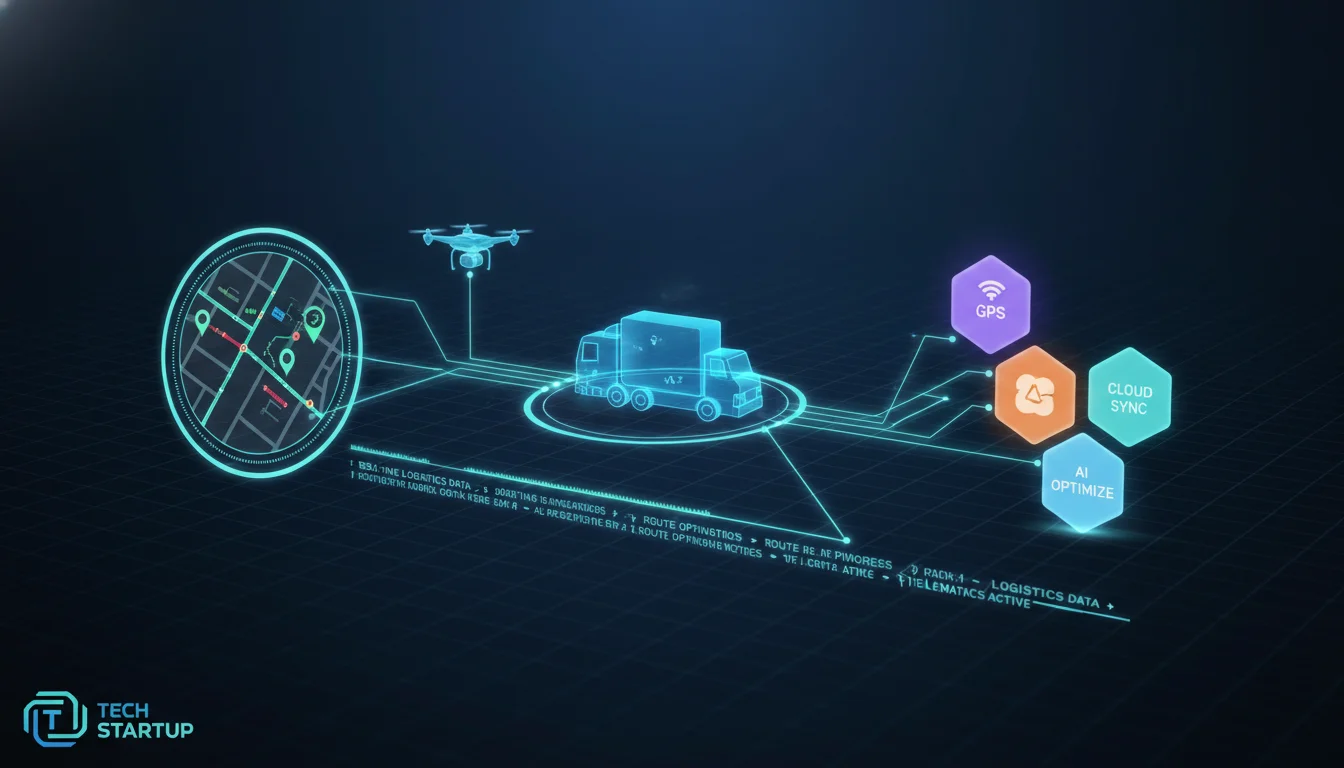
The Convergence of Algorithmic Routing and Hardware Telemetry
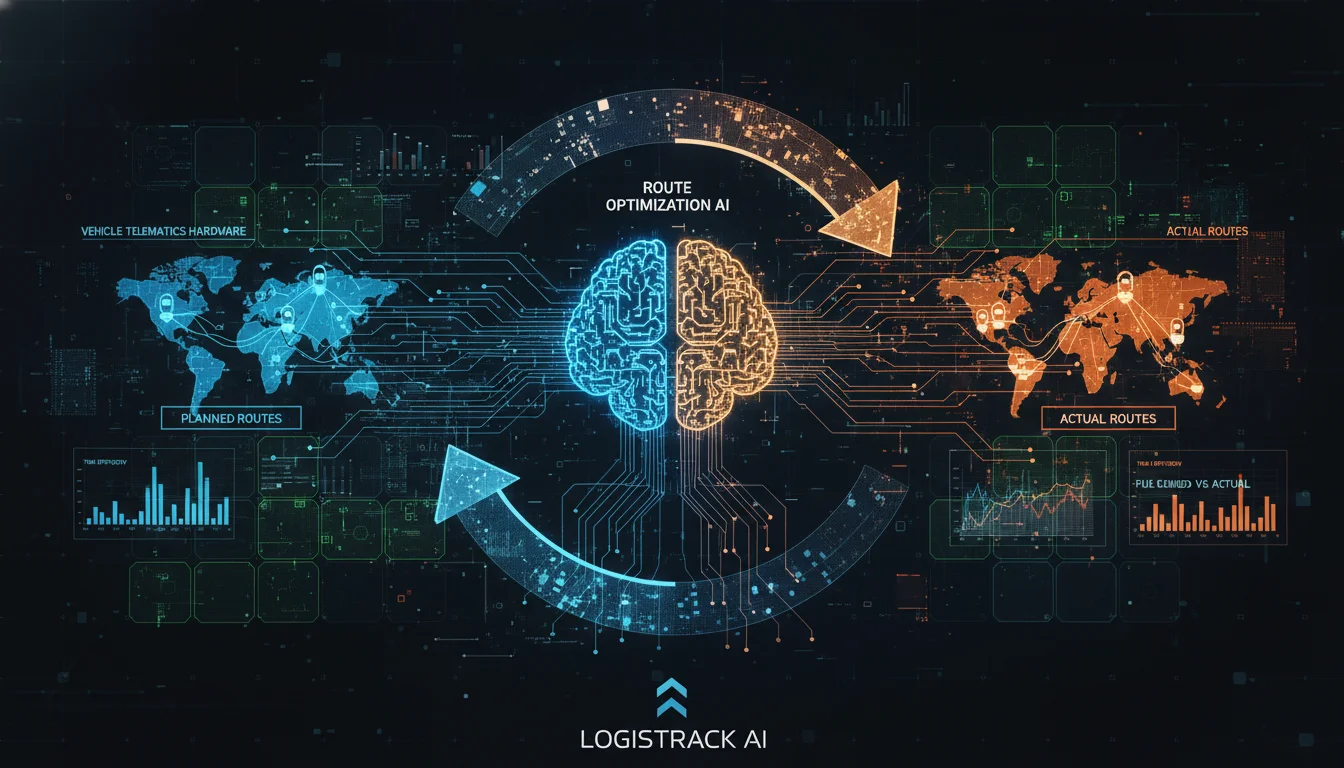
The distinction between planning a route and executing it has historically been a source of significant inefficiency in logistics. Route optimization software (ROS) serves as the brain, solving the mathematically complex Vehicle Routing Problem (VRP) by sequencing stops to minimize distance, time, or cost. Telematics, conversely, functions as the nervous system, utilizing hardware gateways to stream real-time data from a vehicle’s engine control module (ECM) and Global Positioning System (GPS).
The integration of these two domains through APIs allows for a continuous feedback loop known as “planned vs. actual” analysis. This synchronization ensures that the optimization engine is not operating in a vacuum but is instead consuming real-time variables such as traffic congestion, road closures, and driver behavior. For a startup, this integration is critical for maintaining Service Level Agreements (SLAs) and managing the high volatility of urban delivery environments.
| Domain | Primary Function | Key Data Points | Technology Stack |
|---|---|---|---|
| Route Optimization | Strategic sequencing and allocation | Delivery windows, vehicle capacity, driver skills | AI/ML, VRP Solvers, GIS |
| Telematics | Real-time monitoring and feedback | GPS, HOS compliance, diagnostics (OBD-II), fuel | GPS, Cellular ELDs, CAN-bus |
| Integrated API | Holistic operational orchestration | Planned vs. Actual, Dynamic rerouting, Automated ETAs | REST/SOAP/GraphQL, Webhooks, Kafka |
Architectural Fundamentals of Logistics APIs
For technical leadership within a startup, the choice of API architecture determines the long-term scalability and maintenance burden of the platform. The current landscape is dominated by RESTful APIs, which offer a lightweight, language-agnostic interface for mobile and web integrations. However, the specific needs of logistics—characterized by high-frequency updates and large data payloads—have led to the adoption of more advanced protocols.
Data Transfer Mechanisms: Polling vs. Webhooks vs. Streaming
The efficiency of a real-time tracking system is fundamentally limited by its data retrieval strategy. Traditional polling, where a client application repeatedly requests updates from a server, often introduces unacceptable latency and unnecessary server load. Consequently, modern providers like Samsara, Motive, and Route4Me prioritize the use of Webhooks and event-driven architectures.
In a Webhook-based model, the telematics or routing provider “pushes” data to the startup’s server only when a specific event occurs—such as a vehicle crossing a geofence, a driver completing a task, or a vehicle gateway becoming disconnected. This approach minimizes bandwidth and ensures that customer-facing ETAs are updated the moment a delay is detected in the field. For high-volume enterprise applications, Samsara provides a Kafka Connector that streams dozens of data entities, including asset readings and platform events, directly to a designated Kafka topic, ensuring that data is delivered as it is updated in the cloud.
Security and Authentication Protocols
As logistics systems handle sensitive data—including driver locations, customer addresses, and financial transactions—security is a paramount concern. The transition from legacy authentication methods to OAuth 2.0 represents a significant trend in the industry. For example, Azuga’s API v4 has moved away from static API keys and Basic Authentication toward an OAuth 2.0 framework utilizing bearer tokens and refresh logic. This model enhances security by ensuring that credentials are never stored in plain text and that access can be revoked at a granular level. Motive and Samsara employ similar high-standard authentication schemes, requiring Bearer Token HTTP headers for all REST API calls.
Modeling Constraints in the Optimization Engine
The effectiveness of a route optimization API is defined by the depth of its constraint library. A simple “traveling salesman” solver is insufficient for modern logistics, which requires the balancing of over 50 hard and soft constraints. Hard constraints are non-negotiable parameters, such as a vehicle’s maximum payload or a driver’s legally mandated Hours of Service (HOS). Soft constraints represent preferences that the algorithm attempts to satisfy, such as avoiding toll roads or grouping deliveries within a specific neighborhood to reduce “spaghetti” routes.
| Constraint Type | Description | Operational Impact |
|---|---|---|
| Time Windows | Strict arrival/departure periods for customers | Critical for SLA adherence and grocery/meal-kit delivery |
| Vehicle Capacity | Weight and volume limits of the fleet | Maximizes asset utilization and prevents overloading |
| Driver Certification | Matches technician skills to specific job requirements | Essential for field service and hazardous material (Hazmat) transport |
| Regulatory Compliance | HOS rules and truck-specific road restrictions | Avoids fines and ensures safety by keeping trucks on legal routes |
| Dynamic Re-routing | Adjusting routes in response to real-time events | Reduces idling and mileage when accidents or weather events occur |
Strategic Evaluation of Route Optimization APIs
For startups, selecting a routing API requires a balance between feature depth, ease of integration, and cost. The “Top 3” most frequently compared solutions—Onfleet, Routific, and Route4Me—each address a distinct segment of the market.
Onfleet: The Premium Last-Mile Standard
Onfleet has established itself as the premier solution for startups that prioritize a “polished” end-to-end delivery experience. Its API is built for high-volume execution, offering integrated features like barcode scanning, in-app driver chat, and age verification—a “dealbreaker” for cannabis and alcohol delivery startups. Onfleet’s predictive ETA engine utilizes machine learning to “catch fires” before they occur, providing dispatchers with “drift alerts” that indicate when a driver is falling behind schedule. While Onfleet is highly rated for its driver-friendly mobile app and stability under high volume, its per-task pricing model can become a significant expense as a startup scales.
Routific: Simplicity for Scheduled Operations
Routific is often the preferred choice for startups that manage next-day or recurring deliveries with predictable patterns. Its standout strength is its “best-in-class” optimization algorithm, which focuses on producing “driver-friendly” routes that avoid unnecessary doubling back or “spaghetti” patterns. Routific’s API is designed for simplicity, making it ideal for teams without extensive technical resources. However, its limitations in handling on-demand dispatch and multi-day routing make it less suitable for dynamic courier services or long-haul operations.
Route4Me: The Modular Marketplace
Route4Me offers the most complex and feature-rich platform in the comparison, largely due to its modular marketplace approach. This allows a startup to start with basic routing and add specialized plug-ins as they grow—such as territory management, curbside geo-fencing, or weather overlays. Route4Me’s Node.js SDK facilitates the creation of sequenced routes for multiple drivers across thousands of destinations, often returning optimized results in less than a second. While powerful, the modular pricing and higher complexity of the platform can lead to occasional GPS inconsistencies and a steeper learning curve for new users.
NextBillion.ai: High-Scale Constraint Modeling
A new entrant that has gained significant traction among margin-sensitive logistics firms is NextBillion.ai. Unlike legacy providers, NextBillion.ai offers a “pay-for-value” pricing model that can be structured per order, per asset, or per API call, providing high cost-predictability for growing startups. Their API supports up to 10,000 stops in a single optimization problem and offers 50+ configurable constraints, making it one of the few platforms capable of handling large-scale, nationwide trucking operations as effectively as local last-mile delivery. Their commitment to “truck-safe” routing ensures that heavy goods are only routed on roads that can accommodate their weight and height.
Telematics and Fleet Management: Hardware-Software Integration
While routing APIs plan the path, telematics APIs provide the real-world visibility required to manage a physical fleet.
The market leader, Geotab, and its primary competitor, Samsara, represent two distinct philosophies of hardware-software integration.
Geotab: The Open Platform Leader
Geotab’s dominance is rooted in its open-platform flexibility. Its SDK and APIs allow developers to build deeply customized applications, supported by a marketplace of over 430 fleet-focused solutions. Geotab’s “CurveLogic” algorithm is a critical innovation for startups concerned with data costs and resolution; it harmonizes fleet data collection by only transmitting data points when a significant change in vehicle status (such as speed or direction) occurs. This high-resolution data is essential for safety monitoring and predictive maintenance, allowing managers to identify “risky behaviors” like harsh braking or unbelted driving.
Samsara: The Integrated Cloud Ecosystem
Samsara is frequently described as the “Apple” of the telematics world, offering a highly intuitive, vertically integrated experience. Their “Connected Operations Cloud” combines real-time GPS, AI-powered video telematics, and ELD compliance in a single interface. For a startup that lacks a large engineering team, Samsara’s plug-and-play nature is a major advantage. However, the premium pricing and rigid, multi-year contracts with baked-in price increases are common points of contention in user communities. Samsara’s API is particularly strong in its support for “Kafka Streaming,” enabling real-time diagnostics and location data to be ingested into a startup’s own data lake for advanced analytics.
Motive: The Compliance and Safety Hub
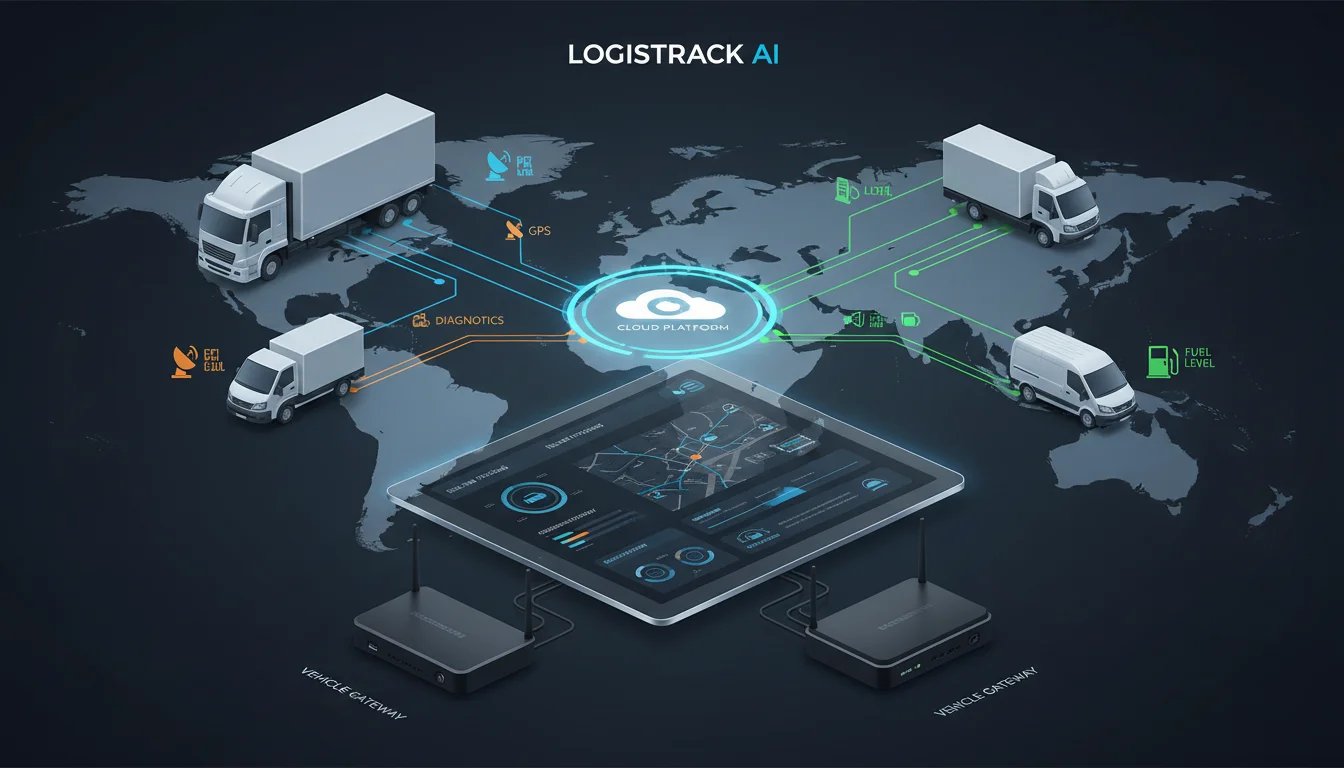
Motive (formerly KeepTruckin) has evolved from a simple ELD provider into a comprehensive operations platform. Its “Vehicle Gateway” hardware connects to all standard 9-pin, 6-pin, and OBDII ports, providing continuous tracking even if the driver is not logged into the mobile app. Motive’s API is extensive, offering endpoints for HOS logs, DVIR (Inspection Reports), fault codes, and driver performance scorecarding. For startups in the trucking sector, Motive’s “AI Coach” provides an automated avatar for personalized driver coaching, reducing the administrative burden on fleet managers.
| Telematics Provider | Key Competitive Advantage | API Ecosystem | Preferred Use Case |
|---|---|---|---|
| Geotab | Platform openness and SDK flexibility | 430+ marketplace apps, high-res data | Mixed fleets requiring custom integrations |
| Samsara | Seamless hardware/software UX | Robust REST API, Kafka streaming | Enterprises prioritizing ease of use |
| Motive | Driver-centric compliance and safety | Deep HOS and DVIR integration | Trucking and heavy freight compliance |
| Azuga | Gamification and 20-sec install | REST API v4, Salesforce integration | Service fleets focused on driver retention |
Economic Analysis of Implementation for Startups
The financial viability of a logistics startup is inextricably linked to the pricing models of its API providers. The industry has largely shifted from perpetual licenses to subscription and usage-based models, which align costs with operational growth.
Pricing Models and Total Cost of Ownership (TCO)
- Per-Task/Per-Order Pricing: Onfleet and Routific typically use this model. It is ideal for startups because it offers a low barrier to entry and ensures that tech costs only rise in lockstep with revenue. However, at high volumes, per-task fees can erode margins, making per-vehicle or per-user models more attractive.
- Per-Vehicle/Per-Asset Pricing: Telematics providers like Samsara and Geotab, as well as routing tools like OptimoRoute, use this model. While this provides predictable monthly costs, startups must pay for the technology even if a vehicle is idle.
- API Credit/Tiered Pricing: Mapping and matrix APIs like NextBillion.ai and Google Maps often use tiered models where the cost per call decreases as volume increases. This rewards scale but requires careful monitoring to avoid “API bill shock” when demand spikes.
ROI Benchmarks and Efficiency Gains
The implementation of these APIs is typically justified by rapid ROI, often achieved within 3 to 6 months. AI-powered route optimization is documented to reduce delivery times by up to 40% and lower fuel costs by 25%. For an enterprise fleet, even minor improvements are transformative; UPS, for example, saves 10 million gallons of fuel annually by reducing just a few miles from each driver’s daily route. For a startup, these efficiencies are the difference between a profitable delivery and a loss-making one.
| Provider | Entry Pricing | Pricing Model | ROI Metric |
|---|---|---|---|
| OptimoRoute | $35.10 / driver / mo | Per-vehicle | 15-25% fuel savings |
| Onfleet | $599 / month | Per-task (2,500 included) | 4.8+ driver app rating |
| NextBillion.ai | Custom Quote | Per-order/API/Asset | 35% reduction in op costs |
| Routific | $150 / month | Per-order (up to 1,000) | Best-in-class UI |
| Track-POD | $29 / driver / mo | Per-driver | Strong Proof of Delivery |
Sector-Specific Optimization and Technical Niche Applications
Not all logistics APIs are created equal, and startups must align their choice with their specific niche—whether it be hyper-local last-mile, regional line-haul, or long-distance long-haul trucking.
Last-Mile vs. Line-Haul Efficiency
Last-mile logistics focuses on the “final hop” to the consumer’s door, where urban density and customer communication are paramount. APIs like Onfleet and FarEye excel here by offering branded tracking links and “Where is my Order?” (WISMO) reduction tools.
Line-haul transportation involves the movement of freight between major hubs. Efficiency in this sector relies on load balancing and the reduction of “empty miles”—trips where a vehicle is traveling without cargo. Long-haul trucking adds another layer of complexity, requiring APIs that can manage multi-day schedules, legally mandated rest periods, and interstate compliance (ELD/IFTA). OptimoRoute’s “Multi-Day Long Haul” feature is a standout here, allowing dispatchers to plan routes up to five weeks in advance while ensuring that drivers finish their shift near their next day’s start point rather than returning to a central depot.
Specialized Equipment and Cold Chain Management
Startups operating in the food, pharmaceutical, or heavy equipment sectors require niche API capabilities. For “reefer” (refrigerated) fleets, Motive and Azuga provide temperature sensor integration and threshold alerts, ensuring that perishable cargo remains within safe limits throughout the journey. For heavy freight, NextBillion.ai and Sygic Professional Navigation offer “truck-legal” routing that accounts for vehicle weight, height, and hazardous material (Hazmat) classifications, preventing drivers from encountering bridge weight limits or restricted tunnels.
The Evolution Toward Agentic AI and Autonomy
The industry is currently transitioning from “prescriptive” AI—which follows fixed rules to create a plan—to “agentic” AI, which can autonomously manage and adjust that plan during execution. Locus is a pioneer in this space, offering an engine that continually improves by analyzing over 1.5 billion deliveries. As new information arrives—such as a last-minute cancellation or a traffic spike—agentic AI recalculates the entire fleet’s sequence in real-time, ensuring that the remaining stops are still optimized for the current reality.
This autonomy extends to hardware as well. In advanced markets, startups are integrating APIs for autonomous ground vehicles (AGVs) and delivery robots. Companies like Amazon and various European startups use robots (e.g., Scout, Ducktrain) for residential last-mile deliveries, reducing the walking distance for human couriers and enabling door-to-door delivery in congested urban centers.
Operational Case Studies: Practical Implementations
DHL: Global Scale AI Deployment
DHL has deployed AI route optimization across more than 50 countries, achieving a 10% saving in total logistics costs and a 15% improvement in on-time deliveries. By processing real-time traffic and road closures, the system reroutes drivers proactively, demonstrating that even the largest networks can achieve significant efficiency gains through algorithmic agility.
Furniture E-retailer: Increasing Delivery Accuracy
A furniture retailer struggling with vague 3-to-7-day delivery windows implemented FarEye’s predictive ETA and slot selection APIs. By allowing customers to choose their own delivery windows at checkout and providing branded tracking pages, the company increased its ETA accuracy to 97% and tripled its order volume without increasing its fleet size.
Construction-Equipment Supplier: Automating Warehouse Loading
A multinational tool manufacturer reduced technician wait times and driver idle hours by using FarEye’s workflow engine to automate dock sequencing and 3PL hand-offs. By providing 360-degree visibility into loading tasks, the firm cut warehouse loading times by 40% and improved its “On-Time In-Full” (OTIF) performance by 6%.
Bolxtine: High-Performance ML Customization
A logistics firm with 200 vehicles utilized a custom tech stack involving Python, TensorFlow, and AWS Lambda to predict traffic patterns based on historical data and weather events. This machine learning-driven approach resulted in a 40% reduction in delivery times and $500,000 in annual fuel savings, proving that startups can achieve enterprise-level performance by building bespoke layers on top of existing APIs.
Future Outlook: Electrification and Sustainability
By 2026, sustainability has shifted from a corporate social responsibility goal to a regulatory mandate.
Startups are increasingly utilizing APIs to manage the transition to Electric Vehicles (EVs).
EV Transition and Charging Management
Managing an EV fleet requires a different optimization logic that accounts for battery health, range limitations, and charging station availability. Geotab’s “EV Suitability Tool” helps startups identify which of their combustion routes are best suited for electrification based on real-world mileage data. New startups like Route10 AI use geospatial simulation and generative AI to model electrification risks and plan charging infrastructure placement. Furthermore, “chargitect” solutions optimize energy demand and battery health by managing when and where vehicles charge, often participating in flexibility markets to lower electricity costs.
The Role of Real-Time Carbon Tracking
Consumer demand for “green logistics” has led to the integration of carbon output measurement directly into routing APIs. Solutions like Locus and Fuelshine now calculate CO2 savings per route, allowing startups to provide customers with transparent environmental impact reports. Amazon, for example, has deployed 100,000 electric vans as of 2025 and uses “eco-lockers” to cut packaging waste by 25%, aiming for a net-zero last-mile delivery by 2040.
Conclusion: Navigating the Integration Maze
For a logistics startup, the “perfect” technology stack is not a single product but a carefully orchestrated symphony of APIs. The choice depends on the specific operational DNA of the company:
- For Hyper-Growth Last-Mile: Onfleet provides the most stable, all-in-one execution platform with a premium consumer experience, though it requires a willingness to accept higher per-task costs.
- For Margin-Sensitive Scale: NextBillion.ai and Geotab offer the most flexible API/SDK architectures, allowing startups to build custom, data-rich solutions that can handle massive volumes and complex trucking constraints.
- For Scheduled and Service Fleets: Routific and OptimoRoute offer best-in-class UI and multi-day planning capabilities, ensuring that drivers are happy and routes are efficient without requiring an army of developers.
The ultimate goal of these technologies is to move logistics from a reactive “tracking” function to a proactive “orchestration” function. By leveraging the synergy between hardware telemetry and algorithmic optimization, startups can ensure that they are not just moving goods from point A to point B, but are doing so with a level of intelligence that was previously the sole province of global shipping conglomerates. As the industry moves toward agentic AI and autonomous systems, the APIs selected today will form the foundation of the autonomous, sustainable, and hyper-efficient logistics networks of the future.