A professional legal setting overlooking the Port of New Orleans with a large container ship and offshore drilling rig in the background, cinematic lighting, 8k resolution, legal scales of justice icon subtly integrated.

The maritime industry serves as the foundational economic lifeblood of the United States Gulf Coast, with New Orleans functioning as its central logistical, commercial, and legal nerve center. Situated at the nexus of the Lower Mississippi River port complex and the Gulf of Mexico, the Port of New Orleans consistently ranks sixth in the nation for total tonnage. The region handles in excess of 70 million tons of domestic and foreign waterborne trade annually, acting as the premier transportation hub for a highly diverse range of products, including structural steel, petroleum, coal, manufactured goods, coffee, and rubber. The logistical infrastructure is further bolstered by the presence of nineteen operating petroleum refineries across Louisiana, ranking the state second only to Texas in refining capacity. This massive industrial ecosystem extends far beyond the coastline, encompassing a vast network of offshore drilling rigs, subsea pipelines, tugboats, and semi-submersible vessels operating throughout the Gulf of Mexico. Major global energy corporations, including Chevron, Shell, BP, ExxonMobil, ConocoPhillips, and Hess Corporation, anchor their offshore operations in these waters.

While this unparalleled maritime infrastructure drives significant economic growth and ensures domestic energy security, it simultaneously creates one of the most hazardous occupational environments in the modern world. Maritime workers face daily, life-threatening risks ranging from catastrophic vessel collisions and rig explosions to severe crushing injuries, asphyxiation in confined spaces, and falls on perpetually slick, moving decks. When these devastating injuries occur, the ensuing litigation is governed by a highly specialized, historically complex framework of federal admiralty law, primarily centered around the Merchant Marine Act of 1920, colloquially known as the Jones Act.

The adjudication of seaman injury compensation claims requires a highly specialized level of legal expertise. Consequently, New Orleans has developed an elite concentration of plaintiff and defense attorneys who dedicate their careers to navigating the intricate intersections of the Jones Act, the Longshore and Harbor Workers’ Compensation Act (LHWCA), the Outer Continental Shelf Lands Act (OCSLA), and the ancient doctrines of general maritime law. This comprehensive research report provides an exhaustive, nuanced analysis of the maritime personal injury landscape in New Orleans. It explores the foundational legal doctrines governing offshore injury compensation, examines the escalating macroeconomic pressures and the phenomenon of “nuclear verdicts,” and meticulously profiles the leading Jones Act attorneys and law firms driving the region’s high-stakes admiralty litigation.

Macroeconomic Pressures and the Geopolitics of the Jones Act

Before analyzing the specific mechanics of an offshore accident settlement, it is critical to understand the macroeconomic and geopolitical context that sustains the Jones Act. Originally enacted in the aftermath of World War I, the Merchant Marine Act of 1920 was designed to ensure the continuing viability of an American merchant marine fleet, which had suffered significant losses during the conflict. The statute mandates that all shipping between domestic United States ports must occur on vessels that carry the U.S. flag, are constructed within the United States, are owned by U.S. citizens, and are crewed by a workforce comprising at least 75 percent U.S. citizens or permanent residents. Over the past century, the primary function of the Jones Act has shifted slightly from pure national defense toward the protection of employment conditions, workplace safety, and compensation rights for American maritime workers.

Economic Criticisms and Federal Protectionism

The protectionist nature of the Jones Act remains highly politicized and subject to intense economic debate. Critics of the legislation argue that its stringent requirements artificially inflate domestic transportation costs, limiting competition and burdening consumers. Economic analyses suggest that prohibiting foreign vessels from transporting cargo between U.S. ports costs the American economy approximately $200 million annually in excess shipping expenditures. During times of acute crisis, such as the devastation following Hurricane Maria in Puerto Rico in 2017 or the geopolitical supply chain disruptions sparked by international conflicts, the federal government has historically issued temporary waivers of the Jones Act. These short-term suspensions are utilized to mitigate disruptions to the oil market and allow vital resources like natural gas, fertilizer, and coal to flow freely to U.S. ports via foreign-flagged vessels.

Despite these economic criticisms, the federal judiciary and the executive branch consistently uphold and reinforce the Jones Act’s mandates. In early 2026, Chief Judge Boasberg of the United States District Court for the District of Columbia dismissed a high-profile lawsuit brought by Kōloa Rum Co., a Hawaiian distillery. The plaintiff asserted that the Jones Act violated the Port Preference Clause and the Due Process Clause by forcing Hawaiian businesses to utilize expensive, limited domestic shipping options. The court concluded that rational-basis review does not permit the judiciary to invalidate legislation based on its perceived economic inefficiency, firmly cementing the constitutionality of the Act.

Furthermore, the federal executive branch has recently doubled down on maritime protectionism. Pursuant to Executive Order 14269, titled “Restoring America’s Maritime Dominance” and signed on April 9, 2025, the Executive Office of the President released “America’s Maritime Action Plan” on February 13, 2026. Developed in coordination with the Secretaries of State, Defense, Commerce, Labor, and Homeland Security, the plan aims to revitalize American shipyards through hundreds of billions of dollars in new capital investments. This massive influx of federal funding is explicitly designed to incentivize domestic shipbuilding and expand the U.S. maritime workforce, ensuring that the volume of maritime labor—and the subsequent volume of personal injury litigation—will remain robust along the Gulf Coast for decades to come.

Jurisdictional Dynamics and the Federal Bench in New Orleans

Because maritime commerce inherently traverses state and international boundaries, the jurisdiction governing offshore injuries is predominantly federal. The United States District Court for the Eastern District of Louisiana, physically located in New Orleans, serves as the primary judicial battleground for these high-stakes disputes. Due to the dense concentration of offshore corporate headquarters, vessel owners, and marine insurance syndicates in the region, the Eastern District frequently assumes jurisdiction over multidistrict litigation arising from catastrophic maritime disasters.

Judicial Conflicts of Interest and Systemic Scrutiny

Navigating the federal judicial landscape in Louisiana requires elite maritime attorneys to possess a nuanced understanding of potential systemic biases and ethical complexities. Recent investigative reports have drawn intense scrutiny to the financial portfolios of federal judges presiding over consequential environmental and maritime lawsuits in the state. Investigations revealed that several federal judges in the Eastern District of Louisiana presided over cases while maintaining financial investments or business connections to the petrochemical defendants appearing before them.

The nature of these ties varied significantly. For instance, records indicated that Judge Carl Barbier held over $100,000 in corporate bonds in five major oil companies while concurrently presiding over four different cases in which one or more of those specific companies was a named defendant. Similarly, Judge Nannette Jolivette Brown reported that she or her spouse traded tens of thousands of dollars in stock for major corporations like Exxon and Chevron while she actively presided over litigation involving those entities. Other conflicts involved judges who had previously worked as defense attorneys for oil conglomerates, received large sums from industry investments prior to ascending to the bench, or leased personal mineral rights to defendants.

Legal scholars and ethics experts note that, in many of these instances, the judges did not technically violate the strict parameters of judicial disqualification rules. However, from a systemic standpoint, the integration of the judiciary with the regional petrochemical economy creates a highly scrutinized environment for a maritime injury lawyer in Louisiana. Plaintiff attorneys must meticulously evaluate venue selection, judicial assignment history, and the potential for systemic industry bias when formulating a litigation strategy. The decision to pursue an offshore accident settlement through mediation versus taking a case to a federal jury trial is heavily influenced by these underlying jurisdictional realities.

Recent procedural rulings in the Eastern District further highlight the high financial stakes involved.

On February 6, 2026, Judge Barbier declined to vacate writs of sequestration sought by a drilling contractor operating on the outer Continental Shelf. The contractor had initiated an in rem action against the non-operating owners of several wells, successfully sequestering their interests to guarantee payment for services rendered after the lease operator filed for bankruptcy. Such rulings demonstrate the aggressive, highly technical legal maneuvers required to secure financial recovery in the offshore sector, whether the dispute involves corporate bankruptcy or catastrophic personal injury.

The Statutory Architecture of Offshore Injury Law

The legal remedies available to an injured worker in Louisiana are strictly dictated by their occupational classification, their specific job duties, and the geographic location of the injury. Land-based workers are universally relegated to state workers’ compensation systems. These state-level systems provide no-fault coverage for medical expenses and a fraction of lost wages, but they strictly prohibit the employee from filing a personal injury lawsuit against the employer for negligence. In stark contrast, maritime workers are classified under a matrix of specialized federal statutes that offer significantly broader, highly lucrative avenues for financial recovery.

The Jones Act: Defining Seaman Status and Negligence

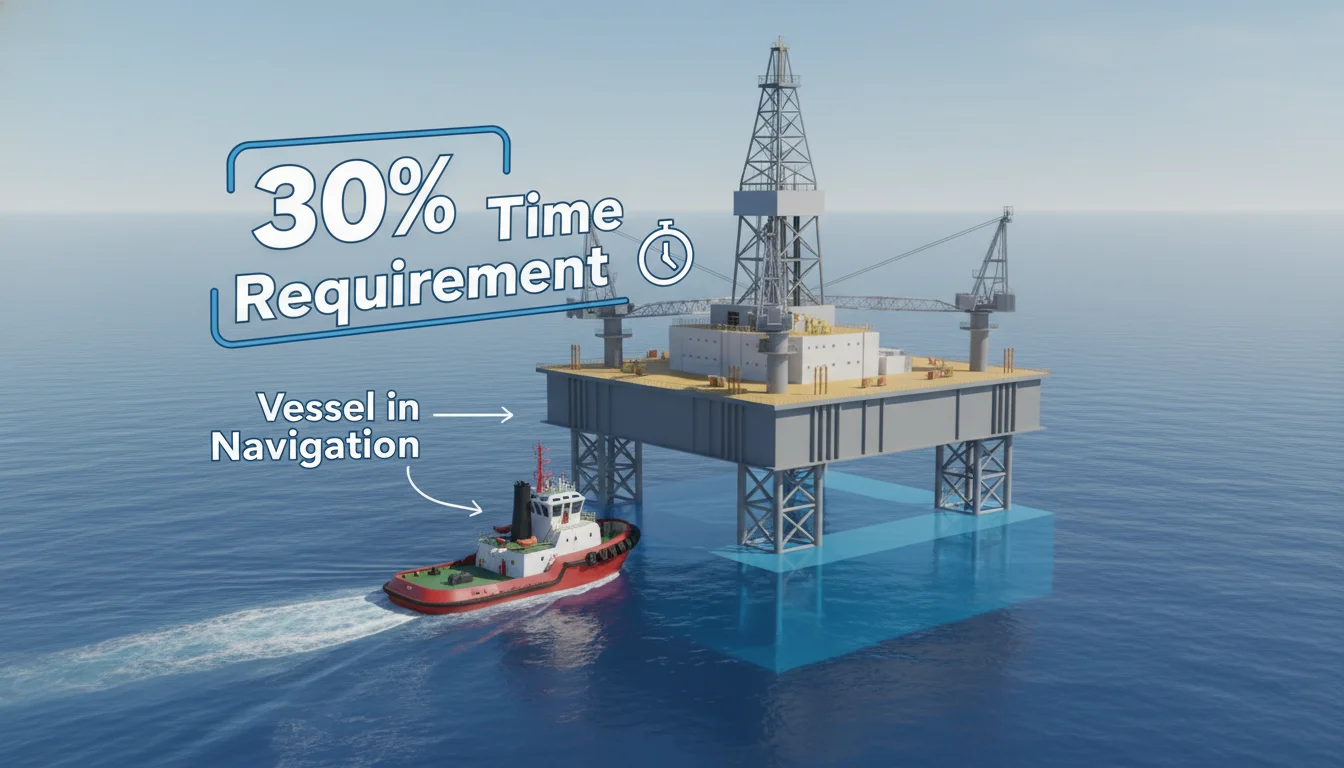
An educational 3D infographic showing a tugboat and a semi-submersible drilling rig with '30% Time Requirement' and 'Vessel in Navigation' text labels in a clean, modern legal style, soft daylight over blue water.

The Jones Act fundamentally alters the traditional employer-employee dynamic by granting qualifying “seamen” the statutory right to file a direct lawsuit against their employer for damages resulting from negligence or unsafe working conditions.

The 30 Percent Rule and Vessel in Navigation

To qualify for the robust protections of the Jones Act, a worker must establish their legal status as a “seaman”. Federal jurisprudence has established a two-pronged test for this classification. First, the worker’s duties must contribute to the function or mission of a vessel. Second, the worker must have a substantial employment connection to a “vessel in navigation”. Courts generally interpret this to mean the worker must spend at least 30 percent of their professional time aboard the vessel.

The legal definition of a “vessel” is broad and heavily litigated. It encompasses traditional oceangoing cargo ships, tankers, cruise ships, tugboats, ferries, and commercial fishing boats. Crucially, the definition also extends to mobile offshore drilling units (MODUs), including semi-submersible rigs, drillships, jack-up rigs, floating cranes, and dredges. To be considered “in navigation,” the vessel must be afloat, operational, and capable of movement, though it does not need to be actively sailing at the exact moment the injury occurs; it simply cannot be permanently drydocked or decommissioned. Deckhands, drillers, boat captains, cooks, engineers, tankermen, and mates routinely meet these stringent criteria.

The Featherweight Burden of Proof

Standard personal injury torts on land require the plaintiff to prove proximate cause—that the defendant’s negligence was the primary, direct cause of the injury. The Jones Act, however, employs a “featherweight” burden of proof. To prevail, a Jones Act attorney in New Orleans need only demonstrate that the employer’s negligence, or the negligence of any coworker, played any part—however slight—in causing the injury. Common grounds for establishing Jones Act negligence include the implementation of inadequate safety standards, insufficient crew training, the issuance of dangerous instructions by supervisors, the failure to maintain a safe work environment (e.g., trash-cluttered decks, unlit stairwells, or slippery surfaces), and the use of malfunctioning equipment.

General Maritime Law: The Doctrine of Unseaworthiness

Distinct from the negligence framework of the Jones Act, general maritime law imposes an absolute, non-delegable duty on vessel owners to provide a “seaworthy” vessel to their crew. An unseaworthiness claim does not require the plaintiff to prove that the vessel owner was negligent or even aware of the specific defect; it is a doctrine of strict liability. To succeed, the plaintiff must merely prove that a piece of equipment, a specific geographic area of the vessel, or the crew itself was unfit for its intended, ordinary purpose. A snapped mooring hawser, a defective deck winch, a lack of appropriate safety gear, or even the assignment of an incompetent or violently disposed captain can render a vessel legally unseaworthiness, triggering strict financial liability for the owner.

Maintenance and Cure

Regardless of who is at fault for the accident, all maritime employers are legally obligated under the ancient, fundamental doctrine of “Maintenance and Cure” to provide immediate support to injured seamen. “Maintenance” requires the employer to pay a daily stipend covering the basic living expenses (room and board) that the seaman would have received had they remained aboard the vessel. “Cure” mandates the payment of all reasonable and necessary medical expenses related to the injury. This obligation continues until the injured worker reaches Maximum Medical Improvement (MMI)—the medical threshold at which further intervention will no longer improve their underlying physical condition. Elite maritime injury lawyers frequently must intervene through emergency injunctions when employers or their insurance carriers attempt to prematurely declare a worker at MMI, or arbitrarily refuse to authorize necessary specialized surgeries or treatments.

Jurisdictional Exclusions: Fixed Platforms and the LHWCA

The legal landscape shifts dramatically based on the physical architecture of the offshore facility. Workers injured on fixed production platforms that are permanently attached to the seabed do not qualify as seamen, because a fixed platform is not legally classified as a vessel. Consequently, these workers are generally precluded from filing Jones Act claims against their direct employers.

Instead, their remedies are dictated by the Outer Continental Shelf Lands Act (OCSLA) or the Longshore and Harbor Workers’ Compensation Act (LHWCA). The LHWCA provides a robust federal workers’ compensation scheme for harbor workers, shipbuilders, ship repairmen, and longshoremen. While the LHWCA bars direct negligence lawsuits against the employer, Section 905(b) of the Act permits injured workers to pursue third-party liability claims against the owner of a vessel if the owner’s independent negligence caused the injury. For example, if a longshoreman is injured while loading cargo due to a defective crane owned by the shipowner (rather than the stevedoring employer), they may file a Section 905(b) action for damages.

Litigation Mechanics: Damages, Punitive Limitations, and the Nuclear Verdict

The financial valuation of seaman injury compensation claims is extraordinarily complex, driven by a combination of statutory allowances, rigid jurisprudential limitations on punitive damages, and the psychological dynamics of federal jury trials.

Compensatory Damages and Pure Comparative Fault

Under the Jones Act and general maritime law, an injured seaman can recover comprehensive compensatory damages. These include past and future medical expenses, past and future lost wages, loss of future earning capacity, and non-economic damages such as physical pain, mental suffering, permanent disability, and loss of enjoyment of life. Because specialized offshore workers—such as crane mechanics, toolpushers, drillers, and commercial divers—often command six-figure salaries, the calculation of future lost earning capacity over a projected twenty- or thirty-year career can rapidly escalate economic damages into the multi-million-dollar range.

However, the defense frequently relies on the doctrine of comparative fault to mitigate these damages. The Jones Act operates under a system of pure comparative fault. If a seaman is found by a jury to be partially responsible for their own injury—perhaps by failing to follow a safety protocol or ignoring a hazard—their financial recovery is reduced by their precise percentage of fault, but the claim is not entirely barred. For example, in a prominent New Orleans trial involving a deckhand injured while accessing an unsafe confined space, the federal jury awarded $1,531,000 in total damages but found the plaintiff to be 55 percent negligent. This resulted in a proportionately reduced net verdict of $688,000. This comparative fault dynamic forces plaintiff attorneys to aggressively reconstruct accidents using maritime safety experts to shift liability away from the worker and squarely onto the employer.

Restrictions on Punitive Damages: Miles and Estis Well Service

While compensatory damages can be vast, the recovery of punitive damages in maritime law is strictly limited by federal jurisprudence. Relying on the United States Supreme Court’s landmark 1990 decision in Miles v. Apex Marine Corp., federal appellate courts have restricted a seaman’s recovery to purely pecuniary (compensatory) losses in specific statutory contexts.

This restriction was starkly reinforced by the U.S.

Court of Appeals for the Fifth Circuit in the en banc decision of Estis Well Service LLC. The case arose after a 30-year-old worker, Skye Sonnier, was tragically killed in 2011 when a derrick toppled over on a barge-mounted drilling rig in Louisiana. Sonnier’s heirs, along with other injured workers, filed suit seeking both compensatory and punitive damages under general maritime law for unseaworthiness. In a divided 9-6 decision, the Fifth Circuit majority ruled that punitive damages are, by definition, “non-pecuniary losses”. Relying on the precedent set in Miles, the court held that plaintiffs cannot recover punitive damages in either wrongful death or personal injury actions predicated on general maritime law unseaworthiness or the Jones Act. This ruling heavily insulates vessel owners and operators from the threat of punitive financial devastation, forcing plaintiff attorneys to focus entirely on maximizing standard non-economic damages (pain and suffering) to secure large recoveries.

Emotional Distress and the “Zone of Danger” Test

Claims for purely emotional or psychological injuries—such as Post-Traumatic Stress Disorder (PTSD) without any accompanying physical trauma—are governed by the strict “zone of danger” test. To recover damages for the negligent infliction of emotional distress, the plaintiff must prove that they were located within the immediate zone of physical danger and experienced a genuine, imminent fear of death or physical injury due to an actual or near-miss accident.

The application of this standard is rigorous. In Ainsworth v. Penrod Drilling Corp., the Fifth Circuit denied an emotional injury claim because the plaintiff was situated 100 feet away from the point of impact of a crashing helicopter, failing to prove he possessed a reasonable fear of immediate injury to himself. Similarly, the Louisiana Supreme Court has clarified the standard for emotional distress following industrial accidents. In a consolidated ruling regarding an industrial explosion, the court noted that there was no substantial chemical release, no evacuation order, and no physical symptoms or medical treatment among the plaintiffs. The court ruled that general fear and anxiety following an explosion, in the absolute absence of physical damage or immediate threat, are insufficient for recovery.

Criminal Liability and the Rise of “Nuclear Verdicts”

While civil punitive damages are restricted, gross negligence in the maritime sector can still result in severe federal criminal penalties. On March 3, 2026, the Ninth Circuit Court of Appeals affirmed the criminal conviction of Jerry Boylan, the former captain of the M.V. CONCEPTION, under the federal statute punishing seaman’s manslaughter. The conviction stemmed from a catastrophic vessel fire that killed 34 people. The appellate court agreed with the Fifth and Eleventh Circuits that the manslaughter statute requires only a showing of simple negligence, not gross negligence, highlighting the severe personal liability captains and operators face when safety protocols fail.

In the civil arena, despite the restrictions on punitive damages, the maritime industry is currently experiencing a massive surge in “nuclear verdicts”—jury awards typically exceeding $10 million. These outsized verdicts are primarily driven by massive, highly subjective awards for non-economic damages, such as physical pain and mental suffering.

Defense and insurance analysts attribute this trend to sophisticated psychological strategies employed by plaintiff attorneys during jury trials. A primary tactic is “anchoring,” wherein the plaintiff’s counsel suggests an extraordinarily high monetary figure during their opening statements. By suggesting a massive figure at the outset, the attorney psychologically anchors the jury’s baseline, making an exorbitant demand for non-economic damages seem logical and necessary during closing arguments. Additionally, plaintiff attorneys frequently utilize per diem or per-minute calculations, asking the jury to assign a specific dollar value to every minute of the plaintiff’s suffering for the remainder of their projected life expectancy, which mathematically compounds into tens of millions of dollars.

The looming, unpredictable threat of a nuclear verdict fundamentally alters the dynamics of an offshore accident settlement. Insurance companies maintain vast proprietary databases of historical verdicts and utilize complex risk-assessment algorithms to determine precise settlement values. As the threshold for jury awards increases, insurers are increasingly pressured to offer substantially higher pre-trial settlements to avoid the volatility of a sympathetic jury pool. Elite plaintiff firms explicitly leverage this dynamic. By demonstrating a relentless willingness to take complex cases to trial, and by refusing to accept low early settlement offers, these firms force defense counsel and insurance syndicates to price the risk of a nuclear verdict directly into their settlement negotiations.

The Anatomy of Offshore Accidents and Forensic Technicalities

To effectively litigate offshore injury claims, a leading Jones Act attorney in New Orleans must possess deep technical knowledge of maritime engineering, rig architecture, vessel mechanics, and the specific daily operations of the crew. Accidents on the water present highly specific fact patterns requiring extensive forensic investigation.

  • Defective Safety Devices and Blowouts: Drilling rig accidents on jack-up rigs, drillships, and semi-submersibles are frequently caused by the catastrophic failure of blowout preventers (BOPs) and the loss of critical well barriers. These engineering failures result in massive blowouts and explosions, exposing workers to extreme thermal burns, blunt force trauma, and traumatic brain injuries. Litigating these claims requires consulting with petroleum engineers and metallurgical experts to prove equipment failure or lack of maintenance.
  • Deck Operations and Machinery Failures: A vast majority of Jones Act claims arise from routine deck operations. Unsafe lifting practices, improperly maintained deck winches, snapped hawsers (mooring lines under extreme tension), and crane malfunctions routinely cause severe crush injuries, amputations, and spinal trauma. For example, workers are frequently injured when required to lift excessively heavy equipment without adequate manpower. In one such instance, an offshore driller working as a barge foreman secured a $1.3 million settlement after suffering a lower back herniation when ordered to manually carry extremely heavy steel plates up to a crane without the assistance of a mandated two-man team.
  • Confined Space Hazards: Working in the poorly ventilated, physically restricted hulls of vessels, tanks, or rig pontoons poses high risks for toxic inhalation, asphyxiation, and devastating falls. As noted previously, unsafe access to these confined spaces regularly results in significant jury verdicts when employers fail to provide proper scaffolding, lighting, or ventilation.
  • Vessel Collisions and Capsizing: Errors in navigation by distracted or exhausted river pilots, adverse weather conditions in the unpredictable Gulf of Mexico, and mechanical steering failures lead to catastrophic vessel collisions and capsizing events. These incidents are particularly common involving crew boats, lift boats, dredges, and tugboats operating on the Mississippi River or in transit to offshore platforms.
  • Helicopter and Transport Crashes: Transporting crews to and from deep-water platforms via helicopter presents immense risks. Mechanical failures or pilot error during these transfers often result in high-fatality crashes or severe traumatic brain and spinal cord injuries for survivors.

Plaintiff Advocacy: Profiles of Elite New Orleans Maritime Law Firms

The plaintiff bar in New Orleans is populated by highly decorated, fiercely competitive law firms that specialize in dismantling corporate defense strategies. The following firms and individual attorneys represent the vanguard of maritime and Jones Act litigation in the Gulf region. These practitioners are distinguished by their peer-reviewed accolades, historical settlement data, and court-appointed leadership roles in complex multidistrict litigation.

Table 1: Notable High-Value Maritime Injury Settlements & Verdicts in the Gulf Region

Plaintiff Law Firm Amount Recovered Incident / Case Description
Clayton, Frugé & Ward $411,000,000 Catastrophic Work Accident
Arnold & Itkin $193,000,000 Offshore Pipeline Explosion
Arnold & Itkin $125,000,000 Dredge Worker Fatality (Explosion/Burns)
The Young Firm $35,000,000 Jury Verdict in Houma, LA
Zehl & Associates $30,000,000 Jones Act Seaman (Traumatic Brain Injury)
Lewis, Kullman, Sterbcow & Abramson $20,000,000+ Offshore Oilfield Helicopter Crash (Brain Injury)
The Young Firm $16,000,000 Settlement in New Orleans Federal Court
Lewis, Kullman, Sterbcow & Abramson $14,421,477 Deepwater Horizon Rig Explosion (Four Workers)
Zehl & Associates $9,100,000 Jack-Up Rig Offshore Injury
The Young Firm $6,000,000 Offshore Brain Hemorrhage (Inadequate Care)

Lewis, Kullman, Sterbcow & Abramson, LLC (LKSA)

LKSA is universally regarded as a premier maritime and admiralty litigation firm, possessing over 130 years of combined legal experience. The firm focuses almost exclusively on complex, high-stakes litigation involving the most catastrophic incidents on navigable waters.

Key Attorneys and Accolades: The firm’s leadership includes Managing Member Paul M. Sterbcow, alongside Members David Abramson, Beth Abramson, Jessica Ibert, and Ian Taylor. Sterbcow is a nationally recognized authority in admiralty law.

His elite status is cemented by his induction as a Fellow into both the American College of Trial Lawyers and the International Academy of Trial Lawyers—invitation-only organizations representing less than 1 percent of trial attorneys in North America. Sterbcow has been consistently recognized by The Best Lawyers in America from 2016 through 2026, and was named the New Orleans Bar Association’s Maritime Lawyer of the Year in 2017. He also maintains a 10.0 Superb rating on AVVO and an AV® Preeminent rating from Martindale-Hubbell.

Litigation Strategy and Leadership

LKSA’s strategic acumen is evidenced by the deep trust placed in the firm by the federal judiciary. The firm is frequently appointed to lead prominent multidistrict litigations. During the Deepwater Horizon disaster, Paul Sterbcow was appointed to the Plaintiffs’ Steering Committee and served as Co-Lead Trial Counsel for the pivotal liability trial against BP. Beth Abramson, Jessica Ibert, and Ian Taylor also served on the Trial Team that secured the massive liability verdict. More recently, Sterbcow was appointed as Plaintiffs’ Co-Liaison Counsel in the tragic SEACOR Power lift boat disaster, with Ian Taylor serving on the Executive Committee.

Notable Case Results

LKSA relies on an aggressive trial-focused strategy, preparing every case with the expectation of facing a jury to maximize settlement leverage. This approach has yielded staggering results, including:

  • A settlement exceeding $20,000,000 for a traumatic brain injury resulting from an offshore oilfield helicopter crash.
  • A settlement in excess of $14,421,477 representing four rig workers severely injured in the Deepwater Horizon explosion.
  • A $4,575,000 settlement for drowning deaths following a commercial vessel collision.
  • A $2,757,008 federal jury award for a rig crew member who suffered an arm-crushing injury.
  • A $1,139,828 judicial award for a seaman’s leg and cervical spine injury.

Lambert Zainey Smith & Soso, PLC

Operating from their dedicated office at 701 Magazine Street in New Orleans, Lambert Zainey has represented injured maritime workers for over 40 years. The firm focuses extensively on complex Jones Act, LHWCA, and OCSLA cases.

Key Attorneys

  • Hugh “Skip” Lambert: A founding partner with decades of intense courtroom experience, Lambert specializes in high-stakes vessel collisions and complex Jones Act matters.
  • J. Christopher Zainey, Jr.: A former Federal Judicial Law Clerk to the Honorable James J. Brady in the U.S. District Court for the Middle District of Louisiana. Zainey leverages his insider knowledge of federal procedural mechanisms to litigate catastrophic injury claims. His high-profile experience includes serving on the Plaintiff’s Steering Committee’s Trial and Deposition Teams for the Deepwater Horizon MDL, representing governmental entities in the National Opiate Litigation MDL, and representing New Orleans Saints legend Jonathan Vilma in his dispute against the NFL.
  • Jacki Smith: A partner highly experienced in securing LHWCA benefits and litigating offshore platform accidents against major energy companies.

Litigation Philosophy and Recoveries

Lambert Zainey explicitly markets its philosophy of aggressively preparing every case for trial rather than seeking quick, undervalued settlements. They emphasize direct attorney-client involvement, rejecting the “quick sleazy dollar” approach common in high-volume personal injury mills. Their vast financial resources allow them to litigate protracted, multi-year battles against multinational maritime conglomerates without the financial constraints that often force smaller firms to settle early. The firm reports total aggregate recoveries exceeding $1 billion for maritime accident victims, underscored by a massive $330 million settlement achieved in a rapid 12-month timeframe.

The Young Firm

Located in the central business district at 400 Poydras Street—directly adjacent to the Eastern District of Louisiana federal courthouse—The Young Firm dedicates its entire practice exclusively to advocating for injured maritime workers.

Key Attorneys

  • Timothy J. Young: The founder and owner, Young possesses over three decades of specialized experience handling Jones Act and general maritime cases. He holds a 10.0 Superb AVVO rating, an AVVO Client’s Choice Award, and is Martindale-Hubbell Peer Rated for High Professional Achievement.
  • Tammy D. Harris & Megan C. Misko: Both seasoned attorneys with deep roots in Louisiana jurisprudence, focusing strictly on Jones Act and General Maritime Law litigation.

Litigation Philosophy & Recoveries

The Young Firm differentiates itself from competitors by strongly warning prospective clients against firms that prioritize massive class-action or mass-tort bundling. The firm argues that law firms boasting of “multi-billion-dollar” aggregate recoveries often achieve those numbers through mass torts where thousands of cases are bundled together. In such scenarios, the attorney’s role is diluted, and the individual injured worker often receives minimal compensation. Instead, The Young Firm focuses intensely on singular, individualized representation to maximize the recovery for the specific worker.

Their case results reflect the efficacy of this targeted, individualized approach:

  • $35,000,000 massive jury verdict in Houma, Louisiana.
  • $16,000,000 settlement secured in New Orleans Federal Court.
  • $10,000,000+ settlement for oilfield workers injured across Louisiana and Mississippi.
  • $6,000,000 settlement in Lake Charles, Louisiana, for an offshore worker who suffered a brain hemorrhage that was severely exacerbated by the employer providing inadequate, inappropriate medical treatment at a small land clinic rather than a specialized hospital.

The Chopin Law Firm LLC

Managing partner Justin M. Chopin operates a highly versatile, award-winning practice licensed in Louisiana, Texas, and Mississippi. The firm handles an array of commercial litigation and personal injury claims. Demonstrating their dominance in the local market, attorneys from The Chopin Law Firm represented nearly 30 percent of all personal injury attorneys featured in New Orleans Magazine’s 2025 Top Lawyers list.

Key Attorneys

  • Justin Chopin: Consistently recognized by Super Lawyers and the National Trial Lawyers Top 40 Under 40, Chopin possesses an AV® Preeminent Rating from Martindale-Hubbell and is a member of the elite Million Dollar Advocates Forum. Peer reviews frequently cite his deep legal knowledge, analytical capability, and diligent, upfront mediation skills when dealing with insurance companies.
  • Jacques DeGruy: Specifically recognized by New Orleans Magazine for his peer-reviewed excellence in Admiralty & Maritime Law.
  • Richard Chopin & Philip Lorio IV: Highly experienced trial counsel handling complex commercial and personal injury litigation.

Notable Recoveries

While handling a broad spectrum of personal injury, medical malpractice, and commercial disputes, the firm has reclaimed over $109,878,510 in total aggregate damages for its clients. Their aggressive litigation strategies are highlighted by a staggering $12,550,000 medical malpractice settlement and multi-million-dollar commercial vehicle accident verdicts. Within the maritime sector, they regularly handle complex OCSLA claims, commercial fishing accidents, and severe injuries occurring on inland barges, drill ships, and floating cranes.

Morrow & Sheppard LLP

Although headquartered in Houston, Texas, Morrow & Sheppard LLP routinely litigates high-value maritime claims in federal courts across Louisiana and the entire Gulf Coast. The firm operates purely on a contingency fee model, ensuring clients pay no upfront costs.

Key Attorneys and Strategy

Founding partners Nick Morrow and John D. Sheppard possess highly unique, formidable backgrounds. Both began their legal careers as equity partners and senior associates at prestigious, massive international corporate defense firms, including Fulbright & Jaworski (now Norton Rose Fulbright). In these roles, they handled high-stakes defense litigation involving millions and billions of dollars for corporate conglomerates. This extensive insider knowledge provides them with a profound, tactical understanding of exactly how major maritime corporations and insurance companies value, defend, and ultimately settle lawsuits.

Alongside trial attorneys Michael R. Null and Daniel E. Sheppard, the firm applies strict comparative fault analysis to aggressively dismantle defense arguments regarding contributory negligence. Their targeted focus on catastrophic offshore explosions, dangerous deck operations, and jack-up rig accidents has resulted in immense financial recoveries, including:

  • $12,560,000 for a catastrophic oilfield explosion and burn injury.
  • $5,912,630 in attorneys’ fees and expenses alone for a single maritime work injury.
  • $4,931,405 and $4,096,671 in various complex maritime lawsuits.
  • $3,300,000 in attorneys’ fees resulting from a specific Jones Act settlement.

Leger & Shaw

Founded in 1979 and headquartered in New Orleans, Leger & Shaw possesses decades of experience in admiralty law, class actions, and toxic torts. Led by Walter Leger Jr., Frank Shaw, and Walter Leger III, the firm is known for its uncompromising dedication to complex litigation.

The firm’s influence extends far beyond individual personal injury claims into the realm of massive environmental maritime disasters.

Members of the firm were deeply involved in the historic Deepwater Horizon litigation, assisting in the complex negotiation and processing of $13 billion in settlement payments across 420,000 claims. Furthermore, they negotiated an $80 million recovery for Orleans Parish and related entities, and nearly $400 million in payments for local coastal governments affected by the spill.

Other Notable Plaintiff Entities Shaping the Market

  • Clayton, Frugé & Ward (Baton Rouge): This firm has fundamentally shifted regional settlement baselines with record-breaking recoveries, including a $411 million work accident settlement, a $171 million plant explosion recovery, and a total exceeding $1 billion in maritime and industrial damages.
  • Arnold & Itkin: Dominating the Gulf of Mexico maritime space, this powerhouse firm has secured a $193 million settlement for offshore pipeline explosion victims, a $125 million recovery for a dredge worker’s widow following a fatal burn incident, and $40 million for three Jones Act seamen injured in a vessel collision caused by poor corporate management.
  • Zehl & Associates: With a specific focus on the offshore drilling industry, they recently announced a $1.3 million settlement for a Louisiana barge foreman suffering a low back injury due to unsafe lifting protocols. Their historical results include a $30 million settlement for a Jones Act seaman with a traumatic brain injury and $9.1 million for a jack-up rig injury.
  • Bruno & Bruno LLP: Led by Stephen P. Bruno, this firm brings six decades of experience to the New Orleans market, securing significant results such as a $1.5 million FEMA trailer explosion settlement and multiple $800,000+ maritime settlements.
  • Lamothe Law Firm: Regularly secures high six-figure Jones Act settlements, including recent recoveries of $650,000 and $625,000 for back injuries sustained in maritime accidents.
  • O’Bryan Law: Demonstrated the viability of confined space claims by securing a $1.53 million federal jury verdict (net $688,000 after comparative fault reduction) for a 43-year-old seaman injured due to unsafe access protocols.

Table 2: Leading New Orleans Maritime Attorneys & Peer-Reviewed Accolades

Attorney Name Law Firm Notable Recognitions & Accolades
Paul M. Sterbcow Lewis, Kullman, Sterbcow & Abramson Fellow, American College of Trial Lawyers; Best Lawyers “Lawyer of the Year” (Admiralty)
Justin M. Chopin The Chopin Law Firm AV® Preeminent Rating; Million Dollar Advocates Forum; Super Lawyers
Timothy J. Young The Young Firm 10.0 AVVO Superb Rating; Martindale-Hubbell Peer Rated High Professional Achievement
J. Christopher Zainey, Jr. Lambert Zainey Smith & Soso The National Trial Lawyer Top 100; Former Federal Judicial Law Clerk
André J. Mouledoux Mouledoux, Bland, Legrand & Brackett Top Rated Admiralty & Maritime Law Defense Lawyer (Super Lawyers)
Matthew A. Moeller The Moeller Firm America’s Top 100 High Stakes Litigators; Professional Mariner Magazine Top Lawyer
Jason P. Waguespack Galloway Johnson Tompkins Burr & Smith Tulane Admiralty Law Institute Advisory Board; Associate Professor of Law at Tulane

The Defense Bar: Strategies for Mitigating Catastrophic Maritime Liability

The astronomical figures sought by plaintiff firms are aggressively countered by elite maritime defense firms based in New Orleans. These firms represent global shipyards, massive international insurance syndicates (P&I clubs), and multinational energy corporations. They utilize a combination of rapid casualty response, technical maritime forensics, and complex contractual maneuvers to systematically mitigate their clients’ liability.

Mouledoux, Bland, Legrand & Brackett (MBLB)

MBLB is a premier, full-service defense firm renowned internationally for its handling of general casualty litigation, LHWCA claims, Defense Base Act cases, and marine insurance defense. Attorney André J. Mouledoux is consistently top-rated by Super Lawyers in Admiralty and Maritime Law.

MBLB’s primary strategy relies heavily on immediate, aggressive on-site casualty investigations. Following an accident, the firm rapidly deploys to gather physical evidence, depose witnesses before plaintiff narratives can solidify, and control early medical assessments. By establishing the facts early, the firm proactively pushes claims toward favorable, highly controlled pre-trial resolutions before plaintiffs have the opportunity to anchor high emotional damages in front of a jury. Furthermore, the firm specializes in limiting liability in highly complex scientific cases involving catastrophic brain and spinal injuries, toxic torts, environmental spills, and asbestos/mesothelioma exposure, utilizing a deep bench of industrial and marine transport experts.

The Moeller Firm (Grasso Moeller LLC)

Led by Matthew A. Moeller, this firm focuses extensively on representing vessel owners, operators, marine contractors, and major shipyards. Moeller relies on a highly technical, preemptive understanding of maritime commercial contracts to insulate his clients from personal injury exposure.

By meticulously drafting and invoking Master Service Agreements (MSAs), master time charter agreements, and third-party boarding agreements, Moeller systematically shifts liability away from his clients via complex, cascading contractual indemnity clauses. When litigation is unavoidable, Moeller frequently utilizes aggressive pre-trial motions to defeat claims. He has successfully obtained summary judgments dismissing Jones Act suits based on the doctrine of forum non-conveniens, and has defeated negligence claims filed by longshoremen under Section 905(b) of the LHWCA. His trial record is equally formidable, including serving as lead counsel to obtain a complete defense verdict in a three-week jury trial where the plaintiff sought over $5 million in damages. Moeller’s expertise is so highly regarded that he serves as outside general counsel for the largest liftboat owner and operator in the Gulf of Mexico.

Jones Walker LLP and Corporate Regulatory Defense

As a massive, internationally recognized corporate law entity, Jones Walker fields an extensive Admiralty and Maritime Law practice group containing dozens of recognized attorneys, including J. Kelly Duncan, Tod Everage, Richard D. Bertram, and William C. Baldwin. Their approach integrates transactional foresight with aggressive litigation defense. They represent Fortune 500 corporations, established energy conglomerates, and emerging alternative energy enterprises in all aspects of offshore, midstream, and environmental regulatory compliance. By ensuring their clients’ daily operations strictly adhere to Coast Guard and federal safety regulations, they proactively eliminate the conditions that plaintiff attorneys rely upon to prove Jones Act negligence or general maritime unseaworthiness.

King & Jurgens and Galloway

Other prominent defense figures include Henry King of King & Jurgens, who focuses on the financial architecture of the maritime industry, representing major marine lenders in vessel financings, ship mortgages, and complex bareboat charters. Jason Waguespack of Galloway serves as an Associate Professor of Law at Tulane University and sits on the National Advisory Board of the Tulane Admiralty Law Institute. Waguespack represents owners, charterers, and P&I clubs in complex marine casualty losses, cargo claims, and high-stakes personal injury defense, bringing an academic rigor to the defense of international maritime law disputes.

Conclusion

The intersection of immense maritime commerce and ancient admiralty law in New Orleans creates a highly lucrative, fiercely contested, and intellectually demanding litigation environment. For offshore workers suffering catastrophic injuries, the Jones Act, the LHWCA, and general maritime law provide indispensable mechanisms for profound financial recovery. These statutes allow injured seamen to secure compensation for lost future earning capacity and severe non-economic suffering that standard state workers’ compensation systems explicitly deny.

However, achieving these recoveries is fraught with procedural and jurisprudential hurdles.

The aggressive invocation of pure comparative fault, strict federal appellate limitations on punitive damages outlined in cases like Estis Well Service, and the sheer forensic complexity of proving vessel unseaworthiness necessitate representation by highly specialized, heavily resourced plaintiff attorneys.

As the psychological threat of “nuclear verdicts” continues to fundamentally alter the actuarial risk calculus for global maritime insurers, leading New Orleans plaintiff firms—such as Lewis, Kullman, Sterbcow & Abramson, Lambert Zainey, and The Young Firm—leverage their vast trial experience and historic multi-million-dollar settlements to extract maximum value from defense syndicates during negotiations. Simultaneously, elite defense practices like MBLB and The Moeller Firm continuously refine their contractual indemnification strategies, deploy rapid-response casualty investigations, and execute sophisticated summary judgment motions to mitigate these massive financial exposures.

Ultimately, as the federal government pumps hundreds of billions of dollars into American shipbuilding initiatives under “America’s Maritime Action Plan” to secure domestic maritime dominance, the volume of commercial activity in the Gulf will only intensify. Driven by this sustained macroeconomic growth and the inherent, unavoidable dangers of offshore drilling and marine transport, New Orleans will undoubtedly remain the preeminent global epicenter for high-stakes maritime injury and Jones Act litigation for the foreseeable future.