RAID Data Recovery San Francisco | Emergency Server Services
Introduction to the San Francisco Data Recovery Landscape
The San Francisco Bay Area stands as the undisputed epicenter of the global neo-industrial technology boom, cultivating a unique economic environment where data is the primary currency and the foundational asset of thousands of enterprises. As corporations aggressively scale their digital footprints, the underlying data architectures supporting these operations have grown exponentially in both capacity and complexity. The reliance on high-capacity Redundant Arrays of Independent Disks (RAID), Storage Area Networks (SAN), Network-Attached Storage (NAS), and hyper-converged virtualized environments is absolute across almost every sector, from financial services to biotechnology. However, despite the implementation of multi-tiered redundancy protocols, immutable backups, and distributed cloud architectures, data loss remains a statistical inevitability. Hardware degradation, sophisticated malicious actors, software anomalies, and human error continuously threaten the integrity of commercial storage repositories. When an enterprise server fails, the resulting operational paralysis translates into catastrophic downtime, severe compliance breaches, and millions of dollars in lost revenue, fundamentally threatening business continuity.
Consequently, a highly specialized, mission-critical sector of emergency data recovery providers operates within the San Francisco geographic radius. These entities offer rapid, round-the-clock interventions for catastrophic array failures, servicing clients ranging from local startups to Fortune 500 conglomerates like Google, Facebook, AT&T, and Boeing. However, the analysis of these service providers reveals a highly stratified market characterized by a profound technological divide. While numerous brokerages and diagnostic drop-off centers claim enterprise-grade capabilities, successful physical data recovery relies on capital-intensive infrastructure. This includes meticulously maintained ISO-certified cleanrooms, advanced X-ray diagnostic imaging, proprietary decryption algorithms, and micro-engineering tools capable of performing ball grid array (BGA) rework on solid-state devices.
Furthermore, the recovery of intellectual property, trade secrets, and protected health information (PHI) necessitates the enforcement of stringent compliance frameworks. The intersection of the System and Organization Controls (SOC) 2 Type II framework and the Health Insurance Portability and Accountability Act (HIPAA) forms the regulatory bedrock upon which true enterprise data recovery firms must operate. This comprehensive research report provides an exhaustive, nuanced examination of the technical capabilities, security compliance matrices, market economics, operational efficacy, and friction points of enterprise data recovery services operating in the San Francisco Bay Area, offering a critical guide for procurement teams, Chief Information Security Officers (CISOs), and IT administrators facing catastrophic data loss events.
The Macro-Environmental and Geopolitical Context of San Francisco
To understand the necessity of emergency data recovery services in San Francisco, one must first analyze the unique environmental, economic, and geopolitical pressures that define the region. San Francisco’s economic resilience relies heavily on continuous technological operations, a fact underscored by the initiatives of the local government and commercial advocates. The San Francisco Chamber of Commerce, under the leadership of President and CEO Rodney Fong, alongside municipal leaders such as Assessor-Recorder Carmen Chu and Treasurer José Cisneros, established an Economic Recovery Task Force to guide the city through the COVID-19 pandemic and ensure the revival of local businesses and employment. The resulting policy recommendations, drawn from months of collaboration across diverse working groups, highlighted the critical need for resilient infrastructure, clean and efficient transit systems, and robust data tracking to sustain downtown economic indicators. In an environment where the Chamber of Commerce actively monitors the heartbeat of the commercial sector, the continuous availability of enterprise data is inextricably linked to the broader economic health of the municipality.
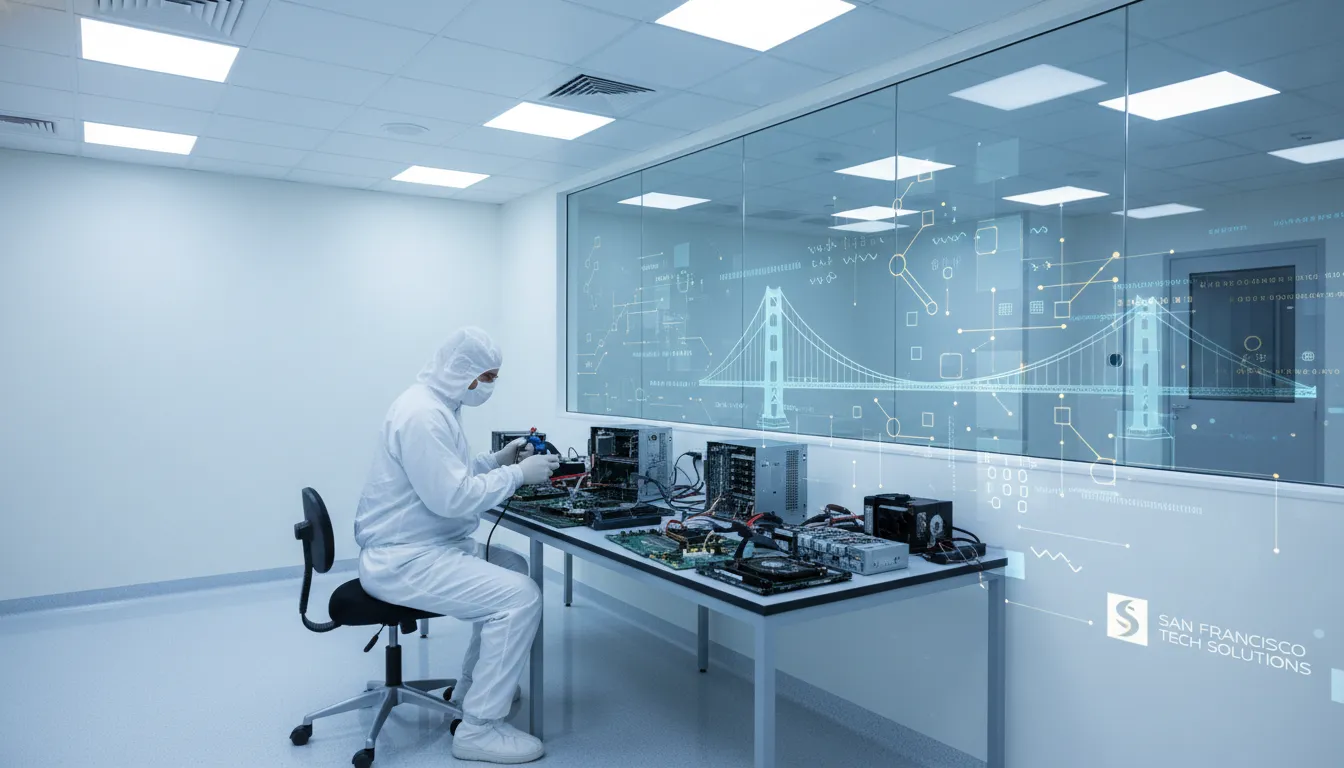
Beyond economic challenges, San Francisco exists in a state of perpetual environmental precarity. Since the devastating 1906 earthquake and fire, the city’s emergency planners and first responders have operated under the constant shadow of natural disasters. The physical threat landscape is severe, encompassing seismic activity, wildfires, and tsunamis. This reality is reflected in the city’s complex emergency alert infrastructure. While San Francisco historically relied on a network of physical emergency sirens to warn residents of air raids or impending disasters, the San Francisco Department of Emergency Management decommissioned these sirens in 2019 due to hardware and security vulnerabilities. Plans to repair the system, estimated to cost upwards of $2.5 million, were introduced by political figures like Aaron Peskin but ultimately stalled in municipal budget negotiations under Mayor London Breed.
Today, the city relies on a decentralized, multi-channel alert system incorporating Alert SF, Wireless Emergency Alerts, and social media networks—tools that successfully facilitated the evacuation of Ocean Beach and the Great Highway during a December 2024 tsunami warning. This environmental reality has direct implications for enterprise IT infrastructure. Data centers and local server rooms within the Bay Area are physically vulnerable to power surges, thermal events from localized fires, and water damage from suppression systems or flooding. When physical disasters strike, enterprise hardware is routinely subjected to extreme environmental trauma. Top-tier data recovery laboratories must therefore be equipped to dismantle, clean, and reconstruct server arrays that have been submerged in contaminated water, severely oxidized, or exposed to intense particulate smoke, transforming disaster recovery from a theoretical planning exercise into a highly specialized chemical and physical engineering challenge.
The Architecture of Enterprise Storage Failures
The foundation of modern enterprise data availability is the Redundant Array of Independent Disks (RAID). RAID architectures are engineered to balance performance, capacity, and fault tolerance by distributing data across multiple physical drives. However, the mechanisms designed to prevent data loss frequently become the vectors of its destruction when multiple faults cascade through a system.
Mechanical and Rotational Hardware Vectors
In traditional hard disk drive (HDD) environments, the primary catalyst for multi-disk RAID failure is correlated mechanical degradation. Because drives within a specific array are typically procured from the same manufacturing batch and deployed simultaneously, they are subjected to identical thermal conditions, vibrational stress, and read/write lifecycles. Consequently, when one drive fails due to mechanical exhaustion, the statistical probability of a secondary drive failing increases dramatically. This risk peaks during the array “rebuild” process, a heavily I/O-intensive operation that forces the remaining drives to read their entire volumes to mathematically reconstruct the missing parity data onto a hot spare.
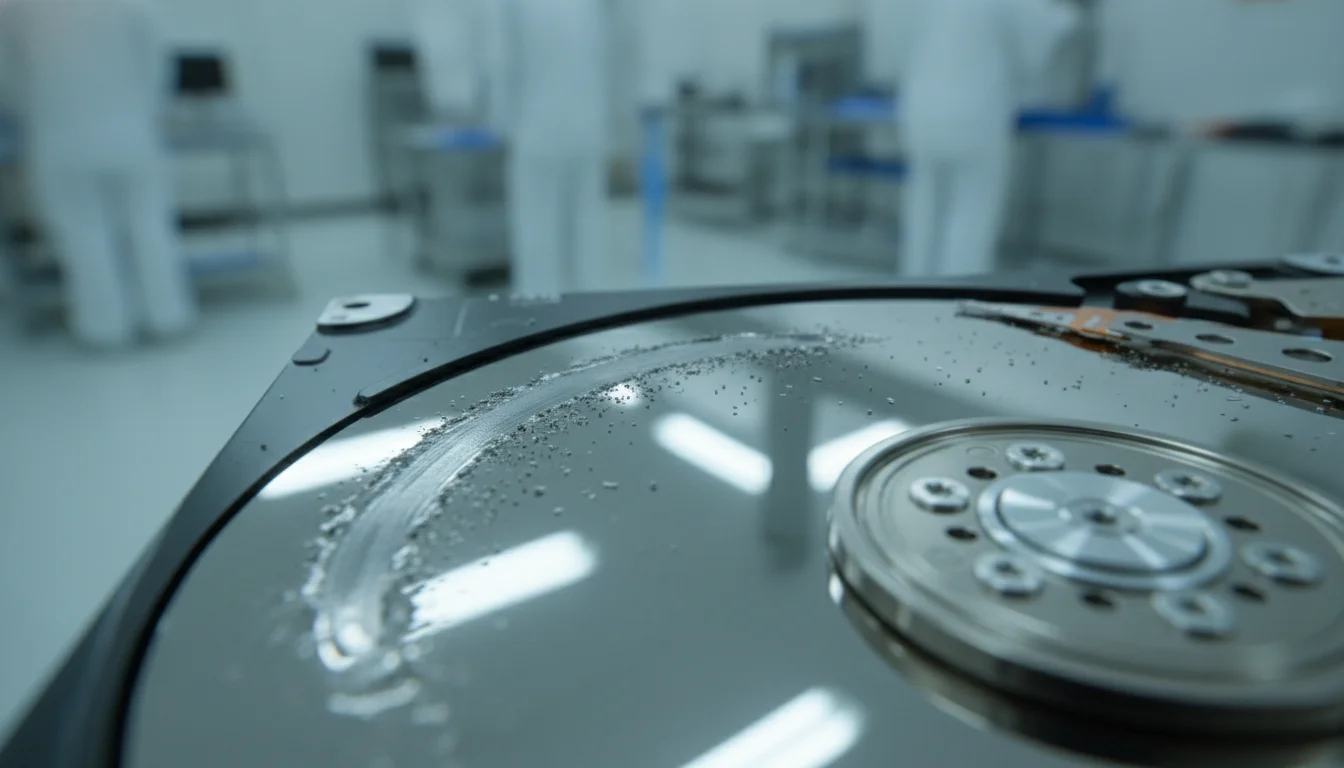
The physical failure modes of these drives are catastrophic. The read/write heads of a modern enterprise HDD hover above the magnetic platters on a microscopic cushion of air, flying at tolerances measured in nanometers. A sudden loss of power, physical shock, or microscopic particulate contamination can cause the aerodynamic flight height to collapse, resulting in a head crash. When the read/write heads make physical contact with platters spinning at 10,000 to 15,000 revolutions per minute, they aggressively scrape the magnetic substrate from the disk, permanently destroying the data and creating a cloud of highly abrasive metallic dust inside the sealed enclosure. Other severe mechanical anomalies include spindle motor seizures, where the fluid dynamic bearings fail and lock the platters in place, or printed circuit board (PCB) burnouts caused by power supply spikes. Recovering data from these scenarios requires engineers to open the sealed mechanisms within sterile environments, physically replace the damaged heads or spindles using identical donor parts, and utilize specialized hardware to bypass corrupted firmware service areas on the platters themselves.
Solid-State Drives (SSD) and NAND Flash Complexities
As enterprise SAN manufacturers—such as Dell EMC, NetApp, IBM, and Pure Storage—migrate toward all-flash arrays to meet high-performance computing demands, the nature of data recovery has fundamentally shifted. Solid-state drives do not suffer from mechanical head crashes; instead, their failure modes are dictated by the physics of NAND flash memory and controller microelectronics.
SSD recovery requires a completely different paradigm of engineering. Flash memory cells possess a finite number of program/erase cycles. Once these cells degrade, the complex wear-leveling algorithms managed by the SSD controller can become corrupted, rendering the translation layer mapping physical blocks to logical sectors completely inaccessible. Furthermore, SSDs are susceptible to microscopic thermal expansion and contraction, which can cause the solder points on the Ball Grid Array (BGA) securing the flash chips to the PCB to fracture. Diagnosing these failures requires non-destructive analysis.
Premier laboratories utilize advanced X-ray diagnostics to identify internal irregularities, locate broken BGA connections, and validate micro-soldering rework without subjecting the highly sensitive NAND chips to unnecessary, destructive thermal stress. Additionally, many enterprise SSDs feature integrated hardware-level encryption managed natively by the controller CPU; recovering this data requires engineers possessing manufacturer-certified encryption expertise to bypass or reconstruct the security keys directly from the damaged silicon.
Logical, Software, and Configuration Failures
Beyond physical degradation, logical failures present an equally complex, and often more insidious, recovery paradigm. RAID systems are managed by sophisticated software or hardware controllers that dictate how data is striped across the array. A sudden power loss or firmware glitch can corrupt the RAID configuration metadata. When the controller loses the map of the array, the data remains perfectly intact on the individual drives, but it is distributed in millions of meaningless, fragmented blocks. Human error remains a primary vector in this category; administrators frequently accidentally reformat logical volumes, replace the wrong drive during a degradation event, or overwrite the array settings during a botched firmware upgrade. Recovering from these logical disasters requires deep hexadecimal analysis, where engineers manually identify the file system structures, determine the block size, striping order, and parity rotation, and virtually rebuild the array using custom-coded software utilities.
The Virtualization and Ransomware Paradigm
The modern data center is heavily abstracted. Physical servers have been largely replaced by virtual machines (VMs) running on hypervisors such as VMware vSphere, ESXi, Workstation, and Microsoft Hyper-V. In these architectures, entire operating systems, applications, and databases are encapsulated within single, massive virtual disk files (such as VMDK or VHDX formats).
This abstraction layers complexity onto the data recovery process. If a physical RAID array fails beneath a VMware datastore, engineers must first reconstruct the physical RAID geometry, then repair the corrupted VMFS (Virtual Machine File System), and finally extract the internal VMDK files. Only after the virtual disks are extracted can the engineers mount them to recover the actual user files, Microsoft Exchange mailboxes, or SQL databases contained within. The fragility of these nested file systems means that even minor logical corruption at the host level can cascade into total data loss for dozens of virtualized servers simultaneously.
The Cryptographic Epidemic: Ransomware Recovery
Data recovery operations in San Francisco have increasingly converged with digital forensics and incident response (IR) protocols due to the rampant proliferation of ransomware. The threat landscape has evolved; threat actors no longer merely encrypt live production servers. They actively map the network, escalate privileges, and intentionally target and corrupt backup repositories, shadow copies, Network Attached Storage (NAS), and offsite replication targets before detonating the encryption payload. When backups fail or are intentionally destroyed, ransomware transitions from a cybersecurity incident into a severe logical data recovery scenario.
The immediate response to a ransomware infection dictates the viability of recovery. Victims are instructed to instantly isolate the infected devices by severing all network connections, including Wi-Fi, external cloud syncs, and shared network resources. However, abruptly powering down the server is generally discouraged unless absolute isolation is impossible, as shutting off the power clears volatile memory (RAM) that may contain unencrypted fragments of the threat actor’s decryption keys.
The reality of the ransomware economy is stark: paying the extortion demand does not guarantee the return of data. Industry metrics indicate that full, uncorrupted data recovery occurs in approximately only 4% of cases where the ransom is paid to the threat actor. Consequently, enterprises increasingly rely on specialized recovery firms. Top-tier providers maintain expansive libraries of existing decryptors, employing reverse engineers who modify these algorithms to attack novel ransomware variants. Furthermore, encryption algorithms frequently malfunction, partially encrypting critical headers of large SQL or Oracle databases, rendering them useless even if the attacker provides a valid decryption key. Professional recovery entails intense post-decryption structural repair, manually rebuilding database tables and virtual disk headers to restore functionality. In this arena, data recovery engineers collaborate closely with breach coaches, digital forensic investigators, and cyber insurance carriers to balance recovery efforts against incident response timelines and strict legal privilege requirements.
Core Technological Infrastructure of Tier-1 Laboratories
The San Francisco market features a stark technological divide between true engineering laboratories and commercial diagnostic triage centers. True enterprise recovery requires massive, sustained capital expenditure in specialized environmental controls and micro-engineering hardware.
Contamination Control: ISO Certified Cleanrooms
Any physical intervention involving the internal components of rotational media must occur within an aggressively sterile environment. A single airborne particle, such as a microscopic flake of human skin, a grain of pollen, or a fingerprint, is significantly larger than the distance between a hard drive’s read/write head and the platter. If a drive is opened in a standard office environment, the resulting contamination will cause a catastrophic head crash the moment the platters reach operational velocity.
To mitigate this, the industry standard for hard drive recovery is the ISO 14644-1 Class 5 cleanroom (traditionally referred to as a Class 100 cleanroom). This rigorous environmental standard dictates that there can be no more than 100,000 particles greater than 0.1 microns in size per cubic meter of air. To contextualize this purity, a standard, non-controlled urban environment contains up to one billion particles of this size in a single cubic foot.
Leading providers like DriveSavers maintain massive cleanroom infrastructures, featuring a 975-square-foot Certified ISO Class 5 central area supported by an adjacent ISO 8 (Class 100,000) clean zone. These environments are constructed using non-shedding, corrosive-resistant materials with extremely low outgassing properties to prevent airborne molecular contamination. Furthermore, because sensitive electronic components can be instantly destroyed by static electricity, these cleanrooms are equipped with comprehensive electrostatic discharge (ESD) controls, including dozens of full-coverage ionizing blowers installed directly above the engineering workstations. Operating within these certified environments is not merely a technical necessity; it is a contractual obligation. Leading hardware manufacturers—including Apple, Western Digital, Seagate, Dell, and Synology—only authorize data recovery providers to break the factory seals on their drives if the work is performed in an audited cleanroom, ensuring the customer’s original equipment warranty remains intact. Competing firms, such as WeRecoverData, advertise the utilization of both ISO 4 (Class 10) and ISO 5 cleanrooms, suggesting adherence to an even higher theoretical standard of particulate filtration.
Regulatory Compliance, Security, and Chain of Custody
For modern enterprise architectures, the physical recovery of the data is only half the mandate; the data must be extracted, stored, and transported without breaching global privacy regulations or leaking proprietary intellectual property. Exposing a failing SAN array containing tens of thousands of unencrypted customer financial records or proprietary source code to a third-party laboratory introduces massive legal liability.
Consequently, the auditing and compliance framework of the recovery vendor is a critical differentiator for procurement teams.
The Convergence of SOC 2 Type II and HIPAA
The enterprise data recovery industry is heavily governed by two primary, yet distinct, compliance frameworks: System and Organization Controls (SOC) 2 Type II and the Health Insurance Portability and Accountability Act (HIPAA).
SOC 2 is a rigorous auditing procedure developed by the American Institute of Certified Public Accountants (AICPA) designed to ensure that third-party service providers securely manage client data. It is a principle-based framework evaluated against five core Trust Services Criteria: Security, Availability, Processing Integrity, Confidentiality, and Privacy. Unlike a rigid checklist, SOC 2 allows a data recovery laboratory to design its own internal controls—such as biometric access restrictions, network air-gapping, multi-factor authentication, and defense-in-depth routing—and requires them to prove the sustained efficacy of these controls over a prolonged auditing period (producing a Type II report). A SOC 2 Confidentiality mandate ensures that any data deemed sensitive by contractual agreement, whether it is an unreleased video game build, financial projections, or legal documents, is fiercely protected against unauthorized access.
Conversely, HIPAA is a rigid, mandatory United States federal law designed exclusively to protect the privacy and security of sensitive patient health information, categorized as Protected Health Information (PHI) and electronic PHI (ePHI). A data recovery firm operating on hardware from a hospital, clinic, or pharmaceutical company is legally classified as a “Business Associate” under the HITECH Act, making them directly liable for HIPAA compliance. HIPAA dictates exact technical, physical, and administrative safeguards through its Privacy Rule, Security Rule, and Breach Notification Rule. Failure to comply can result in severe financial penalties and criminal prosecution.
Compliance Framework Overview
-
SOC 2 Type II:
- Regulatory Focus & Scope: Corporate security, data confidentiality, privacy, and processing integrity.
- Structural Methodology: Flexible, principle-based; evaluates the effectiveness of custom controls over an extended timeline.
- Implications for Data Recovery Operations: Guarantees that trade secrets, proprietary code, and financial data are safe from external breach while residing on the vendor’s internal network.
-
HIPAA:
- Regulatory Focus & Scope: Exclusively targets Protected Health Information (PHI) and electronic PHI (ePHI).
- Structural Methodology: Rigid, legally mandated safeguards and severe breach notification requirements.
- Implications for Data Recovery Operations: Legally essential for any healthcare entity submitting storage arrays; enforces strict physical lab security and audited access logs.
The intersection of these two frameworks is vital for enterprise clients. While SOC 2 Confidentiality aligns closely with the HIPAA Privacy Rule, their scopes diverge significantly. However, a comprehensive crosswalk analysis demonstrates that overlapping controls—such as advanced encryption at rest and in transit, extensive audit logging, robust risk management, and strict access controls—allow a data recovery vendor to synchronize their compliance efforts. Dual compliance drastically reduces the internal auditing friction from approximately 550 to 600 hours down to roughly 75 hours when proper automation is utilized. Top-tier providers in the San Francisco area, such as DriveSavers and Secure Data Recovery, maintain this rigorous dual compliance. Furthermore, providers explicitly guarantee a “Zero Data Disclosure” policy, ensuring engineers only access data at the hexadecimal or directory level rather than viewing raw user files, and deploying Department of Defense (DoD) approved degaussing services to irrevocably destroy any unrecoverable or discarded magnetic media.
Comprehensive Vendor Analysis in the San Francisco Bay Area
The geographic footprint of San Francisco is serviced by a highly diverse spectrum of recovery vendors, ranging from monolithic, internationally recognized laboratories to specialized local boutiques. An exhaustive analysis of their operational models, SLA tiers, pricing economics, and consumer feedback reveals a complex market requiring careful navigation.
DriveSavers Data Recovery
Operating heavily within the Bay Area with their primary global laboratory located securely in Novato, California, DriveSavers is widely regarded as the legacy gold standard for enterprise data recovery. Founded in 1985, the firm serves as the primary recovery vendor for high-profile governmental and corporate entities, boasting a Hall of Fame client roster that includes NASA, Google, Coca-Cola, Boeing, Lucasfilm, and Harvard University.
DriveSavers differentiates itself through its dedicated “Enterprise Systems Group,” a specialized engineering division trained exclusively to handle complex RAID arrays, SAN, and NAS infrastructures from vendors like Dell EMC, NetApp, SuperMicro, and IBM. Their capabilities extend deeply into hypervisor recovery, utilizing proprietary methodologies to rebuild lost VMDK files from vSphere, ESXi, and vCloud platforms. They possess extraordinary capabilities in handling hardware-encrypted solid-state drives, maintaining technical partnerships with encryption manufacturers to natively decrypt drives using keys stored in the host CPUs. DriveSavers is also recognized as the only major vendor documented to utilize advanced in-house X-ray technology for non-destructive diagnostics of SSDs and hybrid storage.
Their service level agreements (SLAs) are structured for extreme urgency. They offer a 24/7/365 Priority Service featuring immediate, around-the-clock intervention with an ASAP turnaround. Their Standard service operates on a 1-2 business day turnaround, while an Economy tier offers 5-7 business days. Operating under a strict “No Data — No Charge” policy, clients are provided with free evaluations, free shipping labels, and a firm, written quote that acts as an absolute price ceiling before any work commences. Market feedback is overwhelmingly stellar, citing exceptional customer support and deep technical competence, though a minority of clients note that the premium engineering services come with a corresponding high-end price tag.
Secure Data Recovery Services
Located prominently at 837 Howard Street, Secure Data Recovery Services commands a dominant presence in the San Francisco market. The firm heavily markets its aggressively documented 96% overall recovery rate and positions itself as a premier destination for complex database restorations.
The company’s technical operations are heavily geared toward enterprise relational databases and email server architectures. Industry reviews highlight a profound success rate in recovering highly fragmented SQL databases, Microsoft Exchange architectures, and proprietary application data from failed server environments. Notably, their engineers possess the deep programmatic capability to extract and repair uncorrupted .bak files from heavily degraded storage partitions in scenarios where native backup servers fail or reach maximum capacity. From a compliance perspective, Secure Data Recovery is exceptionally well-credentialed, maintaining SSAE 18 SOC 2 Type II validation, FIPS compliance, and HIPAA certifications, alongside an audited Class 10 ISO 4 cleanroom. Customer reviews reflect a high degree of satisfaction regarding communication and technical success, with strong aggregate ratings on platforms like Trustpilot and Spiceworks.
SalvageData Recovery Services
SalvageData operates as a highly specialized technical vendor offering a uniquely transparent, complexity-based pricing model. While they service the San Francisco region through dedicated drop-off channels and local dispatch, their operational framework is designed around a 24/7/365 emergency triage hotline capable of managing data loss directly at the client’s location. Their engineering team focuses heavily on massive storage architectures, specifically direct-attached storage (DAS) and SAN setups supporting RAID configurations from RAID 0 through RAID 50.
SalvageData’s pricing structure provides a refreshing window into the genuine economics of data recovery. Rather than billing by the gigabyte—which is financially disastrous for multi-terabyte enterprise arrays—they bill exclusively based on the mechanical and logical complexity of the failure. Minor logical errors, such as corrupt sectors or quickly formatted drives, are priced between $300 and $700. Moderate issues, like controller chip failures or power surges, range from $600 to $1,500. Severe mechanical disasters, including read/write head crashes or spindle seizures, cost between $700 and $1,400.
Extreme edge cases, such as catastrophic fire or water damage involving severe platter scoring, exceed $1,900. The company operates a certified ISO-5 cleanroom and adheres to a strict no-data, no-charge policy. While SalvageData maintains an excellent overall rating (4.7 stars across 2,681 reviews on ShopperApproved), forensic analysis of review platforms reveals occasional logistical friction common to national networks, including delays with overnight shipping labels, long periods of communication silence during evaluations, and instances where final invoices doubled the preliminary quotes.
ACE Data Recovery
ACE Data Recovery maintains a strong physical presence in the heart of San Francisco’s financial district at 505 Montgomery Street, 11th Floor. They present a streamlined, highly professional operation with direct expertise in multi-disk RAID recovery, NAS devices, SQL databases, and Exchange Servers from vendors like IBM, Lenovo, NetGear, Qnap, and Promise. ACE provides a free diagnostic evaluation and differentiates itself in a crowded market by offering free return media (such as external hard drives or USB flash drives) for all completed recoveries, absorbing a hardware cost that many other vendors pass directly onto the consumer. Their turnaround times are consistently cited at approximately one week for standard cases, with specialized emergency and remote recovery options available for urgent enterprise failures. In the event a client declines an approved quote after the diagnostic evaluation, ACE will return the un-repaired device for a nominal $25 fee.
WeRecoverData
Headquartered at Spear Tower, One Market (36th Floor) in San Francisco, WeRecoverData markets itself as an industry pioneer possessing robust GSA government contracts and a willingness to undertake recoveries that other companies have abandoned. They claim an in-house Research and Development team and present high-profile case studies, notably the successful recovery of a massive Coca-Cola database for VidiPax NYC following a catastrophic dual tape-backup and physically damaged RAID failure.
However, third-order analysis of consumer protection forums and specialized industry subreddits indicates severe anomalies in their commercial practices, highlighting significant operational risks for enterprise clients. Reports from the broader data recovery engineering community and past clients suggest a highly predatory operational model. Documented complaints highlight extreme bait-and-switch pricing tactics, where initial “Economy” quotes of $2,415 rapidly scale to $3,450 for “Standard” and $4,657 for “Priority” recovery. More alarmingly, independent analysts and industry peers have leveled accusations of “diagnostic hostage-taking,” wherein the firm copies user data to internal servers during the evaluation phase, and if the client refuses to pay the exorbitant quotes, the firm allegedly degausses (magnetically wipes) the original drives before returning them, permanently destroying the client’s data and preventing secondary attempts by reputable laboratories.
Local San Francisco Boutique Providers
In addition to the monolithic national networks, San Francisco supports several highly rated, locally operated boutique firms. Entities such as File Savers Data Recovery (75 Broadway) and Lazarus Data Recovery (379 Clementina St.) consistently garner strong praise for localized, transparent, and reasonably priced interventions. Reviewers frequently commend local engineers for circumventing the high-pressure sales tactics and opaque pricing models common among larger corporate brokerages, offering rapid, straightforward file extraction for standard logical corruptions, damaged SD cards, and mechanical hard drive failures. While they may lack the massive multi-million-dollar infrastructure to process 50-drive water-damaged SAN arrays, they serve as excellent resources for small-to-medium enterprise (SME) desktop and basic NAS recoveries.
| San Francisco Vendor | Primary Laboratory / Location | Cleanroom Infrastructure | Highlighted Enterprise Expertise | Pricing Model & SLA Turnaround | Consumer Trust & Documented Friction Points |
|---|---|---|---|---|---|
| DriveSavers | Bay Area (Novato, CA) | Certified ISO Class 5 | VMware, SAN, Ransomware, X-Ray Diagnostics, Hardware Encryption | No Data No Charge; 24hr Priority, 1-2 day Standard | Premium pricing; highly trusted by Fortune 500 & government. |
| Secure Data Recovery | 837 Howard St, San Francisco | Certified ISO Class 5 | SQL Database, Exchange Server, NAS architectures | No Data No Charge; Complexity-based estimates | 96% success rate; exceptional communication; occasional sticker shock reported. |
| SalvageData | Local dispatch / Drop-off centers | Certified ISO Class 5 | DAS, SAN, RAID 0 through 50 configurations | Transparent Tiered Complexity ($300-$1900+) | Strong aggregate ratings; noted friction regarding logistical delays and shifting quotes. |
| ACE Data Recovery | 505 Montgomery St, San Francisco | In-lab Cleanroom | Virtualization, SQL, vast hardware vendor support | Standard 1-week turnaround; includes free return media | Smooth evaluation process; $25 return fee if quote is declined. |
| WeRecoverData | Spear Tower, One Market, San Francisco | Advertised ISO 4 & ISO 5 | Extreme physical damage, dual-failure tape/RAID systems | Variable; documented scaling from $2400 to $4600+ | Severe industry allegations of bait-and-switch pricing and malicious drive degaussing. |
Operational Delivery Topologies: In-Lab, On-Site, and Remote Interventions
Enterprise servers present unique logistical challenges. A 48-bay Storage Area Network fully populated with highly sensitive helium-filled hard drives cannot be easily packaged in bubble wrap and shipped via standard overnight couriers without risking catastrophic vibrational damage. Furthermore, defense contractors and financial institutions operate under strict governance that prohibits data from leaving their premises. To accommodate these constraints, premier recovery providers utilize three distinct intervention topologies.
1. In-Lab Cleanroom Recovery
This remains the absolute standard for any mechanical or physical hardware failure. Drives emitting audible distress signals—such as clicking, grinding, scraping, or whirring—must be physically transported to a cleanroom laboratory. The laboratory environment provides the engineering team with immediate access to vast donor parts inventories containing tens of thousands of identical drives, precision optical alignment tools for read/write head replacements, and sophisticated firmware emulation hardware. In-lab services are universally governed by tiered service levels, ranging from economical weekly turnarounds to round-the-clock emergency processing.
2. On-Site Rapid Deployments
For organizations operating under extreme “data-at-rest” security protocols, or for massive hardware arrays that are physically impossible to relocate, providers like DriveSavers and SalvageData offer rapid-deployment engineering teams. These specialized engineers travel directly to the client’s data center in the San Francisco area, utilizing portable clean-air environments and localized diagnostic software to rebuild arrays and extract data directly onto secure, client-owned hardware on the premises.
3. Remote Data Recovery Protocols
A rapidly evolving vector in the enterprise space is the remote intervention model. This topology is strictly utilized for complex logical failures where the physical integrity of the storage media remains entirely uncompromised. Common scenarios requiring remote intervention include accidentally deleted VMDK files within a VMware datastore, corrupted SAN file system tables, overwritten database headers, or targeted ransomware encryption.
In this model, the recovery provider establishes a highly encrypted, dedicated connection directly into the failed server environment. The remote model presents profound advantages for San Francisco’s hyper-paced, continuous-deployment tech ecosystem. It entirely eliminates the logistical delay, expense, and physical risk of hardware transit, allowing highly specialized diagnostics to commence within minutes of an identified failure. Data remains strictly on-premises, satisfying the most stringent internal security and HIPAA governance requirements. By conducting raw, sector-level imaging and analysis remotely, engineers can reconstruct virtual partitions, bypass corrupted file systems, and restore directory structures in real-time, frequently reducing enterprise downtime from weeks to a matter of hours.
Strategic Mandates for Enterprise Incident Response
When an enterprise storage array experiences a catastrophic failure, the initial actions taken by the on-site IT operations and infrastructure teams absolutely dictate the ultimate mathematical probability of data extraction. Professional recovery engineers from across the industry unanimously emphasize strict triage protocols to prevent irreversible data destruction.
1. Immediate Power Termination for Acoustic Distress
If an array, server, or individual hard drive begins emitting physical distress acoustics—such as rhythmic clicking, grinding, metallic scraping, tapping, or loud humming—the system must be powered down immediately. Continued rotation of the platters during a head crash exponentially increases the severity of the magnetic substrate damage.
Allowing a crashing drive to run while attempting a backup will quickly transition the failure from a highly recoverable event into permanent, absolute data loss. Devices showing obvious physical damage or emitting these sounds must never be powered up.
2. Strict Prohibition of DIY Software and Chkdsk
Utilizing commercial data recovery software or initiating operating system-level disk checking utilities (such as chkdsk in Windows or fsck in Linux) on a mechanically failing drive is highly destructive. These software utilities are entirely blind to hardware faults; they generate intense, sustained read/write operations, forcing degraded heads to continuously sweep across failing sectors, dramatically accelerating physical destruction. Furthermore, “home remedies” found online, such as placing a seized hard drive in a freezer or striking the chassis, cause immediate physical harm to the delicate internal mechanisms and must be avoided.
3. Preservation of Array Parity States
In the event of a multi-disk RAID failure, administrators must rigidly document the exact physical slot order of every drive, along with the array block size, offset, and parity configuration. “Forcing” a rebuild with a stale drive, initializing a new configuration over the old one, or indiscriminately swapping drive positions will irreversibly overwrite the parity metadata and stripe the data into unintelligible fragments, vastly compounding the complexity of the recovery.
4. Ransomware Evidence Preservation
If the failure is cryptographic in nature, the system must be immediately isolated from the network to halt lateral movement, but the evidence must be meticulously preserved. The preservation of ransom notes, suspicious emails, malicious attachments, and volatile memory provides critical forensic artifacts that recovery engineers utilize to map the threat actor’s methodology and reverse-engineer decryptors.
Conclusion
The San Francisco Bay Area, functioning as the central nervous system of the global technology economy, demands data recovery capabilities commensurate with its status. The persistent threat of natural disasters, combined with the extreme complexity of virtualized enterprise architecture and the targeted malice of ransomware cartels, ensures that data loss is an omnipresent operational risk. The exhaustive analysis of emergency RAID and enterprise server recovery services reveals that successful interventions are not commoditized IT services; they are highly complex, multi-disciplinary engineering endeavors heavily reliant on advanced infrastructure—specifically ISO Class 5 cleanrooms, deep cryptographic expertise, X-ray diagnostic imaging, and granular micro-engineering capabilities.
While the local market is densely populated with vendors offering emergency services, true enterprise viability is restricted to a select few laboratories possessing dual SOC 2 Type II and HIPAA compliance certifications, alongside transparent, legally binding “No Data, No Charge” pricing models. Providers such as DriveSavers Data Recovery and Secure Data Recovery Services demonstrate the required synthesis of advanced hardware expertise and rigorous data governance necessary to handle mission-critical corporate intelligence and protected health information. Conversely, IT procurement teams must remain hyper-vigilant against the opaque pricing models, logistical friction, and predatory bait-and-switch tactics prevalent in lower-tier brokerages and unverified networks. Ultimately, true enterprise data resilience in the Bay Area is achieved not merely through layers of redundant hardware and cloud backups, but through established, vetted partnerships with highly specialized recovery laboratories capable of executing rapid, secure, and technologically profound interventions when mathematical probability eventually yields to catastrophic hardware failure.