Remote Developer Salary Index 2026: Global Comparison
Introduction: The Maturation of the Global Distributed Workforce
As the global macroeconomic environment stabilizes in 2026, the technology labor market has undergone a profound structural evolution. The paradigm of remote engineering has irrevocably transitioned from a temporary, pandemic-induced operational necessity into a highly sophisticated, borderless organizational architecture. The global remote software developer is now the primary engine driving enterprise modernization, digital transformation, and the integration of artificial intelligence across virtually all economic sectors. Based on an aggregation of comprehensive labor market data from late 2025 and early 2026, the average global salary for a remote developer has stabilized at approximately $70,877 annually. However, this aggregated global figure masks vast regional disparities, complex wage arbitrage dynamics, and deep structural shifts in skill-based compensation.
The overarching narrative of global hiring has fundamentally shifted. Historically, corporate entities leveraged offshore talent in emerging markets almost exclusively as a mechanism to minimize payroll expenditures—a strategy commonly defined as sheer cost arbitrage. In the 2026 landscape, however, organizations are expanding their geographic hiring footprints not merely to reduce operational costs, but to access highly specialized talent pools that remain critically scarce in their domestic markets. This transition is particularly evident among well-funded technology startups and enterprise organizations seeking advanced expertise in machine learning, cloud infrastructure, and cybersecurity. While small and medium-sized businesses continue to utilize emerging markets primarily for budget optimization, enterprises and top-tier startups recognize global hiring as an integral pillar of their long-term capability strategy.
This exhaustive research report examines the 2026 remote developer salary index by conducting a deep, comparative analysis of three critical technology hubs: South Asia, Latin America (LatAm), and Eastern Europe. By systematically evaluating compensation data, cost of living indices, English proficiency rankings, timezone alignment mechanics, and geopolitical stability, this analysis provides a definitive understanding of the contemporary global talent ecosystem. The objective is to elucidate not only what software engineers are paid across these distinct geographic regions, but to uncover the underlying macroeconomic, technological, and operational forces that dictate these valuations in 2026.

Macroeconomic Drivers: Inflation, Compliance, and Structural Shifts
To accurately contextualize regional salary disparities, it is imperative to first understand the macroeconomic and technological forces shaping the global demand for software engineering talent. The 2026 labor market is defined by a seemingly paradoxical dynamic: highly publicized layoffs, budget constraints, and cautious hiring among legacy technology firms are occurring simultaneously alongside severe, persistent talent shortages in emerging technological disciplines. Despite widespread tech layoffs in the United States, where job postings temporarily decreased by more than 31,800, approximately 476,000 vital technology positions remain unfilled, demonstrating continued, aggressive investment in qualified, specialized workers.
The global remote talent market is intricately tied to local macroeconomic stability, currency valuations, and regional inflation rates. In numerous emerging markets, severe inflation and currency depreciation have fundamentally altered how remote workers negotiate and accept compensation. A prime example is Argentina, a massive hub for Latin American tech talent, where hyperinflation has rendered the local currency highly volatile. As of 2026, 84.6% of Argentine remote workers actively choose to receive their compensation in United States Dollars (USD) rather than their local currency. This represents a profound structural shift in cross-border payroll mechanisms. Global contractors are actively managing their own sovereign economic risk, forcing hiring companies and Employer of Record (EOR) providers to develop highly sophisticated, multi-currency payroll distribution systems to attract and retain top talent. Many global enterprises now include contractual clauses that automatically adjust dollar-denominated salary bands if local regional inflation exceeds 10%, ensuring their developers do not suffer a loss of purchasing power.
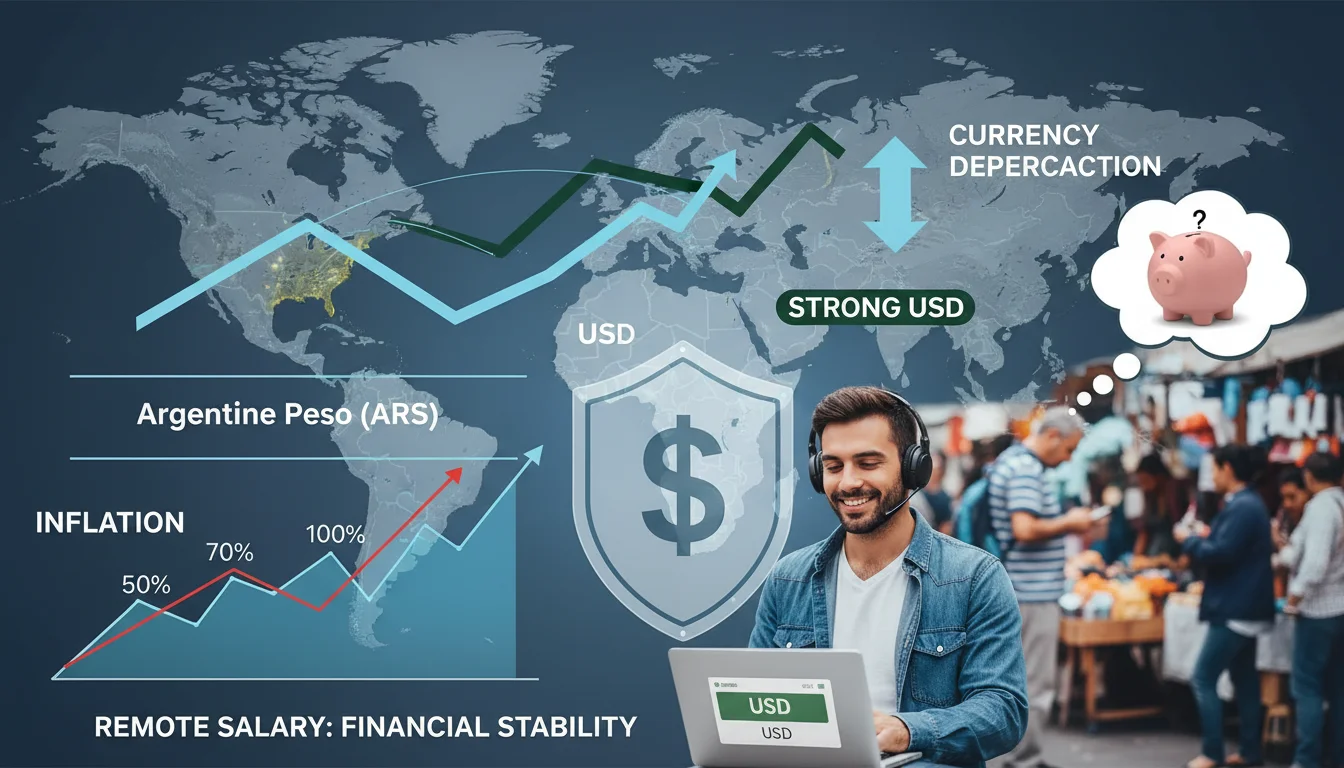
Furthermore, the strength of the US Dollar relative to local currencies in Latin America, South Asia, and parts of Eastern Europe continues to make remote employment for North American and Western European firms the single most lucrative career trajectory for local engineers. Remote positions with US or European companies frequently offer compensation packages that are two to three times higher than local domestic market rates. This wage dynamic systematically drains top-tier talent from local domestic economies, centralizing the world’s most capable engineers within distributed, Western-headquartered organizations.
The stabilization of the remote labor market has seen remote work policies become a standard, expected benefit rather than a unique perk. Remote work has stabilized at approximately 40% of all new positions globally, with 29% operating in a hybrid capacity and 13% remaining fully remote opportunities. Organizations that fail to offer flexible, remote-first structures find themselves at a severe competitive disadvantage, as flexibility in work location and multi-currency pay have transitioned from back-office administrative tasks to core components of the enterprise talent value proposition.
The Artificial Intelligence Paradigm: Bifurcation of Skills and the AI Premium
The rapid commercialization and ubiquitous integration of Generative AI have fundamentally altered the demand curve and compensation structure for software engineers. By the end of 2026, artificial intelligence is projected to create 97 million new jobs globally, yet an astonishing 77% of organizations report significant, ongoing difficulties in sourcing the requisite talent to fill these roles. Consequently, the engineering labor market has severely bifurcated.
Demand for baseline, junior-level programming roles—particularly in general front-end development and manual quality assurance testing—has cooled significantly. These functions are increasingly augmented or entirely automated by advanced AI coding assistants, leading companies to hire fewer entry-level employees. Conversely, roles requiring deep architectural expertise, systems design, or direct AI specialization command massive global premiums. Global compensation for AI and machine learning engineers, as well as cloud architects, is projected to grow by 4.1% in 2026, far outpacing the 1.7% growth expected for general data engineers.

To illustrate this bifurcation, a new class of employment has rapidly emerged: the “AI Trainer.” Over 70,000 workers globally are now employed as specialized AI trainers across more than 600 organizations, actively developing and refining large language models in specialized fields spanning economics, medicine, and translation. Depending on the subject matter expertise and technical proficiency required, these professionals earn anywhere from $15 to $75 per hour. Interestingly, this new sector is not immune to legacy labor issues; data indicates persistent workplace gender disparities within AI training. In the United States, specialized male AI trainers earn a median of $50 per hour compared to $30 per hour for their female counterparts. Even in fields traditionally led by women, such as psychology, male trainers frequently command higher compensation, reflecting systemic biases that are transferring into the new AI economy.
This extreme bifurcation of skills dictates that geographic cost savings are entirely dependent on the specific role being sourced. An enterprise can still achieve massive 60% to 70% cost savings when hiring a mid-level generalist web developer in South Asia compared to North America. However, attempting to hire a senior AI architect or machine learning specialist in Eastern Europe or Latin America will require highly competitive, globally benchmarked compensation, which significantly narrows the cost arbitrage gap. The “AI Premium” routinely allows specialized engineers to command 20% to 50% more than their generalist peers, regardless of their physical location.
Global Compensation Baselines: Establishing the North American Anchor
Before conducting a granular regional analysis of South Asia, Latin America, and Eastern Europe, it is necessary to establish the global baseline and the North American anchor market. The United States remains the absolute pinnacle of software engineering compensation, dictating the top tier of the global market and serving as the benchmark against which all offshore and nearshore rates are calculated.
In 2026, the average annual base salary for a domestic US software engineer sits between $110,140 and $147,524, heavily dependent on the specific data source and geographic hub. Top-tier markets such as San Jose, San Francisco, and Seattle boast average salaries ranging from $148,220 to $167,420. However, total compensation packages—which include base salary, restricted stock units (RSUs), and performance bonuses—push these figures significantly higher.
Senior engineers at major tech hubs routinely see total compensation exceeding $200,000 to $280,000, with specialized AI and machine learning architects effortlessly pushing past the $300,000 to $400,000 mark. At FAANG-level organizations, a Principal Engineer (L7) can achieve total compensation approaching $820,000, illustrating the vast upper limits of the North American market.
Against this premium domestic backdrop, remote salaries offer a distinct, stabilized alternative. A remote developer globally averages $70,877. However, a remote developer physically located within the United States still commands a location premium, averaging approximately $96,999 annually, with remote DevOps engineers at $107,771 and remote ML engineers pulling a median of $168,730. Across the broader global market, remote salaries have largely stabilized at 70% to 90% of US domestic rates, adjusting dynamically based on the region’s specific value proposition.
Table 1: Aggregated Global Remote Developer Salary Baselines
| Geographic Region | Average Annual Remote Salary (USD) | Primary Market Characteristics |
|---|---|---|
| North America (US/Canada) | $82,757 – $147,524 | Anchor market, premium compensation, cutting-edge AI innovation, deep capital pools. |
| Western Europe | $69,720 – $84,250 | High economic stability, stringent labor laws, excellent English proficiency, strong social safety nets. |
| Central & Eastern Europe | $62,307 | Centers of architectural excellence, complex R&D, advanced mathematics, highly competitive technical quality. |
| Latin America (LatAm) | $60,363 | The premier nearshore hub, exceptional timezone alignment, rapid operational growth, strong cultural affinity. |
| Asia (Including South Asia) | $56,483 | Maximum raw cost arbitrage, massive engineering scale, deep systemic integration, asynchronous workflows. |
| Global Average | $70,877 | The baseline median across all reported international remote engineering contracts. |
Data synthesized from comprehensive 2026 global salary surveys, weighting various regional inputs and EOR payroll data.
When organizations look beyond the domestic North American and Western European markets to scale their operations, they encounter the three primary regional tiers detailed below, each offering a highly unique combination of cost efficiency, technical depth, and logistical viability.
Latin America (LatAm): The Nearshore Operational Foundation
By 2026, Latin America has definitively transitioned from an experimental hiring frontier into a core, indispensable pillar of North American engineering strategy. The primary catalyst for this massive shift is not merely the pursuit of lower hourly rates, but the pursuit of operational synergy. As modern, agile software development methodologies require daily synchronous communication, the friction associated with asynchronous, deeply offshore development has become a distinct competitive disadvantage. Latin America solves this inherent friction.
Compensation Benchmarks in Latin America
The average software engineer salary in Latin America rests at $60,363. However, verified payroll data from 2026 indicates that compensation is highly stratified by experience level and the nature of the employment contract. Mid-level developers in the region typically command between $30,000 and $55,000 annually, while senior engineers earn between $50,000 and $84,600, particularly when contracting remotely for US-based enterprises.
Salaries vary significantly across the continent, heavily influenced by local economic maturity, regulatory environments, and the absolute size of the talent pool:
-
Mexico:
Boasting a massive technical workforce exceeding 800,000 professionals, Mexico offers unmatched scale and immediate geographic proximity to the US. Average domestic salaries hover around $28,400 to $38,200 for mid-to-senior roles. However, US-facing remote roles push significantly higher, often reaching $55,000. Mexico is highly favored for its perfect timezone alignment and deep cultural integration with North American business practices.
-
Brazil:
Brazil features a deep talent pool of over 540,000 developers. Average domestic developer salaries sit around $31,500 to $32,800. Yet, senior Brazilian engineers working remotely for foreign firms frequently average $53,000. It is critical to note that hiring locally via a traditional entity in Brazil carries immense tax burdens—employer taxes and mandatory benefits can add up to 73% on top of the base salary—making EOR and independent contractor models the standard for foreign entities operating there.
-
Argentina:
Despite severe and ongoing economic volatility, Argentina possesses a highly educated, sophisticated tech workforce of roughly 150,000 developers. The average domestic salary for an engineer is $42,000, though remote US contracts average $53,000 to $63,163. As previously noted, developers here actively seek foreign employment to secure USD compensation as a definitive hedge against local hyperinflation.
-
Colombia:
Cities like Medellín and Bogotá have rapidly emerged as vital, high-growth tech ecosystems. Salaries remain highly competitive and attractive for US firms, with mid-level roles ranging from $23,000 to $25,000, and senior remote roles pushing up to $55,894.
-
Costa Rica & Panama:
These smaller, highly mature markets boast some of the highest wages in the region. Panama reports averages around $43,160 due to its dollarized economy and status as a financial hub, while senior developers in Costa Rica often command the highest regional averages, frequently exceeding $52,500 due to excellent English proficiency and a highly stable business climate.
Table 2: Latin America Remote Salary Benchmarks by Experience (2026 USD)
| Experience Level | Estimated Annual Salary Range | Market Context |
|---|---|---|
| Junior (0–2 Years) | $10,000 – $20,000 | Heavily dependent on local vs. foreign employment. Colombia/Brazil closer to $10.5k; Costa Rica closer to $19.2k. |
| Mid-Level (3–5 Years) | $30,000 – $55,000 | Represents the “sweet spot” for US companies seeking massive cost savings (60-65% vs US) without sacrificing quality. |
| Senior (5+ Years) | $50,000 – $84,600 | Senior engineers command high premiums. Rates push toward the top of the band for specialized AI/ML or Cloud Architecture roles. |
Data synthesized from verified 2026 EOR payroll and regional benchmarking.
Strategic Advantages: Timezone, Cultural Alignment, and Retention
The predominant, overriding advantage of Latin America is its timezone alignment. Operating generally 1 to 3 hours ahead of or behind US timezones allows for simultaneous Scrum ceremonies, instant code review feedback loops, and real-time operational collaboration. In modern software engineering, where urgent architectural decisions, continuous integration, and rapid deployments are standard, the absence of 12-hour overnight delays dramatically accelerates time-to-market and reduces product friction. Reports indicate that US companies can recruit, vet, and onboard talent in LatAm up to three times faster than in the domestic US market, heavily mitigating the severe opportunity cost of unfilled technical roles.
Furthermore, employee retention rates in LatAm are remarkably strong, consistently outperforming domestic US metrics. Well-managed remote teams report annual retention rates of 80% to 85%. For a Latin American professional, a $50,000 remote USD salary offers profound, life-changing purchasing power parity, creating immense job loyalty, engagement, and stability compared to local domestic opportunities.
English proficiency remains a critical variable in the region. While countries like Mexico, Argentina, and Costa Rica exhibit high proficiency, there is a distinct and quantifiable “English premium” across the continent. Developers with elite bilingual capabilities command a 20% to 30% wage premium over their peers precisely because they can frictionlessly integrate into client-facing roles, product management discussions, and cross-border leadership teams without translation bottlenecks.
Central and Eastern Europe (CEE): Centers of Architectural Excellence
If Latin America serves as the agile nearshore engine for North America, Central and Eastern Europe functions as the intellectual powerhouse for complex, highly technical research and development (R&D). CEE average remote salaries sit at $62,307, positioning the region slightly above LatAm in terms of raw cost, but delivering unparalleled, globally recognized technical depth in legacy systems modernization, advanced mathematics, artificial intelligence, and highly regulated industries such as Fintech and aerospace.
Compensation Benchmarks in Eastern Europe
Eastern Europe is widely recognized for its robust, rigorous educational infrastructure, which produces engineers who excel in algorithmic complexity and deep systems architecture. Salaries in the region have grown steadily by 3% to 8% annually, reflecting an increasing integration with Western European enterprise markets and continued demand from US tech giants.
-
Romania:
Romania has solidified its position as a premium destination within the region. Benefiting historically from highly preferential IT tax treatments designed to stimulate the sector, mid-level engineers in major hubs like Bucharest and Cluj earn between €40,000 and €70,000 ($43,000–$76,000), while senior engineers frequently command up to $100,000+. The national average sits around $42,000. A recent 20% rate growth in Romania is directly indicative of the immense demand for niche, high-quality engineering emanating from the country.
-
Poland:
Anchored by thriving tech hubs such as Warsaw, Kraków, and Wrocław, Poland offers a deep, exceptionally mature technology market.
The average annual salary is $40,800, but senior developers working on remote Western contracts routinely secure between $54,000 and $84,000. Poland is particularly dominant in cloud architecture, enterprise DevOps, and robust backend infrastructure.
- Ukraine: Despite profound, ongoing geopolitical disruptions and conflict, the Ukrainian IT sector has demonstrated astonishing resilience, largely shifting to highly secure remote paradigms to ensure continuity. Senior roles in Ukraine range from $66,000 to $84,000, while junior positions start around $12,600. The overall national average reflects a lower baseline at $28,800, primarily due to the influx of junior talent entering the market.
- Bulgaria & Czech Republic: Bulgaria offers highly competitive offshore rates, averaging $36,000, bolstered heavily by favorable corporate tax structures, including a flat 10% corporate tax rate that attracts significant foreign direct investment. In the Czech Republic, senior full-stack developers average between $63,000 and $72,000, maintaining parity with the broader regional highs.
Table 3: Eastern Europe Remote Salary Benchmarks by Role (2026 USD)
| Engineering Role | Estimated Average Salary | Market Context |
|---|---|---|
| General Software Engineer | $36,000 – $42,000 | The regional baseline, representing a blend of junior to mid-level talent across CEE. |
| Data Engineer | $51,600 | High demand for big data processing and ETL pipeline construction. |
| AI / Machine Learning Engineer | $55,200+ | Eastern Europe produces elite AI talent, commanding the highest regional premiums. |
| Cloud Architect | $59,361+ | Enterprise migration to cloud-native platforms keeps demand severe. |
| Senior Backend (e.g., Rust/Go) | $60,000 – $90,000+ | Specialized backend languages push compensation toward Western European parity. |
Strategic Advantages: Technical Rigor and Elite English Proficiency
Eastern Europe’s value proposition is distinctly different from Latin America’s. While it lacks perfect timezone alignment with the United States—typically operating 6 to 8 hours ahead—it is perfectly synchronized with Western Europe. This makes CEE the undisputed, ideal nearshore destination for EMEA-based enterprise companies. For US companies, Eastern Europe is highly effective for implementing “follow-the-sun” operational models, where continuous product development, rigorous QA testing, or 24/7 cybersecurity monitoring is seamlessly handed off between geographic regions as one team logs off and another logs on.
A massive structural advantage of Eastern Europe is its exceptional linguistic capability. The EF English Proficiency Index (EF EPI) for 2025 and 2026 consistently ranks European nations at the absolute pinnacle of global proficiency. The Netherlands leads globally, but CEE nations follow closely: Croatia, Poland, Romania, and Bulgaria all sit firmly in the “Very High” or “High” proficiency bands. This elite level of English fluency vastly reduces communication bottlenecks. It allows Eastern European developers to easily transcend basic coding tasks and transition into product management, client-facing consulting, and high-level architectural leadership roles.
The R&D Premium
Engineers in Eastern Europe are rarely utilized by global firms for basic web maintenance or entry-level scripting. Instead, they are deployed as true product engineers who are expected to challenge specifications, optimize complex algorithms, and lead secure system architectures. The region boasts a highly competitive AI/ML ecosystem, with specialized engineers earning significantly above the regional baseline. Ultimately, Eastern Europe represents a market where companies willingly pay a slight premium relative to Asia or LatAm to secure top-decile technical rigor, flawless English communication, and reliable, high-quality deliverables. Developer retention rates mirror LatAm, hovering around a highly stable 85%.
South Asia: The Spectrum of Global Cost Arbitrage and Emerging Export Hubs
South Asia remains the absolute epicenter of global IT scaling. It provides the deepest raw cost arbitrage and the largest absolute volume of technical talent available anywhere on the planet. For multinational organizations seeking to build massive Global Capability Centers (GCCs), process vast amounts of unstructured data, or scale enterprise platforms efficiently, the region is unmatched in its capacity. However, in 2026, the South Asian market is undergoing a complex evolution, actively attempting to move away from simple Business Process Outsourcing (BPO) and call-center models toward advanced technical services, high-level software engineering, and AI development.
Compensation Benchmarks in South Asia
The broader Asian region averages $56,483 for remote developer salaries, but this figure is heavily skewed upward by extremely high-income hubs like Singapore, where salaries range from $57,000 to an astronomical $162,000, and emerging Southeast Asian markets like Vietnam ($17,000–$58,000). When isolating the South Asian subcontinent, the wage structure represents the most aggressive financial arbitrage available globally.
- India: As the undisputed titan of global IT outsourcing, India’s market is highly stratified. Local contracts for standard web developers can range from a mere $4,000 to $12,000 annually. However, as the market matures and senior developers secure direct, independent remote roles with Western firms rather than working through legacy agency models, the average remote salary has climbed to approximately $48,918. India is increasingly dominant in advanced data engineering, AI model training, and SaaS operations, aggressively moving beyond legacy IT support into strategic enterprise execution.
- Pakistan: Trailing slightly behind India in absolute volume, Pakistan offers highly competitive remote median salaries around $43,163. It provides a viable, rapidly growing alternative to Indian scaling, particularly strong in web frameworks, mobile app development, and QA automation.
Deep Dive: The Rise of Nepal and Structural Bottlenecks
A fascinating development in the 2026 South Asian tech landscape is the rapid emergence of Nepal. Nepal achieved a symbolic macroeconomic milestone in 2025 by officially surpassing $1 billion in annual IT service exports, a figure that more doubled in just three years. A comprehensive study by the Institute for Integrated Development Studies (IIDS) revealed that in 2022, Nepal’s IT exports grew by 64.2% to $515 million, driven by over 106 IT export companies and a massive workforce of 66,509 freelancers. The industry is incredibly young, with 83.5% of freelancers falling between the ages of 20 and 29.
The median annual salary for a remote software engineer in Nepal is reported between $40,700 and $44,793. However, the domestic market reality is vastly different; entry-level local engineers earn as little as 15,000–25,000 NPR monthly (roughly $1,300–$2,200 annually), while seniors typically max out around $10,000 annually. Nepali developers who manage to secure direct remote contracts with US or Australian firms report life-altering earnings between $1,000 to $5,000 per month ($12,000 to $60,000+ annually). The export sector is heavily supported by the Nepali diaspora—figures like Dr. Sameer Maskey, founder of Fusemachines—who act as vital conduits for foreign investment, AI knowledge transfer, and securing US healthcare and Australian finance contracts.
Despite this explosive 20% year-over-year growth, Nepal faces profound structural bottlenecks that threaten to stall its goal of creating 500,000 tech jobs. The domestic digital infrastructure is highly centralized, with an unsustainable 90% of IT employment restricted to the capital, Kathmandu. Furthermore, industry leaders cite severe policy instability. Unpredictable tax regimes, a lack of formalized frameworks for Foreign Direct Investment (FDI), and the absence of mechanisms to properly track IT earnings (often misclassified simply as personal remittance by the central bank) hamper institutional growth. The Balendra Shah administration’s recent 100-point roadmap, which includes massive probes into the assets of political figures from 1991 to 2006 and the abolition of party-affiliated student councils, highlights the intense political volatility and transition occurring in the background as the country attempts to modernize its governance and economy.
Table 4: South Asia Remote Salary vs Local Contract Disparities (2026 USD)
| Country | Typical Local Contract (Annual) | Direct Remote Contract (US/EU Firm) | Market Focus |
|---|---|---|---|
| India | $4,000 – $12,000 | $45,088 – $48,918 | Massive scale, Cloud, Data Engineering, Enterprise SaaS. |
| Pakistan | $3,500 – $9,000 | $43,163 | Mobile development, QA, Full-stack web. |
| Nepal | $1,300 – $10,000 | $40,700 – $44,793 | AI services, BPO data analytics, freelance platforms. |
Strategic Tradeoffs: Communication, Timezones, and Asynchronous Friction
While South Asia offers unparalleled, deep cost advantages, it presents distinct and severe operational challenges for Western firms. The most significant barrier is timezone friction. South Asian markets operate 9.5 to 13 hours ahead of North America. This extreme differential enforces a strictly asynchronous working model. While this is highly effective for siloed, independent coding tasks, massive data processing, or round-the-clock IT support, it severely hampers rapid product iteration, agile ceremonies, and collaborative problem-solving.
Furthermore, English proficiency metrics indicate systemic, regional challenges. According to the EF EPI 2025/2026 rankings, South Asian nations fall predominantly into the “Low” to “Moderate” proficiency bands.
Nepal ranks 58th globally, Pakistan ranks 67th, and India sits at 74th (with a score of 484, placing it firmly in the low-proficiency band). While the absolute number of English speakers in India is vast due to population scale, the broad variance in proficiency can lead to intense communication bottlenecks in nuanced, client-facing, or highly collaborative remote engineering roles. This specific linguistic friction, combined with the debilitating timezone delays, is the primary catalyst driving North American mid-market and startup firms to shift their hiring from South Asia toward Latin America.
Cross-Regional Nuances: Cost of Living and Purchasing Power Parity
To truly evaluate the efficacy, ethics, and economic impact of global hiring, raw salary data must be analyzed in the context of local purchasing power and the global cost of living index. The fundamental mechanism driving the global remote talent market is wage arbitrage combined with geographic purchasing power parity. A $50,000 salary represents vastly different socio-economic realities depending on the jurisdiction in which it is spent.
According to the 2026 Numbeo and Mercer Global Cost of Living Indices, cities like Bermuda (123.5 index score), Zurich, Singapore, and New York anchor the absolute top of the global expense scale. Conversely, tech hubs in Latin America and South Asia offer incredibly low costs of living, insulated from the housing crises plaguing Western tech hubs. For instance, Buenos Aires (Argentina) and Mexico City are rated as relatively inexpensive, allowing for a highly comfortable lifestyle on a fraction of a US salary. Kathmandu (Nepal) and Bangalore (India) offer some of the lowest living costs globally.
When a United States enterprise pays a remote developer $45,000 in Kathmandu, that developer is earning roughly 2000% more than the local national median income, which hovers around a mere $217 per month (or roughly $2,600 annually). This massive injection of foreign capital creates an elite standard of living for the developer, engendering exceptionally high job satisfaction and fierce loyalty to the foreign employer. Similarly, a $60,000 salary in Warsaw, Poland allows an Eastern European engineer to save upwards of €30,000 annually. This aggressive savings rate is virtually impossible for a mid-level engineer living in London, Paris, or San Francisco due to exorbitant local housing costs, taxation, and inflation.
Therefore, modern global hiring is rarely an exploitation of cheap labor; rather, it is an optimal leveraging of the geographic cost-of-living delta. Enterprises offer life-changing, premium compensation relative to the local market, while simultaneously reducing corporate payroll burdens by 50% to 65% compared to domestic US hiring. This symbiotic financial relationship is the core engine sustaining the 2026 borderless engineering economy.
Evaluating the Tech Stack and Skill Premiums
Beyond geography, the specific technological stack a developer masters heavily dictates their compensation curve. The “AI Premium” is pervasive and powerful across all regions, but other specialized languages also command significant global premiums.
In the United States, expertise in systems-level and highly concurrent languages dictates the top of the market: Rust developers average $185,000, Go (Golang) developers average $175,000, and Kotlin developers average $168,000. These premiums proportionally trickle down into the global remote market. In Latin America, developers proficient in Rust ($52,300) and Go ($49,200) earn significantly more than their peers coding in standard JavaScript ($37,200), reflecting the scarcity of deep systems knowledge compared to the abundance of front-end web developers.
Furthermore, global macroeconomic security threats have drastically elevated the value of cybersecurity professionals. With a staggering global talent shortage of 4.8 million unfilled cybersecurity roles worldwide, engineers specializing in cloud security, penetration testing, and compliance are commanding massive salaries. Western Europe pays cybersecurity engineers approximately $93,000, while Eastern Europe offers an attractive arbitrage at $28,650, making CEE a vital hub for scaling Security Operations Centers (SOC).
Total Cost of Ownership (TCO) and Deployment Models
It is a common operational fallacy for corporate finance teams to equate a remote developer’s base salary with the total cost of hiring. Global employment in 2026 requires navigating a complex labyrinth of compliance, cross-border taxation, and international labor law frameworks. Companies generally utilize an Employer of Record (EOR) to hire remote developers compliantly without the massive expense of establishing a local legal entity in each country.
In Latin America, EOR administrative fees typically range from $400 to $600 per employee per month. However, the true variable is local mandatory benefits. Brazil’s local taxes and robust severance protections can add a staggering 73% oncost to the base salary. Mexico’s mandatory benefits (including the aguinaldo 13th-month pay) add 36% to 44%, while business-friendly Chile adds only 5% to 9%. Consequently, many nimble startups prefer B2B independent contractor models to bypass these heavy taxes entirely, though this significantly increases the risk of legal misclassification penalties as global regulatory bodies crack down on phantom employment. By comparison, Eastern European nations like Bulgaria and Romania offer highly favorable, streamlined tax regimes specifically designed to attract IT investment, lowering the relative TCO for European and US firms while providing clean compliance pathways.
When factoring in TCO, retaining talent becomes paramount. Replacing a developer costs significantly more than providing a 10% annual raise. Because developer retention rates in LatAm (80-85%) and Eastern Europe (~85%) are exceptionally high due to the premium nature of the USD compensation, companies realize long-term cost savings by avoiding the severe disruptions, onboarding delays, and lost institutional knowledge associated with high-churn environments.
Conclusion and Strategic Outlook for 2026 and Beyond
The aggregated data from 2026 paints a definitive picture of a maturing, highly segmented global labor market. The era of indiscriminate offshore outsourcing—driven purely by a race to the lowest possible hourly rate—has ended. In its place is a strategic, globally distributed workforce model where geographic location is dictated entirely by the specific requirements of the engineering role: velocity, technical depth, or sheer scale.
For North American organizations, Latin America has definitively proven its value as the optimal nearshore partner. The slight cost premium LatAm carries over South Asia is negligible when accounting for the massive gains in productivity, seamless communication, and speed-to-market afforded by timezone alignment. As salaries in major US tech hubs remain exorbitant, LatAm will continue to see aggressive wage growth (estimated at 10% to 15% annually) as enterprise companies fully pivot their hiring strategies southward to build highly integrated, synchronous engineering pods.
Eastern Europe will maintain its unshakeable status as the premier destination for high-end, complex software engineering. Protected by elite English proficiency, rigorous educational systems, and deep integration into the broader European economy, developers in Poland, Romania, and Ukraine will continue to command premium remote salaries. This region is significantly less susceptible to the automation of baseline coding tasks by AI, as the workforce is already heavily indexed toward architectural design, complex R&D, and deep systems engineering.
South Asia faces a pivotal, complex transition. While it will remain the default destination for massive-scale IT projects, infrastructure scaling, and 24/7 operational support, it must overcome systemic friction to move up the value chain. As demonstrated by Nepal’s impressive $1 billion export milestone, there is immense capability within the region to provide advanced AI and data services. However, lower relative English proficiency and severe timezone misalignments will continue to force South Asian engineers to compete aggressively on price, keeping median salaries lower than those in LatAm or Europe. To compete with LatAm for premium North American startup roles, South Asian markets must leverage their diaspora to build highly efficient, async-first project management capabilities that negate the timezone penalty.
Looking beyond 2026, the rapid proliferation of AI coding assistants and real-time AI-driven translation tools will likely serve as the great equalizer in global hiring. As artificial intelligence bridges the gap in minor coding proficiencies and linguistic barriers, the true differentiator for remote developers will be domain expertise, architectural thinking, and the ability to integrate complex business logic with technical execution. Consequently, the global remote salary index will likely see a continued, aggressive compression: junior salaries will stagnate globally as automation handles boilerplate code, while compensation for senior, strategic, and AI-specialized developers across South Asia, Latin America, and Eastern Europe will steadily converge toward Western parity. For the modern global enterprise, the mandate is clear: borderless hiring is no longer a temporary cost-saving tactic; it is the fundamental strategy for acquiring scarce talent, building resilient operations, and maintaining dominance in a decentralized digital economy.