Nepal Election 2026: Predictions, Analysis & Key Shifts
Abstract
This comprehensive research report provides a multi-dimensional analysis of the upcoming 2026 General Elections in Nepal, scheduled for March 5, 2026. Commissioned for study purposes, this document evaluates the sociopolitical, economic, and behavioral drivers shaping the electorate’s decision-making process in the aftermath of the September 2025 “Gen Z Uprising.” Through a rigorous synthesis of electoral data, candidate filings, economic indicators, and prediction market sentiment as of late January 2026, the report projects a paradigmatic shift in Nepal’s governance structure. The analysis indicates a high probability of a decisive victory for the Rastriya Swatantra Party (RSP), bolstered by its unification with independent political heavyweight Balendra Shah. The report further examines the existential crisis facing traditional parties—specifically the Nepali Congress and the CPN-UML—and the geopolitical ramifications of a potential technocratic-populist administration in Kathmandu.
Chapter 1: The Genesis of the 2026 Snap Polls
1.1 The September 2025 Gen Z Uprising: A Sociological Flashpoint
To understand the predictive models for 2026, one must first dissect the cataclysmic events of late 2025 that rendered the previous political order obsolete. The General Election of March 5, 2026, is not a routine constitutional exercise; it is the direct political consequence of the “Gen Z Uprising,” a phenomenon that fundamentally altered the power dynamics in the Federal Democratic Republic of Nepal.
The catalyst for this movement was the decision by the then-Prime Minister K.P. Sharma Oli’s administration on September 4, 2025, to impose a blanket ban on 26 major social media platforms, including Facebook, WhatsApp, YouTube, and X (formerly Twitter). While the government cited “digital sovereignty” and non-compliance with local registration laws as the rationale, the youth demographic—which constitutes a significant plurality of the electorate—interpreted this as a draconian assault on freedom of expression and digital connectivity.
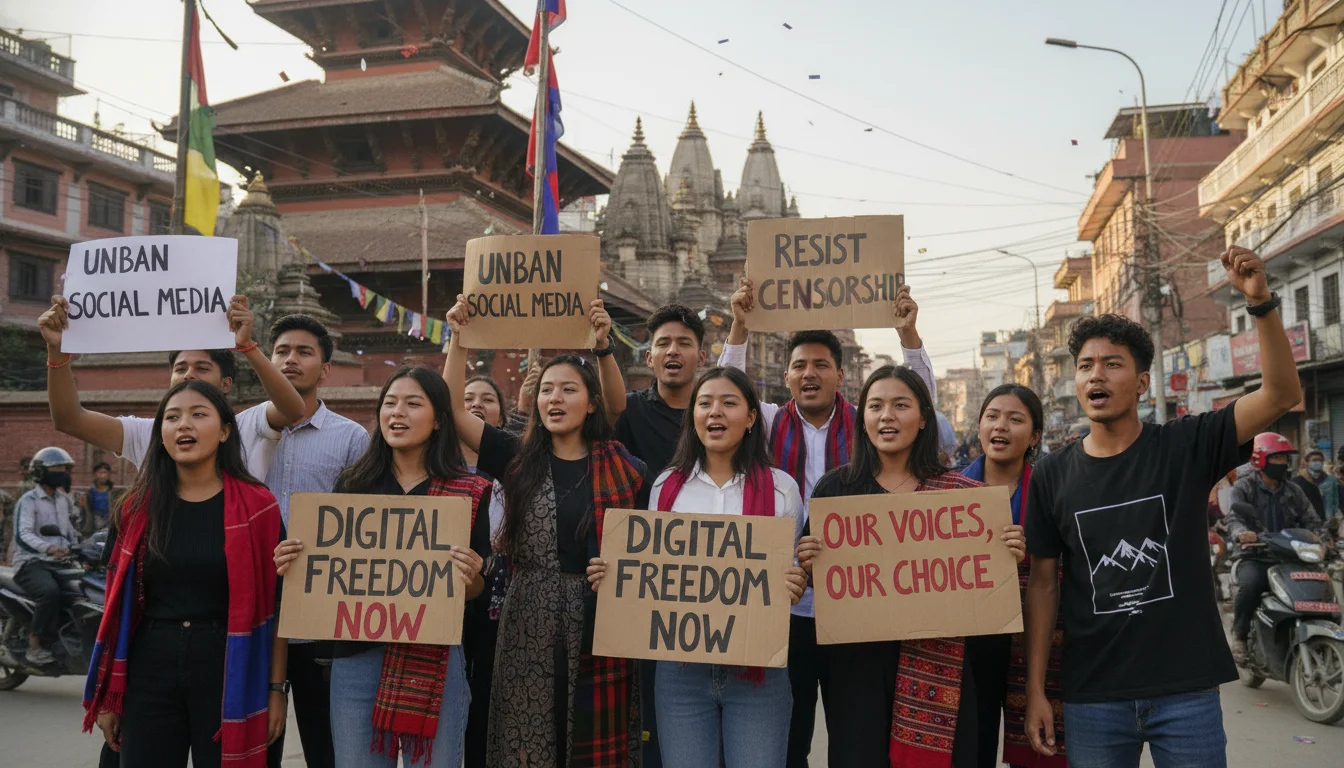
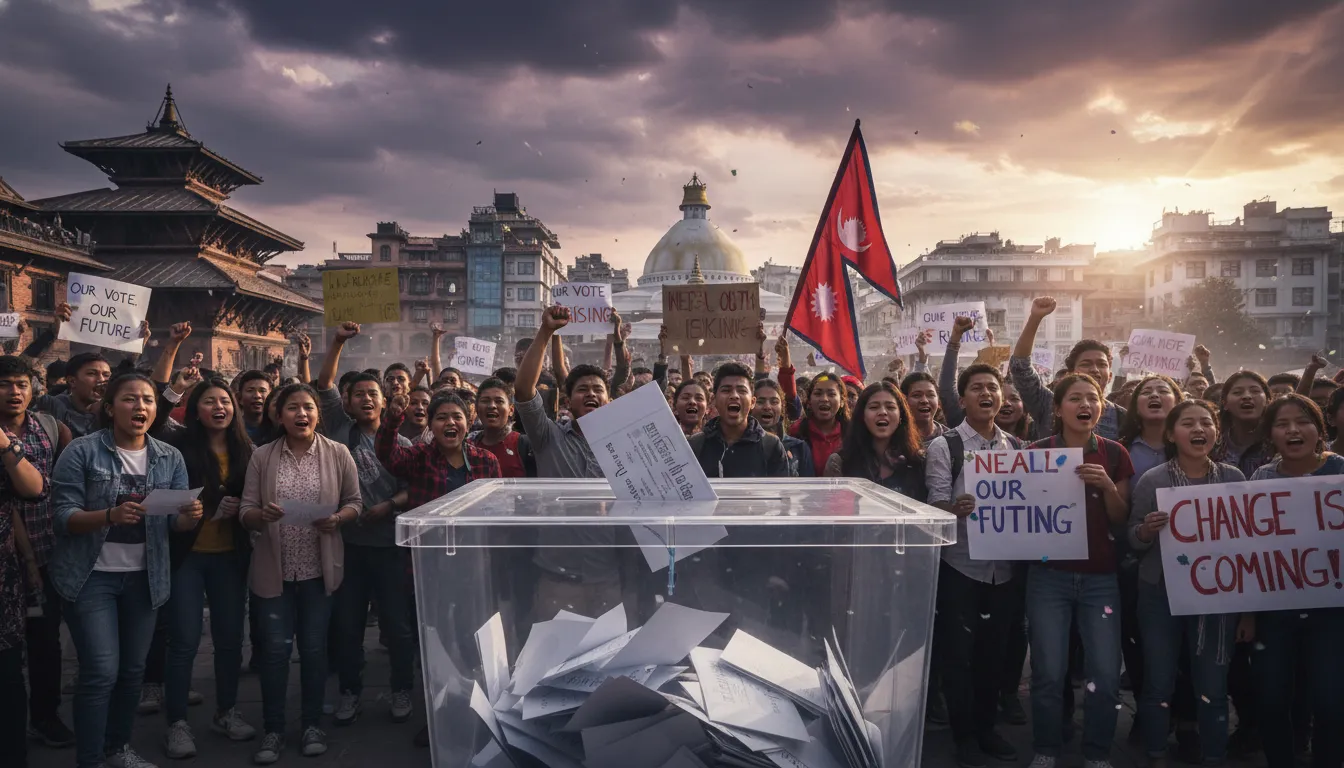
Unlike the 1990 People’s Movement (led by the Nepali Congress and Left Front) or the 2006 Jana Andolan II (orchestrated by the Seven Party Alliance and Maoists), the 2025 uprising was characterized by its decentralized, leaderless structure. It was mobilized primarily by urban youth under the age of 30, utilizing the very digital tools the state sought to suppress. The escalation was rapid and violent. Following the death of 19 protesters, including a minor, at the hands of security forces on September 8, 2025, the protests metamorphosed from a single-issue grievance into a revolutionary demand for systemic overhaul.
The psychological impact of this uprising on the electorate cannot be overstated. It shattered the “invincibility” myth of the major political parties. The sight of the Prime Minister resigning on September 9 and fleeing the capital (reportedly by helicopter) created a vacuum of authority that the traditional opposition was ill-equipped to fill. The subsequent installation of Sushila Karki, the former Chief Justice known for her judicial activism, as the head of an interim government on September 12, 2025, signaled a temporary suspension of partisan politics in favor of stabilizing the constitutional order.
1.2 The Interim Administration and the Crisis of Governance
The mandate of the Sushila Karki-led interim government was singular: to restore law and order and conduct free and fair elections. However, the operational reality has been fraught with challenges that have further alienated the public from the political class.
The interim period has been marked by a peculiar form of instability: the resignation of technocratic ministers to pursue political ambitions. As detailed in recent reports, four ministers from the interim cabinet, including high-profile figures like Kulman Ghising (Minister of Energy) and Bablu Gupta (Youth and Sports), resigned their posts in January 2026 to contest the upcoming elections. This “exodus of the technocrats” has been criticized by civil society leaders and former administrators as a breach of public trust, reinforcing the cynical view that even the “neutral” interim government is a stepping stone for personal political aggrandizement.
Furthermore, the security situation remains fragile. The government has had to launch special operations to recover over 1,100 firearms looted during the chaos of the September uprising and to rearrest thousands of prisoners who escaped during the breakdown of law and order. The specter of insecurity looms over the March 5 polls, influencing voter behavior toward candidates who project strength and decisive leadership.
Chapter 2: The Electoral Architecture and Demographics
2.1 The Constitutional Framework and the Schedule
The 2026 election will constitute the House of Representatives, the lower house of the Federal Parliament. Per the 2015 Constitution, the house consists of 275 members elected through a mixed electoral system:
- 165 Members elected via First-Past-The-Post (FPTP) from single-member constituencies.
- 110 Members elected via Proportional Representation (PR) from a single nationwide constituency, with a threshold of 3% for a party to be recognized as a national party.
This system is structurally designed to prevent single-party dictatorships but often results in hung parliaments. However, predictive models for 2026 suggest that the magnitude of the “wave election” might override these structural checks.
Key Dates in the Electoral Timeline:
- Dissolution of Parliament: September 12, 2025.
- Voter Registration Deadline: November 21, 2025.
- Candidate Nomination (FPTP): January 20, 2026.
- Election Day: March 5, 2026.
2.2 The Demographic Bulge
The 2026 electorate is defined by a significant “youth bulge.” With 18.9 million registered voters, representing an increase of roughly 5.09% from previous cycles, the demographic weight has shifted decisively toward voters aged 18-40. This demographic is the primary engine of the “Gen Z Uprising” and exhibits low partisan loyalty to the historical parties (NC, UML, Maoists). Their voting behavior is driven less by historical patronage and more by immediate economic grievances, specifically unemployment and the desire for digital rights.
Chapter 3: The Challenger — The Rise of the Rastriya Swatantra Party (RSP)
3.1 The “Balen Effect”: A Unified Alternative Front
The single most critical variable in the 2026 election prediction model is the strategic consolidation of alternative political forces. Prior to December 2025, the “alternative vote” was threatened by fragmentation between the Rastriya Swatantra Party (RSP), led by Rabi Lamichhane, and the independent movement centered around Kathmandu Mayor Balendra Shah (“Balen”).
However, a landmark political development occurred in late December 2025, fundamentally altering the electoral calculus. Balen Shah and the RSP signed a 7-point agreement, creating a unified front against the established parties.
The Agreement Mechanics: Under this deal, Balen Shah agreed to resign from his mayoral post (which he did on January 18, 2026) and join the RSP. Crucially, the agreement designates Balen Shah as the RSP’s Projected Prime Ministerial Candidate, while Rabi Lamichhane retains the organizational control as Party President.
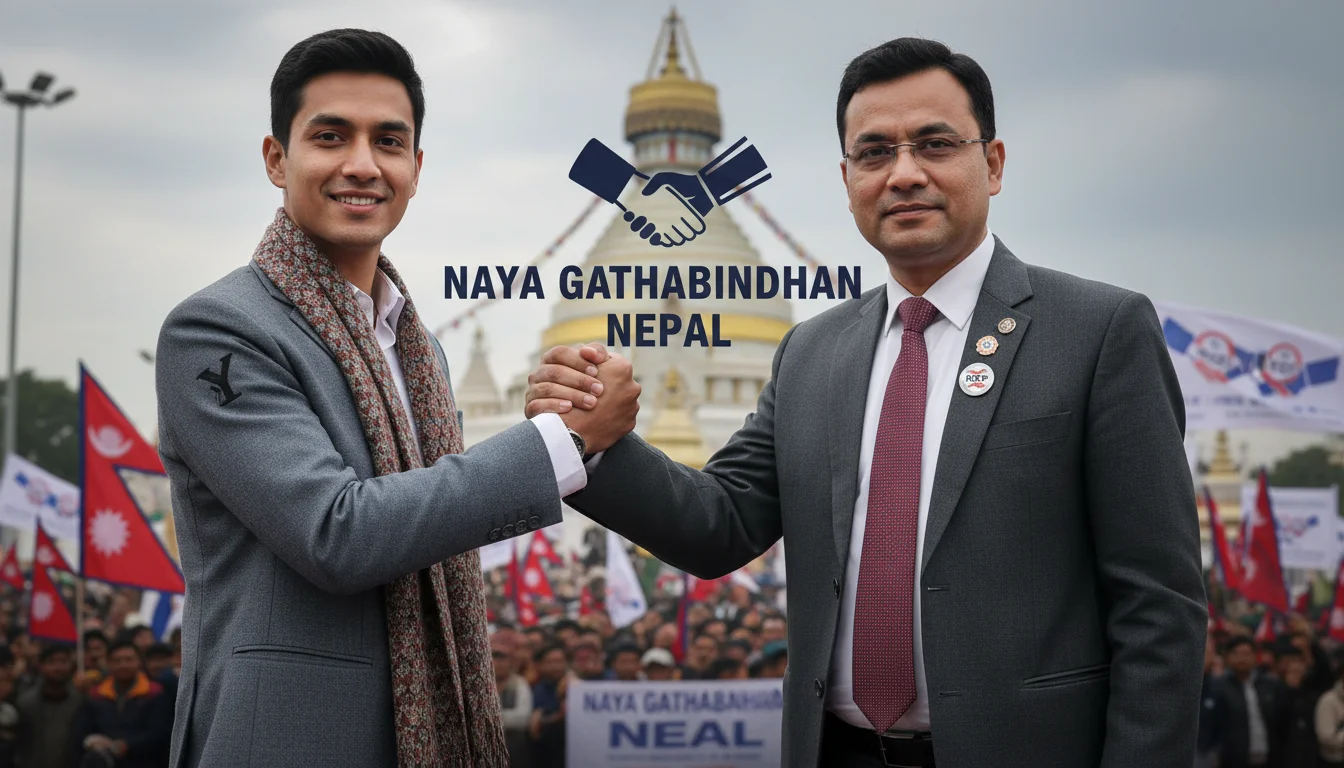
Strategic Implication: This merger combines the RSP’s parliamentary infrastructure (party symbol, PR list eligibility) with Balen’s immense personal popularity and “cult status” among the youth. It effectively nationalizes the “Balen Brand,” which was previously confined to the Kathmandu Valley.
The RSP further bolstered its technocratic credentials by merging with the Ujyalo Nepal Party, led by the faction supporting Kulman Ghising, the celebrated former Managing Director of the Nepal Electricity Authority known for ending load-shedding. This trilateral consolidation—Rabi’s media savvy, Balen’s youth appeal, and the Ghising faction’s delivery track record—creates a formidable “super-party” of the new era.
3.2 The “Head-Hunting” Strategy: Jhapa-5 and Beyond
The RSP has adopted a highly aggressive electoral strategy, departing from the traditional approach of seeking “safe seats.” The party has deployed its heavyweights to directly challenge the leaders of the old guard in their own fortresses.
The Battle for Jhapa-5: The most symbolic contest of the 2026 election is in the Jhapa-5 constituency.
The Incumbent: K.P. Sharma Oli, Chairman of the CPN-UML and four-time Prime Minister. Jhapa-5 has been his stronghold for three decades.
The Challenger: Balen Shah. By choosing to run in Jhapa-5 rather than a safe seat in Kathmandu, Balen has turned the constituency into a national referendum on the “Old vs. New” paradigm.
Predictive Analysis: Early indicators suggest this is a high-risk, high-reward strategy. A victory here would decapitate the UML leadership. Prediction markets and analyst sentiment lean toward Balen, citing the massive anti-incumbency generated by Oli’s flight during the uprising.
Chitwan-2 and Other Fronts: Rabi Lamichhane is seeking re-election from Chitwan-2, a constituency he won with a record margin in the 2023 by-election.
The RSP has also fielded Gen Z activists and technocrats across the country, including Sobita Gautam in Chitwan-3 and new faces in Gorkha and Achham.
3.3 Platform and Manifesto: The Technocratic Promise
While the full manifesto is detailed in the RSP’s campaign literature, the core tenets driving their popularity include:
- Digital Democracy: Implementation of digital voting and direct feedback mechanisms for legislation.
- Anti-Corruption: A “zero-tolerance” policy, including the investigation of assets of all politicians holding office since 1990.
- Directly Elected Executive: A push for constitutional amendment to allow for a directly elected Prime Minister, ensuring stability.
Chapter 4: The Old Guard in Retreat — NC, UML, and Maoists
4.1 Nepali Congress: The Gamble of Reinvention
The Nepali Congress (NC), the oldest democratic party, has attempted a radical internal surgery to survive the anti-establishment wave. Recognizing that its traditional leadership under Sher Bahadur Deuba was a liability, the party held a Special General Convention in January 2026.
The “Thapa Transformation”: The convention resulted in the election of Gagan Thapa as the new Party President, displacing the Deuba faction. Thapa, a younger leader known for his oratory and reformist stance, represents the NC’s attempt to offer “responsible change” as an alternative to the RSP’s radicalism.
- Electoral Strategy: In a bold strategic move, Gagan Thapa has shifted his constituency from Kathmandu-4 to Sarlahi-4 in the Madhesh Province. This move is calculated to reclaim the NC’s eroding base in the Terai region and challenge the narrative that the NC is a “hill-centric” party.
- Deuba’s Exit: Former PM Sher Bahadur Deuba has opted not to contest the parliamentary election, a move designed to signal that the party has truly moved on from the “old generation”.
4.2 CPN-UML: The Fortress Under Siege
The CPN-UML faces the most precarious position of any major party. As the ruling party during the September 2025 uprising, it bears the direct brunt of public anger.
- Leadership Stagnation: Despite the uprising, the party has re-nominated K.P. Sharma Oli as its Prime Ministerial candidate. This decision appeals to the party’s hardline cadre but risks alienating the floating voter.
- Defensive Alliances: To mitigate losses, the UML has entered into a tactical seat-sharing arrangement with the Nepali Congress for the National Assembly elections. This “Grand Coalition” of the two largest traditional rivals is a desperate measure that validates the RSP’s narrative of a “political syndicate” (the syndicate-tantra).
4.3 The Decline of the Maoists (NCP)
Pushpa Kamal Dahal “Prachanda” has attempted to rebrand his political vehicle by merging the Maoist Centre with splinter groups (including Madhav Nepal’s Unified Socialist) to form the Nepali Communist Party (NCP).
- Retreat to the Base: Facing a wipeout in urban centers, Prachanda has abandoned his previous constituencies (Chitwan, Gorkha) to contest from Rukum East, the historical heartland of the Maoist insurgency. This retreat signals a defensive strategy focused on survival rather than national expansion.
Chapter 5: Economic Indicators as Electoral Drivers
The political volatility is underpinned by a severe economic paradox that is driving voter behavior.
5.1 The “Stagnation-Migration” Trap
As of late 2025 and January 2026, Nepal’s macroeconomic indicators present a misleading picture of health masking deep structural rot.
- Inflation: Consumer Price Inflation (CPI) dropped to a multi-decade low of 1.63% in late 2025. While nominally positive, economists attribute this to a collapse in domestic demand due to mass out-migration.
- Remittances: Inflows surged by 35.6% in the first five months of FY 2025/26, reaching nearly Rs 183 billion in a single month. This spike correlates with the record number of youths leaving the country, a direct metric of the domestic job market’s failure.
5.2 The Forex Paradox
Foreign exchange reserves have swelled to a historic Rs 3.2 trillion (approx. USD 24 billion). However, this accumulation is due to the lack of imports (industrial stagnation) and high remittances. The electorate views this not as a success of the Oli government, but as evidence of a “cemetery economy”—rich in cash but dead in opportunity.
Electoral Implication: The RSP’s campaign focuses heavily on this “Migration Crisis.” They argue that the reserves should be used for industrialization to create jobs at home, a message that resonates with the thousands of youths queuing for passports and temporary police jobs.
Chapter 6: Quantitative Predictions and Market Sentiment
6.1 Prediction Markets: The Kalshi Signal
Data from the Kalshi prediction market “Nepal House of Representatives Winner 2026” as of January 24, 2026, provides a stark forecast of the likely outcome:
| Party / Alliance | Probability of Victory | Contract Price (Yes) | Trend |
|---|---|---|---|
| Rastriya Swatantra Party (RSP) | 59% | 64¢ | ▲ Rising |
| Nepali Congress (NC) | 19% | 24¢ | ↔ Stable |
| CPN-UML | 11% | 15¢ | ▼ Declining |
| Others (Coalition/Hung) | 11% | N/A | – |
Analysis: The market assigns a nearly 60% probability to an RSP victory. This is a statistical anomaly in Nepal’s history, where hung parliaments are the norm. The market is pricing in a “Wave Election“—a scenario where the FPTP system amplifies a popular vote swing into a landslide seat victory.
6.2 Seat Projection Models
Based on the prediction market data and constituency-level analysis, the following seat distribution in the 275-member House is projected:
| Party | FPTP Seats (Projected) | PR Seats (Projected) | Total Seats (Est.) | Governance Status |
|---|---|---|---|---|
| RSP | 90 - 105 | 45 - 55 | 135 - 160 | Majority |
| Nepali Congress | 30 - 40 | 30 - 35 | 60 - 75 | Main Opposition |
| CPN-UML | 15 - 25 | 25 - 30 | 40 - 55 | Third Force |
| NCP (Maoist+) | 8 - 12 | 10 - 12 | 18 - 24 | Minor Party |
| RPP (Royalist) | 5 - 10 | 5 - 8 | 10 - 18 | Regional/Identity |
| Janamat Party | 8 - 12 | 3 - 5 | 11 - 17 | Madhesh Power |
Rationale:
- The FPTP Multiplier: In a three-cornered fight (RSP vs NC vs UML), the RSP is likely to sweep the urban and semi-urban constituencies where the “Gen Z” vote is concentrated.
- The PR Floor: Even in rural areas where RSP organization is weak, the “Balen” factor will drive the PR vote, ensuring a high proportional haul.
Chapter 7: Regional and Geopolitical Dimensions
7.1 The Madhesh Battleground
The Madhesh province remains a critical puzzle piece. The Janamat Party, led by C.K. Raut, has eclipsed the traditional Janata Samajbadi Party (JSP).
- Thapa’s Gamble: Gagan Thapa’s entry into Sarlahi-4 is an attempt to disrupt this regional dominance. However, early assessments suggest he faces a stiff challenge from both the Janamat Party and the RSP’s growing influence among migrant worker families in the Terai.
7.2 The Monarchy Factor
The Rastriya Prajatantra Party (RPP) continues to agitate for the restoration of the Hindu Monarchy. While they have mobilized street protests, they have failed to form a unified front with independent royalists like Durga Prasai. In the face of the RSP’s forward-looking “Digital Democracy” narrative, the RPP’s backward-looking “Restoration” narrative appears to be losing steam, likely relegating them to a minor pressure group.
7.3 Geopolitical Ripples
- India: New Delhi is closely monitoring Balen Shah. His placement of a “Greater Nepal” map in his mayoral office in 2023 caused diplomatic friction. An RSP-led government might pursue a more assertive, nationalist foreign policy, potentially complicating the “special relationship.”
- China: The collapse of the Left Alliance (UML-Maoist) is a strategic setback for Beijing. The RSP’s technocratic leanings and diverse leadership base make them less ideologically aligned with the CCP than the previous communist incumbents.
Conclusion: The Era of Disruption
The 2026 General Election is poised to be the most consequential in Nepal’s modern history. The convergence of the Gen Z Uprising, the collapse of the Oli administration, and the RSP-Balen unification has created a perfect storm for the established political order.
Final Prediction: The data strongly indicates that the Rastriya Swatantra Party (RSP), led by the dual engine of Rabi Lamichhane and Balendra Shah, will emerge as the largest party, likely securing a simple majority.
- The Winner: Rastriya Swatantra Party (RSP).
- The Next Prime Minister: Balendra Shah (Balen) is the projected Prime Minister, based on the internal agreement and his specific candidacy against K.P. Sharma Oli in Jhapa-5.
- The Losers: The “Syndicate” of NC, UML, and Maoists faces an existential reduction in parliamentary power.
The electorate appears ready to trade the “stability” of the old guard for the “hope” of the new, despite the inherent risks of an inexperienced administration. March 5, 2026, will likely mark the end of the post-1990 political transition and the beginning of Nepal’s “Third Republic.”
Table 1: Key Candidate Matchups and Predictions
| Constituency | Candidates | Party Affiliation | Projected Winner | Analysis |
|---|---|---|---|---|
| Jhapa-5 | K.P. Sharma Oli vs. Balendra Shah | UML vs. RSP | Balen Shah | High anti-incumbency; youth consolidation. |
| Sarlahi-4 | Gagan Thapa | Nepali Congress | Toss-Up | Strong individual brand vs. weak party base. |
| Chitwan-2 | Rabi Lamichhane | RSP | Rabi Lamichhane | Safe seat; incumbent advantage. |
| Rukum East | Pushpa Kamal Dahal | NCP | Pushpa Kamal Dahal | Legacy Maoist vote; safe haven. |
| Kathmandu-4 | Pradip Paudel (Likely) | Nepali Congress | RSP Candidate | Urban swing against Congress. |
Table 2: Comparative Economic Indicators (FY 2024/25 vs 2025/26)
| Indicator | Late 2025 Value | Trend | Electoral Implication |
|---|---|---|---|
| Inflation (CPI) | 1.63% | ▼ Historical Low | Indicates demand collapse; minimal credit for Govt. |
| Remittances | Rs 183 Billion/mo | ▲ +35.6% Surge | Signs of mass youth exodus (brain drain). |
| Forex Reserves | Rs 3.2 Trillion | ▲ Record High | “Cemetery Economy” narrative (capital idle). |
| GDP Growth | 4.3% (Est.) | ↔ Stagnant | Insufficient to absorb youth workforce. |
Related Resources
- Digital Marketing Strategy Template for Nepali Businesses
- Google Ads Cost in Nepal: Complete Breakdown
- Facebook Ads vs TikTok Ads for Local Businesses
- Content Marketing Services in Nepal
Need Strategic Support?
If you want help turning these insights into an actionable growth plan, contact Arjan KC for consulting, campaign strategy, and team training.