Building E-commerce Simulations for Business Students
Building Interactive E-commerce Simulations for Business Undergraduates

The landscape of higher education business instruction has undergone a profound structural transformation, migrating from passive pedagogical frameworks to dynamic, experiential learning environments. As the global e-commerce sector evolves into a highly complex, data-driven ecosystem encompassing algorithmic digital marketing, real-time pricing optimization, globalized supply chain logistics, and influencer-driven social commerce, traditional academic methodologies increasingly fall short of preparing undergraduates for the realities of the marketplace. Traditional case study methodologies, while historically valuable for examining ethical dilemmas and dissecting historical corporate strategy, fundamentally fail to thrust students into the real-time, high-stakes cognitive environments where decisions generate immediate, compounding consequences. Case studies permit the passive analysis of a founder’s past decisions, whereas interactive e-commerce simulations serve as virtual laboratories that require students to become the founders themselves, adjusting strategies, testing hypotheses, and facing the quantitative consequences of their choices in real time.
Within these digital simulation environments, business undergraduates are tasked with managing finite financial resources, allocating advertising budgets across digital channels, and optimizing physical supply chains. The overarching objective is to develop the agile strategic thinking and data-driven decision-making skills required in the modern digital economy. This comprehensive report presents an exhaustive examination of the development, implementation, pedagogical efficacy, and assessment of interactive e-commerce simulations for undergraduate business programs. It explores the foundational learning theories validating gamified education, analyzes the commercial landscape of off-the-shelf simulation platforms, dissects the sophisticated technical architectures required for custom simulation development, and outlines the data telemetry and rubric frameworks necessary for rigorous academic accreditation.
Pedagogical Foundations of Experiential Business Simulations
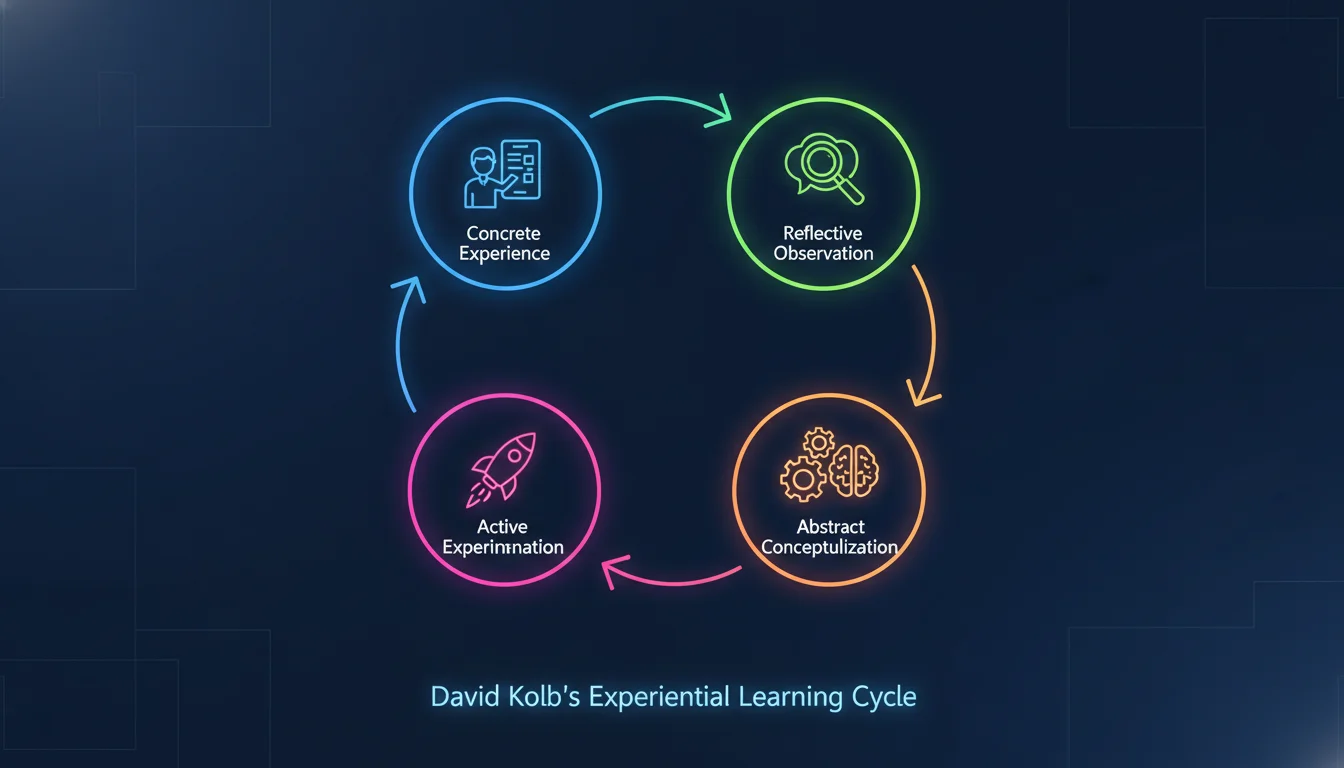
The academic efficacy of business simulations is deeply rooted in established epistemological frameworks, most notably David Kolb’s Experiential Learning Cycle. This foundational model postulates that deep, internalized learning occurs through a cyclical four-stage process consisting of a concrete learning experience, reflective observation, abstract conceptualization, and active experimentation. When applied directly to an interactive e-commerce simulation, this cycle manifests continuously. A student might experience a sudden and catastrophic inventory stockout due to a poorly forecasted marketing campaign, which serves as the concrete experience. By reviewing the simulation’s performance dashboards and financial statements, the student engages in reflective observation, identifying the mathematical mismatch between aggressive advertising spend and limited warehouse capacity. The student then internalizes the theoretical relationship between customer acquisition velocity and supply chain constraints, engaging in abstract conceptualization. Finally, the student adjusts procurement orders and modulates daily ad budgets for the subsequent simulation round, representing active experimentation.
Simulations further align seamlessly with the widely recognized 70-20-10 learning model, which suggests that seventy percent of knowledge acquisition and retention derives from experiential, hands-on tasks and problem-solving, twenty percent from social interactions and peer collaboration, and a mere ten percent from formal, traditional classroom instruction. Empirical research cited across instructional design literature indicates that learners retain up to ninety percent of information acquired through experiential simulation, compared to a highly inefficient ten percent retention rate through traditional lecture formats. Furthermore, academic studies specific to executive and undergraduate business education demonstrate that students engaged in simulation-based learning retain approximately seventy-five percent of the instructional content, vastly outperforming retention rates from lectures, audio-visual presentations, and even active discussion groups. Deep actionable knowledge and rapid decision-making skills develop most effectively when individuals have the opportunity to apply classroom theory in environments characterized by messy complexity, extreme time pressures, and irreversible consequences.
The introduction of gamification mechanics into these simulated environments—such as competitive leaderboards, limited resource allocation constraints, and real-time market feedback—significantly enhances both intrinsic academic motivation and overall self-efficacy. Intrinsic motivation within these environments is closely associated with Flow theory, wherein students become entirely engaged with the activity due to a perfect balance between the challenge presented and their current skill level. Academic studies investigating the deployment of gamified business planning simulations have demonstrated statistically significant improvements in student outcomes. In a quasi-experimental study observing higher education students utilizing a gamified entrepreneurship program, objective learning scores reached an impressive average of 89.93 out of 100, while self-efficacy scores evaluating the students’ confidence in executing business tasks rose dramatically from a pre-intervention mean of 46.11 to a post-intervention mean of 69.58.
The competitive nature of multi-team simulations, where cohorts of students operate rival e-commerce firms within a shared, zero-sum virtual market, actively prevents the passive learning behaviors often seen in traditional settings. Because one team’s aggressive pricing strategy or massive digital marketing expenditure directly impacts the market share and customer acquisition costs of rival teams, the simulation accurately mirrors the hostile and stochastic dynamics of real-world commerce. This dynamic, peer-to-peer interaction cultivates higher-order cognitive skills, compelling undergraduate students to not only execute their own internal corporate strategies but also to actively anticipate, model, and counter the strategic maneuvers of their competitors.
Core E-Commerce Competencies in Simulated Environments
Digital Marketing and Unit Economics
Modern e-commerce is fundamentally reliant on algorithmic customer acquisition and the precise calculation of unit economics. Advanced simulations require students to design, fund, and execute multi-channel digital marketing campaigns, forcing them to balance long-term brand-building initiatives with immediate performance marketing. Students routinely engage in extensive keyword research, the continuous A/B testing of advertisement copy across target audiences, and the granular allocation of budgets across search, display, and shopping channels. Crucially, participants must master unit economics by relentlessly optimizing the ratio between Customer Acquisition Cost (CAC) and Customer Lifetime Value (CLV). If a student team aggressively scales its advertising budget without simultaneously optimizing landing page conversion rates or website user experience, the simulation mathematically demonstrates the resulting erosion of profit margins. Furthermore, simulations often incorporate Search Engine Optimization strategies, requiring students to make direct decisions on content investment to observe how these choices impact organic traffic and long-term sales.
Supply Chain and Inventory Logistics
The physical constraints of e-commerce must be modeled with high fidelity to counter the pervasive illusion that digital businesses operate without physical friction. Comprehensive simulations introduce rigid supply chain variables such as procurement lead times, warehousing costs, logistics limitations, and inventory depreciation. Students are forced to forecast future demand using historical data and current market trends to prevent costly stockouts, which damage brand reputation, or excess inventory accumulation, which destroys cash flow. Progressive curriculum structures must also address asset-light fulfillment methodologies such as dropshipping. Simulations modeling this specific dynamic require students to orchestrate digital advertising libraries alongside digital storefronts, demanding an initial budget allocation while managing supplier reliability, extended shipping times, and thinner profit margins.
Social Commerce and Influencer Dynamics
The structural shift from intent-driven e-commerce, where customers enter websites with a specific purchase intent, to discovery-driven social commerce represents a critical evolution in the retail industry. Social commerce sales in the United States alone are projected to surpass one hundred billion dollars by the year 2026, driven heavily by platforms integrating native checkout features that allow users to purchase products without ever leaving their social feeds. Forward-thinking educational simulations are rapidly incorporating influencer marketing mechanics and social commerce features, requiring students to allocate operational budgets to various tiers of content creators.
Students engage with Key Opinion Consumers or hybrid creators who drive organic, word-of-mouth sales through personal networks. Within the simulation, students must calculate the return on ad spend for diverse influencer tiers, balancing the massive upfront costs of celebrity macro-influencers against the highly targeted, authentic, and often higher-converting engagement of niche micro-influencers.
Financial Operations and Enterprise Sustainability
Financial literacy is embedded directly into the core operational loop of these platforms. Students must interpret Profit and Loss statements, cash flow reports, and balance sheets that are generated dynamically based on their strategic inputs over simulated fiscal quarters. Furthermore, modern academic curricula demand the deep integration of Environmental, Social, and Governance factors. Modern simulations force students to navigate the complex trade-offs between maximizing short-term operating margins and investing in sustainable packaging, ethical sourcing, and carbon-neutral logistics. By modeling these factors, the software reflects the intense real-world pressures exerted by conscious consumers and regulatory bodies, teaching students that long-term brand equity is inextricably linked to corporate responsibility.
Commercial Landscape of Off-the-Shelf Simulation Platforms
-
Cesim Ecommerce
- Primary Pedagogical Focus Areas: Sustainability, Brand Building, Supply Chain Efficiency, Financial Optimization
- Key Architectural Features & Mechanics: AI-driven feedback assessments, multilingual support across eleven languages including Hindi and Mandarin, dynamic tracking of Operating Margins and Return on Ad Spend, competitive peer-to-peer market modeling.
- Ideal Academic Application: Undergraduate and graduate capstone courses in e-commerce, sustainable business modeling, and digital marketing.
-
Stukent Simternship
- Primary Pedagogical Focus Areas: Digital Marketing Strategy, Pay-Per-Click Advertising, SEO, A/B Testing
- Key Architectural Features & Mechanics: Ten immersive simulation rounds, auto-graded quizzes, seamless Learning Management System integration, real-time metric feedback, complex keyword bidding mechanics.
- Ideal Academic Application: Dedicated digital marketing modules requiring granular execution of advertising campaigns and data analysis.
-
Finsimco E-Commerce
- Primary Pedagogical Focus Areas: Financial Modeling, Customer Acquisition Cost vs. Lifetime Value, Strategic Agility
- Key Architectural Features & Mechanics: Adaptive difficulty algorithms adjusting to learner input, real-time administrator coaching panels, deep Profit and Loss statement integration, gamified competitive environment.
- Ideal Academic Application: Cross-functional capstone courses bridging marketing operations with advanced financial management and analytics.
-
StratX CircularPRO
- Primary Pedagogical Focus Areas: Environmental Social Governance, Circular Economy Models, Systems Thinking
- Key Architectural Features & Mechanics: Focuses heavily on authentic sustainability dilemmas, responsible resource management, and measuring long-term macroeconomic ESG outcomes.
- Ideal Academic Application: Innovation, corporate strategy, and modern sustainability-focused curriculum programs.
-
Hubro Business
- Primary Pedagogical Focus Areas: Foundational Business Management, Entrepreneurship, Introductory Finance
- Key Architectural Features & Mechanics: Browser-based accessibility, extremely short decision cycles, highly visual and intuitive user interface, simplified operational mechanics.
- Ideal Academic Application: Early-career or introductory undergraduate programs requiring a short learning curve and immediate engagement.
-
Marketplace Simulations
- Primary Pedagogical Focus Areas: Conscious Capitalism, Market Strategy, Venture Integration
- Key Architectural Features & Mechanics: Overlay assessments for Assurance of Learning, head-to-head competition, focus on value-based decision-making beyond pure profit maximization.
- Ideal Academic Application: Executive MBA and senior undergraduate capstone courses requiring holistic business integration.
While these commercial platforms offer immediate deployment capabilities, beautifully designed user interfaces, and proven pedagogical frameworks, they inherently operate within rigid, predefined programmatic boundaries. Institutions utilizing these closed systems must adapt their syllabi and grading structures to fit the software’s hardcoded parameters, which can restrict the academic exploration of highly specialized regional markets, proprietary faculty research, or rapidly emerging niche industries that the vendor has not yet modeled.
The Strategic Dilemma: Build vs. Buy in Higher Education
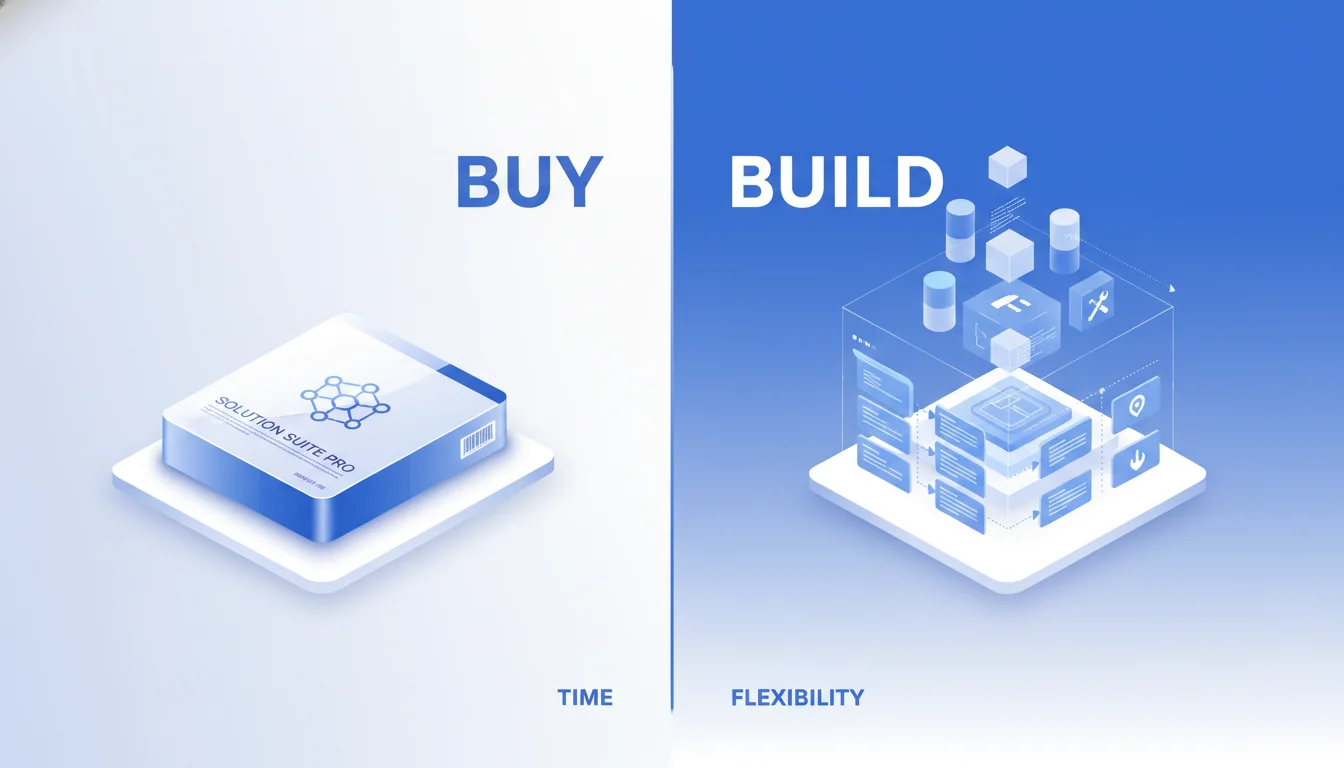
When an institution’s curriculum requires bespoke mechanics that commercial vendors cannot provide, higher education administrators must evaluate the complex Build vs. Buy strategic dilemma. This decision matrix requires a rigorous analysis of the Total Cost of Ownership, long-term scalability, institutional technical proficiency, integration constraints, and the desire for competitive differentiation in the academic market.
Cost Modeling and Academic Licensing Structures
Off-the-shelf educational software typically employs either a per-student licensing model or a tiered institutional enterprise license. Per-student costs for premium, highly interactive simulations often range around one hundred and sixty-five dollars per seat, a variable cost that scales linearly with course enrollment and must often be passed directly to the student via course fees. Alternatively, enterprise academic licensing is generally tied to total student enrollment volumes or institutional revenue bands. Software platforms in the higher education sector often feature pricing tiers beginning at thirty thousand dollars annually for smaller programs, escalating to one hundred and seventy-five thousand dollars or more for large-scale deployments across tens of thousands of active users. While these costs are highly predictable and include ongoing vendor support, server uptime guarantees, and annual curriculum updates, they accumulate significantly over a multi-year horizon, often representing millions of dollars over a decade.
Conversely, developing a custom e-commerce simulation requires a massive upfront capital expenditure and highly specialized project management. Industry benchmarks for enterprise-grade custom software development reveal that building a robust, multiplayer simulation engine ranges from one hundred thousand dollars for a simplified prototype to well over four hundred thousand dollars for a comprehensive, scalable platform. The development timeline is equally demanding, typically requiring four to eight weeks for pre-production and design, six to ten weeks for prototype development, and four to six months for full production and asset creation. Furthermore, university procurement processes involving Requests for Proposals require immense lead times. The initial legal review alone can take thirty to sixty days, followed by legislative reviews and contract execution phases, meaning the total timeline from concept to deployment can easily exceed twelve months.
However, custom software incurs absolutely no recurring per-seat licensing fees to external vendors. Financial models indicate that for educational institutions deploying the simulation to more than five hundred users annually, custom development often yields a higher Return on Investment over a three-to-five-year period, despite the severe initial capital outlay and ongoing server maintenance costs.
Hybrid Development via Simulation Engines and Low-Code Platforms
To mitigate the extreme financial risks and extended timelines of building a simulation entirely from scratch, while simultaneously retaining bespoke functionality, many academic institutions are employing a hybrid development strategy. This approach utilizes specialized simulation middleware and enterprise low-code application platforms. Platforms such as Forio Epicenter serve as developer-grade middleware specifically designed for learning simulations. They allow institutional researchers to build proprietary mathematical models using standard data science languages such as Python, R, and Julia, or established modeling tools like Vensim and Stella. The engine then handles the complex backend infrastructure, providing pre-built interface builders, secure user authentication protocols, data dashboards, and elastic cloud hosting.
Furthermore, low-code and no-code environments such as Microsoft Power Apps, OutSystems, Mendix, and DronaHQ allow non-technical instructional designers and business school faculty to collaborate directly with IT departments. These platforms provide highly visual, drag-and-drop development interfaces connected to robust, enterprise-grade databases. By generating proper database code rather than mere abstraction layers, these platforms allow universities to handle millions of records and complex workflows without the overhead of manual, full-stack programming. This hybrid approach significantly reduces time-to-market while ensuring that the university retains total intellectual property ownership over the underlying educational model.
Technical Architecture of E-commerce Simulation Engines
Constructing an interactive, multi-team e-commerce simulation requires a profoundly robust underlying technical architecture capable of processing thousands of interdependent variables, network calls, and database updates in real-time.
The core of any business simulation is its mathematical modeling engine, which typically relies on one or a combination of three primary simulation methodologies: System Dynamics, Discrete Event Simulation, and Agent-Based Modeling.
Mathematical Modeling Methodologies
-
System Dynamics
- Architectural Concept and Mathematical Foundation: Analyzes complex systems using continuous flows, causal loops, and feedback mechanisms governed by differential equations representing stocks and flows.
- Application in E-commerce Simulations: Simulating continuous macroeconomic trends, the gradual build-up and decay of brand equity over time, or the continuous flow of aggregate market demand.
-
Discrete Event Simulation
- Architectural Concept and Mathematical Foundation: Models a system as a strict chronological sequence of distinct events where entities move linearly through defined queues, delays, and processing blocks.
- Application in E-commerce Simulations: Simulating granular supply chain logistics, warehouse fulfillment times, inventory bottlenecks, or customer service queue constraints.
-
Agent-Based Modeling
- Architectural Concept and Mathematical Foundation: Simulates the simultaneous operations, interactions, and decision-making processes of thousands of independent computational agents to assess emergent systemic behavior.
- Application in E-commerce Simulations: Simulating individual consumer purchasing decisions where each agent possesses unique preferences, price sensitivities, and social network influences.
An advanced custom e-commerce simulation designed for graduate-level execution might utilize an Agent-Based Modeling approach to simulate a population of heterogeneous consumers reacting dynamically to a student’s targeted social media ad campaign. Simultaneously, the software would utilize Discrete Event Simulation to calculate the precise logistical constraints of fulfilling the resulting surge in physical orders, providing a highly realistic, multi-layered computational environment.
Multiplayer Networking Topology and State Synchronization
To achieve the competitive, peer-to-peer market dynamics that make business simulations highly engaging, the architecture must support robust multiplayer networking. Unlike simple, turn-based logic where computations can be processed sequentially with minimal urgency, a live e-commerce simulation—such as modeling a real-time Black Friday bidding war for search engine keywords—requires instantaneous synchronized state replication across all connected student clients.
This networking requirement is typically managed via an authoritative client-server architecture. The central server maintains the absolute, definitive “truth” of the overall simulation state, tracking current global inventory levels, active advertisement bids, and market share distributions. When a student client submits an action, the server receives the data via TCP/IP or HTTP serialization protocols, validates the input against the core game logic to prevent cheating or desynchronization, and subsequently broadcasts the updated state back to all participating clients.
To handle massive scale and extreme computational performance, modern simulation architectures frequently employ the Entity Component System and the Data-Oriented Technology Stack. Unlike traditional object-oriented programming paradigms that suffer from memory fragmentation, the Entity Component System separates pure data components from operational logic systems, organizing data contiguously in memory arrays. This architecture allows the server’s central processing unit to utilize sophisticated Burst Compilers and Job Systems, processing massive arrays of calculations—such as updating the price elasticity for one hundred thousand virtual consumers—with unprecedented multi-core efficiency.
Furthermore, advanced deterministic rollback mechanisms must be engineered into the netcode. If unpredictable network latency causes a desynchronization between a student’s local client and the authoritative server, the system instantly rewinds the simulation state, applies the correct chronological inputs received out of order, and fast-forwards to the corrected present state, ensuring absolute mathematical fairness in highly competitive academic market scenarios.
Data Telemetry, Assessment, and Accreditation Frameworks
The pedagogical value of an interactive e-commerce simulation is inexorably linked to the quality of the data telemetry it generates and how that specific data is utilized for rigorous academic assessment. Simulations represent a profound technological upgrade over traditional multiple-choice examinations because they capture not just the final outcome of a scenario, but the entire sequential decision-making process that led to that outcome.
Advanced Telemetry: SCORM versus xAPI
Historically, educational software integrated with university Learning Management Systems via the Sharable Content Object Reference Model (SCORM) standard. However, this legacy framework is highly restricted, tracking only fundamental metrics such as module completion status, pass or fail binaries, and final assessment scores within the structured confines of the platform.
For sophisticated business simulations, the implementation of the Experience API (xAPI), also known as Tin Can, is absolutely critical. This modern standard records telemetry as granular “noun-verb-object” statements—for example, recording that “Student A adjusted Advertisement Budget X to value Y at timestamp Z.” This vast stream of behavioral data is securely transmitted to an external Learning Record Store. This architecture permits the capture of incredibly granular behavioral telemetry, including offline interactions, cursor hover times, the specific sequence of analytical menus accessed, and the exact latency between a student observing a market change and executing a reactionary decision. By algorithmically analyzing this data, faculty can differentiate between a student who achieved a high profit margin through calculated, strategic adjustments and deep market research, versus a student who succeeded purely through random, chaotic inputs that happened to align with market trends.
Assessment Rubrics and Institutional Accreditation Alignment
To ensure that simulation-based learning activities meet the incredibly rigorous standards of international accrediting bodies such as the Association to Advance Collegiate Schools of Business (AACSB), institutions must implement highly structured Assurance of Learning (AoL) rubrics. These accrediting standards require institutions to demonstrate continuous quality improvement, focusing on strategic management, learner success, and quantifiable societal impact. Rubrics serve to translate the complex, multifaceted, and often abstract outcomes of a business simulation into objective, quantifiable academic metrics.
A comprehensive, accreditation-aligned business simulation rubric typically evaluates performance across several criteria:
-
Strategic Coherence:
- Direct Measurement: Evaluates the mathematical alignment between a team’s stated mission and their actual simulation inputs (e.g., executing high pricing to match premium, sustainable packaging).
- Indirect Measurement: Quality of written executive summaries outlining the intended strategy prior to simulation execution.
- Performance Target: 75% of the student cohort achieves a score of 4 out of 5 on strategic alignment rubrics.
-
Operational Execution:
- Direct Measurement: Assesses the optimization of supply chain mechanics, minimizing inventory turnover rates, and maximizing website conversion metrics.
- Indirect Measurement: Team presentation evaluating operational bottlenecks encountered during the simulation.
- Performance Target: Cohort maintains an average inventory stockout rate below 5% across all simulated quarters.
-
Financial Acumen:
- Direct Measurement: Measures the ability to interpret Profit and Loss statements, maintain healthy cash flow, and achieve target Operating Margins and Return on Ad Spend.
- Indirect Measurement: Standardized testing on financial formulas utilized within the simulation engine.
- Performance Target: 80% of students successfully calculate accurate unit economics during the debrief phase.
-
Market Adaptability:
- Direct Measurement: Evaluates the team’s quantitative responsiveness to unexpected market shocks, such as a simulated supply chain disruption or aggressive competitor pricing.
- Indirect Measurement: Peer evaluation of team communication and conflict resolution during high-stress simulation rounds.
- Performance Target: Teams adjust pricing strategies within one simulated round of a major competitor market entry.
Institutions frequently employ the industry-standard Kirkpatrick Model to structure this comprehensive evaluation hierarchy. This four-tier framework begins by assessing student Reactions (engagement and satisfaction), then moves to measuring Learning (acquisition of concepts via rubrics), followed by Behavior (ability to apply strategic thinking), and finally tracks Results (post-graduation employment and marketplace success). By mapping the granular behavioral data captured via xAPI directly to AACSB-aligned evaluation rubrics, business schools can irrefutably demonstrate that their experiential learning initiatives satisfy the most rigorous international accreditation standards.
Strategic Implementation Guidelines for Faculty
The successful integration of a complex e-commerce simulation into an undergraduate business curriculum requires meticulous pedagogical planning and a fundamental shift in instructional dynamics.
Implementation and Facilitation
Instructors must deliberately transition from their traditional roles as lecturers and primary sources of information into facilitators and curators of experiential learning environments. The implementation process must begin with extensive pre-simulation alignment. The simulation software cannot exist in a vacuum; it must be explicitly tied to the overarching goals of the course syllabus. Faculty facilitators are required to comprehensively review all supporting materials and rigorously pre-test the software environment to anticipate potential failure points, software glitches, or areas of extreme cognitive overload for the students.
During the introductory phases, students must be briefed not just on the mechanics of the software interface, but heavily on the underlying economic theories and analytical frameworks they are expected to apply. To prevent passive learning, students must be required to predict and logically explain the outcomes they expect the simulation to generate prior to executing their decisions.
Leaving undergraduates entirely to their own devices in a highly complex, multivariable simulation often leads to severe frustration, analytical paralysis, and ultimate disengagement. Implementing regular, guided milestone reviews is essential. During these intervals, student teams must present their strategic rationale, financial forecasts, and operational adjustments to the class or a faculty-led “Board of Directors” before the next simulation round is permitted to execute. This structured pause forces active reflection and abstract conceptualization, preventing students from merely guessing at inputs.
Crucially, the most vital phase of experiential learning occurs after the simulation concludes. The post-simulation debriefing process allows students to systematically deconstruct their failures, analyze successful competitor strategies, and connect their chaotic virtual experiences back to the foundational academic theories discussed in lectures. Without this highly structured reflection phase, the simulation severely degrades from a sophisticated educational tool into a mere digital game.
Furthermore, faculty must avoid poorly constructed grading schemas, such as basing a student’s entire academic grade purely on their final cumulative shareholder return or total market share within the game. Instead, grading must reflect the quality of the strategic thought process, the ability to pivot strategies based on data analysis, and the depth of insight demonstrated during the final debriefing sessions.
Conclusion
The integration of highly interactive e-commerce simulations into undergraduate business curricula represents a necessary and inevitable evolution in the methodology of higher education. As the global digital economy grows exponentially more sophisticated, driven by algorithmic performance marketing, dynamic influencer-driven social commerce, and highly complex, data-reliant supply chain networks, the pedagogical tools utilized to train future corporate leaders must possess a corresponding level of complexity. Traditional, static educational models are no longer sufficient to build the rapid, data-driven reflexes required in modern commerce.
Whether a university administration opts to license a commercially mature, off-the-shelf platform to ensure rapid deployment and operational cost predictability, or chooses to architect a bespoke, data-driven simulation engine to perfectly map proprietary curricular goals and regional market nuances, the overarching educational imperative remains identical. Institutions must transition undergraduate students from passive recipients of historical business theory into active, highly engaged participants in dynamic, consequential commercial environments.
By anchoring these virtual experiences in rigorous experiential learning frameworks, utilizing advanced telemetry data standards to track cognitive decision-making, and aligning all outcomes with strict international accreditation rubrics, universities can generate profound, measurable gains in student self-efficacy, strategic agility, and ultimate workforce readiness.