2026 Texas Full Coverage Auto Insurance Guide & Rates
The 2026 Texas Auto Insurance Market: Policy Changes, Provider Analysis, and Rate Dynamics
Executive Summary
The Texas automobile insurance market in 2026 occupies a transitional space characterized by the stabilization of actuarial models, the deployment of advanced telematics, and a heavily reformed regulatory framework. Following an era of historic premium escalations driven by post-pandemic supply chain disruptions, severe weather events, and a critical shortage of automotive repair technicians, the sector is experiencing a period of cautious recalibration. While the national average rate for auto insurance is projected to increase by a marginal one percent in 2026, the Texas market remains inherently volatile due to its unique geographic risks, sprawling metropolitan centers, and high concentrations of uninsured motorists. Currently, the average annual premium for a full coverage policy in Texas ranges between $2,498 and $2,821, while minimum liability coverage averages between $780 and $960 annually, heavily contingent upon the specific underwriter, the demographic profile of the insured, and the localized risk of the garaging zip code.
The operational landscape for property and casualty insurers has been fundamentally redefined by the conclusion of the 89th Texas Legislature. A comprehensive suite of consumer protection mandates—most notably requiring unprecedented underwriting transparency, unilateral appraisal rights for loss disputes, and strict guardrails surrounding the utilization of credit-based insurance scores—has been enacted into law. Conversely, ambitious legislative initiatives designed to modernize the state’s minimum liability thresholds and to introduce a state-subsidized public auto insurance option ultimately failed to achieve codification. Consequently, the established free-market dynamics and the legacy liability minimums that have governed the state for nearly two decades remain the foundational pillars of the industry.
This report provides an exhaustive, expert-level analysis of the 2026 Texas auto insurance sector. It meticulously examines the statutory framework, the operational impact of recent legislative shifts, the financial strength and consumer satisfaction metrics of leading underwriters, the granular pricing disparities across demographics and regions, the proliferation of usage-based insurance platforms, and the systemic challenges facing high-risk and low-income drivers navigating the market of last resort.
The Macroeconomic Drivers of Texas Auto Insurance Pricing
To contextualize the pricing paradigms of 2026, it is imperative to analyze the macroeconomic factors that dictate insurer loss ratios and subsequent premium calculations. Insurance premiums are not arbitrary; they are the mathematical reflection of projected operating costs, estimated claims payouts, risk tolerance, and profitability imperatives.

The preceding years were marked by a severe deterioration in underwriting profitability across the top ten United States auto insurers, driven by a confluence of inflationary pressures. The TechForce Foundation reported a critical labor shortage within the automotive repair industry, estimating that the demand for transportation technicians outpaced supply by a ratio of five to one. This labor deficit, coupled with strained global supply chains for automotive components, resulted in a 12.7 percent increase in the cost of vehicle repairs and maintenance over a single twelve-month tracking period. As the capital required to repair or replace totaled vehicles surged, insurers were forced to file for substantial rate increases to maintain statutory solvency requirements.

Entering 2026, the market has begun to absorb these shocks. Used vehicle depreciation has helped stabilize actual cash value payouts, and insurers have largely returned to profitability. However, the Texas market presents unique challenges that prevent a uniform reduction in rates. The state’s susceptibility to catastrophic weather—particularly severe spring hailstorms in the northern and central regions, alongside hurricane-induced flooding along the Gulf Coast—ensures that comprehensive claim severity remains perpetually elevated. Consequently, while the velocity of rate increases has decelerated, the baseline cost of insurance in Texas remains approximately eleven percent higher than the national average.
Statutory Minimums and the Defeat of Liability Reform
The bedrock of the Texas auto insurance ecosystem is the state’s financial responsibility law, which mandates that all operators of motor vehicles demonstrate the financial capacity to cover damages for which they are legally liable. Because Texas adheres to a traditional tort system, the driver determined to be at fault in a collision bears total financial liability for resulting medical expenses and property damage.
The 30/60/25 Mandate
Despite vigorous legislative debate, the minimum liability limits for Texas drivers in 2026 remain fixed at the 30/60/25 standard under Texas Transportation Code § 601.072. This statutory requirement dictates that every driver must carry a liability insurance policy that provides at minimum:
- Bodily Injury (Per Person): $30,000 – The maximum the policy will disburse for the injuries or death of a single individual in a crash caused by the insured.
- Bodily Injury (Per Accident): $60,000 – The absolute maximum the policy will disburse for all injuries combined in a single crash, regardless of the number of claimants.
- Property Damage (Per Accident): $25,000 – The maximum the policy will pay to repair or replace the property of others, including vehicles and structures, in a single crash.
These figures represent the absolute ceiling of insurer liability under a minimum compliance policy. Once damages exceed these thresholds, the at-fault driver becomes personally liable for the remaining balance, exposing their personal assets and future wages to civil litigation. While alternative methods of demonstrating financial responsibility exist—such as depositing $55,000 in cash or securities with the county judge or Texas State Comptroller, or obtaining a surety bond—these mechanisms are highly impractical for the general public, making auto liability insurance the de facto requirement.
The Failure of House Bill 4178
A defining narrative of the 89th Legislative Session was the aggressive push to modernize these statutory minimums, which have remained stagnant since 2008. Introduced as House Bill 4178, alongside its companion Senate Bill 1674, the legislation sought to raise the mandatory liability limits to a 50/100/40 configuration. Specifically, the bill proposed minimums of $50,000 for individual bodily injury, $100,000 for total accident bodily injury, and $40,000 for property damage, with an intended implementation date of January 1, 2026.
Proponents of HB 4178 argued that the existing 30/60/25 framework is dangerously obsolete. The current $25,000 property damage limit is statistically inadequate to cover the replacement cost of the average modern vehicle, effectively guaranteeing that a driver carrying minimum insurance who totals another motorist’s late-model truck or SUV will face substantial out-of-pocket liabilities. Similarly, escalating healthcare costs have rendered the $30,000 bodily injury limit highly insufficient for collisions involving severe trauma, extended hospitalization, or specialized rehabilitation.
Despite the empirical evidence supporting the inadequacy of the current limits, HB 4178 failed to advance through the legislative process and died in committee before the session adjourned. The primary opposition to the legislation centered on the inevitable premium inflation that would accompany higher mandatory limits. In a market where low-income drivers are already facing severe financial strain to afford basic coverage, lawmakers ultimately prioritized immediate affordability over comprehensive loss protection, maintaining the legacy 30/60/25 standard.
The Rejection of the Public Auto Option (SB 1246)
In parallel with efforts to raise liability limits, lawmakers introduced Senate Bill 1246, which proposed the creation of the “Texas Automobile Insurance Public Option.” This initiative aimed to address the affordability crisis by establishing a state-administered entity, overseen by the Texas Department of Insurance (TDI) and the Texas Comptroller, to provide mandatory liability and optional physical damage coverage.
The public option was designed to utilize actuarial principles while offering a sliding premium scale specifically tailored to low-income policyholders, funded through a combination of collected premiums and supplemental state grants. However, the proposal faced insurmountable opposition from free-market advocates and industry lobbyists who argued against state intervention in the competitive property and casualty sector. Consequently, SB 1246 failed to pass, reinforcing the state’s reliance on private underwriters and market competition to dictate insurance accessibility.
Essential Coverages Beyond the Minimum: UM/UIM and PIP
With the failure of statutory limit increases, Texas drivers remain highly exposed to the financial risks associated with underinsured motorists.
The Texas Department of Transportation estimates that approximately twelve percent of drivers statewide operate without insurance, with that figure climbing to over fourteen percent in densely populated jurisdictions like Harris County. To mitigate this systemic risk, the state mandates the offering of specific first-party protections.
Uninsured/Underinsured Motorist Coverage (UM/UIM)
UM/UIM coverage acts as a vital financial proxy, stepping into the shoes of an at-fault driver who either lacks insurance entirely or carries limits insufficient to cover the resulting damages. In Texas, UM/UIM is bifurcated into Bodily Injury (BI) and Property Damage (PD) components. UM/UIM Property Damage coverage is subject to a standard $250 deductible, which is notably lower than most standard collision deductibles, making it highly cost-effective for policyholders whose vehicles are struck by uninsured drivers.
Crucially, Texas jurisprudence requires actual physical contact between vehicles to successfully file a UM claim for a hit-and-run incident. This standard exists to prevent fraudulent claims where a driver might blame a single-vehicle accident on a “phantom vehicle.” Furthermore, Texas generally prohibits the “stacking” of UM/UIM limits across multiple vehicles on the same policy, restricting the maximum payout to the limit listed for the specific vehicle involved in the collision. Policyholders are permitted to purchase UM/UIM limits up to, but not exceeding, their own elected liability limits.
Personal Injury Protection (PIP) and Medical Payments (MedPay)
Texas law requires that all auto insurers offer a minimum of $2,500 in Personal Injury Protection (PIP) coverage. If a policyholder chooses to decline this coverage, they must do so explicitly in writing. PIP is a no-fault coverage mechanism that disburses funds for medical expenses, funeral costs, up to eighty percent of lost income, and the cost of essential household services that the injured party can no longer perform.
Alternatively, insurers offer Medical Payments (MedPay) coverage. While MedPay also functions on a no-fault basis to cover medical and surgical interventions, its scope is significantly narrower than PIP, as it explicitly excludes compensation for lost wages or household services. If a policyholder’s declarations page indicates that PIP has been rejected, MedPay may serve as the sole first-party medical safety net outside of traditional health insurance. Because Texas is not a strict “no-fault” state, these first-party medical coverages sit alongside liability protections, allowing injured parties to receive immediate medical care without waiting for prolonged fault determinations or subrogation processes between carriers.
The 2026 Legislative Overhaul: Transparency, Appraisals, and Underwriting
While macroscopic liability reform stalled, the 89th Texas Legislature successfully codified a series of profound regulatory adjustments aimed at consumer empowerment. These new statutes, many of which take effect or apply to policies issued on or after January 1, 2026, severely restrict opaque underwriting practices and alter the architecture of claims dispute resolution.
House Bill 2067: Eradicating Arbitrary Non-Renewals
Historically, property and casualty insurers in Texas were not legally obligated to provide a proactive, written rationale when declining an application, canceling a policy mid-term, or refusing to offer a renewal quote, unless the consumer formally petitioned for an explanation. Effective January 1, 2026, House Bill 2067 reverses this paradigm.
The law mandates that insurers automatically generate and deliver a clear, written statement articulating the precise underwriting rationale behind any adverse policy action. This statutory shift provides consumers with actionable intelligence. For instance, if an insurer issues a non-renewal notice due to a pattern of minor moving violations, the consumer gains the exact knowledge necessary to rectify the issue through defensive driving courses or improved telematics scores before seeking alternative coverage.
Furthermore, HB 2067 imposes a stringent reporting mechanism on the industry. Insurers are now required to submit quarterly data directly to the TDI, detailing the specific reasons for their declinations and cancellations. To manage this massive influx of data, the TDI is executing a phased implementation strategy, leveraging the existing Texas Statistical Plan for Residential Risks and the Private Passenger Auto Statistical Plan (Phase 1) before expanding the reporting requirements to commercial lines (Phase 2). The TDI will aggregate this data and publish public reports mapped by ZIP code, a move designed to expose localized underwriting prejudices or geographic redlining.
Senate Bill 458: Revolutionizing the Appraisal Process
Disputes over the valuation of a total loss or the necessary labor hours for a collision repair frequently result in severe friction between insurers and policyholders. For decades, the primary alternative to costly litigation was the invocation of the policy’s appraisal clause. However, many insurers relied on policy language requiring “mutual consent” to enter appraisal, effectively allowing carriers to block the process and force the claimant to accept an inadequate settlement.
Senate Bill 458, which applies to all personal auto policies issued or renewed post-January 1, 2026, dismantles this obstruction. The legislation mandates the inclusion of a standardized appraisal provision that grants either party the unilateral right to invoke the appraisal process. The new framework eliminates the necessity of proving an “impasse” and triggers strict statutory timelines—typically a 120-day window for auto claims—governing the selection of independent appraisers and an impartial umpire.
To further protect policyholders from predatory tactics, the TDI’s implementing rules for SB 458 mandate that if the two appraisers cannot agree on an umpire, the party requesting a court-appointed or vendor-assigned umpire must provide the opposing party with ten days written notice, ensuring transparency in the arbitration architecture. Once the panel reaches a consensus on the amount of loss, the decision is legally binding on both the insurer and the insured, absent evidence of fraud or material mistake. This structured resolution path is heavily endorsed by consumer advocates and collision repair networks, who anticipate faster repair authorizations and a reduction in underpaid total loss valuations.
Senate Bill 1644: Credit Score Reassessment
The integration of credit-based insurance scores into actuarial models is a standard industry practice, predicated on the statistical correlation between credit histories and claim frequencies. However, the punitive nature of this practice is severe; in Texas, a driver with poor credit can expect to pay three to three-and-a-half times the premium of a statistically identical driver with excellent credit.
Senate Bill 1644 intervenes in this dynamic for policies issued or renewed after January 1, 2026. The legislation requires auto insurers to conduct a mandatory review and update of an insured’s credit report every thirty-six months. Following this review, the insurer is legally obligated to recalculate the policy rating and mathematically adjust the consumer’s premium to reflect their updated credit profile. This mechanism prevents consumers who have successfully rehabilitated their finances from being permanently anchored to high-risk premium tiers by an outdated underwriting algorithm.
Additional 2026 Regulatory Mandates
The TDI and the legislature implemented several parallel statutes designed to optimize consumer fairness:
- Prohibition on Bundling Mandates (SB 213): Insurers and their affiliates are prohibited from making the issuance or renewal of a personal auto policy contingent upon the purchase of a residential property policy (and vice versa). While insurers may still offer lucrative multi-line discounts, the outright coercion of product tying is now classified as a deceptive trade practice.
- Widowed Spouse Protections (SB 1238): Insurers are strictly forbidden from utilizing a change in marital status following the death of a spouse as a basis for increasing an auto premium or altering a risk classification.
- Surplus Lines Arbitration (SB 455): For surplus lines policies issued or renewed after January 1, 2026, any arbitration related to a risk located entirely within Texas must physically occur within the state and be interpreted strictly under Texas law.
- AI in Utilization Review (SB 815): The use of automated decision systems and artificial intelligence in healthcare utilization reviews (which can impact PIP and MedPay medical payouts) is severely restricted, guaranteeing that complex medical necessity determinations are overseen by human professionals rather than proprietary algorithms.
The TDI is vigorously enforcing these new standards. Through the first half of the preceding fiscal year, the department’s complaint resolution division successfully processed 12,658 inquiries, returning an average of $4,051 per valid complaint, with auto insurance constituting the highest volume of consumer disputes.
Analyzing Provider Solvency, Satisfaction, and Market Share
In a strictly privatized market, consumer choice is dictated by a matrix of premium costs, financial solvency, and claims-paying efficiency. The evaluation of top-tier underwriters in Texas requires a synthesis of sentiment-based consumer surveys (such as J.D. Power) and mathematical regulatory ratios (such as the NAIC Complaint Index and AM Best ratings).
J.D. Power Customer Satisfaction Rankings
The J.D. Power U.S.
Auto Insurance Study ranks regional providers across a 1,000-point scale, evaluating seven core dimensions: Digital Channels, Ease of Doing Business, People, Price for Coverage, Problem Resolution, Product/Coverage Offerings, and Trust. The 2025/2026 data for the Texas region indicates a clear preference for carriers that successfully balance technological innovation with localized service capabilities.
| Insurance Provider | J.D. Power Texas Region Score (Out of 1000) |
|---|---|
| Nationwide | 657 |
| Automobile Club of Southern CA (AAA) | 655 |
| GEICO | 651 |
| State Farm | 645 |
| Allstate | 644 |
| Farmers | 641 |
| Liberty Mutual | 640 |
| Progressive | 620 |
Data aggregated from the latest J.D. Power regional auto insurance study. Note: USAA typically achieves scores exceeding 730, dominating the index, but is formally excluded from ranking awards due to its restricted military eligibility criteria.
Nationwide’s ascent to the highest tier of satisfaction is heavily correlated with its dominance in usage-based insurance, where it has consistently ranked first nationally for its telematics architecture. GEICO maintains robust satisfaction metrics driven by its elite digital interfaces and mobile application capabilities, allowing policyholders to execute claims and policy modifications seamlessly without agent intervention.
Conversely, the overall industry satisfaction regarding auto claims remains stagnant. The J.D. Power Auto Claims Satisfaction Study reveals that a staggering 26% of auto insurance consumers now carry deductibles of $1,000 or more in a desperate bid to suppress monthly premiums. When these consumers suffer a loss, the immense out-of-pocket financial burden drastically degrades their perception of the claims settlement process, a systemic issue that disproportionately impacts the satisfaction scores of volume-heavy carriers like Progressive and Farmers.
Regulatory Metrics: NAIC Indices and AM Best
While J.D. Power measures sentiment, the National Association of Insurance Commissioners (NAIC) Complaint Index provides a sterile, mathematical evaluation of operational friction. The index divides a company’s share of confirmed complaints by its share of policies in force. The national median is 1.00; figures below 1.00 denote superior performance, while figures above 1.00 suggest systemic operational deficiencies.
| Insurance Provider | NAIC Complaint Index | AM Best Financial Strength |
|---|---|---|
| Texas Farm Bureau | 0.16 – 0.30 | B++ |
| GEICO | 0.60 – 0.69 | A++ |
| Nationwide | 0.63 – 1.07 | A |
| Progressive | 0.60 – 0.71 | A+ |
| State Farm | 0.79 – 0.97 | A++ |
| Allstate | 1.10 – 1.20 | A+ |
| USAA | 1.18 – 1.60 | A++ |
Data synthesized from market analysis reports. Texas Farm Bureau operates as a statistical anomaly in customer advocacy, maintaining an incredibly low complaint index. Their localized, membership-driven operational model inherently limits claims friction, although this highly insulated risk pool correlates with a slightly lower AM Best rating (B++) compared to national underwriters.
Notably, USAA exhibits a complex operational dichotomy. While they achieve virtually unparalleled sentiment scores and possess the highest possible financial strength rating (A++), their NAIC complaint index frequently spikes above the industry average. This suggests that while their pricing and initial customer service are elite, complex loss settlements occasionally generate significant regulatory friction.
The Economics of Full Coverage Pricing
The baseline pricing of auto insurance in Texas requires the integration of diverse variables: garaging location, vehicle type, annual mileage, and the applicant’s credit history. To establish comparative pricing, analysts model the premiums for a theoretical “standard driver”—typically a 30-year-old male with a clean driving record and good credit.
Full coverage is generally defined as a policy encompassing statutory liability limits, paired with comprehensive and collision coverages carrying $500 deductibles. While full coverage is not statutorily mandated by the state, it is an absolute requirement imposed by all vehicular financing and leasing institutions to protect their collateral.
Provider Pricing Averages for Texas in 2026
The following table highlights the severe stratification in pricing strategies among the dominant carriers operating in the state.
| Insurance Provider | Average Annual Premium (Full Coverage) | Average Monthly Premium |
|---|---|---|
| Texas Farm Bureau | $1,301 – $1,380 | $108 – $115 |
| State Farm | $1,680 – $1,956 | $140 – $163 |
| USAA (Military Only) | $1,500 – $1,925 | $125 – $160 |
| GEICO | $1,644 – $2,275 | $137 – $190 |
| Auto Club (AAA) | $1,983 – $2,318 | $165 – $193 |
| Nationwide | $1,502 – $1,987 | $125 – $165 |
| Progressive | $2,750 – $3,032 | $229 – $252 |
| Allstate | $2,941 – $4,633 | $245 – $386 |
| Farmers | $4,127 – $4,600 | $343 – $383 |
Data aggregated from 2026 rate analyses, incorporating variations based on diverse profile weightings.
Strategic Rate Adjustments and Market Dominance
State Farm commands the largest private auto insurance market share in the United States and leverages this massive economy of scale to out-price competitors. In the spring of 2026, State Farm aggressively maneuvered to capture further market share by implementing a statewide auto rate reduction averaging 4.1 percent. This actuarial adjustment injected over $250 million in total annual premium savings back into the Texas market, achieving an average savings of $60 per vehicle. Furthermore, the company authorized dividend payouts averaging $105 per eligible mutual auto customer. Consequently, State Farm offers the cheapest minimum liability coverage in the state and serves as the most accessible full coverage option for the general public.
Texas Farm Bureau remains the absolute lowest-cost provider for full coverage, but their rates are predicated on an exclusionary, membership-based model. By maintaining rigid underwriting standards and isolating their risk exposure entirely within the state, they avoid cross-subsidizing losses from highly litigious jurisdictions elsewhere in the country.
GEICO and USAA maintain robust middle-market positioning. USAA’s competitive pricing is inherently restricted to active-duty military personnel, veterans, and their immediate families, preserving a highly disciplined and homogeneous risk pool. GEICO utilizes its massive direct-to-consumer digital apparatus to minimize agent commissions and overhead, translating those administrative savings into lower baseline premiums, particularly for younger demographics and federal employees.
Conversely, Progressive, Allstate, and Farmers anchor the highest tiers of the premium spectrum. These carriers utilize complex pricing algorithms that heavily penalize risk. For example, a driver with a clean record might pay $2,941 annually with Allstate, but the addition of a single at-fault accident can spike that premium significantly. Similarly, Farmers relies on expansive, high-touch agency networks and vast commercial portfolios, resulting in higher operational overhead that is passed down through personal lines pricing.
Demographic and Behavioral Risk Pricing
Underwriting auto insurance is fundamentally an exercise in risk discrimination. Actuaries rely on massive datasets to correlate personal attributes with the statistical probability of filing a future claim. In Texas, age, gender, driving history, and financial solvency dictate individual premium calculations far more than the baseline averages suggest.
The Actuarial Impact of Age and Gender
Age is the most potent demographic variable in insurance pricing, representing the statistical proxies for driving experience and risk aversion.
| Driver Age & Gender | Average Annual Premium (Blended Full/Min) |
|---|---|
| Male, Under 20 | $3,215 – $3,419 |
| Female, Age 17 | $7,115 |
| Male, Age 17 | $7,819 |
| Male, 30-39 | $2,294 – $2,405 |
| Female, Age 40 | $2,191 |
| Male, Age 40 | $2,198 |
Data sourced from Experian and comprehensive demographic analyses.
Teenage drivers are subjected to exorbitant premiums, frequently exceeding $7,000 annually for comprehensive coverage, due to a severe lack of situational awareness and a high statistical propensity for catastrophic collisions. However, the cost curve flattens significantly by age 25, at which point the frontal cortex is fully developed and risk-taking behaviors statistically decline. Gender plays a subtle but persistent role in pricing; statistically, female operators are involved in fewer severe collisions and accumulate fewer Driving Under the Influence (DUI) infractions, leading to marginally lower premiums across all adult age brackets.
The Cost of Infractions and Financial Instability
A driver’s motor vehicle record (MVR) and Comprehensive Loss Underwriting Exchange (C.L.U.E.) report are rigorously analyzed during the quoting process. A pristine driving record yields an average annual cost of $2,396 across the state. The introduction of a single moving violation elevates that average to $2,829, while multiple violations push the median past $3,371.
However, poor credit is perhaps the most insidious driver of premium inflation. Insurance algorithms view poor credit as a highly accurate predictor of future claims activity.
As noted previously, drivers with poor credit scores can face premiums three to three-and-a-half times higher than drivers with exceptional credit, completely independent of their actual driving history. Even with budget-oriented carriers like GEICO or AAA, drivers with poor credit face minimum monthly payments exceeding $300.
Geographic Stratification: Urban Density versus Rural Isolation
Because the probability of an accident is intrinsically linked to the physical environment in which a vehicle operates, insurance pricing is fiercely localized down to the specific ZIP code. The fundamental differences in traffic density, crime rates, and weather patterns create massive disparities in premium costs across the Texas landscape.
The Metropolitan Surcharge
The largest economic centers in Texas generate the highest insurance premiums in the state, characterized by relentless traffic congestion, complex highway interchanges, and elevated rates of vehicular theft.
- Houston: $2,696 – $3,153 (Variance: +14% to +18%)
- Dallas: $2,504 – $3,146 (Variance: +13% to +17%)
- Arlington: $2,765 – $2,839 (Variance: +3% to +10%)
- San Antonio: $2,262 – $2,843 (Variance: +1% to +5%)
- Austin: $2,151 – $2,616 (Variance: -2% to +2%)
Data aggregated from 2026 regional rate analyses.
Houston represents the absolute apex of Texas insurance costs. Its sheer geographic sprawl necessitates lengthy daily commutes, multiplying the per-mile probability of collision. Furthermore, Houston’s geographic positioning on the Gulf Coast exposes underwriters to catastrophic comprehensive claims stemming from hurricane activity, tropical storm flooding, and severe wind events.
Dallas and its immediate suburbs (such as Arlington and Garland) share similar pricing burdens, driven by extreme traffic density along the I-35 corridor and exceptionally high rates of vehicular theft and property crime. Furthermore, the Dallas-Fort Worth metroplex is highly susceptible to massive spring hailstorms, which routinely inflict millions of dollars in comprehensive damage, forcing insurers to socialize those losses through elevated regional base rates.
Rural Anomalies and Systemic Risks
Conversely, rural and semi-rural jurisdictions benefit from a precipitous drop in traffic density, yielding premiums five to fifteen percent below the state average. Drivers in towns like Hext, Woodville, and Turkey typically see annual full coverage premiums ranging between $2,300 and $2,600.
However, rural geography is not universally immune to risk. The Texas A&M Transportation Institute identified the Permian Basin in West Texas as a severe outlier, noting that vehicle crashes in this region are twice as likely to be fatal compared to the rest of the state. This immense severity is driven by the proliferation of heavy commercial trucking serving the oil and gas industry, operating alongside passenger vehicles on undivided, high-speed rural highways. Insurers heavily weight this severe injury potential, inflating the cost of liability and PIP coverages in these specific industrial corridors.
Telematics and the Future of Usage-Based Underwriting
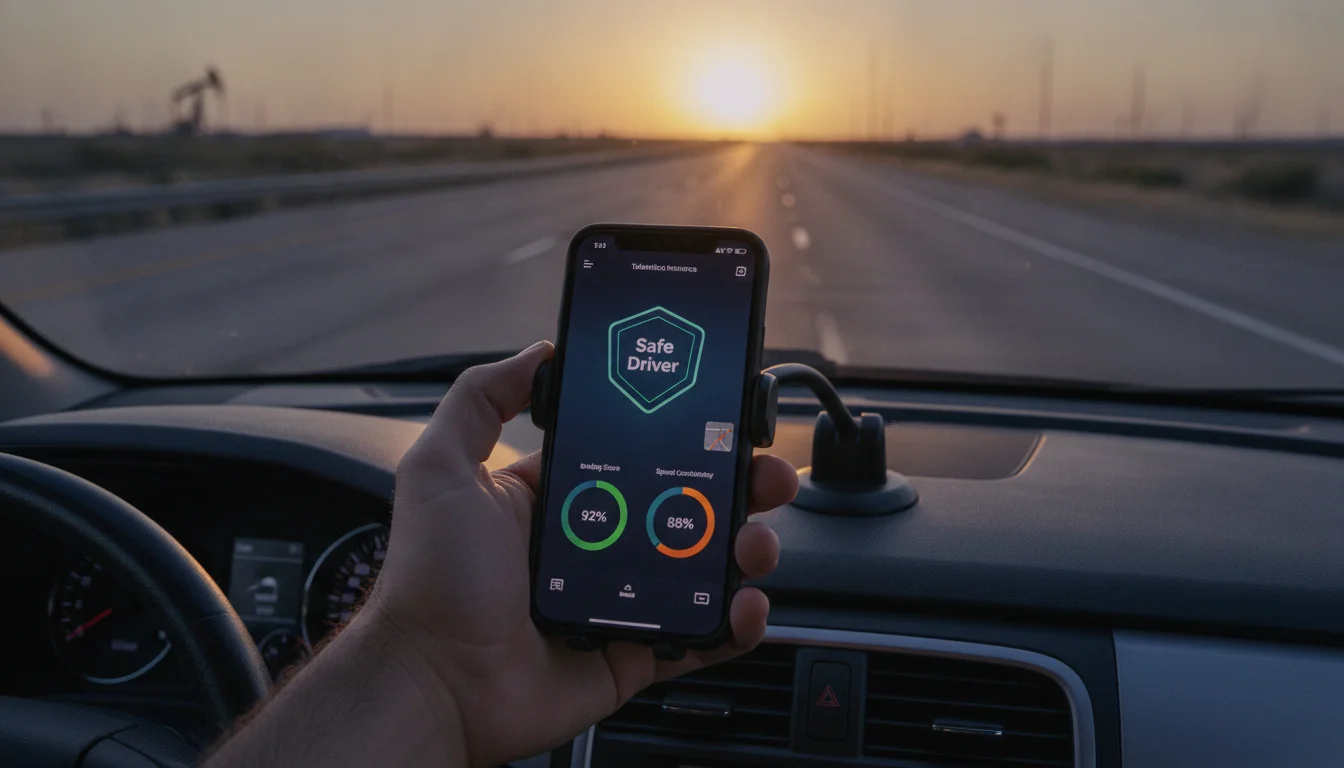
The inherent flaws in traditional proxy-based underwriting—such as penalizing a safe driver simply because they reside in a high-risk ZIP code—have accelerated the adoption of Usage-Based Insurance (UBI). By utilizing smartphone gyroscopes or OBD-II plug-in devices, telematics programs circumvent demographic assumptions, pricing insurance based strictly on real-time empirical data regarding how, when, and where a vehicle is operated.
The Mechanisms of Behavioral Tracking
Telematics algorithms capture and analyze distinct behavioral metrics to construct a personalized risk profile. The primary data points include:
- Hard Braking and Rapid Acceleration: Indicators of aggressive driving, tailgating, or poor situational awareness.
- Time of Operation: Algorithms severely penalize late-night driving (typically midnight to 4:00 AM), periods statistically correlated with driver fatigue, diminished visibility, and intoxicated motorists.
- Total Mileage: Lower mileage directly correlates to decreased exposure to road hazards.
- Distracted Driving: Modern smartphone applications monitor screen interactions and handset movement while the vehicle is in motion, penalizing drivers for texting or navigating.
Evaluating the Dominant Telematics Ecosystems
While virtually all major insurers in Texas offer a UBI discount, the actuarial execution of these programs is vastly different, particularly regarding whether the data can be used to increase a policyholder’s premium.
State Farm – Drive Safe & Save: This program provides a nominal discount simply for onboarding, with the potential for safe drivers to earn up to a 30% reduction at policy renewal. Crucially, State Farm utilizes an asymmetrical risk model. The telematics data is strictly utilized to calculate the volume of the discount; poor driving habits will result in a zero percent discount, but the insurer guarantees that the data will not be used to implement a punitive surcharge above the driver’s baseline premium.
GEICO – DriveEasy: GEICO’s DriveEasy platform utilizes a symmetrical risk model. While safe drivers can earn projected discounts of up to 25%, the algorithm actively penalizes high-risk behavior. If the application detects chronic hard braking, excessive speeding, or pervasive distracted driving, GEICO possesses the authority to actively increase the policyholder’s premium at renewal, making this program a high-risk proposition for aggressive drivers.
Nationwide – SmartRide and SmartMiles: Nationwide has established dominance in the UBI sector, consistently ranking first in J.D. Power’s customer satisfaction metrics for telematics. The company bifurcates its offerings:
- SmartRide monitors behavioral safety (braking, acceleration, time of day) and offers the potential for massive discounts up to 40% for elite driving performance.
- SmartMiles is a strict pay-per-mile architecture designed for remote workers or retirees. It charges a static monthly base rate plus a variable per-mile fee. Notably, the program includes a “road trip exception,” capping the billable mileage at 250 miles for any single calendar day. Policyholders must select one program or the other; they cannot be utilized concurrently.
USAA – SafePilot: Exclusive to the military community, SafePilot offers a 10% enrollment discount and up to 30% off at the subsequent renewal. Like State Farm, USAA employs an asymmetrical model, promising that the data will never be weaponized to increase base premiums. For low-mileage drivers (under 8,000 miles annually), USAA offers SafePilot Miles, blending behavioral discounts with mileage-based pricing adjustments.
The Plight of Low-Income Drivers and the Market of Last Resort
The convergence of escalating baseline premiums, punitive credit-score underwriting, and stringent statutory mandates has created an insurmountable financial barrier for a substantial segment of the Texas population. Unlike states such as California, Texas does not offer a state-subsidized, low-income auto insurance program to assist marginalized demographics.
The Affordability Crisis and Uninsured Realities
A 2026 focus group study conducted by Texas Appleseed and the United Way of Greater Houston illuminated the severe financial strain placed on low-income residents in Harris County. The study found that drivers with poor credit or lapsed histories are viewed as uninsurable by the standard market, forcing them to operate outside the law. In Harris County, an estimated 14.44% of registered vehicles are driven without any liability insurance.
The participants indicated that basic transportation is an absolute prerequisite for maintaining employment and facilitating childcare in Texas’s sprawling, car-dependent infrastructure. When forced to choose between exorbitant insurance premiums and basic necessities, many drivers deliberately assume the legal risk of driving uninsured, exposing themselves to severe penalties, including fines up to $1,000, vehicle impoundment, and the suspension of their driver’s licenses. Furthermore, drivers who incur these penalties are often required to file an SR-22 certificate with the Texas Department of Public Safety (TxDPS)—a document proving compliance with the 30/60/25 minimum—which inherently categorizes them as high-risk and further inflates their insurance costs.
The Texas Automobile Insurance Plan Association (TAIPA)
When a driver’s risk profile becomes too toxic for the voluntary market—due to DUIs, excessive accidents, or chronic lapses in coverage—the state provides a mandatory market of last resort: The Texas Automobile Insurance Plan Association (TAIPA).
TAIPA operates as an assigned risk pool. To qualify, an applicant must provide formal documentation proving they have been rejected by at least two standard auto insurance carriers. Once eligibility is verified, TAIPA assigns the driver’s policy to an authorized insurer operating in Texas, effectively forcing the private industry to absorb the high-risk applicant on a rotating basis.
However, TAIPA is a deeply punitive mechanism designed solely to ensure basic legal compliance rather than comprehensive asset protection:
- Restricted Coverages: TAIPA exclusively issues policies matching the strict statutory minimums: 30/60/25 liability, the basic $2,500 PIP limit, and UM/UIM coverage. TAIPA policies completely prohibit the inclusion of collision coverage, comprehensive coverage, or elevated liability limits. Consequently, individuals relying on TAIPA cannot legally finance or lease a vehicle, as all lenders demand physical damage protection to secure their collateral.
Exorbitant Pricing and Surcharges
TAIPA’s baseline rates are engineered to be significantly more expensive than the voluntary market. In May 2026, the TDI approved an additional 2.8% rate increase for TAIPA private passenger policies and a 4.9% increase for commercial policies, scheduled to take effect in November 2026. Furthermore, TAIPA applies aggressive, stacked surcharges for every ticket, accident, or SR-22 filing attached to the driver’s record.
TAIPA is designed to function as a temporary rehabilitation pathway. If a policyholder maintains their TAIPA coverage for one full year without incurring new tickets or accidents, the association reduces their internal surcharges. If the driver sustains a flawless record for three consecutive years, state law mandates that the assigned insurance company must offer them a standard policy in the voluntary market, granting them an exit from the assigned risk pool and access to significantly cheaper, comprehensive coverage options.
Conclusion
The architecture of the 2026 Texas auto insurance market is defined by the tension between vital consumer protection advancements and the relentless economic realities of underwriting risk. The failure of the 89th Texas Legislature to pass House Bill 4178 ensures that the state will continue to operate under the antiquated 30/60/25 liability minimums, leaving millions of compliant drivers dangerously underinsured against the modern costs of vehicular replacement and medical trauma. Furthermore, the rejection of a state-subsidized public option reinforces Texas’s reliance on a strictly privatized, fiercely competitive free-market system.
Within this framework, insurers have effectively restored profitability following years of inflationary losses, allowing market leaders like State Farm to deploy strategic rate reductions to aggressively capture market share. However, these baseline averages obscure a landscape of extreme stratification, where demographic algorithms, precise geographic risk, and credit-based scoring models dictate that young, urban, or financially vulnerable drivers pay exceptionally high premiums.
The introduction of sweeping transparency and operational laws—specifically the unilateral appraisal rights mandated by SB 458, the credit reassessment cycles of SB 1644, and the required non-renewal disclosures of HB 2067—provides policyholders with powerful new tools to navigate this complex ecosystem. Moving forward, Texas consumers must proactively leverage these new statutory rights, embrace the granular behavioral tracking of telematics programs, and aggressively compare rates across the fragmented provider landscape to secure optimal coverage within an uncompromising financial environment.