Export Tariffs Strategy: Navigating Cross-Border Trade
Cross-Border Trade Compliance: A Strategic Methodology for Navigating Export Tariffs
The contemporary global trading environment has transitioned from an era of relatively stable multilateral cooperation into a period defined by extreme geopolitical volatility, protectionist fiscal policies, and the weaponization of trade as a tool of national security. As organizations attempt to manage cross-border operations, the traditional view of trade compliance as a back-office administrative necessity has been rendered obsolete. In its place, a new strategic imperative has emerged, requiring professional trade practitioners to integrate customs technicalities, geopolitical risk modeling, and advanced financial engineering into the core of corporate strategy. The ability to navigate the complex web of export tariffs, which are increasingly decoupled from traditional market logic and instead anchored in security concerns such as fentanyl smuggling, illegal migration, and strategic decoupling from adversaries, has become the primary determinant of supply chain viability and international competitiveness.
The Institutional Architecture of Global Trade Regulation
The structural framework of international trade compliance is governed by two principal intergovernmental organizations: the World Trade Organization (WTO) and the World Customs Organization (WCO). While their mandates are complementary, their operational focuses represent the distinction between trade policy and customs technicality. The WTO, headquartered in Geneva and comprising approximately 164 members, functions as the primary negotiator of trade rules and the arbiter of disputes. Its focus is the systemic reduction of trade barriers through multilateral agreements such as the General Agreement on Tariffs and Trade (GATT), the General Agreement on Trade in Services (GATS), and the Trade-Related Aspects of International Property Rights (TRIPS). These agreements are built upon the foundational principles of most-favored-nation (MFN) treatment, national treatment, and transparency, which collectively seek to ensure that international trade is conducted on a non-discriminatory and predictable basis.
In contrast, the WCO, located in Brussels, serves as the technical steward of global customs operations, representing over 180 customs administrations. The WCO’s role is primarily centered on the standardization of customs procedures to facilitate the secure and efficient movement of goods across borders. This is achieved through instruments such as the Revised Kyoto Convention (RKC) and the Harmonized Commodity Description and Coding System (HS). While the WTO sets the legal ceilings for tariffs and the rules for their application, the WCO provides the technical tools required to classify goods, determine their value, and verify their origin, thus ensuring that the policy objectives negotiated in Geneva are accurately implemented at the physical border.
| Feature | World Trade Organization (WTO) | World Customs Organization (WCO) |
|---|---|---|
| Membership Size | 164 Members | 180+ Members |
| Primary Location | Geneva, Switzerland | Brussels, Belgium |
| Mandate | Negotiation of trade rules and dispute settlement | Standardization of customs and technical procedures |
| Key Instrument | GATT (Tariffs and Trade) | Harmonized System (HS) |
| Strategic Goal | Trade liberalization and barrier removal | Trade facilitation and border security |
| Established | 1995 (Succeeding GATT 1947) | 1952 (as Customs Cooperation Council) |
The integration of these two bodies is most evident in the WTO Trade Facilitation Agreement (TFA), which entered into force as part of the “Bali Package.” The TFA seeks to modernize customs activities by reducing bureaucracy through e-commerce solutions, the implementation of “single-window” platforms for document submission, and the use of standardized data sets. This movement toward digital trade facilitation is supported by the WCO’s Mercator Program, which provides technical assistance to countries striving to meet their TFA obligations. For the compliance professional, the WTO-WCO nexus represents the starting point for any strategic methodology, as it defines the global “rules of the game” while simultaneously providing the mechanisms for their technical execution.

Quantitative Restrictions and the GATT Article XI Framework
A critical component of trade compliance involves understanding the legal constraints placed on governments regarding how they may restrict trade. Article XI of the GATT 1994 establishes the general elimination of quantitative restrictions, prohibiting members from instituting prohibitions or restrictions other than duties, taxes, or other charges. This distinction is vital: while the WTO allows for the imposition of tariffs (taxes), it strictly limits the use of quotas or licensing requirements that create an absolute ceiling on trade volumes. The rationale is that price-based restrictions are transparent and allow efficient exporters to remain competitive by absorbing the cost, whereas quantitative restrictions distort the free flow of trade and create insurmountable barriers regardless of a product’s price-competitiveness.
However, the modern trade landscape frequently invokes the exceptions provided under GATT Article XI:2. These exceptions allow for temporary export prohibitions or restrictions to prevent or relieve critical shortages of foodstuffs or other essential products, and the application of standards for the classification and marketing of commodities. The interpretation of “temporarily” and “essential” has become a central focus of trade jurisprudence, particularly in cases involving natural resources and critical minerals. For businesses, these regulations mean that while tariffs are the most common hurdle, the sudden imposition of non-automatic export licenses or quotas can represent a total loss of market access, requiring a compliance strategy that monitors both fiscal duties and the underlying legal justifications for quantitative measures.
The Technical Indicators of Customs Obligation

Harmonized System (HS) Classification
The Harmonized System is a universal nomenclature for the classification of products, assigning a standardized six-digit code to over 5,000 commodity descriptions. This system is structured hierarchically into Sections, Chapters (first 2 digits), Headings (first 4 digits), and Subheadings (first 6 digits). While the first six digits are globally harmonized, individual nations typically append additional digits—such as the 10-digit Harmonized Tariff Schedule of the United States (HTSUS) or the European Union’s Combined Nomenclature (CN)—to capture more granular statistical data and apply domestic tariff rates.
Classification is governed by the General Rules of Interpretation (GRI), a set of six legal rules that ensure a standardized methodology for code selection. These rules require that classification be determined by the terms of the headings and relative section or chapter notes. For composite goods or kits, the GRI requires identifying the material or component that gives the article its “essential character”. The implications of classification are vast; even a single digit change can alter the duty rate, trigger import/export limitations, or necessitate specific licenses and permits. Misclassification is a primary driver of financial penalties, retrospective duty assessments, and shipment delays, as customs authorities use automated systems to flag inconsistencies between product descriptions and assigned HS codes.
Methodologies for Customs Valuation
Once classified, a product must be assigned a customs value to determine the ad valorem duty. The WTO Agreement on Customs Valuation (ACV) mandates a hierarchical application of six valuation methods.
- 1. Transaction Value: This is the primary method and is based on the price actually paid or payable for the goods when sold for export to the country of importation, plus specific statutory additions if not already included in the price. These additions include packing costs, selling commissions, assists (materials or services provided by the buyer to the seller free of charge), and royalties or license fees paid as a condition of the sale.
- 2. Transaction Value of Identical Goods: Applied when the transaction value cannot be used, this method utilizes the value of identical goods exported to the same country at or about the same time.
- 3. Transaction Value of Similar Goods: If identical goods are not found, value is based on similar goods that perform the same functions and are commercially interchangeable.
- 4. Deductive Value: This method starts with the unit price at which the imported goods are sold in the country of importation to unrelated parties, deducting costs such as profit, general expenses, and transport incurred within the importing country.
- 5. Computed Value: This method bases the value on the cost of production, including materials, fabrication, profit, and general expenses in the country of origin.
- 6. Fallback Method: When all previous methods fail, a value is determined using reasonable means consistent with GATT principles and based on available data in the importing country.
A significant challenge in valuation arises in related-party transactions, such as those between members of a multinational enterprise (MNE).
In these cases, customs authorities examine the “transfer price” to ensure that the relationship did not influence the price actually paid or payable. Compliance requires aligning transfer pricing policies with customs valuation methodologies, a process often managed through programs like the U.S. Customs and Border Protection (CBP) Reconciliation program, which allows for retroactive adjustments to the declared value based on end-of-year transfer pricing settlements.
Rules of Origin: Non-Preferential vs. Preferential
The determination of a product’s “economic nationality” is essential for the application of MFN tariffs, trade remedies (anti-dumping and countervailing duties), and Free Trade Agreement (FTA) preferences. Non-preferential rules of origin are applied generally for trade statistics and origin marking, often relying on the principle of “substantial transformation”—the point at which an article undergoes a process that results in a new name, character, or use.
Preferential rules of origin are significantly more stringent and are defined within specific bilateral or multilateral agreements. These rules ensure that only goods truly originating within the trade bloc benefit from reduced or zero duties. Determining origin under an FTA typically involves meeting one of three criteria:
- Wholly Obtained: Products entirely produced or harvested in a single country (e.g., agricultural products or minerals).
- Change in Tariff Classification (CTC): Non-originating components must be processed sufficiently to result in a change in their HS chapter, heading, or subheading.
- Value Content (Ad Valorem): A minimum percentage of the product’s value must be added within the territory of the FTA partners.
The proliferation of these complex and often inconsistent rules across various agreements creates the “spaghetti bowl” effect, where exporters must maintain distinct compliance documentation for the same product depending on its destination. This complexity often leads to the under-utilization of trade preferences, as the compliance costs associated with proving origin can sometimes exceed the tariff savings offered by the agreement.
The 2025-2026 Global Tariff Landscape: Geopolitical Volatility
The start of 2025 signaled a dramatic departure from the post-Cold War era of trade liberalization. Led by the United States, a new protectionist paradigm emerged, anchoring trade policy in national security concerns, border control, and the reduction of trade deficits.
Universal Reciprocal Tariffs and IEEPA Enforcement
In the first half of 2025, the U.S. administration implemented a 10% baseline tariff on nearly all imports, predicated on the International Emergency Economic Powers Act (IEEPA). This was accompanied by targeted reciprocal tariffs—ranging from 20% to 50%—on over 60 countries with which the U.S. maintains significant trade imbalances. Notably, countries such as Vietnam (46%), Cambodia (49%), and India (26%) faced some of the highest reciprocal rates.
Relationships with neighbors and traditional allies were similarly strained. A 25% tariff was applied to all goods from Mexico and Canada, though Canadian energy resources (oil, natural gas, electricity) were subject to a lower 10% rate. The justification for these measures often extended beyond economics to include migration and drug trafficking concerns. In response, Canada retaliated with 25% tariffs on $155 billion worth of U.S. goods, and China introduced duties on American agricultural products while placing U.S. firms on an “unreliable entity list”.
| Country/Region | Baseline Tariff | Specific Targeted Measures | Retaliatory Status |
|---|---|---|---|
| China | 10% (Additional) | 34% Reciprocal; Export controls on rare earths | Significant (Agriculture, Entity List) |
| Mexico | 25% | Linked to migration/fentanyl security | Imminent/Active |
| Canada | 25% (10% Energy) | Steel and aluminum specific duties | 25% on $155B U.S. goods |
| Vietnam | 10% | 46% Reciprocal (Trade deficit) | Monitoring/Negotiating |
| European Union | 10% | 20% Reciprocal; CBAM coordination | Filing WTO complaints |
| India | 10% | 26% Reciprocal; Oil-related non-reciprocal IEEPA | Negotiating/Strategic Partnership |
Impact on the Middle East and GCC Markets
While the primary focus of the U.S. trade agenda in 2025 was China, Mexico, and Canada, the ripples were felt globally, particularly among Gulf Cooperation Council (GCC) businesses. A critical concern for GCC exporters is the 25% tariff on aluminum and steel imports, which took effect in March 2025 and may supersede existing FTA treatments, such as those with Oman and Bahrain. For these businesses, the administration’s linkage of trade policy to national security means that protectionist measures can be introduced with little notice, requiring immediate strategy re-evaluation.
Trade diplomacy has bifurcated into two patterns: advanced economies like Germany and Canada have generally adopted a “retaliate-to-negotiate” approach, while emerging economies like Mexico and Vietnam have utilized a “concession-to-de-escalate” strategy, offering security or migration concessions to mitigate tariff impacts. This volatility underscores the need for “strategic sovereignty”—the ability of a firm to de-risk its supply chain from any single great power through diversification and resilient trade functions.
Strategic Tariff Mitigation and Financial Engineering
In a high-tariff environment, businesses must transition from passive adherence to active mitigation. Several legal and operational frameworks allow companies to reduce their duty exposure while maintaining full compliance with international laws.
First Sale for Export Valuation
The “First Sale” rule is perhaps the most effective mechanism for compliantly lowering the declared customs value on a transaction-by-transaction basis. In a multi-tiered sales structure, an importer often purchases from a middleman (vendor) who has previously purchased the goods from a factory. Standard customs valuation is based on the price paid by the importer to the middleman. However, under the First Sale rule, the importer can declare the lower price paid by the middleman to the factory, provided the transaction meets three criteria: the goods were clearly destined for the export market, the sale was at arm’s length, and the value is substantiated by documentation. By excluding the middleman’s markup from the declared value, companies can achieve double-digit reductions in duty spend.
Tariff Engineering and Product Re-engineering
Tariff engineering involves the strategic modification of a product’s design, material composition, or state of assembly to fit into a lower-tariff HS classification. This is a long-standing and legitimate practice that leverages the technicalities of the Harmonized System. For example, modifying the fiber content of apparel or shifting the location of certain assembly processes can move a product from a high-duty “finished good” category to a lower-duty “component” category. Successful tariff engineering requires seamless collaboration between engineering, logistics, and legal teams to ensure that product modifications are genuine and compliant with customs regulations.
Utilization of Special Customs Regimes and Tax Incentives
Foreign Trade Zones (FTZs) and customs bonded warehouses offer significant benefits by deferring or eliminating tariffs. Goods entering an FTZ are not subject to duties until they leave the zone for domestic consumption. If the goods are re-exported, the duties are waived entirely. Furthermore, FTZs allow for “inverted tariff” benefits, where an importer can choose to pay the duty rate of either the imported components or the finished product manufactured within the zone—whichever is lower.
For U.S.-based exporters, the Interest Charge Domestic International Sales Corporation (IC-DISC) provides a powerful offset to tariff-induced cost increases. This strategy offers permanent federal tax savings of 5.8% to 13.2% on export income by converting ordinary income into qualified dividends. As tariffs compress margins, the IC-DISC can be the difference between maintaining a market presence and retreating. Qualification requires that the product be manufactured in the U.S. and contain more than 50% U.S. content by fair market value, a threshold that many companies have crossed as they reshore production in response to global trade volatility.
| Mitigation Mechanism | Operational Action | Financial Impact |
|---|---|---|
| First Sale Valuation | Identify multi-tier sales; substantiating factory price | Reduces dutiable value by markup amount |
| Tariff Engineering | Modify product materials or assembly stage | Shifts product to lower-duty HS code |
| Foreign Trade Zones | Defer duty until domestic entry; re-export duty-free | Improved cash flow; inverted tariff savings |
| Duty Drawback | Claim refund on duties paid for re-exported goods | Recovers up to 99% of import duties |
| IC-DISC (U.S. Only) | Establish tax-exempt commission agent for exports | 5.8%–13.2% tax savings on export income |
Export Licensing: Dual-Use and Defense Controls
Compliance with export tariffs is incomplete without a rigorous framework for managing export licenses, particularly for sensitive dual-use items—goods with both civilian and military applications.
The U.S. Framework: ITAR vs. EAR
The U.S. manages exports through two primary regimes: the International Traffic in Arms Regulations (ITAR) and the Export Administration Regulations (EAR).
- ITAR: Administered by the Directorate of Defense Trade Controls (DDTC), ITAR governs defense-related items on the U.S. Munitions List (USML). Controls are stringent and based primarily on the nature of the item rather than the destination.
ITAR violations carry severe penalties, including fines of up to $1 million per violation and imprisonment.
- EAR: Administered by the Bureau of Industry and Security (BIS), the EAR covers dual-use items on the Commerce Control List. Licensing requirements depend on the item’s Export Control Classification Number (ECCN), the destination, the end-user, and the end-use. The EAR employs a more flexible, risk-based approach, including “deemed exports”—the release of controlled technology to a foreign national within the U.S.
The EU Dual-Use Regulation and Emerging Technologies
The EU export control regime, governed by Regulation (EU) 2021/821, was recently updated to reflect commitments under multilateral regimes such as the Wassenaar Arrangement. A significant development in 2025 has been the introduction of unilateral controls by EU member states (e.g., the Netherlands and France) on emerging technologies such as quantum computing, advanced semiconductors, and additive manufacturing. For compliance practitioners, this creates a fragmented regulatory landscape where a product may be controlled in one EU member state but not another, necessitating frequent product audits and engagement with national authorities.
Regulatory Proliferation: Sustainability and Social Compliance at the Border
A fundamental shift in trade compliance is the emergence of sustainability and labor standards as border-enforced “market entry” requirements. Trade flows worth hundreds of billions of dollars are now at risk due to non-compliance with Environmental, Social, and Governance (ESG) data collection mandates.
Key regulations include:
- EU Carbon Border Adjustment Mechanism (CBAM): Requires importers to report and pay for the carbon emissions embedded in certain carbon-intensive goods (e.g., steel, aluminum, cement).
- US Uyghur Forced Labour Prevention Act (UFLPA): Establishes a rebuttable presumption that any goods made in the Xinjiang region of China are made with forced labor and are thus prohibited from entry.
- EU Deforestation Regulation (EUDR): Mandates that products such as soy, beef, and timber must be proven to be “deforestation-free” through geo-location data before entering the EU market.
For trade functions, these regulations mean that the “customs package” must now include ESG certifications and supply chain mapping data. Failure to substantiate origin or provide required environmental data can lead to the seizure of goods, reputational damage, and fines equal to the value of the goods.
Digital Transformation: GTM Systems and Blockchain
Global Trade Management (GTM) Platforms
GTM systems such as Oracle Fusion Cloud GTM, Descartes, and SAP provide a centralized platform for managing the cross-border lifecycle. These systems automate key tasks:
- Restricted Party Screening: Real-time checking of partners against thousands of global denied-party lists.
- Classification Management: AI-driven libraries that assist in assigning correct HTS and ECCN codes globally.
- Duty and Landed Cost Calculation: Simulating the impact of changing tariffs and trade agreements on total landed cost.
- Customs Filing: Automating the preparation and electronic submission of declarations to border agencies worldwide.
Blockchain and the “System of Synchronized Truth”
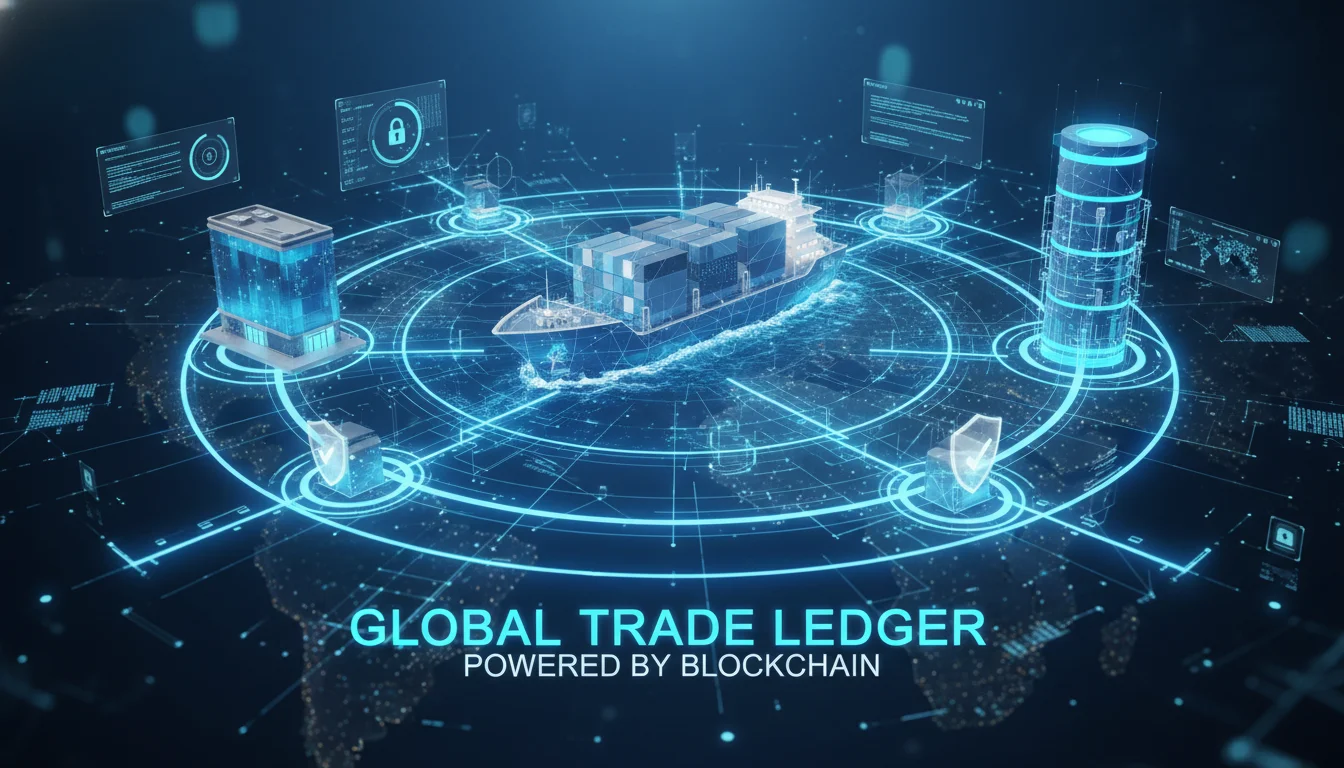
Blockchain technology offers a transformative solution to the transparency and data-sharing challenges of international trade. By creating a shared, immutable ledger for all participants (shipper, carrier, customs, bank), blockchain eliminates the need for manual reconciliation of paperwork.
Case studies demonstrate the tangible ROI of blockchain in customs:
- TradeLens (Maersk/IBM): Demonstrated a 40% reduction in document processing time through digitized shipping milestones.
- European Automotive Consortium: A pilot reduced duty calculation errors by 92% using smart contracts to encode HS codes and trade agreements.
- Singapore-based Trade Platform: Reduced customs clearance times from days to under four hours for pre-approved shipments using pre-verified data.
Blockchain’s ability to provide an immutable audit trail dramatically simplifies compliance with ESG regulations like UFLPA and EUDR, as the origin and journey of every component are captured at the point of creation.
Governance: The Internal Compliance Program (ICP)
The ultimate success of a trade compliance strategy depends on its institutionalization within the company through an Internal Compliance Program (ICP). An effective ICP must move beyond a “check-the-box” document to become a live system integrated with business functions such as procurement, R&D, and finance.
Core Pillars of an Effective ICP
- Management Commitment: Senior leadership must provide the “tone at the top,” allocating necessary resources and designating clear accountability.
- Cross-Functional Collaboration: Trade management must be embedded across legal, government affairs, sustainability, and IT.
- Advanced Risk Assessment: Using data-driven scoring to identify high-exposure areas across jurisdictions and suppliers.
- Continuous Training: Regularly scheduled, role-specific training to ensure staff can navigate changing regulations.
- Audit and Self-Monitoring: Periodic internal “mock audits” to identify gaps and validate that written procedures match actual behavior.
The Trade Maturity Model
The World Economic Forum identifies four stages of trade maturity:
- Minimalist: Basic compliance; reactive to crises.
- Evolving: Defined processes; initial technology adoption.
- Optimizing: Integrated functions; centralized data; proactively managing costs.
- Leading: Trade function informs corporate strategy; real-time visibility; ESG-integrated.
Organizations that invest in maturing their trade capabilities are better positioned to handle “black swan” geopolitical events and rising protectionism.
Conclusion: A Strategic Synthesis for the C-Suite
The navigation of export tariffs in 2025 and beyond requires a total rethink of the trade compliance function. It is no longer sufficient to merely “get the goods across the border.” Success now requires a multi-layered strategy that synthesizes technical customs mastery with geopolitical de-risking and technological foresight.
Compliance practitioners must first master the technical trinity of classification, valuation, and origin, leveraging mechanisms like the First Sale rule and tariff engineering to maintain margins in a high-tariff environment. Simultaneously, they must navigate the proliferation of security-linked universal reciprocal tariffs, employing trade diplomacy and supply chain diversification to achieve strategic sovereignty.
The integration of digital tools—specifically GTM platforms and blockchain—is the only way to manage the data density required by modern border authorities for both fiscal duties and sustainability mandates. Finally, by institutionalizing these efforts through a robust, senior-led ICP, organizations can transform trade compliance from a risk center into a strategic enabler of business continuity, resilience, and global competitiveness. In the new global trade order, the most successful companies will be those that view the border not as an obstacle, but as a strategic checkpoint for value creation.