The Client Control Paradox: Why Manual Ads Control Fails
The Client Control Paradox: Why More Marketing Control Can Create Worse Results

Introduction: The Psychology of Control and the Quest for Certainty
In the mid-1970s, psychological research established a cognitive bias known as the “illusion of control.” In seminal experiments, individuals evaluating purely chance-based events—such as drawing a lottery ticket or predicting the outcome of a coin toss—demonstrated a persistent belief that their personal involvement, choices, or behaviors could actively influence uncontrollable outcomes. This cognitive phenomenon is deeply rooted in a fundamental human desire for agency and a psychological need to secure certainty in highly ambiguous environments. When individuals are personally invested in a specific outcome, this illusion acts as a self-protective and self-serving mechanism, inflating self-esteem and providing a comforting, albeit mathematically false, sense of security against random variance.
In modern business environments, this psychological bias has profoundly infiltrated the digital marketing ecosystem. The traditional architecture of digital advertising—characterized by rigid budget allocations, granular keyword bidding, and highly specific demographic audience segmentations—was inherently built to satisfy this human craving for certainty. For decades, marketing managers and enterprise clients operated under the assumption that absolute tactical control over campaign inputs directly correlated with superior business outputs. By pulling every available lever, from device exclusions to manual bid caps, advertisers felt securely in the driver’s seat. The perceived proximity to the levers of execution created a psychological safety net, even if the underlying logic of those manual adjustments was flawed.
However, the advent of advanced machine learning and autonomous algorithmic bidding has radically disrupted this paradigm, exposing a fundamental contradiction: the “Client Control Paradox.” The paradox dictates that in contemporary, AI-driven advertising ecosystems, an advertiser’s insistence on maintaining granular manual control actively degrades campaign performance, stifles algorithmic learning, and ultimately produces worse financial outcomes.
The algorithms powering platforms like Google Ads and Meta Ads operate on predictive modeling, analyzing billions of real-time intent signals across millions of auctions per second. This represents a computational scale that vastly exceeds the cognitive ceiling of any human media buyer, who is inevitably subject to decision fatigue and bounded rationality. When advertisers impose strict manual constraints to satisfy their own illusion of control, they inadvertently starve the algorithms of the data liquidity required to find the most efficient conversion paths. The paradox is further compounded by a phenomenon observed in privacy and risk-taking research: providing users with explicit, granular controls often reduces their objective risk awareness, making them more likely to engage in inefficient or hazardous behaviors simply because they feel they are “in charge.” In media buying, this manifests as advertisers aggressively segmenting audiences and capping bids to “reduce risk,” which paradoxically drives up Customer Acquisition Costs (CAC) by restricting algorithmic exploration.
This report comprehensively examines the Client Control Paradox. By separating the ecosystem into distinct domains, this analysis defines where human control is strategically imperative, the tactical arenas where human interference is financially detrimental, and the required evolution of the agency-client operating model necessary to accommodate the era of artificial intelligence.
Part 1: Where Control Helps
The relinquishment of manual media buying controls to machine learning does not imply the abdication of marketing leadership. On the contrary, as algorithmic platforms automate the exact “how” of media execution, the “what” and the “why” become the sole proprietary advantages a brand possesses in a commoditized auction space. Human control must pivot away from the platform’s execution levers and aggressively consolidate around business strategy, brand identity, and financial architecture. Artificial intelligence optimizes exclusively for the variables it is explicitly instructed to prioritize; without rigorous human constraints placed on business definitions and strategic inputs, algorithms will efficiently scale unprofitable outcomes.
Strategy, Data Architecture, and Signal Quality
The most critical locus of control for modern advertisers is the definition of business success. Machine learning algorithms are inherently agnostic to a company’s internal profit margins, supply chain constraints, and customer lifetime value (LTV) models unless they are structurally programmed to recognize them. If a client tasks an algorithm with maximizing conversion volume without applying margin-based constraints, the system will naturally gravitate toward selling the highest volume of the lowest-margin products or acquiring low-value customers who present the path of least resistance.
Strategic control requires the implementation of Value-Based Bidding (VBB) and precise offline conversion tracking (OCT). In Business-to-Business (B2B) Software-as-a-Service (SaaS) sectors, for example, the path from an initial click to a closed deal can span three to six months. Optimizing a Google Performance Max (PMax) campaign for front-end Marketing Qualified Leads (MQLs) trains the algorithm on high-volume, low-intent “junk” leads, actively destroying pipeline efficiency. The client must exercise absolute control by defining the exact pipeline stages—such as Sales Qualified Leads (SQLs), Opportunities, and Closed-Won deals—and assigning tiered financial values to these specific CRM events (e.g., MQL = $50, SQL = $500, Closed-Won = actual contract value). By feeding these exact business priorities back into the ad platform through a server-side connection, the client maintains control over the financial integrity of the campaign, allowing the AI to navigate the auction mechanics in pursuit of true business value rather than vanity metrics.

Furthermore, algorithms are highly sophisticated pattern recognition engines that are entirely dependent on the quality of their data inputs. A central area where clients must exercise relentless control is the architecture of their first-party data. With the deprecation of third-party cookies and the rollout of privacy frameworks like Apple’s App Tracking Transparency (ATT), browser-based tracking pixels lose up to 30% of conversion data, resulting in severe signal degradation. To maintain control over algorithmic efficacy, clients must oversee the implementation of robust data infrastructure, such as Meta’s Conversions API (CAPI) and Google’s Enhanced Conversions, establishing deterministic server-side tracking. The accuracy of Event Match Quality (EMQ) and the seamless integration of CRM data are non-negotiable elements of human control. The AI can only optimize toward the Ideal Customer Profile (ICP) if the client controls the precise flow of high-fidelity first-party data into the platform.
Brand Voice and Creative Direction
In an era where targeting and bidding are largely automated, creative assets have fundamentally replaced manual audience targeting as the primary lever for reaching the right consumer. The algorithm analyzes the creative elements—the text overlays, the audio signals, the pacing, and the first three seconds of a video hook—to predict which user segment will respond favorably before the ad is ever served.
This shift is exemplified by Meta’s Andromeda AI retrieval system, which evaluates creative strength and predicts audience fatigue prior to auction entry. Consequently, the control of brand voice, visual identity, and psychological messaging is paramount. A brand cannot outsource its core identity or consumer psychology to machine learning. Human marketers must retain control over the narrative, crafting distinct, emotionally resonant concepts that align with the brand’s long-term positioning.
While platforms like Meta Advantage+ can dynamically test up to 150 creative combinations simultaneously to find optimal pairings, the raw ingredients—the messaging angles, the user-generated content (UGC) scripts, and the aesthetic guardrails—must be strictly controlled by the brand. If a brand abdicates creative control, it risks the algorithm optimizing toward high-converting but brand-damaging clickbait that erodes long-term trust for short-term acquisition. Human control is required to build a testing framework that feeds the machine a diverse but brand-safe array of static images, carousels, and short-form video variants, establishing a continuous cycle of creative refreshment.
Business Priorities and Dynamic Resource Allocation
Human strategy is required to dictate budget allocation across the business portfolio based on broader macroeconomic, operational, or inventory realities. An algorithm operating within a single campaign cannot know that a specific product line is facing localized supply chain shortages, or that a new geographical market requires a temporarily higher acceptable CAC to achieve initial market penetration. These business priorities represent the structural guardrails within which the AI must be confined.
Moreover, control must be exercised in the philosophy of budgeting. The traditional approach to budget allocation involves fixed, rigid structures where specific dollar amounts are allocated to siloed departments or channels based on historical data or twelve-month forecasting. While this provides clients with an illusion of organizational control and predictability, it creates “resource inertia” and is fundamentally incompatible with the fluid nature of digital auctions.
Modern marketing requires dynamic resource allocation, where financial guardrails are established based on marginal Return on Ad Spend (ROAS), allowing budgets to scale fluidly into channels that demonstrate superior long-term cohort economics. The control lies not in locking a budget into a spreadsheet, but in defining the financial thresholds that govern how fluidly capital can move across the digital ecosystem.
Domain of Control Comparison
- Data & Tracking: Traditional approaches rely on browser-side pixels and last-click attribution. The modern algorithmic approach utilizes server-side APIs (CAPI), CRM integration, and incrementality testing. Strategic implication: Algorithms require deterministic, high-fidelity first-party data to model LTV accurately.
- Creative Production: Shift from single “hero” assets and strict brand guidelines to high-volume modular assets, AI-generated variants, and a focus on User-Generated Content (UGC). Strategic implication: Creative serves as the primary targeting mechanism; diversity feeds machine learning.
- Budgeting: Moves from fixed annual allocations siloed by channel to dynamic allocation based on marginal ROAS and rolling forecasts. Strategic implication: Capital must flow freely across platforms to capture real-time auction efficiencies.
- Targeting Definitions: Transition from manual demographic selections and strict keyword match types to Value-Based Bidding and defining pipeline stages. Strategic implication: The client controls what a conversion is worth; the AI controls who fulfills it.
Part 2: Where Control Hurts
While high-level strategic and financial control is essential, extending that control downward into the tactical execution of digital campaigns triggers the negative consequences of the Client Control Paradox. The human desire to micromanage variables out of a need for perceived certainty actively contradicts the operational requirements of modern algorithmic systems like Google’s Performance Max and Meta’s Advantage+ Sales campaigns.
The Fallacy of Auction Decisions and Targeting Control
Historically, media buyers exercised control by defining narrow audience segments—targeting specific zip codes, age brackets, or niche interests—and manually adjusting bids based on device or placement performance. Today, imposing these constraints creates artificial barriers that prevent the algorithm from finding the cheapest conversions across the broader digital landscape.
Meta and Google have systematically moved away from granular targeting toward broad, predictive audience discovery. For instance, Meta’s Advantage+ Audience treats advertiser inputs not as hard boundaries, but as initial “suggestions,” granting the algorithm the autonomy to target users well outside those parameters if it calculates a higher probability of conversion based on real-time platform behaviors. Attempting to force control by separating audiences into distinct, tightly defined ad sets results in overlapping auctions. In this scenario, the advertiser is essentially bidding against themselves, fragmenting the data signal and artificially inflating costs.
Similarly, micromanaging platform placements is financially detrimental. An advertiser reviewing a campaign breakdown might notice that a specific placement—such as the right-hand column on Facebook desktop—generates very few direct clicks, prompting them to manually exclude it. However, this heuristic human decision ignores the complex delivery optimization model. A cheap, highly visible right-column ad may serve a critical assistive role, building the necessary cognitive fluency and brand recall that leads to a conversion on a mobile feed days later. When advertisers restrict available inventory, they cause overall CPA to skyrocket. Meta’s AI processes billions of real-time intent indicators to find highly valuable “outlier” audiences that manual, logic-based demographic constraints would inherently filter out.
Algorithmic Optimization and the Vulnerability of the Learning Phase
The most profound damage inflicted by excessive human control occurs through the repeated disruption of the algorithmic “learning phase.” This is the critical calibration period during which a platform’s delivery system explores audience behaviors to build a predictive mathematical model of who will convert, when they will convert, and where they can be reached most efficiently.
To exit this volatile phase and stabilize ad delivery, algorithms require a strict minimum threshold of data liquidity, commonly referred to as conversion velocity. Meta’s machine learning requires approximately 50 optimization events per ad set within a rolling 7-day window to achieve statistical confidence. Google’s Smart Bidding algorithms require a baseline of 30 to 50 conversions within a 30-day period. Furthermore, the length of the learning phase is inextricably linked to the consumer’s conversion cycle; a B2B software product with a three-day delay between a click and a form submission forces the algorithm to wait for complete cycles to calibrate.
The illusion of control frequently drives marketers to impatiently tinker with campaigns that are actively in the learning phase. Making significant edits—such as changing target audiences, swapping out creative assets, or modifying conversion actions—forces the algorithm to discard its current predictive model and resets the learning phase entirely.
The most common self-inflicted wound is manual budget adjustment. On both Meta and Google, adjusting a daily budget by more than 15% to 20% materially alters the competitive landscape of the auction. From the algorithm’s perspective, a 30% budget increase completely changes which auctions the campaign can enter and how aggressively it can bid, triggering an immediate reset of the learning progress.
Operators who micromanage their ad sets every few days trap their campaigns in a state of perpetual learning or “Learning Limited.” In this unstable state, the algorithm is forced into endless exploration without ever reaching the efficiency of exploitation, leading to CPA inflation of 30% to 50% above what a stabilized ad set would achieve.
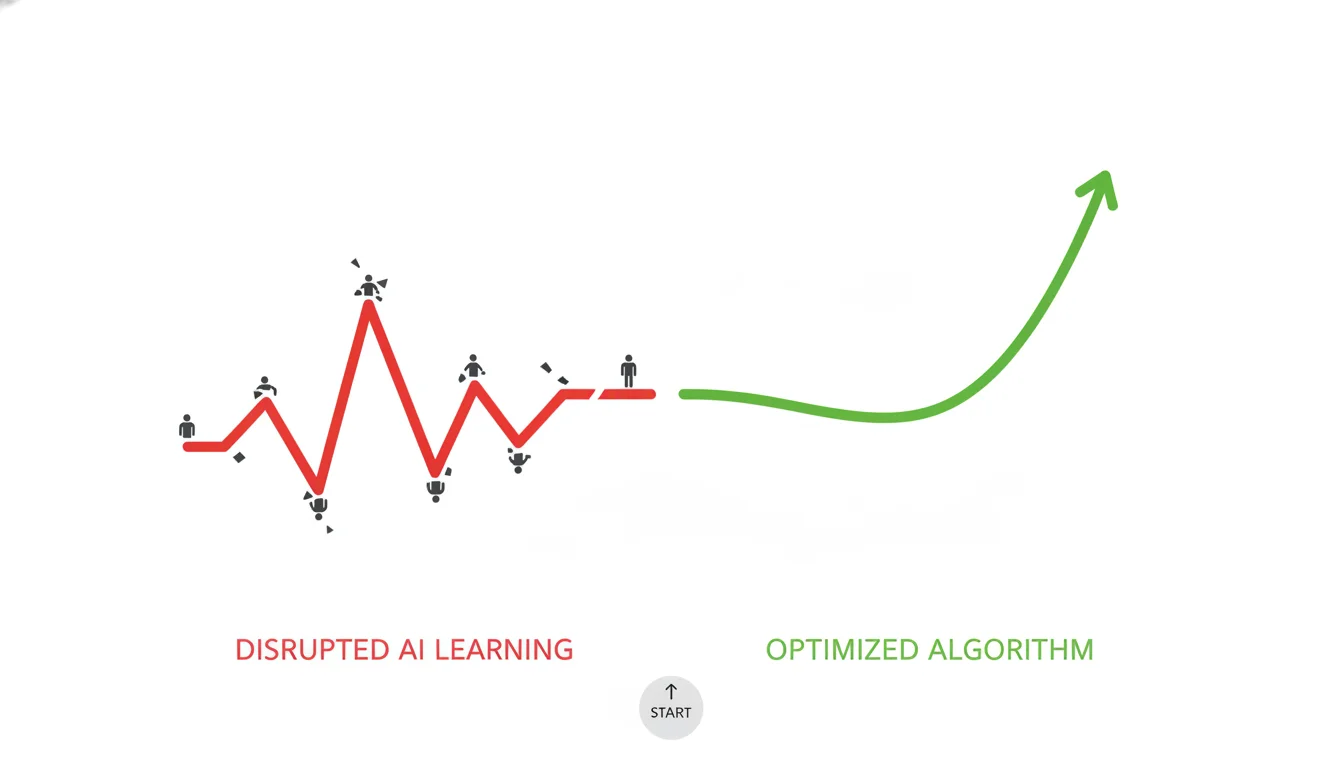
The most profitable intervention a media buyer can often make is to suppress their instinct to control, consolidate ad sets to pool conversion data, and simply stop editing the campaign.
Algorithmic Impact of Manual Interventions
- Budget Adjustment >20%: Alters available auction pool, forcing recalculation of pacing and bid aggression. Best Practice: Scale budgets incrementally by 10-20% every 3-4 days to preserve learning history.
- Bid Strategy Change: Invalidates previous models (e.g., switching from Maximize Clicks to Target CPA). Best Practice: Select the final bid strategy at launch based on business goals and hold it steady.
- Creative/Audience Edits: Changes the variables used to predict user response rates and ad relevance. Best Practice: Batch changes together, or duplicate ad sets to test new creative without disrupting the original.
- Conversion Action Update: Redefines the ultimate goal, requiring a completely new pattern recognition baseline. Best Practice: Ensure CAPI and pixel events are fully QA’d before launching conversion campaigns.
Budget Allocation: The Danger of Rigid Ad Set Caps
The shift from manual Ad Set Budget Optimization (ABO) to automated Campaign Budget Optimization (CBO)—or fully automated structures like Advantage+ Sales—is critical for achieving scale. Automated budget allocation allows the platform to fluidly shift funds in real-time to the specific creatives and placements that are actively yielding the best results.
While manual ABO remains occasionally necessary for protecting highly sensitive margins or ensuring spend on strategic launches, applying rigid budget caps across all prospecting efforts severely throttles the algorithm’s ability to capitalize on real-time market opportunities. Even in manual setups, Meta’s systems can now autonomously shift up to 20% of a budget from an underperforming ad set to an outperforming one. Attempting to fight this drift often results in budget starvation for the exact audiences most likely to convert.
Quantifying the Cost of Control: Industry Benchmarks
Empirical performance data decisively illustrates the financial cost of overriding algorithmic automation. By surrendering tactical levers and utilizing consolidated, AI-driven campaign structures, advertisers consistently realize superior unit economics.
The contrast is stark: Meta reports that Advantage+ Sales campaigns deliver an average 22% lift in Return on Ad Spend (ROAS) compared to manually configured setups. Broader industry benchmarks confirm this trajectory, noting that mature ecommerce catalogs running Advantage+ average a 4.52x ROAS versus a 3.70x ROAS for manual campaigns, accompanied by a reduction in CPA ranging from 12% to 32%.
Similarly, Google reports that advertisers adopting Performance Max see an average 18% increase in conversions at a comparable cost-per-action relative to standard, manually constrained Shopping campaigns.
However, this reliance on platform-reported metrics comes with a caveat that reinforces the need for high-level human strategic control. Independent incrementality studies, such as a comprehensive analysis of 640 tests by Haus, suggest that while automated systems like Advantage+ report exceptional ROAS, they can sometimes over-claim credit for conversions that would have occurred organically, particularly by over-indexing on existing customers. Therefore, while tactical control hurts the auction, strategic control—utilizing independent Marketing Mix Modeling and incrementality testing to verify the true business lift—remains paramount to prevent the platform from grading its own homework.
Part 3: The Agency-Client Operating Model
The transition from manual campaign management to AI-driven automation requires a radical restructuring of the foundational relationship between clients and their marketing agencies. The traditional operating model was built upon the tenets of Principal-Agent Theory, a framework from institutional economics that models the dynamic between a principal (the client) who delegates work to an agent (the agency).
Historically, this relationship was fraught with inherent conflicts of interest. Due to severe information asymmetry, principals naturally distrusted agents, fearing “adverse selection” (hiring an incompetent agency) and “moral hazard” (the agency acting opportunistically to maximize its own profit at the expense of the client’s results). To mitigate these perceived risks, clients demanded intense monitoring, implementing heavy reporting requirements and granular micromanagement of daily activities. Agencies were reduced to order-takers, optimizing for highly visible but ultimately shallow proxy metrics like Cost-Per-Click (CPC) or raw impression volume, simply because these metrics gave the client the illusion that the agency was actively “working”.
This outdated, friction-heavy operating model breaks down completely in the era of machine learning. If an agency’s primary function is merely pulling manual levers inside an ad account or reporting on daily click-through rates, they are performing tasks that algorithms and AI agents now execute exponentially faster and with greater mathematical precision. To survive, drive actual growth, and eliminate the principal-agent conflict, the agency-client operating model must shift toward Stewardship Theory. In this model, the interests of the principal and the steward (the agency) are structurally aligned toward the same overarching organizational outcome, replacing exhaustive tactical monitoring with deep strategic trust.
The Client Owns Business Outcomes
In the redefined operating model, the client must completely divest from the technical minutiae of ad platform mechanics—abandoning questions about specific keyword bids or granular audience exclusions—and assume absolute ownership of the business outcomes. The client’s primary responsibility is to provide the agency with unassailable clarity regarding the overarching commercial strategy and the true health of the business.
This entails defining the true unit economics: acceptable profit margins per product line, lifetime value (LTV) assumptions, allowable customer acquisition costs (CAC), and specific cohort retention goals. The client owns the internal technology stack, ensuring that the CRM systems integrate seamlessly with marketing platforms so that offline conversion data (such as a lead progressing to a closed-won status) is accurately captured and transmitted back to the algorithms. By shifting their locus of control away from the tactics of media and toward the financial architecture of the business, clients provide the agency and the algorithms with the exact target they must hit. The client essentially defines the boundaries of the playing field and the rules for scoring, allowing the AI and the agency to determine the optimal gameplay.
The Agency Owns Media Execution
Relieved of the burden of manual, task-based micromanagement and endless reporting on proxy metrics, the modern agency assumes complete ownership of media execution. In an automated environment, the agency’s role shifts fundamentally from a “bid manager” to a “system architect”.
The agency is responsible for designing the complex technical environment required to feed the AI. This includes managing data signals, structuring server-side tracking APIs, formatting dynamic product feeds for ecommerce, and establishing rigorous testing frameworks. Because creative variety is the primary targeting lever in platforms like Performance Max and Advantage+, the agency’s core value is heavily derived from its ability to rapidly conceptualize, produce, test, and iterate creative assets (video hooks, UGC, ad copy) that resonate with algorithmic intent and prevent creative fatigue.
Furthermore, the agency acts as the crucial human-in-the-loop, monitoring the algorithm for systemic anomalies and applying strategic guardrails. For example, while Google’s Performance Max is highly efficient, if left entirely unconstrained, it may aggressively cannibalize a brand’s branded search traffic or waste budget on low-quality display network placements. The agency’s expertise lies in knowing exactly where to apply protective barriers—such as negative keyword lists, brand exclusions, device targeting adjustments, and value rules—without suffocating the algorithm’s ability to explore broad audiences.
Structural Integration and Outcome-Based Remuneration
To facilitate this new division of labor, organizational silos must be dismantled. The traditional separation between media buying teams, creative production agencies, and internal data analytics creates immense friction, resulting in duplicated efforts and delayed execution. Modern, high-growth brands are adopting integrated “pod-based” or “squad” structures, grouping strategists, creatives, and media buyers into cross-functional teams focused on specific business outcomes rather than isolated channels.
Similarly, the industry is seeing a shift toward the PESO model (Paid, Earned, Shared, Owned), which forces all marketing investments into a unified planning and measurement system, tearing down the artificial separation between upper-funnel brand building and lower-funnel performance marketing. A prime example is the ‘Mars Model’ developed between Mars and Publicis, which established a “nucleus” structure that brings creative production and media capabilities into one integrated ecosystem, all connected to the same backbone of first-party data.
A natural consequence of this structural alignment is the evolution of agency remuneration. As agencies shift from selling hours of manual labor to architecting systems that directly drive business growth, compensation models must adapt. Research indicates that an increasing percentage of global marketers—up to 41%—expect to build actual business outcomes into agency remuneration models by 2026. When an agency is fully empowered to own the media execution and is judged—and compensated—based on the delivery of qualified pipeline, incremental revenue, or market share growth, the conflict of interest inherent in the principal-agent dynamic dissolves. Both parties share the risk and the reward, aligning incentives toward long-term organizational success rather than short-term vanity metrics, fostering a partnership built on transparency rather than adversarial monitoring.
Operating Model Responsibility Summary
-
Primary Focus:
- Client Ownership: Defining commercial strategy and financial constraints.
- Agency Ownership: Architecting the media system and feeding the algorithm.
-
Data & Tracking:
- Client Ownership: Owning the CRM, defining LTV, ensuring data privacy compliance.
- Agency Ownership: Implementing APIs, formatting product feeds, configuring event tracking.
-
Creative Direction:
- Client Ownership: Defining brand voice, visual identity, and legal compliance.
- Agency Ownership: High-volume asset production, A/B testing, hook generation.
-
Success Metrics:
- Client Ownership: Net revenue, Pipeline velocity, Customer Acquisition Cost (CAC), Incrementality.
- Agency Ownership: Return on Ad Spend (ROAS), Cost Per Lead (CPL), In-platform algorithmic stability.
Conclusion
The Client Control Paradox reveals a profound truth about modern digital marketing: the human pursuit of absolute tactical control is fundamentally at odds with the operational realities of artificial intelligence. Driven by the deep-seated psychological illusion of control, advertisers who insist on micromanaging targeting parameters, auction bids, and daily budgets consistently generate inferior financial results. By treating advanced predictive models as if they were legacy manual tools, these advertisers actively starve the algorithms of the data liquidity they require to optimize, trapping campaigns in volatile learning phases and artificially inflating acquisition costs.
To thrive in this increasingly automated environment, brands and their marketing leaders must undergo a difficult paradigm shift. They must abandon the psychological comfort of tactical micromanagement and elevate their control to the strategic level. This requires rigorously managing business definitions, data infrastructure, profit margins, and creative direction, while granting the algorithms the unconstrained freedom to navigate the complex, high-speed mechanics of the digital auction.
Concurrently, this evolution necessitates a modernized agency-client operating model. By moving past the distrust inherent in historical principal-agent dynamics and establishing a stewardship framework, organizations can align their efforts toward true growth.
When the client exclusively owns the definition and measurement of business outcomes, and the agency is fully empowered to architect and execute the algorithmic media strategy, the friction of micromanagement disappears. Ultimately, achieving superior marketing performance in the algorithmic age requires the strategic courage to let go of the levers of execution in order to firmly grasp the levers of long-term business growth.