Los Angeles Eminent Domain Lawyers: Maximize Compensation
Eminent Domain Lawyers in Los Angeles: Maximizing Compensation for Commercial Property Condemnation
Introduction to the Los Angeles Eminent Domain Landscape
The geographical and economic expanse of Los Angeles, California, represents one of the most dynamic, densely populated, and heavily regulated commercial real estate markets in the world. As the region undergoes an unprecedented era of public infrastructure expansion—driven by aggressive preparations for the 2028 Olympic Games, massive transit overhauls by the Los Angeles County Metropolitan Transportation Authority (LACMTA or Metro), and statewide initiatives like the California High-Speed Rail—the collision between public necessity and private commercial property rights has intensified exponentially. Projects such as the East San Fernando Valley Light Rail Transit Corridor, the I-710 Corridor Project, the West Santa Ana Branch Transit Corridor, the Sixth Street Bridge/Viaduct Replacement Project, and the Expo light rail expansion demand the acquisition of thousands of private parcels. Consequently, the invocation of eminent domain by state, county, and municipal authorities has become a ubiquitous reality for commercial property owners, corporate tenants, and real estate developers across Southern California.
For a commercial enterprise, a condemnation action represents an acute existential threat. The forced acquisition of a commercial property threatens business continuity, destabilizes real estate investment portfolios, displaces critical operational infrastructure, and frequently decimates accumulated business goodwill. The legal framework governing this adversarial process is rooted in the Fifth Amendment of the United States Constitution and Article 1, Section 19 of the California Constitution, both of which mandate that private property shall not be taken or damaged for public use without “just compensation” having first been paid to the owner.
However, the practical determination of what constitutes “just compensation” is inherently adversarial and highly subjective. Condemning agencies, functioning under a fiduciary duty to protect the public fisc, are statutorily obligated to offer fair market value. Yet, these initial governmental offers are almost universally based on conservative appraisals commissioned by the agencies themselves. These appraisals frequently rely on restrictive assumptions regarding the property’s current zoning, completely discounting its future development potential, minimizing the economic impact of severance damages in partial takings, and often assigning a zero-dollar value to the loss of intangible business goodwill.
To survive this asymmetric legal conflict, commercial property owners in the Los Angeles area require highly specialized legal representation. The realm of eminent domain and land use litigation is an esoteric, insular ecosystem. General commercial litigators rarely possess the nuanced understanding of forensic appraisal methodologies, the strategic foresight required for pre-condemnation planning, or the specific trial experience necessary to combat specialized government defense attorneys. Elite eminent domain practitioners must synthesize real estate law, urban planning, environmental regulations (such as the California Environmental Quality Act), and complex corporate valuation to neutralize the government’s inherent advantages and maximize financial recovery for their clients. This comprehensive report provides an exhaustive, analytical exploration of the commercial eminent domain landscape in Los Angeles, dissecting the procedural mechanics of property condemnation, the strategic valuation levers utilized to multiply initial government offers, the evolving jurisprudence surrounding inverse condemnation, and the specific capabilities of the region’s leading eminent domain law firms.
The Statutory and Procedural Mechanics of Commercial Condemnation
Eminent domain in California is governed by a strict, highly regimented statutory framework outlined primarily in the California Code of Civil Procedure (Code of Civ. Proc. 1230.010 et seq.). Understanding the temporal sequence and the procedural nuances of this framework is absolutely critical, as the tactical maneuvers executed during the early pre-condemnation phases almost always dictate the trajectory of the litigation and the ultimate financial outcome.
Pre-Condemnation Activities, Environmental Review, and Initial Appraisals
The condemnation process initiates long before a formal lawsuit is filed in Superior Court. Public agencies typically engage in extensive preliminary planning, feasibility studies, and environmental reviews. A critical component of this phase is compliance with the California Environmental Quality Act (CEQA). Eminent domain defense attorneys and agency counsel must ensure that the proposed property acquisition complies with CEQA before the agency adopts a resolution authorizing the condemnation. Failure to comply with CEQA can render the subsequent condemnation action invalid, providing private landowners with a powerful procedural weapon to delay or derail the acquisition. The legal authority indicates that CEQA compliance is a foundational prerequisite, as the right to take is premised on a valid, legally sound administrative record.
During this pre-condemnation phase, agencies possess a statutory right to enter private property to conduct environmental tests, soil borings, and assess the overall suitability of the site for the public project. This right was robustly reinforced by the landmark pre-condemnation entry decision in Property Reserve, Inc. v. Superior Court, which solidified the statutory authority of a condemning entity to conduct necessary investigatory work.
Once a specific commercial property is deemed necessary for the infrastructure project, the government must formally appraise the property and issue a written offer of just compensation based on that specific appraisal before it can legally adopt a Resolution of Necessity. California law explicitly dictates that the condemning agency must attempt to reach a negotiated resolution with the property owner. To level the asymmetric playing field, California law imposes a crucial requirement: the condemning government agency must pay the property owner up to $5,000 to commission their own independent appraisal. Elite eminent domain attorneys intervene aggressively at this exact juncture. They utilize this statutory allowance to retain specialized, highly credentialed forensic appraisers who evaluate the commercial property under alternative, higher-yielding valuation paradigms, setting the stage for subsequent litigation.
The Resolution of Necessity and Right-to-Take Challenges
If early negotiations fail to produce a mutually agreeable settlement, the public agency must hold a formal public hearing to adopt a Resolution of Necessity. This resolution is the legislative act that formally authorizes the use of the state’s eminent domain power. A validly adopted Resolution of Necessity establishes a conclusive legal presumption that the public interest requires the project, that the project is planned or located in the manner that will be most compatible with the greatest public good and the least private injury, and that the targeted property is strictly necessary for that project. Notably, in cases involving extraterritorial condemnation—where a public entity seeks to condemn property located entirely outside its own jurisdictional boundaries—the resolution of necessity only creates a presumption affecting the burden of producing evidence, as defined in Section 1245.250 of the Code of Civil Procedure.
Legal counsel representing commercial property owners frequently attend these Resolution of Necessity hearings to formally object and preserve their client’s right to challenge the taking in court. These “right-to-take” challenges are statistically difficult to win given the broad judicial deference traditionally granted to the legislative determinations of public agencies. However, they serve as an immensely powerful tactical mechanism. By contesting the validity of the stated public purpose, challenging the adequacy of the CEQA environmental review, or demonstrating that the agency skipped mandatory statutory steps during the appraisal process, seasoned attorneys can threaten to severely stall critical infrastructure timelines. The mere threat of protracted project delays, which can cost public agencies millions of dollars in escalating construction costs, often forces the government back to the negotiating table, resulting in highly favorable, premium pre-litigation settlements for the commercial owner.
Orders for Prejudgment Possession and Deposit Withdrawals
Upon filing the formal eminent domain complaint in Superior Court, the government typically seeks an Order for Prejudgment Possession. This order allows the public agency to take immediate physical control of the commercial property, evict tenants, and commence demolition or construction long before a final property value is determined by a judge or jury. To secure this powerful order, the condemning agency must deposit the probable amount of just compensation into the State Treasury, based on their approved appraisal.
Commercial property owners and displaced commercial tenants have the statutory right to apply to the court to withdraw these deposited funds. This withdrawal is often strategically necessary to facilitate business relocation, purchase replacement property, or maintain business continuity during the ensuing litigation. However, experienced legal counsel must meticulously monitor these deposits to ensure the property is not severely undervalued at the outset.
Furthermore, top-tier attorneys will aggressively oppose the government’s effort to obtain prejudgment possession if the premature eviction threatens the viability of an ongoing commercial enterprise, or if the agency has failed to provide adequate relocation assistance.
Voluntary Abandonment
It is also critical to recognize that a public agency may execute a “voluntary abandonment” of the condemnation action. At any time after an eminent domain complaint is filed, and even after a final judgment has been entered, the agency may choose to abandon the acquisition entirely. In such scenarios, the property is no longer taken, and the owner receives no compensation for the property itself, though the owner is typically entitled to recover their litigation expenses and attorney’s fees incurred defending the abandoned action. This introduces a layer of strategic risk; if an owner’s legal team pushes the valuation too high during trial, the agency may simply abandon the project or redesign it to avoid the parcel entirely, potentially leaving the owner with a blighted, unmarketable property.
Strategic Valuation Levers for Maximizing “Just Compensation”
The core battlefield in any commercial condemnation action is the ultimate determination of “just compensation.” The legal definition of just compensation is the fair market value of the property, which represents the highest price a willing buyer would pay a willing seller on the open market, neither being under any compulsion to buy or sell, and both having full knowledge of all the uses and purposes for which the property is reasonably adaptable and available. Condemning agencies inherently default to conservative valuations based rigidly on the property’s current zoning and its existing, present-day use. Conversely, specialized eminent domain attorneys employ sophisticated economic models, urban planning theories, and real estate market analyses to project a substantially higher property value.
The Doctrine of “Highest and Best Use”
The most significant and frequently litigated multiplier in eminent domain compensation is the “highest and best use” doctrine. California eminent domain law mandates that private property must be valued not merely on its present, actual use, but on the most profitable use to which it is reasonably adaptable and legally permissible in the near future. Proving a higher, more lucrative use requires attorneys and their retained experts to synthesize land use regulations, anticipated zoning changes, neighborhood economic gentrification trends, and regional market demand.
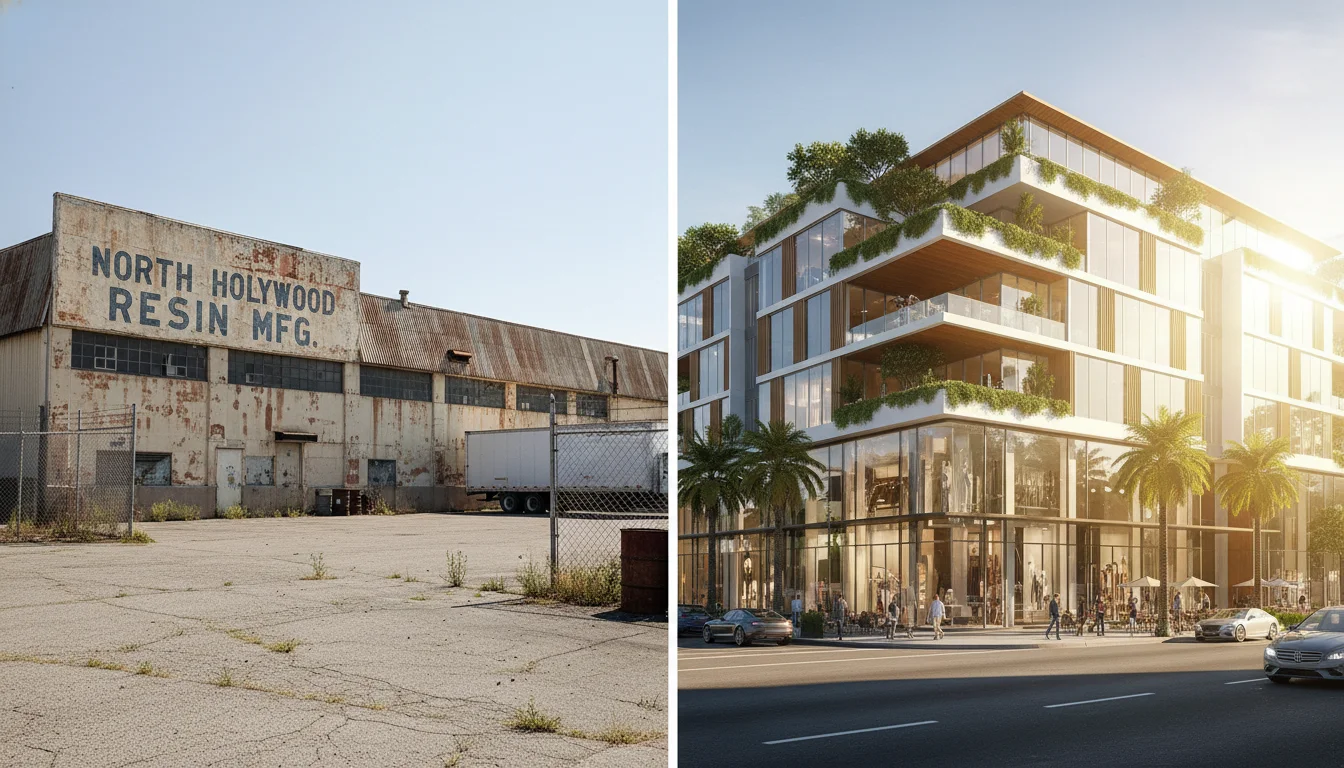
A prime, quantifiable example of this strategy was flawlessly executed by the Peterson Law Group in a prominent North Hollywood eminent domain case. The government sought to acquire a commercial industrial property currently being used for producing fiberglass and resin products. Based on its existing industrial utility and current zoning constraints, the condemning agency issued an initial compensation offer of $1,760,000. The legal team, rather than merely arguing over the per-square-foot value of industrial land, engaged in a complex, paradigm-shifting valuation battle. They successfully argued before a jury that the property’s true “highest and best use” was not industrial manufacturing, but rather as a highly lucrative mixed-use commercial and residential development. By validating this conceptual shift in the property’s potential, the jury rejected the government’s premise entirely, resulting in a final award of $4,390,000—representing nearly 250% of the government’s initial offer.
Severance Damages in Partial Takings
In many modern urban infrastructure projects—such as the widening of the I-5 corridor or the expansion of light rail networks—the government does not need to condemn the entire commercial parcel. Instead, it executes a “partial taking,” acquiring only a small fraction of the land for street widening, utility easements, or temporary construction easements. While the standalone value of the acquired sliver of land may be relatively negligible, the economic impact on the remaining, unacquired commercial property can be devastating. Severance damages are designed to compensate the property owner for the diminution in the fair market value of the remaining parcel caused by the severance of the acquired portion and the construction of the public project.
Attorneys meticulously analyze how the partial taking impairs the property’s functionality. Does the taking eliminate critical customer parking? Does it impair vehicular ingress and egress? Does it alter the property’s shape, rendering it non-conforming with local zoning setbacks? Does it reduce the commercial visibility of retail signage? For instance, if a highway widening removes a retail shopping plaza’s primary parking area, the remaining commercial building may become economically unviable or un-leasable, transitioning the legal claim from a minor land acquisition into a multi-million dollar structural obsolescence dispute. In a case handled by The Horowitz Law Firm involving a highway widening in Los Angeles County, the firm successfully highlighted severe impairment of access issues regarding existing easements. This legal pressure forced the public entity to abandon a minor partial acquisition in favor of a complete “full take” buyout, yielding a highly favorable settlement of $40,000 above the initial offer without the need for protracted litigation.
Conversely, defending against exaggerated severance claims is a primary focus for public agency defense firms. Burke, Williams & Sorensen, a prominent defense firm, demonstrated this capability when representing a joint powers authority against a developer of condemned vacant land. The developer sought severance damages in excess of $1 million. Serving as trial counsel in a 9-day jury trial, Burke successfully dismantled the developer’s valuation theories, and the jury ultimately declined to award any severance damages whatsoever. This highlights the extreme risk of presenting speculative severance models to a jury without airtight economic foundations.
Loss of Business Goodwill
For operating commercial enterprises, the physical real estate is only one component of the overall economic value. The loss of “business goodwill”—defined as the intangible value of a business’s reputation, its specific geographical location, its established customer patronage, and its operational synergy—is highly compensable under California Code of Civil Procedure 1263.510. Proving goodwill requires deep integration of forensic accounting, industry-specific business valuation expertise, and complex economic modeling to demonstrate that the condemnation will permanently impair the business’s profitability.
The legal standards surrounding the entitlement to, and quantification of, business goodwill are among the most fiercely litigated aspects of eminent domain law. A seminal appellate precedent illustrating this battle is Los Angeles County Metropolitan Transportation Authority v. Yum Yum Donut Shops, Inc., a case successfully handled on appeal by the prominent landowner firm Murphy & Evertz. In this matter, the transit authority sought to take a retail donut shop for a proposed rail line. The trial court initially ruled against the business owner, finding that because Yum Yum Donut Shops failed to fully mitigate some of its loss of goodwill, it was legally precluded from receiving compensation for any loss of goodwill. Murphy & Evertz appealed this draconian interpretation. The California Court of Appeal reversed the trial court, ruling decisively that a condemnee is entitled to compensation for lost goodwill if any portion of that loss is unavoidable. The appellate court established that a condemnee need only prove “some or any unavoidable loss of goodwill” to satisfy their statutory burden, ensuring that a partial failure to mitigate does not entirely extinguish a commercial operator’s constitutional right to recover business goodwill damages. This published appellate ruling drastically fortifies the negotiating position of commercial tenants, franchisees, and retail operators facing governmental displacement across California.
However, goodwill claims must be meticulously substantiated. Defense attorneys are highly adept at exposing inflated goodwill valuations. For example, Alan A. Sozio of Burke, Williams & Sorensen successfully defended a public agency against a staggering $25 million lost goodwill claim brought by a publicly-held tester of aeronautical and military component parts. Following a grueling 19-day trial, the defense obtained a jury verdict awarding absolutely zero damages for the loss of goodwill, a verdict that was subsequently upheld in its entirety on appeal (137 Cal.App.4th 264).
Relocation Costs and Unmovable Equipment Valuation
Beyond the physical real property and intangible goodwill, displaced commercial businesses are entitled to comprehensive relocation expenses under both federal and California relocation assistance laws. Commercial relocation is rarely a seamless logistical process; specialized manufacturing equipment, hazardous materials processing facilities, and customized heavy industrial fixtures often cannot be physically moved without destroying their value.
Elite attorneys aggressively pursue compensation for this unmovable equipment, inventory spoilage during the transition period, and the exorbitant, unforeseen costs of retrofitting a replacement commercial site to match the operational capacity of the condemned property.
Pre-Condemnation Damages (Klopping Damages)
When a public agency publicly announces an intent to acquire a specific commercial property for a project but then engages in unreasonable delay before filing the actual condemnation lawsuit, the property can suffer from severe “condemnation blight.” During this limbo period, commercial tenants refuse to renew leases, traditional bank financing dries up, building maintenance becomes economically irrational, and the property’s open-market value plummets.
In these scenarios, attorneys pursue pre-condemnation damages—often referred to as Klopping damages in California jurisprudence, stemming from the landmark case Klopping v. City of Whittier—to recover the lost rental income, ongoing holding costs, and property taxes incurred by the owner during the government’s period of unreasonable delay. Peterson Law Group achieved a notable success in this arena in a Playa del Rey case involving a temporary construction easement over an R-3 zoned parcel. By proving “unreasonable” pre-condemnation activity by the government, the firm more than doubled the initial compensation offer, raising the award from $330,000 to over $810,400.
The Complexities of Inverse Condemnation Jurisprudence
While direct eminent domain involves the government proactively initiating a lawsuit to acquire property, inverse condemnation is a constitutional cause of action initiated by the private property owner. It alleges that the government has effectively “taken” or damaged their private property for public use without initiating formal eminent domain proceedings and without paying just compensation. Inverse condemnation claims are heavily litigated, highly technical, and generally fracture into two distinct legal categories: physical takings and regulatory takings.
Physical Takings vs. Regulatory Takings
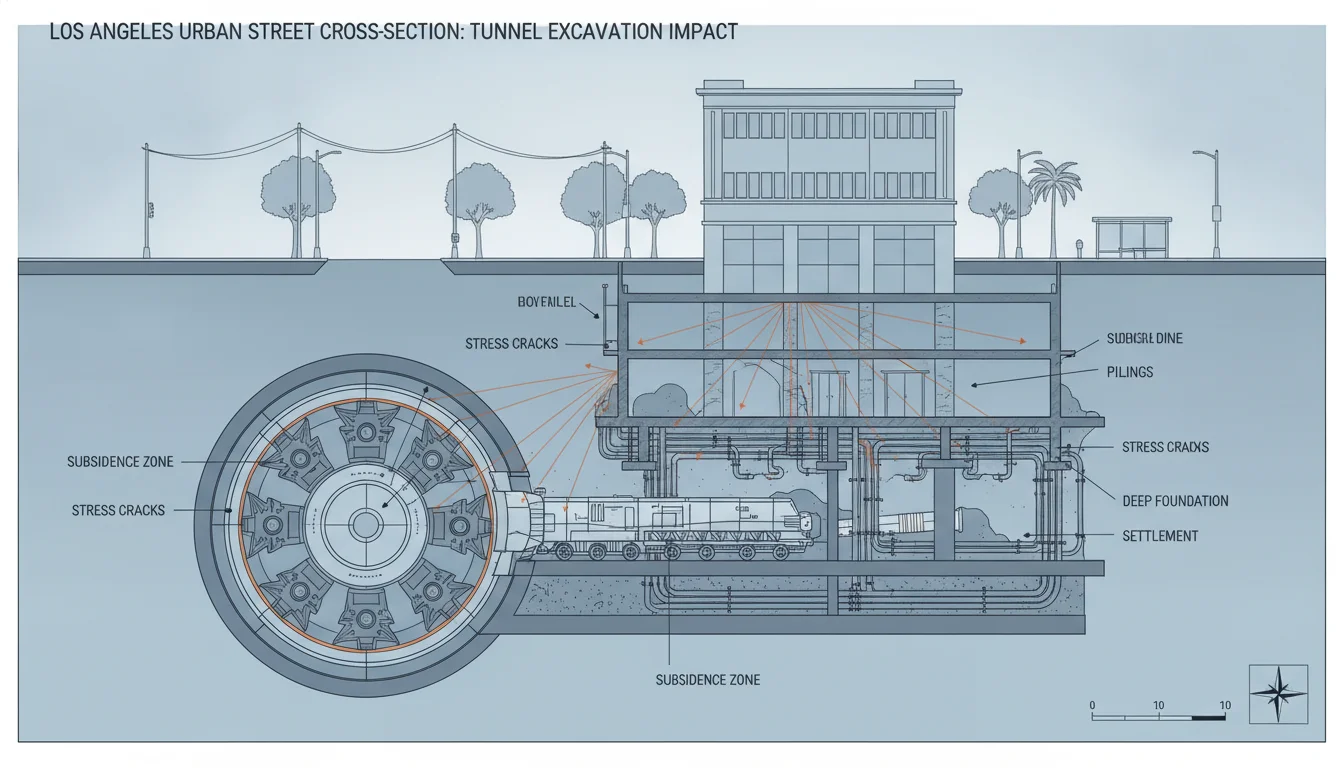
Physical Takings: This occurs when a public works project, infrastructure failure, or government action directly causes physical damage to or physical invasion of private property. Common examples in Southern California include land subsidence or structural cracking caused by subterranean tunneling for light rail projects, severe flooding due to inadequate municipal storm drainage systems, or catastrophic mudslides originating from mismanaged public lands or roadways.
For example, the Peterson Law Group successfully utilized inverse condemnation theory to recover $1,700,000 for the owners of 16 separate properties in the Antelope Valley whose residential neighborhoods were buried in up to five feet of mud and water due to infrastructure failures by several government entities. Similarly, Nossaman LLP litigated a massive inverse condemnation landslide case that was so complex it required two separate three-month jury trials and three distinct appellate court proceedings to resolve. Conversely, governments heavily defend against these claims, arguing that public improvements did not cause the damage. In Brumer v. Los Angeles County Metropolitan Transportation Authority, property owners sued for inverse condemnation alleging transit construction caused a substantial impairment of access. The Court of Appeal affirmed the trial court’s decision in favor of the MTA, holding that the construction was a proper, non-compensable exercise of the government’s police power.
Regulatory Takings (Exactions): Also known as “exactions” or “de-facto takings,” this occurs when excessive government regulation, long-term zoning freezes, or the bad-faith denial of development permits deprives a commercial property of all economically viable use, effectively taking the property without a physical invasion. These claims are notoriously difficult to win, as courts grant wide latitude to municipalities exercising their police powers for public health and safety. Defense firms like Burke, Williams & Sorensen actively shield municipalities against these claims. In one instance, property owners sued a city for $7.8 million, alleging inverse condemnation and deprivation of civil rights due to the denial of development permits. Alan Sozio successfully obtained a judgment of dismissal by demonstrating the landowners failed to adequately and timely exhaust their administrative remedies before filing suit.
Landmark Jurisprudential Shifts in Inverse Condemnation
The legal landscape governing inverse condemnation in California is undergoing significant, tectonic realignments, necessitating highly sophisticated legal representation that remains at the bleeding edge of appellate law.
The Shift from Strict Liability to Reasonableness (City of Oroville)
For decades, inverse condemnation jurisprudence regarding physical damage (such as flooding from municipal pipes) was heavily weighted toward strict liability; if the public improvement caused the damage, the government paid. However, in the 2019 California Supreme Court decision City of Oroville v. Superior Court (litigated with direct involvement from Nossaman LLP), the court issued a unanimous, landmark opinion that drastically altered the burden of proof for property owners. The case involved a city sewer backup that flooded a commercial dental practice. The Supreme Court ruled that a property owner must show more than just a causal link between the existence of a public improvement and the property damage. Instead, the owner must demonstrate that the damage was the “probable result or necessary effect of an inherent risk associated with the design, construction, or maintenance” of the public improvement.
Furthermore, the court introduced a comparative fault analysis. The court noted that the dentists failed to install a legally required backwater valve on their private property, which would have prevented the damage. This ruling raises the bar significantly for commercial owners; attorneys can no longer rely on automatic strict liability. They must now engage in rigorous engineering analysis, hydrology studies, and fault-based litigation to prove the government’s design or maintenance was inherently risky, while simultaneously proving the private owner was entirely free of comparative negligence.
Protecting Procedural Rights in Inverse Litigation (Weiss v. People ex rel. DOT)
Procedural battles in inverse condemnation are equally fierce, as government agencies constantly seek procedural shortcuts to dismiss owner claims before they reach a jury. In 2020, John S. Peterson of the Peterson Law Group successfully argued the case of Weiss v. People ex rel. Dept. of Transportation before the California Supreme Court. In a massive victory for property owners, the unanimous decision disapproved of the government’s use of California Code of Civil Procedure 1260.040 to determine liability in inverse condemnation cases. Section 1260.040 is a pre-trial law and motion procedure designed explicitly for streamlining evidentiary issues in direct eminent domain cases. The government had been attempting to weaponize this statute to force early, truncated evidentiary hearings to dismiss inverse condemnation claims without a full trial. By dismantling the use of this statute in the inverse context, the Supreme Court prevented the government from short-circuiting these complex claims, ensuring commercial property owners retain their constitutional right to comprehensive liability trials and full evidentiary discovery.
Standing to Sue in Inverse Condemnation (Sierra Palms v. Metro)
The issue of who possesses the legal standing to bring an inverse condemnation claim is also closely scrutinized. In Sierra Palms Homeowners Association v. Metro Gold Line Foothill Extension Construction Authority, the HOA sued Metro and construction contractors for inverse condemnation arising from the construction of a railway adjacent to the condominium complex. The trial court initially sustained demurrers, ruling the HOA lacked standing. However, the Court of Appeal reversed the judgment regarding Metro, confirming that with proper pleading, an HOA can demonstrate standing to assert inverse condemnation claims for damage to common areas, further expanding the procedural pathways for collective property owners.
Commercial Tenant Rights and the Danger of Lease Provisions
A highly nuanced and often overlooked sub-sector of eminent domain litigation involves the rights of commercial tenants. When a leased commercial property is condemned, the overall just compensation award is typically divided between the fee owner (the landlord) and the tenant (who holds a leasehold interest, valuable fixtures, and potential business goodwill).
However, the apportionment of this award is entirely dictated by the specific contractual language contained within the commercial lease agreement. Commercial tenants can, and frequently do, inadvertently sign away their constitutional rights to just compensation through standard, boilerplate lease provisions drafted by landlord-friendly real estate brokers.
This peril was starkly highlighted in the appellate decision People ex rel. DOT v. Hawara. In this case, a property adjacent to a State Highway was condemned. The commercial lease contained a common condemnation clause stating: “LESSEE hereby irrevocably assigns to LESSOR any right to compensation or damages to which LESSEE may become entitled by reason of the condemnation of all or a part of the demised premises.” When the eminent domain lawsuit was filed, the commercial tenant attempted to seek just compensation for their lost leasehold interest. The property owners filed a motion for summary judgment to completely dismiss the tenant from the proceedings based on this lease clause.
The trial court granted the motion, determining that any and all damages would be awarded solely to the landlords. The tenant appealed, arguing the terms were ambiguous, but the Court of Appeal affirmed the trial court, ruling that the tenant had successfully and irrevocably assigned all constitutional claims to just compensation back to the property owner.
This reality highlights a critical dimension of top-tier legal practice in Los Angeles: proactive real estate transaction structuring. Elite eminent domain attorneys do not merely litigate after a lawsuit is filed; they are actively engaged during the drafting of commercial leases and the pre-condemnation planning phase. Law firms such as Nossaman, which possess robust real estate transactional and leasing capabilities, routinely counsel developers, corporate entities, and tenants on drafting complex condemnation clauses, ground leases, and sale-leasebacks to protect their future interests in the event of unanticipated public acquisitions. For commercial tenants facing displacement, securing an attorney who can parse complex lease language, challenge the enforceability of assignment clauses, and preserve independent statutory claims for relocation benefits, loss of fixtures, and loss of business goodwill is absolutely paramount.
Deep Dive: Analyzing Los Angeles’ Leading Eminent Domain Practitioners
The legal market for eminent domain in Los Angeles and the broader Southern California region is highly stratified. The leading firms operate distinct methodologies and philosophies, which can generally be categorized into specialized boutique plaintiff firms, high-stakes dual-representation mega-firms, and interdisciplinary real estate/construction litigation hybrids.
The High-Stakes Powerhouses: Massive Scale and Dual Representation
Certain firms operate at the absolute apex of public infrastructure development, handling complex cases where real estate and goodwill valuations reach into the tens or hundreds of millions of dollars. These firms often represent both massive condemning authorities and powerful private landowners, providing them with a unique, 360-degree tactical perspective on litigation strategy.
Nossaman LLP: Housing what is widely recognized as the largest dedicated Eminent Domain & Inverse Condemnation practice group in the United States, Nossaman represents a dominant legal force in California infrastructure. The group is chaired by Brad Kuhn, a nationally-recognized leader who has spent two decades guiding public agencies, utilities, and property owners through more than $30 billion worth of real estate development and infrastructure projects. Kuhn serves as general counsel for Mobility 21 and the International Right of Way Association (IRWA), and has been recognized as a “Visionary in Commercial Real Estate” by the Los Angeles Times and featured in the 2026 edition of Best Lawyers in America.
The firm boasts a deep bench of elite partners, including Managing Partner David Graeler (also named an IRWA Professional of the Year) and Artin Shaverdian, who leverages vast experience to counsel cutting-edge clients like Virgin Hyperloop One and Adventist Health on right-of-way and regulatory matters. Nossaman’s unique advantage is their dual representation model. Because they actively represent massive public entities, they intimately understand the internal administrative mechanics, risk tolerances, and appraisal instructions of condemning agencies.
When this inside knowledge is deployed on behalf of private landowners, it proves devastatingly effective. In one pre-condemnation negotiation involving the Val Verde Unified School District attempting to acquire 60 acres of an undeveloped 180-acre subdivision, Nossaman utilized a sophisticated multi-prong approach of litigation, lobbying, and negotiation to secure a staggering $48 million settlement in lieu of condemnation. In another complex inverse condemnation/pre-condemnation matter involving a frozen development entitlement in Winchester, Nossaman utilized arbitration to push the agency from an appraiser valuation of below $30 million to a final settlement exceeding $70 million. Their robust appellate practice also ensures that trial victories are codified into California case law. For example, in County of Contra Costa v. Pinole Point Properties, a Nossaman attorney secured a $6 million award for unimproved land, and the published appellate decision clarified California law on the use of prior inconsistent appraisals for the impeachment of government appraisers at trial. Furthermore, in a 2001 appellate win against Caltrans regarding a mobile home park, Nossaman established critical precedent allowing property owners to recover attorneys’ fees based on the government’s unreasonable settlement positions.
Murphy & Evertz: Based in Costa Mesa but operating extensively across Southern California, Murphy & Evertz possesses an unparalleled track record for generating sheer monetary scale in jury verdicts and settlements. Managed by John C. Murphy—an elected Fellow of the American Bar Association who was named “Orange County Litigation – Real Estate Lawyer of The Year” by Best Lawyers—the firm focuses exclusively on eminent domain, inverse condemnation, and complex real estate trials. Supported by partners like Douglas J. Evertz and Bradford B. Grabske, the firm claims to have earned private landowner clients over $300 million in eminent domain awards over the past ten years.
Their empirical data reflects an astonishing ability to secure monumental judgments. John Murphy personally won a massive $14.6 million jury verdict in Marin County Superior Court, and in 2017, the firm secured a colossal $48 million judgment against the County of San Bernardino. Their tactical superiority lies in exhaustive early site evaluation, aggressive management of pre-condemnation claims to avoid re-condemnation delay, and an unmatched technical mastery of business goodwill and valuation methodology, as vividly demonstrated by their appellate victory in the Yum Yum Donut case.
The Specialized Boutiques: Singular Focus and Maximum ROI
Boutique firms dedicate their entire, exclusive practice to eminent domain and inverse condemnation, leveraging an acute, surgical understanding of the “highest and best use” doctrine to generate massive returns on investment (ROI) over initial government offers.
Peterson Law Group PC: Led by John S. Peterson, this firm aggressively focuses on absolute trial readiness and highly tailored litigation strategies. Peterson boasts over 38 years of experience, is an elected member of the elite American Board of Trial Advocates (ABOTA), holds an AV Preeminent rating from Martindale-Hubbell, and has been named “Lawyer of the Year” for Eminent Domain in Los Angeles by Best Lawyers.
Peterson Law Group fundamentally rejects the “one-size-fits-all” settlement mill approach, preparing every single case as if it will proceed to a jury trial or a Supreme Court appeal, as evidenced by their unanimous landmark victory in Weiss v. DOT. Their results underscore the extreme power of redefining real estate paradigms in the courtroom. By successfully convincing a jury to re-categorize an industrial fiberglass site as a highly lucrative mixed-use commercial/residential development, they boosted compensation from a $1.76 million offer to a $4.39 million award. Furthermore, they secured a $28 million award against Caltrans for an I-5 widening project where the initial offer was only $13.4 million, obtained $5.4 million plus relocation benefits for a Santa Monica glass company displaced by the Expo light rail, and successfully settled a complex business displacement claim for a Kosher foods distributor displaced by the Sixth Street Bridge project for $5,000,025 (up from a $3.09 million offer).
California Eminent Domain Law Group (CEDLG): Operating as a premier boutique with absolutely 100% of its practice devoted to eminent domain law, CEDLG represents property and business owners against massive condemning entities like Caltrans, BART, and various regional Transportation Authorities. The firm is led by prominent attorneys Glenn Block, A.J. Hazarabedian, and Christopher Washington. Glenn Block, who previously served as Chair of the Land Use section of the Los Angeles County Bar Association, brings a highly refined, aggressive litigation style to California courts.
Their methodology relies on providing “small firm attention” coupled with deep forensic investigations into the operational realities and profit margins of their clients’ businesses. This deep-dive approach yields staggering valuation deltas, having handled over $500 million in matters for their clients. For example, CEDLG secured an incredible $10,000,000 award for a Los Angeles County warehouse property where Caltrans initially offered a mere $2,902,000. In another striking instance involving a complex food processing business, they achieved a $7,982,281 recovery against a highly contested initial College District offer of just $1,200,000. By attacking the fundamental economic premises and highest-and-best-use assumptions of the government’s appraisals, CEDLG consistently converts low-seven-figure offers into high-seven and eight-figure judgments.
Interdisciplinary Construction and Real Estate Practitioners
The condemnation of commercial properties frequently triggers secondary, highly complex legal disputes involving broken construction contracts, active mechanics liens, surety bonds, and leasehold breaches.
Firms that synthesize eminent domain proficiency with broader real estate and construction litigation experience provide holistic, indispensable protection for active commercial developers.
The Horowitz Law Firm, APC
Managed by Jeffrey D. Horowitz and based in Sherman Oaks, this firm seamlessly integrates eminent domain advocacy with over 20 years of intensive experience in California construction law, surety bond law, and complex real estate litigation (such as quiet title, partition, and boundary disputes). This interdisciplinary crossover is invaluable in the Los Angeles market. When an active development property is suddenly condemned, existing construction contracts are breached, materialmen’s liens are filed by unpaid subcontractors, and subdivision bonds are thrown into administrative chaos.
Horowitz’s deep background allows the firm to expertly navigate both the valuation of the condemned property and the disentanglement of the underlying construction disputes. For example, in 2008, Horowitz secured a $242,469 judgment after a trial for a general contractor involving a mechanics’ lien and wrongful withhold claims. In the eminent domain sphere, the firm frequently handles cases involving the complex up-zoning of single-family residences to multi-family developments. In disputes against school district expansions, they secured settlements of $265,000 and $250,000 above the government’s deposited amounts by successfully leveraging these higher zoning potentials.
BDG Law Group
Featuring accomplished attorneys like Brian Bergman and Gregory Bergman, BDG Law Group handles eminent domain actions alongside highly complex environmental compliance (CEQA, CERCLA, Clean Water Act, Clean Air Act), land use, and public contracting disputes. Brian Bergman, who chaired the USC Hale Moot Court Honors Program and served as chair of the Mackrell International Environmental Practice Group, brings a highly academic and technically rigorous approach to environmental litigation. For commercial property owners targeted by infrastructure projects that feature heavy, legacy environmental contamination components (such as old industrial sites or gas stations), BDG’s dual proficiency ensures that the government does not unfairly deduct exaggerated, speculative environmental remediation costs from the property’s fair market value.
The Defense Perspective: Protecting the Public Fisc
To fully comprehend how to maximize compensation, an expert must intimately understand how the government actively attempts to minimize it. Public agencies rely on specialized, highly aggressive defense counsel to protect the public treasury from what they view as exaggerated severance, goodwill, and inverse condemnation claims.
Burke, Williams & Sorensen, LLP
With a formidable California Eminent Domain and Inverse Condemnation team led by partners Alan A. Sozio and Brenda Aguilar-Guerrero, Burke routinely represents cities, joint powers authorities, school districts, and transit agencies. Their primary objective is defeating speculative commercial valuations and litigating against unmerited inverse condemnation suits. Alan Sozio, who literally authored the authoritative practice guide California Eminent Domain: An Overview (Solano Press), possesses an encyclopedic knowledge of the procedural pitfalls that can doom an agency’s acquisition, including the strict requirements for CEQA compliance and the specialized rules governing the acquisition of unique properties like golf courses.
The firm’s trial record serves as a stark warning to plaintiffs presenting overzealous valuations. As previously noted, Sozio successfully defended a public agency against a $25 million lost goodwill claim, resulting in a zero-dollar goodwill verdict. In another highly complex part-take commercial condemnation action where the landowner aggressively sought $6.8 million (including $4 million in severance damages and $1.2 million in goodwill), the Burke team restricted the jury award to absolutely zero goodwill and less than 30% of the real estate compensation sought, bringing the final judgment down to a number that nearly equaled the agency’s initial low offer. This highlights the severe, unmitigated financial risks commercial owners face if their legal and appraisal teams present unsupported, highly speculative valuation models to a skeptical jury.
Data Synthesis: Comparative Analysis of Government Offers vs. Final Recoveries
The empirical efficacy of elite legal representation in Los Angeles is best quantified by analyzing the “valuation delta”—the quantifiable financial difference between the government’s initial approved offer and the ultimate monetary recovery obtained through aggressive litigation, mediation, arbitration, or jury trial. The following table synthesizes representative public data from the case results of leading Los Angeles eminent domain attorneys, illustrating the extreme financial variance inherent in commercial property condemnations.
| Law Firm & Lead Counsel | Property Type / Case Context | Initial Government Offer | Final Owner Recovery | Valuation Multiplier (Approx.) |
|---|---|---|---|---|
| Murphy & Evertz (John Murphy) | Large-Scale Commercial/Land | $41,400,000 | $56,000,000 | 1.35x |
| Murphy & Evertz (John Murphy) | Large-Scale Commercial/Land | $0 | $48,480,000 | Infinite (Defeated $0 valuation) |
| Murphy & Evertz (John Murphy) | Large-Scale Commercial/Land | $34,000,000 | $42,750,000 | 1.25x |
| Murphy & Evertz (John Murphy) | Commercial Parcel | $650,000 | $14,633,000 | 22.5x |
| Murphy & Evertz (John Murphy) | Commercial Parcel | $84,000 | $4,600,000 | 54.7x |
| Peterson Law Group (John Peterson) | Caltrans I-5 Industrial Warehouse | $13,400,000 | $28,000,000 | 2.08x |
| CA Eminent Domain Law Group (Glenn Block) | Warehouse Property (LA County) | $2,902,000 | $10,000,000 | 3.4x |
| CA Eminent Domain Law Group (Glenn Block) | Food Processing Business | $1,200,000 | $7,982,281 | 6.6x |
| CA Eminent Domain Law Group (Glenn Block) | Light Industrial Property | $2,222,000 | $6,682,000 | 3.0x |
| Peterson Law Group (John Peterson) | Custom Glass Co. (Expo Light Rail) | $4,385,000 | $5,400,000 | 1.23x |
| Peterson Law Group (John Peterson) | Kosher Foods Distributor | $3,093,000 | $5,000,025 | 1.6x |
| Peterson Law Group (John Peterson) | Industrial (Mixed-Use argument) | $1,760,000 | $4,390,000 | 2.5x |
| Peterson Law Group (John Peterson) | Parking Lot (Downtown LA) | $840,000 | $4,000,000 | 4.7x |
| CA Eminent Domain Law Group (Glenn Block) | Plumbing Company | $0 | $2,750,000 | Infinite (Defeated $0 valuation) |
| Peterson Law Group (John Peterson) | Antelope Valley Mud Flow (Inverse) | $0 | $1,700,000 | Infinite (Defeated $0 valuation) |
Analytical Takeaways and Market Implications
- The Systemic Fallacy of the Initial Offer: The empirical data irrefutably demonstrates that initial government offers are virtually never indicative of a commercial property’s true, maximized fair market value. Condemning agencies systematically and legally rely on highly limiting assumptions regarding current zoning, future use, and the viability of business goodwill to minimize taxpayer expenditure. Accepting an initial offer without independent forensic evaluation is a guaranteed mechanism for severe capital destruction.
- The Extraordinary Power of Zero-to-Millions Conversions: In multiple, highly documented instances across different law firms, public agencies initially offer $0 for specific, critical components of a claim—most notably for intangible business goodwill, alleged regulatory takings, or inverse condemnation damages. The proven ability of specialized plaintiff firms to convert $0 initial offers into multi-million dollar jury verdicts or settlements underscores the highly subjective, malleable, and legally contestable nature of eminent domain valuation methodology.
- The Economics of Scale in Real Estate Litigation: The data reveals a fascinating dichotomy in valuation multipliers. While lower-value properties frequently see massive, double-digit percentage multipliers due to fundamental re-classifications of the property’s use, ultra-high-value institutional properties yield immense absolute dollar increases despite numerically lower percentage multipliers. Both scenarios require entirely different sets of expert witnesses and legal theories.
Conclusion and Strategic Action Plan
The legal environment for eminent domain, inverse condemnation, and commercial property acquisition in Los Angeles is defined by intense statutory complexity, massive financial stakes, and rapidly shifting appellate doctrines. Condemning agencies enter these disputes heavily armed with statutory presumptions of necessity, vast amounts of public taxpayer resources, and highly aggressive, specialized defense counsel whose sole mandate is to strictly limit payouts for severance damages and business goodwill.
To successfully navigate this hostile landscape, neutralize the government’s inherent procedural advantages, and absolutely maximize financial compensation, commercial property owners, developers, and corporate tenants must adopt a highly proactive, multi-disciplinary, and aggressive posture. Based on this exhaustive analysis of the Los Angeles eminent domain ecosystem, the following strategic recommendations are imperative for any commercial entity facing public acquisition:
- 1.
1. Engage Specialized Counsel Immediately Prior to Formal Condemnation
The legal clock does not begin when the eminent domain lawsuit is formally filed; it begins at the very first public hint of infrastructure planning, environmental scoping, or CEQA review. Retaining specialized eminent domain counsel at this embryonic stage allows for the mitigation of “condemnation blight,” the strategic execution of CEQA compliance attacks, and the optimization of the property’s physical and operational state to command the highest possible “highest and best use” valuation.
2. Aggressively Exploit the Statutory Appraisal Allowance
Property owners must immediately and without hesitation utilize the California statutory provision requiring the government to pay up to $5,000 for an independent, owner-commissioned appraisal. This critical funding finances the early, foundational work of elite forensic appraisers who will construct the necessary economic counter-narrative to the government’s inevitably low-ball valuation models.
3. Conduct Rigorous Audits of Commercial Leases for Condemnation Clauses
Commercial landlords, developers, and corporate tenants must rigorously review all existing and future commercial leases long before the threat of eminent domain materializes. Tenants must ensure they have not inadvertently assigned their constitutional right to business goodwill, fixture compensation, and relocation expenses back to the landlord, a danger starkly validated by the Hawara appellate decision. Conversely, landlords must utilize transactional real estate counsel, such as those at Nossaman, to draft leases that maximize their fee simple recovery without exposing themselves to protracted cross-litigation from their own displaced tenants.
4. Prepare for Evolving, Highly Technical Inverse Condemnation Standards
In light of the California Supreme Court’s paradigm-shifting decision in City of Oroville, commercial property owners facing physical damage from public works or infrastructure failures can no longer rely on the historical doctrine of strict liability. Owners must maintain immaculate, comprehensive records of their own property maintenance, structural compliance, and building code adherence to defeat inevitable government attempts to assign comparative fault for infrastructure-induced damages.
5. Select Legal Counsel Based on a Precise Case Matrix Profile
The selection of a law firm must align flawlessly with the property’s specific risk profile, valuation ceiling, and legal entanglement.
- For pure, aggressive valuation fights demanding hyper-focused trial readiness and highest-and-best-use conceptual pivoting, highly specialized boutique firms like Peterson Law Group or California Eminent Domain Law Group provide proven, aggressive ROI metrics.
- For massive, nine-figure institutional properties requiring immense political leverage, deep lobbying capabilities, dual-representation insights, and robust appellate strength, powerhouse firms like Murphy & Evertz or Nossaman LLP are an absolute requisite.
- For commercial properties deeply entangled in active development, complex mechanics liens, surety bond disputes, or controversial tenant improvements, interdisciplinary firms like The Horowitz Law Firm are essential to untangle parallel liabilities without destroying the underlying condemnation value.
Ultimately, the condemnation of commercial property in California is not a static, administrative real estate transaction; it is high-stakes, adversarial constitutional litigation. By deploying elite legal strategists who possess the technical capability to dismantle conservative government appraisals, leverage sophisticated severance and goodwill doctrines, and aggressively litigate complex inverse takings, commercial property owners in Los Angeles can transform a hostile governmental acquisition from a catastrophic financial loss into a maximized, highly lucrative liquidity event.
To continue exploring this topic, read Why Your Google Ads Are Failing in Nepal (And How to Fix It), Fortifying Your Digital Fortress: WordPress Security in Nepal, Building Your Digital Foundation: WordPress in Nepal, and Boosting Your Online Presence: Website Performance in Nepal.