Iran Conflict & Oil Price Forecast: 2026 Geopolitical Impact
Introduction to the Geopolitical Rupture of 2026
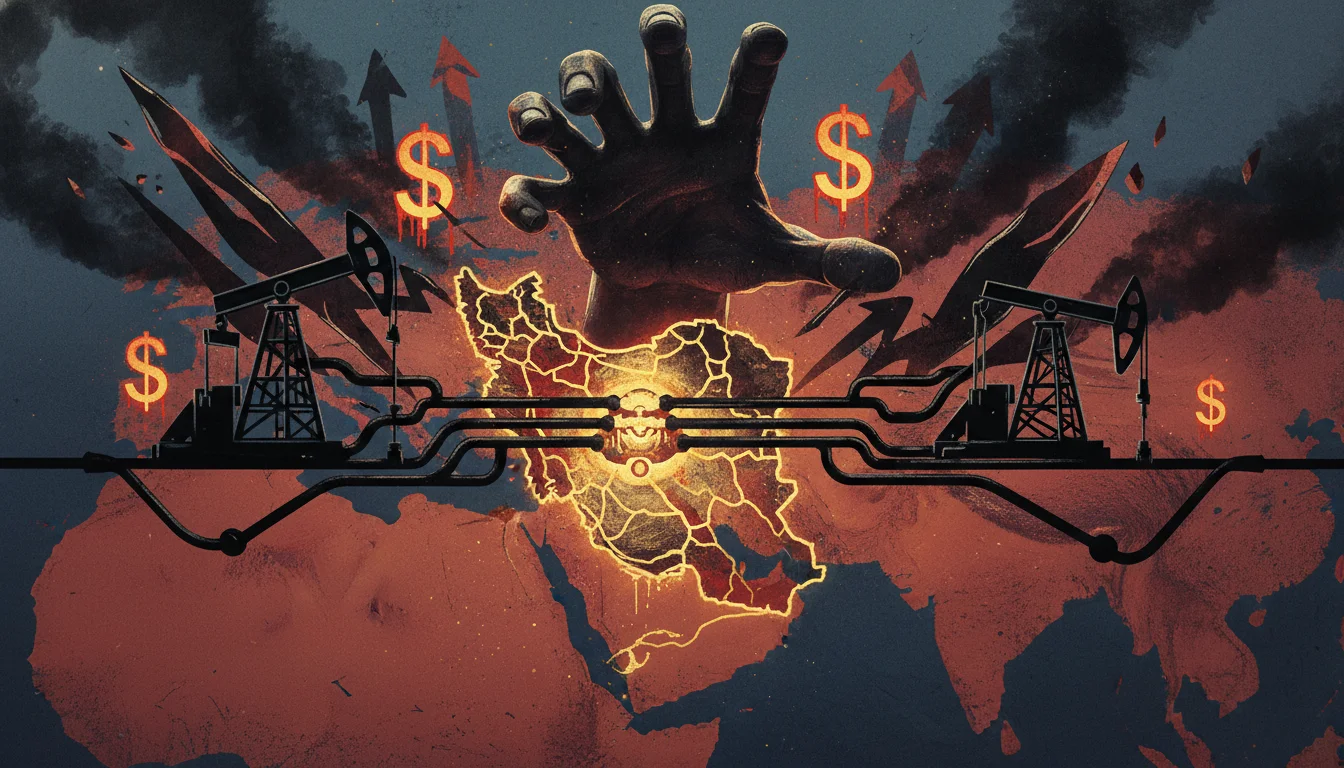
The geopolitical architecture of the Middle East and the foundational stability of global energy markets were irrevocably altered on February 28, 2026. After years of escalating tensions surrounding Iran’s nuclear program, ballistic missile advancements, and regional proxy network, the United States and Israel initiated “Operation Epic Fury,” a massive, coordinated military campaign aimed at decisively neutralizing the Iranian threat. This preemptive offensive capitalized on Iran’s weakened domestic posture following the destabilizing nationwide protests of January 2026, the economic attrition of prolonged sanctions, and the systemic degradation of its military capabilities sustained during the brief 12-day confrontation with Israel in June 2025. The collapse of the Joint Comprehensive Plan of Action (JCPOA) renegotiations in late 2025 further solidified the strategic calculation in Washington and Tel Aviv that diplomatic avenues had been completely exhausted, necessitating overwhelming kinetic intervention.
The opening phase of Operation Epic Fury was unprecedented in its velocity and scale, comprising nearly 900 targeted precision strikes across Iranian territory within the first twelve hours. These initial salvos achieved a catastrophic decapitation of the Iranian state’s highest echelons, resulting in the assassination of Supreme Leader Ali Khamenei and the obliteration of the Assembly of Experts complex in Tehran, fundamentally disrupting the regime’s institutional capacity to manage a succession crisis. While the United States articulated a strictly defined strategic objective of degrading Iran’s nuclear infrastructure, ballistic missile manufacturing, and the Islamic Revolutionary Guard Corps (IRGC) to render the nation “combat ineffective” for the foreseeable future, Israeli strategic doctrine experienced a marked expansion. Driven by the momentum of the strikes and internal political imperatives, Israel broadened its targeting parameters from mere containment to the explicit pursuit of total regime collapse, systematically dismantling state security organs including the Basij militia, domestic police forces, and vital energy infrastructure essential for sustaining the Iranian military apparatus.
In the immediate aftermath of the leadership vacuum, Iran’s top security official, Ali Larijani, announced the formation of an Interim Leadership Council. Recognizing the existential nature of the threat, this council activated a comprehensive, decentralized asymmetric warfare protocol, leveraging Iran’s extensive network of regional proxies to execute a massive retaliatory campaign. By weaponizing its geographic dominance over the Strait of Hormuz, the Iranian regime initiated a sophisticated strategy designed to inflict intolerable economic pain on the global community, effectively holding the international energy supply chain hostage in a desperate bid to force a diplomatic off-ramp and a mandated ceasefire.
This exhaustively detailed report analyzes the multidimensional ramifications of the March 2026 conflict. It meticulously evaluates the physical destruction of regional energy infrastructure, the cascading production shut-ins resulting from the maritime blockade, the unprecedented macroeconomic countermeasures deployed by global institutions, and the complex geopolitical realignments involving China and Russia. Furthermore, it synthesizes the disparate predictive models from leading financial institutions to provide a definitive assessment of crude oil and natural gas price trajectories through the remainder of the decade.
The Strategic Architecture of the Conflict and Asymmetric Regional Retaliation
The operational dynamics of the war rapidly transitioned from a focused series of airstrikes into a sprawling, multi-front regional conflagration. Following the targeted assassination of Supreme Leader Ali Khamenei, the Iranian state apparatus was gripped by institutional paranoia regarding deep-seated US-Israeli intelligence infiltration. Consequently, the regime drastically expanded its internal securitization efforts, prioritizing counterintelligence and violently suppressing any potential domestic uprisings that might exploit the chaos. Concurrently, the operational command of the IRGC was decentralized, granting unprecedented tactical autonomy to regional commanders and proxy militias across the “Axis of Resistance” to execute retaliatory strikes against US and coalition interests throughout the Middle East.
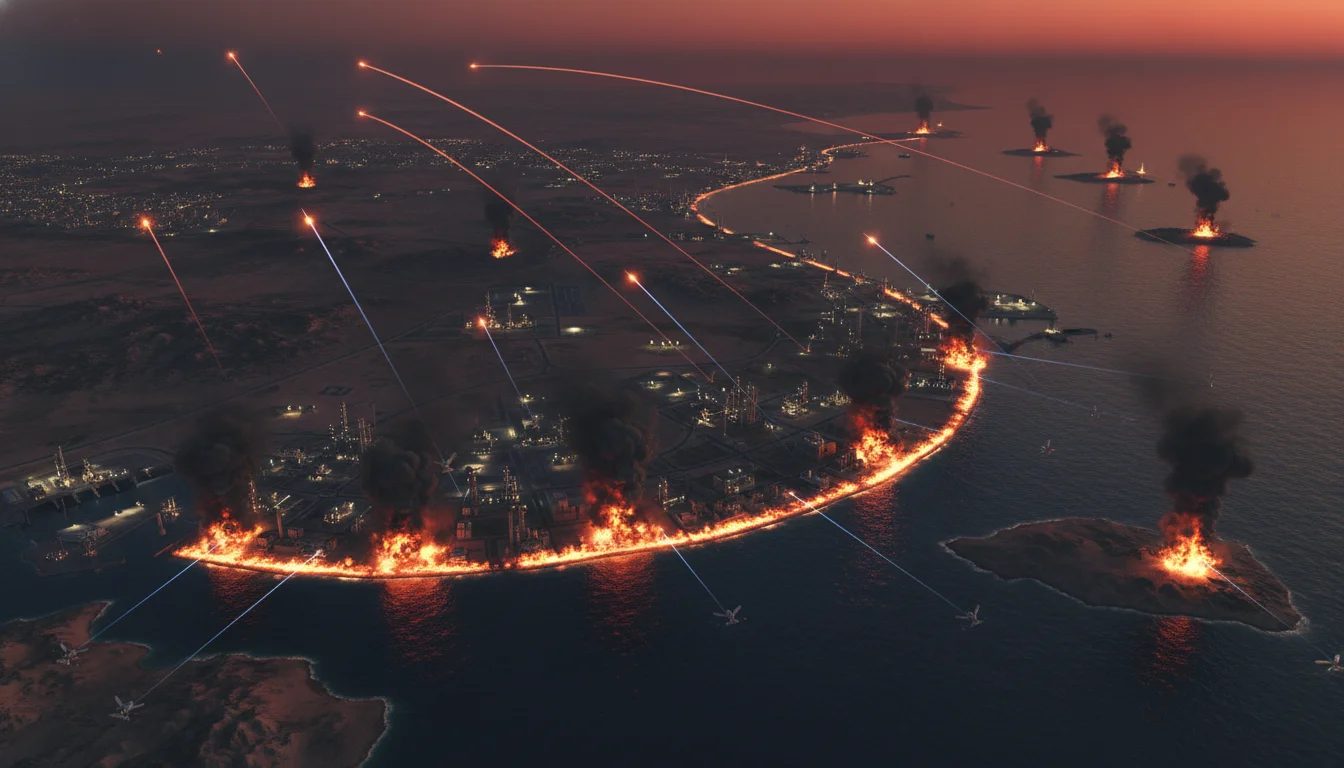
Between the onset of hostilities and the second week of March 2026, Iran and its affiliated militias launched a barrage of thousands of suicide drones and ballistic missiles. These munitions targeted a vast array of critical infrastructure, military installations, and civilian population centers across Saudi Arabia, the United Arab Emirates (UAE), Kuwait, Bahrain, Qatar, Iraq, and Jordan. The sheer volume and velocity of the incoming projectiles severely tested the limits of regional air and missile defense architectures. For example, by March 10, the UAE government reported that a staggering 1,475 drones and 270 missiles had been launched toward its sovereign territory. While advanced defense systems successfully intercepted 1,385 drones and 249 missiles, the saturation tactics ensured that numerous projectiles breached the defensive umbrella, causing significant infrastructure damage and localized casualties. Similar saturation attacks were recorded in Kuwait, which faced 407 drones and 221 missiles, and Bahrain, which reported intercepting 176 drones and 106 missiles.
The human cost of the conflict has been catastrophic, particularly within Iran. The Iranian Red Crescent Society confirmed massive civilian casualties and the severe impairment of domestic infrastructure, reporting that nearly 10,000 civilian structures across the country had been damaged or destroyed, including homes, educational facilities, and almost three dozen health centers. Early estimates from human rights organizations suggested the civilian death toll exceeded 2,400 within the opening weeks, compounded by strikes hitting densely populated urban centers such as the Ramat Gan area in Israel and various civilian neighborhoods in Tehran. Iran’s retaliatory doctrine also incorporated the deployment of highly controversial cluster munitions, scattering lethal unexploded bomblets across wide geographic areas in Israel, severely complicating civilian sheltering protocols and post-strike recovery operations.
Despite claims by US Defense Secretary Pete Hegseth on March 5 that intense coalition strikes had rendered the Iranian conventional navy “combat ineffective,” the asymmetric threat matrix remained profoundly lethal. Iran’s overarching strategic objective was not to achieve conventional military parity, which was impossible, but rather to construct a “ring of fire” that maximized economic disruption. By targeting the hydrocarbon lifelines of the Gulf Arab states, Tehran calculated that the ensuing global energy crisis would rapidly erode international support for the US-Israeli campaign, forcing Western powers to prioritize global economic stability over the complete dismantlement of the Iranian regime.
The Strait of Hormuz Blockade: Mechanisms of Maritime Interdiction
The absolute fulcrum of this geopolitical crisis is the Strait of Hormuz, a narrow maritime chokepoint connecting the Persian Gulf to the Gulf of Oman and the Arabian Sea. Historically, the strait has served as the central artery of the global hydrocarbon economy. In 2025, an average of 20 million barrels per day (bpd) of crude oil and refined products navigated this corridor, representing approximately 25% of the world’s total seaborne oil trade. Furthermore, the strait is the primary export route for the vast majority of Middle Eastern liquefied natural gas (LNG) and agricultural chemicals. On March 2, 2026, recognizing its ultimate point of leverage, a senior IRGC official officially declared the Strait of Hormuz closed to all hostile and non-aligned commercial shipping, explicitly threatening kinetic retaliation against any vessel attempting transit.
Iran’s operationalization of this blockade was executed through a highly sophisticated, multi-domain strategy encompassing naval mine deployment, kinetic projectile strikes, and the psychological manipulation of global insurance markets. Evidence compiled by maritime intelligence agencies indicates a deliberate strategy of “selective targeting”. The Iranian military did not need to physically destroy every vessel; rather, executing highly publicized strikes on a small fraction of the commercial fleet was entirely sufficient to render the corridor fundamentally uninsurable and physically untenable for major operators.
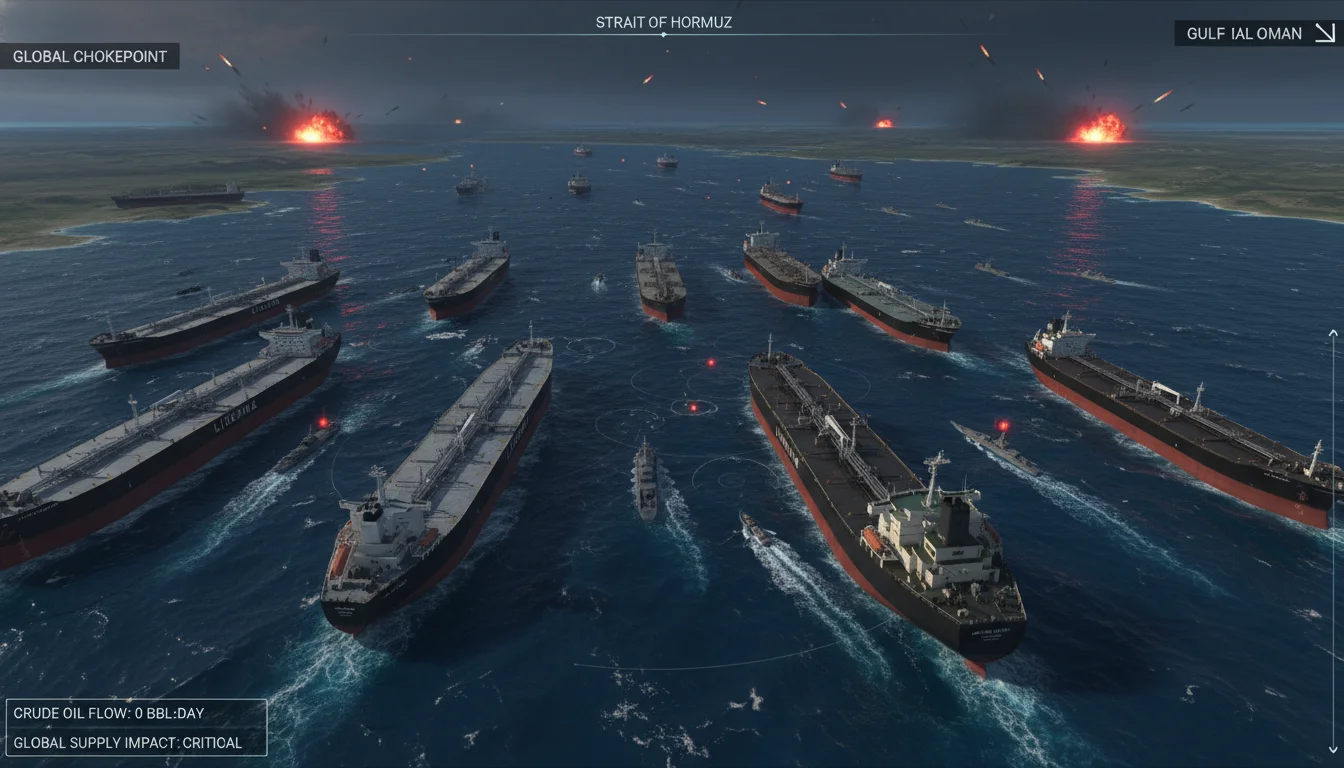
On March 1, the oil tanker Skylight was struck by an unidentified projectile north of Khasab, Oman, resulting in the deaths of two crew members. This was followed by a concerted campaign of maritime harassment, culminating on March 11 when three merchant vessels—the Thai-flagged Mayuree Naree, the Japan-flagged ONE Majesty, and the Marshall Islands-flagged Star Gwyneth—sustained severe damage from projectiles, forcing crew evacuations and necessitating emergency rescue operations by the Omani navy.
Simultaneously, the US military confirmed that Iran had initiated the widespread deployment of naval mines.
On March 10, US Central Command (CENTCOM) reported the detection and destruction of 16 Iranian minelaying vessels operating near the strait. These small, highly maneuverable craft were designed to saturate the shipping lanes with explosive hazards, creating an indiscriminate threat to all maritime traffic. President Donald Trump issued severe ultimatums via social media, threatening retaliation at “a level never seen before” if the mines were not immediately cleared, though the deterrent effect on Iranian proxy forces remained negligible.
The culmination of these kinetic actions resulted in an absolute paralysis of global shipping logistics. Major maritime conglomerates, including Maersk, CMA CGM, and Hapag-Lloyd, immediately suspended all transits through the strait and interconnected Red Sea routes. Commercial maritime data visually underscored the blockade’s efficacy: while ship-tracking data initially showed a 70% reduction in traffic in the opening days of the war, by the second week of March, multiple consecutive days were recorded where zero inbound international commercial transits occurred. Export volumes of crude and refined products collapsed to less than 10% of pre-conflict levels. Regional traffic was forced to massively redistribute, undertaking the substantially longer and economically punitive journey around the Cape of Good Hope, fundamentally altering global shipping economics, drastically extending supply chain lead times, and exponentially increasing freight rates. The risk premium associated with the region drove global marine insurance underwriters to essentially withdraw coverage entirely, solidifying the physical naval blockade with an impenetrable financial one. In a desperate bid to restore flow, the US government proposed a $20 billion sovereign reinsurance program alongside Navy escorts, but commercial operators remained paralyzed by the asymmetric threat.
Upstream Contagion: Storage Exhaustion and Cascading Production Shut-ins
The tactical closure of the Strait of Hormuz precipitated a secondary, equally severe crisis for the Gulf energy producers: the rapid, catastrophic exhaustion of regional crude oil storage capacity. The physics of hydrocarbon extraction dictate that oil production is a continuous, pressurized process. When the primary export arteries are severed by a maritime blockade, the extracted crude must be diverted to localized onshore storage facilities. Once these storage tanks reach maximum capacity, operators face a critical physical limitation and are forced to sequentially shut in upstream producing wells to prevent environmental disasters and infrastructure rupture.
By the second week of March 2026, this logistical bottleneck forced massive, involuntary output curtailments across the member states of the Organization of the Petroleum Exporting Countries (OPEC). Iraq, heavily reliant on the Strait of Hormuz, saw production from its prolific southern fields collapse by a staggering 70%. Iraqi output plummeted from a pre-war baseline of 4.3 million bpd to a mere 1.3 million bpd as the port of Basra became completely inaccessible to international tankers and local storage facilities quickly topped out. The Kuwait Petroleum Corporation was similarly overwhelmed, officially declaring force majeure and initiating severe precautionary production cuts after its storage infrastructure reached critical thresholds. The United Arab Emirates (UAE) was forced to lower its output by an estimated 500,000 to 800,000 bpd. While the UAE attempted to mitigate the blockade by rerouting a fraction of its exports through the Abu Dhabi Crude Oil Pipeline to the port of Fujairah on the Gulf of Oman, the pipeline’s capacity was vastly insufficient to absorb the country’s total export volume. Furthermore, the Fujairah storage hub itself became a target, sustaining damage from Iranian drone strikes, thereby compromising the alternative route.
Saudi Arabia, the undisputed heavyweight of OPEC and the world’s preeminent swing producer, faced the most severe logistical constraints. The Kingdom was forced to reduce aggregate production by an estimated 2 million to 2.5 million bpd. Although Saudi Aramco possesses the East-West pipeline, designed specifically to reroute crude away from the Persian Gulf to terminals on the Red Sea, the pipeline’s maximum capacity of approximately 5 million bpd could not fully compensate for the total occlusion of Gulf-side export volumes, especially as Red Sea shipping was simultaneously threatened by Iranian-aligned Houthi forces in Yemen.
Compounding the logistical crisis of overflowing storage was the direct, kinetic destruction of the energy infrastructure itself. Iranian drones, utilizing highly sophisticated swarming tactics to bypass regional air defenses, executed precise strikes on critical upstream and downstream nodes. The most significant structural blow was delivered against Saudi Aramco’s massive Shaybah oil field. Located deep in the remote Empty Quarter, the Shaybah field boasts a production capacity of 1 million bpd and is vital for producing natural gas liquids utilized in the global petrochemical industry. The Saudi defense ministry reported that the facility was targeted by 20 drones deployed in five distinct, coordinated waves. Despite interceptions, the attack caused severe structural damage to a critical delivery segment carrying propane and butane. Industry engineers conducting preliminary damage assessments indicated that the repair timeline would extend to a minimum of one month, precluding any resumption of operations before late March or April 2026.
Furthermore, Aramco’s Ras Tanura refinery, one of the oldest and largest in the Middle East with a 550,000 bpd capacity, was forced into an emergency precautionary shutdown after sustaining damage from intercepted drone debris in two separate, successive incidents. Similar proxy attacks sparked fires at Bahrain’s 405,000 bpd Sitra refinery and damaged critical desalination plants, raising the specter of catastrophic potable water shortages across the parched desert nations. The compounding, synergistic effect of upstream shut-ins caused by the blockade, downstream refinery damage, and outright export paralysis resulted in the removal of roughly 20 million bpd of crude and refined products from the global market, engineering an unprecedented and catastrophic supply deficit.
The Liquefied Natural Gas (LNG) Crisis: The Qatari Vulnerability
While crude oil markets traditionally dominate geopolitical headlines, the economic ramifications of the 2026 war on global natural gas markets have been arguably more acute, exposing the extreme, structural fragility of the global Liquefied Natural Gas (LNG) supply chain. The crisis materialized violently when Qatar, which single-handedly supplies approximately 20% of the world’s LNG, was forced to declare an absolute force majeure and completely halt all production following sophisticated drone strikes on its crown jewel energy facilities at Ras Laffan Industrial City and Mesaieed Industrial City.
This sudden, total removal of 10.2 billion cubic feet per day (Bcf/d) of LNG constitutes a global market shock comparable in absolute scale and severity to the loss of Russian pipeline gas to Europe following the 2022 invasion of Ukraine. The Ras Laffan complex, recognized as the largest LNG export facility on the planet, experienced an unprecedented five-day total drought of shipments, marking the longest operational hiatus since 2008. Granular infrastructure analysis suggests a grim recovery timeline: even under the most optimistic, frictionless scenarios, the complex will require a minimum of two weeks of intensive engineering work to safely restart base operations once hostilities cease, followed by an additional two-week ramp-up period to return to baseload capacity, effectively guaranteeing a minimum four-week absolute supply disruption.
The macroeconomic elasticity of the LNG market is notoriously rigid in the short run. Unlike oil, which possesses significant strategic reserves, LNG liquefaction trains globally operate at or near maximum capacity to meet baseline demand, leaving virtually no “swing” or buffer supply available to compensate for the sudden loss of Qatari volumes. Consequently, market price action must absorb the entirety of the supply shock to enforce demand destruction. Benchmark gas prices in Asia—the primary market which receives 80% of all Qatari exports—responded instantly, surging over 55% in the opening days of the conflict. Financial modeling by leading institutions suggests a potential doubling of pre-war prices, projecting Asian spot rates to spike to an astronomical $25–$30 per million British thermal units (MMBtu) if the outage persists beyond the immediate term.
This volatile dynamic initiated a frantic, high-stakes global bidding war for available molecules.
US LNG cargoes, initially contracted and in transit toward European markets, were rapidly diverted mid-ocean toward Asia, as trading houses sought to capture massive, sudden arbitrage premiums. According to maritime tracking data, at least eight massive LNG carriers were diverted from the Atlantic basin to the Pacific. This immediate supply diversion, in turn, drained European natural gas inventories precisely as the continent was emerging from the winter heating season, causing European Title Transfer Facility (TTF) futures to spike in sympathy. The Qatari shutdown vividly and painfully demonstrates how highly localized, targeted infrastructure vulnerabilities in the Persian Gulf translate directly, and almost instantaneously, into profound global energy insecurity and hyper-volatility across continents.
Global Energy Market Reaction, Volatility, and the Psychology of Pricing
The immediate financial and psychological response of the global commodities market to Operation Epic Fury and the ensuing Hormuz blockade was violent, historic, and characterized by extreme tail-risk pricing. By March 9, 2026, the international benchmark Brent crude futures contract surged past the psychological threshold of $119 per barrel, reaching its highest level since mid-2022. This represented a staggering 36% gain since the conflict’s onset. The US domestic benchmark, West Texas Intermediate (WTI), experienced a parallel 39% exponential spike, also briefly topping the $119 mark. Market volatility entered completely uncharted territory, with the derivatives and options markets flashing extreme upside systemic risk. Preceding the blockade, Brent and WTI one-month call skews had grown by nearly 20 points, indicating massive institutional hedging against catastrophic, long-term supply loss.
However, the psychology of the modern oil market remains hypersensitive to political signaling and the perceived duration of the conflict. On March 10, US President Donald Trump delivered an exclusive interview to CBS News, aggressively declaring that the military campaign against Iran was “very complete” and asserting that Washington was “very far ahead” of its initial four-to-six-week estimated timeframe. This single, highly publicized rhetorical intervention triggered a massive, automated algorithm-driven sell-off. Believing the crisis had peaked, traders liquidated long positions, plunging oil prices by nearly 7% in a single session, driving Brent crude back down to approximately $92 per barrel.
This extreme price whiplash highlights the complex duality of the current market structure. The global energy trade is currently caught in a violent tug-of-war between a “Physical Reality” and a “Geopolitical Reality”. The Physical Reality dictates that millions of barrels are tangibly trapped behind an active naval blockade, sovereign storage tanks are overflowing, and global supply is definitively shrinking. Conversely, the Geopolitical Reality is heavily influenced by speculative trading and the underlying assumption that the United States and allied global superpowers simply will not permit a prolonged, permanent disruption of the global economy. As analysts at Standard Chartered and Barclays succinctly observed, the market inherently believes that the sheer unsustainability of a closed Strait of Hormuz practically guarantees a swift diplomatic or overwhelming military resolution within weeks, not months.
From a strict mathematical and economic perspective, the relationship between supply constraints and price spikes can be approximated by the price elasticity of demand. In the short term, global energy demand is exceptionally inelastic; industrial factories must operate, citizens require fuel for transportation, and basic heating needs cannot be deferred. If the global supply pool is artificially reduced by the Hormuz blockade (approximately 20 million bpd), and demand cannot easily or quickly adjust downward, prices must spike exponentially to enforce immediate demand destruction. The brief retreat to the $92 per barrel level indicates that the futures market is currently pricing in a high probability of immediate resolution, rather than structurally adjusting to a long-term, permanent 20% deficit in global supply. However, if the blockade persists and the political signaling of a quick end proves false, the unforgiving mathematics of inelastic demand dictate that prices must invariably test, and likely shatter, new historical highs.
Institutional Crude Oil Price Forecasts and Scenario Modeling
Faced with a generational geopolitical shock, leading global financial institutions were forced to rapidly discard and revise their 2026 commodity outlooks. Prior to the February 28 attacks, the overriding consensus view on Wall Street was overwhelmingly bearish. Analysts had modeled a structural market oversupply, driven by rising non-OPEC production (particularly from the Americas) and sluggish macroeconomic growth in China, with baseline forecasts placing Brent comfortably in the high $50s to mid-$60s for the year. The sudden onset of the conflict generated a broad, highly divergent spectrum of revised scenarios, reflecting disparate institutional assessments of the war’s potential duration, severity, and the efficacy of macroeconomic interventions.
The following table synthesizes the revised forecasts, scenario modeling, and tail-risk probabilities from leading financial institutions as of March 2026:
| Financial Institution | 2026 Target/Average (Brent) | Near-Term Target | Key Scenario Assumptions & Tail Risks |
|---|---|---|---|
| Goldman Sachs | $71/bbl (Q4 Avg) | $98/bbl (March/April) | Base Case: Models 21 days of Hormuz flows operating at only 10% capacity, followed by a slow 30-day gradual recovery. Assumes SPR releases dampen the shock by 50%. Bull Case: If the physical disruption lasts a full month, the March/April average spikes to $110. A sustained 5-week total shutdown risks $100+ structurally to force severe demand destruction. Pre-war Q4 forecast was $66. |
| J.P. Morgan | ~$60/bbl (Annual Avg) | Highly Volatile | Base Case: Maintains a structurally bearish long-term outlook despite the current spike. Firmly views the market as fundamentally oversupplied in 2026 once the geopolitical “fog of war” clears. Anticipates that OPEC+ voluntary cuts will still be required simply to maintain the $60 floor. |
| Barclays | $65/bbl (Baseline) | $90 - $100/bbl | Base Case: Prices stay elevated in the near term due to massive physical volumes being taken offline and severely degraded OPEC+ spare capacity caused by storage exhaustion. Tail Risk: Under a 10% extreme deterioration scenario, where diplomacy collapses and infrastructure is permanently crippled, Brent could hit a catastrophic $150/bbl. |
| Citigroup | $62.50/bbl (Q2 Avg) | $70 - $75/bbl | Base Case: Asserts that current elevated prices are supported purely by geopolitical risk premiums and speculative panic rather than actual fundamental physical shortages. Bull/Bear: Bull case sees $70-$75 if supply risks persist and escalate. Bear case sees a rapid collapse to $50 if diplomatic breakthroughs occur and the underlying structural surplus overtakes the market. |
| BloombergNEF | $91/bbl (Q4 Extreme) | $71/bbl (Q2) | Base Case: Pre-war forecast of $55/bbl is completely abandoned. Bull Case: If Iranian exports are completely and permanently removed from the market for the rest of 2026, Brent will average $91 in Q4. Sees a modest $4/bbl permanent war premium. |
These complex models uniformly underscore that the single most important variable dictating the price trajectory is the absolute duration of the disruption. A localized, short-term conflict allows the market to utilize existing commercial and strategic inventories to temporarily bridge the gap, preventing a sustained price breakout. Conversely, a protracted blockade that extends into months fundamentally drains the global buffer, triggering aggressive, unmitigated price rationing. Furthermore, quantitative analysts note a massive, perilous “liquidity void” in the technical trading structure between $90 and $95 per barrel; a sudden, confirmed ceasefire announcement, coupled with the massive strategic reserve releases currently hitting the market, could easily precipitate a violent $20 flash crash in futures markets.
Unprecedented Macroeconomic Countermeasures: The IEA and OFAC Responses
Faced with the terrifying prospect of triple-digit oil prices plunging the fragile global economy into a deep recessionary spiral, international energy coalitions and the US government deployed severe, historically unprecedented macroeconomic countermeasures.
These actions were designed to artificially suppress price volatility, guarantee market liquidity, and provide policymakers with a critical window of time to achieve military objectives.
The Historic IEA Strategic Petroleum Reserve Release
On March 11, 2026, the 32 member nations of the International Energy Agency (IEA), convened by Executive Director Fatih Birol, unanimously agreed to the largest emergency oil stock release in the organization’s half-century history. Recognizing that the scale of the disruption threatened the foundations of global energy security, the coalition authorized the release of a staggering 400 million barrels of crude oil from strategic petroleum reserves (SPR). To accurately contextualize the sheer magnitude of this intervention, it is more than double the previous historical record of 182.7 million barrels released in 2022 following the Russian invasion of Ukraine, and constitutes roughly one-third of the total 1.25 billion barrels of government-controlled emergency stockpiles held globally.
The burden of this release was shared globally, though the United States committed to contributing the lion’s share, authorizing the rapid drawdown of 172 million barrels from its domestic SPR. Japan followed suit, pledging to release 80 million barrels from state and private reserves, alongside significant proportional contributions from Germany (19.5 million barrels) and other allied nations.
While the mere announcement of this mammoth injection successfully suppressed further price breakouts and acted as a powerful psychological bearish signal to traders, its physical efficacy in replacing lost barrels remains severely constrained by hard logistics. Goldman Sachs models highlight a critical infrastructural limitation: the global pipeline and refining infrastructure can realistically only process, transport, and distribute approximately 3 million barrels per day of SPR releases into the active market. Therefore, while the IEA release can successfully bridge a short-term deficit and artificially calm markets, it mathematically cannot fully replace the estimated 20 million bpd lost to a prolonged, total closure of the Strait of Hormuz. It acts strictly as a palliative, short-term measure.
US Sanctions Recalibration: Russia General License 133
Perhaps the most fascinating, Machiavellian geopolitical paradox of the crisis involves the United States’ maneuvering regarding Russian energy exports. Recognizing that the global macroeconomic system simply could not simultaneously sustain the loss of Iranian oil, the complete blockade of the Strait of Hormuz, and the heavy, punitive sanctions placed on Russian crude due to the ongoing Ukraine war, the US Treasury’s Office of Foreign Assets Control (OFAC) executed a dramatic strategic pivot.
On March 5, 2026, OFAC officially issued Russia General License 133 (GL 133). This sweeping, emergency directive temporarily authorized transactions necessary for the sale, delivery, and offloading of Russian-origin crude oil and petroleum products to the Republic of India, provided the oil was loaded on or before March 5 and delivered by April 4. Critically, GL 133 explicitly permitted the use of the heavily sanctioned “shadow fleet” vessels and authorized massive transactions with previously blocked Russian state energy giants such as Rosneft and Lukoil.
US Treasury Secretary Bessent framed this extraordinary concession as a necessary “short-term measure” designed to “enable oil to keep flowing to the market” and to alleviate the immense inflationary pressure caused by Iran’s attempt to take the global energy economy hostage. In effect, the United States tacitly weaponized Russian oil to combat Iranian geopolitical aggression. This maneuver unequivocally demonstrates a critical hierarchy of national security interests: in moments of extreme systemic risk, raw global macroeconomic stability and the prevention of a fuel-driven recession supersede long-term sanctions policy frameworks and ideological commitments.
OPEC+ Paralysis and the Absence of Swing Capacity
In stark contrast to the aggressive, coordinated actions of the IEA, the OPEC+ cartel maintained a relatively passive, paralyzed posture. During their emergency January and March 2026 meetings, the participating nations reaffirmed their commitment to retaining flexibility and gradually phasing out 2.2 million bpd of previously agreed voluntary cuts, but offered no immediate relief. Despite the outbreak of the war, OPEC maintained its standard global supply and demand projections in its Monthly Oil Market Report, claiming the geopolitical developments warranted “close monitoring”. The cartel’s inability to aggressively ramp up production to stabilize the market is not a matter of political unwillingness, but sheer physical impossibility. The vast majority of OPEC’s vaunted spare capacity resides firmly within Saudi Arabia, the UAE, Kuwait, and Iraq—the precise nations currently locked behind the Iranian maritime blockade and suffering from catastrophic domestic storage exhaustion.
The Dark Fleet Lifeline: Chinese Secondary Sanctions Evasion and Superpower Calculus
A critical, highly visible anomaly within the architecture of the 2026 conflict is the unabated, massive flow of Iranian crude oil to the People’s Republic of China (PRC). Despite the ferocity of Operation Epic Fury, the degradation of the Iranian military, and the effective closure of the Strait of Hormuz to international Western shipping, a dedicated maritime energy corridor—referred to by intelligence analysts as the “Dark Fleet Lifeline”—remains remarkably operational between Tehran and Beijing.
Tanker tracking intelligence firms, utilizing advanced satellite imagery and AIS data, confirm that Iran successfully exported between 13.7 and 16.5 million barrels of crude oil in just the first eleven days of the conflict. This equates to a sustained flow rate of approximately 1.25 to 1.5 million barrels per day, figures that are virtually indistinguishable from Iran’s pre-war export averages. The vast majority of this oil—over 84%—is destined for independent “teapot” refineries in China, purchased at steep discounts outside the traditional financial system.
This dynamic reveals a highly sophisticated, high-dimensional geopolitical and economic calculation by all primary actors involved:
- Iranian Strategy and Selective Targeting: Iran operates a vast, sophisticated “shadow fleet” of older, unsanctioned vessels that manipulate Automatic Identification System (AIS) signals to obscure their origins, destinations, and ownership structures. By ensuring these specific vessels safely navigate the heavily mined and contested waters of the Persian Gulf—while striking Western-aligned vessels—Iran exercises “Selective Targeting”. This allows Tehran to maintain a critical revenue stream necessary to fund its proxy network and sustain its war economy. Furthermore, Iran understands a grim sovereign reality: completely and indiscriminately closing the strait would also sever its own imports of food, medicine, and basic goods, representing an unacceptable risk of domestic collapse.
- Chinese Strategic Calculus: China relies heavily on Iran, which accounts for roughly 10% to 15% of its total seaborne crude imports. Beijing has adopted a calculated “wait-and-see” approach, rhetorically opposing the US-Israeli strikes on principle but carefully avoiding direct material or military support for Tehran. By maintaining these imports, China leverages the crisis to secure deeply discounted energy, bolstering its own massive strategic reserves. More importantly, Beijing utilizes its diplomatic weight and the implicit threat of economic retaliation as a “Cognitive Shield,” deterring the US from striking Chinese-bound vessels.
- US Restraint and Systemic Limits: The unhindered flow of Iranian oil to China stands in stark, highly visible contrast to the aggressive US naval blockades previously deployed against nations like Venezuela. The United States has deliberately refrained from kinetic interdiction of the Chinese-bound Dark Fleet. This restraint is heavily influenced by the broader macroeconomic relationship between Washington and Beijing. While the Trump administration authorized a 25% tariff on Iran’s trading partners, executing military strikes on Chinese-owned or destined vessels risks expanding the regional conflict into a catastrophic, direct superpower confrontation. Furthermore, Washington is forced to tolerate the leakage of Iranian oil to China because those barrels effectively remain in the global supply pool, indirectly suppressing global prices and preventing a worse domestic inflationary crisis in the US.
Broader Macroeconomic Contagion: Inflation, Equity Markets, and Industrial Metals
The extreme volatility radiating from the Middle East has systematically infected broader global asset classes, threatening to derail the delicate macroeconomic equilibrium carefully managed by central banks worldwide over the previous years. The primary transmission mechanism for this contagion is the baseline price of crude oil and natural gas, which acts as a highly regressive, unavoidable tax on global consumers and serves as the fundamental input cost for all industrial production.
Inflationary Pressures and Monetary Policy Reversal
A sustained period of elevated energy prices fundamentally alters the trajectory of global inflation. Prior to the conflict, major central banks, including the US Federal Reserve, were navigating a delicate “soft landing” scenario, aiming to gradually reduce interest rates as post-pandemic inflation subsided. However, the 2026 energy shock threatens to trigger a devastating second wave of cost-push inflation.
Rising fuel costs instantly inflate maritime shipping, ground logistics, and agricultural production prices. If energy disruptions persist, long-term consumer inflation expectations will become unanchored, forcing central banks to halt rate cuts or even aggressively hike interest rates again. This tightening of global financial conditions increases the cost of capital, dampens corporate earnings, and dramatically elevates the risk of a severe global recession. The impact is not limited to the West; emerging markets dependent on remittances and imported oil, such as the Philippines, face delayed economic recoveries as the crisis stretches global purchasing power.
Equity Market Volatility and Sectoral Shifts
Global equity markets reacted to the initial outbreak of war with predictable, violent “risk-off” behavior, leading to precipitous declines across major indices in Asia, Europe, and the Americas. The CBOE Volatility Index spiked dramatically, reflecting the extreme uncertainty regarding corporate profits and economic growth in a high-energy-cost, high-inflation environment. However, the equity impact has been highly granular and sector-specific. US aerospace and defense equities have emerged as key beneficiaries of the geopolitical uncertainty, massively outperforming broader indices as sovereign nations rush to recapitalize defense budgets and procure advanced munitions and air defense systems. Similarly, the global oilfield services sector (including companies like Schlumberger, Baker Hughes, and Cactus Inc.) stands to benefit substantially as nations outside the conflict zone rapidly accelerate domestic drilling activities to capture high crude prices and enhance national energy security.
Industrial Metals and Supply Chain Paralysis
The blockade of the Strait of Hormuz has also sent shockwaves through the industrial base metals markets, proving that the waterway is not merely an energy corridor, but a vital artery for global manufacturing. The Middle East accounts for nearly 9% of global aluminum output, with over 5 million tons of finished aluminum shipped through the strait annually, alongside massive quantities of bauxite and alumina flowing in the opposite direction. The sudden inability to safely export finished metal or import raw materials prompted massive regional producers like Qatalum and Alba to announce immediate delivery stoppages and declare force majeure. Consequently, London Metal Exchange (LME) aluminum prices surged to four-year highs, surpassing $3,372 per ton within days. Leading institutions like Citi revised their near-term forecasts to $3,600 per ton, outlining a highly plausible bull-case scenario of $4,000 per ton if the disruption becomes protracted and forces European and Asian manufacturers to scramble for alternative supplies. This profound inflation in base metals directly impacts the manufacturing costs of automobiles, aerospace components, commercial construction, and renewable energy infrastructure globally, further compounding the macroeconomic crisis.
Strategic Conclusions and the Long-Term Energy Paradigm
The March 2026 conflict between the US-Israeli coalition and the Islamic Republic of Iran serves as a profound, unprecedented stress test for the global economic and security architecture. The comprehensive analysis of military developments, physical commodity flows, infrastructure vulnerabilities, and financial market reactions yields several critical, unavoidable conclusions regarding the future of the global economy:
- First, the global energy system remains structurally and terrifyingly vulnerable to highly localized geographic chokepoints. Despite decades of strategic diversification efforts, the massive expansion of US shale production, and the accelerating transition toward renewable energy, the sheer volume of critical hydrocarbons and industrial metals transiting the Strait of Hormuz ensures that any disruption in this narrow corridor instantly translates into a systemic global economic crisis. The 2026 conflict has empirically demonstrated that a technologically inferior adversary can successfully utilize relatively cheap, asymmetric tactics—such as localized naval mines, swarm drones, and psychological deterrence—to completely paralyze trillion-dollar international supply chains and hold the global economy hostage.
- Second, the era of absolute, unchallengeable US maritime hegemony in the Persian Gulf is being openly challenged and constrained by complex geopolitical interdependencies. The United States’ inability, or calculated strategic reluctance, to militarily interdict the massive flow of Iranian oil to China highlights the limiting parameters of modern sanctions enforcement in a multipolar world. Washington must constantly balance the tactical objective of starving the Iranian war machine against the strategic risk of provoking a broader conflict with China and inadvertently removing too many barrels from an already tight global market. This dynamic forces uncomfortable compromises, such as the emergency issuance of General License 133 for Russian oil, vividly illustrating that raw economic pragmatism will repeatedly override ideological policy in matters of ultimate energy security.
- Third, the financial market’s pricing of geopolitical risk is inherently transient, emotionally driven, and highly sensitive to political narrative rather than physical fundamentals. The violent, algorithmic swings in Brent crude—surging from $70, peaking at $119, and rapidly retreating to $92 based entirely on shifting perceptions of the war’s duration stemming from a single presidential interview—indicate a global market operating on immense leverage and minimal physical buffers. The unprecedented 400 million barrel SPR release by the IEA provides a vital, yet ultimately finite, shock absorber for the global economy. If the geopolitical conflict is resolved swiftly, the market’s underlying structural surplus will likely reassert itself, driving prices back toward the $60 baseline forecasted by institutions like J.P. Morgan. However, if the blockade extends beyond the logistical limits of SPR injections, the market will inevitably face the harsh, undeniable mathematics of demand destruction, forcing energy prices into the triple digits indefinitely.
Ultimately, even a swift diplomatic or military resolution to the kinetic phase of Operation Epic Fury will leave permanent, indelible scars on the global energy landscape. The graphically demonstrated vulnerability of hyper-concentrated, massive infrastructure assets—such as the Ras Laffan LNG complex and the Shaybah oil field—will force a fundamental, global repricing of long-term energy infrastructure risk. Global consumers and industrial manufacturers will likely bear the cost of a permanent “war premium,” driven by the absolute necessity of enhanced physical security protocols, exorbitant, structural increases in maritime insurance rates, and the accelerated, highly capital-intensive push for domestic supply chain onshoring. The 2026 Middle East conflict does not merely represent a temporary, violent spike in commodity prices; it definitively signals a permanent paradigm shift in the valuation, transportation, and strategic conceptualization of global energy security.