Indian Wedding Industry & Digital Marketing Report 2025
Strategic Blueprint: Digital Marketing for Wedding Venues and Services in India
1. Industry Overview
The Indian wedding industry is currently operating at the nexus of deeply entrenched cultural traditions and rapidly evolving modern consumer aspirations, creating one of the most lucrative and resilient economic sectors globally. This domain encompasses a vast ecosystem of service providers, ranging from grand palatial resorts and boutique banquet halls to specialized event planners, high-end caterers, and cinematic videographers. The sheer scale of this industry requires a nuanced understanding of macroeconomic drivers, consumer demographic shifts, and the underlying structural challenges that dictate market viability.
An analysis of the current market size and projected growth trajectories reveals a phenomenal economic expansion. The broader Indian wedding services market was estimated to be valued at approximately USD 103.93 billion in the year 2024. Driven by a confluence of rising disposable incomes, an expanding middle class, and the cultural mandate of the extravagant Indian wedding, this overarching market is projected to reach an astounding USD 238.18 billion by the year 2030, reflecting a robust Compound Annual Growth Rate (CAGR) of 14.3% to 14.5%. Concurrently, a parallel evaluation specifically targeting the structured wedding planning niche estimates its valuation at USD 6.42 billion in FY2024, with expectations to scale to USD 16.53 billion by FY2032, expanding at a CAGR of 12.55%. This immense capital flow indicates that while the market is highly profitable, it is also undergoing significant premiumization.
The financial commitment to these celebrations is profound and structurally shifting. Recent demographic and consumer evaluations from the 2025–2026 season indicate that the average wedding expenditure currently stands at ₹39.5 lakh, representing an 8% year-over-year inflationary rise. This escalation is increasingly financed through formal credit mechanisms, with the average wedding loan size now standing at ₹15.5 lakh. This critical data point suggests a market dynamic that carefully balances high aesthetic aspiration with structured financial prudence, moving away from purely cash-driven, informal family expenditures toward professionalized, digitally tracked transactions where 38% of users now opt for digital payment modes.
A fundamental reallocation of wedding budgets is transforming the industry landscape. Historically, matrimonial capital was deployed to maximize guest volume, frequently exceeding a thousand attendees to fulfill social obligations. The contemporary trend heavily favors curated, high-yield experiential investments for smaller, more intimate groups. The average age of marriage has stabilized around 29 years, and nearly 29% of couples cohabit before marriage, suggesting that individuals are entering matrimony with established careers, greater financial independence, and highly specific, personalized aesthetic preferences. They prioritize love, stability, and real-world connections over mere tradition, demanding bespoke celebrations that reflect their unique identities.
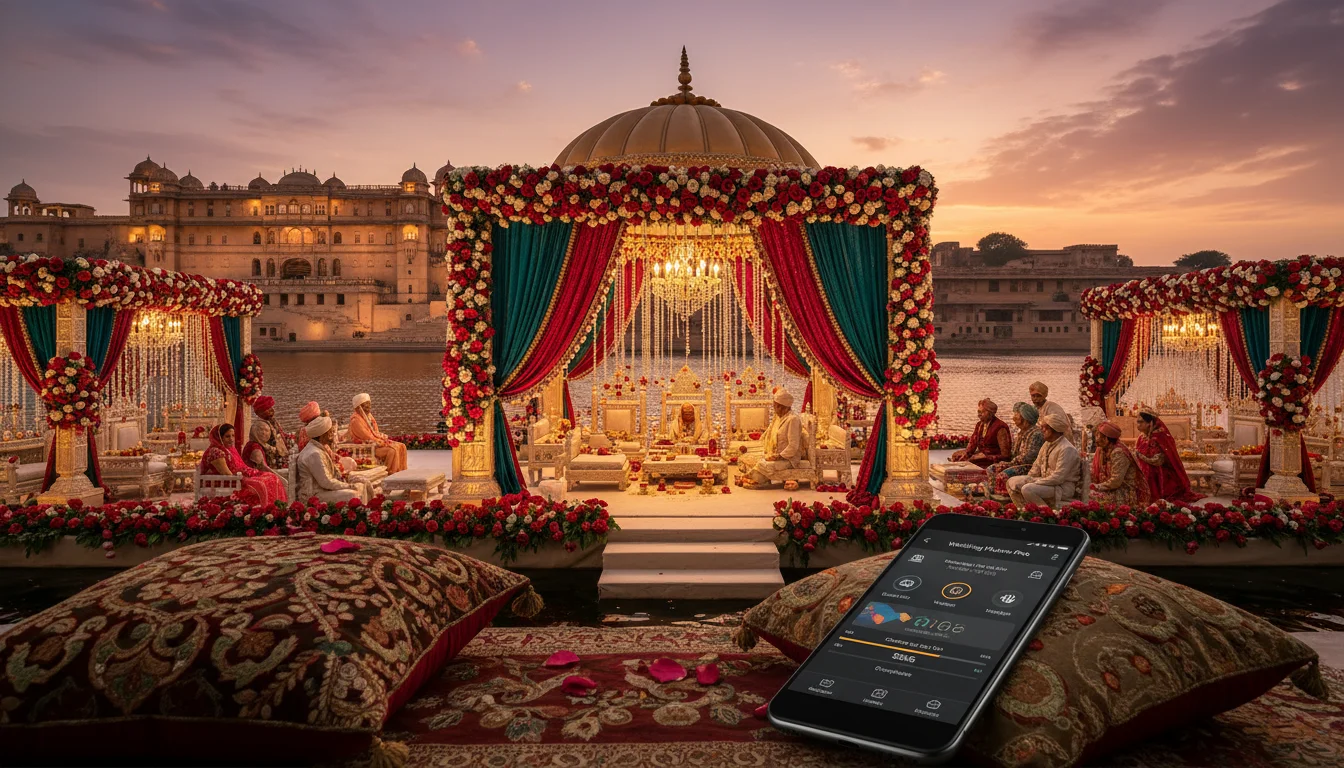
This demographic and psychological shift has catalyzed the monumental rise of the destination wedding sector. In 2025, one in every four Indian weddings was a destination event. For weddings with budgets exceeding ₹1 crore, over 60% are now hosted away from the couple’s hometown. While international destinations such as Bali, Vietnam, Thailand, and Malaysia capture a portion of this luxury segment, an overwhelming 89% of destination weddings remain localized within India. This domestic preference is directly supported by strategic macroeconomic policies, notably the Ministry of Tourism’s “Wed in India” campaign launched in 2023, which aims to position the nation as a premier global wedding hub by highlighting regional diversity and improving infrastructure. Cities such as Jaipur, Goa, Udaipur, Mussoorie, Dehradun, Rishikesh, and Jim Corbett dominate this space, with Jaipur leading major metropolitan areas with an average wedding spend of ₹73 lakh. The definition of a venue is expanding beyond traditional banquet halls to include unique, experiential spaces, heritage palaces, and a subtle resurgence in temple weddings (4.13%).
Despite these overwhelmingly positive macroeconomic indicators, wedding venues and service providers must navigate a highly fragmented and exceptionally challenging operational environment. The most pressing structural bottleneck is the reliance on traditional auspicious dates, commonly referred to as Saya dates. This cultural requirement leads to extreme seasonal demand compression, where limited Saya dates tighten venue supply drastically, with availability issues driving 37.91% of all consumer frustrations during the planning process. Venues struggle with massive overcapacity demands on a handful of days while facing revenue droughts during off-season periods.
Furthermore, the industry is characterized by hyper-competition. The market comprises a volatile mix of large event management conglomerates, luxury hospitality chains, and independent boutique agencies, all vying for the same high-intent clientele. Modern couples require highly bespoke solutions, ranging from sustainable and eco-conscious decor and “Quiet Luxury” aesthetics to tech-infused celebrations, maximalist florals, and hyper-local regional themes. Venues that offer rigid, standardized packages are rapidly losing market share to agile, highly customizable competitors who can cater to the nuanced demands of the 2026 consumer. Finally, a significant digital trust deficit exists for legacy businesses. With 1 in 3 couples rigorously checking online reviews before booking a vendor, a lack of robust online reputation management instantly disqualifies traditional venues that rely solely on offline, localized word-of-mouth networks.
| Market Metric | Current Data (2024/2025) | Projected Trajectory | Primary Growth Drivers |
|---|---|---|---|
| Total Services Market | USD 103.93 Billion | USD 238.18 Billion | Expanding middle class, rising disposable income. |
| Wedding Planning Niche | USD 6.42 Billion | USD 16.53 Billion | Demand for professional execution and curated experiences. |
| Average Wedding Spend | ₹39.5 Lakh | Anticipated continuous rise | Inflationary pressures, experiential premiumization. |
| Destination Wedding Share | 25% of all weddings | Expanding market share | Government initiatives (“Wed in India”), shift from scale to experience. |
| Domestic Destination Share | 89% of destination events | Sustained domestic dominance | Improved regional infrastructure, localized cultural themes. |
2. Digital Landscape in India (Contextual to the Industry)
The integration of ubiquitous internet access, high-speed mobile data, and widespread smartphone penetration in India has fundamentally redefined how matrimonial events are conceptualized, curated, and ultimately consumed. The digital landscape has transitioned the wedding planning process from a traditional, family-centric offline activity dictated by local networks into a highly individualized, algorithmically driven online journey. Understanding this digital attention economy is paramount for any venue or service provider attempting to capture market share.
Academic and market evaluations examining the impact of Social Networking Sites (SNS) on Indian weddings reveal a profound shift toward digitally-driven aspiration building. Consumers, particularly the Gen Z demographic which now represents 41% of the 2026 wedding market, form idealized visions of their celebrations based on visual content and influencer narratives long before they ever engage a physical vendor. This phenomenon has given rise to a performative wedding culture, wherein social comparison and online validation shape how consumers evaluate the success and prestige of their celebration. The aesthetics of the event—meticulously optimized for digital consumption and social media broadcasting—are now considered as critical as the cultural event itself.
The modern Indian couple utilizes a fragmented but highly specific array of digital platforms, with each network serving a distinct psychological and logistical need within the broader marketing funnel. Pinterest functions less as a traditional social network and more as a highly specialized visual search engine utilized predominantly in the early discovery phase, often 12 to 18 months prior to the event. When a couple navigates Pinterest, they are actively planning rather than passively scrolling. Recent data indicates a 32% increase in Indian wedding boards and an 87% rise in shoppable Pins, highlighting the platform’s role in shaping specific aesthetic choices such as “Heritage Glamour” or “Modern Romanticism.” Because pins have an extended digital shelf-life and compound in search engine value over time, Pinterest is the dominant platform for establishing long-term, passive brand visibility that captures leads even when vendors are offline.
Conversely, Instagram serves as the primary validation and direct conversion engine. While Pinterest is utilized for broad inspiration, Instagram is where couples verify the authenticity, consistency, and current activity of a specific vendor or venue. A staggering 87% of couples report making crucial wedding planning decisions based directly on social media content, and 55% of Gen Z couples indicate they increased their overall wedding budgets specifically because of premium experiences they viewed online. Instagram’s visual-first format, particularly the utilization of Instagram Reels and Stories, is vital for service-based vendors.
Dynamic, short-form video content—such as bridal entry transformations, time-lapse decor setups, and behind-the-scenes coordination—generates 74% higher engagement than static visual posts. 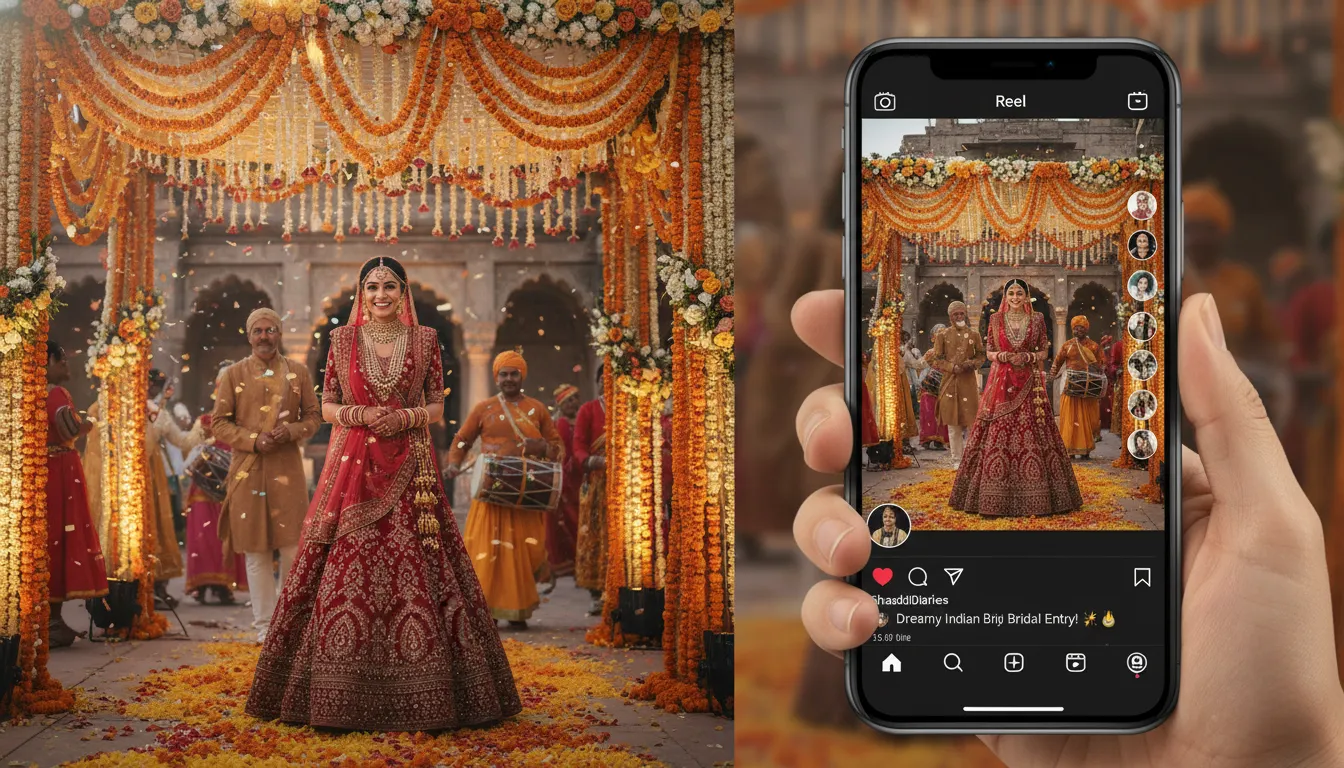 YouTube also plays a critical, albeit niche, role by providing a platform for long-form cinematic storytelling. Couples seek out aesthetically curated, documentary-style wedding films on YouTube to experience a realistic, immersive preview of a venue’s spatial potential and ambient lighting.
Consumer online behavior related to wedding services has grown exceedingly sophisticated. The consumer journey is no longer linear; it is an omnichannel experience. A prospective client may discover a venue’s aesthetic through a viral Instagram Reel, save that specific decor setup to a collaborative Pinterest board, verify the venue’s logistical capabilities through Google Local Search reviews, and ultimately execute a booking inquiry through a specialized aggregator platform like WedMeGood or WeddingWire. Furthermore, the very definition of wedding services has expanded exponentially in the digital age. Digital consumer behavior now encompasses comprehensive “wedding-like experiences” that occur well before and after the primary ceremony. For instance, pre-wedding clinical beauty treatments have surged, with 65% of individuals undergoing skin treatments and 17% opting for advanced aesthetic procedures like dermal fillers as part of their preparation. Additionally, travel has become a core, digitally researched ritual, with 38% taking pre-wedding trips and average honeymoon expenditures reaching ₹3.41 lakh, creating ancillary digital marketing opportunities for luxury resorts and destination planners.
3. Digital Marketing Opportunities
The structural challenges inherent in the Indian wedding sector—namely extreme seasonal demand compression due to limited Saya dates, hyper-competition from both conglomerates and boutique entrants, and the necessity of establishing immense digital trust—can be systematically solved through the deployment of advanced digital marketing architectures. Digital marketing transitions venue promotion from a passive reliance on geographic proximity to an active, precision-targeted acquisition strategy.
For venues struggling with the bottleneck of auspicious dates, digital strategies offer the capability to actively promote and incentivize off-season bookings, daytime events, or the utilization of unique non-traditional spaces. By utilizing targeted advertising and content marketing, venues can educate the market on the aesthetic and financial benefits of non-Saya date celebrations. Regarding the challenge of hyper-competition, search engine optimization (SEO) and algorithmic social media marketing allow independent boutique venues to compete asymmetrically against massive hospitality chains. By dominating localized, high-intent search queries and cultivating a highly engaged, niche following on visual platforms, smaller venues can secure premium bookings without requiring multi-million rupee advertising budgets.
The bedrock of any venue marketing strategy is hyper-local Search Engine Optimization (SEO). Prospective clients rarely search for broad, generic terms; they utilize highly specific, intent-driven queries designed to solve immediate logistical requirements, such as “outdoor wedding venues in [city]” or “affordable wedding venues near me”. The most critical, high-impact, and budget-friendly strategy is the absolute optimization of a Google Business Profile (GBP). Venues must maintain meticulous accuracy regarding Name, Address, and Phone (NAP) data, consistently upload high-resolution imagery showcasing various event setups, and actively manage their online reputation by soliciting and responding to reviews. Beyond the basic profile, implementing advanced Schema Markup on the venue’s website—specifically utilizing tags such as venue, amenities, and hasMap—allows search engines to fully understand the spatial offerings and display rich snippets in search results, thereby significantly increasing organic click-through rates.
Given the highly aesthetic nature of the matrimonial industry, content strategies must prioritize dynamic visual storytelling over static architectural documentation. Wedding venues must transition their digital portfolios to reflect emotional resonance. This is effectively achieved through the Hub and Spoke content model. Venues should create comprehensive, authoritative “Hub” pages for specific high-value locations or services, supported by numerous “Spoke” blogs covering peripheral topics. This structure builds immense topical authority in the eyes of search algorithms. Furthermore, the integration of short-form video is non-negotiable. Utilizing platforms like TikTok, Instagram Reels, and Facebook video to showcase the logistical reality of the venue bridges the gap between digital discovery and tangible emotional connection.
Traffic generation, however, is entirely futile without rigorous Conversion Rate Optimization (CRO). Applying a digital retail framework to wedding venue websites reveals that the user experience must be engineered specifically for lead capture. Simple, data-driven UI/UX improvements yield outsized results. Case studies indicate that enlarging Call-To-Action (CTA) buttons by 30%, rounding button edges for modern aesthetic compliance, increasing mobile font sizes for legibility, and integrating AI-driven chatbots for instant query resolution can drastically improve the rate at which passive site visitors convert into active booking inquiries.
Precision-targeted paid advertising represents another massive opportunity. Paid social media campaigns on Meta (Facebook and Instagram) and Google Ads allow venues to bypass organic algorithms and target users based on precise, deterministic behavioral indicators. Advertisers can isolate demographics such as individuals who have recently updated their status to “engaged,” users actively searching for bridal jewelry, or couples browsing honeymoon packages. Retargeting campaigns are exceptionally effective in this high-ticket industry, ensuring the venue remains top-of-mind as couples navigate the lengthy transition from the initial discovery phase to the final financial commitment.
The efficacy of these methodologies is proven by prominent industry case studies. An analysis of the aggregator platform Weddingz.in demonstrates the sheer power of technical SEO. By standardizing technical templates across thousands of venue pages, enhancing meta titles to match precise user intent, and utilizing a structured two-tier secondary backlink architecture, the platform achieved massive local search dominance. Similarly, a localized case study of Amington Hall illustrates how an independent venue secured 76 premium bookings within a mere 6 months. This exceptional growth was achieved by combining precision-targeted ad campaigns with a highly optimized website experience and an end-to-end digital lead nurturing system.
4. Competitive Analysis
The digital ecosystem for wedding services in India is heavily mediated by massive aggregator platforms that operate as dual-sided marketplaces. Understanding the digital presence and operational strategies of these dominant entities is essential for any independent business seeking to carve out its own market share. The primary market leaders in this space include WedMeGood, WeddingWire India, Mandap.com, and VenueLook.
A quantitative evaluation of these platforms reveals distinct hierarchies and operational focuses. WedMeGood stands as the premier digital entity, generating approximately 1.03 million monthly visits with a robust domain authority score of 72. WeddingWire.in follows closely with approximately 690,000 monthly visits, while Mandap.com and VenueLook.com capture specific niche segments with around 198,000 monthly visits each. Emerging specialized platforms, such as Shaadi Baraati and the ultra-luxury concierge service URAHL, represent the growing fragmentation of the market toward highly specialized, premium niches.
- WedMeGood.com: ~1.03 Million Estimated Monthly Visits. Focus: Premium experiences, extensive editorial content, high-end visual inspiration, and “Real Weddings” narratives.
- WeddingWire.in: ~690,000 Estimated Monthly Visits. Focus: Exceptional hyper-local SEO categorization (79,000+ vendors), international destination directories, utility-driven planning tools.
- Mandap.com: ~198,000 Estimated Monthly Visits. Focus: Traditional venue bookings, strong regional and tier-2 city penetration.
- VenueLook.com: ~198,000 Estimated Monthly Visits. Focus: Broad event space aggregation, catering heavily to budget and mid-tier family celebrations.
The industry leaders execute several digital strategies with exceptional proficiency. First and foremost is their mastery of granular localization and long-tail keyword capture. WeddingWire.in, for instance, does not rely solely on broad national search terms.
Instead, their architecture categorizes over 79,000 vendors by specific state, city, and micro-neighborhood (e.g., “Wedding Venues in Gurgaon,” “Marriage Gardens in Lucknow”). This programmatic SEO approach ensures absolute dominance in localized search engine results pages where commercial intent is highest.
Secondly, these platforms excel in utility marketing through interactive lead magnets. Both WedMeGood and WeddingWire offer an array of sophisticated digital tools completely free of charge, including step-by-step interactive checklists, comprehensive budget calculators, guest list managers, hashtag generators, and customizable wedding websites. By providing these utilities, the platforms transition from being mere directory listings into indispensable project management ecosystems, driving immense user stickiness and capturing invaluable first-party data regarding user budgets, dates, and locations.
Finally, they leverage organic storytelling as the ultimate form of social proof. A foundational element of WedMeGood and WeddingWire’s content strategy is the publication of “Real Weddings.” By curating high-quality photographic galleries of actual couples and seamlessly linking the visual assets directly to the specific vendors utilized, these platforms merge inspirational content with direct, frictionless lead generation.
However, the dominance of these aggregators presents distinct vulnerabilities and massive opportunities for individual venues to outperform them. Aggregators are fundamentally directory listings; they offer a commoditized, standardized view of venues restricted by the platform’s UI framework. They lack deep personalization. Independent venues can utilize their own digital properties to host immersive visual storytelling—such as 360-degree virtual reality venue tours, cinematic drone footage, and deeply emotive brand narratives—creating an emotional connection that a standardized aggregator profile cannot possibly replicate.
Another significant gap is the regional language void. The top aggregators predominantly operate and optimize their platforms in English. In the diverse Indian market, a massive, untapped opportunity exists in optimizing local digital presence for Hindi and other regional languages. Queries such as “शादी का हॉल [City]” (marriage hall in [City]) or localized terms for specific cultural rituals present incredibly low-competition, high-conversion SEO opportunities for smart regional venues.
Most importantly, independent venues have the opportunity to achieve direct audience ownership. Venues that rely exclusively on aggregators like WedMeGood pay premium commissions for leads that are often simultaneously distributed to their direct competitors. By building an independent digital infrastructure—specifically, a dedicated email marketing funnel that leverages zero-party data captured through proprietary downloadable brochures or cost-calculators on their own website—venues can own their audience data outright, nurturing leads without enduring costly intermediary fees.
5. Recommended Strategy for Wedding Venues and Services in India
To deploy marketing capital efficiently and bypass the noise of the highly fragmented market, digital campaigns must be strictly segmented according to the psychological drivers, aesthetic preferences, and logistical requirements of distinct consumer personas. A monolithic marketing approach is highly inefficient in the 2026 landscape.
The primary persona is The Aesthetic Planner (The Modern Millennial/Gen-Z Couple). Ranging in age from 26 to 32, these urban professionals possess high disposable incomes and are heavily active on visual platforms like Instagram and Pinterest. They actively reject standardized packages, prioritizing intense personalization, the “Quiet Luxury” aesthetic, sustainability, and highly curated, unique experiences over traditional massive scale. Their digital trigger points include visually arresting decor, candid and documentary-style photography, and experiential catering concepts.
The secondary, yet equally vital persona, is The Logistical Approver (The Traditional Patriarch/Matriarch). Typically aged 50 to 65, these are the parents of the couple and often remain the primary financiers of the event. Their digital behavior centers around Google Search, Facebook community groups, and direct verifiable recommendations. They are far less concerned with viral aesthetics and prioritize concrete logistical capabilities: maximum seating capacity, food quality, ample parking infrastructure, and vendor reliability. Their trigger points revolve around specific functional queries like “AC banquet hall,” “in-house catering,” and transparent, highly rated Google reviews.
The third highly lucrative persona is The Destination Seeker (The NRI Couple). Ranging from 28 to 35 and residing in high-income regions such as the US, UK, UAE, or Canada, these couples plan their entire Indian destination wedding remotely. They rely completely on comprehensive digital communication, demanding high-definition video tours, extensive aggregator reviews, and full-stack concierge planning services. Their trigger points are end-to-end seamless service, premium destination resorts (e.g., Goa, Rajasthan, or emerging cross-border locations like Nepal), and absolute digital transparency. 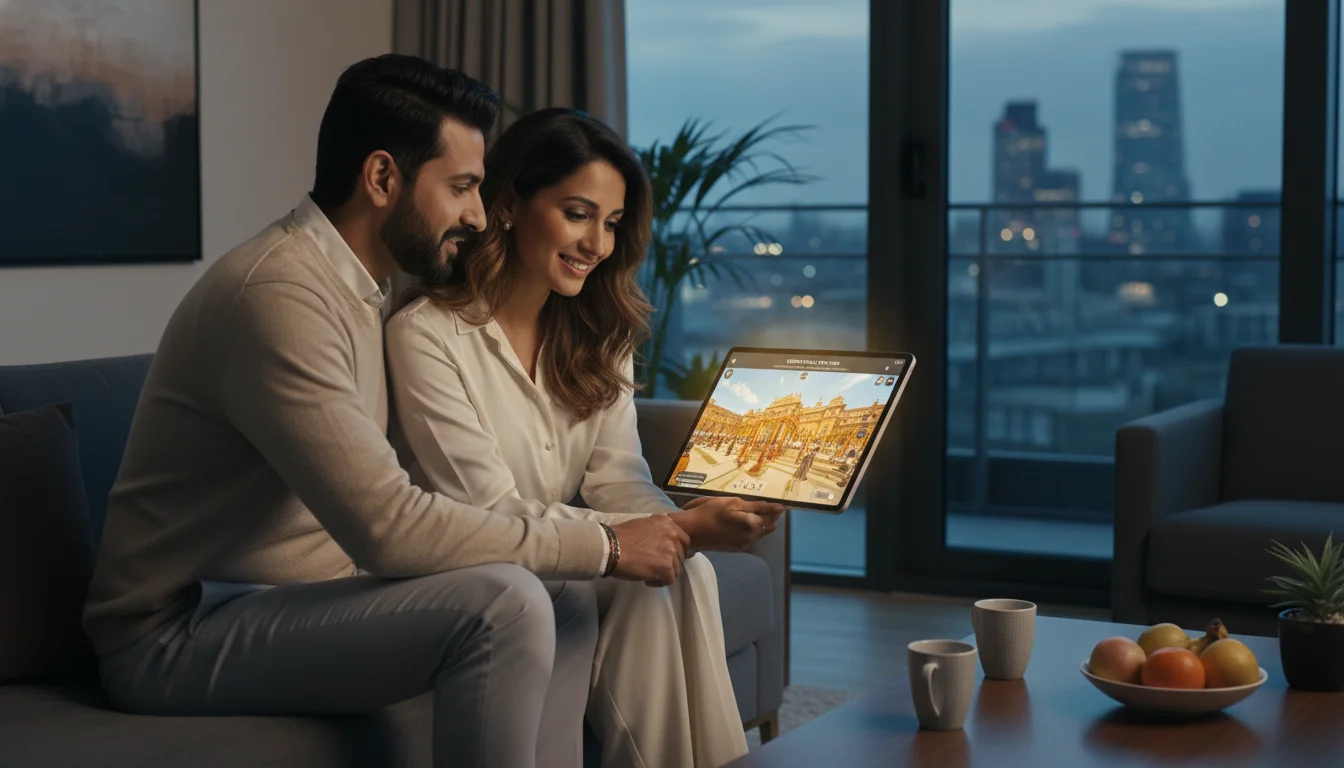
To capture these diverse personas, a multi-channel digital approach must be implemented to ensure visibility across the entire consideration cycle.
- Top of Funnel (Awareness): To capture the Aesthetic Planner, venues must deploy content 12-18 months ahead of the booking cycle. This involves creating meticulously curated Pinterest boards that map emerging 2026 wedding trends, such as “Rococo Inspired Decor,” “Maximalist Florals,” or “Celestial Themes”. Concurrently, high-frequency Instagram Reels showcasing wide-angle cinematic drone shots of venue aesthetics and ambient lighting setups must be utilized to capture algorithmic reach.
- Middle of Funnel (Consideration): As couples narrow their choices, long-form educational blog content becomes critical. Publishing articles that answer specific user queries—such as “How to Plan a Multi-Day Destination Wedding in Jaipur” or “Integrating Eco-Friendly Practices into Indian Weddings”—builds immense trust. At this stage, retargeting advertisements on Meta platforms (Facebook and Instagram) must be deployed to re-engage users who previously visited the venue’s pricing or gallery pages.
- Bottom of Funnel (Conversion): To secure the Logistical Approver and finalize the booking, highly optimized Google Search campaigns must be activated targeting purely commercial intent keywords (e.g., “book luxury banquet hall Delhi”). Furthermore, implementing an automated email welcome sequence that immediately delivers comprehensive venue brochures and transparent pricing tiers to engaged leads is essential to prevent drop-off.
Content ideation must be deeply specific to the nuances of the Indian market. Visual storytelling should highlight the sheer versatility of the venue. For example, producing time-lapse video content that demonstrates a single space transforming from a bright, floral Haldi ceremony into a glamorous, LED-lit Sangeet night provides tangible proof of a venue’s operational excellence. Educational content should guide couples through complex cultural logistics, such as navigating auspicious Saya dates or seamlessly blending traditional regional rituals with modern luxury aesthetics. Integrating social proof via video testimonials—specifically featuring parents discussing the flawless logistical execution of the event—speaks directly to the anxieties of the Logistical Approver persona.
For independent banquet halls, boutique planners, and mid-tier service providers operating without massive advertising budgets, deploying asymmetrical, highly efficient marketing tactics is critical for survival. Total mastery of the Google Business Profile (GBP) is the highest ROI activity available; it is completely free and dictates local search visibility. Venues must consistently utilize the “Google Posts” feature to highlight seasonal promotions, actively solicit positive reviews immediately following successful events, and promptly answer all community Q&A queries. To maintain a necessary presence on visual platforms without incurring the cost of a full-time media team, venues must adopt a strict content batch-creation strategy. By dedicating a single weekend event to film 8-10 Reels and designing 10-15 Pinterest templates simultaneously on Canva, a venue can schedule out a month’s worth of content, ensuring algorithmic consistency and sustained visibility. Finally, building simple, low-cost email marketing funnels using the free tiers of platforms like Mailchimp allows venues to capture leads by offering a valuable digital asset, such as a “Free Indian Wedding Budget Calculator,” initiating an automated nurturing sequence that operates passively.
6. Keywords & SEO Opportunities
A scientifically structured, data-driven SEO strategy requires categorizing keywords strictly by user intent. General, high-volume keywords serve to build top-of-funnel brand awareness, whereas long-tail, highly localized keywords act as the primary engines for direct revenue conversion.
High-intent, high-volume keywords indicate users who are actively seeking vendors or venues, though it must be noted that competition for these exact-match phrases is fierce, often dominated by massive aggregators.
Strategic application involves optimizing the core homepage titles, main navigational headers, and primary meta descriptions to signal broad relevance to search algorithms.
- Keyword: wedding venues — Estimated Monthly Search Volume: 823,000 — Intent Category: Commercial — Strategic Application: Core homepage optimization; broad brand positioning.
- Keyword: wedding planner — Estimated Monthly Search Volume: 246,000 — Intent Category: Commercial — Strategic Application: Primary service pages detailing comprehensive planning logistics.
- Keyword: destination wedding — Estimated Monthly Search Volume: 135,000 — Intent Category: Navigational/Commercial — Strategic Application: Dedicated landing pages specifically targeting cross-state or NRI clients seeking comprehensive packages.
- Keyword: wedding photography — Estimated Monthly Search Volume: 4,600 — Intent Category: Commercial — Strategic Application: Dedicated portfolio galleries heavily tagged with localized schema markup.
While high-volume keywords capture broad attention, the true return on investment in the Indian market lies in Long-Tail and Localized SEO Opportunities. Long-tail keywords naturally possess lower overall search volumes but exhibit substantially higher conversion rates due to their extreme specificity. By integrating precise city names, micro-neighborhood identifiers, and specific venue amenities into the keyword strategy, independent venues can effectively bypass major aggregators in the search engine results pages (SERPs), connecting directly with consumers who know exactly what they require.
- Long-Tail Structure: Capacity + Venue + Location — Exact Query Example: “1000 capacity wedding hall [location]” — Target Persona & Content Application: The Logistical Approver: Emphasize detailed floor plans, square footage, and proven logistical capacity in the page content.
- Long-Tail Structure: Amenity + Venue + Area — Exact Query Example: “AC banquet hall with parking in [area]”, “wedding venue with accommodation” — Target Persona & Content Application: Urban Families: Highlight modern infrastructure, secure valet services, and advanced climate control features.
- Long-Tail Structure: Budget + Venue + City — Exact Query Example: “budget wedding venue in [city]”, “Best Wedding Venues in [City] Under Rs 10 Lakhs” — Target Persona & Content Application: Middle-Class Millennials: Utilize transparent, easy-to-read pricing tables and value-driven package details on specific landing pages.
- Long-Tail Structure: Event Specific + Venue — Exact Query Example: “reception venue,” “sangeet venue,” “mehendi venue,” “ring ceremony hall” — Target Persona & Content Application: The Aesthetic Planner: Showcase the highly versatile, modular nature of the spaces and diverse decor capabilities.
- Long-Tail Structure: Hyper-Local / Neighborhood — Exact Query Example: “wedding resort in Jim Corbett”, “banquet hall in South Delhi”, “venues in Indiranagar” — Target Persona & Content Application: Geographical Dominance: Strictly optimize Google Business Profile titles and location-specific metadata to capture proximity searches.
- Long-Tail Structure: Regional Language / Vernacular — Exact Query Example: “शादी का हॉल [City]” (Marriage hall in [City]), “cheap wedding photographer in Jaipur” — Target Persona & Content Application: Tier-2/Tier-3 Penetration: Capture immense, untapped local vernacular search intent; optimizing for Hindi and regional dialects yields low-cost conversions.
Furthermore, the rising prevalence of smart devices necessitates Voice Search Optimization. Natural language phrases that mimic conversational spoken queries, such as “Alexa, find luxury wedding planners near me,” must be seamlessly and contextually integrated into comprehensive FAQ sections on the venue’s website to ensure visibility in this rapidly growing search vector.
7. Implementation Roadmap
Executing a comprehensive digital transformation for a wedding venue or service provider requires a meticulously phased approach. Attempting to deploy all tactics simultaneously results in diluted resources and strategic failure. A structured 12-month roadmap balances immediate, low-cost revenue generation with the gradual establishment of impenetrable, long-term organic equity.
Phase 1: Foundation and Quick Wins (Months 1–3)
The primary objective of the initial phase is to establish a flawless digital infrastructure, plug immediate conversion leaks in existing traffic, and capture readily available local demand.
- Month 1: Digital Audit & Technical SEO Remediation: Initiate a comprehensive, site-wide audit of the existing digital property. Resolve all broken links, compress heavy image files to improve critical mobile loading speeds, and implement advanced Schema Markup (specifically venue, amenities, and hasMap tags) to communicate effectively with search engines. Simultaneously, claim, verify, and aggressively optimize the Google Business Profile (GBP) ensuring complete NAP data accuracy and uploading fresh, high-resolution architectural and event imagery.
- Month 2: Conversion Rate Optimization (CRO) & Content Batching: Execute a rigorous redesign of the website’s user interface based on digital retail principles. Enlarge primary CTA buttons by 30%, integrate an AI-driven chatbot for instantaneous 24/7 query resolution, and ensure visual galleries are frictionless to navigate on mobile devices. Concurrently, conduct a high-intensity batch-creation session for visual platforms, generating 30 days’ worth of Instagram Reels and standardized Pinterest templates to establish a baseline of aesthetic consistency.
- Month 3: Lead Capture Ecosystem & Localized Advertising: Launch a foundational email marketing funnel. Develop a high-value lead magnet (e.g., “The Ultimate 12-Month Indian Wedding Planning Countdown”) to capture user data. Deploy hyper-localized, tightly budgeted Google Search Ads targeting high-intent commercial queries (e.g., “banquet halls near me”) to generate immediate, measurable booking inquiries while organic strategies take root.
Phase 2: Authority Building and Ecosystem Expansion (Months 4–8)
With the technical foundation secured and initial leads flowing, the operational focus shifts to building massive topical authority and dominating the visual discovery platforms where couples spend the majority of their planning phase.
- Months 4-5: The Hub & Spoke Content Rollout: Begin publishing highly targeted, algorithmically optimized long-form content. Develop core “Hub” pages detailing primary services, interlinked comprehensively with numerous “Spoke” articles covering niche, high-interest topics (e.g., “Top Destination Wedding Trends in Thailand & Goa”, “Eco-Friendly Wedding Ideas India 2026”). Concurrently, execute a campaign to build local citations and acquire secondary backlinks to systematically boost the website’s overall domain authority.
- Months 6-7: Multi-Platform Synergy & Reputation Engineering: Synthesize the disparate social media efforts into a cohesive strategy. Systematically transition high-performing, validated Instagram content into SEO-optimized Pinterest boards to extend their lifecycle. Actively engineer the brand’s online reputation by heavily incentivizing past clients to leave detailed, keyword-rich reviews on both Google and major industry aggregators like WedMeGood.
- Month 8: Paid Social Amplification & Retargeting Mastery: Implement Meta Pixel tracking across all digital properties. Launch sophisticated retargeting ad campaigns on Facebook and Instagram specifically aimed at users who visited the site, lingered on pricing pages, but failed to submit an inquiry. These campaigns should heavily utilize social proof, showcasing video testimonials and extending exclusive, time-sensitive booking offers to force conversion.
Phase 3: Domination and Advanced Innovation (Months 9–12)
The final phase is dedicated to scaling the most successful campaigns from the previous months and aggressively integrating next-generation technologies to future-proof the business against evolving market dynamics.
- Months 9-10: Advanced Link Building & Digital PR: Elevate the brand’s authority by actively pitching comprehensive “Real Wedding” stories and high-resolution galleries to major digital publications and top-tier aggregators to secure high-quality editorial backlinks. Engage in strategic co-marketing campaigns with premium, non-competing vendors (e.g., luxury makeup artists, celebrity decorators, boutique caterers) to cross-pollinate and tap into their established, highly engaged digital audiences.
- Months 11-12: Technological Integration (AI & Immersive Media): Implement advanced, immersive digital experiences on the primary website, such as 360-degree virtual reality venue tours and drone fly-throughs, catering explicitly to high-net-worth NRI clients and out-of-state planners who cannot conduct physical site visits. Prepare all digital content and structural properties for Generative Engine Optimization (GEO) and Answer Engine Optimization (AEO) to ensure the venue is accurately recommended by emerging AI-driven search interfaces in 2026 and beyond. Conclude the year by analyzing 12 months of attribution data to refine and reallocate the marketing budget for the subsequent operational cycle.
8. Conclusion
The Indian wedding industry has undergone a permanent, structural paradigm shift. The unprecedented convergence of rising per capita disposable incomes, the highly specific aesthetic demands of the maturing millennial and Gen-Z demographics, and the profound, inescapable influence of the digital attention economy has irrevocably altered how matrimonial services are discovered, evaluated, and ultimately procured. Digital marketing can no longer be viewed as a supplementary, optional tactic for wedding venues and service providers operating in India; it constitutes the foundational, non-negotiable infrastructure required for basic operational survival and subsequent scale.
From capturing hyper-specific, high-intent localized searches via meticulously optimized Google Business Profiles to shaping the aspirational visions of couples 12 to 18 months in advance through algorithmically dominant Pinterest boards, a robust and active digital footprint dictates market share.
The Digital Imperative for the Wedding Industry
In an industry ecosystem that is conservatively projected to exceed USD 238 billion by the year 2030, businesses that fail to digitize their acquisition funnels will inevitably be marginalized by more technologically agile competitors.
However, the reality of executing sophisticated, multi-channel digital strategies—which seamlessly encompass deeply technical SEO, ongoing Conversion Rate Optimization, algorithmic social media management, and data-driven paid media buying—requires highly specialized, multi-disciplinary expertise. Attempting to build an elite in-house marketing team capable of this level of execution is frequently cost-prohibitive for independent banquets, boutique planners, and regional venues. Conversely, relying on fragmented networks of generalist freelancers typically yields inconsistent, misaligned, and ultimately ineffective results, leaving businesses vulnerable to market leaders.
Strategic Arbitrage: Leveraging Cross-Border Expertise
For Indian wedding businesses seeking to aggressively dominate their local search environments and elevate their brand prestige without drastically inflating their monthly operational expenditures, leveraging cross-border digital expertise presents a highly lucrative strategic arbitrage. Partnering with a specialized, full-stack digital marketing agency located in Nepal, such as Gurkha Technology, offers an unparalleled synthesis of significant cost reduction, profound cultural alignment, and elite technical execution.
This strategic partnership provides several distinct competitive advantages:
- Cultural Synergy and Alignment: Unlike distant, highly disconnected offshore agencies, Nepalese digital professionals possess an intrinsic, organic understanding of South Asian cultural nuances, the specific rhythms of traditional wedding aesthetics, and the unique logistical dynamics of the Indian market. This ensures that all brand messaging, regional vernacular keyword targeting, and highly emotive visual storytelling resonate authentically with the precise target demographic. Furthermore, the rapidly accelerating trend of cross-border India-to-Nepal destination weddings highlights the increasing integration of these regional hospitality markets.
- Substantial Economic Advantage: Operating from Kathmandu, Gurkha Technology provides enterprise-grade, comprehensive digital marketing services at a mere fraction of the financial commitment required by equivalent agencies based in major Indian metropolitan centers like Mumbai or Delhi. With comprehensive SEO and social media marketing packages generally ranging from a highly accessible NPR 15,000 to NPR 80,000 per month, Indian businesses can drastically maximize their Return on Investment (ROI) while securing dedicated access to top-tier technological talent.
- Proven Industry-Specific Execution: With an expansive portfolio encompassing over a decade of continuous operational experience, Gurkha Technology has demonstrated capabilities that are directly and immediately applicable to the premium hospitality and event sectors. Their successful execution of complex, full-stack digital campaigns—exemplified by their comprehensive branding for premium event spaces and precision-targeted audience generation for luxury lifestyle entities—unequivocally proves their capacity to successfully manage and scale high-ticket, aesthetically demanding brands.
Securing Market Leadership
To transition from merely participating in the crowded Indian wedding market to actively dominating high-intent local search queries and consistently capturing premium, high-budget clientele, venues and planners must implement a data-driven, flawlessly executed digital architecture immediately. Engaging a proven, culturally aligned expert growth partner provides the deep technical execution, the necessary strategic foresight, and the unmatched economic efficiency required to secure and defend a leadership position in this booming, multi-billion dollar industry.