India Cleaning Services Market: Growth, Trends & Report
1. Industry Overview
Brief Description of the Cleaning and Sanitization Services in India
The professional cleaning and sanitization industry in India represents a highly dynamic, rapidly formalizing, and essential component of the nation’s broader facility management and domestic services sector. Historically, the Indian market has been heavily reliant on an unorganized workforce, predominantly consisting of local domestic helpers or informal neighborhood contractors. However, the industry is currently undergoing a massive structural transformation. Driven by heightened post-pandemic hygiene awareness, the proliferation of specialized interior materials that require expert care, and the rising value of convenience among urban populations, the market has shifted decisively toward professional, tech-enabled service providers.
The sector encompasses an expansive array of service modalities, carefully partitioned into two primary end-use segments: residential and commercial. The residential segment includes standard maid services, deep cleaning, floor care, and highly specialized tasks such as carpet and upholstery shampooing. The commercial segment addresses the complex requirements of corporate parks, retail establishments, and healthcare institutions, offering institutional housekeeping, industrial cleaning, Sustainable Facility Management (SFM), and advanced mechanized sanitization. Both domains are currently experiencing a paradigm shift characterized by the adoption of formalized service-level agreements, standardized operational protocols, and seamless digital booking architectures.
Current Market Size, Growth, and Trends
The Indian cleaning services market is exhibiting robust and sustained expansion, underwritten by favorable macroeconomic indicators, rapid urbanization, and rising disposable incomes. Demographic projections indicate that by 2036, approximately 600 million individuals will reside in urban Indian centers, fundamentally expanding the total addressable market for outsourced domestic and commercial maintenance. Multiple market intelligence forecasts confirm a steep upward trajectory, though exact valuations vary based on the scope of services included in the analysis.
- TechSci Research / Research and Markets: Estimated Market Value (Base Year): USD 9.02 Billion; Forecasted Market Value (Target Year): USD 13.95 Billion; CAGR: 7.54%
- IMARC Group: Estimated Market Value (Base Year): USD 14.48 Billion; Forecasted Market Value (Target Year): USD 25.93 Billion; CAGR: 6.45%
- Grand View Research: Estimated Market Value (Base Year): USD 9.66 Billion; Forecasted Market Value (Target Year): USD 17.72 Billion; CAGR: 8.00%
- Technavio: Estimated Market Value (2030): USD 24.93 Billion; Forecasted Market Value: Not Specified; CAGR: 6.50%
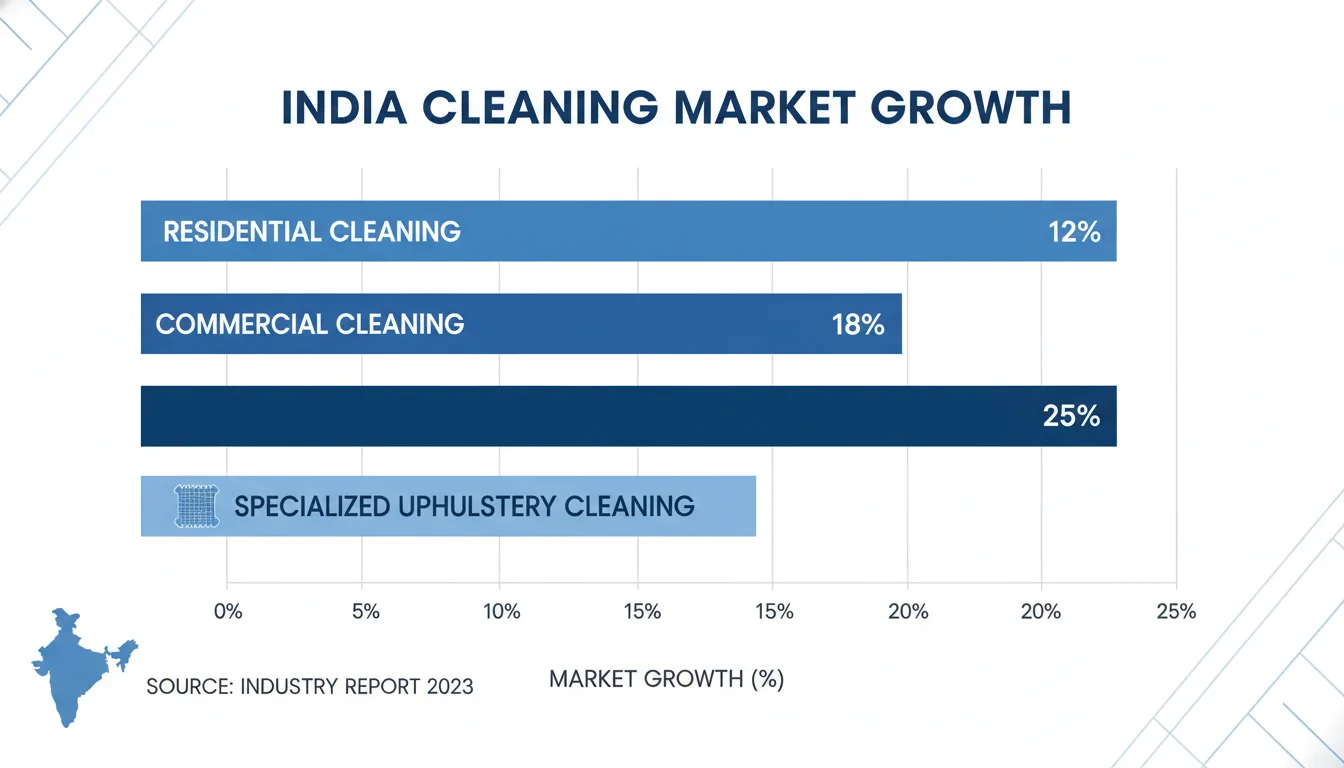
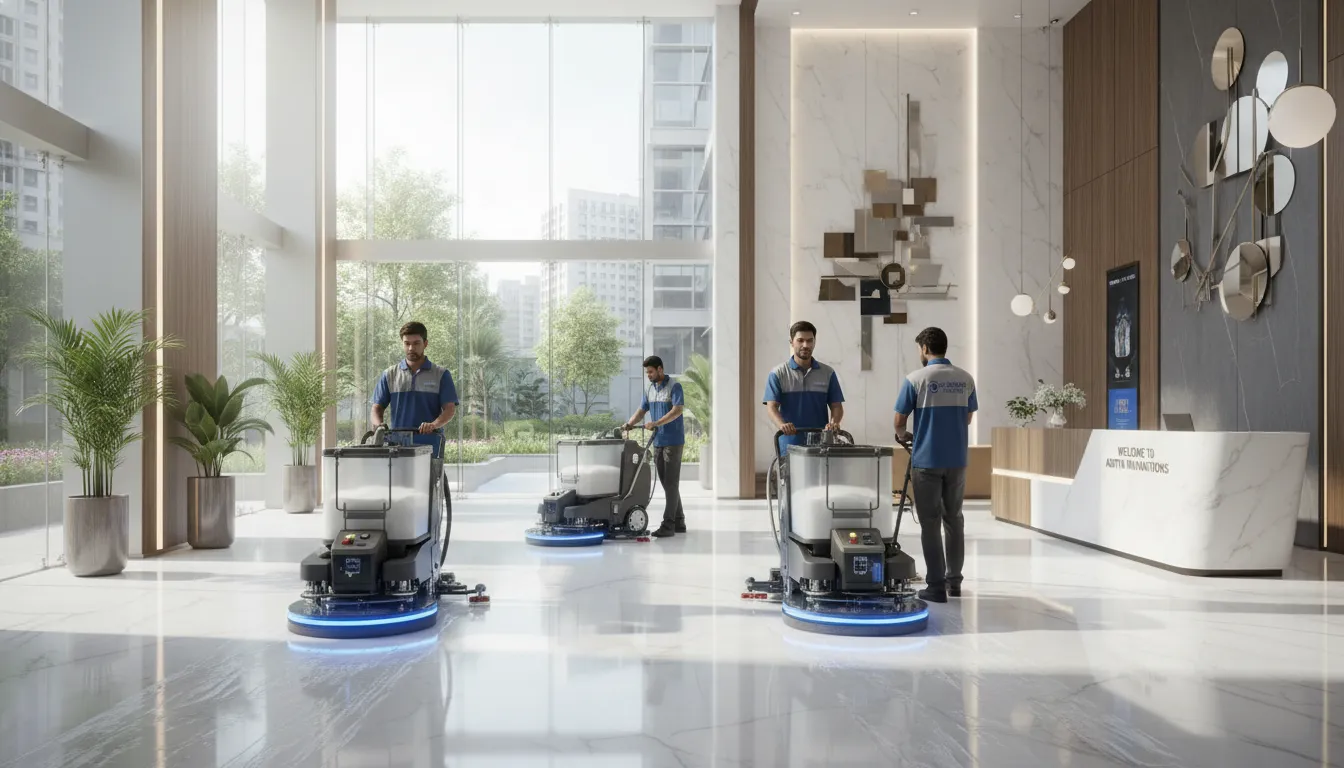
A critical analysis of the data reveals several defining trends shaping the market’s evolution. First, segment dominance remains skewed toward traditional offerings, with standard maid services commanding a 27.0% volume share in 2025. This is heavily propelled by the proliferation of nuclear families and dual-income households in tier-1 and tier-2 cities. Concurrently, the commercial sector remains the fastest-growing end-use segment, fueled by rapid expansion in real estate, corporate infrastructure, and organized retail, particularly in the Southern IT corridors.
Geographically, market demand is highly concentrated. North India represents the largest regional bloc, capturing a 31.5% market share in 2025. This dominance is driven by dense urban clusters and corporate hubs in the Delhi-NCR and Uttar Pradesh regions. From a service specialization perspective, while general floor care generates the highest baseline revenue, carpet and upholstery cleaning is anticipated to be the most lucrative and fastest-growing sub-segment, reflecting a consumer shift toward high-margin, specialized hygiene care that requires proprietary mechanized equipment. Furthermore, the industry is witnessing a transition toward subscription-based revenue models. The adoption of recurring service contracts is reshaping revenue predictability, with industry leaders reporting that over 30% of repeat users now opt for monthly or annual service plans, stabilizing cash flow and cementing long-term customer loyalty.
Key Challenges Faced by Businesses in this Industry
Despite the highly favorable growth parameters and vast addressable market, the cleaning and sanitization industry in India is beset by profound structural, socio-economic, and operational challenges that impede rapid scalability and consistent service quality.
A primary obstacle is the overwhelming scale of India’s foundational sanitation deficit, which creates immense logistical friction. While open defecation has drastically declined, an estimated 300 million people still lack access to basic sanitation infrastructure, and rapid urbanization frequently overwhelms existing water distribution and waste management systems. For professional cleaning firms, navigating these socio-economic barriers and infrastructural gaps requires localized adaptation and hyper-efficient resource management.
Simultaneously, the industry grapples with severe skilled workforce scarcity and alarmingly low retention rates. The transition from an informal, unorganized sector to a highly regulated, corporate service model necessitates extensive training, the implementation of standardized operating procedures, and continuous workforce monitoring. This friction is compounded by institutional resistance to technological integration; high initial adoption costs for AI-driven scheduling software, IoT-enabled predictive maintenance, and sophisticated Customer Relationship Management (CRM) tools act as significant barriers to entry for legacy facility management firms.
At the consumer level, the market suffers from profound trust deficits and notable quality discrepancies. The reliance on aggregator models and gig-economy workforces often leads to inconsistent service delivery. Consumer reviews frequently highlight deep dissatisfaction, citing untrained staff, a reliance on manual scrubbing over promised mechanized cleaning, language barriers, and unprofessional conduct. This inconsistency severely damages brand equity and prevents aggregators from monopolizing premium residential segments.
Finally, the sector faces extreme commoditization and margin compression. A saturation of generic “antibacterial” and “germ-kill” claims has commoditized basic cleaning services, rendering them standard table stakes rather than unique selling propositions. Brands face intense pressure to elevate performance cues, as consumers increasingly express post-cleaning frustrations. Issues such as the rapid reappearance of pests or insects, combined with a growing interest in dust-resettling prevention, point to critical gaps in service efficacy that standard marketing narratives fail to address.
2. Digital Landscape in India (Contextual to the Industry)
Internet & Social Media Usage Relevant to Cleaning Services
India’s massive digital ecosystem has fundamentally altered the mechanisms through which cleaning and sanitization services are discovered, evaluated, and procured. With an estimated 180 million highly active users of online services and rapidly climbing digital literacy across both urban metropolises and tier-2 cities, the consumer journey for home and commercial maintenance has migrated almost entirely to the internet. The proliferation of affordable smartphones and pervasive broadband data has democratized access to On-Demand Home Service Applications (HSAs), bridging the historical gap between disorganized local labor pools and standardized, digital fulfillment platforms.
For commercial and industrial facility management, the digital touchpoint matrix has matured equally rapidly. Corporate procurement officers and facility directors no longer rely solely on offline tenders or traditional word-of-mouth networks. Instead, they conduct exhaustive vendor screening through sophisticated digital channels, scrutinizing online reviews, LinkedIn corporate profiles, and specialized B2B trade directories before initiating contact. This digital procurement shift dictates that a modern B2B website is no longer merely a digital brochure, but a functional portal that handles complex inquiries, manages digital quotations, and supports continuous operational communication.
Popular Platforms Among the Target Audience
The selection and efficacy of digital platforms within the Indian cleaning sector are strictly dictated by the business model deployed—Business-to-Consumer (B2C) versus Business-to-Business (B2B).
For residential (B2C) cleaning, highly visual, localized, and conversational platforms absolutely dominate the marketing mix. Instagram and Facebook serve as critical digital portfolios. They are utilized extensively to demonstrate service efficacy through visceral “before-and-after” transformations, to position cleaning as an aspirational lifestyle choice, and to execute highly targeted, geo-fenced local advertising. Concurrently, WhatsApp has evolved far beyond a messaging app into a primary engine for conversational commerce in India. It offers highly personalized, budget-friendly marketing avenues, allowing businesses to send multimedia service catalogs, automated booking confirmations, and direct customer support without the friction of app downloads. Underlying all these efforts, Google My Business (GMB) remains the absolute foundation for capturing high-intent, local search traffic, seamlessly addressing “near me” queries at the exact moment of consumer need.
Conversely, for corporate, industrial, and institutional cleaning services (B2B), LinkedIn is the undisputed leader in lead generation and professional networking.
Comprehensive research indicates that 87% of B2B marketers utilize paid relationships on LinkedIn, a figure that vastly outperforms other channels such as Facebook, X (formerly Twitter), or Instagram for generating high-ticket corporate leads. Within the commercial cleaning sector, LinkedIn is heavily utilized to target Facilities Managers, Operations Directors, and Real Estate Developers through thought-leadership posts, technical whitepapers on sustainable practices, and visually backed case studies detailing commercial sanitization success.
Consumer Online Behavior Related to Cleaning Services
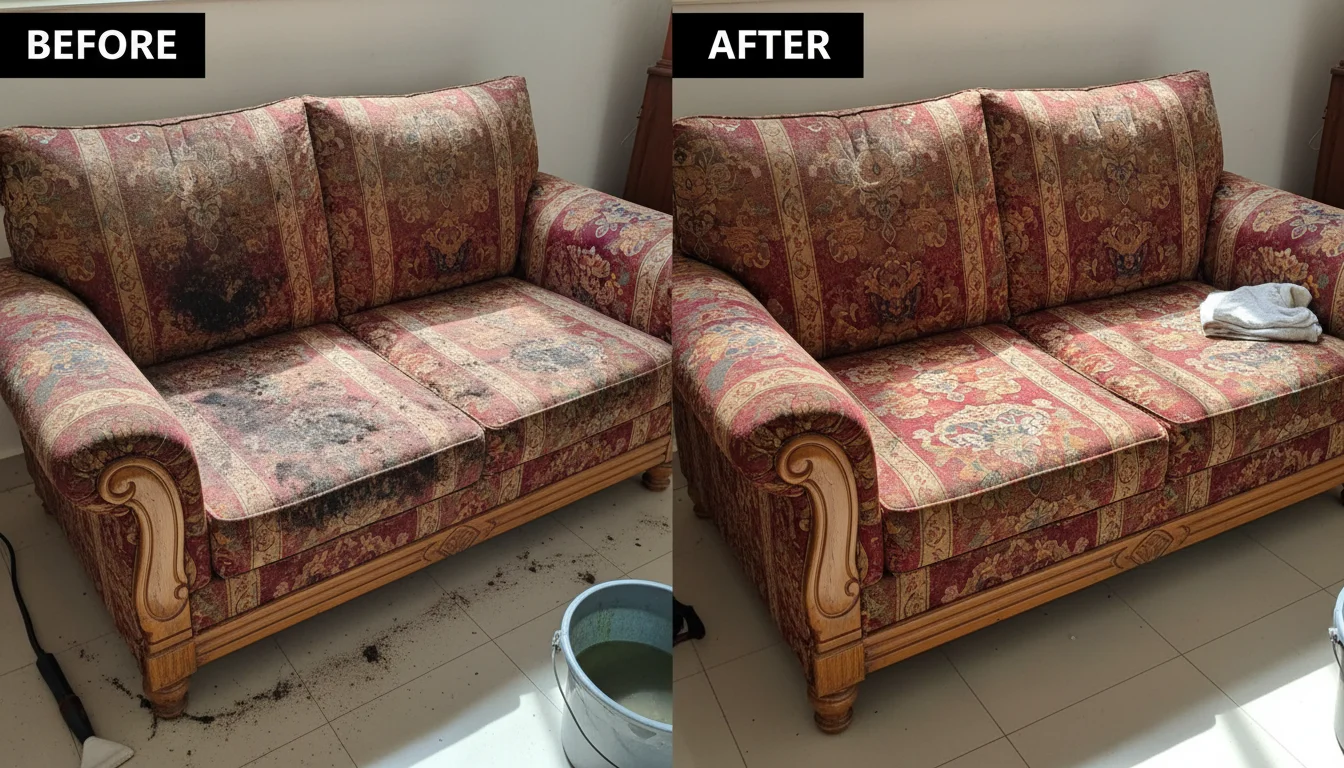
The online behavior of Indian consumers seeking cleaning services is a complex matrix governed by high-intent search patterns, deep-rooted trust-transfer psychology, and extreme seasonal cyclicality.
The psychological mechanism underpinning HSA adoption relies heavily on “trust transfer theory.” Because the consumer is inviting an unknown individual into their private sanctuary, they subconsciously transfer their trust from the digital platform’s brand equity directly to the individual service provider. Academic analyses of HSA adoption in India reveal that consumer behavior is influenced heavily by utilitarian value (convenience and efficiency) and social value, while hedonic value plays a minimal role. Crucially, this trust transfer is contingent upon the platform providing transparent online background checks, verified peer reviews, and highly responsive digital grievance redressal systems. When a platform fails to maintain this digital trust, the resulting friction leads to rapid customer churn.
Furthermore, consumer online behavior is distinctly omnichannel and research-intensive. Consumers rarely convert on the first digital touchpoint. A standard journey involves initiating a long-tail search query (e.g., “deep cleaning service cost for 3BHK in Bangalore”), navigating to a provider’s website or app, and then rigorously cross-referencing user reviews on independent third-party aggregators such as Trustpilot or MouthShut to verify quality claims. Only after this exhaustive digital vetting process does the consumer execute the booking via an app interface or a direct WhatsApp API link.
Finally, online booking behavior is highly concentrated around distinct cultural and seasonal spikes. The period between August and December—encompassing major festivals such as Onam, Ganesh Chaturthi, and Diwali, culminating in the winter wedding season—witnesses a massive surge in high-intent online searches. As consumers prepare to host guests and upgrade their living spaces, their propensity to spend increases dramatically. For example, industry estimates indicate that in October 2025 alone, on-demand platforms managed approximately 800,000 to 900,000 orders, capitalizing entirely on the cultural imperative of festive deep cleaning. Brands that align their digital ad spend to precisely capture these seasonal behavioral spikes achieve disproportionate revenue growth.
3. Digital Marketing Opportunities
How Digital Marketing Can Solve the Key Challenges
The intrinsic challenges of the cleaning sector—profound trust deficits, intense commoditization, and the inefficiencies of unorganized labor—can be systematically neutralized through the deployment of precision digital marketing architectures.
To overcome the pervasive trust deficit and anxiety regarding gig-worker quality, cleaning brands can utilize User-Generated Content (UGC), extensive video testimonials, and transparent operational storytelling. Publishing unedited “before-and-after” videos of deep cleaning, alongside detailed digital content explaining the strict background verification and specialized training processes for staff, directly addresses consumer anxieties regarding safety, capability, and professionalism. Digital marketing transforms an invisible, untrusted labor force into a highly visible, documented team of experts.
To combat the severe commoditization of basic cleaning, digital marketing enables granular audience segmentation and specific messaging. Rather than competing in a crowded market on generic “antibacterial” claims—which Indian consumers increasingly view as standard table stakes—businesses can utilize targeted content marketing to address highly specific, unresolved pain points. Content highlighting solutions for “dust-resettling prevention,” “post-renovation VOC (Volatile Organic Compound) removal,” or “pet-safe upholstery sanitization” differentiates a brand entirely. By transitioning the digital narrative from simple aesthetic cleaning to advanced, scientific hygiene and family protection, companies can justify premium pricing and protect their profit margins.
Best Strategies for Cleaning Services in India
The most successful digital marketing frameworks in the Indian cleaning sector eschew generalized branding in favor of a highly localized, intent-driven, and data-backed approach.
The absolute foundation of this approach is Hyper-Local SEO combined with aggressive Google My Business (GMB) optimization. Because cleaning is fundamentally a geographical service, dominating the Google Local Pack is non-negotiable. This involves continuous, automated review generation, ensuring strict Name, Address, and Phone Number (NAP) consistency across Indian directories, and utilizing location-specific metadata to capture ready-to-buy consumers.
For B2C residential providers, visual proof via Social Media Marketing (SMM) is the primary conversion engine. Platforms like Instagram must function as a dynamic digital portfolio. High-resolution imagery, engaging timelapse videos of grueling deep cleaning tasks, and educational reels providing tips on maintaining home hygiene build an authoritative, aspirational brand presence. This is heavily augmented by Conversational Commerce through WhatsApp Business APIs. Utilizing WhatsApp allows localized firms to bypass the high acquisition costs of search ads by sending multimedia catalogs, tailored festive discounts, and automated appointment reminders directly to a highly engaged user base.
For commercial B2B cleaning providers, the strategy shifts to Account-Based Marketing (ABM) on LinkedIn. Rather than casting a wide net, B2B firms must execute targeted campaigns against specific high-value accounts, such as major corporate tech parks in Pune, hospital chains in Delhi NCR, or luxury hotel groups in Mumbai. This involves publishing data-rich case studies and deploying lead generation forms targeted explicitly at individuals holding titles like “Facilities Manager” or “Head of Operations”.
Finally, all strategies must incorporate Festive Sprint Campaigns. Aligning the bulk of digital ad spend with the Indian cultural calendar is highly lucrative. Shifting budget aggressively toward Google Ads and Instagram campaigns four to six weeks prior to Diwali captures the absolute peak in residential deep-cleaning search intent, ensuring maximum return on ad spend (ROAS).
Local and Global Examples/Case Studies
Empirical evidence strongly validates the efficacy of these targeted digital strategies across both the Indian and global markets.
In India, Urban Company’s omnichannel dominance serves as the premier case study. The massive home services platform executed a remarkable financial turnaround, posting a strong Profit After Tax (PAT) of ₹239.77 Cr and revenues of ₹1,260.68 Cr in FY25, recovering from severe prior-year losses. This recovery was heavily supported by an immense ₹80 crore marketing allocation, funded via their IPO, encompassing OTT promotions, localized SEO, and highly effective influencer campaigns. By collaborating with fitness and lifestyle influencers using the hashtag #BeUrbanFit, their marketing successfully shifted the brand narrative from a mere utility app to an indispensable component of the upper-middle-class urban lifestyle.
A highly relevant global parallel is the case of CleanWave Commercial, a firm that successfully pivoted from residential to corporate contracts by narrowing its digital focus. Recognizing the intense competition and low margins in home cleaning, CleanWave repositioned its website entirely toward B2B corporate office cleaning. By optimizing for commercial keywords and deploying targeted LinkedIn campaigns, the firm stabilized its revenue stream against residential seasonality, rapidly achieving $30,000 in reliable monthly recurring revenue. Similarly, the case study of BrightHome illustrates the power of digital operational tools. By integrating a streamlined Customer Relationship Management (CRM) platform, automating follow-up emails, and aggressively soliciting online reviews, BrightHome increased its customer retention to an impressive 72% and scaled revenue from $160,000 to $620,000 within just three years.
In the hyper-local Indian context, a mid-sized home cleaning business in Bangalore leveraged highly targeted local SEO to completely outrank massive aggregator portals, including JustDial, for profitable cleaning keywords. By meticulously optimizing localized landing pages and publishing content specifically addressing Bangalore’s rising pollution and allergen levels, the firm exponentially increased its daily organic lead flow and successfully reclaimed market share from better-funded national competitors. Another agency, DigitalMarketingSage, reported a staggering 460% increase in organic search traffic and a 38% overall sales bump for a cleaning client within six months by pushing 63 high-intent keywords to the first page of Google results.
4. Competitive Analysis
Current Digital Presence of Top Businesses in India
The Indian professional cleaning market features a distinct and highly polarized digital bifurcation between massive, tech-enabled service aggregators and established, specialized facility management corporations.
At the apex of the aggregator and app-based platforms sits Urban Company. The firm holds a commanding and nearly monopolistic lead in the B2C sector, accounting for an estimated 60% to 65% of total order volumes during peak festive seasons. They are trailed by a secondary tier of digital competitors such as Snabbit, NoBroker Home Services, TechSquadTeam, and Housejoy. The digital footprints of these aggregators are highly sophisticated, characterized by frictionless app ecosystems, massive programmatic advertising budgets, and vast, algorithmically generated SEO architectures.
Conversely, the specialized and corporate B2B segments are dominated by legacy firms such as HiCare, BVG India, and ISS Facility Services. BVG India, operating as one of the country’s largest facility management companies with thousands of employees nationwide, leverages its sheer scale and institutional credibility primarily through B2B digital channels and direct corporate procurement portals. HiCare effectively bridges the B2B and B2C divide, maintaining a highly robust digital presence centered around specialized pest management and deep-cleaning content. Their strategy heavily utilizes Google Ads and established domain authority to capture high-value residential and commercial search traffic.
A robust third tier consists of mid-sized franchise and regional providers like AKS Facilities, Unicare Services, and Cleanomatics, which maintain strong regional dominance in lucrative markets such as Delhi NCR and Gurgaon. The digital presence of these firms is generally less reliant on custom app development and more heavily dependent on highly optimized GMB profiles, localized SEO landing pages, and aggressive Search Engine Marketing (SEM) campaigns.
What They Are Doing Well
Market leaders excel precisely where traditional businesses fail: ruthlessly reducing friction within the digital conversion funnel. Urban Company’s user experience (UX) is a masterclass in conversion rate optimization; the app provides immediate algorithmic price transparency, granular service cataloging (e.g., specifically segmenting “Sofa Shampooing” from “Bathroom Deep Cleaning”), and frictionless, secure payment gateways. Furthermore, their deployment of massive marketing budgets—such as the aforementioned ₹80 crore IPO allocation—toward targeted influencer marketing and category-led content establishes an unparalleled level of brand recall among affluent demographics.
Established players also deploy back-end data analytics with devastating efficiency. Utilizing sophisticated predictive models, they map regional demand density, allowing them to scale their gig-workforce dynamically during critical peak seasons like Diwali. From an SEO perspective, the top competitors maintain vast arrays of programmatic landing pages, enabling them to capture the “long-tail” of local search traffic at an industrial scale.
Gaps and Opportunities to Outperform Them
Despite their vast market share and sophisticated technology, large aggregators exhibit significant structural vulnerabilities that agile, localized competitors can systematically exploit.
The most glaring weakness is the severe quality control deficit inherent to the algorithmic “gig-worker” model. Detailed user sentiment analyses conducted on platforms like Reddit, MouthShut, and Trustpilot reveal deep-seated and pervasive consumer frustrations regarding inconsistent service quality. Consumer complaints frequently cite untrained workers who rely on exhausting manual scrubbing rather than utilizing the advanced mechanized cleaning equipment promised in the marketing materials. Furthermore, language barriers, unprofessional conduct, and an inability to handle complex cleaning scenarios are consistently highlighted as pain points.
Moreover, negative reviews heavily criticize the pricing models of these aggregators. Consumers frequently report sudden price surges, hidden material costs, or instances where gig workers demand extra, off-platform gratuities for executing substandard work.
These systemic failures present a massive, highly lucrative opportunity for independent cleaning services and regional agencies. By aggressively positioning themselves against the aggregator model, smaller firms can reclaim market share. Digital campaigns emphasizing “In-House, Fully Background-Checked Staff,” “No Gig Workers,” “Mechanized Equipment Guarantees,” and “100% Transparent Flat-Rate Pricing” will resonate profoundly with disenfranchised, high-value aggregator customers who prioritize quality and safety over algorithmic convenience.
Furthermore, a significant digital whitespace exists in the B2B commercial sector. While aggregators pour hundreds of millions of rupees into dominating B2C residential cleaning, the B2B marketing space remains highly fragmented. Executing specialized content marketing focused on ESG compliance, the integration of green chemicals, and Sustainable Facility Management (SFM) for corporate offices allows agile firms to secure lucrative, long-term corporate contracts with minimal digital competition.
5. Recommended Strategy for Cleaning and Sanitization Services in India
Target Audience Persona
To maximize marketing Return on Investment (ROI) and minimize wasted ad spend, digital campaigns must be tightly segmented into distinct, highly specific buyer personas. The Indian market dictates three primary profiles:
-
The Affluent Urban Professional (B2C)
- Demographics & Location: Age 27-45, Tier-1 Metro cities (Bangalore, Mumbai, Delhi), Dual-income households.
- Psychographics & Key Preferences: Values time exponentially over money. Demands absolute convenience, stringent background checks, safety, and seamless app/web booking interfaces.
- Dominant Digital Behavior: Heavy consumers of Instagram and lifestyle content. Quick to execute “best deep cleaning near me” searches. Highly influenced by curated lifestyle aesthetics and fitness influencers.
-
The Festive / Milestone Planner (B2C)
- Demographics & Location: Age 30-55, Homeowners, Pan-India (including Tier-2 cities).
- Psychographics & Key Preferences: Highly active immediately prior to major festivals (Diwali, Onam) or during the intense Indian winter wedding season. Seeks extensive, whole-home deep cleaning to impress visiting relatives and guests.
- Dominant Digital Behavior: Highly receptive to localized WhatsApp discount offers. Actively searches for bundled package deals. Reads extensive online peer reviews before committing to a booking.
-
The Corporate Facility Manager (B2B)
- Demographics & Location: Age 35-60, Major Corporate Hubs (NCR, Pune, Hyderabad, Bangalore).
- Psychographics & Key Preferences: Focused heavily on Service Level Agreements (SLAs), operational efficiency, sustainable/green practices, compliance, and long-term contract reliability.
- Dominant Digital Behavior: Highly active on LinkedIn for professional networking. Consumes industry whitepapers, attends webinars, and relies on rigorous B2B trade directories and procurement portals for vendor vetting.
Recommended Channels and Campaign Types
Given the distinct divergence between the residential and commercial audiences, a bifurcated digital channel strategy is required.
For capturing high-intent residential traffic, Google Local Service Ads (LSAs) and highly optimized Google My Business (GMB) profiles act as the tip of the spear. Search campaigns should focus on maximizing impression share for exact-match, localized queries. Concurrently, WhatsApp Marketing represents the most cost-effective retention and conversion channel for the Indian market. Utilizing the WhatsApp Business API allows brands to broadcast seasonal discounts, share rich-media PDF service catalogs, and facilitate instant conversational bookings. To build top-of-funnel awareness, the Meta ecosystem (Instagram/Facebook) should be utilized for lead generation, using precise geofencing to target premium residential complexes.
For the commercial cleaning sector, LinkedIn Account-Based Marketing (ABM) is the mandatory primary channel. Executing highly targeted InMail campaigns and sponsoring detailed case studies directed specifically at HR heads, Operations Managers, and Facility Directors yields the highest quality B2B leads.
Content Ideas Specific to Cleaning Services in India
To drive conversions, content marketing must transition from purely functional descriptions to transformational, authoritative storytelling.
The most powerful content format is Visual Proof. Producing high-quality “Before and After” timelapse reels that showcase extreme grime removal—such as eradicating post-construction dust, reviving heavily stained carpets, or degreasing commercial kitchens—provides viewers with visceral satisfaction and offers incontrovertible proof of the firm’s capability.
Equally important is establishing Educational Authority. Creating content that directly addresses specific Indian consumer frustrations elevates the brand.
Articles and videos explaining “How to prevent urban dust resettling after cleaning,” or “Why generic anti-bacterial sprays fail to deter monsoonal pests,” establish the firm as a scientific hygiene authority rather than a mere supplier of manual labor.
To directly counter the negative sentiment surrounding unverified gig-workers, firms must publish Trust and Transparency Features. Employee spotlight videos detailing the rigorous background checks, the extensive training required to operate mechanized equipment, and the company’s fair-wage practices build immense psychological trust with safety-conscious consumers.
For the B2B audience, the focus must shift to high-level compliance and efficiency. Publishing in-depth whitepapers on topics such as “Integrating IoT Predictive Maintenance into Sustainable Facility Management,” or “Maintaining HACCP Standards in Indian Corporate Kitchens,” provides the exact technical reassurance that corporate procurement officers require.
Budget-Friendly Digital Marketing Approaches
For emerging independent firms or mid-sized agencies operating without the massive venture capital backing of the top aggregators, allocating capital with extreme efficiency is paramount.
The single highest-ROI, zero-ad-spend tactic is establishing automated Review Generation Loops. By utilizing CRM integrations to automatically send SMS or WhatsApp review requests immediately after a service is completed, firms can rapidly accumulate hundreds of 5-star Google reviews. This creates a compounding digital asset that dramatically increases local visibility and lowers future Customer Acquisition Costs (CAC).
Additionally, firms should pursue Local Digital Partnerships. Co-marketing on social media channels and executing shared email blasts with complementary local businesses—such as interior design studios, real estate brokers, and premium packer/mover services—creates a highly effective, mutual lead referral network at virtually no cost. Finally, embracing Long-Tail Content Dominance allows smaller firms to outmaneuver massive competitors. Instead of engaging in expensive bidding wars on Google Ads for broad terms like “cleaning service,” firms should write detailed, SEO-optimized blog posts targeting highly specific, low-competition queries (e.g., “Airbnb deep cleaning service cost in Whitefield Bangalore”). This strategy reliably captures ready-to-convert traffic.
6. Keywords & SEO Opportunities
High-Intent Keywords for Ranking
A foundational Search Engine Optimization (SEO) strategy in the cleaning sector demands a rigorous, uncompromising focus on high-intent search queries. While broad keywords present massive, seductive search volumes, their conversion rates are typically abysmal because the user intent is often purely informational. High-intent keywords, conversely, indicate a user situated at the absolute bottom of the marketing funnel, actively wielding a credit card and ready to procure services.
Analyzing comprehensive search volume data reveals clear delineations in keyword strategy:
- Broad / Top-of-Funnel: maids (1,500,000 SV), window cleaning (135,000 SV), house cleaning (110,000 SV). Search Intent: Informational Intent. Users are researching options or DIY methods. Utilize these terms sparingly for overarching website category pages and broad brand awareness blog content.
- Transactional / Local B2C: window cleaners near me (90,500 SV), home cleaning services near me (27,100 SV). Search Intent: Immediate Action Intent. These must be mapped strictly to the Google My Business profile and highly optimized localized landing pages to capture immediate bookings.
- Specialized & Urgent B2C: move out cleaning service, post construction cleaning services, deep cleaning maid service (2,400 SV). Search Intent: Urgent/Stressful Intent. Requires dedicated service pages that meticulously detail the scope of work, rapid turnaround times, and the specialized equipment utilized to reassure the stressed consumer.
- Commercial B2B: office cleaning services (22,500 SV), industrial cleaning services, medical office cleaning services. Search Intent: High-Value Lead Generation Intent. Optimize these pages heavily with corporate case studies, ISO/compliance certifications, and highly visible Request for Quote (RFQ) lead capture forms.
Long-Tail Keyword Opportunities (India-Specific)
Long-tail keywords constitute highly specific, multi-word search phrases that account for the vast majority of all web searches. More importantly, they convert at vastly superior rates because they align exactly with the specific nuances of the user’s problem. In the Indian context, these queries are incredibly potent as they often blend unique language nuances, hyper-local geographical markers, and acute price sensitivity.
Location-bound long-tail queries are the lifeblood of local SEO. Keywords such as “best local cleaning service in Powai Mumbai,” “affordable office cleaning in Cyber City Gurgaon,” or “post renovation deep cleaning Whitefield Bangalore” allow agile firms to bypass the fierce, expensive national competition dominated by aggregators. These keywords attract highly qualified users seeking immediate, geographically viable solutions.
Problem-specific long-tail queries capture users in the research phase of a very specific crisis. Targeting searches like “how to remove hard water stains from bathroom tiles India” or “professional sofa shampooing for pet stains” via educational blog posts allows the brand to introduce its professional service as the ultimate, hassle-free solution to a complex problem.
Finally, price-oriented long-tail queries are critical for conversion. Indian consumers are historically highly price-sensitive and research costs extensively before converting. By targeting queries such as “deep cleaning 3BHK flat cost in Pune” or “commercial cleaning services price list Delhi,” and providing transparent, easy-to-understand pricing matrices, cleaning firms can build immense trust and drastically accelerate the customer’s decision-making process.
7. Implementation Roadmap
Executing this multifaceted, highly technical digital strategy requires a phased, disciplined approach. Firms must systematically transition from establishing a flawless foundational setup to deploying advanced, scalable marketing automation.
Short-Term Quick Wins (Month 1–3): Foundation and Local Dominance
The initial 90-day phase focuses entirely on capturing existing, high-intent local demand and repairing any operational friction or leaks within the current digital booking process.
The first month demands a rigorous digital infrastructure audit and GMB optimization. Firms must conduct a comprehensive technical audit of their website, ensuring lightning-fast mobile responsiveness, as the vast majority of Indian consumers will book via smartphones. Concurrently, the Google My Business profile must be completely overhauled. This includes updating the profile with high-resolution images of uniformed staff and modern equipment, ensuring strict Name, Address, and Phone Number (NAP) consistency across all major Indian directories (such as JustDial and Sulekha), and proactively populating the Q&A section to address common consumer anxieties. During this phase, localized landing pages mapped directly to the high-intent keywords identified earlier must be deployed.
Moving into the second month, the focus shifts to establishing a robust review generation engine and integrating conversational commerce. An automated system must be implemented to request reviews via SMS or WhatsApp from every satisfied customer immediately post-service, rapidly inflating the firm’s GMB authority and local ranking. Simultaneously, the WhatsApp Business API should be integrated into the website and social channels. Transitioning the sales team from inefficient cold calling to digital conversational commerce enables users to request quotes, receive visual catalogs, and book appointments instantly via WhatsApp, dramatically reducing friction.
By the third month, tactical paid acquisition can commence. With a strong digital foundation in place, firms should launch highly geo-fenced Google Local Service Ads (LSAs) and Search Ads, bidding strictly on bottom-of-funnel, intent-driven keywords (e.g., “emergency cleaning services near me,” “book house cleaning service online”). To capture users who abandon the website before booking, retargeting pixels should be deployed to serve compelling visual display ads across the Meta (Facebook/Instagram) network.
Long-Term Strategy (Month 6–12): Scaling, Automation, and B2B Acquisition
The secondary phase of the roadmap transitions focus toward building long-term content authority, acquiring lucrative corporate B2B clients, and maximizing revenue during critical seasonal events.
During months four through six, the objective is establishing content marketing and SEO authority. The production of specialized service pages and educational blog content must be scaled rapidly. By publishing detailed content on topics like HACCP compliance or the benefits of green cleaning chemicals, the firm captures highly valuable long-tail organic traffic. Furthermore, a consistent video marketing pipeline should be established on Instagram and YouTube, publishing weekly high-quality “before-and-after” transformations and staff training spotlights to continuously engage the B2C audience.
Months seven through nine are dedicated to B2B commercial expansion. The Account-Based Marketing (ABM) strategy on LinkedIn must be fully launched.
The firm should develop highly technical gated content—such as whitepapers on facility management efficiency or workplace hygiene standards—to capture valuable email leads from corporate facility managers. To manage these complex, multi-touchpoint B2B sales cycles, a robust CRM integration is required, enabling the firm to execute automated email nurturing sequences and track commercial lead progression accurately.
Finally, the culmination of the annual roadmap in months ten through twelve is the Festive Sprint and predictive scaling. Preparing for the peak Diwali and Indian Winter Wedding seasons requires planning that must commence in late August. The majority of the annual B2C advertising budget should be strategically allocated to this brief, highly lucrative window to capitalize on the massive surge in deep-cleaning intent. Aggressive WhatsApp broadcast campaigns should be launched to the firm’s existing subscriber base, offering early-bird festive booking discounts to lock in revenue. Post-season, exhaustive data analysis must be conducted to refine customer lifetime value metrics, analyze customer churn, and optimize the subsequent year’s marketing budget allocation.
Conclusion
Summary of Why Digital Marketing is Crucial for Cleaning Services in India
The Indian cleaning and sanitization industry has evolved irrevocably beyond the informal, localized networks and word-of-mouth recommendations of the past. As the market accelerates rapidly toward a projected valuation ranging from USD 13.95 billion to USD 25.93 billion within the next decade, the battle for market supremacy, customer retention, and brand equity is being waged almost entirely in the digital arena. Digital marketing has ceased to be a peripheral, experimental activity; it is now the core operational engine that dictates discoverability, facilitates vital consumer trust, and drives the acquisition of both high-volume residential bookings and highly lucrative corporate B2B contracts.
In an intensely competitive landscape where affluent urban consumers demand absolute convenience and transparency, and where corporate entities require stringent, documented hygiene compliance, traditional outbound marketing methodologies are vastly inefficient and largely obsolete. The empirical evidence is overwhelming: only through the deployment of precision local SEO, visually compelling social media proof, trust-centric authoritative content, and frictionless, tech-enabled booking ecosystems can cleaning services capture high-intent demand. Furthermore, robust digital strategies are the only reliable mechanism through which independent firms can differentiate themselves from the systemic quality issues plaguing ubiquitous gig-economy aggregators, allowing them to scale profitably and sustainably.
Call-to-Action and How Gurkha Technology Can Help
Executing a sophisticated, omnichannel marketing strategy of this magnitude requires deep technical expertise, nuanced regional market understanding, and flawless execution. For cleaning and facility management businesses, attempting to manage complex localized SEO architectures, navigate programmatic B2B advertising on LinkedIn, and develop seamless digital booking portals in-house often severely strains core operational resources and dilutes focus.
This is precisely where Gurkha Technology, a premier digital marketing and IT solutions firm based in Nepal, serves as an invaluable and highly capable strategic partner. Possessing a robust portfolio of successful, high-impact implementations for major industry leaders across the South Asian region—including comprehensive digital transformations for entities such as Jay Mangalam Cements and the Nepal Airlines Corporation—Gurkha Technology commands the specialized, cross-disciplinary capabilities required to dominate the Indian cleaning sector’s vast digital whitespace.
By leveraging their extensive and integrated suite of services—which encompasses elite, data-driven Search Engine Optimization (SEO), high-conversion Social Media Marketing (SMM), custom Web and B2B Portal Development, and sophisticated digital branding—cleaning service businesses in India can confidently outsource their entire digital growth engine. Gurkha Technology’s rigorous, budget-optimized approach ensures that your brand captures the highest-intent traffic, builds unshakeable digital trust with your target personas, and scales operations exponentially in this rapidly booming market.
To transform your cleaning or facility management business from a traditional service provider into a digitally dominant market leader, partner with the experts and initiate your comprehensive, 12-month strategic growth roadmap today.