2026 Home Insurance Trends: Premiums Rising Fastest
The State of the U.S. Homeowners Insurance Market: Premium Trends, Catastrophe Modeling, and Geographic Vulnerabilities in 2026
Executive Summary
The United States property and casualty (P&C) insurance sector has entered a paradigm-shifting phase in 2026, characterized by the convergence of macroeconomic inflation, evolving climate perils, and highly granular, technology-driven underwriting practices. Following a historic accumulation of underwriting losses in the early 2020s, the national average annual cost of homeowners insurance is projected to rise by 4 percent to reach $3,057 by the end of 2026. While this represents a moderation from the severe 12 percent premium spike observed in 2025, it compounds a staggering 46 percent cumulative surge in national home insurance costs since 2021—a rate of increase that has outpaced broader inflation by a factor of nearly three.
The architecture of risk pooling is fundamentally changing. The historical dominance of coastal hurricane risk has been increasingly rivaled by the frequency and severity of severe convective storms (SCS) in the Midwest and Great Plains, which have generated over $50 billion in U.S. insured losses for three consecutive years. Concurrently, insurers have transitioned from broad, state-level rate setting to hyper-local, ZIP-code-level risk modeling driven by artificial intelligence (AI) and aerial imagery. This transition has resulted in a heavily segmented market where admitted carriers are shedding risk, funneling millions of homeowners into the more expensive Excess and Surplus (E&S) market or forcing them onto state-backed insurers of last resort.
The downstream macroeconomic effect is profound: homeowners insurance now accounts for an unprecedented 9 percent of the typical monthly mortgage payment, actively eroding home equity and purchasing power in climate-vulnerable regions. Furthermore, national property insurance premiums exceeded $1.03 trillion in 2024, representing a massive transfer of household wealth to the financial sector, prompting intense scrutiny from federal regulators and consumer advocacy groups.
Macroeconomic Divergence: Premiums Versus Inflation and Income
The escalating cost of homeowners insurance cannot be attributed to catastrophe losses alone; it is intrinsically linked to broader macroeconomic volatility and the delayed mechanisms of state rate-approval processes. From 2020 through 2025, regulator-approved home insurance rate hikes outpaced cumulative inflation in 44 states and the District of Columbia. During this five-year period, national insurance rates rose by 45.8 percent against a cumulative national inflation rate of 26.1 percent, creating a 19.7 percentage point inflationary gap.
Finance Calculator
Use this calculator to estimate repayments or growth before you compare providers.
This gap is most pronounced in states experiencing high catastrophe frequency coupled with rigid regulatory environments that previously suppressed rate adequacy. The disparity between insurance inflation and general economic inflation demonstrates the delayed, compounding effect of supply chain disruptions, material cost surges, and sustained labor shortages within the construction sector. As general inflation cooled in 2025, the Consumer Price Index (CPI) for homeowners insurance continued to rise, reaching a 2.2 percent three-month change by June 2025, as insurers caught up on deferred rate adequacy.
The Insurance Rate versus General Inflation Gap (2020–2025)
The table below highlights the states where the divergence between insurance premium increases and general economic inflation has been the most extreme, placing immense pressure on household budgets.
| State | Cumulative Rate Hike (2020–2025) | Cumulative Inflation (2020–2025) | Gap (Percentage Points) | Rate vs. Inflation Multiple |
|---|---|---|---|---|
| Colorado | 100.8% | 26.4% | 74.4 | 3.8x |
| Iowa | 96.0% | 26.3% | 69.7 | 3.7x |
| Minnesota | 88.2% | 26.3% | 61.9 | 3.4x |
| Utah | 77.2% | 26.4% | 50.8 | 2.9x |
| Nebraska | 72.2% | 26.3% | 45.9 | 2.7x |
| Arizona | 71.0% | 26.4% | 44.6 | 2.7x |
| Illinois | 68.0% | 25.7% | 42.3 | 2.6x |
| South Dakota | 62.8% | 26.3% | 36.5 | 2.4x |
| Arkansas | 56.2% | 23.8% | 32.4 | 2.4x |
| Texas | 55.9% | 23.8% | 32.1 | 2.3x |
Source Data: LendingTree analysis of S&P Global RateWatch.
Conversely, only five states saw general inflation outpace insurance hikes during this period, with West Virginia (-8.7 percentage point gap), Vermont (-2.7), and Maine (-2.3) demonstrating the most significant lagging premium growth relative to the broader economy.
The Erosion of Household Income
Insurance rate hikes are actively eroding household discretionary income. Between 2020 and 2024, insurance premium growth exceeded median household income growth in 41 states. In states such as Iowa, the differential between premium growth and income growth reached a staggering 49.5 percentage points (70.9% rate hike versus 21.4% income growth). Utah experienced a 43.8 percentage point gap, and Colorado faced a 42.8 percentage point deficit.
These economic realities force difficult decisions upon consumers. An estimated 50 percent of surveyed homeowners reported making financial sacrifices to maintain their coverage, while nearly 30 percent indicated a desire to drop property insurance coverage entirely if their mortgage lenders permitted it. For those without a mortgage, the temptation to “go bare” (uninsured) is rising. According to the U.S. Census Bureau’s American Community Survey (ACS), the median property insurance cost for mortgaged homes in Florida was $2,273, whereas households without a mortgage paid $1,442—a discrepancy of $831 that suggests non-mortgaged homeowners are increasingly dropping catastrophic coverages like wind and hail to keep basic liability policies affordable.
The Construction Cost Adjustment Factor and Claim Severity
The severity of property claims is inextricably tied to the cost of rebuilding, measured in the industry by the Construction Cost Adjustment Factor (CCAF). ISO data reveals that while claim frequency hovered between 5.33 and 6.37 claims per 100 policies between 2019 and 2023, the average severity of those claims skyrocketed from $13,884 in 2019 to $20,062 in 2023.
Despite the stabilization of general consumer inflation, the construction market in 2025 and 2026 has remained under immense pressure. Federal funding has pushed billions into critical infrastructure projects, creating direct competition with the residential construction sector for materials and labor. The construction industry is facing a severe labor deficit, requiring an estimated 499,000 net new hires in 2026 to meet accelerating demand. In July 2025 alone, wages for non-supervisory home building workers surged by 9.2 percent, significantly outpacing overall sector wage growth.
Additionally, building material prices continue to exhibit volatility due to geopolitical trade policies. Existing and future tariffs severely impact the cost of home building materials, including a 50 percent tariff on steel and copper imports, alongside heavy levies on imported timber, lumber, appliances, and cabinetry. By September 2025, residential maintenance and repair costs had risen by 2.3 percent year-over-year. These elevated localized rebuilding costs translate directly to higher Coverage A (Dwelling) limits. Because premiums are a mathematical derivative of the dwelling limit, base premiums necessarily rise even before advanced weather-related risk multipliers are applied.
Comprehensive Analysis: Average Homeowners Insurance Cost by State
Determining an exact “average” cost for homeowners insurance requires aggregating data across multiple actuarial models, as carriers weight risk factors—such as credit history, roof age, and localized crime rates—differently. Forbes Advisor, Bankrate, and Insurify provide distinct cross-sections of the market based on different Dwelling Coverage amounts. The data below synthesizes these findings to present a comprehensive view of the U.S. market in 2025 and 2026.
National Averages Scaled by Dwelling Coverage
As reconstruction costs inflate, homeowners are forced to purchase higher dwelling coverage limits to avoid being underinsured. The national average cost scales predictably with coverage amounts, illustrating how inflation in the housing market directly drives insurance expenditures.
| Dwelling Coverage Amount | Average National Annual Premium |
|---|---|
| $200,000 | $1,872 |
| $300,000 | $2,200 - $2,400 |
| $350,000 | $2,720 |
| $500,000 | $3,538 |
| $750,000 | $4,802 |
*Estimated interpolation based on standard actuarial scaling.
State-by-State Base Premium Comparisons
The following tables synthesize the average annual premiums across the United States. Costs fluctuate wildly depending on geographic vulnerability to natural disasters, regulatory environments, and localized construction costs.
High-risk states like Nebraska, Oklahoma, and Florida command premiums several multiples higher than low-risk states like Vermont and Delaware.
Note: The data reflects blended sample averages primarily targeting standard $200,000 to $350,000 dwelling coverage bounds unless otherwise specified by market indices.
- Alabama: $2,668 - $3,928
- Alaska: $789 - $1,449
- Arizona: $1,526 - $2,337
- Arkansas: $2,756 - $3,129
- California: $1,172 - $2,455
- Colorado: $3,645 - $3,996
- Connecticut: $1,444 - $1,728
- Delaware: $966 - $1,519
- Florida: $5,728 - $8,292
- Georgia: $1,789 - $2,879
- Hawaii: $500 - $2,566
- Idaho: $1,409 - $1,740
- Illinois: $2,225 - $3,559
- Indiana: $1,666 - $2,082
- Iowa: $2,214 - $2,802
- Kansas: $3,440 - $3,468
- Kentucky: $2,011 - $3,163
- Louisiana: $3,836 - $5,050
- Maine: $755 - $1,374
- Maryland: $1,263 - $2,186
- Massachusetts: $946 - $2,170
- Michigan: $1,603 - $2,368
- Minnesota: $1,801 - $3,530
- Mississippi: $3,353 - $3,833
- Missouri: $2,191 - $2,880
- Montana: $2,062 - $2,798
- Nebraska: $4,216 - $6,366
- Nevada: $760 - $1,296
- New Hampshire: $1,176
- New Jersey: $1,236
- New Mexico: $2,736
- New York: $1,248 - $2,243
- North Carolina: $1,544 - $2,951
- North Dakota: $1,808 - $2,786
- Ohio: $1,149 - $1,694
- Oklahoma: $3,055 - $4,962
- Oregon: $770 - $1,485
- Pennsylvania: $971 - $1,817
- Rhode Island: $2,090 - $2,349
- South Carolina: $2,611 - $3,092
- South Dakota: $2,600+ (Estimated via trends)
- Tennessee: $3,036
- Texas: $3,291 - $4,380
- Utah: $1,319 - $1,536
- Vermont: $1,087
- Virginia: $1,632 - $1,717
- Washington: $1,377 - $1,428
- West Virginia: $1,479 - $1,588
- Wisconsin: $1,365 - $1,600
- Wyoming: $1,470 - $1,929
*Hawaii’s base rates appear artificially low in some indices because standard policies often exclude wind and flood coverage, which must be purchased separately in the state.
City-Level Granularity and Intra-State Disparities
While state averages provide a macro view, they often obscure radical intra-state disparities. Insurers utilize highly granular geographic data to set rates, leading to substantial differences within the same state borders based on proximity to coastlines, fault lines, or wildland-urban interfaces (WUI).
Based on sample rates for $300,000 in dwelling coverage, Bankrate data illustrates these municipal variances:
- Alabama: The state’s vulnerability to Gulf Coast hurricanes drives extreme coastal pricing, while inland areas face lesser, though still significant, tornado risks. Mobile, situated on the coast, averages $4,881 annually, whereas inland cities like Huntsville ($2,811), Tuscaloosa ($2,663), and Montgomery ($2,514) command premiums that are nearly half the coastal rate.
- Alaska: Benefiting from a lower incidence of large-scale natural disasters (excluding earthquakes, which require separate policies), Alaskan cities remain affordable. Fairbanks averages $1,129, Kenai $1,074, and Anchorage $964.
- California: Wildfire mapping dictates Californian pricing. Los Angeles averages $2,118, while Riverside and Anaheim average $1,820 and $1,683, respectively. However, homes located specifically in the WUI or in historic burn scars face premiums exponentially higher than these municipal averages.
- Colorado: Driven by severe hail and wildfires, the state’s urban corridor faces uniformly high rates. Aurora ($3,719), Denver ($3,714), and Colorado Springs ($3,669) all hover near the $3,700 mark for standard $300k coverage.
- Connecticut: Coastal exposure drives rates in the Northeast. Bridgeport averages $1,987, Norwalk $1,741, and Stamford $1,657.
- Arkansas: Inland tornado activity keeps rates high across the state. Fort Smith averages $3,173, Jonesboro $3,096, and Little Rock $3,088.
These intra-state variations confirm that the insurance crisis is intensely localized. The cost gap between expensive and cheap ZIP codes is widening rapidly. The U.S. Treasury Department’s Federal Insurance Office (FIO) conducted an exhaustive analysis of over 246 million policies from 2018 to 2022, revealing severe structural inequities based on climate risk. Consumers residing in the top 20 percent of ZIP codes with the highest expected climate-related building losses paid an average premium of $2,321—82 percent higher than consumers in the lowest 20 percent of climate-risk ZIP codes. Furthermore, non-renewal rates in these high-risk corridors were approximately 80 percent higher, indicating a localized collapse of insurance availability.
Where Premiums Are Rising Fastest: The 2026 Projections
While historical data frames the crisis, 2026 projections illustrate where the market is experiencing the most acute stress. The geographical locus of the American insurance crisis has definitively migrated. Historically, the U.S. property insurance market’s capital reserves were modeled around the threat of coastal hurricanes. However, 2025 marked the first time in a decade that no major hurricane made landfall in the continental United States. Despite this, insurers suffered massive losses, resulting in dramatic rate hikes centered in the Midwest and Great Plains.
In 2025 alone, six states saw premiums escalate by 20 percent or more: Minnesota (34 percent), Colorado (33 percent), Iowa (28 percent), Nebraska (25 percent), Oklahoma (24 percent), and South Carolina (20 percent).
Looking forward to the end of 2026, Insurify projections identify several states poised for significant surges, outpacing the national projected average increase of 4 percent.
- California: +16% projected increase; Projected Annual Cost: $2,843. Drivers: Wildfire recovery; introduction of catastrophe models in rate setting.
- Nebraska: +13% projected increase; Projected Annual Cost: $3,117 - $3,756. Drivers: Unprecedented tornado frequency; severe hail.
- New Mexico: +11% projected increase; Projected Annual Cost: $2,015. Drivers: Wildfire risk; shifting weather patterns.
- Georgia: +10% projected increase; Projected Annual Cost: $3,167. Drivers: Regulatory approvals; coastal and inland storm risk.
- North Carolina: +9% projected increase; Projected Annual Cost: $3,492. Drivers: Coastal exposure; high-wind damage claims.
- Arkansas: +7% projected increase; Projected Annual Cost: $3,345. Drivers: Convective storms; housing affordability squeeze.
- Missouri: +7% projected increase; Projected Annual Cost: $3,035. Drivers: Severe convective storms; Midwest hail.
- Oregon: +6% projected increase; Projected Annual Cost: $1,571. Drivers: Wildfire exposure; supply chain cost increases.
- Illinois: +5% projected increase; Projected Annual Cost: $3,559. Drivers: High severe thunderstorm frequency; urban density claims.
- Oklahoma: +5% projected increase; Projected Annual Cost: $5,205. Drivers: Persistent tornado and large hail events.
Note: Data variations exist regarding base methodologies; e.g., Nebraska has been recorded as high as $6,366 for specific high-tier dwelling parameters, but generalized index projections place the state base average near $3,100-$3,700 with a 13 percent growth rate.
Conversely, rates are expected to remain flat or dip by 0 to 2 percent in five states: Hawaii, Massachusetts, Maine, Louisiana, and Rhode Island. Louisiana’s stabilization is particularly notable, reflecting a pause after years of exponential post-hurricane rate increases and the implementation of robust legislative reforms aimed at market stabilization.
The Changing Anatomy of Catastrophe: Severe Convective Storms
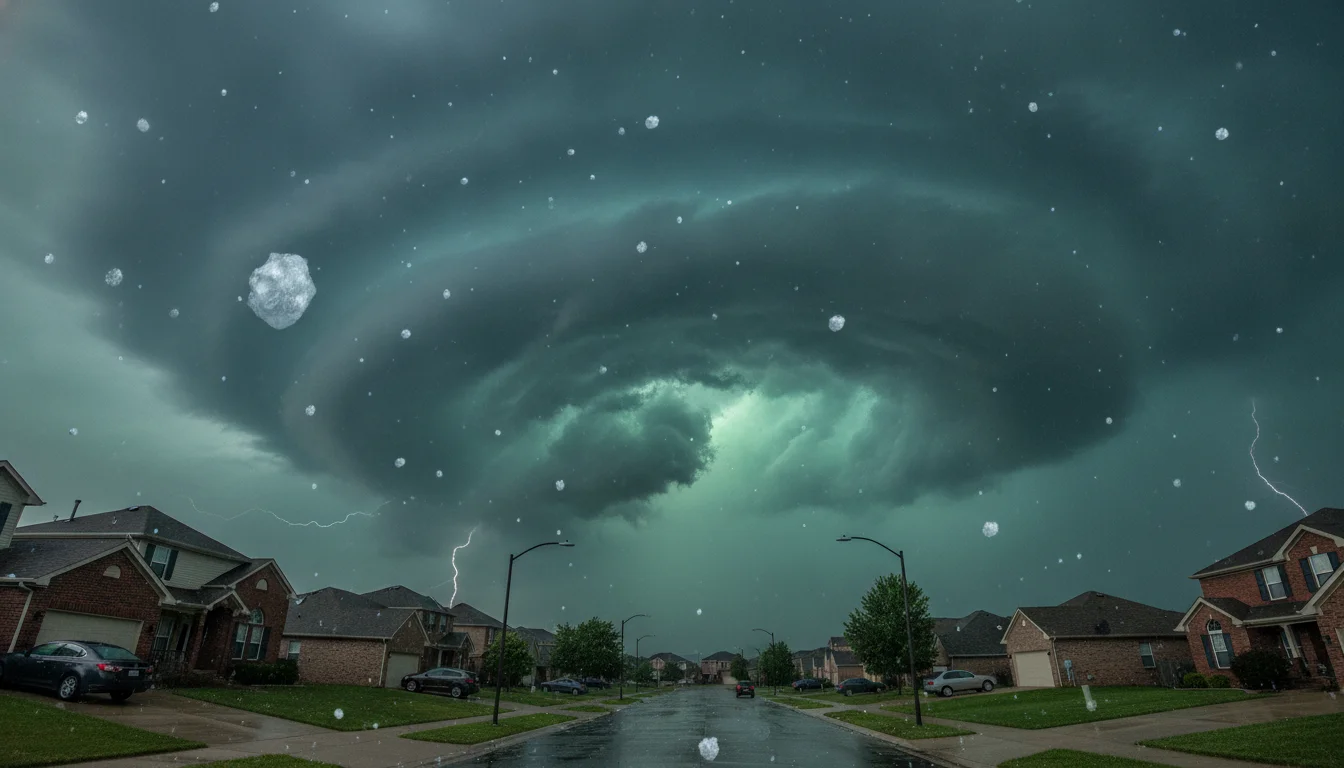
The primary catalyst for the Midwestern premium explosion is the rise of severe convective storms (SCS). Convective storms—which generate destructive straight-line winds (derechos), tornadoes, and severe hail—have accounted for more than $50 billion in U.S. insured losses for three consecutive years (2023–2025). In 2025 alone, economic damages from SCS events exceeded $68 billion.
Meteorological shifts, amplified by climate change, are fundamentally altering the frequency and severity of these events. In 2025, the National Oceanic and Atmospheric Administration (NOAA) reported at least 1,559 tornadoes, representing 127 percent of the historical annual average. A record 300 twisters spawned in March 2025 alone, generating $8.4 billion in insured losses early in the season.
Hail damage, which accounts for up to 80 percent of convective storm claims, has become particularly devastating to insurer loss ratios. Advanced climate modeling by researchers at Northern Illinois University indicates that warmer atmospheric conditions over the course of the century will melt smaller hailstones but will concurrently strengthen storm updrafts, resulting in the production of larger, exponentially more destructive hailstones. In Minnesota, a single hailstorm in 2022 produced golfball-sized hail that caused at least $2.6 billion in damages, followed by a 2023 thunderstorm that resulted in $1.5 billion in damages. Modern roofing systems are highly susceptible to these large-impact events, resulting in total dwelling roof replacements rather than minor repairs, driving up claim severity metrics across the Great Plains and Midwest.
The Reinsurance Paradox: Global Softening versus Primary Hardening
A critical third-order insight regarding the 2026 insurance landscape is the paradox between global reinsurance capacity and primary consumer pricing.
Reinsurance—the “insurance for insurance companies” purchased by primary carriers to offload catastrophic risk—was a primary driver of premium spikes between 2022 and 2024, with rates jumping by up to 27 percent. However, the global reinsurance market experienced a significant correction at the January 1, 2026, renewals.
According to Howden Re, risk-adjusted global property-catastrophe reinsurance rates-on-line decreased by an average of 14.7 percent in 2026, marking the sharpest year-over-year decline since 2014. This accelerated from an 8 percent reduction in 2025. The softening of the reinsurance market has been driven by massive injections of alternative capital, record issuance of Insurance-Linked Securities (ILS), and robust retained earnings among reinsurers. S&P Global noted that increased competition from both established players and new entrants reduced prices by 10 to 20 percent on upper catastrophe layers, with retrocessionaires (reinsurers of reinsurers) posting strong results due to a lack of severity events triggering their covers in 2025.
Despite these double-digit cost reductions for primary carriers at the treaty reinsurance level, consumer-facing premiums are still projected to rise by 4 percent nationally in 2026. This disconnect is largely due to the structural changes imposed by reinsurers during the hard market of 2023. While reinsurance capacity has returned and prices have dropped, reinsurers have maintained elevated “attachment points”—the financial threshold at which reinsurance payouts trigger. By keeping attachment points high, reinsurers force primary carriers to retain significantly more losses from secondary perils like severe thunderstorms and mid-sized hail events. Consequently, primary carriers are absorbing the brunt of the $50 billion convective storm losses and are passing the costs of these retained, high-frequency losses directly to the consumer. This dynamic demonstrates that the primary insurance market remains stressed even as the global reinsurance market enters a highly profitable, softened phase.
Technological Underwriting and the “16 Percent Trap”

Perhaps the most significant structural change in the 2026 property insurance landscape is the transition to highly granular, technology-driven underwriting—a phenomenon industry analysts have termed the “16 Percent Homeowner Trap”. This refers to the projected compounding 16 percent rate increase over the 2026-2027 cycle (8 percent each year in specific volatile markets), coupled with aggressive, algorithmic policy cancellations.
Insurers have largely abandoned state-wide or county-wide risk pools. Advancements in predictive analytics allow actuaries to segment risk down to the individual property level. Major carriers are deploying drones, fixed-wing aircraft, and satellite imagery integrated with computer vision AI to conduct unannounced aerial roof and property inspections. The algorithms flag properties for immediate non-renewal based on visual markers that previously required a physical inspection. Homeowners are increasingly receiving cancellation notices for “moss on shingles,” “overhanging tree branches,” or even benign “shadows” that the AI algorithms misidentify as structural damage or roof degradation.
This remote, algorithmic redlining places the burden of proof entirely on the consumer. If a homeowner receives a cancellation notice based on an aerial image, they typically have a narrow 60-day window to provide a licensed contractor’s report proving the image is outdated or the AI’s assessment is incorrect.
The Codification of the “15-Year Roof Rule”
Compounding the aerial inspection trend is the rigid enforcement of roof age thresholds. Driven by the $31 billion in national roof claims recorded in 2024 (a 30 percent jump from 2022), the industry has universally adopted the “15-Year Rule”. Standard admitted carriers are now systematically refusing to write or renew policies on properties with roofs older than 15 years, regardless of their physical condition or the absence of prior claims.
The premium gap between a home with a brand-new roof and one with an 11-to-15-year-old roof expanded to an average of $155 annually by late 2025, but the absolute penalty is often total policy cancellation. Certain materials, such as cedar shake, are rapidly becoming entirely uninsurable in standard markets due to their vulnerability to wind-driven embers and large hail. Insurers are utilizing satellite tech to pinpoint roof age accurately and execute mass non-renewals across older neighborhoods.
Structural Policy Degradation: Shifting the Risk to the Consumer
To mitigate underwriting losses without pricing themselves entirely out of the market or triggering regulatory bans on rate hikes, insurers in 2026 have structurally degraded the quality of the standard homeowners policy (HO-3). This is achieved through the aggressive implementation of percentage-based deductibles and Actual Cash Value (ACV) roof schedules.
Wind and Hail Deductibles
Historically, homeowners policies operated on a flat-fee “all-perils” deductible (e.g., $1,000 or $2,500). In response to the Midwestern convective storm crisis, carriers are mandating separate, percentage-based wind/hail deductibles. In states like Illinois, Texas, and Ohio, standard policies now carry minimum 1 percent or 2 percent wind/hail deductibles. State Farm recently instituted a mandatory minimum 1 percent Wind/Hail deductible in Illinois for all instances where the cause of loss is deemed wind or hail. For a home insured at a $400,000 dwelling limit, a 2 percent deductible shifts the first $8,000 of storm-related damage entirely onto the homeowner. This functionally eliminates the utility of insurance for moderate roof or siding damage, drastically reducing claim frequency for the insurer while preserving the appearance of affordable base premiums.
Roof Schedules and ACV Provisions
Simultaneously, carriers are amending policies from Replacement Cost Value (RCV) to Actual Cash Value (ACV) for roofs exceeding 10 to 15 years of age. Under an ACV schedule, the insurer applies steep depreciation based on the roof’s age. Following a catastrophic hail event, a homeowner expecting a $20,000 roof replacement may receive a payout of only $6,000, severely impairing community recovery timelines and pushing homeowners into debt to restore the physical integrity of their properties.
Regional Market Mechanics and Legislative Interventions
Florida: Legislative Interventions Yield Market Stabilization
Florida has historically represented the epicenter of U.S. property insurance dysfunction, characterized by an average annual premium that peaked well over $8,000, driven by high hurricane exposure and a uniquely litigious environment fueled by assignment of benefits (AOB) abuse. However, 2026 data indicates a profound structural stabilization following the aggressive legislative interventions of Senate Bill 2-D and Senate Bill 2-A enacted in 2022 and 2023.
These reforms systematically dismantled the financial incentives driving asymmetric plaintiff attorney fees. The results have been empirical and rapid. Insurance litigation filings, measured via the Property Insurance Intent to Initiate Litigation (PIITIL) system, have fallen by more than 35 percent since 2021. Legal Service of Process (LSOP) filings decreased by 26 percent in the first eleven months of 2025 alone. Concurrently, Defense Cost and Containment expenses per claim dropped from $992.89 in 2022 to $817.64 by 2024.
This massive reduction in leakage has restored carrier profitability. In 2024, Florida domestic insurers reported collective aggregate net underwriting gains for the first time in nine years. Capital is returning to the state: seventeen new companies have been approved to write residential property policies since the reforms were enacted. Furthermore, the Florida Hurricane Catastrophe Fund (FHCF) approved rate decreases for participating insurers by a statewide average of -9.51%.
Most notably, Citizens Property Insurance Corporation—the state-backed insurer of last resort—has successfully shed massive liability. Private insurers assumed over 546,000 policies through late 2025, and Citizens itself filed for an 8.7 percent rate decrease effective mid-2026. For policies effective in 2024 and beyond, 39 companies requested outright rate decreases, and 100 companies requested a 0 percent rate adjustment, signaling that Florida’s market, while remaining the most expensive in the nation, has decoupled from its previously exponential cost trajectory.
California: Catastrophe Modeling and the Admitted Market Exodus
If Florida represents stabilization through deregulation, California illustrates the friction between severe climate exposure and rigid consumer protection frameworks. By the end of 2026, California is projected to experience the highest statewide premium surge in the nation at 16 percent, bringing the average premium to $2,843.
The crisis in California was precipitated by a systemic exodus of major admitted carriers. Citing billions in wildfire losses, massive reconstruction inflation, and regulatory constraints under Proposition 103—which historically barred insurers from using forward-looking catastrophe models or incorporating reinsurance costs into pricing—entities like State Farm, Allstate, Farmers, and Chubb either entirely paused new business applications or severely restricted their footprints in 2022 and 2023. Nearly 7 percent of real estate deals in the state fell out of escrow because buyers could not find affordable insurance.
However, regulatory concessions are slowly reopening the market.
The California Department of Insurance’s “Sustainable Insurance Strategy” represents a landmark compromise. Under this framework, the state now permits insurers to utilize advanced computer catastrophe modeling—incorporating climate trends, vegetation density, and wildfire history—rather than relying strictly on historical loss data. In exchange for this pricing freedom, insurers must commit to writing a specific percentage of their business in highly vulnerable wildfire corridors, ensuring availability for residents previously forced onto the FAIR Plan. Consequently, five major insurers (Mercury, CSAA, USAA, Pacific Specialty, and California Casualty) have publicly committed to expanding in California, filing for standardized 6.9 percent rate increases to reflect the new, actuarially sound catastrophe models.
Texas: Granular Segmentation and Transparency
Texas occupies a unique space, marrying the hurricane exposures of Florida with the severe convective storm and hail risks of the Midwest. The state features 8.23 million active policies generating $19.75 billion in direct written premiums. The Dallas Federal Reserve indicates that while the insurance burden grew substantially post-pandemic, the pace of premium growth has slowed from 18.7 percent in 2024 to 4.3 percent in 2025, largely mirroring the stabilization of global reinsurance pricing.
However, the Texas market is undergoing extreme risk segmentation. Carriers are no longer writing broad, state-wide books of business. Instead, they are strictly targeting specific risk profiles:
- Newly constructed homes
- High-value properties with fortified roofs
- Low-risk geographic enclaves
Recognizing the aggressive use of algorithmic underwriting and unannounced non-renewals, Texas lawmakers enacted a new consumer protection statute effective January 1, 2026. This law requires insurers to publicly disclose their specific, granular reasons for policy non-renewals at the ZIP code level, providing regulators with the data necessary to identify algorithmic redlining and ensure equitable market access across demographics.
The Excess and Surplus (E&S) Migration and the Forced-Placed Threat
As standard, “admitted” carriers restrict their underwriting guidelines, mandate 15-year roof rules, and pull out of high-risk ZIP codes, a massive volume of residential risk is being pushed into the Excess and Surplus (E&S) market. Historically, the E&S market was reserved for commercial risks, highly unique properties, or homeowners with disastrous claims histories. By the end of 2025, however, E&S policies accounted for approximately 16 percent of all residential policies in crisis states like California, Florida, and Texas—a staggering exponential increase from less than 2 percent just three years prior.
This structural market shift has severe implications for consumer protection. Unlike admitted carriers, E&S insurers are not bound by state Department of Insurance rate regulations or form approvals. They possess the ultimate freedom to price risk dynamically, which guarantees the availability of coverage but often results in premiums that are orders of magnitude higher than the standard market. More critically, E&S carriers do not participate in state guaranty funds. If an E&S carrier becomes insolvent following a major catastrophic event, the policyholder has no state-backed safety net to ensure their claims are paid, leaving the homeowner and the mortgage lender entirely exposed to the loss.
If a homeowner is dropped by their carrier and fails to secure replacement coverage (even E&S) within a strict 30-day window, mortgage servicers will institute “force-placed” insurance. This lender-placed coverage is considered the ultimate trap of the modern insurance market: it is typically two to three times more expensive than standard voluntary market policies, protects only the outstanding mortgage balance rather than the homeowner’s equity, and entirely excludes personal property and liability coverage.
Parallel Industry Contraction: A Note on Health Insurance
The contraction of risk appetite is not limited to the property and casualty sector; it is indicative of a broader retrenchment across the entire U.S. insurance apparatus in response to rising loss ratios, inflation, and shifting federal policies.
The Affordable Care Act (ACA) health insurance marketplace is experiencing simultaneous carrier flight. Major entities like Aetna/CVS Health have announced total withdrawals from the individual ACA market by the end of 2025, abandoning approximately one million enrollees across 17 states due to persistent underperformance, $448 million in anticipated losses, and an inability to achieve actuarial profitability. Similarly, Cigna is exiting all state ACA marketplaces by the end of 2026, impacting 369,000 enrollees, while regional carriers like Health Alliance, Quartz, and Baylor Scott & White are withdrawing from key markets in Illinois and Texas.
While P&C and health insurance operate on fundamentally different risk models, the parallel exits demonstrate a unified corporate shift toward capital preservation. Parent companies like CVS Health are reallocating capital toward more profitable, less volatile sectors such as pharmacy services. This cross-line phenomenon illustrates an overarching lack of confidence in the regulatory mechanisms that dictate premium adequacy, resulting in the rapid shedding of high-volatility, low-margin lines of business across the broader financial services landscape.
Federal Oversight and Consumer Advocacy Responses
The systemic shock to the U.S. housing market caused by rising property insurance premiums has triggered unprecedented federal and state-level scrutiny. The structural widening of the premium gap between climate-vulnerable and climate-safe ZIP codes is fundamentally altering real estate valuations. Data indicates that in the top 25 percent of homes most exposed to hurricanes and wildfires, rising premiums have actively suppressed buyer demand, artificially reducing property values by roughly $20,500 since 2018.
In response to the opacity of the insurance industry’s rate-setting algorithms, the National Association of Insurance Commissioners (NAIC) launched the most comprehensive homeowners insurance data call in U.S. history during its 2026 Spring National Meeting. State regulators are demanding granular, ZIP-code-level data spanning 2018 to 2025 from any insurer writing at least $50,000 in premiums. This initiative aims to audit exact premium metrics, claims, non-renewals, and the implementation of mitigation discounts, with a final public report scheduled for early 2027.
Similarly, consumer advocacy groups are mounting aggressive challenges to the industry’s narrative. The Consumer Federation of America (CFA) published a landmark report analyzing proprietary industry data, revealing that homeowners insurance premiums increased in 95 percent of all U.S. ZIP codes between 2021 and 2024, representing a $21 billion total price hike for homeowners. The CFA argues that state insurance commissioners must utilize their existing authority to reject unjustified price increases, pointing to instances where industry-wide loss ratios have remained comfortably near 61.8 percent. This suggests that high corporate profits, dividends, and excessive non-claims costs (such as advertising and stock buy-backs) are contributing to premium inflation alongside actual weather losses.
To combat algorithmic redlining, the CFA has proposed federal interventions, including mandating public disclosures for insurance applications in a format similar to the Home Mortgage Disclosure Act (HMDA). Furthermore, advocates suggest the creation of a federal reinsurance backstop to insulate primary carriers from the volatility of global unregulated “insurance for insurance companies,” ensuring that middle-class homeowners are not held entirely captive to the fluctuations of the global capital markets.
Strategic Outlook and Conclusions
The 2026 U.S. homeowners insurance landscape represents the crystallization of a new actuarial reality. The 46 percent cumulative surge in premiums since 2021 reflects a market aggressively correcting for years of underpricing against the backdrop of an evolving climate and severe macroeconomic inflation. The normalization of $50 billion annual losses from severe convective storms has erased the geographic safety once enjoyed by the American Midwest, equalizing the premium burdens of states like Oklahoma, Nebraska, and Minnesota with coastal hurricane zones.
Moving forward, the traditional, homogenized, “all-perils” homeowners policy is essentially obsolete in high-risk areas. The integration of artificial intelligence and satellite surveillance into routine underwriting has permanently altered the relationship between insurer and insured, shifting power heavily toward algorithmic risk aversion. To maintain commercial viability, the market is structurally transferring financial liability back to the homeowner via:
- Percentage-based wind and hail deductibles
- Aggressive ACV roof depreciation schedules
- Forced migration to the unregulated Excess and Surplus market
Ultimately, until meaningful national investments in property mitigation, climate resilience, and fortified building codes are realized, housing affordability will remain structurally tethered to the volatility of global reinsurance capital and the unpredictable severity of the localized atmospheric environment. Homeowners must increasingly view their properties not just as real estate investments, but as active risk-management entities requiring rigorous maintenance to satisfy the watchful, remote algorithms of the modern insurance industry.
To continue exploring this topic, read Fortifying Your Digital Fortress: WordPress Security in Nepal, Building Your Digital Foundation: WordPress in Nepal, Beyond the Launch: Common Web Development Failures in Nepal, Understanding Web Development Cost in Nepal: A Guide for Businesses, Your Comprehensive PPC Guide for Nepal: Mastering Paid Advertising, Top SEO Mistakes Nepali Businesses Make (And How to Fix Them), and Your Essential PPC Audit Checklist for Digital Marketing in Nepal.