Marketing Strategies for Indian Salons & Spas in 2024
Comprehensive Research Report: Digital Marketing for Salons and Spas in India
Industry Overview
Brief Description of the Salons and Spas in India
The Indian salon and spa industry is currently undergoing a profound structural and cultural metamorphosis, evolving from a fragmented, unorganized sector into a highly sophisticated, experience-driven wellness ecosystem. Historically, professional grooming in India was largely perceived as a seasonal indulgence, intrinsically tied to wedding preparations, major festivals, and formal milestones. However, the modern industry has transcended these utilitarian origins. Today, grooming and wellness are firmly embedded in the daily lifestyle and self-care routines of the Indian consumer, driven by urbanization, shifting workforce demographics, and a growing emphasis on psychological well-being and personal branding.
The sector is characterized by a vast spectrum of service providers. At one end, hyper-local, independent beauty parlors serve densely populated urban neighborhoods and expanding rural markets. At the opposite end of the spectrum, luxurious, multi-city franchise chains, advanced medical spas, and elite destination wellness retreats offer high-ticket, technology-enabled transformation services. This evolution has blurred the traditional boundaries between cosmetology, dermatology, and holistic wellness. The contemporary Indian salon no longer simply provides haircuts or facials; it positions itself as a comprehensive life-styling destination integrating clean beauty practices, artificial intelligence-powered skin diagnostics, and cruelty-free treatments. Simultaneously, the spa sector is expanding rapidly, capitalizing on India’s heritage of Ayurveda and yoga while integrating modern, non-invasive cosmetic therapies to cater to a globalizing clientele.
Current Market Size, Growth, and Trends
The financial trajectory of the beauty, wellness, and personal care ecosystem in India reflects robust, sustained, and multi-dimensional expansion. The broader Beauty and Personal Care (BPC) market was valued at approximately USD 28.00 billion in 2024 and is projected to scale to USD 48.30 billion by 2033, expanding at a compound annual growth rate (CAGR) of 5.60%. Within this expansive macroeconomic environment, the specialized salon and spa segments are growing at an even more aggressive pace.
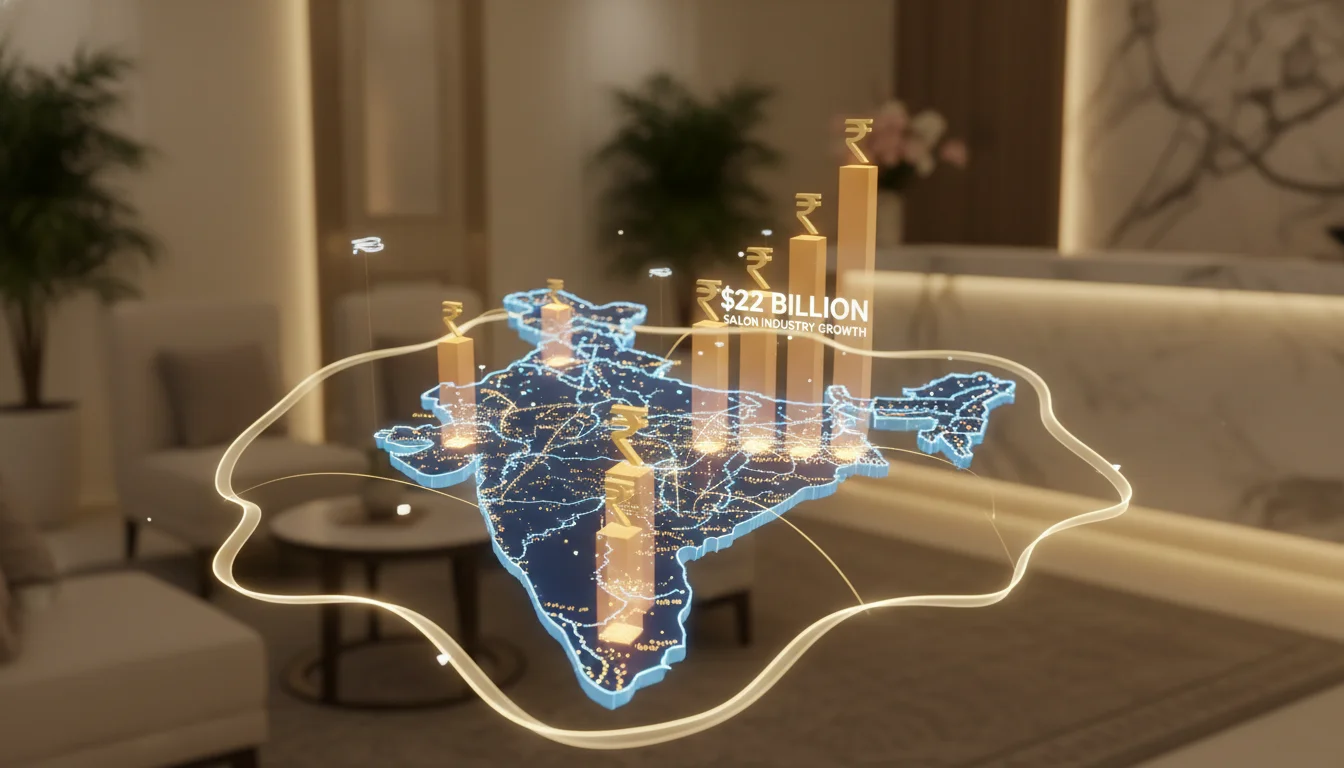
- India Beauty Salon Market: Current Valuation (2023/2024) of USD 10.55 Billion / ₹1,01,949 Crore; Projected Valuation (2032/2033) of USD 22.12 Billion / ₹2,01,185 Crore; Projected CAGR of 7.90% - 8.57%.
- India Spa Products Market: Current Valuation of USD 1.79 Billion; Projected Valuation of USD 2.99 Billion; Projected CAGR of 8.90%.
- India Destination Wedding Market: Current Valuation of USD 16.25 Billion; Projected Valuation of USD 55.39 Billion; Projected CAGR of 14.80%.
- Luxury Beauty Segment: Projected Valuation (2025) of USD 1.60 Billion; Projected CAGR of 14.00%.
The salon spa segment dominates the broader spa industry, holding a projected 32% market share by 2025, a dominance driven by widespread accessibility, affordability, and the rapid expansion of organized salon chains across urban centers. In contrast, the medical spa category represents the most lucrative and fastest-growing product segment, fueled by the rising consumer appetite for non-invasive aesthetic enhancements and dermatologically validated treatments. Furthermore, the hotel and resort spa segment remains the largest revenue generator, benefiting directly from the surge in wellness tourism, which saw over 6.19 million international tourists visiting India in recent years to partake in holistic therapies.
Several profound socio-economic and demographic trends are catalyzing this exceptional growth. The foremost driver is rising affluence and the subsequent premiumization of beauty services. India’s working-age population earning over USD 10,000 annually currently stands at approximately 60 million individuals, a cohort that is growing at 12% per year and is projected to reach 100 million by 2027. This expanding upper-middle class exhibits a high willingness to spend on premium, science-backed beauty routines. Additionally, shifting workforce demographics play a critical role. With over 432 million women actively employed in the Indian workforce as of 2024, dual-income households have become the urban norm. These households possess higher disposable incomes but suffer from acute time poverty, making professional, efficient grooming services a necessity.
Geographic expansion is another transformative trend. Growth is no longer confined to major metropolitan hubs like Mumbai, Delhi, and Bengaluru. Rising disposable incomes and ubiquitous exposure to global digital media have sparked massive demand in Tier-2 and Tier-3 cities. Franchise models are rapidly penetrating these regions, and by 2029, industry analysts project that over 180,000 rural salons will be operational, a significant increase from the 110,000 recorded in 2024. Concurrently, there is a paradigm shift toward clean beauty and sustainability. Modern Indian consumers are highly ingredient-conscious, demanding vegan, cruelty-free, organic, and ecologically sustainable products, forcing salons to redesign their supply chains and service offerings. Finally, the normalization of men’s grooming is expanding the total addressable market, with specialized startups and dedicated salon services capturing this previously under-penetrated demographic.
Key Challenges Faced by Businesses in this Industry
Despite the highly lucrative growth projections, salon and spa operators in India must navigate a volatile and fiercely competitive operational environment characterized by significant structural friction points. Chief among these challenges is the intense competition that frequently devolves into destructive price wars. The market is densely saturated, characterized by an ongoing clash between highly capitalized, established corporate chains and fragmented independent salons. In densely populated urban zones such as Delhi and Mumbai, this hyper-competition often forces local operators to continuously slash service charges while fixed operational costs rise, severely compressing profit margins and threatening business viability.
Furthermore, client retention remains a pervasive and costly hurdle. While acquiring a first-time client through heavy discounting is achievable, retaining that client is notoriously difficult. Historically, the Indian salon industry has suffered from a profound “post-purchase retention void”. Many salons operate on a purely transactional basis, failing to engage clients in the critical weeks between appointments, which invariably leads to high churn rates, estimated in some unorganized sectors to be as high as 60%.
Unorganized staffing and profound operational blind spots further plague independent operators. Many highly skilled individual beauty artists and mid-tier parlors rely on manual scheduling, fragmented notebook-based commission tracking, and guesswork for inventory management. This lack of automation leads to imbalanced employee workloads, undetected inventory leakage resulting from product pilferage, high staff turnover due to opaque commission structures, and rampant appointment no-shows that cripple daily cash flow. Ultimately, these operational inefficiencies are compounded by a severe digital deficit. A significant portion of the market lacks the capital, digital literacy, and marketing acumen required to establish a compelling online presence, leaving them exposed and vulnerable to digitally aggressive, tech-enabled corporate chains.
Digital Landscape in India (Contextual to the Industry)
Internet & Social Media Usage Relevant to Salons and Spas
To comprehend the digital marketing imperative for the Indian salon and spa industry, one must first analyze the unprecedented scale of the nation’s digital connectivity. India currently boasts an active internet user base of 806 million individuals, representing approximately 55.3% of the total population. Alongside this, the country supports 491 million active social media identities. Mobile data consumption is extraordinarily high and continues to accelerate, with projections indicating an average monthly consumption of 46 GB per consumer by 2027. This infrastructure is largely driven by the widespread availability of affordable smartphones and highly competitive telecom data pricing, effectively democratizing digital access across all socio-economic strata.
This massive, mobile-first connectivity has fundamentally altered the consumer’s path to purchase for beauty and wellness services. Digital discovery is no longer an optional or secondary touchpoint; it is the primary battleground for customer acquisition. The shift to digital commerce is stark, with online beauty sales growing exponentially—currently expanding up to nine times faster than traditional in-store retail interactions. In late 2024, online beauty sales in India grew by 39% in value, compared to a mere 3% growth in physical retail. For salons and spas, this means that a prospective client’s journey begins on a search engine or social media feed long before they step foot onto the physical premises.
Popular Platforms Among the Target Audience
- Instagram (The Visual Epicenter): For urban Millennials and Generation Z, Instagram remains the undisputed epicenter of beauty discovery and aesthetic validation. Driven heavily by the “Reels” algorithm and highly visual influencer tutorials, the platform serves as a dynamic digital portfolio.
It is the primary arena where salons showcase transformative hair styling, intricate bridal makeup, and aesthetic skin treatments, relying on the highly visual nature of the platform to communicate service quality.
- Regional Short-Form Video (SFV) Platforms: In Tier-2, Tier-3, and rural markets, platforms such as Moj and ShareChat have achieved massive penetration, boasting over 325 million daily active users. These platforms are projected to reach 650 million users by 2025. Because they deliver content in over 15 native Indian languages, they are indispensable for salon chains executing geographic expansion strategies outside the major metros, allowing brands to connect with aspirational consumers in their native vernacular.
- WhatsApp (The Retention Engine): WhatsApp is ubiquitous across virtually all demographic strata in India. However, its utility has evolved from simple peer-to-peer messaging into a sophisticated enterprise communication layer via the WhatsApp Business API. It is utilized by modern salons for appointment confirmations, pre-visit consultations, post-care instructions, digital catalog sharing, and loyalty program management.
- Quick Commerce Applications: Platforms such as Blinkit, Zepto, and Swiggy Instamart are radically revolutionizing the retail side of beauty, offering sub-30-minute delivery of personal care products. While salons are primarily service-based entities, the rapid adoption of quick commerce is profoundly shifting consumer expectations toward instant gratification and hyper-local convenience, thereby raising the bar for how quickly salons must respond to booking inquiries and digital communications.
Consumer Online Behavior Related to Salons and Spas
The modern Indian salon consumer is highly informed, skeptical, and digitally empowered. Their online behavior is characterized by several distinct psychological and behavioral shifts that dictate how digital marketing must be executed.
First is the rise of the “Ingredient Intellectual”. The contemporary consumer has moved beyond blind brand loyalty and passive celebrity aspiration. Today’s clients scrutinize treatments based on scientific efficacy and biological mechanisms. They actively research the International Nomenclature of Cosmetic Ingredients (INCI) lists, searching for specific active compounds such as Niacinamide, Peptides, and Ceramides. Consequently, they expect the digital content produced by their chosen salons to provide detailed, science-backed explanations of how treatments repair the skin barrier or combat hyperpigmentation, rather than relying solely on emotive marketing.
Second is an overwhelming reliance on social proof. In an environment where beauty consumption is increasingly trend-reactive, speed-sensitive, and heavily impulse-driven, social proof is the paramount currency. Over 60% of Gen Z consumers rely strictly on user-generated reviews, peer validation, and digital content over highly polished corporate advertisements to inform their purchasing decisions. Authenticity is demanded; consumers actively seek out un-airbrushed, hyper-realistic before-and-after results that demonstrate genuine artistry and efficacy.
Third, there is a pronounced demand for technological integration. Clients increasingly seek out salons that offer a technologically advanced, frictionless experience. This includes seamless online booking interfaces, virtual AI consultations, augmented reality (AR) mirrors for virtual hair-color try-ons, and AI-powered skin diagnostics. Such digital touchpoints are perceived not merely as conveniences, but as vital signals of trust, modernity, and hygiene.
Finally, search behaviors indicate that Indian consumers possess a high degree of regional and climatic hyper-awareness. Online search queries frequently focus on highly localized environmental stressors, forcing salons to adopt context-aware digital messaging. For example, consumers actively search for solutions tailored to Indian skin types (Fitzpatrick Type III to VI) battling urban pollution, seeking “monsoon skincare for high humidity” in coastal areas, or “hard water damage hair treatments” in northern cities.
3. Digital Marketing Opportunities
How Digital Marketing Can Solve Key Challenges
The strategic and rigorous application of digital marketing directly addresses the structural vulnerabilities of the Indian salon and spa industry. To combat the pervasive threat of destructive price wars, digital marketing enables salons to pivot definitively toward premiumization through brand authority. By consistently publishing high-value educational content, showcasing stringent sanitary standards, highlighting specialized staff certifications, and utilizing high-quality videography, a salon differentiates itself based on expertise rather than merely competing on the lowest price. This positions the establishment as a luxury or clinical authority, effectively insulating it from the race-to-the-bottom pricing dynamics of local competitors.
Furthermore, the critical challenge of the “post-purchase retention void” is decisively solved through the implementation of WhatsApp Automation. With staggering open rates of 98% and click-through rates hovering between 45% and 60% (compared to a mere 5-10% for traditional email campaigns), WhatsApp serves as an inescapable conduit for customer relationship management. By utilizing the WhatsApp Business API, salons can automate personalized post-treatment care instructions, prompt re-booking reminders based on specific service cycles, and seamlessly manage points-based loyalty rewards, thereby drastically reducing client churn.
Finally, the adoption of integrated, cloud-based salon management software—such as Zylu, DINGG, or SalonBoost—linked directly to a salon’s digital booking interfaces eliminates the chaos of unorganized scheduling. These platforms automate staff rosters, track inventory in real-time, and mitigate costly no-shows by up to 80% through automated SMS and WhatsApp alerts, fundamentally transforming the operational efficiency of the business.
Best Strategies for Salons and Spas in India
To achieve market dominance, businesses must move beyond a passive digital presence and deploy aggressive, integrated, omnichannel strategies.
- Generative Engine Optimization (GEO) & Local Search Dominance: As major search engines increasingly integrate AI overviews into their results pages, salons must pivot their content strategies toward Generative Engine Optimization. This involves answering specific, conversational consumer queries comprehensively (e.g., “What is the best active ingredient for breakouts during high humidity in Mumbai?”). Simultaneously, rigorous optimization of the Google Business Profile (GBP) is non-negotiable for capturing high-intent local footfall. Collecting and systematically showcasing customer reviews on GBP dramatically enhances local map-pack rankings, ensuring the salon appears when nearby consumers exhibit immediate booking intent.
- Micro-Influencer Seeding and Authenticity Marketing: The era of relying solely on multi-million-rupee Bollywood celebrity endorsements is rapidly fading, as modern consumers view them as corporate mouthpieces. Market leaders are instead executing programmatic “seeding” campaigns—partnering with networks of 50 to 100 regional micro-influencers and local creators who possess highly engaged followings of 10,000 to 100,000 users. By having these micro-influencers document their genuine, unfiltered salon experiences, brands generate significantly higher engagement and peer-to-peer trust at a fraction of traditional endorsement costs.
- Programmatic & Contextual Advertising: Instead of deploying monolithic, one-size-fits-all national advertising campaigns, advanced salons and beauty brands utilize programmatic ad buying to serve dynamically tailored, context-specific content. This strategy involves using geolocation and weather data to serve advertisements for heavy, deep-hydration treatments to consumers in Northern India during arid winters, while simultaneously promoting lightweight, sweat-proof bridal makeup and anti-frizz keratin treatments to consumers in the humid, tropical Southern coastal regions.
- Automated WhatsApp Drip Campaigns: Leveraging the WhatsApp Business API allows salons to deploy highly structured retention loops. A proven algorithmic sequence includes: Day 1 (sending personalized post-visit care instructions and a thank-you note), Day 3 (requesting a Google review or internal feedback), Day 30 (sending a personalized product replenishment recommendation based on previous purchases), and Day 45 (offering a time-sensitive, exclusive incentive for a follow-up service). This continuous engagement keeps the salon top-of-mind without being perceived as invasive.
Local and Global Examples/Case Studies
The efficacy of these digital strategies is thoroughly validated by recent market case studies demonstrating rapid scaling and exponential revenue growth.
Lakm Salon’s Omnichannel Dominance
Recognizing the profound shift in consumer expectations, Lakm expanded its digital footprint drastically over recent years. The brand integrated virtual skin and hair consultations, aggressively pushed home-care treatments via e-commerce during service downtimes, and utilized augmented reality (AR) for service previews. By leveraging its “backstage specialist” positioning and integrating high-end partner brands like Dermalogica and Moroccanoil, Lakm operates over 450 franchise outlets across 190 cities. They utilize robust digital marketing to drive footfall to both their premium transformation services and their high-margin retail product lines.
Nish Hair’s Digital Explosion
Founded by Parul Gulati in 2017, Nish Hair faced the challenge of entering a market where hair extensions were viewed with intimidation and skepticism regarding authenticity.
The brand leveraged an appearance on Shark Tank India alongside an aggressive, highly authentic digital marketing strategy to normalize hair extensions among Indian women. By combining vulnerable, relatable storytelling with targeted performance marketing and educational content, the brand achieved a 4X sales expansion, driving ₹17 Crore in revenue in FY24, and ultimately expanding internationally with a flagship store in Dubai.
Tata CLiQ (Retail WhatsApp Paradigm): Demonstrating the sheer power of conversational commerce in the Indian context, retail giant Tata CLiQ utilized specialized WhatsApp marketing software for order updates, personalized recommendations, and targeted promotions. They achieved a remarkable 57% Click-Through Rate (CTR) and a 10x higher Return on Ad Spend (ROAS). This engagement blueprint—transitioning from passive communication to active, personalized dialogue—is highly translatable to salons seeking to increase service re-bookings.
YourStory Event Conversion: In a broader demonstration of WhatsApp’s event-marketing efficacy, the media platform YourStory utilized the Interakt WhatsApp API to address challenges in audience conversion. By sharing personalized invites, automated responses, and timely follow-ups through WhatsApp rather than traditional email, they drastically reduced communication friction, resulting in event attendance conversion rates increasing from a stagnant baseline up to 25-30%. This demonstrates the power of WhatsApp for marketing high-ticket salon events, such as bridal makeup trials or exclusive aesthetic clinics.
4. Competitive Analysis
Current Digital Presence of Top Salons and Spas Businesses in India
The Indian market is currently dominated by large-scale, highly organized corporate chains such as Lakm Salon, Naturals, Jawed Habib, Looks Salon, Studio11, and VLCC. These entities are increasingly competing against tech-enabled service aggregators like Urban Company, which dominate the at-home mobile salon market. In the retail-to-service crossover space, omnichannel beauty giants like Nykaa, Tira (Reliance Retail), Sugar Cosmetics, and Pilgrim are setting aggressive new benchmarks for digital consumer engagement, fundamentally altering what the Indian consumer expects regarding brand interaction and digital seamlessness.
What They Are Doing Well
Market leaders have successfully transitioned from being strictly local service providers to functioning as integrated digital ecosystems. These top chains do not rely on manual administrative processes; instead, they have invested heavily in proprietary tech infrastructure. They utilize custom mobile applications and cloud-based Customer Relationship Management (CRM) systems to meticulously map the entire customer journey. This facilitates seamless online booking, automated GST billing, predictive inventory tracking, and real-time operational analytics. Furthermore, leaders utilize sophisticated, data-driven loyalty ecosystems. By implementing tiered, points-based loyalty programs integrated directly into their Point-of-Sale (POS) systems, they track service frequency and retail purchase history with granular precision. This allows them to deliver hyper-personalized digital rewards—such as targeted coupons or early access to new treatments—that lock consumers into their proprietary ecosystem and severely penalize churn.
Visually, these corporate chains maintain highly elevated branding. Through high-production-value video marketing and strategic partnerships with top-tier influencers, established brands consistently signal trust, clinical hygiene, and premiumization. They frequently employ intelligent in-store touchpoints, such as “smart mirrors” and AI-driven hair and skin diagnostics, subsequently promoting these technological differentiators aggressively across their social media platforms to attract the modern, tech-centric consumer.
Gaps and Opportunities to Outperform Them
Despite their vast capital resources and technological infrastructure, large corporate chains suffer from systemic blind spots and operational rigidity that agile, independent salons and regional chains can actively exploit to capture market share.
- The “Sea of Sameness” in Marketing Messaging: Large chains often deploy highly sanitized, overly produced corporate advertising that younger, authenticity-craving demographics find sterile and unconvincing. Independent salons can outmaneuver these giants by showcasing un-airbrushed, hyper-realistic, behind-the-scenes content that highlights the genuine artistry, personality, and technical skill of their individual stylists. By pulling back the curtain on the process, independents build a parasocial relationship with the consumer that faceless corporate brands cannot replicate.
- Underutilization of Regional Vernacular Platforms: Corporate marketing budgets are heavily skewed toward polished, English-language content on Instagram, targeting top-tier metropolitan audiences. Independent and Tier-2 salons can capture massive, uncontested market share by executing aggressive digital marketing on regional short-form video platforms like Moj and ShareChat, utilizing native dialects and colloquialisms to build deep, localized cultural resonance and trust.
- The Hyper-Personalization Deficit: While large chains possess sophisticated loyalty software, their sheer scale often results in generic, mass-blast promotional SMS messages that consumers promptly ignore or mark as spam. A local salon utilizing a WhatsApp Business API can execute true hyper-personalization. They can send highly individualized voice notes, personalized video follow-ups from the exact stylist who performed the service, and bespoke maintenance advice tailored to the client’s specific scalp or skin condition. This level of operational intimacy is something corporate chains cannot systematically execute across thousands of locations.
- Agility in Trend Adoption: Independent salons can pivot their service offerings and digital marketing campaigns overnight to capitalize on viral global trends (e.g., “glass skin” facials, specific K-beauty routines, or niche clean-beauty product launches). Conversely, corporate chains are encumbered by slow-moving procurement processes and rigid franchise protocols, delaying their ability to market emerging trends.
5. Recommended Strategy for Salons and Spas in India
Target Audience Personas
To maximize Return on Investment (ROI) and minimize wasted ad spend, digital strategies must be rigorously segmented according to the distinct psychological drivers and online behaviors of different consumer cohorts.
-
Quick-Commerce Gen Z:
- Demographics: Age 18-25; Urban & Metro
- Preferences: Trend-reactive, speed-sensitive, impulse-driven. Values brand inclusivity, clean beauty, and cruelty-free/vegan claims.
- Digital Behavior: Relies 100% on peer validation and UGC. Consumes rapid-fire, viral Instagram Reels and TikTok-style content. Demands instant online booking.
-
Ingredient Intellectual Millennials:
- Demographics: Age 26-35; Metro & Tier-1
- Preferences: Highly educated, stressed professionals. Seek dermatologically validated routines, anti-aging therapies, and barrier repair solutions.
- Digital Behavior: Scrutinizes INCI ingredient lists, reads long-form educational blogs, demands scientific proof of efficacy over celebrity endorsements.
-
Tier-2 Aspirational Consumers:
- Demographics: Age 20-40; Tier-2/3 & Rural
- Preferences: High aspirational spending on premiumization. Influenced heavily by local beauty standards and regional micro-creators rather than elite Bollywood figures.
- Digital Behavior: Consumes short-form video heavily in vernacular languages across Moj, ShareChat, and YouTube Shorts.
-
The Luxury Bridal & Wellness Cohort:
- Demographics: Age 22-35; Pan-India
- Preferences: Highly anxious regarding event preparation. Seeking holistic pre-wedding physical enhancements, spa relaxation, and emotional wellness.
- Digital Behavior: Conducts deep research on comprehensive, multi-month packages. Relies heavily on Pinterest, Instagram mood boards, and specialized bridal blogs.
-
Corporate Wellness Planners:
- Demographics: Age 30-50; B2B Metro
- Preferences: HR professionals seeking corporate adoption of wellness off-sites and preventive health retreats for employee retention.
- Digital Behavior: Engages through LinkedIn, corporate wellness portals, and direct B2B email marketing.
Recommended Channels and Campaign Types
To effectively reach these diverse personas, salons must deploy a sophisticated, multi-channel architecture.
- 1. WhatsApp Conversational Commerce & Retention: Implement a WhatsApp Business API platform (utilizing tools such as Wati, Interakt, or Sanoflow) to execute a closed-loop retention system. Campaigns must transcend simple spam blasts. They should include automated appointment reminders to slash no-show rates, post-treatment satisfaction surveys to catch negative experiences before they hit Google Reviews, and algorithmic 45-day reactivation sequences for dormant clients.
- 2. Hyper-Local Search Marketing (The Google Ecosystem): The foundation of local acquisition is the Google Business Profile. It must be optimized exhaustively with geo-tagged images, frequently asked questions (FAQs), and detailed service menus. Concurrently, run highly targeted Google Search Ads focusing exclusively on high-intent “near me” and specific treatment queries (e.g., “laser hair removal in [Neighborhood]”) utilizing a tight 5 to 10-kilometer geo-radius to ensure maximum relevance and minimal wasted spend.
- 3. Social Media ‘Educational-Entertainment’ (Edutainment): Transition social media feeds from acting as static digital brochures to serving as dynamic educational hubs. Deploy campaigns focusing on process transparency. Rather than just showing a finished haircut, show the technical geometry of the cut.
Demonstrate precisely how tools are sterilized in an autoclave to appeal to hygiene-conscious consumers, or explain the chemical science behind a keratin treatment.
Content Ideas Specific to Salons and Spas in India
- The “Bridal Journey” Documentary Series: Given the immense scale of the Indian wedding economy—projected to reach USD 55 Billion—salons must aggressively market comprehensive pre-bridal packages. Content should transparently break down pricing tiers (e.g., detailing the value difference between a standard ₹14,000 package and a premium ₹75,000 Airbrush Signature Package, utilizing data from market comps like Pony Up Salon or Kaya Clinic). Create immersive, 60-day documentary-style reels tracking a real bride’s skin, hair, and mental wellness transformation leading up to her wedding day, positioning the salon as a trusted partner rather than a vendor.
- Ingredient Deep Dives and Myth-Busting: To capture the “Ingredient Intellectual,” produce high-fidelity carousel posts and short videos explaining the hard science of specific treatments. Explain exactly why Niacinamide is utilized in anti-pollution facials, decode the pH balance required for effective scalp treatments, or debunk common myths surrounding chemical peels.
- Climatic & Seasonal Lifelines: Create highly contextual, hyper-relevant problem-solving content tailored to the Indian climate. Examples include video tutorials on “3 Ways to Prevent Monsoon Frizz in Mumbai’s Humidity” or blogs detailing “How to Combat Hard Water Hair Loss in Delhi.”
- Behind-the-Chair Reality (ASMR & Timelapses): Produce unfiltered, sped-up timelapse videos of complex, multi-hour color corrections or intricate nail art extensions. Pair these with trending audio or ASMR (Autonomous Sensory Meridian Response) sounds of brushing and styling. This content highlights the intense labor, skill, and premium products involved, implicitly justifying premium pricing to the consumer.
Budget-Friendly Digital Marketing Approaches
For independent salons, single-location spas, or those with highly constrained marketing budgets, executing high-impact, low-cost strategies is vital to compete against corporate ad spend.
- The Offline-to-Online Review Loop: Place physical, elegantly designed QR codes on all salon mirrors, reception desks, and billing counters. These QR codes should link directly to the salon’s Google Review page or a WhatsApp opt-in chat. Crucially, offer a marginal instant incentive—such as a 5% discount on retail products or a free deep-conditioning add-on during the current visit—in exchange for the client leaving a detailed review or subscribing to the WhatsApp list while they are still in the chair.
- WhatsApp Catalog Utilization: Rather than investing heavily in a custom e-commerce website immediately, utilize the free WhatsApp Business App’s catalog feature. Build a comprehensive digital menu of services and retail products, enabling clients to browse, inquire, and book directly within the chat interface, facilitating frictionless social commerce.
- Barter-Based Micro-Influencer Marketing: Instead of paying exorbitant monetary fees to macro-influencers, initiate a barter program. Invite 10 to 15 local college micro-influencers, corporate professionals, or local lifestyle bloggers (those with 2,000–10,000 highly engaged followers) to receive complimentary premium services. In exchange, require them to post detailed, tagged Instagram stories, create a dedicated Reel, and leave a comprehensive Google review. This generates an authentic groundswell of local social proof at the mere cost of product and staff time.
6. Keywords & SEO Opportunities
High-Intent Keywords for Ranking
High-intent keywords indicate a user at the absolute bottom of the digital marketing funnel; they possess an immediate problem and are ready to book a service transactionally. Capturing these searches requires a rigorously optimized Google Business Profile, high review velocity, and fast-loading local landing pages.
| High-Intent Keyword Cluster | Estimated Monthly Volume (Indicative) | Search Intent & Strategic Value |
|---|---|---|
| indian beauty parlour near me | 49,500 | Massive volume indicating immediate proximity booking for general grooming and rapid service needs. |
| beautician near me | 40,500 | High intent for individual professional services, often indicating a preference for boutique setups or at-home service requests. |
| best parlour near me | 18,100 | Quality-focused intent. The user is willing to travel slightly further for highly-rated, premium providers. Requires strong Google reviews to capture. |
| spa parlour near me | 4,400 | Focus on relaxation, holistic wellness, and mental rejuvenation, distinct from routine aesthetic grooming. |
| nail extension near me with price | 720 | Extremely high conversion probability. The user is executing specific service and budget validation prior to immediate booking. |
Long-Tail Keyword Opportunities (India-Specific)
Long-tail keywords inherently possess lower search volumes, but they yield substantially higher conversion rates due to their granular specificity and lack of corporate competition. They represent an optimal target for blog content, educational articles, and highly specialized service landing pages.
| Category | Long-Tail Keyword Examples (India-Specific) | Strategic Implementation |
|---|---|---|
| Hair Services & Treatments | “best chemical free keratin treatment salon”, “hard water damage hair spa”, “balayage hair coloring salon in [City]” | Create dedicated service pages detailing the specific brands used (e.g., L’Or al, Olaplex) to capture brand-affinity searches. |
| Skin & Aesthetic Services | “organic anti-aging facial treatment”, “acne treatment salon for oily skin”, “best at home laser hair removal for face and body” | Develop long-form, medically reviewed blog posts explaining the science behind these treatments to build authority. |
| Bridal & Event Makeup | “pre bridal packages cost in [City]”, “HD party makeup salon near me”, “affordable bridal makeup artist in [Neighborhood]” | Build comprehensive pricing matrices and portfolio galleries specifically for these search terms to capture anxious brides executing deep research. |
| Wellness & Spa Tourism | “ayurvedic body polishing massage”, “corporate wellness retreats near [City]”, “eco-friendly active wellness tourism India” | Target B2B HR professionals and premium wellness tourists through targeted landing pages emphasizing stress relief and holistic balance. |
Strategically, an Indian salon should build dedicated, localized URLs for each core service rather than lazily listing all services on a single, cluttered webpage. This architectural separation explicitly signals relevance to search engine crawlers for these long-tail variations.
7. Implementation Roadmap
Short-Term Quick Wins (Month 1–3)
The immediate objective during the initial phase is to plug existing revenue leaks, establish foundational digital visibility, and completely digitize the legacy client database.
-
Month 1: Infrastructure Modernization and Local SEO Baseline.
- The primary task is to claim, verify, and exhaustively populate the Google Business Profile (GBP). This includes uploading high-resolution interior images, specifying precise operating hours, and linking a complete digital service menu.
- Simultaneously, the salon must deprecate all pen-and-paper operational methods. Deploy a cloud-based salon management software solution (such as SalonBoost, Zylu, or DINGG) to establish a digital CRM, automate staff scheduling, and digitize GST billing. Software like SalonBoost, starting at an accessible ₹799/month, provides immediate ROI by structuring operations.
-
Month 2: The WhatsApp Activation and Lead Capture.
- Migrate the newly digitized client database into a dedicated WhatsApp marketing automation tool. For smaller, budget-conscious salons, tools like QuickReply.ai or Wati offer excellent SMB automation, while larger chains may require enterprise solutions like WebEngage or Insider.
- Implement foundational automation protocols: trigger instant appointment confirmations upon booking, dispatch 24-hour pre-visit reminders (proven to slash no-shows by up to 80%), and automate post-visit review requests to systematically boost GBP rankings.
- Deploy the physical offline-to-online QR code loop across all salon mirrors to rapidly accelerate the WhatsApp subscriber list.
-
Month 3: Content Incubation and Social Proof Generation.
- Launch an Instagram and Facebook content calendar adhering to a strict 3:1 ratio: three pieces of educational or behind-the-scenes content (edutainment) for every one promotional or sales-oriented post.
- Initiate the barter-based micro-influencer program, onboarding 10 to 15 hyper-local creators to generate initial social buzz, authentic user-generated content, and a surge in local map-pack relevance.
Long-Term Strategy (Month 6–12)
As foundational operations stabilize, the secondary objective shifts toward scaling top-line revenue, maximizing Client Lifetime Value, and executing advanced, data-driven marketing maneuvers.
-
Month 6: Advanced Retention Architectures and Omnichannel Loyalty.
- Launch a sophisticated, tiered, points-based loyalty program utilizing specialized salon software like ReSpark. This allows clients to earn and burn points via a digital wallet, transforming intermittent, discount-seeking visitors into highly profitable, recurring brand advocates.
- Implement AI-driven, algorithmic WhatsApp drip campaigns.
For example, configure the CRM to trigger a specialized “win-back” discount if a client hasn’t visited in 90 days, or automate a message suggesting a hydrating hair-spa add-on exactly one week before a client’s scheduled root touch-up.
-
Month 9: Programmatic Advertising Scaling and E-Commerce Integration.
- Transition marketing spend away from simple “boosted posts” toward sophisticated Google Ads and Meta Ads. Utilize custom audiences by uploading the highest-spending profiles from the CRM to create “lookalike audiences,” thereby targeting demographics algorithmically proven to possess high disposable income.
- Integrate a seamless e-commerce gateway into the salon’s primary website. This allows clients to purchase recommended professional retail products (e.g., dermatological serums, specialized shampoos) online between physical visits, effectively converting the salon from a pure service provider into a resilient omnichannel retailer.
-
Month 12: Geographic Scaling and Ecosystem Analytics.
- If targeting regional franchise expansion into Tier-2 or Tier-3 cities, pivot digital content production to include vernacular languages on regional platforms like ShareChat and Moj to capture emerging market demand.
- Utilize deep CRM analytics and AI insights to identify the most profitable services and highest-performing staff members. Refine operational staffing, inventory procurement, and targeted marketing spend based strictly on these empirical data sets.
Conclusion
The Indian salon and spa industry has definitively crossed the digital rubicon. Propelled by rapidly rising affluence, the normalization of grooming as an essential daily habit, the profound influence of global social media, and an overwhelmingly mobile-first consumer base, the sector is experiencing unprecedented, multi-billion-dollar expansion. However, the landscape is mercilessly competitive. The traditional business model—relying purely on passive foot traffic, seasonal wedding surges, manual ledger books, and localized word-of-mouth—is fundamentally obsolete.
To survive and achieve outsized profitability in this saturated market, salons and spas must execute a radical paradigm shift: they must transition from being commoditized, easily replaceable service providers to becoming digitally augmented, experiential brands. This transformation requires the relentless, clinical pursuit of local SEO dominance to capture high-intent traffic. It mandates the deployment of hyper-personalized, automated WhatsApp retention architectures to obliterate client churn. Furthermore, it necessitates the continuous creation of highly authentic, scientifically backed social media content that resonates deeply with today’s skeptical, highly informed “ingredient intellectuals”.
Navigating the complexities of this expansive digital ecosystem—from integrating cloud-based CRM software to executing programmatic ad buys and optimizing digital storefronts—requires specialized technical infrastructure and strategic foresight. This is where Gurkha Technology, a premier digital marketing and technical solutions firm based in Nepal, serves as an indispensable strategic partner. With deep, nuanced expertise in the South Asian digital market and a proven, documented track record of scaling beauty, cosmetics, and fashion brands, Gurkha Technology offers the exact digital mechanisms required to dominate the contemporary salon industry.
From developing stunning, custom UI/UX e-commerce websites and executing sophisticated local SEO optimization, to managing high-converting social media campaigns, scaling targeted Facebook and TikTok ad infrastructure, and managing expansive micro-influencer partnerships, Gurkha Technology provides comprehensive, end-to-end digital architecture. By partnering with an expert agency like Gurkha Technology, salon and spa owners can effectively offload the overwhelming complexities of digital transformation. This strategic delegation allows operators to focus entirely on their core competency: delivering world-class, transformative grooming and wellness experiences to an increasingly demanding clientele.