Digital Marketing for Indian Film & Music Studios
Digital Marketing for Film Production and Music Studios in India: A Comprehensive Strategic Blueprint
1. Industry Overview
The Ecosystem of Film Production and Music Studios in India
The Indian media and entertainment (M&E) ecosystem represents one of the most prolific, dynamic, and culturally diverse creative economies globally. Rooted in a century-old cinematic tradition and a rich heritage of classical, regional, and contemporary music, the industry operates as a massive engine of cultural export and domestic consumption. Film production in India is not a monolithic entity; rather, it is a highly fragmented and multilingual network comprising the Hindi film industry (Bollywood) centered in Mumbai, alongside formidable regional powerhouses such as Tollywood (Telugu), Kollywood (Tamil), Mollywood (Malayalam), and Sandalwood (Kannada). Collectively, these industries produce approximately 2,000 feature films annually, making India the largest film producer in the world by output volume. The Bollywood segment alone generates immense revenue, characterized by high production values, a star-driven system, and a growing polarization between massive blockbuster event films and mid-budget content migrating directly to digital platforms. Concurrently, the South Indian film industries have collectively grown to account for nearly 43% of the national box office, demonstrating the rising prominence of pan-Indian spectacles and regional cinema.
Parallel to film production, the Indian music studio sector has historically functioned symbiotically with cinema, as film soundtracks historically accounted for up to 80% of total music consumption, recording approximately 10,000 songs each year. However, a profound structural transformation is currently underway. The rise of independent music, artist-led labels, and regional pop (often termed “I-Pop”) is decoupling the music studio ecosystem from its traditional reliance on theatrical film releases. Music studios now range from massive corporate entities that dominate global digital platforms to boutique, independent recording facilities catering to a burgeoning creator economy, podcasters, and independent musicians. The advent of algorithmic distribution and digital-first music discovery has fostered an environment where non-film music is posing an unprecedented challenge to the cultural hegemony of traditional film soundtracks.
Current Market Size, Growth, and Trends
The Indian M&E sector has demonstrated remarkable resilience and exponential growth, rapidly accelerating past global trends. In 2025, the sector expanded by 9% year-on-year to reach a staggering valuation of INR 2.78 trillion, driven predominantly by digital expansion, advertising recovery, and live experiences. Projections indicate that the industry is on a definitive trajectory to reach INR 3.3 trillion by 2028, expanding at a compound annual growth rate (CAGR) exceeding 7%. Digital media has officially overtaken traditional television as the largest segment within this ecosystem, crossing the historic INR 1 trillion mark in revenues for the first time in 2025, cementing digital platforms as the operational backbone of the industry.
Within this macro-environment, the film segment specifically recorded revenues of INR 205 billion in 2025, supported by exceptional theatrical performances and rising ticket prices, with 37 films grossing over INR 1 billion at the domestic box office. The music sector is experiencing an equally aggressive upward trend. The Indian music industry was valued at approximately INR 2,798 crore in 2022 and is projected to scale to INR 7,800 crore by 2026, driven by a compound annual growth rate of 13.4%. Furthermore, India has cemented its position as the second-largest streaming market globally by volume, recording 1.03 trillion on-demand streams in 2023. The live events sector, intrinsically linked to both music and film promotion, also saw a massive 44% increase in the organized segment in 2025, fueled by higher spending on ticketed concerts and large public gatherings.
A critical trend defining this growth is the corporatization and consolidation of the industry. Legacy production houses are securing substantial institutional investments to finance ambitious, technology-driven global content strategies. A prime example is the landmark acquisition of a 50% stake in Dharma Productions by Serene Productions for INR 1,000 crore, signaling a shift away from family-run banner houses toward structured financing, professionalized brand leverage, and rigorous intellectual property monetization. Similar strategic investments, such as Saregama’s INR 325 crore investment in Sanjay Leela Bhansali’s company and Reliance Jio Studios’ acquisition of Sikhya Entertainment, indicate a transition toward a studio-led ecosystem designed to create a steady pipeline of diverse content. Simultaneously, the integration of Artificial Intelligence (AI) in both music and film production—ranging from AI-assisted scriptwriting and generative VFX tools to algorithmic mastering—is compressing production timelines and reducing post-production costs by 20% to 40%.
Key Challenges Faced by Businesses in this Industry
Despite unprecedented financial growth, film production and music studios face a confluence of systemic and operational challenges in the digital age. The most immediate infrastructural hurdle is the acute distribution bottleneck caused by an under-screened theatrical landscape. With fewer than 10,000 screens serving a population of over 1.4 billion, screen density remains disproportionately low and heavily concentrated in major metropolitan centers. This structural deficit forces smaller, independent films into fierce competition for exhibition space, often sidelining them in favor of big-budget, star-driven spectacles. Consequently, independent producers bear immense risk, creating products for an unpredictable market where theatrical access is heavily gated.
The digital revolution has also introduced severe revenue fragmentation and monetization hurdles. While music streaming volume in India is astronomical, the monetization per user remains a fraction of that in Western markets, largely due to the overwhelming dominance of ad-supported free tiers over paid subscriptions. For artists and music studios, relying on streaming royalty rates, per-stream payouts, and transparent accounting remains a highly contentious and challenging operational reality. Furthermore, artists and studios face complex algorithmic distribution challenges, where platforms like Spotify and YouTube dictate visibility, effectively transferring gatekeeping power from traditional record labels to global tech algorithms.
Intellectual property (IP) infringement and digital piracy continue to erode revenue margins systematically. The proliferation of high-definition leaks on encrypted messaging apps and torrent networks severely impacts box-office and digital licensing returns, necessitating advanced technological solutions and stricter enforcement of copyright laws. Additionally, there is mounting pressure on production budgets. Audiences, exposed to premium global content via Over-The-Top (OTT) platforms, now demand world-class visual effects and production values, forcing studios to inflate budgets while simultaneously navigating a shrinking pool of traditional financing.
2. Digital Landscape in India (Contextual to the Industry)
Internet & Social Media Usage Relevant to the Industry
The foundation of India’s entertainment boom is its rapidly expanding digital infrastructure. As of early 2025, India’s internet user base reached 806 million, representing a penetration rate of 55.3% of the total population, with rural adoption outpacing urban growth and accounting for 55% of total users. By 2026, this figure is expected to surpass 1.03 billion individuals, pushing online penetration to 70.0%. This connectivity is underpinned by a total of 1.12 billion cellular mobile connections, emphasizing that the Indian digital experience is unequivocally mobile-first.
Driven by affordable handset availability and ultra-low-cost mobile data plans, Indian consumers exhibit profound mobile data consumption. The average monthly data consumption per user skyrocketed to 27.5 GB in 2025, up from 17 GB in 2023, enabling the frictionless consumption of high-fidelity streaming video and lossless audio formats that form the core product of film and music studios. This continuous engagement translates to users spending approximately 69% of their mobile phone time—totaling 779 billion hours in 2024—exclusively on media and entertainment activities, including social media, video streaming, and casual gaming.
Social media penetration mirrors this macro internet growth. By January 2025, India housed 491 million active social media user identities, a figure that equates to nearly 33.7% of the national population. This highly engaged user base spends an average of 2 hours and 30 minutes daily across an average of 7.6 different platforms, with entertainment, music, and creator-led content driving the highest volumes of engagement.
Popular Platforms Among the Target Audience
The digital ecosystem in India is dominated by a few pivotal platforms that serve as the primary distribution and marketing arteries for the entertainment sector.
For general content discovery and communication, WhatsApp reigns supreme, utilized by 80.8% of all internet users. While traditionally a messaging app, WhatsApp’s integration of business communication tools makes it a critical platform for direct-to-consumer conversational marketing, allowing studios to push localized ticketing offers or exclusive trailer drops directly to consumer devices.
For visual and entertainment-driven engagement, Instagram is the undisputed leader, identified by 38.3% of users as their favorite platform. Instagram’s Reels feature has revolutionized music discovery and film promotion. Meta-commissioned studies reveal that Reels is the most viewed short-form video format in India, watched daily by 95% of surveyed users, fundamentally altering how music studios engineer viral moments and how film studios tease visual content.
YouTube remains the bedrock of both long-form video consumption and music streaming. With over 411 million unique visitors across desktop and mobile platforms in late 2024, YouTube serves a dual purpose: it is the primary hosting ground for official movie trailers and full-length music videos, while YouTube Shorts aggressively competes in the short-form vertical. In the dedicated audio streaming sector, Spotify has achieved profound penetration, leveraging localized playlists and algorithmic discovery to secure its position alongside domestic giants like JioSaavn, Wynk, and Gaana. Spotify’s influence is notable; in 2024 alone, Indian artists were heard 11.2 billion times by new listeners on the platform, indicating its massive role in audience acquisition.
For B2B marketing—crucial for production houses seeking corporate clients for ad films, VFX services, or equipment rentals—LinkedIn has evolved into a mandatory platform. It serves as the primary conduit for establishing industry authority, networking with agency producers, and showcasing technical portfolios to highly targeted corporate decision-makers.
Consumer Online Behavior Related to Film and Music
The Indian digital consumer’s behavior has undergone a tectonic shift toward hyper-personalization, short-form consumption, and regional language preference. The dominance of Generation Z, armed with an estimated $860 billion in spending power, dictates current marketing trends. This demographic favors authenticity, immersive experiences, and participatory culture over polished, traditional advertising. They demand purpose from brands, prioritizing engagement over passive consumption, and rely heavily on social media discovery to influence their purchasing decisions.
For the music industry, this translates into the “UGC (User Generated Content) Flywheel.” Consumers no longer passively listen to music; they interact with it by creating short-form videos on Instagram Reels and YouTube Shorts. A 15-second viral audio snippet frequently translates into millions of sustained streams on audio platforms, effectively making the audience the primary marketing vehicle. This trend rewards artists and studios that provide creator-friendly edits and participate in trends, rather than relying solely on traditional radio play.
Furthermore, the consumption of Indic language content has completely disrupted the historical hegemony of Hindi and English media. Approximately 98% of users access content in regional languages like Tamil, Telugu, Malayalam, and Marathi. This regional renaissance has allowed localized film and music studios to build massive, dedicated superfan communities that rival national audiences in scale and engagement. Platforms that facilitate this localization and personalize content recommendations are witnessing the highest retention rates.
Another notable behavioral shift is declining attention spans coupled with ad fatigue. Consumers actively bypass traditional commercial interruptions, preferring integrated brand storytelling, influencer recommendations, and organic content discovery. For film studios, this means that the traditional marketing blitz of press junkets and television spots must be replaced with strategic, digital-first narrative building that begins during pre-production and invites audience participation long before release day.
Digital Marketing Opportunities
Solving Key Industry Challenges
Digital marketing presents targeted, measurable solutions to the systemic challenges plaguing the Indian entertainment sector. The severe screen shortage and distribution bottlenecks that historically suppressed independent film studios can be bypassed through strategic digital demand generation. By leveraging highly targeted digital advertising and Search Engine Optimization (SEO), production houses can build direct-to-consumer (D2C) relationships, directing audiences to specific OTT platforms or curated theatrical releases, thus bypassing traditional exhibition monopolies.
For the music industry’s revenue fragmentation, digital marketing facilitates the diversification of income streams. Studios and independent artists can utilize data-driven campaigns to transition passive free-tier listeners into active purchasers of merchandise, concert tickets, and exclusive fan-club memberships. The experience economy is booming; by creating multi-sensory marketing campaigns around live events, studios can capture highly lucrative concert revenues that offset streaming deficits. Furthermore, robust digital brand protection strategies, encompassing SEO reputation management and digital rights management (DRM) integration, act as a bulwark against piracy, ensuring that legitimate, monetizable links outrank unauthorized torrent sites on search engine results pages (SERPs).
Best Strategies for Film Production and Music Studios
A comprehensive digital marketing architecture for the entertainment sector requires a multi-disciplinary approach, blending technical precision with creative storytelling.
- Search Engine Optimization (SEO): For B2B film production services (e.g., ad filmmaking, VFX, Foley, equipment rental), SEO is the primary driver for lead generation. Studios must implement a robust local SEO strategy, optimizing Google My Business profiles to capture high-intent local queries. Technical SEO ensuring fast mobile load speeds is non-negotiable for India’s mobile-centric audience. For B2C music studios and indie labels, SEO involves optimizing YouTube metadata—titles, tags, and descriptions—to align with algorithmic search patterns, capturing long-tail queries and ranking for specific mood-based or activity-based playlists.
- Social Media Marketing & The UGC Engine: Social media strategies must pivot from outbound broadcasting to inbound community building. Music studios must engineer tracks with “snippet appeal”—15-to-30-second hooks designed specifically for Instagram Reels and TikTok. Film studios should embrace “always-on” marketing, sharing behind-the-scenes (BTS) footage, raw editing sessions, and director Q&As to build anticipation months before a film’s release. This participatory marketing transforms passive viewers into invested stakeholders.
-
Performance Marketing and Programmatic Ads: Data-driven advertising allows studios to achieve unparalleled precision. Utilizing programmatic advertising, studios can serve hyper-localized, vernacular video ads to specific demographics based on geographic location and online behavior. Google’s Performance Max (PMax) campaigns, utilizing AI to optimize ad delivery across Search, Display, and YouTube, ensure that marketing budgets are directed exclusively toward high-converting audiences, minimizing wasted ad spend. Digital out-of-home (DOOH) advertising is also emerging as a premium channel, seamlessly blending the scale of physical billboards with the targeting capabilities of digital media.
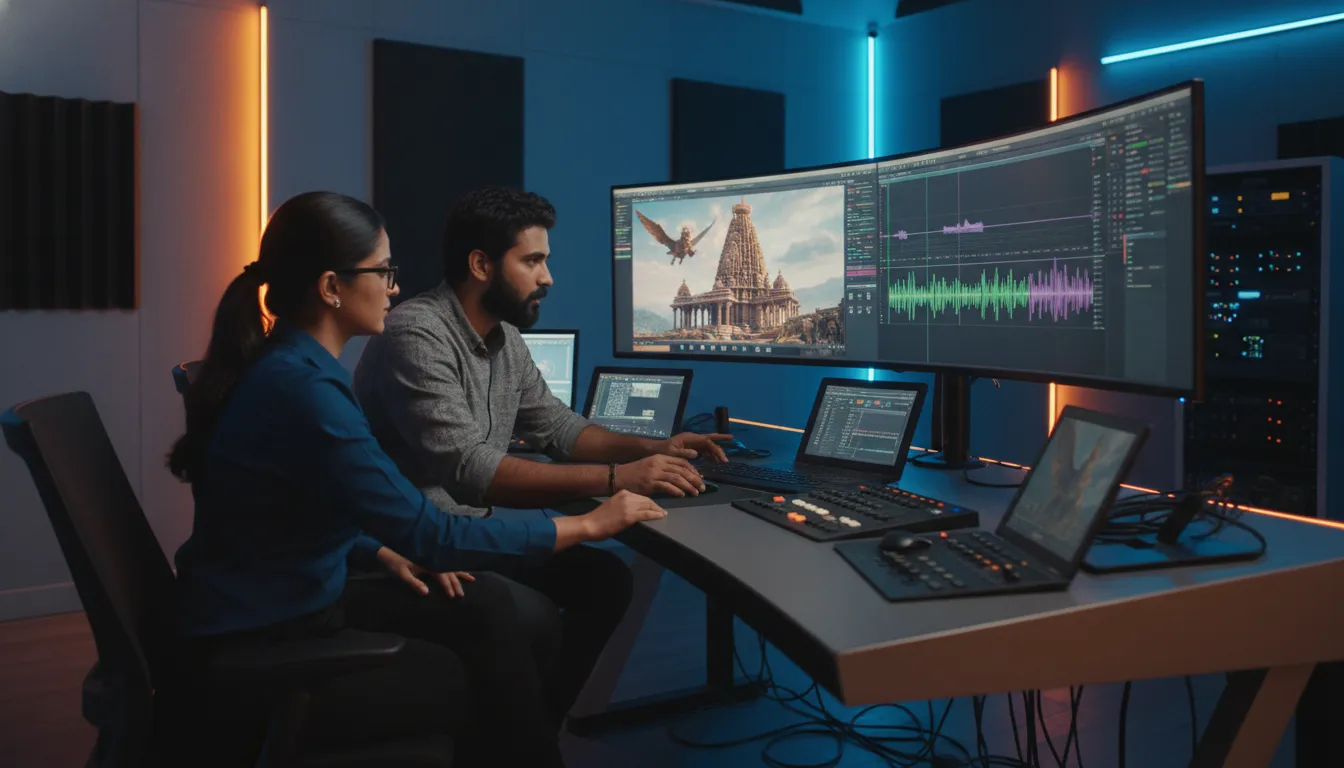 - Content and Influencer Marketing: Influencer marketing remains a cornerstone, but the strategy must shift from macro-celebrities to micro and nano-influencers. Partnering with regional lifestyle, dance, or review influencers yields higher engagement rates and feels more authentic to Gen Z audiences. For B2B entities, content marketing through high-quality blogs, podcasts, and technical breakdown videos establishes production houses as industry thought leaders, building trust with corporate clients and advertising agencies who seek sophisticated, modern production solutions.
Local and Global Examples/Case Studies
Empirical evidence underscores the efficacy of these strategies in the Indian context, proving that creativity paired with digital precision yields outsized returns.
- RC Films Studio (Social Media & Paid Acquisition): Facing zero initial digital presence, this production house partnered with an agency to execute a targeted YouTube and social media strategy. By deploying creative posters and teaser trailers alongside targeted YouTube paid advertising, the studio achieved a 15% increase in brand awareness, generated a surge in subscriber growth, and boosted overall cross-platform engagement by 20%.
- Kalki 2898 AD (Data-Driven Trailer Drops): This major theatrical release utilized a highly calculated, data-driven trailer drop strategy. By analyzing audience tracking metrics through tools like Ormax Cinematix, the studio orchestrated organic audience pull and pre-release urgency entirely through digital channels, achieving massive box office openings without relying heavily on traditional, cost-heavy physical marketing tours.
-
Yash Raj Films (YRF) “Less is More” Playbook: For blockbuster releases like Pathaan and War 2, YRF abandoned traditional pre-release press interviews and television appearances. Instead, they relied strictly on strategic digital asset drops (teasers, posters).
- FutureWorks (B2B Global Content Marketing): To attract international clients, this Indian VFX and post-production house launched a global content marketing campaign. By establishing a branded YouTube channel, repurposing technical project breakdowns into editorial features, and utilizing strategic PR, they successfully scaled their global presence and acquired high-value contracts from streaming giants like Amazon, Apple TV, and Netflix.
- Prateek Kuhad (Independent Artist Growth): Demonstrating the power of personalized digital marketing, independent musicians like Prateek Kuhad have bypassed traditional labels. By cultivating a highly engaged, niche audience through tailored email marketing, localized social media engagement, and strategic streaming platform placement, artists can generate significant income and build devoted fan bases without massive corporate backing.
4. Competitive Analysis
Current Digital Presence of Top Businesses in India
The Indian entertainment landscape is fiercely competitive, dominated by well-capitalized legacy studios and highly agile digital-first production houses. Understanding their digital positioning reveals the baseline required to compete in this market.
At the apex of the music and film convergence sits T-Series. Operating as both India’s largest music label and a massive film production entity, T-Series boasts unparalleled digital dominance. It holds the title of the most-subscribed YouTube channel globally, utilizing its massive catalog of Bollywood, regional, and devotional genres to command algorithmic authority and capture immense ad-revenue. Similarly, legacy entities like Saregama have leveraged their historical IP, digitizing over 4000 hours of content and successfully bridging the gap between legacy physical media and modern digital streaming ecosystems across 14 languages.
In the realm of feature film production, Yash Raj Films (YRF) and Dharma Productions maintain formidable, highly polished digital footprints. These studios possess deep vertical integration capabilities, managing everything from talent and production to digital distribution. Red Chillies Entertainment not only markets its films heavily online but also leverages its dedicated VFX division to showcase high-end technical prowess, capturing B2B post-production market share.
In the ad-film and B2B production sector, companies like Nirvana Films and SBN Media differentiate themselves. Nirvana focuses on premium cinematic portfolios that connect across borders, utilizing platforms like Vimeo for high-fidelity showcasing. Conversely, SBN Media has aggressively branded itself around “Filmmaker-Led AI,” capturing the attention of modern, tech-forward corporate clients who require high-volume digital campaigns without sacrificing brand safety to “AI slop”.
What They Are Doing Well
The market leaders exhibit several highly effective digital behaviors that solidify their dominance.
- Aggressive Volume Strategies and Data Analytics: T-Series has adopted a prolific volume strategy, releasing multiple Extended Plays (EPs) and albums monthly spanning diverse genres from indie pop to commercial rap. This ensures constant algorithmic feeding and maintains relevance across all listener demographics, effectively suffocating smaller competitors in the digital feed.
- Franchise and Universe Building: Studios like YRF treat digital marketing not as a promotional tool for a single film, but as an ongoing narrative for cinematic universes (e.g., the YRF Spy Universe). This creates sustained, long-term digital engagement between film releases, building a loyal community that stays invested in the intellectual property over years.
- Deep Regional Localization: Top studios recognize that India is an “AND” market, requiring simultaneous multi-lingual digital campaigns. Universal Pictures India, for example, achieved a 47% growth in box office share by adopting a language-first approach, launching simultaneous digital campaigns tailored to specific South Indian markets, complete with regional voice talent and culturally relevant influencer partnerships.
Gaps and Opportunities to Outperform Them
Despite their vast resources, legacy studios exhibit critical digital vulnerabilities that agile, modern businesses can exploit.
- 1. Neglect of Long-Tail and B2B Local SEO: Major studios rely almost exclusively on brand equity and “head terms” (e.g., the name of the movie or star). They frequently neglect granular, high-intent SEO. Independent VFX studios, Foley artists, and boutique ad-film houses can easily outrank massive conglomerates on search engines by targeting specific, localized, and technical long-tail keywords (e.g., “affordable Dolby Atmos mixing studio in Pune” or “green screen studio rental Chennai”).
- 2. Over-Reliance on “Hero” Campaigns: Large studios often exhaust their marketing budgets on massive, short-term promotional blitzes surrounding a release, leaving digital channels dormant during off-cycles. A continuous, “always-on” content strategy that consistently provides value—such as audio engineering tutorials, gear reviews, or scriptwriting tips—can build a more loyal, engaged community than intermittent, high-budget advertisements.
- 3. Lack of Authentic Community Engagement: Highly polished, corporate digital personas often fail to resonate with Gen Z’s demand for authenticity. Independent studios and artists have a distinct advantage in showcasing vulnerability, humanizing their brand through raw, unfiltered BTS content, and engaging directly with fans in comment sections and live streams. This fosters deeper emotional connections that corporate giants struggle to replicate.
5. Recommended Strategy for Film Production and Music Studios in India
Based on the macro-environmental data and identified competitive gaps, film and music studios must transition from traditional outbound promotion to an inbound, digital-first engagement methodology.
Target Audience Personas
To maximize return on ad spend (ROAS) and content efficacy, studios must bifurcate their marketing strategies to address two distinct, highly valuable audience personas:
Persona A: The B2B Client (For Production Services, VFX, Ad Films, Rentals)
- Profile: Creative Directors, Agency Producers, Brand Marketing Managers, and Independent Filmmakers. Ages 28–55. Located primarily in commercial hubs (Mumbai, Delhi NCR, Bangalore, Chennai, Hyderabad).
- Preferences: Data-driven results, high-fidelity technical portfolios, workflow efficiency, and absolute reliability. They conduct extensive online research before engaging a vendor and value thought leadership.
- Pain Points: Unreliable vendors, budget overruns, poor communication, and a lack of modern tech integration (such as AI workflows or Virtual Production capabilities).
Persona B: The B2C Consumer (For Film Releases, Music Tracks, Indie Artists)
- Profile: Gen Z and younger Millennials (Ages 15–30). Highly distributed across Tier 1, 2, and 3 cities, driven by increasing rural internet penetration. Exclusively mobile-first consumers.
- Preferences: Authenticity, short-form video (Instagram Reels/YouTube Shorts), meme culture, interactive content, and regional/vernacular relevance. They do not want to be “sold to”; they expect to discover, participate, and co-create.
- Pain Points: Ad fatigue, generic corporate messaging, irrelevance to their specific cultural or linguistic background, and a lack of community belonging.
Recommended Channels and Campaign Types
The strategy must leverage platform-specific strengths tailored to the identified personas.
- LinkedIn & Targeted Search (For Persona A): Establish the studio’s technical authority. Publish in-depth case studies detailing how a specific VFX challenge was solved or how a brand’s ROI was increased through a high-converting ad film. Utilize highly targeted Google Search campaigns capturing commercial intent (e.g., “corporate video production company”).
- Instagram Reels & YouTube Shorts (For Persona B): Implement the “UGC Flywheel.” Seed 15-second audio hooks or visually striking film snippets to micro-influencers to spark viral trends. Run interactive campaigns, such as dance challenges or dialogue lip-sync contests, turning the audience into active promoters.
- Programmatic Audio Advertising (Spotify/JioSaavn): Utilize programmatic audio ads targeted by mood, genre, and time of day to capture the 175 million active music streamers. Audio ads offer a captive, screen-free environment with high recall rates, perfect for promoting upcoming album releases or film soundtracks.
- Performance Max (PMax) Campaigns: For direct conversions (e.g., selling concert tickets, securing studio bookings, or driving merchandise sales), leverage AI-driven cross-channel advertising to dynamically optimize placements across the Google ecosystem, ensuring budget is spent efficiently.
Content Ideas Specific to the Industry
Content must transition from mere promotion to providing intrinsic value, catering to the curiosity and aspirations of the audience.
- The “Process” Narrative: Document the creation journey. Post time-lapse videos of set construction, studio recording sessions, Foley artistry, or complex VFX layer breakdowns. This builds immense credibility for B2B clients evaluating technical competence and fascinates B2C audiences eager for a peek behind the curtain.
- Gear Spotlights and Technical Tutorials: Position the studio as an industry vanguard. Review a new cinema camera, demonstrate an advanced vocal mixing technique, or explain the integration of AI in post-production.
This attracts aspiring filmmakers and musicians who view the studio as a thought leader, eventually translating into clientele or talent acquisition.
- Interactive Q&A and Live Streams: Host live sessions with directors, sound engineers, or featured artists. Address audience questions directly to humanize the brand, discuss creative choices, and foster a deeply invested superfan community that feels a sense of ownership over the final product.
Budget-Friendly Digital Marketing Approaches
Scale and impact do not require exorbitant spending. Studios can achieve significant market penetration through resource-efficient, high-leverage tactics.
- Algorithmic Optimization over Paid Reach: Rather than relying solely on paid ads, rigorously optimize YouTube metadata (titles, descriptions, tags, closed captions) to capture organic search traffic. Ensuring your content answers specific user queries guarantees long-term, free visibility.
- Micro-Influencer Bartering: Partner with regional content creators who possess highly engaged, niche followings. Exchange studio time, exclusive access, or early release previews for promotional content, eliminating massive upfront influencer fees while gaining authentic endorsements.
- Meme Marketing and Guerrilla Social: Leverage trending audio and visual memes. Adapting studio content to fit contemporary internet humor is entirely free and exponentially increases the likelihood of organic virality, appealing directly to Gen Z sensibilities.
6. Keywords & SEO Opportunities
To capture high-quality traffic, a bifurcated keyword strategy is essential. High-intent keywords target users at the bottom of the funnel (ready to transact), while long-tail keywords capture users in the informational and consideration phases.
High-Intent Keywords for Ranking
These keywords are highly competitive but yield exceptional ROI as they signify immediate business intent. They must be integrated into service pages, landing pages, and Google Ads campaigns. Capturing these searches connects studios with clients who have credit cards in hand.
| Keyword Category | Target Keyword | Search Intent | Target Audience |
|---|---|---|---|
| Film & Video Production | ad film production agency Mumbai | Commercial | Brand Managers, Ad Agencies |
| Film & Video Production | corporate video makers Delhi NCR | Transactional | B2B Corporate Clients |
| Film & Video Production | VFX studio for feature films India | Commercial | Indie Filmmakers, Producers |
| Music & Audio | professional recording studio near me | Navigational / Transactional | Independent Artists, Podcasters |
| Music & Audio | dubbing and foley studio Mumbai | Commercial | Post-Production Supervisors |
| Equipment & Rental | cinema camera rental Bangalore | Transactional | Freelance Cinematographers |
Long-Tail Keyword Opportunities (India-Specific)
Long-tail keywords face lower competition and capture highly specific, regional search queries. While individual search volume is lower, they collectively account for the vast majority of web traffic and convert at significantly higher rates because they perfectly match the user’s highly specific query. These are ideal for blog posts, YouTube video titles, and comprehensive FAQ sections.
| Keyword Category | Target Keyword | Content Application |
|---|---|---|
| Music Discovery (B2C) | best indie love songs for late nights 2026 | Spotify Playlist SEO, YouTube Compilations |
| Music Discovery (B2C) | new punjabi hip hop tracks download | Blog Posts, Music Landing Pages |
| Studio Services (B2B) | affordable recording studio for independent artists Delhi | Studio Service Page, Google My Business |
| Technical/Educational | how to mix vocals for bollywood songs | YouTube Tutorial, In-depth Blog Post |
| Production Services | cost of producing a 30 second tv commercial in India | B2B Educational Guide / Lead Magnet |
| Regional Cinema | top telugu film distribution companies in Hyderabad | Thought Leadership Article, B2B Networking |
7. Implementation Roadmap
A successful digital transformation requires a phased, disciplined approach, ensuring foundational stability before scaling into complex, budget-heavy campaigns. Reacting without a formalized plan leads to inconsistent messaging, unpredictable lead flow, and wasted budgets.
Short-Term Quick Wins (1–3 Months)
Objective: Establish a robust digital foundation, capture low-hanging organic search traffic, and initiate preliminary community engagement.
-
Month 1: Digital Audit & Technical Infrastructure:
- Conduct a comprehensive audit of the studio’s website for mobile responsiveness, user experience (UX), and load speed, which is an absolute necessity for India’s mobile-first audience.
- Claim, verify, and optimize Google My Business profiles with high-resolution studio imagery, precise location data, client reviews, and targeted local keywords to dominate local map searches.
- Standardize branding and messaging across all social media channels (LinkedIn, Instagram, YouTube) to ensure a cohesive corporate identity.
-
Month 2: Content Architecture & Initial B2B Outreach:
- Develop and publish 3-5 foundational case studies or portfolio pieces on the website, detailing technical challenges overcome and ROI delivered for past clients.
- Initiate a targeted LinkedIn outreach campaign connecting with regional agency producers, independent directors, and marketing managers.
- Launch an “Always-On” social media calendar featuring BTS imagery, equipment spotlights, and team introductions.
-
Month 3: Targeted Paid Acquisition & Algorithmic Seeding:
- Deploy tightly budget-controlled Google Search campaigns targeting hyper-specific commercial intent keywords (e.g., “music mastering services Chennai”).
- For B2C releases, initiate micro-influencer outreach to seed audio tracks or trailer snippets across Instagram Reels and YouTube Shorts to test viral potential.
- Set up robust tracking infrastructure (Google Analytics 4, Meta Pixel) to establish baseline metrics and monitor user behavior for future optimization.
Long-Term Strategy (6–12 Months)
Objective: Dominate industry search visibility, build sustainable direct-to-consumer revenue streams, and leverage advanced marketing technologies for exponential growth.
-
Months 4-6: Thought Leadership & Earned Media:
- Scale content marketing by publishing high-value video tutorials, industry trend analyses, and podcast interviews featuring the studio’s technical leads.
- Execute a strategic backlink acquisition campaign, securing features in industry publications and regional entertainment portals to dramatically boost domain authority and organic rankings.
- Continuously optimize and monetize YouTube channels through high-retention video content, aiming for algorithmic amplification and passive ad revenue.
-
Months 7-9: Advanced Programmatic & Immersive Campaigns:
- Transition from basic paid search to AI-driven programmatic advertising. Utilize tools like Google Performance Max to dynamically serve video and display ads across the web based on predictive consumer behavior and intent signals.
- For major theatrical or album releases, develop immersive AR/VR filters on Instagram or Snapchat to drive participatory engagement and user-generated content among Gen Z audiences.
-
Months 10-12: Data Consolidation & Community Monetization:
- Analyze aggregated first-party data to deeply refine target personas, improve audience segmentation, and eliminate inefficient ad spend.
- Launch D2C monetization channels, such as exclusive membership portals, limited-edition merchandise drops, or premium digital masterclasses, transforming the engaged social media audience into a direct, predictable revenue stream.
- Establish strategic partnerships with local streaming platforms (JioSaavn, Wynk) for featured playlist placements, programmatic audio ad dominance, and exclusive content windowing.
8. Conclusion
The Indian film production and music studio sector stands at a critical, highly lucrative historical juncture. Valued at INR 2.78 trillion in 2025 and expanding rapidly toward a projected INR 3.3 trillion by 2028, the industry is experiencing a profound paradigm shift. This transformation is driven by aggressive digital adoption, mobile-first consumption patterns, and a fundamental change in how audiences discover, consume, and interact with entertainment. The era of relying solely on legacy distribution networks, theatrical monopolies, and traditional broadcasting is definitively over. Today, digital media—having crossed the historic INR 1 trillion revenue mark—is the absolute operating backbone of the entertainment economy.
For studios to survive, scale, and remain relevant in this hyper-competitive landscape, digital marketing is no longer a peripheral promotional tool; it is a vital mechanism for business continuity and revenue generation. Whether it is an independent music label utilizing Instagram Reels to bypass traditional gatekeepers and achieve global streaming metrics, or a high-end VFX studio leveraging targeted B2B SEO to secure international corporate contracts, a robust, data-driven digital strategy is the primary differentiator between stagnation and exponential growth. Success in this new era dictates mastering algorithmic distribution, cultivating authentic community engagement, and deploying precise, AI-driven performance marketing.
To successfully navigate this complex, fragmented ecosystem, entertainment businesses require a technological partner possessing both deep regional market intelligence and advanced digital execution capabilities.
Gurkha Technology
Gurkha Technology, an award-winning digital marketing agency based in Nepal and operating effectively across the broader South Asian landscape, provides the exact intersection of creativity and technical infrastructure required. With specialized expertise spanning high-intent SEO architecture, social media brand transformation, AI-driven Performance Max advertising, and bespoke web development utilizing highly secure, Ubuntu-based Linux workflows, Gurkha Technology empowers production houses and music studios to transcend geographical limitations.
By partnering with Gurkha Technology, entertainment businesses can effectively digitize their operations, optimize their brand visibility, solve complex distribution bottlenecks, and ultimately thrive in the world’s most dynamic and rapidly expanding creative economy.