B2B Buying Committee Mapping & Persona Research Guide
The Architecture of B2B Decision-Making: Buying Committee Mapping and Persona Analytics
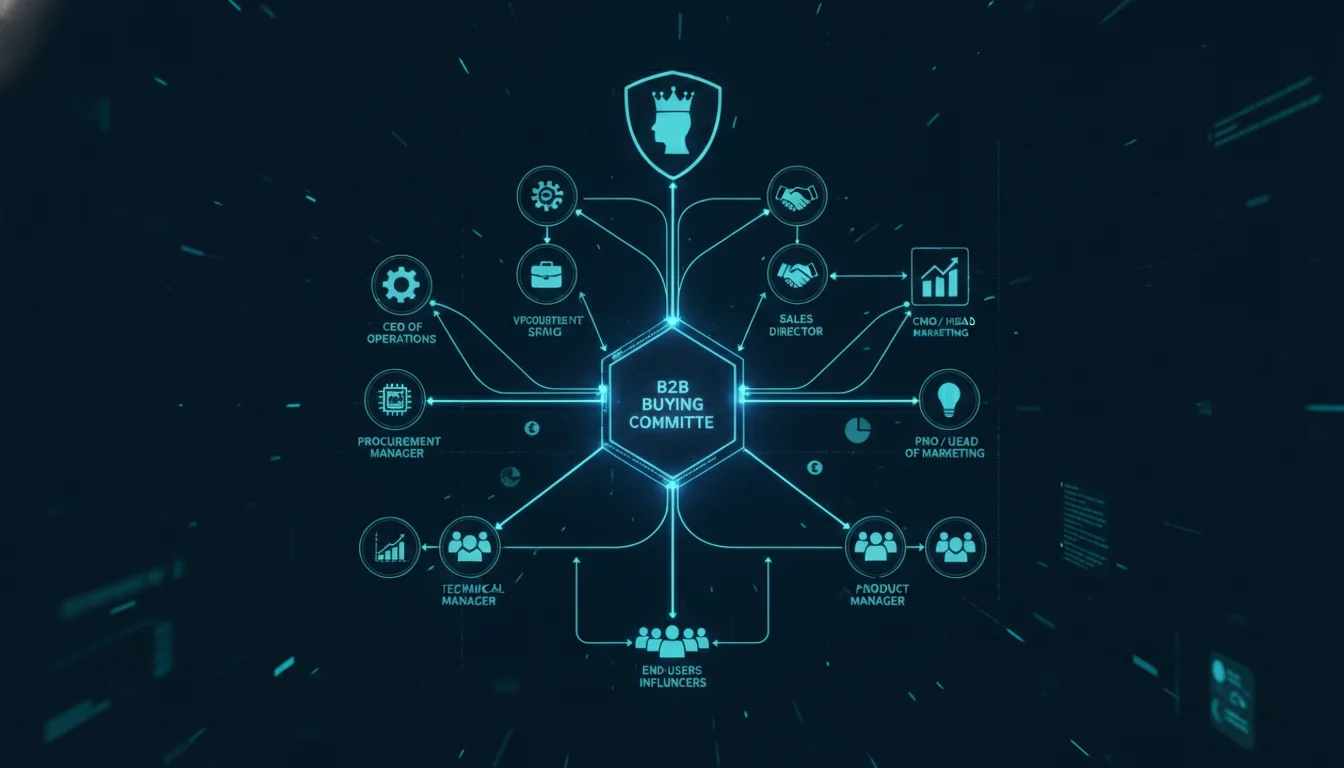
The paradigm of Business-to-Business (B2B) purchasing has undergone a radical, irreversible transformation over the past decade. The traditional model, characterized by a straightforward, linear transaction between a persuasive sales representative and a single executive decision-maker, has been entirely superseded by a highly complex, non-linear orchestration involving multiple stakeholders. As organizational environments become increasingly interconnected, technologically dependent, and risk-averse, the burden of purchasing has shifted heavily onto buying committees—groups of specialized professionals tasked with evaluating vendors, mitigating operational risk, and authorizing enterprise-level capital investments.
In contemporary markets, understanding the structural dynamics of these committees, mapping their intricate internal relationship networks, and decoding the highly specific personas within them are no longer optional marketing exercises. They are foundational imperatives for scalable revenue generation. This comprehensive report provides a rigorous examination of B2B buying committee dynamics, the methodologies required to map these complex stakeholder ecosystems utilizing advanced platforms like LinkedIn Sales Navigator, and the psychological and operational frameworks necessary to construct highly actionable buyer personas.
The Evolution and Anatomy of the Modern Buying Committee
The contemporary B2B buying journey has effectively reached a tipping point of complexity, becoming virtually unnavigable for buyers without significant, carefully structured facilitation from suppliers. Gone are the days when an executive sponsor unilaterally evaluated a software solution, signed a contract, and mandated immediate organizational adoption. Today, the median B2B purchasing process involves six to ten decision-makers, with enterprise-level deals frequently expanding to include between thirteen and twenty-three discrete stakeholders spanning multiple departments.
This massive expansion in committee size correlates directly with an elevation in stakeholder seniority. Modern buying groups are not only larger, but they also possess far greater organizational influence, with more than half of these committees featuring Vice President-level decision-makers. This elevation in baseline seniority inherently amplifies the demand for rigorous business cases, stringent risk management protocols, and comprehensive consensus-building frameworks before any capital can be successfully deployed.
The Proliferation of the Dark Funnel and Rep-Free Preferences
Complicating the expansion of the buying committee is a fundamental, market-wide shift in how corporate buyers prefer to acquire their information and evaluate potential partnerships. Empirical research indicates that up to 75% of B2B buyers now strongly prefer a sales-rep-free purchasing experience, actively avoiding vendors who deploy aggressive, high-friction, or irrelevant outbound outreach methodologies.
Furthermore, approximately 70% to 80% of the entire B2B buyer journey—and the vast majority of sales interactions between buyers and suppliers—now occur entirely in digital channels before a buyer ever initiates formal contact with a sales representative. Buyers are conducting extensive, anonymous research within the “dark funnel.” They are leveraging peer communities, private Slack groups, third-party review platforms, and independent analyst reports to formulate their requirements and evaluate vendors long before a vendor is even aware they are being considered.
Consequently, buyers spend only about 17% of their total purchasing cycle engaging directly with potential suppliers. This data suggests a profound implication for modern commercial teams: the vast majority of a buying group’s critical debates, strategic alignments, and internal conflicts occur entirely offline or in secure internal communication channels when the seller is not in the room.
Gartner’s Six Buying Jobs and the Non-Linear Journey
To understand how these increasingly autonomous committees operate, revenue professionals must discard the traditional, linear sales funnel. Buying groups do not move uniformly from awareness to consideration to decision. Instead, they operate on parallel tracks, engaging in a fluid, non-linear “pinball” process where different stakeholders perform distinct, overlapping tasks simultaneously. According to Gartner, this process is characterized by six distinct “buying jobs” that can occur in any order, and which frequently repeat throughout the cycle:
- Problem Identification: The organization recognizes a critical operational or strategic deficit. This phase is heavily influenced by internal champions identifying friction points.
- Solution Exploration: Once the problem is quantified, the committee begins scouring the digital market for potential methodologies or technologies to address the deficit.
- Requirements Building: With potential solutions in mind, the group outlines the specific technical criteria, necessary integrations, and operational capabilities a supplier must possess.
- Supplier Selection: The systematic evaluation of specific vendors against the rigorously built requirements matrix.
- Validation: The intensive stress-testing of the proposed solution. This phase typically involves rigorous security audits, customer reference checks, compliance reviews, and legal scrutiny.
- Consensus Creation: The complex internal alignment required to authorize the purchase, bridging the gap between technical viability and financial justification.
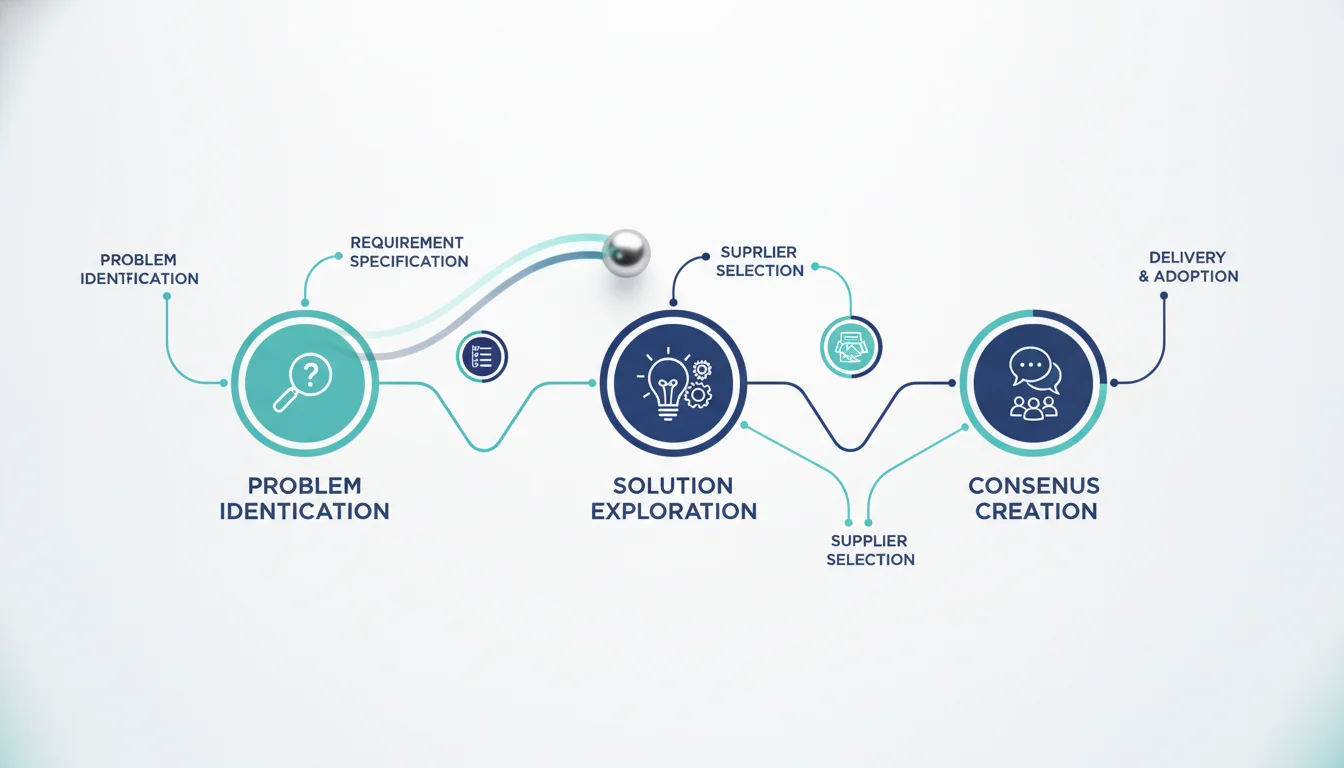
Because these six jobs are executed concurrently by different departments, the buying cycle exhibits a chaotic “stop-start” tempo. A deal may progress rapidly through solution exploration, only to stall entirely when a newly introduced legal stakeholder forces the committee to reopen the requirements building phase to address a previously unidentified compliance risk. Furthermore, suppliers face the challenge of “strategic convergence,” wherein 64% of buyers cannot distinguish between the digital experiences of competing B2B brands, leading to analysis paralysis and stalled deals.
The Crisis of Consensus and Unhealthy Conflict
The most formidable barrier to a successful B2B transaction is not competitive displacement, but internal indecision. Committees are inherently conflicted entities. Data reveals that 74% of B2B buying teams experienced “unhealthy internal conflict” during the evaluation process. This friction occurs because different personas within the committee are driven by fundamentally opposing departmental mandates. For instance, a Business Sponsor’s desire for rapid implementation directly conflicts with an IT Director’s mandate to prolong the evaluation for exhaustive, months-long security testing.
The consequences of this organizational conflict are severe. Internal friction leads to vastly prolonged sales cycles and causes up to 86% of purchases to stall entirely. Furthermore, even when a decision is forced through without true organizational alignment, it results in severe post-purchase regret. Studies indicate that 81% of buyers express deep dissatisfaction with their chosen provider post-implementation due to misaligned internal expectations at the time of purchase. Conversely, when buying committees are provided with the strategic tools to resolve their conflicts and reach a genuine consensus, they are 2.5 times more likely to consider the acquisition a high-quality, successful decision. Therefore, the modern seller’s primary function has evolved from direct persuasion to strategic facilitation; the ultimate objective is to orchestrate internal alignment among highly disparate stakeholders.
Strategic Persona Architecture: Beyond Demographics
Navigating this complex landscape requires a granular, empirical understanding of the specific roles that comprise the buying committee.
Traditional Business-to-Consumer (B2C) personas, which often rely on superficial demographics, generalized interests, or hypothetical daily routines (e.g., “Sarah, the 35-year-old yoga enthusiast”), are entirely insufficient and practically useless for B2B applications. In B2C, the individual who researches, purchases, and uses the product is typically the exact same person. In B2B, the end-user is almost never the final buyer, and the person who benefits most from the solution operationally often holds the absolute least influence over the final purchasing decision.
A robust B2B buyer persona is a highly strategic asset built on empirical primary research, extensive customer interviews, and integrated CRM data. It must meticulously capture role-specific pain points, Key Performance Indicators (KPIs), perceived career risks, decision-making authority, reporting structures, and preferred information channels. High-performing marketing teams are 2.4 times more likely to actively utilize these deep personas in their demand generation strategies, moving beyond broad firmographic segmentation to deliver hyper-relevant, problem-centric messaging tailored to specific buying committee roles.
To construct an effective persona architecture, organizations must analyze the following core archetypes that universally appear across complex B2B transactions:
| Persona Archetype | Primary Focus | Key Performance Indicators (KPIs) | Major Objections & Perceived Risks | Core Enablement Content Required |
|---|---|---|---|---|
| Economic Buyer (CFO / VP Finance) | Financial impact, capital efficiency, risk mitigation, and overall ROI. | Customer Acquisition Cost (CAC), Customer Lifetime Value, Return on Marketing Investment (ROMI). | Long payback periods, failed ROI projections, high Total Cost of Ownership (TCO). | Pre-wired business cases, configurable ROI calculators, transparent pricing logic. |
| Technical Evaluator (IT Director / CISO) | System architecture, cybersecurity, deployment speed, and seamless integration. | System uptime, compliance adherence, reduction of technical debt. | Security vulnerabilities, API limitations, creation of unauthorized data silos. | SOC2/ISO documentation, detailed data-flow diagrams, comprehensive risk ledgers. |
| Business Sponsor (Operations Leader) | Departmental efficiency, standardized processes, and strategic execution. | Operational cost reduction, on-time project delivery, team productivity metrics. | Workflow disruption during rollout, adoption resistance from other departments. | Case studies showing operational impact, implementation timelines, peer benchmarking. |
| End-User (The Practitioner) | Day-to-day usability, intuitive workflows, and elimination of manual tasks. | Personal productivity, time saved, reduction of error rates. | Disruption to established routines, steep learning curves, feelings of increased administrative burden. | Free sandbox trials, short workflow demonstration videos, exceptional UX/UI design. |
| The Champion (The Internal Mobilizer) | Solving acute departmental pain to drive career progression and visibility. | Departmental KPI achievement, successful strategic initiatives. | Loss of internal political capital, vendor failure resulting in reputational damage. | Consensus briefs, highly visual executive summary decks, forwardable FAQs. |
The Economic Buyer Persona (The CFO)
The Chief Financial Officer (CFO) and equivalent finance leaders operate through a highly analytical lens of risk mitigation, capital efficiency, and measurable financial outcomes. Marketing to an Economic Buyer using vanity metrics (such as website page views, social media engagement, or email open rates) or purely technical product feature lists is a guaranteed path to friction.
Core Motivations and Financial KPIs
The CFO evaluates all enterprise investments strictly on their ability to drive top-line revenue, drastically reduce operational expenditures, or tangibly improve profit margins. They demand to see marketing and sales proposals translated directly into financial terms. Key financial metrics that resonate profoundly with the CFO persona include:
- Marketing Attributed Revenue: The total revenue generated exclusively from marketing-initiated customer acquisitions. This directly connects vendor activities to top-line growth.
- Customer Acquisition Cost (CAC): The total cost of sales and marketing divided by the total number of new customers acquired in a specific period. The CFO monitors this to assess the overall capital efficiency of the organization’s growth strategy.
- Customer Lifetime Value: The total revenue a business can expect from a single customer account over the duration of the relationship. The CFO evaluates the financial health of an investment by examining the CLV to CAC ratio, seeking a baseline benchmark of at least 3:1.
- Return on Marketing Investment (ROMI): This metric evaluates the overall profitability of the marketing spend. It is calculated by subtracting the marketing cost from the revenue attributed to marketing, then dividing by the marketing cost. A positive, high-yield ROMI is the ultimate justification for budgetary approval.
- Pipeline Contribution: The percentage of the total sales pipeline generated directly by marketing activities, typically targeting a benchmark of 30% to 60%.
Pain Points and Perceived Risks
The CFO’s primary pain points include rising customer acquisition costs, the proliferation of fragmented software tools (often referred to as “Martech sprawl”) leading to redundant expenditures, and departmental leaders who operate their divisions as “cost centers” rather than quantifiable revenue drivers. When evaluating a new vendor, their core fears revolve around investing in tools that fail to deliver the promised ROI, engaging in contracts with long payback periods that unnecessarily tie up liquid capital, and the severe financial risk associated with failed, prolonged software implementations.
Engagement Strategy
To successfully engage the CFO, vendors must proactively provide “pre-wired” business cases, highly configurable ROI calculators grounded in the buyer’s own operational data, and executive summaries that explicitly address payback windows and internal rates of return (IRR). Messaging must emphasize quantifiable cost reduction, operational efficiency gains, and proven financial impact.
The Technical Evaluator Persona (IT Leadership)
The Technical Evaluator—often represented by the IT Director, Chief Information Security Officer (CISO), or Lead Systems Architect—approaches the B2B buying process with a strict, unyielding mandate to protect the organization’s existing infrastructure and safeguard proprietary data.
Core Motivations and KPIs
This highly analytical persona is measured internally on system uptime, data security incident reduction, compliance adherence (e.g., GDPR, HIPAA), and the successful, seamless deployment of new technologies across the enterprise. They actively seek solutions that offer true enterprise-grade security, massive scalability, deep API flexibility for custom integrations, and exceptionally low ongoing maintenance requirements.
Pain Points and Perceived Risks
IT leaders suffer daily from workflow issues related to managing outdated, fragmented legacy tools, dealing with the constant threat of cybersecurity vulnerabilities, and managing the crushing “technical debt” accrued from previous poor purchasing decisions made by other departments without IT oversight. Their primary objections during a sales cycle usually center on integration complexities. They possess the authority to instantly stall or kill a deal if they perceive that a new solution does not meet stringent SOC2/ISO security requirements, if it threatens to create unnecessary technical debt, or if the vendor’s implementation roadmap is vague or overly optimistic.
Engagement Strategy

Selling to the Technical Evaluator requires an entirely different lexicon and cadence than selling to the CFO. Vendors must engage IT and Security stakeholders incredibly early in the sales cycle—well before any commercial pricing discussions occur—to conduct comprehensive risk reviews. Providing immediate, ungated access to technical documentation, API specifications, detailed data-flow diagrams, and comprehensive security dossiers is critical to neutralizing their inherent skepticism and preventing late-stage deal collapse.
The Business Sponsor Persona (Operations Leadership)
The Business Sponsor is the functional leader—such as a VP of Operations, Director of Human Resources, or Chief Revenue Officer—who acutely feels the underlying operational pain and is ultimately accountable for the business outcome of the purchase.
Core Motivations and KPIs
Using “Operations Olivia” as an archetypal example, this persona’s strategic priorities include standardizing processes across highly siloed departments, radically reducing operational inefficiencies, and improving leadership visibility into resource allocation. Their KPIs are heavily focused on cost reduction, on-time project delivery, and team productivity metrics. They need to see a clear path to significant efficiency improvements—often seeking a 20% to 30% reduction in manual tasks and error rates.
Perceived Risks and Engagement Strategy
The Operations Leader is terrified of workflow disruption during the implementation phase. They fear adoption resistance from other departments and harbor deep skepticism born from previous investments in tools that failed to deliver their promised operational ROI. To win the Business Sponsor, sellers must provide case studies showcasing peer benchmarking, explicit implementation timelines, and proven operational impact.
The End-User Persona (The Practitioner)
The End-User persona represents the frontline practitioners who will actually be required to utilize the software or service on a daily basis.
While they typically lack any formal authority to sign contracts or approve budgets, their enthusiasm—or their vocal resistance—can ultimately dictate the success or failure of the vendor implementation.
Core Motivations and Pain Points
End-users are heavily motivated by UI/UX (User Interface/User Experience), immediate time savings, and how a new tool directly simplifies their complex daily workflows. Their pain points revolve around manual, repetitive data entry, clunky legacy software interfaces, and inefficient, bureaucratic processes that hinder their individual performance metrics and cause daily frustration.
Perceived Risks and Engagement Strategy
The End-User’s greatest fear is disruption to their established routine. They actively resist new tools that require steep learning curves, force them to change deeply ingrained habits, or feel like “extra administrative work” pushed down from management. A common, catastrophic mistake vendors make is conflating End-User enthusiasm with a closed deal. While End-Users cannot authorize a purchase, they must be won over through product-led growth strategies, frictionless free trials, and concise, two-minute workflow demonstration videos. Winning the End-User ensures rapid post-sale adoption, which in turn proves the ROI necessary to retain the Economic Buyer at the time of contract renewal.
The Champion Persona (The Internal Mobilizer)
The Champion is unequivocally the most critical persona for the seller to cultivate and arm. They are the internal project sponsor who initially recognizes a strategic gap, explores the market, and actively advocates for the vendor’s solution to fill that gap.
Core Motivations and Pain Points
The Champion is typically a mid-to-senior level manager or director (e.g., a Director of Revenue Operations or a VP of Marketing) who is attempting to solve a pressing departmental issue that directly impacts their performance reviews and long-term career trajectory. They suffer from severe operational bottlenecks—such as siloed data, lack of visibility into metrics, or an inability to scale their team’s output due to manual constraints. Their ultimate goal is to look like an innovator and a leader by bringing a transformative, high-ROI solution to the executive board.
Perceived Risks and Engagement Strategy
The Champion’s primary risk is reputational damage. By loudly endorsing a vendor, they are spending their finite internal political capital. If the vendor fails to deliver, or if the implementation becomes a disaster, the Champion’s credibility and career progression suffer immensely. To properly support the Champion, sellers must meticulously arm them with “portable leave-behinds.” Because sellers are rarely in the room when the final decision is debated, they must provide highly shareable, concise executive decks, forwardable FAQs, and consensus briefs that empower the Champion to successfully and confidently pitch the solution to the CFO and the IT Director on the vendor’s behalf.
The Mechanics of Relationship Mapping: Uncovering the Organizational Blueprint
Possessing deep, psychologically accurate buyer personas is only the theoretical foundation of B2B sales; applying them requires a rigorous operational methodology to track exactly where these personas sit within a massive target account and how they interact with one another. This is achieved through the discipline of strategic relationship mapping.
Sellers often mistakenly equate a standard organizational chart with a relationship map. This is a fatal strategic error. While an organizational chart relies strictly on formal, hierarchical reporting lines, it is notoriously inadequate for navigating the realities of complex B2B deals. An organizational chart shows who formally reports to whom; a relationship map illuminates the hidden, informal networks of influence that actually drive corporate business decisions.
The Core Components: Nodes and Links
A relationship map is a dynamic, visual representation of an account’s internal ecosystem, constructed using two fundamental, interrelated components: nodes and links.
- Nodes (Individuals or Entities): In a business context, a node represents a specific individual, a client contact, or an entire department. The visual design of a node is critical; its size and positioning are strategically scaled to reflect the individual’s true significance, informal role, and power within the network. For instance, a node representing a highly influential CEO may be rendered significantly larger and placed more centrally on the map compared to a junior staff member, instantly signaling their broader reach across the organization.
- Links (The Connections): Links are the connective pathways drawn between nodes to illustrate interactions. Unlike an organizational chart, links in a relationship map illustrate both professional hierarchies (direct reporting authority, project collaboration histories) and personal connections (mentorships, past company affiliations, or informal social ties).
To visually convey the deep nuance of these informal networks, advanced relationship maps utilize “heat mapping” techniques to visualize three key relationship attributes:
- Strength of Influence: Measures the depth of dependency between entities. A strong relationship indicates high dependency and significant influence over decision-making processes.
- Frequency of Contact: Visualized by line thickness. Bold, thick lines represent strong, regular interactions (e.g., weekly project collaboration), whereas thin or dotted lines denote occasional, weak contact (e.g., quarterly check-ins).
- Influence Level: Highlights directional sway and informal authority. A map might reveal that while a Senior Director has formal authority over their direct reports, they also wield immense informal influence over an entirely separate department, effectively acting as a hidden decision-maker.
The Six-Step Framework for Executing a Relationship Map
To move from theory to execution, organizations utilize a structured, six-step process to build comprehensive business relationship maps:
- 1. Identify Objectives: Clarify the specific goal of the map (e.g., improving a specific sales strategy, uncovering cross-sell opportunities, or managing stakeholder relationships during a difficult renewal).
- 2. Gather Data: Systematically collect detailed information regarding names, titles, interaction histories, and informal influence levels using CRM data, LinkedIn, and direct conversations with internal Champions.
- 3. Identify Stakeholder Interests: Analyze the relevant players by mapping their specific persona interests, needs, concerns, and ultimate fears.
- 4. Identify the Relationships: Chart the existing connections between the parties, mapping both formal reporting lines and informal trusted-advisor relationships.
- 5. Identify Coalitions: Locate internal alliances. This helps sellers determine who can directly further their interests (allies to bring closer) and who can hinder their interests (blockers to handle with care).
- 6. Attack with Strategy and Tact: Develop a clear, multi-threaded action plan to navigate the map, utilizing specific playbooks to engage each node appropriately.
Advanced Mapping Models: Power/Interest, RACI, and Salience
To further categorize stakeholders within the map, revenue teams apply established strategic models:
- The Power/Interest Grid: Classifies stakeholders into four quadrants based on their power to influence the final decision versus their interest in the project’s outcome. “High Power, High Interest” individuals are the primary targets requiring continuous, high-touch alignment.
- The RACI Matrix: Clarifies exactly who is Responsible (doing the work of evaluation), Accountable (the final sign-off authority), Consulted (technical experts whose input is required), and Informed (executives kept in the loop but not actively evaluating).
- The Salience Model: Categorizes stakeholders based on their power, legitimacy, and the urgency of their requests, helping sales teams identify who requires immediate attention to prevent a deal from stalling.
Technological Enablement and Platform Integration
The operationalization of relationship mapping has evolved dramatically from static whiteboard drawings and disconnected PowerPoint slides into sophisticated, AI-driven software ecosystems. Today, mapping is executed through a combination of massive professional networks and integrated CRM mapping tools.
Executing Mapping via LinkedIn Sales Navigator
LinkedIn Sales Navigator, boasting over a billion professional members, serves as the premier global database for de-anonymizing buying committees and plotting initial organizational structures. Sales Navigator features a dedicated tool known as the “Relationship Map” (formerly Account Map), accessible directly from a target company’s account page. This feature allows sales professionals to visually structure their saved leads into a clear hierarchy, enabling multi-threaded outreach strategies.
The step-by-step process of constructing a relationship map within Sales Navigator is highly systematic:
- 1. Accessing the Workspace: The user navigates to the target account’s page within Sales Navigator and accesses the “Relationship Explorer” and “Relationship Map” modules. Distinct maps can be generated for different divisions, regions, or subsidiaries of a massive enterprise account.
- 2. Identifying and Filtering Leads: Sellers utilize the “Persona” search filters—inputting specific criteria such as job function, exact seniority level, and tenure—to generate a hyper-targeted list of potential buying committee members rather than searching blindly.
- 3. Populating the Map: Once the advanced search yields the correct individuals, these leads are saved to a dedicated Sales Navigator list.
They subsequently appear in a side panel, allowing the seller to simply drag and drop them directly onto the visual map interface.
4. Categorization and Tiering: Sales Navigator’s algorithm automatically categorizes placed leads into specific tiers based on their corporate seniority:
- Tier 1: Senior Executives (C-Suite, EVPs)—The Economic Buyers and Final Authorities.
- Tier 2: Middle Management (Directors, VPs)—The Champions and Functional Sponsors.
- Tier 3: Individual Contributors (Managers, Specialists)—The End-Users and Technical Evaluators.
5. Assigning Functional Tags: Beyond hierarchical tiering, users manually tag the leads with their specific buying committee role, explicitly designating them as Decision Makers, Influencers, or Evaluators.
6. Data Extraction for CRM Ingestion: To move this mapped intelligence into actionable outbound email sequences, professionals frequently utilize third-party data extraction extensions, such as Evaboot. With a single click, the mapped leads are exported into a sanitized CSV file, complete with verified professional email addresses, public and private LinkedIn URLs, and open profile statuses.
Advanced CRM-Native Mapping Platforms
While Sales Navigator provides the raw personnel data, maintaining living relationship maps over a 6-to-12-month sales cycle requires CRM-native platforms. Tools like DemandFarm, Prolifiq CRUSH, and InAccord integrate directly into Salesforce and other major CRMs to prevent data silos and ensure high seller adoption.
These advanced platforms utilize artificial intelligence to automatically construct baseline organizational charts, monitor cross-functional engagement analytics, and provide “next-best-step” automated guidance. For example, DemandFarm centralizes all deal-critical context into a specialized Kanban workspace, allowing Account Managers to track exactly how deeply they have penetrated the C-suite and instantly highlighting blind spots where key stakeholders have been ignored. Similarly, platforms like InAccord automate the discovery process, actively scanning CRM data to recommend which specific stakeholders need to be pulled into predefined buying committee roles, thereby enforcing standardized qualification playbooks across the entire revenue organization.
Multi-Threading and Consensus Building Execution
A fully populated relationship map, enriched with deep persona data, is merely a static asset until it is weaponized through strategic execution. Because the vast majority of B2B purchases stall due to a lack of internal consensus, the modern sales motion must pivot away from aggressive feature-pitching and focus entirely on risk reduction, internal facilitation, and rigorous multi-threading. Revenue teams must align their mapped intelligence with proven B2B sales methodologies—such as Solution Selling (diagnosing pain points), the Challenger Sale (teaching and disrupting status quo thinking), or MEDDIC (rigorous qualification for complex enterprise deals)—to structure their approach.
The Bottom-Up Outreach Strategy
One of the most effective methodologies deployed using these maps is the Bottom-Up outreach strategy. In complex B2B sales, attempting to cold-call a Tier 1 Economic Buyer (e.g., the CEO or CFO) is generally highly ineffective; their defenses are impenetrable, their inboxes are flooded, and they naturally delegate operational evaluations downward.
When direct outreach to the top decision-maker inevitably stalls, the relationship map provides alternative, highly effective pathways. Sellers identify Tier 2 or Tier 3 personnel—the Champions or Influencers who experience the acute operational pain the product solves on a daily basis. The seller builds intense rapport and establishes undeniable value with these lower-level operatives.
Once the Champion is convinced, the seller leverages the map to carefully chart a vertical pathway upward. They ask the Champion for an introduction to their regional director, who in turn provides a warm, internally vetted introduction to the ultimate decision-maker. By the time the seller finally speaks with the Economic Buyer, they are not pitching cold; they are arriving with the pre-vetted, enthusiastic endorsement of the buyer’s own trusted staff.
The Imperative of Multi-Threading
Relying on a single point of contact within an enterprise account—known as single-threading—is universally recognized as the most common point of failure in B2B sales. If a seller’s sole Champion leaves the company, changes roles, or loses political capital during a nine-month sales cycle, the deal dies instantly.
Multi-threading is the systematic, intentional process of building concurrent relationships across multiple nodes of the relationship map. It requires highly personalized, persona-specific engagement. A seller does not send the same generic follow-up email to the entire committee. The communication to the CFO focuses exclusively on the business case justification and the payback period; the concurrent communication to the IT Director highlights API documentation and SOC2 compliance; the message to the End-User features a link to a sandbox environment.
Equipping the Champion with Alignment Assets
As previously established, sellers spend minimal time actually in the room with the buying group. Therefore, success hinges almost entirely on how effectively the seller can arm their internal Champion to fight political battles and secure budget on their behalf. Top-performing revenue teams do not merely provide glossy product brochures; they engineer specific alignment assets designed to bridge the gaps between conflicting personas and force consensus:
- The Consensus Brief: A highly concise, one-page document that outlines exactly what a successful implementation looks like, the specific operational risks mitigated, and a simple, shared scoring rubric that allows highly disparate departments to evaluate the solution objectively.
- The Pre-Wired Business Case: A highly configured financial model built specifically for the CFO persona. It translates the operational benefits championed by the Business Sponsor into rigorous, undeniable financial metrics (IRR, payback, sensitivity analysis).
- The Risk Ledger: A document specifically crafted for the Legal and Technical Evaluator personas. It proactively anticipates common security, compliance, and integration objections and maps them directly to the vendor’s internal controls and audited evidence.
By injecting these carefully engineered tools into the organization via the Champion, the vendor controls the narrative of the internal debate, drastically reducing the friction inherent in the Validation and Consensus Creation stages of the buying journey.
Strategic Neutralization of Detractors and Blockers
Finally, effective relationship mapping dictates exactly how a seller handles active resistance. A common, fatal error in B2B sales is attempting to circumvent, ignore, or bypass a known detractor or blocker (such as a highly skeptical procurement officer or a legacy IT architect favoring an incumbent vendor). Ignoring a blocker virtually guarantees they will successfully sabotage the deal in the final stages of negotiation.
Instead, expert sellers utilize the relationship map to bring detractors into the conversation as early as possible. By giving skeptics a “VIP seat” at the table and actively encouraging them to voice their toughest, most cynical objections upfront, sellers accomplish two critical objectives: they prevent the detractor from lobbing unexpected grenades late in the cycle, and they demonstrate immense confidence and transparency. Frequently, a detractor whose concerns are systematically addressed, respected, and validated through a detailed Risk Ledger or customized technical deep-dive converts into one of the vendor’s most powerful, influential internal advocates.
Strategic Synthesis and Future Outlook
The fundamental architecture of B2B decision-making has shifted decisively from a model of individual persuasion to one of complex, collective consensus orchestration. As enterprise buying committees continue to expand in size, organizational seniority, and inherent skepticism, the traditional reliance on gut-feeling sales tactics, linear funnels, and generic marketing broadcasts has been rendered entirely obsolete. Success in the modern enterprise market is now predicated on extreme analytical precision and disciplined execution.
To thrive in this environment, commercial organizations must invest heavily in the rigorous development of role-specific, data-backed buyer personas. They must move far beyond superficial firmographics to understand the deeply rooted financial mandates, technical constraints, and operational fears that drive individual stakeholders—from the ROI-obsessed Economic Buyer to the risk-averse Technical Evaluator.
These psychological profiles must then be operationalized through sophisticated relationship mapping methodologies. By leveraging the expansive data networks of LinkedIn Sales Navigator and integrating advanced, AI-driven mapping platforms directly into their CRM environments, revenue teams can finally expose the hidden networks of informal influence that actually govern corporate purchasing behavior. By seamlessly merging deep persona analytics with structural, dynamic relationship mapping, organizations can anticipate objections before they arise, execute precise multi-threaded engagement strategies, empower their internal champions with targeted alignment assets, and ultimately guide fractured, highly conflicted buying committees toward a confident, high-quality consensus.