The Multistakeholder Model: Why Governments Alone Do Not Control the Internet
If there is one term you will hear 1,000 times at any Internet Governance Forum, it is “Multistakeholderism.”
It sounds like a corporate buzzword. But it is actually a radical idea that kept the internet free for the last 30 years.
Multilateral vs. Multistakeholder
To understand it, compare it to the United Nations.
- The UN model is “Multilateral”: Only governments have a vote. If you are Google or a Human Rights NGO, you can sit in the hallway, but you can’t vote.
- The Internet model is “Multistakeholder”: Everyone who has a “stake” in the internet gets a seat at the table.
Who are the Stakeholders?
- Governments: They care about national security, laws, and taxes. (e.g., Ministry of Communication and Information Technology).
- Private Sector: They build the infrastructure and services. (e.g., ISPs, Facebook, startups). They care about business environments and innovation.
- Technical Community: They make sure it works. (e.g., IETF, NPIX). They care about stability and standards.
- Civil Society: They protect users. (e.g., Internet Society, Digital Rights Nepal). They care about privacy, access, and human rights.
- Academia: They study the long-term impact.
Why This Model?
Because the internet is too complex for any one group to manage.
- If Governments ran it alone, they might block cross-border data or censor content, fragmenting the web (the “Splinternet”).
- If Companies ran it alone, they might prioritize profit over privacy or access for the poor.
- If Engineers ran it alone, they might ignore social and legal realities.
By forcing these groups to talk, we get Governance by Consensus. It’s slow. It’s messy. But it produces robust policies that work globally.
Why It Matters for Nepal
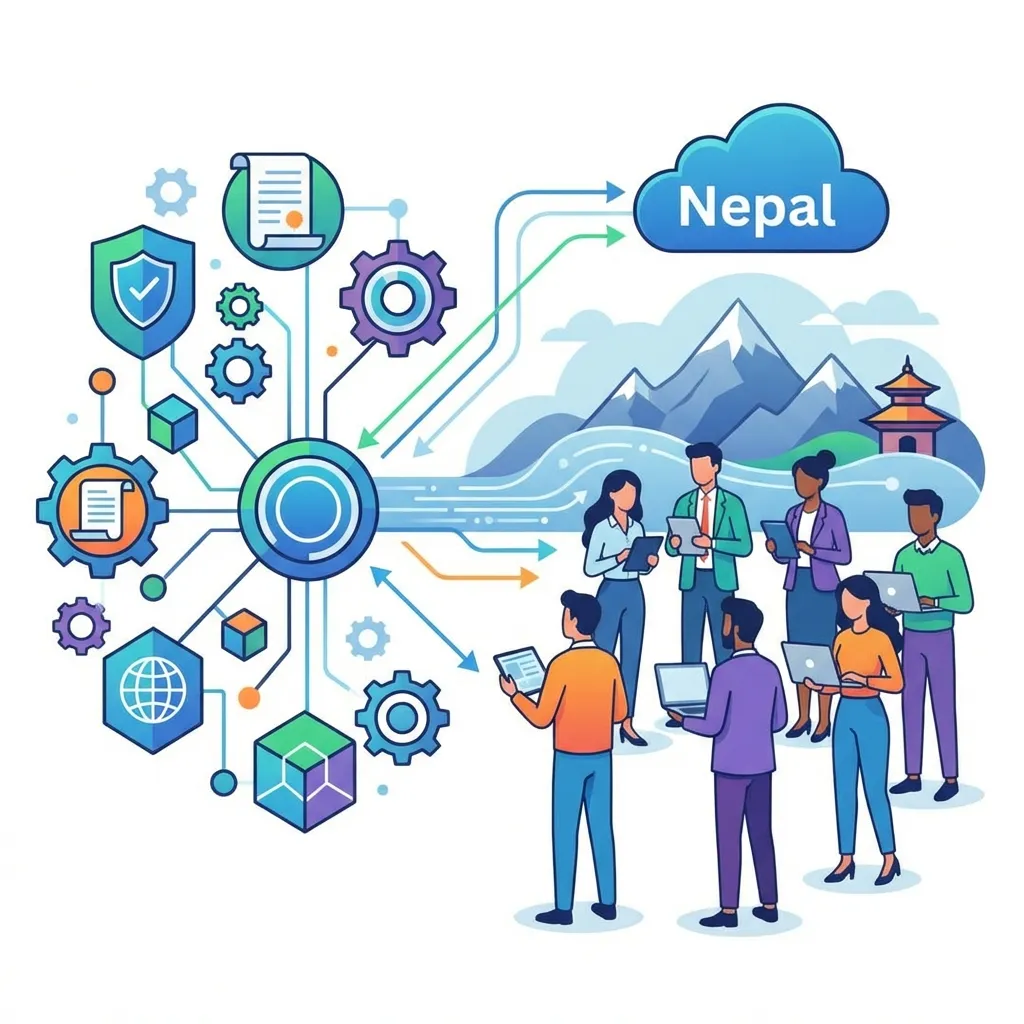
For a smaller country like Nepal, the Multistakeholder model is a lifeline.
In a “government-only” model, Nepal would just be a small vote against superpowers. But in a multistakeholder world:
- A Nepali engineer can propose a technical standard at IETF that becomes a global rule.
- A Nepali youth activist can speak at the IGF about the digital divide, influencing global funding priorities.
We don’t need a massive army or GDP to have influence. We just need good ideas and active participation.
The Threat
This model is under threat. Some countries want to move internet control back to the UN (ITU), making it a government-only affair. As young professionals, fighting for the Multistakeholder model is fighting for an open, unified global internet.