Smart Video Doorbells 2026: Features, Costs & Installation Guide
Comprehensive Market Analysis and Technical Evaluation of Smart Video Doorbells: 2026 Features, Economic Models, and Deployment Architectures
Introduction to the 2026 Smart Video Doorbell Ecosystem
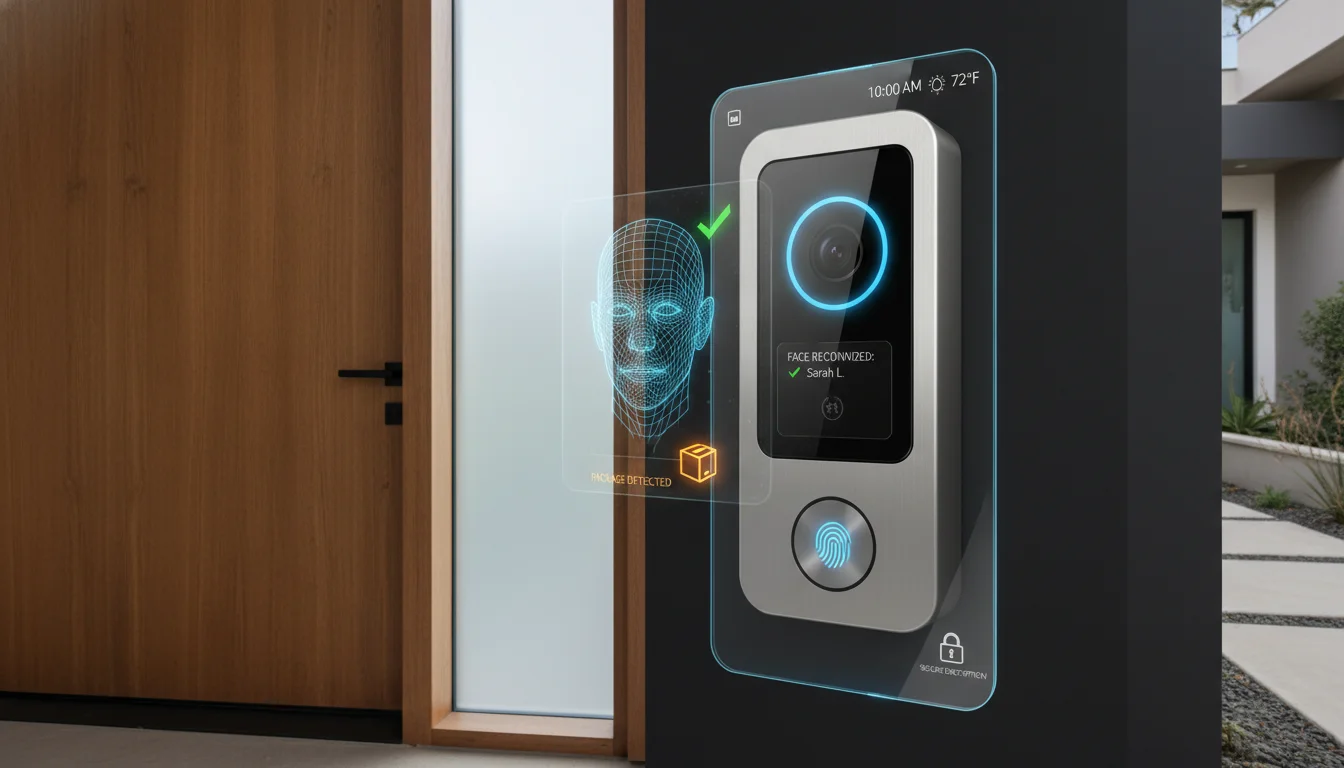
The residential smart home security paradigm has undergone a profound structural and technological transformation over the past decade. Devices that were once categorized as rudimentary, motion-triggered optical cameras have evolved into highly sophisticated, artificial intelligence-driven perimeter defense nodes. As of 2026, the smart video doorbell operates as the central nervous system of residential exterior security architectures, serving simultaneously as a two-way intercom, an automated package monitoring system, a biometric identification tool, and a proactive deterrent against intrusion. The industry landscape is currently defined by a fierce technological arms race among major technology conglomerates—primarily Google, Amazon (Ring), and Arlo—alongside aggressive market disruption from specialized manufacturers such as Eufy and Wyze, who prioritize local storage and edge computing over cloud dependency.
This comprehensive report evaluates the state of the video doorbell market in 2026, analyzing hardware capabilities, the integration of generative and analytical artificial intelligence, and the economic realities of cloud subscription models versus local storage paradigms. Furthermore, the analysis explores the global deployment challenges of these systems, utilizing a specific case study of regional restrictions, payment gateway friction, and e-commerce dynamics in the emerging market of Nepal. The report concludes with an exhaustive technical guide to deployment, electrical installation, and infrastructure requirements for both standard and Power over Ethernet (PoE) configurations.
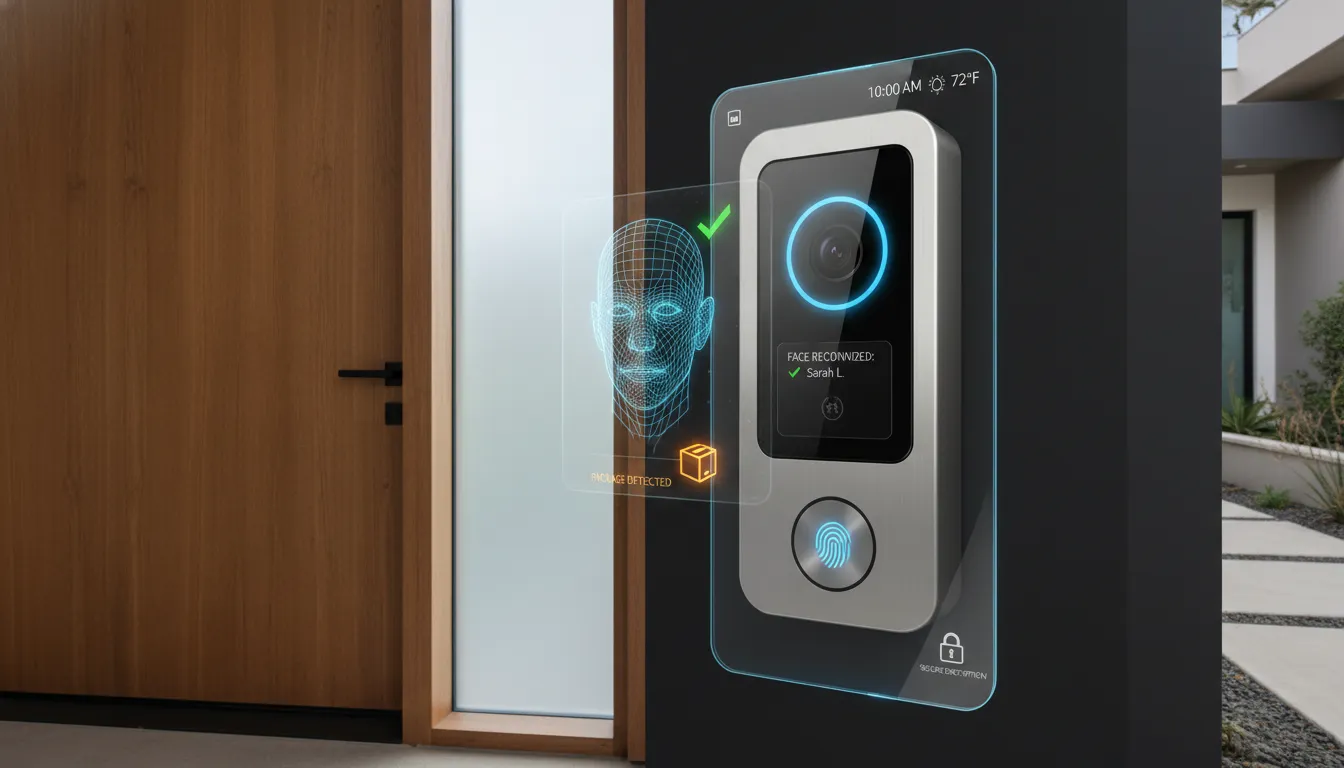
The central thesis defining the current market dynamic is that hardware specifications—once the primary differentiator among competing brands—have largely plateaued at high-definition and ultra-high-definition resolutions. The new battleground for market dominance lies almost entirely within the software ecosystem. Specifically, competition centers on the capability of Large Vision Models (LVMs) to semantically understand live video feeds, the total cost of ownership dictated by heavily tiered subscription architectures, and the data sovereignty offered by decentralized local network storage.
Technical Evaluation and Hardware Architectures of Leading Platforms
The Ultra-Premium Tier: 4K Resolution and 3D Radar Integration
At the absolute apex of the consumer market, the Ring Wired Doorbell Pro represents the most technologically aggressive hardware currently available. Ring’s flagship model distinguishes itself primarily through the implementation of a 4K resolution image sensor—marketed heavily as “Retinal Vision”—which provides unprecedented optical clarity. This massive increase in pixel density allows for the precise, post-incident digital magnification of facial features, clothing details, and license plates at extended distances without the severe pixelation that plagues standard 1080p sensors.
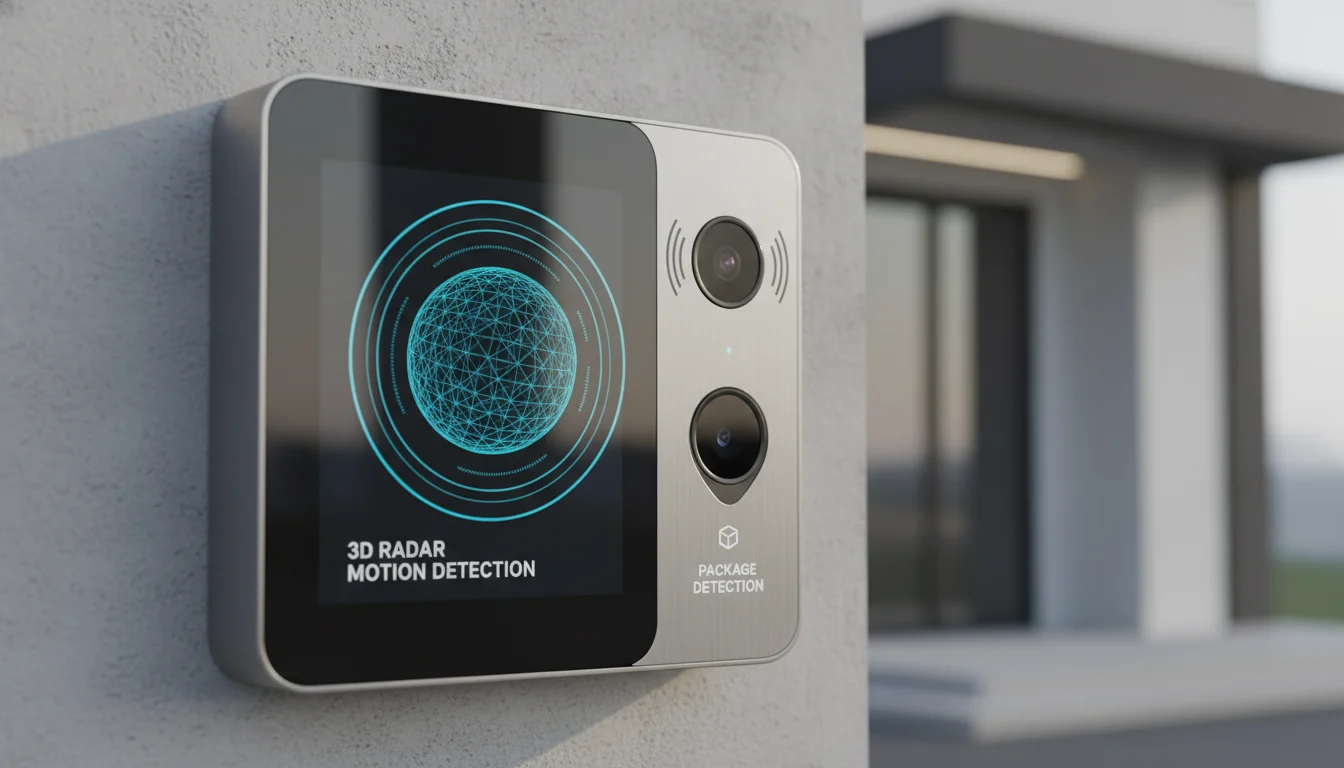
However, the defining technological breakthrough of the Ring Wired Doorbell Pro is its transition away from purely optical, pixel-based motion detection toward physical spatial mapping. The device utilizes an integrated 3D radar module to map the user’s front yard, enabling precise, distance-based motion thresholds. Historically, optical motion detection was easily fooled by shifting shadows, rustling foliage, or passing headlights. The 3D radar system completely circumvents these optical illusions by measuring the physical distance and trajectory of moving objects. This allows the system to differentiate between a subject actively approaching the physical threshold of the property versus innocuous activity occurring on a public sidewalk, drastically reducing the false-positive alert fatigue that has historically plagued the smart camera industry.
The Ecosystem Integrator: Google Nest Doorbell (Wired, 3rd Gen)
Google’s engineering strategy with the Nest Doorbell (Wired, 3rd Gen) emphasizes computational photography, optimal aspect ratios, and deep ecosystem integration over raw hardware supremacy. The device captures video in 2K High Dynamic Range (HDR) at a resolution of 2048 by 2048 pixels. This specific mathematical resolution yields a 1:1 aspect ratio, a deliberate optical engineering choice designed to provide a comprehensive, head-to-toe vertical field of view measuring 166 degrees diagonally. The 1:1 vertical orientation reflects a broader industry recognition that package tracking at the base of the door is equally as critical as facial recognition at eye level.
The 3rd Generation Nest Doorbell relies on advanced H.264 and H.265 encoding to compress high-fidelity video for rapid cloud transmission, minimizing latency for two-way audio communications. It is supported by two high-power 850 nanometer (nm) infrared LEDs that provide nocturnal illumination up to 20 feet, ensuring that the HDR capabilities remain effective in zero-light conditions. The device is offered in multiple aesthetic finishes, including Snow, Hazel, and Linen, to match exterior residential architecture, though its primary value proposition remains its exclusive integration with Google’s Gemini AI.
The Dual-Camera Paradigm and Edge Processing
To solve the blind-spot problem inherent in traditional single-lens systems, the Eufy Video Doorbell E340 utilizes an innovative dual-camera architecture. This hardware consists of a primary forward-facing 2K resolution camera designed for visitor identification and horizon monitoring, combined with a secondary, downward-facing camera dedicated exclusively to package detection. When the system’s local algorithms detect an individual approaching a delivered package, it is capable of automatically playing a pre-recorded deterrence message from its integrated loudspeaker to warn potential porch pirates.
Furthermore, Eufy distinguishes itself through edge computing. Rather than transmitting raw video to a remote server for analysis, the E340 utilizes local artificial intelligence processing within its proprietary HomeBase hub to categorize humans, pets, and vehicles autonomously. This architectural choice reduces notification latency, minimizes broadband bandwidth consumption, and ensures total data sovereignty for the user.
High-Value, Niche, and Peripheral Alternatives
- The Arlo Video Doorbell (2nd Gen) is available in both 1536p and 2K configurations. The Arlo unit provides an expansive 180-degree diagonal field of view, which remains the widest among its direct competitors, effectively eliminating all peripheral blind spots on a standard porch. It also offers the versatility of being operated via an internal battery or hardwired into an existing electrical transformer.
- Serving the cost-conscious demographic, Wyze offers the Video Doorbell Pro and the standard Video Doorbell. The Pro model features 2K QHD video, color night vision, and a 150-degree viewing angle at a sub-$100 price point, proving that high-definition optics have been thoroughly commoditized. It utilizes a 3:4 aspect ratio, prioritizing verticality for package detection.
- The SimpliSafe Video Doorbell Pro is engineered specifically for active intrusion prevention rather than mere convenience. This 1080p hardwired model integrates seamlessly with SimpliSafe’s professional monitoring ecosystem. Its standout feature is “Active Guard Outdoor Protection,” which allows remote human monitoring agents to view the live feed and speak directly to trespassers via two-way audio during overnight hours (typically 8:00 PM to 6:00 AM). This shifts the device from a passive recording tool to an active security presence.
- Finally, specialized models exist for distinct software ecosystems. The Logitech Circle View Wired Video Doorbell is universally cited as the premier option specifically optimized for Apple Siri and the HomeKit Secure Video ecosystem. Meanwhile, the Lorex 1080p Wired Video Doorbell caters to users seeking reliable high-definition performance strictly tied to local Network Attached Storage (NAS) or proprietary Network Video Recorders (NVR), bypassing the cloud entirely.
Comparative Technical Specifications
| Device Model | Video Resolution | Field of View (FOV) | Primary Distinguishing Feature | Base Hardware Cost (Approx.) |
|---|---|---|---|---|
| Ring Wired Doorbell Pro | 4K UHD | Wide | 3D Radar Motion Detection | $249.99 |
| Google Nest Doorbell (3rd Gen) | 2K HDR (2048 x 2048) | 166° Diagonal | Gemini AI Integration & 1:1 Ratio | $179.99 |
| Eufy Video Doorbell E340 | 2K Primary + Secondary | 160° Primary | Dual Cameras & Edge AI | $149.00 - $180.00 |
| Arlo Video Doorbell (2nd Gen) | Up to 2K | 180° Diagonal | Maximum Peripheral Vision | $150.00 |
| Wyze Video Doorbell Pro | 2K QHD | 150° Diagonal | Ultimate Budget Value | $99.00 |
The Generative AI Revolution in Video Surveillance
By 2026, the application of artificial intelligence in home security has progressed far beyond basic pixel-contrast motion detection. Historically, as mentioned, shadows, moving trees, and ambient light changes triggered incessant notifications, leading to user desensitization.
The contemporary standard mandates advanced algorithmic categorization, and the most sophisticated systems now employ Large Language Models (LLMs) and Large Vision Models (LVMs) to semantically contextualize visual data.
Google’s Gemini for Home: Conversational Security
Google has aggressively leveraged its Gemini AI infrastructure to differentiate the Nest Doorbell (3rd Gen) from its competitors. Through the Google Home Premium Advanced subscription, users running Google Home App version 4.0 or higher gain access to “Live Search,” a revolutionary paradigm in camera interaction. Rather than manually scrolling through a timeline of triggered events, a user can query the system conversationally. A homeowner can simply ask their smartphone or smart speaker, “Hey Google, is there a car in the driveway?” or “Did the delivery driver leave a package by the planter?”. Gemini processes the camera’s live and recorded visual stream, understands the semantic meaning of the objects within the frame, and forms a direct natural-language response.
Additionally, Gemini provides highly detailed AI-generated event descriptions and daily activity summaries, condensing hours of footage into readable text narratives. This capability transforms the security camera from a passive archiving tool into an active, intelligent assistant capable of summarizing the day’s events with nuanced context. Gemini’s underlying logic also enhances smart home automation accuracy, allowing specific object detection (e.g., a recognized vehicle pulling into the driveway) to trigger complex lighting and climate control routines.
Ring’s Behavioral Analytics and Alexa Guard
Amazon’s Ring ecosystem counters with a suite of proprietary AI capabilities designed to streamline user notifications and automate deterrence. Ring’s “Familiar Faces” (Beta) feature utilizes sophisticated facial recognition algorithms on its 2K and 4K cameras to learn the biometric signatures of frequent visitors. Once an individual is tagged within the Ring application’s library, the system replaces generic “Person detected” alerts with personalized push notifications, such as “Chris at Front Door”. This empowers users to selectively mute notifications for routine family activities while maintaining strict, high-priority alerts for unrecognized individuals.
Ring also implements “AI Video Descriptions” and “Single Event Alerts” (Beta). Single Event Alerts utilize temporal and spatial continuity algorithms to bundle repetitive, ongoing motion events into a single notification. For instance, a child playing in the front yard for twenty minutes will generate one continuous alert rather than dozens of fragmented, annoying notifications. AI Video Descriptions analyze the scene and append descriptive text directly to the notification banner, allowing the user to understand what triggered the camera without actually opening the application to view the video.
Furthermore, Ring’s “Active Warnings” feature leverages AI to issue automated, highly specific spoken warnings from the camera’s loudspeaker. When a trespasser is detected, the AI can call out specific details, such as their shirt color or physical location, making it abundantly clear to the intruder that they are not just being recorded, but actively identified by an intelligent system. This operates in tandem with Alexa Guard, which unifies the doorbell’s optical sensors with internal acoustic sensors (like Echo devices detecting glass breaking) to form a comprehensive defensive web.
Implications of Algorithmic Surveillance
The integration of these advanced AI models suggests a profound shift in consumer expectations. Users no longer want to act as security guards analyzing raw footage; they expect the system to interpret the footage and deliver actionable intelligence. However, this level of processing requires massive computational power. Because compact devices like the Google Nest and Ring Pro cannot physically house the silicon required to process LLM or LVM queries locally, the video footage must be streamed continuously to external corporate cloud servers. This technological limitation directly dictates the economic structure of the industry, forcing the controversial transition to ongoing Software-as-a-Service (SaaS) subscription models.
Economic Models: Subscription Ecosystems vs. Local Storage Architectures
The Cloud Subscription Hegemony
The leading brands explicitly restrict their most valuable features—and sometimes core operational functionalities—behind strict digital paywalls. Without a subscription, premium devices are frequently reduced to basic live-view intercoms, entirely incapable of saving historical footage, utilizing facial recognition, or identifying specific objects.
The Ring Protect Ecosystem
In January 2026, Ring officially restructured and renamed its legacy “Ring Home” subscription tiers to “Ring Protect” plans. The new architecture aggressively monetizes advanced features across multiple price points:
- Ring Solo: Previously known as Home Basic, this tier is priced at $4.99 per month (or $49.99 annually). It provisions essential cloud infrastructure for a single hardware node, offering video recording, basic smart alerts (person, package, vehicle), and up to 180 days of cloud video playback.
- Ring Multi: Previously Home Standard, this plan covers all Ring devices located at a single geographic address with the features included in the Solo plan.
- Ring AI Pro: Priced at $19.99 per month (or $199.99 annually), this premium tier unlocks the ecosystem’s full potential. It includes 24/7 Professional Monitoring (which can dispatch emergency responders based on alarm triggers), AI Video Descriptions, the Familiar Faces beta, and comprehensive Alexa Guard integration.
- Premium Legacy: A grandfathered tier for users transitioning from the older Protect Plus (1st Gen) or Home Premium plans, maintaining their existing features.
- A La Carte Modules: Ring further monetizes specific capabilities. A user desiring “24/7 Continuous Recording” must pay an additional $3.00 per month per camera, while “Smoke & CO Monitoring” requires an additional $5.00 per month per location.
- Virtual Security Guard: An elite, high-cost tier offering live video monitoring by remote human security professionals who can actively view streams and verbally deter threats in real-time.
Google Nest Aware and Home Premium
Google operates a similarly tiered ecosystem designed to fund its massive Gemini AI infrastructure:
- Included (Free Tier): Extremely limited, providing only 3 hours of historical event tracking or 6 hours of 10-second video previews.
- Google Home Premium Standard (Nest Aware): Priced at $10.00 per month (or $100 annually), equating to approximately €6.00 per month in European markets. This provides 30 days of event-based video history and Familiar Face alerts across all cameras within the home.
- Google Home Premium Advanced (Nest Aware Plus): Priced at $20.00 per month (or $200 annually), equating to approximately €12.00 per month in Europe. This unlocks 60 days of event history, 10 days of continuous 24/7 video recording, and the full suite of Gemini-powered live search and natural language summarization features.
Arlo Secure and Wyze Cam Plus
Arlo requires an “Arlo Secure” subscription, starting at $9.99 per month for a single camera, to unlock its rolling 30-day cloud history and smart detection features. Wyze offers a highly disruptive, budget-oriented pricing model; its “Cam Plus” plan costs a modest $2.99 per month per camera for unlimited event recording and AI alerts. However, to access emergency dispatch and facial recognition, users must upgrade to the “Cam Unlimited Pro” tier at $19.99 per month.
The Resurgence of Local Storage Architectures
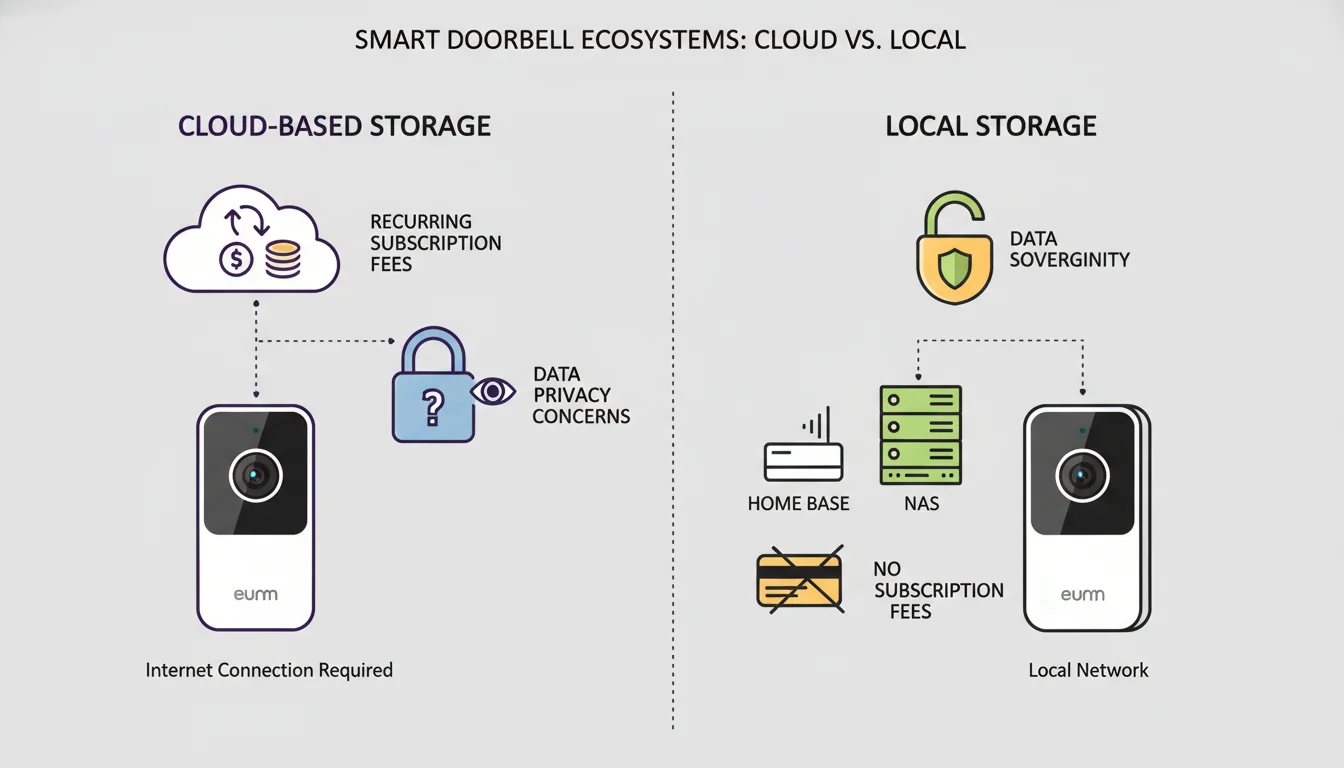
A rapidly growing segment of the consumer base is experiencing profound “subscription fatigue”. Acknowledging that the average doorbell subscription costs $5 to $10 per month for basic features, consumers are effectively paying $180 to $360 in software fees over three years, which routinely exceeds the base value of the physical hardware. Furthermore, transmitting highly sensitive home surveillance data to centralized corporate servers raises persistent privacy concerns regarding unauthorized access, government subpoenas, and corporate data monetization.
This environment has catalyzed the explosive popularity of local storage models, championed by brands like Eufy and Reolink. The Eufy Video Doorbell E340 requires absolutely zero monthly fees to operate at full capacity. Footage is cryptographically encrypted and stored locally on the user’s premises via the Eufy HomeBase, which houses expandable hard drive storage (ranging from integrated solid-state memory to multi-terabyte external SATA drives).
The strategic advantage of local storage is multifold:
- Economic Efficiency: Complete elimination of recurring Software-as-a-Service costs.
- Data Sovereignty: Footage remains entirely under the physical and cryptographic control of the homeowner, drastically reducing the attack surface for external hackers or mass corporate data breaches.
Network Resilience
High-definition video is recorded directly to local drives even if the home’s broadband internet connection is severed by weather or intruders, whereas cloud-dependent cameras permanently cease recording the moment external internet connectivity drops.
Three-Year Total Cost of Ownership Analysis
To illustrate the vast economic disparity between ecosystems, an analysis of the Three-Year Total Cost of Ownership (TCO) highlights why hardware MSRP is a fundamentally misleading metric for smart home procurement.
| Device Ecosystem | Estimated Hardware Cost | Required Tier for AI/History | Monthly Subscription | 3-Year Subscription Total | Total 3-Year TCO |
|---|---|---|---|---|---|
| Eufy E340 (Local) | $180.00 | None (Local Edge AI) | $0.00 | $0.00 | $180.00 |
| Ring Wired Pro (1 Cam) | $249.99 | Ring Solo | $4.99 | $179.64 | $429.63 |
| Google Nest (1 Cam) | $179.99 | Premium Standard | $10.00 | $360.00 | $539.99 |
| Arlo 2nd Gen (1 Cam) | $150.00 | Arlo Secure | $9.99 | $359.64 | $509.64 |
| Ring Wired Pro (AI Pro) | $249.99 | Ring AI Pro | $19.99 | $719.64 | $969.63 |
Note: The table assumes standard monthly billing. Annual billing discounts apply but do not fundamentally alter the vast economic delta between local and cloud-dependent models.
Global Deployment Challenges: A Case Study on Regional Restrictions
While the technological discourse surrounding smart doorbells is largely framed from a North American or European perspective, the global deployment of these devices reveals profound systemic friction. A close examination of the consumer experience in the emerging market of Nepal highlights the critical vulnerabilities of cloud-dependent security architectures when exported outside designated corporate service regions.
E-commerce Availability and Parallel Imports
In Nepal, major smart home brands such as Amazon Ring and Google Nest do not maintain official, direct-to-consumer corporate presences. Instead, the market is supplied entirely through parallel imports and third-party e-commerce platforms such as Daraz, Hamrobazaar, and specialized high-end tech retailers like Oliz Store.
A survey of the Nepali e-commerce landscape reveals a thriving, albeit chaotic, marketplace for video doorbells. Consumers can purchase premium imported devices like the Amazon Ring Video Doorbell Wired for approximately Rs. 20,000, alongside high-end local storage solutions from Eufy. Simultaneously, the market is flooded with lower-cost, generic imports originating from regional manufacturers. These generic systems heavily rely on universal Internet of Things (IoT) platforms like Tuya or V380, offering standard 1080p and Wi-Fi intercom functionalities with price points ranging drastically from Rs. 2,800 for basic battery models to over Rs. 23,000 for complex multi-screen villa integrations featuring RFID unlock capabilities.
The Financial Firewall: Subscription Payment Failures
The critical failure point for premium smart doorbells in Nepal is not hardware operability or internet bandwidth, but financial infrastructure. Devices like Ring, Google Nest, and Arlo are intrinsically designed as loss-leaders attached to geographic-specific subscription services. Ring explicitly states in its terms of service that features and services “may vary by country,” and Arlo’s professional monitoring and 24/7 emergency response features are strictly geofenced to North America.
When a consumer in Kathmandu imports a Ring or Arlo device, they encounter a highly restrictive “financial firewall” when attempting to subscribe to Ring Protect or Arlo Secure. These platforms utilize advanced international payment processors (such as Stripe) that verify the Bank Identification Number (BIN) of the submitted credit or debit card. Because these major tech companies do not officially support subscriptions or direct billing in Nepal, payments attempted with Nepali-issued banking cards are systematically declined, even when valid international transaction limits and dollar-exchange facilities are enabled by the local bank.
Consumers attempting to circumvent these geofences often employ Virtual Private Networks (VPNs) to spoof United States or European IP addresses during the initial account creation phase. However, this strategy ultimately fails during the final payment gateway process, as the system demands a payment method originating from the spoofed region (e.g., a US billing address combined with a US-issued credit card). The result is a highly frustrating consumer experience: a homeowner invests upwards of Rs. 20,000 in a premium 4K camera, only to discover it functions as little more than a standard live-view peephole because the cloud storage and AI capabilities are permanently inaccessible due to regional banking incongruities.
Strategic Market Adaptation
This geopolitical friction heavily dictates consumer strategy in developing technological ecosystems. Due to the exceptionally high risk of cloud-subscription lock-out, the optimal deployment architecture for regions like Nepal heavily favors local storage and decentralized processing.
Devices from Eufy, Reolink, and the multitude of Tuya-based generic systems do not require international subscription gateways to function at full capacity. By utilizing localized MicroSD cards, proprietary base stations, or integrated Network Attached Storage (NAS) devices, consumers achieve the required high-definition security monitoring without the persistent threat of remote feature deprecation or payment gateway rejection. Consequently, in regions subject to global software geofencing, local-storage hardware isn’t merely a cost-saving measure; it is a fundamental prerequisite for functional operability.
Comprehensive Deployment Architectures and Installation Guidelines
The physical installation of a smart video doorbell represents a critical juncture where consumer electronics intersect directly with residential electrical engineering. The choice of deployment architecture—hardwired electrical integration versus self-contained battery operation—profoundly influences the device’s operational stability, thermal performance, and ultimate feature availability.
The Dichotomy of Power: Wired vs. Battery Ecosystems
Battery-Powered Systems: Wireless, battery-operated doorbells offer ultimate deployment flexibility and ease of installation. These units can be mounted on virtually any exterior surface—stucco, brick, or vinyl siding—without requiring physical proximity to existing electrical infrastructure or internal chime boxes. Installation simply involves charging the internal or removable lithium-ion battery via a standard USB interface, mounting the bracket using standard masonry or wood screws, and clipping the device into place.
However, this convenience introduces strict operational limitations. To conserve battery life, wireless doorbells must remain in a low-power “sleep” state until physically awakened by a passive infrared (PIR) motion sensor. This wake-up latency can result in the camera failing to record the critical initial seconds of an event, famously resulting in security footage consisting entirely of the backs of delivery personnel walking away. Furthermore, battery-operated models are generally incapable of 24/7 continuous video recording (CVR), cannot utilize power-intensive 3D radar or constant algorithmic video-based motion analysis, and suffer from severely degraded performance or rapid battery drain in extreme winter temperatures.
Hardwired Systems: Hardwired doorbells draw continuous low-voltage alternating current (AC) power directly from the home’s electrical grid, typically utilizing the pre-existing copper bell wire infrastructure left behind by mechanical doorbells. This uninterrupted power supply fundamentally changes how the camera operates. It enables advanced pre-roll recording (capturing several seconds of video before a motion event is officially triggered by maintaining a rolling cache in RAM), continuous 24/7 video recording to local or cloud servers, constant radar emissions, and significantly faster application load times. While the physical installation is considerably more complex, professional analysts unequivocally recommend hardwired deployments for their superior reliability and the elimination of recurring battery maintenance.
Electrical Parameters and Transformer Specifications
The most pervasive point of failure during a hardwired installation is insufficient electrical current. Traditional mechanical doorbells only require a momentary, split-second surge of power to strike a physical chime. Conversely, a smart doorbell operates as an always-on microcomputer, streaming high-definition video over Wi-Fi, running local AI algorithms, while simultaneously powering infrared night-vision LEDs.
To support these constant demands, specific transformer outputs are strictly required. Voltage is measured in Volts Alternating Current (VAC), while total power capacity is measured in Volt-Amperes (VA).
- Basic Requirements: Most standard smart doorbells, including SimpliSafe and entry-level battery-hybrid Ring models, require a transformer output of 8 to 24 VAC.
- High-Demand Requirements: Premium, feature-dense models, such as the Google Nest Doorbell (Wired, 3rd Gen) and the Ring Wired Doorbell Pro (alongside the 3rd Gen model), require a stricter minimum of 16 to 24 VAC, with a power rating spanning between 10VA and 40VA.
If a legacy transformer (e.g., an older 10V, 5VA unit) is utilized for a modern premium doorbell, the device will suffer from localized brownouts.
Symptoms of an underpowered circuit include continuous reboot loops, failure to connect to Wi-Fi networks, the mechanical indoor chime buzzing constantly, or the camera shutting down entirely the moment the infrared LEDs are activated at night due to power draw. In such instances, a licensed electrician must locate and replace the home’s doorbell transformer, which is typically hidden near the main breaker panel, in an attic, or within a utility closet.
Step-by-Step Technical Deployment for Hardwired Systems
Installing a hardwired system necessitates strict adherence to electrical safety protocols. The following methodology synthesizes manufacturer guidelines for a safe, stable, and code-compliant deployment:
- Circuit Isolation: Installation must begin at the home’s main consumer unit (breaker box). The specific circuit breaker governing the doorbell and surrounding hallway lighting must be switched to the “Off” position to eliminate the risk of lethal electrical shock or short-circuiting the transformer.
- Indoor Chime Modification: To ensure the smart doorbell receives constant power without inadvertently triggering the indoor bell to ring endlessly, the mechanical chime box must be modified. Depending on the brand, an included “chime kit,” “Pro Power Kit,” or bypass cable must be installed across the “Front” and “Trans” (Transformer) terminals within the chime box. For specific models connecting to older electronic or digital chimes, an inline diode may be required to regulate the current.
- Hardware Removal and Preparation: The legacy doorbell button is unscrewed from the exterior wall, and the two low-voltage wires are gently extracted. If the existing wires are too short or brittle, wire extenders and wire nuts are utilized to create a sufficient, workable lead.
- Bracket Mounting: The mounting bracket is leveled and secured. Many manufacturers include an optional angle wedge or corner mount, used to physically pivot the camera to optimize the field of view away from parallel walls. For masonry surfaces, a 1/4-inch or 3/16-inch masonry drill bit is required to insert the provided wall anchors before driving the screws.
- Electrical Termination: The exposed copper leads of the two doorbell wires are looped around the screw terminals on the rear of the smart doorbell and securely tightened. Because the system utilizes alternating current (AC), the polarity of the wires generally does not matter; either wire can connect to either terminal without causing damage.
- Physical Securing and Activation: The device is hooked onto the mounting bracket and locked into place utilizing a specialized proprietary security screw (usually a small Torx or star-head design) inserted from the bottom to deter physical theft. Power is then restored at the main breaker, allowing the device to boot, initialize its LED ring, and enter its Wi-Fi configuration state, which is completed via the manufacturer’s smartphone application.
Next-Generation Deployment: Power over Ethernet (PoE)
An emerging architecture in 2026 is the adoption of Power over Ethernet (PoE), specifically featured in enterprise-grade residential units like the Ring Wired Doorbell Pro (3rd Gen).
PoE infrastructure eliminates reliance on variable AC transformers and potentially volatile 2.4GHz or 5GHz Wi-Fi networks. Instead, a single Category 5 (Cat5) or Cat6 ethernet cable is routed from a centralized PoE+ switch directly through the walls to the rear of the doorbell. This single cable delivers highly stable Direct Current power while simultaneously facilitating a hardwired gigabit data connection.
During installation of a PoE model, the installer mounts the bracket, plugs the ethernet cable into an included PoE adapter or directly into the unit, and connects it to the network switch. This architecture is virtually immune to wireless de-authentication attacks, signal interference from dense masonry or metal siding, and common Wi-Fi latency. It represents the absolute pinnacle of residential deployment stability, ensuring that high-bandwidth features like 4K video streaming and 24/7 continuous recording operate flawlessly without saturating the home’s wireless spectrum.
Synthesized Market Conclusions
The 2026 smart video doorbell market represents a mature, highly segmented industry where optical hardware serves merely as a conduit for advanced software processing. The integration of 4K sensors, 3D radar motion detection, and dual-lens package-monitoring architectures ensures that modern devices capture environmental data with immaculate optical precision. However, the fundamental differentiator in the modern marketplace lies entirely in how that data is processed, understood, and monetized.
Google’s Gemini integration and Ring’s proprietary AI algorithms signal a definitive shift toward conversational, context-aware smart home security. These systems offer unparalleled convenience by mathematically summarizing video events and allowing users to query their cameras via natural language. Yet, this convenience is explicitly tethered to a restrictive, high-margin subscription ecosystem that fundamentally alters the cost calculus of home security.
Consumers evaluating these systems must look beyond the initial retail price and conduct a holistic Total Cost of Ownership analysis. Ecosystems heavily reliant on cloud infrastructure easily command $400 to nearly $1000 over a standard three-year lifespan. Conversely, models utilizing local edge processing, such as the Eufy E340, provide massive economic relief and enhanced data privacy by eschewing monthly fees entirely.
Furthermore, the structural failure of cloud subscription models in unsupported geographic regions—as evidenced by the payment gateway barriers in emerging markets like Nepal—highlights the fragility of geofenced software. For consumers residing outside the primary operational zones of Amazon and Google, or those who simply prioritize absolute data sovereignty and financial efficiency, local storage architectures are not merely the superior choice; they are the only viable long-term solution.
Ultimately, maximum operational reliability is achieved by abandoning battery power in favor of robust hardwired electrical integrations—or preferably, PoE networks—ensuring that the sophisticated AI processing required by modern security parameters is never starved of electrical current or throttled by wireless network instability.