Open Source Schools: Saving Money with Linux & Moodle in Nepal
I recently visited a community school that had a brand new computer lab. The hardware was decent. But the computers were locked.
“Why aren’t the students using them?” I asked. “We are waiting for the Windows license budget,” the Principal said.
This broke my heart.
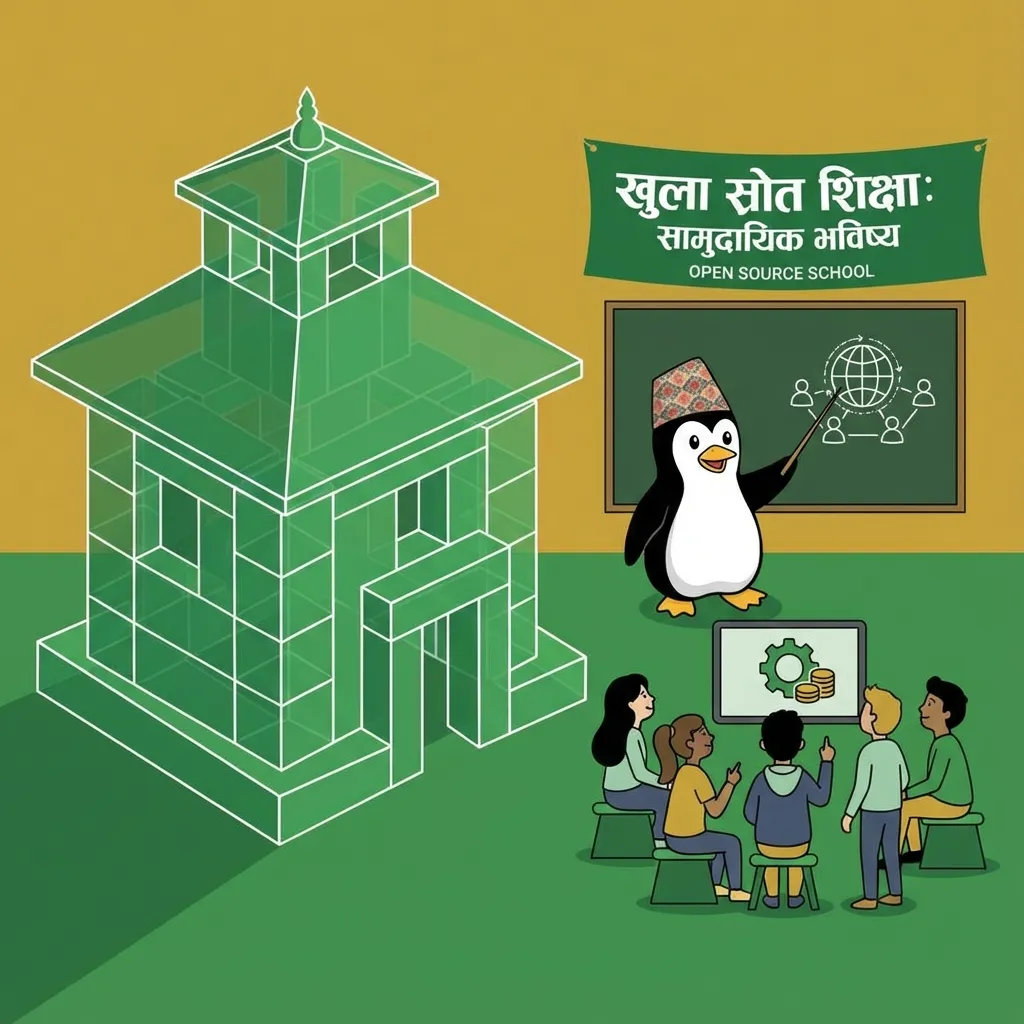
We are letting legal bureaucracy stop education. And the irony is, we don’t need those licenses. We have Open Source.
What is Open Source?
Imagine a recipe for Momo.
- Proprietary Software (like Windows/Microsoft Office): You can buy the Momo, but you can’t see the recipe. You can’t change the recipe. If you try to share the Momo with a friend, you get arrested.
- Open Source Software (like Linux/LibreOffice): You get the Momo and the recipe. You can change it. You can make 1,000 copies for your friends. It belongs to the community.
The “Linux Lab” Advantage
For the price of zero rupees, you can install Ubuntu or Linux Mint on every old computer in your school.
- No Viruses: Linux is practically immune to the pendrive viruses that plague Nepali computer labs.
- Fast on Old Hardware: It runs smoothly on computers that would choke on Windows 11.
- Coding Ready: It comes with Python, GCC, and other developer tools pre-installed.
Moodle: Your Digital Campus
Instead of paying for expensive “School Management Systems,” use Moodle. It is the world’s most popular learning platform. It is what universities like Tribhuvan University and Kathmandu University use.
- Host quizzes.
- Upload assignments.
- Track grades.
Yes, it takes some technical skill to set up. But that is why we need Teacher Developers.
A Call to Action for Principals
Stop spending your limited budget on software rent. Use that money to buy better internet. Buy a projector. Pay your teachers better.
Switch to Open Source. It is not just cheaper; it is better education.
Related Posts and Resources
- Low-Tech, High-Impact Teaching in Nepal
- Coding for Teachers in Nepal
- Data-Driven Grading for Educators
- Gamification in Nepali Classrooms
- Cyber Hygiene for Students and Teachers
- Flipped Classroom in Nepal
- CS Unplugged Activities in Nepal
- School Wi-Fi Budget Planning
- AI-Based Assessment in Nepal
- Digital Marketing in Nepal (Complete Guide)