Session 4: SEM & Paid Search
While SEO is a long-term strategy, Search Engine Marketing (SEM)—specifically Google Ads—allows you to buy your way to the top of the search results immediately. Today we focus on Pay-Per-Click (PPC) advertising on the search network.
View lecture slides: Session 4 Slides
1. Pre-Work: PPC Mechanics & Quality Score
In PPC, you only pay when someone clicks your ad. However, Google doesn’t just show the ad of the person who bids the highest. They use a metric called Ad Rank.
Ad Rank ≈ Max CPC Bid × Quality Score × Expected Impact of Ad Assets (extensions)
Quality Score and ad assets (sitelinks, callouts, call extensions, etc.) both influence whether you win the auction and what you pay. The highest bidder does not always win.
The Quality Score
Google assigns a Quality Score (1-10) to your keywords based on three factors:
- Expected Click-Through Rate (CTR): How likely are people to click your ad?
- Ad Relevance: Does your ad copy match the user’s search intent?
- Landing Page Experience: When they click, does your sandbox website deliver what the ad promised? Is it fast and mobile-friendly?
High Quality Score = Lower Cost Per Click (CPC) and Better Ad Positions.
Keyword Match Types
To control who sees your ads, you use match types:
- Broad Match (
keyword): Reaches the widest audience, but lowest intent. (e.g., searches for “free shoes” might trigger your ad for “buy running shoes”). - Phrase Match (
"keyword"): Searches that include the meaning of your keyword. - Exact Match (
[keyword]): Searches that are exactly your keyword or close variants. Highest intent, highest cost. - Negative Keywords: Terms you don’t want to show up for (e.g.,
-free,-cheap).- Manager’s Note: A robust negative keyword list is the single most effective way to prevent wasted ad spend. It ensures you don’t pay for clicks from people seeking free information or unrelated products.
2. Lab Session: Structuring a Google Ads Campaign
Today, we will navigate the Google Ads interface and build a mock campaign structure for your sandbox. (Note: No real money will be spent. This is a structural exercise).
Campaign Structure
A well-organized account is crucial for success.
mindmap
  root((Google Ads Account))
    Campaign 1 Brand Terms
      Ad Group Brand Name
        Keywords
        Ad Copy A
        Ad Copy B
    Campaign 2 Non-Brand Commercial
      Ad Group Product A
        Keywords
        Ad Copy A
        Ad Copy B
      Ad Group Product B
        Keywords
        Ad Copy A
        Ad Copy B
Writing Effective Ad Copy (A/B Testing)
You should never write just one ad. Always write at least two variations to see which performs better (A/B testing).
- Ad A: Focus on features/price.
- Ad B: Focus on emotional benefits/urgency.
Budget Allocation & Bidding
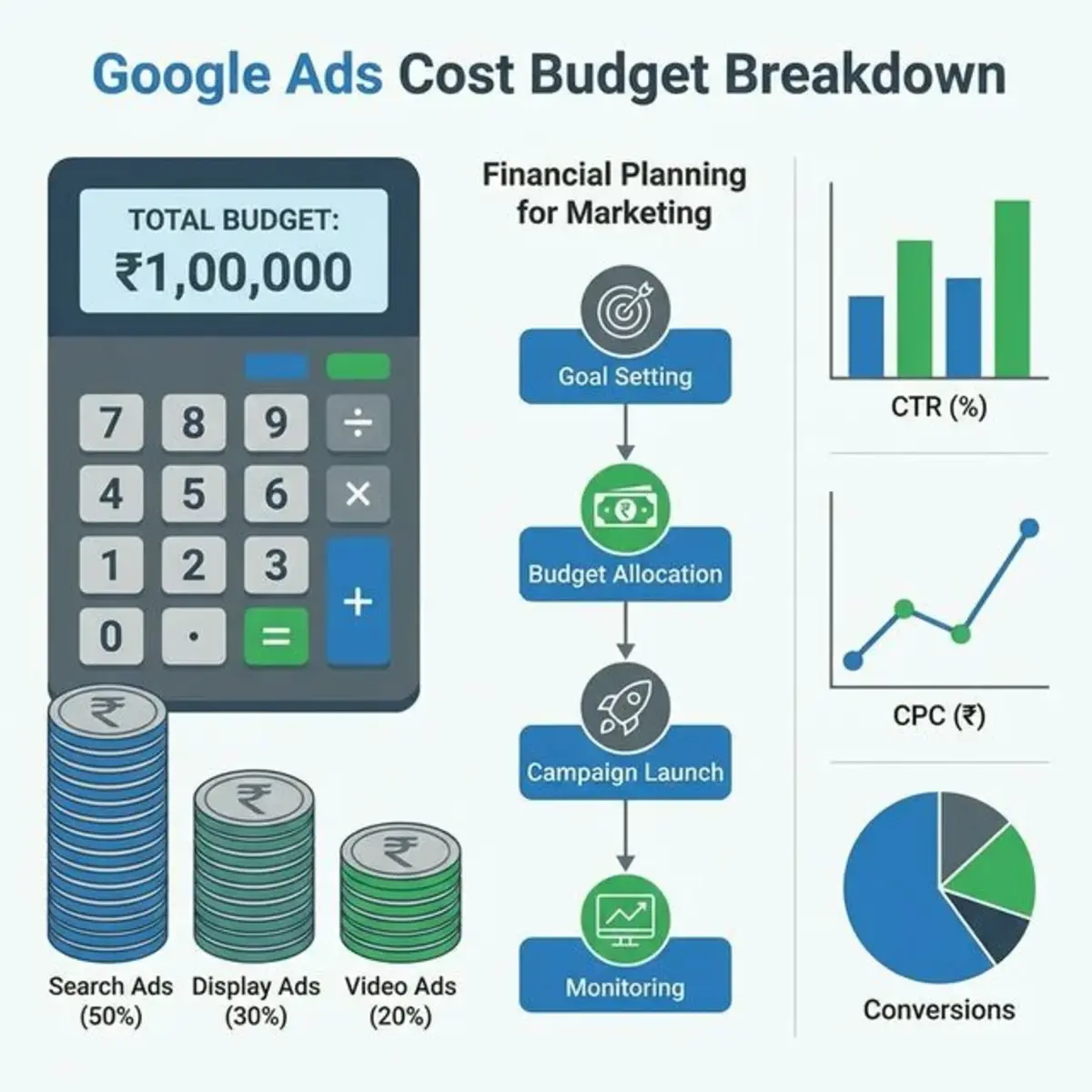
How much should you bid? This ties back to Session 1. Example (NPR): If customer LTV is NPR 15,000 and the site converts clicks to customers at 5%, max affordable CAC for a 3× LTV:CAC target is NPR 5,000—so max CPC ≈ NPR 250 before other costs. We will run this calculation in the lab.
Automated vs. Manual Bidding (Manager’s Choice) Modern SEM relies heavily on machine learning.
- Manual CPC: You set the exact maximum amount you’ll pay per click. Good for brand new accounts with no data, giving you tight budget control.
- Maximize Conversions: Google automatically sets bids to get the most conversions within your budget. Requires conversion tracking to be perfectly set up.
- Target CPA (Cost Per Acquisition): You tell Google what you are willing to pay for a lead (e.g., NPR 2,500), and the algorithm adjusts bids dynamically.
- Target ROAS (Return on Ad Spend): Used mostly in E-commerce where conversion values vary. Note: Automated bidding algorithms need data (typically 15-30 conversions in 30 days) to function properly. Do not switch to Target CPA on day one.
Real-world proof (SEM)
Kathmandu home services Search (90 days): CPA NPR 4,722 → 2,571 (−42%), conversions 18 → 28/mo, wasted query spend ~35% → ~8% — on less monthly spend after restructuring.
Teaching brief: Home services Google Ads
Education consultancy (same NPR 300k/mo spend, 6 months): CPL −40%, leads ~2×, landing CVR 2.1% → 6.8%, reported ROAS 1.8× → 5.2×.
Brief: Education PPC
Pattern for your mock plan: negatives → themed ad groups → matching landing page → then smart bidding.
Try it: ROAS calculator
Enter Nepal campaign numbers (use NPR). ROAS = revenue ÷ ad spend.
Try it: CPA calculator
Cost per acquisition = ad spend ÷ conversions.
Self-check: CAC vs CPA
A Google Ads campaign spends NPR 40,000 and gets 20 form leads. Ten of those leads become paying customers. What is CAC for this channel?
3. Deliverable
Use the MBA DM Deliverable Toolkit (Templates + Samples) before submitting.
A documented campaign structure with ad variations and a brief rationale.
- Outline 1 mock Campaign and 2 Ad Groups.
- List 5-10 keywords (with match types) and at least 5 Negative keywords.
- Write two text ad variations (A/B test) for one of the ad groups.
- Provide a short explanation of your proposed budget and bid strategy.
Submit the document before the start of Session 5.
Quick check — Session 4
A higher bid always wins the Google Ads auction, regardless of Quality Score.
4. Summary & Review
Paid search captures existing demand. Google’s auction ranks ads by bid, Quality Score (expected CTR, ad relevance, landing-page experience) and the expected impact of assets, so relevance can beat a bigger bid. A clean structure (campaign → tightly themed ad groups → keywords → ads) and sensible match types with negative keywords keep spend focused. Budgets and bidding strategies should follow conversion data: manual control while learning, automated bidding once tracking and volume are reliable.
Key Takeaways
- Relevance lowers cost: improve Quality Score before raising bids.
- Tightly themed ad groups with matching landing pages.
- Use negative keywords to stop wasted spend.
- Automated bidding needs reliable conversion tracking and volume.
Review Questions
Short answer
- Name the three components of Quality Score.
- Compare broad, phrase and exact match.
- When is automated bidding appropriate?
Applied (case) questions
- Design a Google Ads structure (two ad groups, five keywords each, three negatives) for a Kathmandu laptop repair shop.
- Your campaign spends NPR 20,000 a month but gets few leads. List the first five things you would check.