Unit 2: Organizational Strategy, Business Processes, and Competitive Advantage
This unit explores the critical relationship between organizational strategy, the business processes that execute that strategy, and the role of Information Systems (IS) in achieving a sustainable competitive advantage.
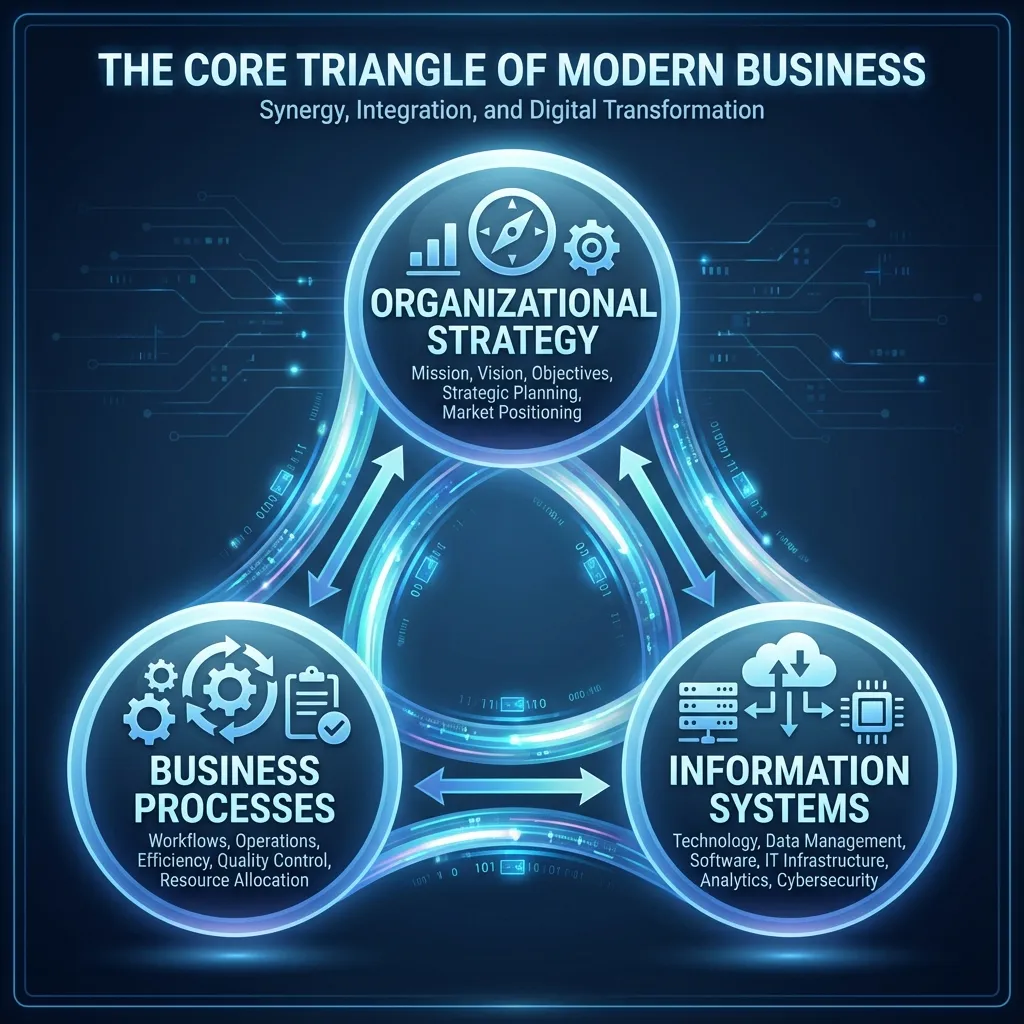 Figure 1: The Core Alignment Triangle - Strategy, Process, and IT
flowchart TB
    subgraph ALIGNMENT["Strategy-Process-IS Alignment"]
        STRATEGY["🎯 Organizational\nStrategy"]
        PROCESS["⚙️ Business\nProcesses"]
        IS["💻 Information\nSystems"]
    end

    STRATEGY -->|"Defines"| PROCESS
    PROCESS -->|"Enabled by"| IS
    IS -->|"Supports"| STRATEGY

    ALIGNMENT --> CA["🏆 Competitive Advantage"]

    style CA fill:#2d5016,color:#fff
Figure 2: The Strategic Alignment Triangle
We will examine how businesses operate through a series of interconnected processes and how they must constantly adapt to business pressures from the business environment—including market forces, technological changes, and societal expectations.
Most importantly, we will see how organizations leverage information technology not just to support daily operations, but to create powerful strategic advantages in the marketplace. Understanding this alignment between strategy, process, and technology is the key to using IT for true business transformation.
What This Unit Covers
| Chapter | Topic | Key question |
|---|---|---|
| 2.2 | Business processes | What is a business process, and what are its inputs, activities, and outputs? |
| 2.3 | BPI and BPR | Should a process be improved step by step or redesigned from scratch? |
| 2.4 | Business process management | How do firms manage processes continuously? |
| 2.5 | Business pressures | Which market, technology, and societal pressures force change? |
| 2.6 | Organizational responses | How do firms respond to those pressures with IT? |
| 2.7 | Competitive advantage | How can IS help a firm beat its rivals (Porter’s models)? |
Why This Unit Matters
- Every system you will meet in this course supports a business process. If you cannot describe the process, you cannot choose or improve the system.
- Managers are judged on results under pressure: falling margins, new competitors, and changing customer expectations. This unit gives you the tools to analyse those pressures.
- Porter’s competitive forces model and value chain model are common exam topics and practical tools for strategy discussions.
Key Terms
| Term | Meaning |
|---|---|
| Business process | A set of related activities that produces a product or service for a customer |
| BPI | Business process improvement: incremental changes to an existing process |
| BPR | Business process reengineering: radical redesign of a process |
| BPM | Business process management: ongoing modelling, monitoring, and improvement of processes |
| Competitive advantage | An edge over rivals in cost, quality, speed, or differentiation |
| Value chain | The sequence of primary and support activities that add value to a product |
The Nepal Context
Nepali organisations face many of the same pressures: customers expect digital payments and fast service, imported goods compete on price, and regulators require electronic records such as online VAT returns. Banks have redesigned account opening around online forms and e-KYC; retailers have added QR payments and online ordering. Where firms only automate an old paper process without rethinking it, the benefits are usually small.
Key Takeaways
- A business process is a set of related activities that turns inputs into an output of value to a customer; information systems exist to support these processes.
- Business process improvement (BPI) fixes an existing process step by step, while business process reengineering (BPR) redesigns it from scratch; BPR promises bigger gains but carries more risk.
- Business process management (BPM) treats process improvement as a continuous activity rather than a one-off project.
- Market, technology, and societal pressures force firms to change; they respond with strategic systems, customer focus, make-to-order production, and e-business.
- Porter’s competitive forces model explains where industry pressure comes from, and the value chain model shows where IS can add value inside the firm.
Unit Review Questions
Short answer
- What is a business process? Give one example from a bank or a retail shop.
- Distinguish between BPI and BPR.
- Name the five forces in Porter’s competitive forces model.
Long answer
- Explain the relationship between organizational strategy, business processes, and information systems.
- Discuss the major business pressures facing organizations today and how IT helps firms respond to them, with examples from Nepal.