Unit 2.6
Organizational Responses & IT Support
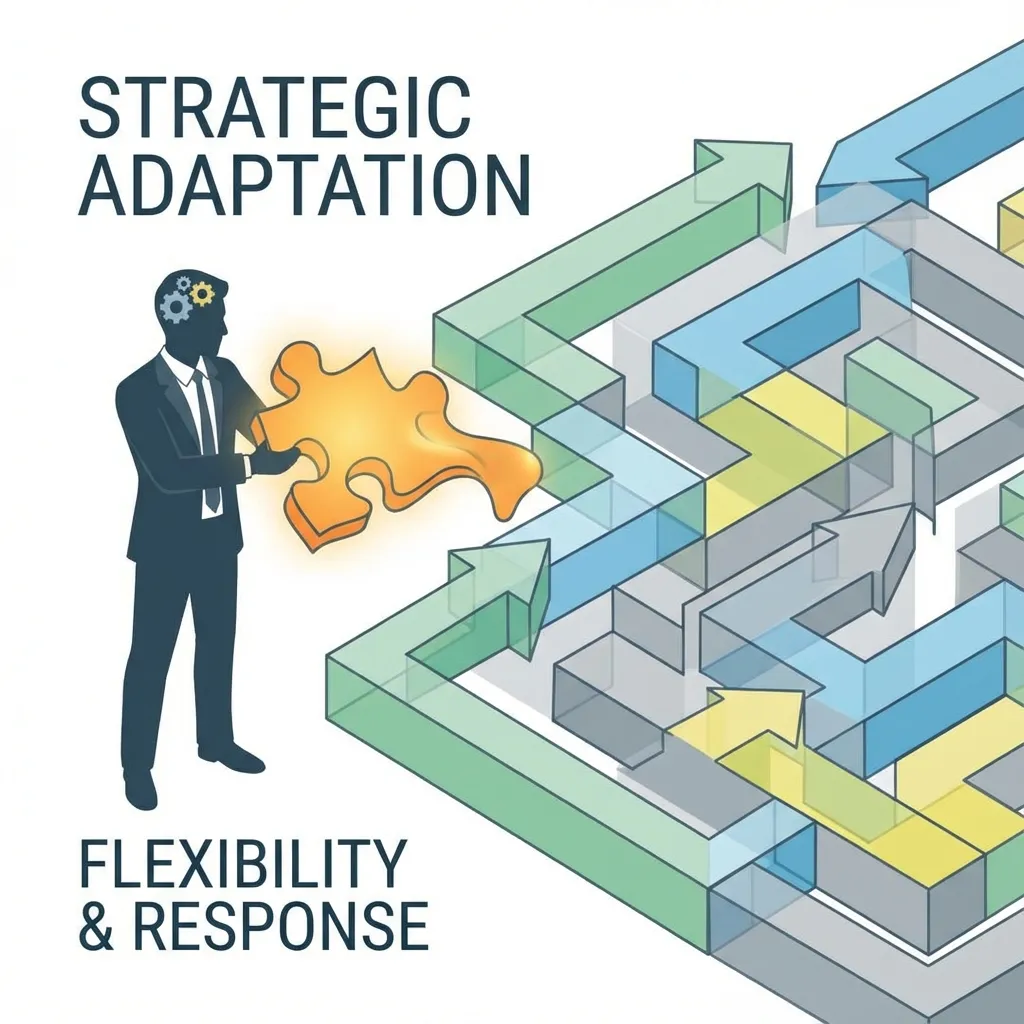
Responding to Pressures
How do organizations survive market, technology, and societal pressures?
They must respond strategically to turn these pressures into opportunities.
- Strategic Systems
- Customer Focus
- Make-to-Order
- E-Business
- Business Alliances
IT is the enabler for all of these responses.
Quick Check: Classify the Response
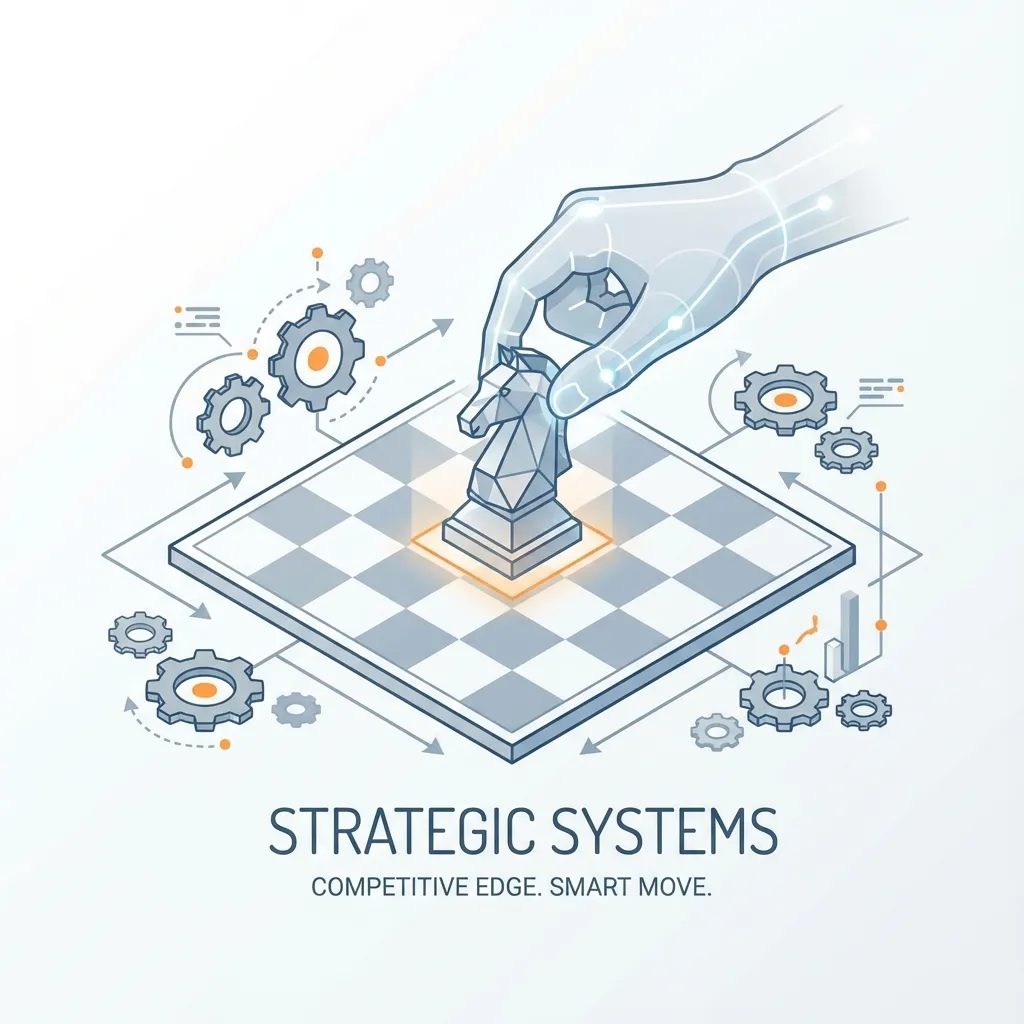
1. Strategic Systems
Strategic Information Systems (SIS) provide a competitive advantage by helping an organization to:
- Implement Goals: Directly support the business strategy (e.g., low cost leader vs. premium service).
- Increase Productivity: Doing more with less.
- Combat Forces: Help deal with competitive threats (Porter's 5 Forces).
Example: Walmart's inventory management system minimizes stock and reduces waste, allowing for lower prices that competitors cannot match.
SIS Knowledge Check
⚔️ How IT Helps Fight Porter's Five Forces
| Force | IT response |
|---|---|
| Threat of new entrants | Large systems and data that newcomers can't easily copy |
| Bargaining power of buyers | Loyalty programs and saved preferences that raise switching costs |
| Bargaining power of suppliers | Online sourcing to compare many suppliers quickly |
| Threat of substitutes | New digital services that keep customers with you |
| Rivalry among competitors | Better analytics for faster, cheaper, more personal service |
An SIS is any system that changes one of these forces in your favour.
2. Customer Focus
Goal: Provide superb customer service to retain customers.
Organizations must shift from being product-centric to customer-centric.
- Why? Powerful customers create high pressure. If you don't treat them well, they leave.
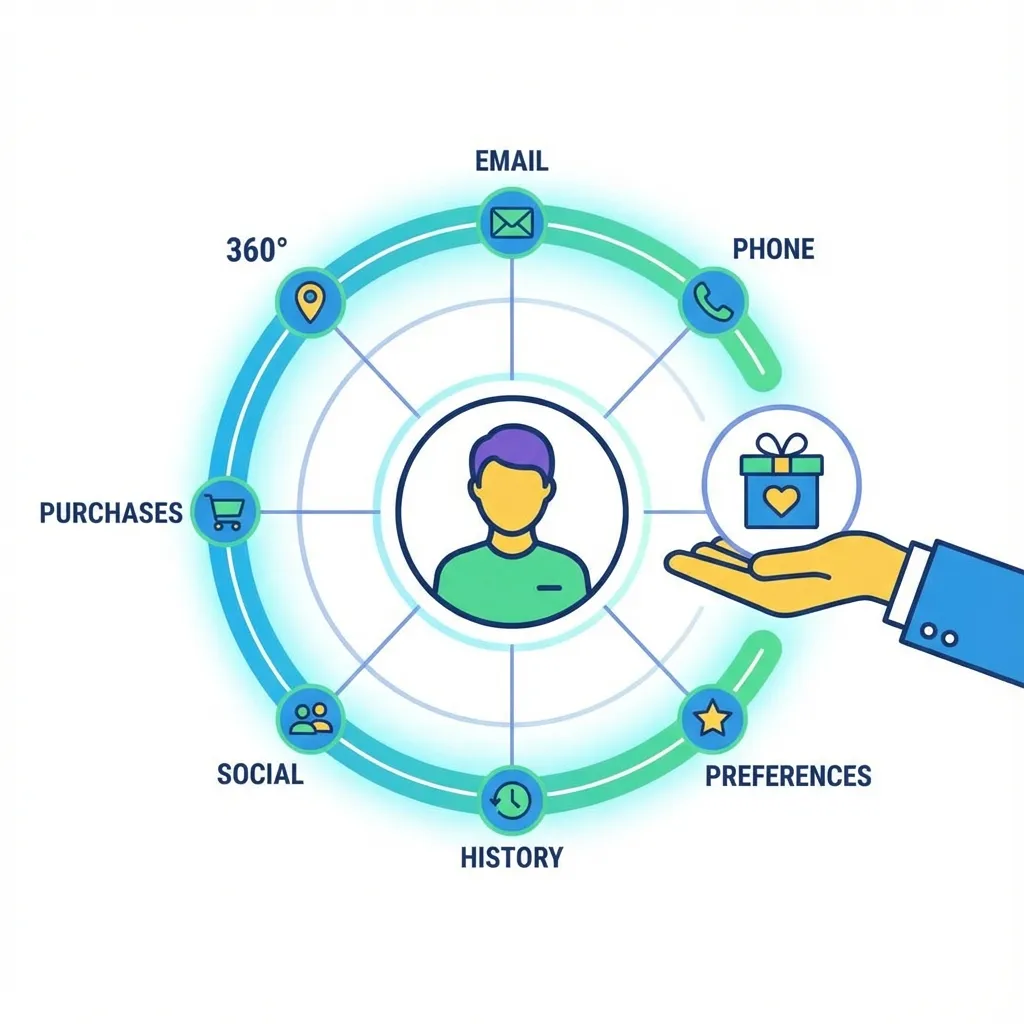
- IT Enabler: CRM (Customer Relationship Management) systems.
- Capture and analyze customer data.
- Provide a 360-degree view of the customer.
- Enable personalized marketing and service.
CRM: Feature-Benefit Match
Match each CRM feature (left column) to its business benefit (right column). Click a feature, then click the matching benefit.
🛒 Real Case: Amazon's "Customers Who Bought This…"
- Amazon records every search, click and purchase, so each customer has a detailed profile.
- Its recommendation system suggests products based on what similar customers bought.
- McKinsey (2013) estimated that about 35% of what customers buy on Amazon comes from these recommendations.
- Every customer sees a different home page, built from their own data.
Customer focus at scale: the CRM data is the asset, and the recommendation is the service.
🎬 Watch: How Recommenders Work
3. Make-to-Order & Mass Customization
Make-to-Order
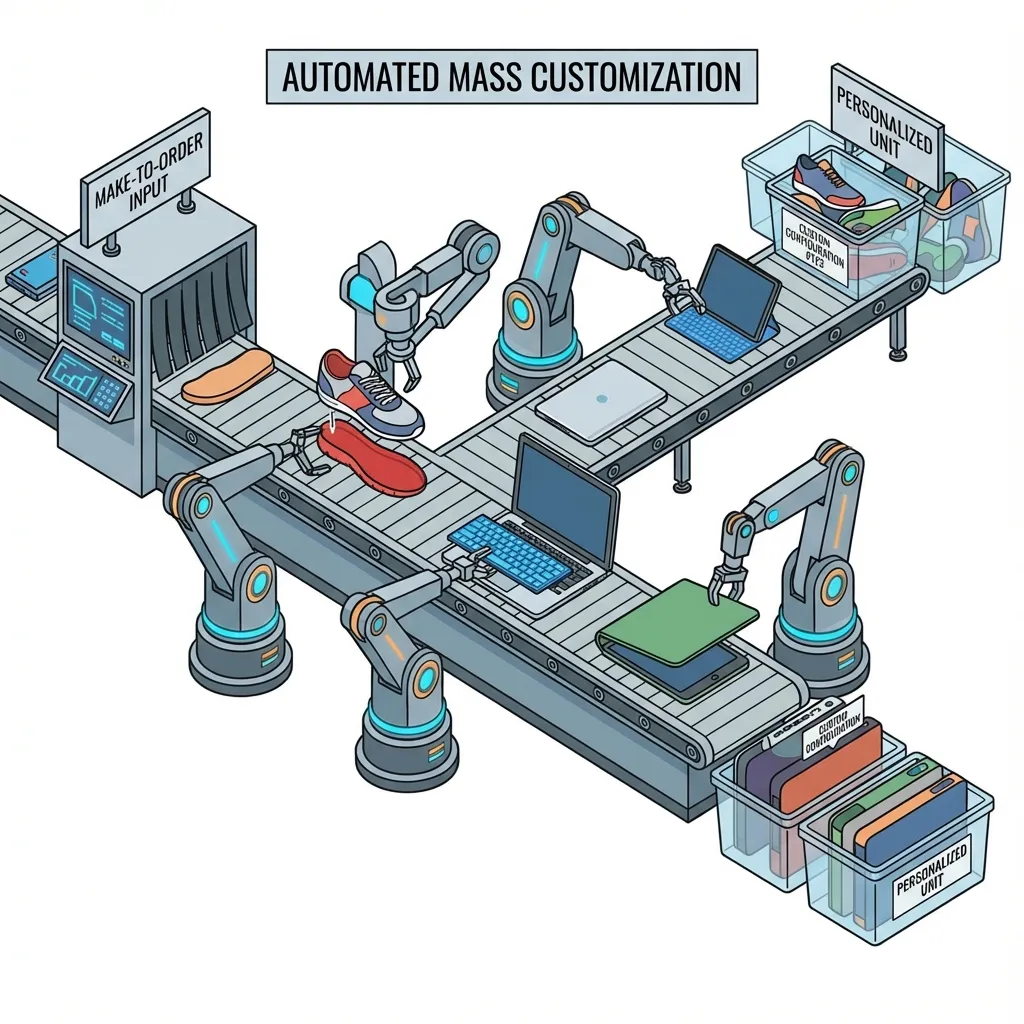
Manufacturing begins only after the order is received.
- Reduces inventory costs.
- Reduces waste.
Mass Customization
Producing a large quantity of items, but customizing them to fit each customer.
- Example: NikeID, Dell.
- IT Requirement: Flexible manufacturing systems & integrated ordering.
🏭 Make-to-Stock vs. Make-to-Order
| Make-to-Stock (MTS) | Make-to-Order (MTO) | |
|---|---|---|
| When made | Before any order, based on a sales forecast | Only after the customer orders |
| Driven by | "Push": the firm pushes stock to shops | "Pull": the customer's order pulls production |
| Inventory | High, with a risk of unsold stock | Low, little waste |
| Customer waits? | No, it's on the shelf | Yes, days or weeks |
| Example | Soft drinks, toothpaste, school notebooks | Passenger aircraft, custom software, printed wedding cards |
IT makes MTO practical: online order forms, real-time production scheduling, and supplier links.
🎬 Watch: Chocolate Made to Order
Make-to-Order or Make-to-Stock?
🎧 Real Case: Mass Customization Without a Factory
- In July 2015, Spotify launched Discover Weekly: a 30-song playlist made for each user, every Monday.
- The same service reaches millions of people, yet each of them gets a different product.
- It runs on listening data and algorithms, not on extra staff.
Quick poll: which apps on your phone give you a "mass customized" experience? (YouTube, TikTok, Daraz and Netflix home pages are all examples.)
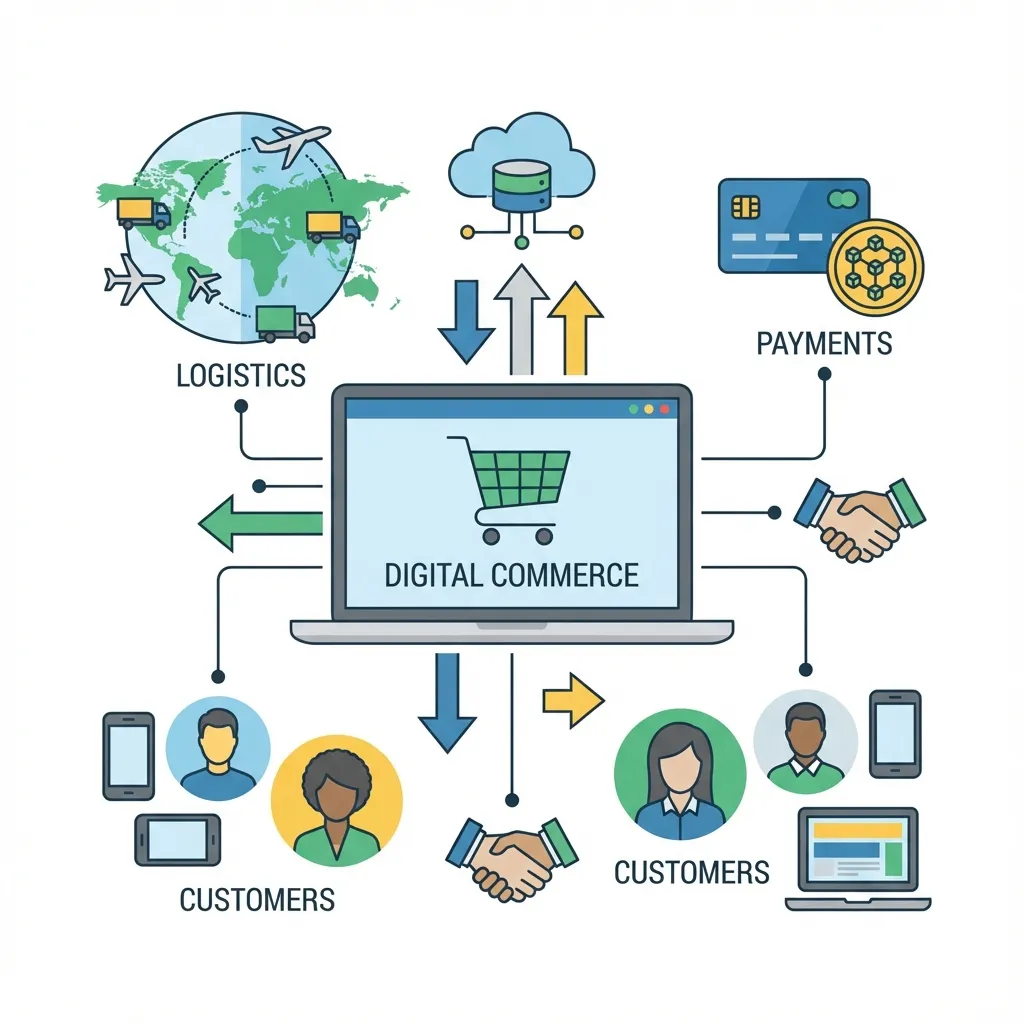
4. E-Business & E-Commerce
Doing business electronically is now a requirement, not an option.
- Global Reach: Sell to anyone, anywhere (expands market).
- Cost Reduction: Less physical infrastructure needed.
- 24/7 Operation: Always open.
- Data Collection: Tracking user behavior for better insights.
5. Business Alliances 🤝
Companies work together to compete more effectively.
- Joint Ventures: Creating a new entity together.
- Strategic Partnerships: Collaborating on specific projects.
- Affiliate Marketing: Partnering for sales.
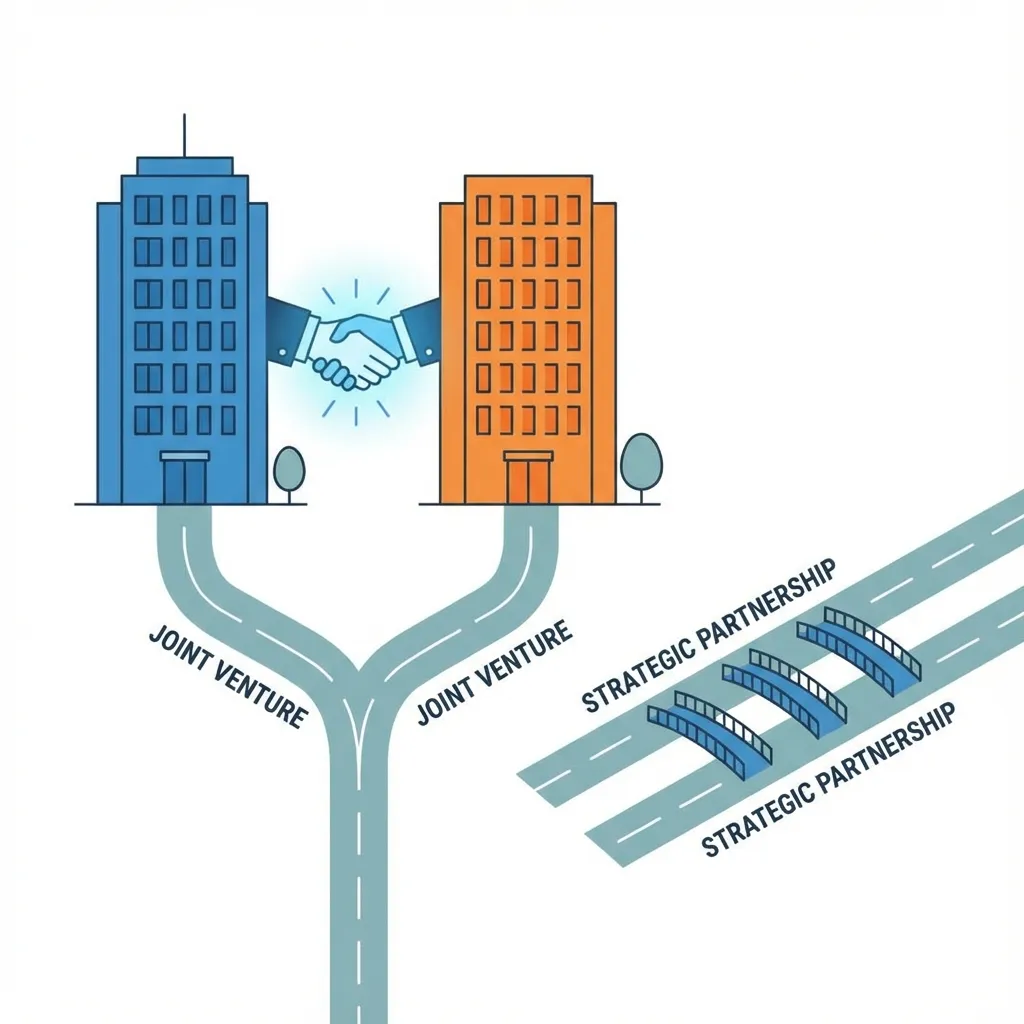
IT enables these alliances through inter-organizational information systems.
✈️ Real Case: Star Alliance
- Founded in 1997 by five airlines: Air Canada, Lufthansa, SAS, Thai Airways and United.
- Members sell seats on each other's flights (codeshare), share airport lounges and honour each other's frequent-flyer miles.
- This only works because their reservation and loyalty systems are linked: an inter-organizational information system.
- Each airline stays independent, but together they cover destinations none could reach alone.
This is a strategic partnership, a type of business alliance, and IT is what holds it together.
🎬 Watch: How Airline Alliances Work
🧣 Worked Example: A Nepali Pashmina Maker vs. Foreign Rivals
Illustrative example: a small Kathmandu workshop faces large Chinese and Indian producers that sell cheaper shawls.
Customer focus
Keep a simple CRM of buyers abroad. Send care tips, and an offer on their anniversary of purchase.
Make-to-order
Customers choose the colour, size and an embroidered name. Weaving starts after payment, so there's no unsold stock.
E-business
Its own website and global marketplaces, card and wallet payments, and courier tracking.
It can't win on price, so it wins on personal service, uniqueness and the "handmade in Nepal" story, all delivered through IT.
Summary & Key Takeaways
- 🎯 Proactive Response: Organizations use IT to actively respond to pressures, not just passively accept them.
- 🎯 Customer Centricity: CRM and Mass Customization focus on keeping the powerful customer happy.
- 🎯 Efficiency: Make-to-Order and Strategic Systems drive down costs and improve speed.
- 🎯 Collaboration: E-Business and Alliances expand reach and capabilities.
🎯 Activity: Which Response Would You Choose?
For each pressure, name the best response and the IT that supports it. Discuss with your neighbour for 2 minutes.
- A new online rival undercuts your shop's prices. Strategic system: lower costs with automated inventory and purchasing.
- Customers keep leaving after one purchase. Customer focus: CRM, loyalty points, follow-up messages.
- Unsold stock fills your warehouse every season. Make-to-order: online ordering linked to production.
- You can't afford to open shops in other cities. E-business: a website and social commerce, with delivery partners.
- You lack the technology a big contract requires. Business alliance: partner with a firm that has it, sharing data through linked systems.
Exam Practice 📝
Short answer
- What is mass customization?
- Distinguish between make-to-stock and make-to-order.
- What is a business alliance? Give an example.
Exam Practice 📝 (continued)
Long answer
- Explain the main ways organizations respond to business pressures and the role of IT in each.
- Discuss how a Nepali business could use customer focus, make-to-order, and e-business to compete with larger foreign rivals.
Revise the answers in the full note.
Discussion
- How does mass customization help a company respond to market pressures?
- Is it possible for a company to be successful today without some form of e-commerce?
Image & Video Credits
Images
- Porter's Five Forces diagram: made for this course
- Lufthansa Airbus A340-300 (D-AIGV) in Star Alliance livery, Frankfurt Airport: tjdarmstadt, CC BY 2.0, via Wikimedia Commons
Videos (YouTube)
- EduTechGyan, "How Recommendation Engines Work | The Netflix and Amazon Algorithm Explained" (66–115 s)
- DW Euromaxx, "Mass Customization - Individual Design for the Masses" (2011; 94–158 s)
- AviaThusiast, "What is an Airline Alliance? | Advantages & Disadvantages" (23–89 s)