Low-Tech, High-Impact: A Digital Teaching Toolkit for Nepal
“Sir, the internet is not working.”
If you teach in Nepal, this is not an excuse. It’s the daily weather report.
Many “EdTech” experts will tell you to use fancy cloud-based Learning Management Systems (LMS) or stream 4K videos. That’s great if you are in New York. But if you are in a classroom in Nuwakot, or even an overloaded network in Kathmandu, those tools are useless.
But a Teacher Developer doesn’t complain about the environment. They optimize for it.
The “Offline-First” Mindset
The key to using technology in Nepal is to assume that the internet will fail.
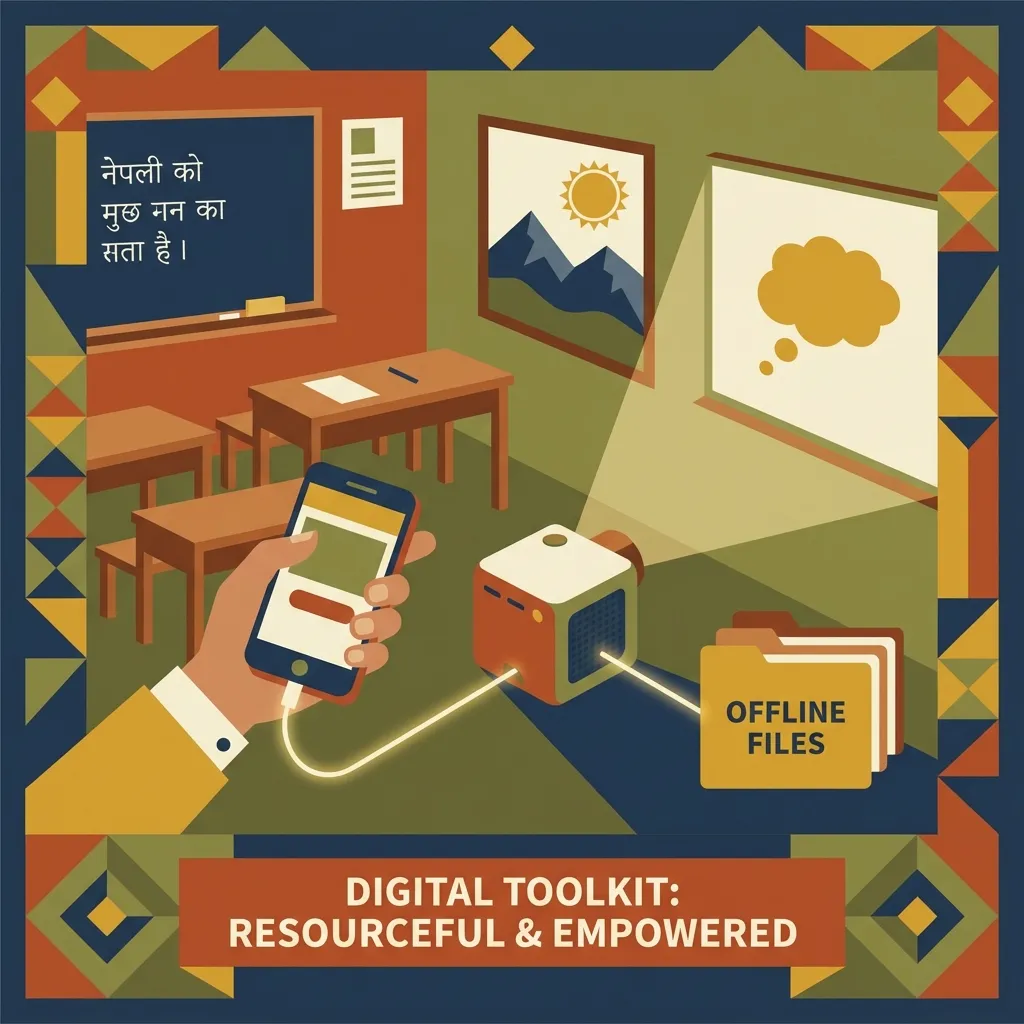
Stop relying on live streaming. Start relying on downloading, compressing, and sharing locally.
Here is my “Zombie Apocalypse” toolkit for Nepali teachers—tools that work even when the connection dies.
1. The Offline Video Library
Don’t try to stream YouTube in class. It will buffer, students will get bored, and you will get stressed. The Tool: 4K Video Downloader (or similar safe tools). The Workflow: On Saturday, when you have good Wi-Fi at home, download 5-10 videos relevant to next week’s lessons. Save them on a USB drive or your phone. The Impact: Zero buffering. Instant playback. You look like a magician.
2. The Pocket Scanner
Stop photocopying expensive textbooks page by page. The Tool: Adobe Scan or Microsoft Lens (Free mobile apps). The Workflow: Snap a picture of a textbook diagram, a student’s handwriting, or a physical whiteboard. The app turns it into a crisp, searchable PDF. The Impact: You can now project that “one rare book” onto the wall for the whole class to see.
3. The “Poor Man’s Smartboard”
You don’t need an interactive whiteboard costing 3 Lakhs. The Setup:
- Your smartphone.
- A cheap tripod (or a stack of books).
- A laptop connected to a projector. The Tool: Scrcpy (for techies) or just generic “Screen Mirroring” apps. The Workflow: Write on your phone screen or use the camera to show a science experiment live. Project your phone screen to the wall. The Impact: The entire class sees what you see, in real-time.
It’s Not About the Gadgets
I’ve seen teachers with $1000 iPads deliver boring lectures. I’ve seen teachers with a cracked Android phone and a passion for their subject spark a revolution in their students’ minds.
Being a Teacher Developer means using the tool you have in your pocket to unlock the potential in your students’ heads.
Start small. Download one video. Scan one document.
Make technology work for you, not the other way around.
Related Posts and Resources
- Coding for Teachers in Nepal
- Data-Driven Grading for Educators
- Open-Source Schools in Nepal
- Gamification in Nepali Classrooms
- Cyber Hygiene for Students and Teachers
- Flipped Classroom in Nepal
- CS Unplugged Activities in Nepal
- School Wi-Fi Budget Planning
- AI-Based Assessment in Nepal
- Digital Marketing in Nepal (Complete Guide)