LLM Training GPU Cloud: 2026 Provider Comparison
Executive Summary and Macro-Market Dynamics
The global landscape for cloud-based artificial intelligence infrastructure in 2026 has undergone a fundamental, structural reorganization. Driven by the exponential scale of trillion-parameter large language models (LLMs), mixture-of-experts (MoE) architectures, and the transition from experimental generative AI to production-grade agentic systems, computational demand has vastly outpaced the capacity of traditional data center paradigms. The contemporary market exhibits a severe and distinct bifurcation between traditional hyperscalers—such as Amazon Web Services (AWS), Google Cloud Platform (GCP), and Microsoft Azure—and a rapidly maturing cohort of specialized, GPU-first “neo-clouds” including CoreWeave, Lambda Labs, RunPod, and Together AI.
This bifurcation is not merely a matter of market share abstraction; it represents a profound divergence in architectural philosophy, networking topologies, and economic modeling. Traditional hyperscalers continue to bundle GPU access with deep, sticky enterprise ecosystems, which inherently bloats the total cost of ownership (TCO) through hidden mechanisms like exorbitant data egress fees and generalized networking hardware. Conversely, specialized neo-clouds have engineered their infrastructure explicitly for accelerated computing, offering bare-metal access, unmetered network egress, and localized InfiniBand fabrics natively integrated with advanced orchestration frameworks like Kubernetes and Slurm. As a result, these specialized platforms are routinely delivering 50% to 70% cost savings compared to legacy hyperscale environments while simultaneously providing access to the newest silicon.
Furthermore, the geographical distribution of compute is shifting violently. Geopolitical tensions, data sovereignty mandates, and the physical limitations of legacy power grids have catalyzed the decentralization of AI factories away from North America and Western Europe. Regions previously considered secondary or tertiary markets, such as India, Vietnam, Indonesia, and Thailand, are now at the epicenter of multi-billion-dollar sovereign AI deployments. These deployments are fueled by national data protection laws, the necessity for localized language model training, and specialized regional providers capturing local market share. This report exhaustively analyzes the 2026 GPU cloud ecosystem, dissecting the evolution of accelerator hardware, the critical role of networking fabrics, cloud economics, software orchestration paradigms, and the geopolitical reconfiguration of global compute.
The Evolution of Accelerator Hardware: The 2026 Silicon Wars
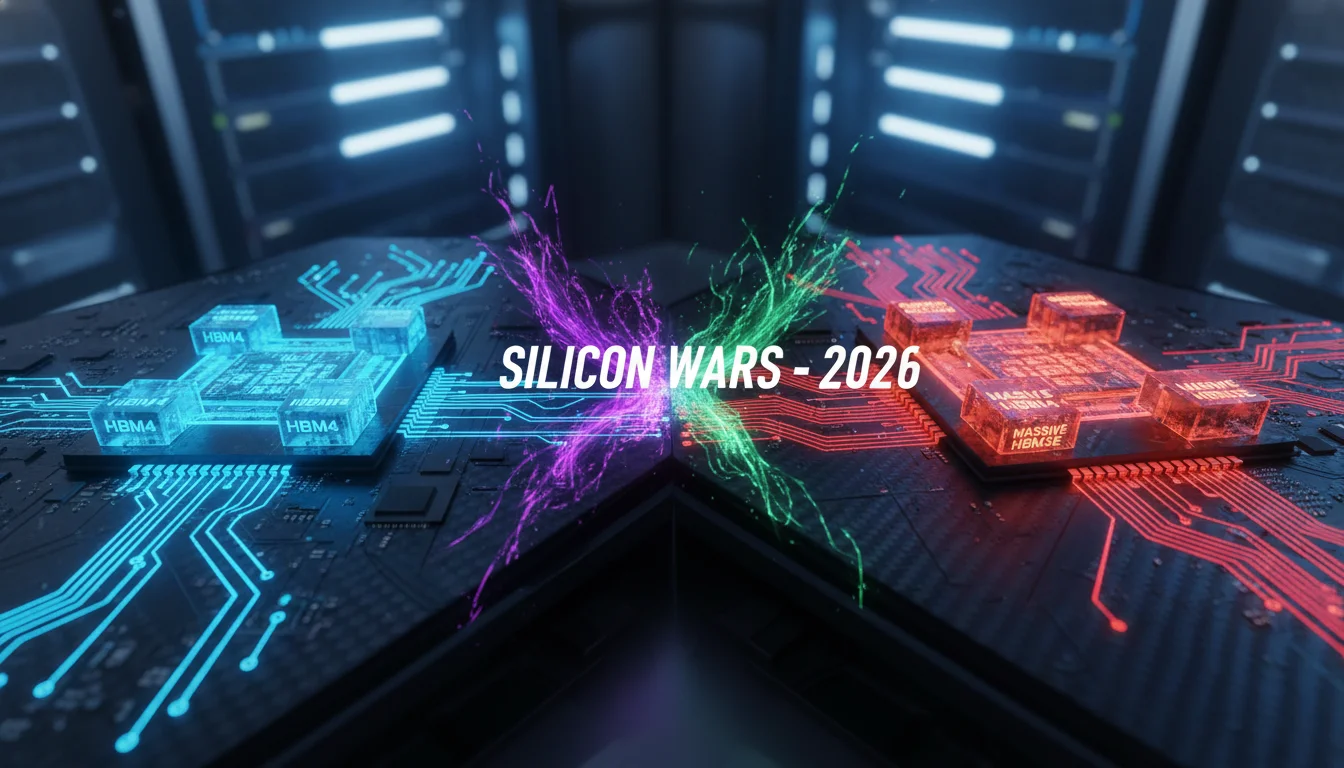
The foundational layer of the AI cloud is defined by the silicon it hosts. The compute requirements for training frontier models have breached the exaFLOP barrier, forcing semiconductor manufacturers into unprecedented release cadences, novel architectural paradigms, and increasingly massive power envelopes. The hardware market in 2026 is characterized by a multi-front war between NVIDIA’s relentless release cycle, AMD’s aggressive parity, custom hyperscaler ASICs, and novel wafer-scale computing solutions.
NVIDIA’s Accelerated Dominance: Hopper, Blackwell, and the Rubin Transition
NVIDIA remains the undisputed hegemon of the data center, having successfully transitioned to a grueling one-year product release cadence to maintain its market dominance. The H100 (Hopper) architecture, initially released in 2022, remains the industry workhorse and the baseline standard for widespread deployment in 2026. The H100 delivers highly reliable FP8 precision utilizing its Transformer Engine, which revolutionized GPT-scale training and established a mature, highly understood operational pattern for distributed clusters. However, for frontier AI research and the largest scale deployments, the H100 is increasingly viewed as legacy infrastructure.
The Blackwell architecture, specifically the B200 and B300 GPUs, represents the current state-of-the-art available in mass cloud deployment. Blackwell introduces native FP4 precision support, fundamentally doubling the theoretical throughput of FP8 workloads. The B200 boasts 192GB of High Bandwidth Memory (HBM3E), offering critical advantages for handling massive context windows and MoE models that require substantial memory capacity.
Yet, the most significant disruption in the 2026 hardware landscape is NVIDIA’s early mass production of the Rubin architecture, specifically the R100 GPU and the Vera Rubin NVL72 rack-scale system. Entering production ahead of its originally anticipated late-2026 schedule, the Rubin platform directly addresses the “memory wall”—the physical bottleneck where data movement speed fails to keep pace with core processing throughput. The R100 achieves this by integrating the industry’s first commercial application of HBM4 memory stacks featuring a massive 2048-bit memory interface. Built on Taiwan Semiconductor Manufacturing Co.’s (TSMC) advanced 3-nanometer (N3P) process, the R100 achieves 50 PFLOPS of NVFP4 inference compute and 35 PFLOPS of FP4 training compute. The Rubin architecture also introduces third-generation NVIDIA Confidential Computing, which maintains data security across CPU, GPU, and NVLink domains, a critical feature for enterprises training models on highly sensitive, proprietary data.
AMD’s Ascent: CDNA 4 and the Instinct MI350X Paradigm
Advanced Micro Devices (AMD) has emerged as the only viable merchant silicon alternative to NVIDIA for dense, multi-node LLM training, executing its own rigorous annual architectural cadence. The 2026 deployment of the Instinct MI350 Series, specifically the flagship MI355X built on the CDNA 4 architecture, has fundamentally altered the competitive calculus of the AI cloud market.
The MI350X directly attacks NVIDIA’s historical memory capacity advantage. Equipped with a staggering 288GB of HBM3E memory and 8TB/s of memory bandwidth, the MI350X allows models up to 144 billion parameters to reside entirely on a single GPU at FP16 precision. This is a feat that is physically impossible on the 192GB NVIDIA B200. The economic implications of this memory density are profound. For serving massive models, such as the 405-billion parameter Llama 3.1 Maverick, an AMD deployment requires fewer discrete GPUs to accommodate the model weights. Specifically, it requires only two MI350X GPUs for FP8 deployments compared to three B200 GPUs, yielding approximately a 33% to 40% reduction in hardware cost per token before factoring in cloud provider rate differences.
Architectural performance and memory comparison between AMD MI350X and NVIDIA B200.
| Precision Metric | AMD Instinct MI350X | NVIDIA B200 |
|---|---|---|
| FP64 (Double Precision) | 72.1 TFlops | 37.0 TFlops |
| FP32 (Single Precision) | 144.2 TFlops | 75.0 TFlops |
| FP16 / BF16 (Half Precision) | 2306.9 / 2309.6 TFlops | 2250.0 TFlops |
| FP8 / INT8 | 4614.0 / 4613.7 TFlops | 4500.0 TFlops |
| Memory Capacity | 288GB HBM3E | 192GB HBM3E |
AMD’s software stack, ROCm, which has historically been a point of friction for developers accustomed to NVIDIA’s CUDA, has seen massive ecosystem maturity. The stack now allows for seamless integration with inference engines like vLLM, TensorRT-LLM, and SGLang, delivering first-time model bring-up capabilities that rival NVIDIA’s ease of use. Looking forward to late 2026, AMD is preparing the MI400 series based on the next-generation CDNA 5 architecture. This will utilize the “Helios” rack-scale architecture to unify EPYC “Venice” CPUs, Instinct MI400 series GPUs, and Pensando “Vulcano” AI Network Interface Cards (NICs) into a fully integrated, tightly coupled scale-up domain.
Custom Hyperscaler Silicon and Wafer-Scale Accelerators
To offset dependence on merchant silicon and improve internal unit economics, hyperscalers are aggressively deploying highly specialized custom Application-Specific Integrated Circuits (ASICs). Google Cloud’s TPU v6e (Trillium) is heavily integrated into GCP’s Vertex AI platform, offering industry-leading latency profiles (5-20 ms) for proprietary large language models. AWS continues to deploy Trainium 2 for cost-effective training workflows, while Microsoft Azure leverages the Maia 200 chip—manufactured in-house specifically to optimize Copilot and OpenAI inference workloads natively while generating telemetry data to improve future architectural designs.
Outside the traditional GPU and TPU paradigms, companies like Cerebras Systems are pioneering wafer-scale computing. The Cerebras CS-3 system powers the Condor Galaxy 3 supercomputer, a joint venture with UAE-based technology holding group G42. By utilizing an entire silicon wafer as a single contiguous compute node, Cerebras eliminates the latency associated with inter-chip networking. Condor Galaxy 3, located in Dallas, achieves 8 exaFLOPs of compute capacity. This architecture bypasses the traditional complexities of distributed GPU orchestration by presenting a 64-system cluster as a single logical device to the developer, dramatically simplifying the programming model for researchers.
Networking Fabrics: The True Bottleneck in Distributed LLM Training
As the parameters of foundation models scale into the trillions, individual GPU performance becomes secondary to the bandwidth, latency, and reliability of the inter-node network. In 2026, the primary differentiator between an enterprise AI platform capable of synchronous training and a sub-optimal cloud deployment is the underlying networking topology. The market is divided into two operational domains: scale-up (intra-rack communication) and scale-out (inter-rack, cluster-wide communication).
Scale-Out: InfiniBand vs.
The Ethernet Evolution
For clusters exceeding 32 nodes—and explicitly for training models exceeding 70 billion parameters—NVIDIA’s Quantum-X800 InfiniBand architecture remains the uncompromising gold standard. InfiniBand delivers ultra-low latency (approximately 1–2 s) and features hardware-offloaded Remote Direct Memory Access (RDMA). RDMA ensures that GPU-to-GPU memory transfers bypass the central processing unit entirely, preventing massive bottlenecks during the gradient synchronization phase of backpropagation. Specialized neo-clouds like CoreWeave, Lambda Labs, and RunPod provision InfiniBand as a default standard across their high-end tiers, granting them up to 35x faster multi-node training performance compared to legacy cloud architectures.
Conversely, hyperscalers like AWS and GCP rely almost exclusively on Ethernet-based proprietary networks, severely crippling tightly coupled synchronous training jobs. However, Ethernet is undergoing a massive evolutionary leap. Backed by the Ultra Ethernet Consortium (UEC), modern 400G and 800G Ethernet platforms—such as NVIDIA’s own Spectrum-X—utilize highly optimized RoCEv2 (RDMA over Converged Ethernet) to achieve latencies of 5–10 s. While slightly inferior to InfiniBand for raw gradient synchronization, advanced Ethernet fabrics have evolved from “good enough” to genuinely AI-optimized, providing a highly cost-effective and flexible alternative for massive inference deployments and medium-scale fine-tuning environments.
Scale-Up: NVLink vs. Ultra Accelerator Link (UALink)
Inside the rack, the compute density of AI servers requires massive bandwidth to share memory spaces effectively. NVIDIA’s proprietary NVLink dominates this space. The upcoming NVLink 6 in the Rubin NVL72 architecture provides a staggering 260 TB/s of aggregate scale-up bandwidth, allowing 72 discrete GPUs to act as a unified inference engine for trillion-parameter models.
To counteract NVIDIA’s closed ecosystem, a consortium of competitors—including AMD, Intel, Cisco, and Astera Labs—has established the Ultra Accelerator Link (UALink). UALink is an open industry standard for memory-semantic, scale-up fabrics. Operating at 200Gbps per lane (equivalent to high-end Ethernet), UALink allows ultra-low latency load, store, and atomic operations between hundreds of disparate accelerators. By optimizing the protocol stack to minimize end-to-end latency and reducing the valuable die area required on GPUs for networking, UALink effectively enables a multi-vendor rack-scale architecture. The deployment of UALink-based switches in late 2026 aims to permanently decouple the scale-up network from proprietary silicon constraints, offering cloud providers unprecedented flexibility in hardware procurement.
Cloud GPU Economics: TCO, Egress Fees, and Pricing Volatility
The economics of AI infrastructure in 2026 require a highly granular understanding of nuanced pricing vectors. Evaluating providers strictly on “price per GPU hour” obscures massive hidden costs, leading to highly inaccurate total cost of ownership (TCO) projections.
The Hyperscaler Premium and the Egress Fee Crisis
The most insidious and frequently overlooked cost in cloud AI development is data egress. AI development is highly iterative; data scientists and machine learning engineers constantly pull model checkpoints, vast training corpora, and massive logging artifacts between object storage, local developer workstations, and diverse compute clusters. Hyperscalers like AWS, GCP, and Azure charge substantial premiums for outbound network data transfer. In high-volume training pipelines, these hyperscaler egress fees routinely surpass the base cost of the compute instances themselves, incinerating tens of thousands of dollars in unexpected operational expenditures.
Neo-clouds have aggressively engineered their business models to eliminate this specific friction. Providers such as Lambda Labs, CoreWeave, and RunPod charge zero egress fees as a standard policy. When combined with lower baseline hardware costs—for example, an AWS A100 80GB instance averages $4.10/hour compared to Lambda Labs at $1.10/hour—the financial incentive to migrate away from hyperscalers for raw compute is mathematically overwhelming. Azure offsets this slightly with specialized NDm instances that offer better network topologies, but they still carry the hyperscaler brand premium.
NVIDIA B200 Pricing Dynamics
The rollout of the NVIDIA B200 has generated extreme pricing volatility across the cloud landscape. Due to restricted supply and deep enterprise allocations stretching well into late 2027, on-demand access is highly fractured and wildly inconsistent.
| Cloud Provider | Instance Archetype | Pricing Model | Hourly Rate (USD) | Infrastructure Notes |
|---|---|---|---|---|
| Vultr | Unmanaged Bare Metal | On-demand (x8 GPUs) | $2.99 / GPU | Highly constrained spot availability. |
| Together AI | B200 Managed Cluster | On-demand | $5.49 - $7.49 | Includes proprietary Kernel optimizations. |
| CoreWeave | Kubernetes Native | On-demand (x8 GPUs) | $8.60 / GPU | Premium InfiniBand topology; zero egress. |
| AWS | p6-b200.48xlarge | On-demand | $10.30 / GPU | Deep integration with SageMaker & Bedrock. |
| Oracle Cloud | OCI Bare Metal | On-demand (x4 GPUs) | $16.00 / GPU | RDMA support; optimal for distributed workloads. |
| Microsoft Azure | NDsrGB200NDRv6 | On-demand (x4 GPUs) | $27.04 / GPU | Premium hyperscaler markup; enterprise compliance. |
The extreme disparity between a $2.99/hr neo-cloud offering and a $27.04/hr Azure offering underlines a fundamental market reality: hyperscalers are charging massive premiums for their integrated Platform-as-a-Service (PaaS) ecosystems, regulatory compliance certifications, and hybrid on-premise integrations, rather than the raw silicon performance. For pure-play LLM training, organizations achieve vastly superior unit economics by utilizing bare-metal or specialized Kubernetes clusters from neo-clouds.
Capital Expenditure vs. Cloud Rental Break-Even Analysis
For large enterprises considering capital expenditure (CapEx) to build on-premise AI clusters rather than relying on cloud providers, the break-even mathematics in 2026 are highly complex. A single NVIDIA H100 GPU costs approximately $25,000 to purchase outright. At an average cloud rental rate of $2.99/hour, continuous 24/7 utilization achieves a break-even point in roughly 14 months. However, AI training is rarely continuous; if hardware utilization drops to 8 hours a day, the break-even horizon stretches to 42 months.
Furthermore, this raw calculation ignores massive hidden on-premise costs. Purchased GPUs require heavy infrastructure investments ranging from $5,000 to $50,000 per rack, recurring power costs of approximately $60 per month per GPU, and specialized technical staff for maintenance. Consequently, unless an organization is running sustained, 24/7 workloads for 18+ months continuously, cloud GPU hosting remains the most capital-efficient strategy.
Software Stacks and Managed AI Platforms for Custom LLM Training
Raw computational power is inert without sophisticated software orchestration. The complexities of tensor parallelism, pipeline parallelism, and Fully Sharded Data Parallel (FSDP) methodologies require robust software frameworks to prevent silent failures, optimize data sharding, and avoid catastrophic memory out-of-bounds errors. In 2026, the ecosystem is dominated by highly specialized managed platforms that abstract infrastructure complexity.
Anyscale, Ray Train, and Distributed Orchestration
Anyscale, the commercial entity behind the dominant open-source Ray framework, provides the most flexible and scalable environment for extending custom Python-based training code from a single machine to thousands of GPUs. Training an LLM requires complex fault tolerance; if one node in a 512-GPU cluster fails due to a hardware fault, the entire training job can crash, wasting thousands of dollars in compute time. Anyscale mitigates this through automated job retries, fast node launching, and persistent logs that outlive the cluster, allowing data scientists to perform post-mortem debugging without keeping expensive GPUs idling.
Anyscale integrates natively with platforms like Microsoft Azure Kubernetes Service (AKS) and CoreWeave’s CKS, enabling fractional GPU allocation and seamless multi-cloud orchestration. By tightly integrating with DeepSpeed and ZeRO (Zero Redundancy Optimizer) memory stages, Anyscale seamlessly manages state partitioning across nodes. This makes it the platform of choice for highly customized, parameter-efficient fine-tuning (PEFT) techniques like LoRA, as well as complex post-training methodologies including Reinforcement Learning from Human Feedback (RLHF) and Reinforcement Learning from Verifiable Rewards (RLVR).
Databricks Mosaic AI and the Lakehouse Paradigm
For massive enterprises, moving terabytes of proprietary data to external compute clusters poses severe security risks and incurs massive network costs.
Databricks’ Mosaic AI circumvents this by bringing the training compute directly to the data. Utilizing the Databricks Unity Catalog for rigorous data governance, Mosaic AI allows users to fine-tune open-source models natively within the Databricks Lakehouse architecture.
Mosaic AI leverages automated provisioning of NVIDIA H100 instances connected via InfiniBand. The platform handles complex data featurization, checkpoints, and vector index generation automatically. By optimizing the underlying software stack for specific hardware configurations, Databricks ensures that custom models built with Model Training are faster, more domain-specific, and cost up to 10x less than constantly calling proprietary LLM APIs. Crucially, all data and model checkpoints remain within the organization’s secure Virtual Private Cloud (VPC) boundaries, ensuring strict regulatory compliance.
5.3 Together AI: Custom Kernels and Continued Fine-Tuning
Together AI operates at the intersection of infrastructure provisioning and deep AI research. Aside from providing competitive B200 and H100 cluster pricing, Together AI differentiates its platform through its proprietary Kernel Collection. Utilizing software innovations like FlashAttention-4 and ATLAS (runtime-learning accelerators), Together AI significantly boosts the hardware utilization of NVIDIA silicon, accelerating throughput and lowering latency far beyond default cuDNN implementations.
A critical feature refined by Together AI in 2026 is “Continued Fine-Tuning” (CFT). Historically, LLMs suffer from “catastrophic forgetting” when sequentially trained on new tasks, losing previously acquired knowledge. CFT allows developers to specify a –from-checkpoint parameter in their training pipelines, enabling the iterative updating of an LLM with fresh enterprise data without retraining from scratch. This dramatically lowers the cost of maintaining a domain-specific agent in production and ensures the model accurately reflects the latest organizational knowledge.
5.4 NVIDIA NeMo Framework
NVIDIA’s proprietary NeMo Framework is a comprehensive, cloud-native generative AI suite built to customize models like Nemotron for agentic, enterprise systems. Deeply integrated into major cloud platforms including AWS SageMaker, GCP Vertex AI, and Oracle Cloud Infrastructure (OCI), NeMo offers end-to-end AI lifecycle management.
The framework utilizes “NeMo Curator” to clean, filter, and prepare safe multimodal datasets, and features an AutoConfigurator that automatically determines the highest-throughput tensor and pipeline parallelism parameters for a specific cluster topology. For organizations standardizing exclusively on NVIDIA’s full-stack AI Enterprise software, NeMo provides the most heavily optimized path from raw data to deployed agentic inference.
6. The Geopolitics of Compute: Sovereign AI and Regional Data Centers
By 2026, the concept of “Sovereign AI” has matured from a political talking point into a massive, heavily funded infrastructure reality. Nations recognize that relying on computing resources located in the United States or Western Europe poses unacceptable strategic risks to data privacy, economic independence, and operational continuity. Consequently, the geographic footprint of GPU cloud providers has expanded rapidly into emerging markets.
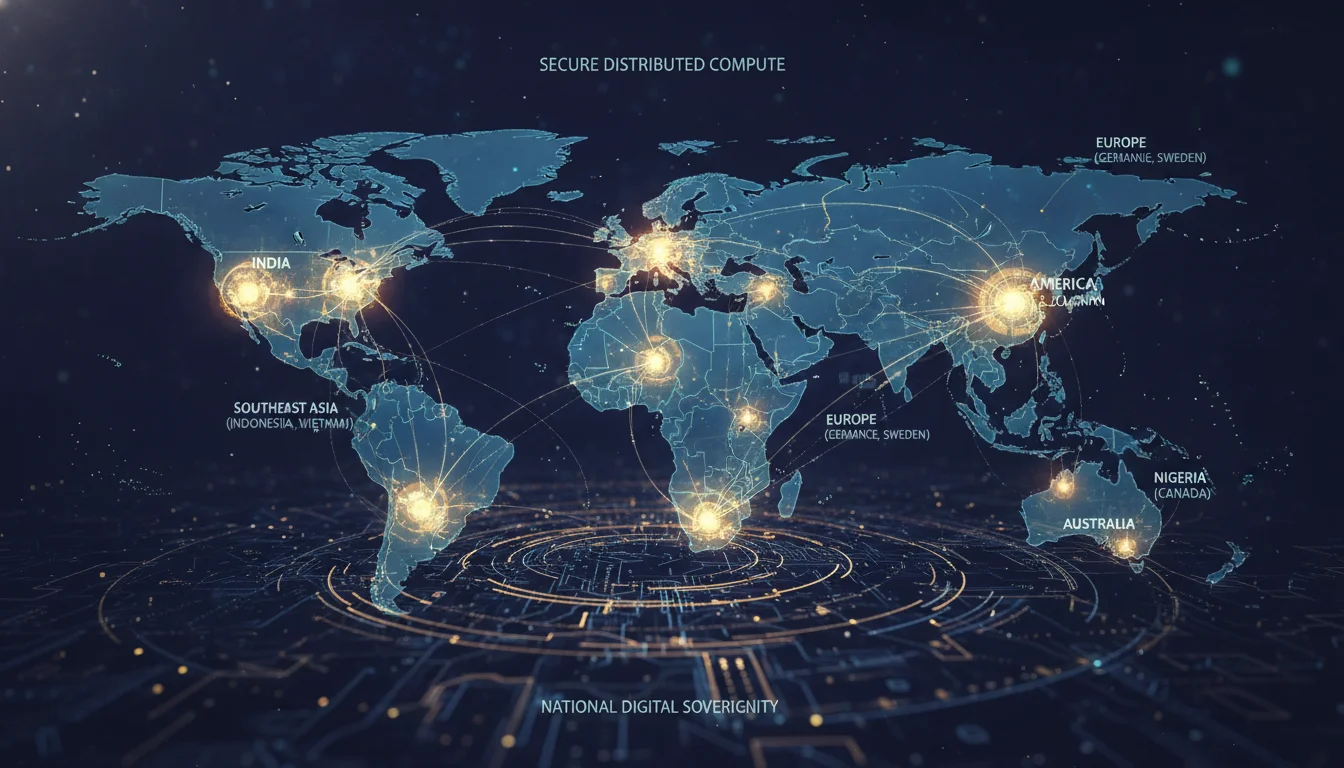
6.1 India: The Vanguard of Localized AI Infrastructure
India’s data center market has exploded, catalyzed by the generative AI wave and the strict data localization mandates enforced by the DPDP (Digital Personal Data Protection) Act of 2023. Financial institutions, healthcare providers, and defense contractors in India can no longer route sensitive training data to US-based hyperscalers without facing severe regulatory penalties. Consequently, domestic GPU-as-a-Service providers have aggressively filled the void.
Yotta Data Services has positioned its “Shakti Cloud” as India’s premier Sovereign GPU Cloud. As an elite NVIDIA Cloud Partner (NCP), Yotta has deployed over 16,000 H100 GPUs and is actively integrating B200 clusters across high-density facilities in Navi Mumbai and beyond. Shakti Cloud distinguishes itself by offering non-virtualized bare-metal clusters with 32 Tbps inter-node InfiniBand networks, completely avoiding the “noisy neighbor” latency inherent in shared hyperscaler environments.
Similarly, providers like Cyfuture AI offer enterprise H100 compute starting at ₹219/hr, drastically undercutting AWS/GCP’s Mumbai regional pricing by 60% to 70%. Tata Communications’ Vayu AI Cloud further broadens the market, providing purpose-built L4, L40S, and H100 instances for enterprise workloads on an hourly basis. AceCloud provides transparent, pay-as-you-go pricing for high-end H100 and A100 instances targeted specifically at local AI startups and data science teams.
The urgency of this localized buildout is compounded by severe external geopolitical risks. Submarine optical fiber cables connecting India to European and US servers primarily run through highly volatile regions like the Red Sea and the Strait of Hormuz. Escalating military conflicts and targeted disruptions of these cable networks threaten severe latency spikes and internet blackouts for the subcontinent. Landlocked nations dependent on India’s fiber backbone, such as Nepal, face compounding connectivity risks. Nepal’s National AI Policy explicitly acknowledges weak digital infrastructure, and real-time monitoring indicates that average latency from Kathmandu to New Delhi data centers sits at approximately 263ms due to complex physical routing. This highlights the absolute necessity of geographically proximate, dedicated data centers for low-latency AI inference. To mitigate these global routing risks, AWS and Microsoft Azure are proactively evaluating the relocation of their West Asian datacenter workloads directly to India to ensure regional service resilience.
6.2 Southeast Asia: Singtel, Indosat, and the Gulf Edge AI Transformation
Southeast Asia has emerged as another hyper-growth region for localized GPU clouds, driven by national digitalization imperatives and aggressive corporate partnerships.
In Singapore, Singtel’s Digital InfraCo has launched “RE:AI”, a high-performance sovereign AI cloud, and partnered directly with NVIDIA to establish a Centre of Excellence for Applied AI. This initiative aims to distribute GPU-as-a-Service capabilities across Bridge Alliance members, actively driving localized compute into neighboring countries like Malaysia and Indonesia.
In Indonesia, Indosat Ooredoo Hutchison has spearheaded a massive AI democratization effort. Partnering with NVIDIA and Nokia, Indosat is integrating 5G Cloud RAN with NVIDIA’s AI Aerial platform, pioneering an AI-RAN network infrastructure. This unified computing grid supports both traditional telecommunications workloads and edge AI inferencing, ensuring data sovereignty for Indonesian enterprises.
In Vietnam, the cloud market is defined by a strong emphasis on local data residency. FPT Smart Cloud has established the FPT AI Factory, investing $200 million into Sovereign Cloud infrastructure. Equipped with NVIDIA HGX H100 and cutting-edge B300 systems, FPT provides 43 specialized AI Cloud services to over 18,000 engineers. This sovereign infrastructure provides the required data residency, compliance, and low-latency performance essential for foreign enterprises operating in Vietnam’s tightly regulated digital ecosystem.
Meanwhile, in Thailand, Gulf Edge (the digital infrastructure arm of Gulf Group) has partnered with Google Cloud to launch sovereign, air-gapped Google Distributed Cloud (GDC) environments. This initiative heavily utilizes Gulf’s telecommunications subsidiary, AIS, to deploy agentic AI platforms powered by Gemini Enterprise natively within Thailand’s borders. This circumvents the latency and regulatory hurdles of routing enterprise data to hyperscaler regions in Singapore or Taiwan.
7. Benchmarking Trends and the Economics of Open-Weight Models
The underlying driver of this massive infrastructure buildout is the rapid evolution of the models themselves. The gap between proprietary, closed-source models and open-weight models has practically vanished by 2026, profoundly altering the return on investment for custom LLM training.
While proprietary models like OpenAI’s GPT-5.4 Pro and Anthropic’s Claude Opus 4.6 still hold slight leads in overarching intelligence benchmarks (scoring 92 and 85 respectively on aggregate metrics), open-weight models have reached striking distance. Models like the open-weight GLM-5 rank incredibly high in complex reasoning tasks, while Meta’s Llama 4 family (including the Maverick and Scout variants) provides highly capable base models for enterprise fine-tuning.
The most disruptive force in 2026 is the economic efficiency of models like DeepSeek-V3.2.
Trained on alternative hardware and optimized heavily for reasoning, DeepSeek-V3.2 delivers roughly 90% of the output quality of GPT-5.4 Pro at 1/50th of the API cost. DeepSeek manages massive context windows for a fraction of the cost ($0.25 per million input tokens), proving that highly efficient, customized models deployed on rented GPU infrastructure can outperform generalized proprietary APIs in unit economics.
Because high-quality open-weight models are readily available, enterprises are heavily incentivized to rent H100 or B200 clusters from neo-clouds, fine-tune these models on their proprietary data using platforms like Databricks or Anyscale, and deploy them internally. This methodology ensures data privacy, avoids proprietary API lock-in, and offers predictable, flat-rate inference costs.
Strategic Provider Evaluation: Hyperscalers vs. Neo-Clouds
When selecting a GPU cloud provider for training custom LLMs in 2026, engineering leaders must strictly align their choice with their architectural maturity, data residency requirements, and financial constraints.
The Traditional Hyperscalers (AWS, GCP, Azure)
- Strengths: Unmatched breadth of ancillary services, deep integration with legacy enterprise systems, massive global redundancy, high-tier compliance certifications, and exclusive access to custom silicon (TPU v6e, Trainium 2, Maia 200).
- Weaknesses: Punishing data egress fees, high hourly GPU baseline costs, restrictive lack of native InfiniBand for scale-out training (excluding highly specialized, expensive Azure NDm nodes), and complex ecosystem lock-in mechanics.
- Ideal Use Case: Highly regulated Fortune 500 enterprises with pre-existing multi-year cloud commit contracts, massive data lakes already hosted on S3 or Azure Blob, and strict compliance mandates that preclude moving data to specialized vendors.
The Enterprise Neo-Clouds (CoreWeave, Lambda Labs, Together AI)
- Strengths: Unrestricted bare-metal GPU access, zero network egress fees, native Kubernetes orchestration, uncompromising InfiniBand connectivity standard across clusters, and early access to next-generation silicon (B200, B300). CoreWeave’s fractional GPU allocation and Together AI’s custom kernel optimizations offer unparalleled performance-per-dollar.
- Weaknesses: Narrower scope of ancillary services; organizations must often bridge disparate systems for traditional relational databases, frontend hosting, and long-term cold storage.
- Ideal Use Case: AI-native startups, dedicated LLM research labs, and enterprise AI teams conducting massive multi-node pre-training or fine-tuning, where pure compute throughput and the elimination of egress costs are the primary economic constraints.
The Specialized and Budget Providers (RunPod, TensorDock, Vast.ai)
- Strengths: Ultra-low cost, instantaneous access, highly granular per-second billing, and the availability of consumer-grade GPUs (e.g., RTX 4090/5090) which offer massive cost savings for workloads that comfortably fit within 24GB of VRAM.
- Weaknesses: Decentralized marketplaces (like Vast.ai) lack rigid Service Level Agreements (SLAs) and reliable network security, making them fundamentally unsuitable for production pipelines containing proprietary or sensitive data.
- Ideal Use Case: Fast prototyping, academic research, hackathons, and low-latency serverless inference where rapid cold-start times and strict budget constraints dictate the architecture rather than enterprise reliability.
Conclusion and Strategic Outlook
The 2026 GPU cloud market is defined by a relentless, unyielding pursuit of memory bandwidth, network speed, and pure unit economics. As foundation models balloon past the trillion-parameter mark and transition from reactive chatbots to autonomous, reasoning-capable agentic systems, the underlying infrastructure must evolve beyond isolated GPU instances. The immediate future is rack-scale computing—exemplified by NVIDIA’s Vera Rubin NVL72 and AMD’s Helios architecture—where dozens of distinct chips operate seamlessly as a single logical entity across intricately interconnected memory semantic fabrics like UALink and NVLink 6.
For enterprises, governments, and researchers building custom LLMs, the strategic imperative is unequivocally clear. Blindly defaulting to legacy hyperscalers is an economically flawed strategy for pure compute-bound training workloads, given the exorbitant egress fees and often inferior networking fabrics. The rise of specialized, GPU-first neo-clouds offers a financially superior, performance-optimized alternative. Simultaneously, the explosion of Sovereign AI clouds in hyper-growth regions like India and Southeast Asia guarantees that data residency, latency optimization, and geopolitical resilience will no longer act as insurmountable barriers to frontier AI development.
To succeed in the current paradigm, organizations must construct fluid, multi-cloud architectures. By leveraging robust orchestration platforms like Anyscale or Databricks Mosaic AI to abstract the underlying hardware complexity, engineering teams can pair the optimal mix of spot-priced neo-cloud compute, specialized hyperscaler ASICs, and sovereign data centers. This diversified infrastructure strategy insulates AI developers from hardware supply chain bottlenecks, extreme pricing volatility, and the looming complexities of deploying production-grade, agentic intelligence at global scale.