Internet Governance in Nepal: Where We Are and Where We Need to Go
We’ve looked globally and regionally. Now, let’s look at home.
Internet Governance in Nepal is at a fascinating crossroads. We have exploded in connectivity—mobile data is everywhere, and fiber-to-the-home (FTTH) is becoming standard in cities.
But “Access” is just the first layer of governance.
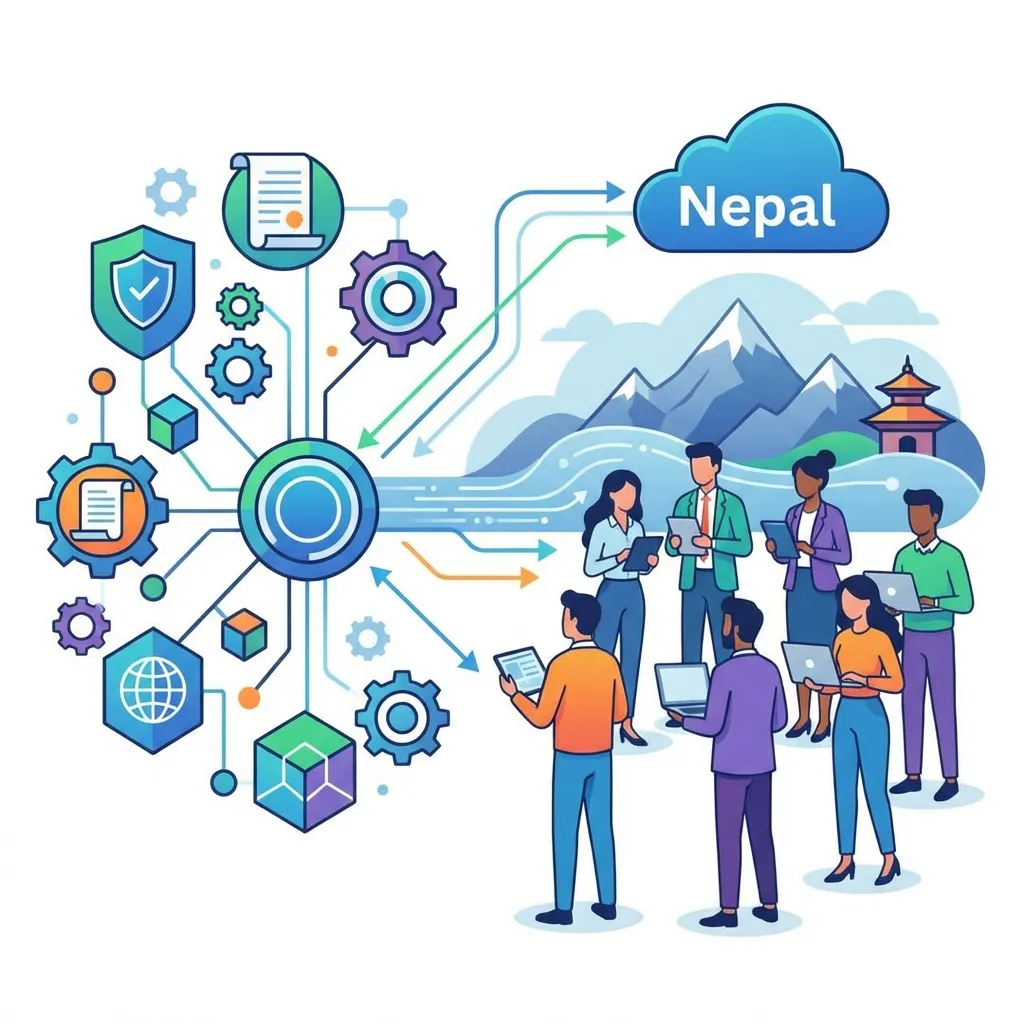
The Pillars of Nepal’s IG Ecosystem
- Nepal IGF: We have our own national Internet Governance Forum. It’s a platform where government, industry, and civil society meet. It’s growing, but we need more “unusual suspects” there—students, startups, and content creators, not just the usual policy experts.
- Civil Society: Groups like the Internet Society Nepal (ISOC Nepal), Digital Rights Nepal, and Body & Data are doing incredible work advocating for privacy, freedom of expression, and equity.
- Government: The Ministry of Communication and Information Technology and the Nepal Telecommunications Authority (NTA) make the hard rules (Cyber Act, IT Bill).
- Technical Sector: ISPs, NPIX, and the .np registry (Mercantile) keep the lights on.
The Gaps
Despite this activity, we face challenges:
1. The Reactivity Problem
We often react to technology rather than planning for it. We discuss “regulating AI” or “banning crypto” often after it’s already widespread or when panic sets in. We need proactive, knowledgeable policy frameworks.
2. The Participation Gap
While civil society is active, the private sector (marketing agencies, e-commerce giants, software houses) is often missing from IG discussions unless a tax issue arises. Furthermore, Youth participation is often tokenistic. We need youth not just as “volunteers” at events, but as policy drafters.
3. The Urban-Rural Divide
IG discussions happen in Kathmandu hotels. But the real governance challenges—digital literacy, affordable access, meaningful connectivity—are in Karnali and Sudurpaschim.
Where We Need to Go
- Strengthen the Nepal IGF: Make it a year-round process, not just a one-day event.
- Digital Literacy 2.0: Move beyond “how to use Facebook” to “how the internet works and what my rights are.”
- Global Representation: We need more Nepalis in ICANN, APNIC, and the UN IGF. We have a unique perspective as a developing, landlocked nation that the world needs to hear.
The groundwork has been laid by the pioneers of Nepal’s IT sector. It is now up to our generation to build the structure on top of it.