Indian Handicrafts Digital Marketing Report: Market Growth & Trends
Digital Marketing for Handicrafts and Local Products in India
Industry Overview
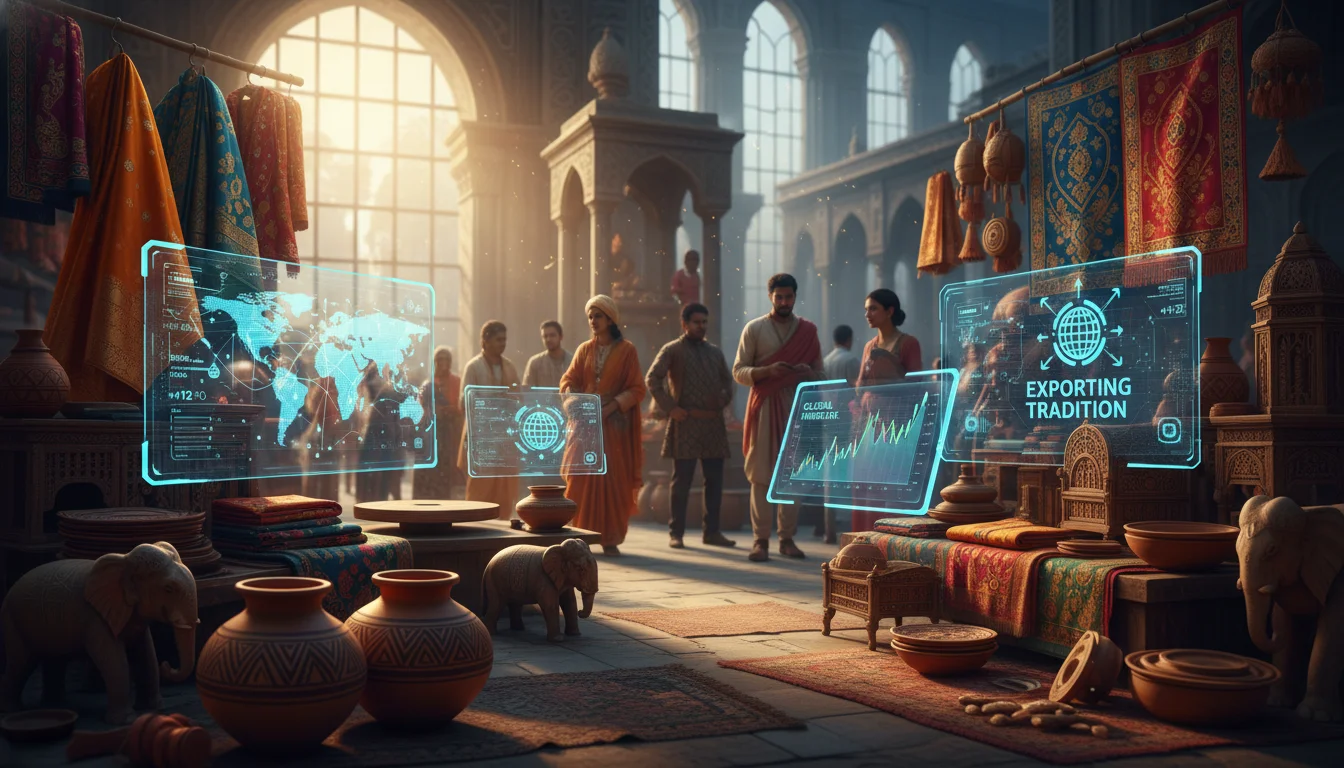
The Indian handicrafts and local products sector operates at a critical intersection of cultural heritage preservation, rural economic sustenance, and modern commercial scaling. Rooted deeply in centuries-old artisan traditions, the industry represents a vast, decentralized ecosystem that supports approximately 200 to 250 million participants across the subcontinent, making it one of the largest informal creative economies globally. The sector encompasses a highly diverse array of product categories. Traditional handicrafts include woodwork, glassware, hand-printed textiles, embroidered and crocheted goods, zari, imitation jewelry, and pottery. Concurrently, the definition of local products has expanded to include high-growth agricultural and wellness segments such as organic regional foods, herbal teas, superfoods, premium custom spices, and traditional snacks like makhana (fox nuts), which are experiencing a renaissance under the banner of sustainable, homegrown wellness.
Current market valuations project robust and multifaceted expansion trajectories, driven by shifting consumer paradigms and significant government interventions. Domestic market estimates from the Export Promotion Council for Handicrafts (EPCH) indicate that the Indian handicrafts market achieved a valuation of US$ 4.56 billion in 2024 and is forecast to reach US$ 8.19 billion by 2033, expanding at a compound annual growth rate (CAGR) of 6.39%. Broader assessments that incorporate aggressive export scaling and allied local product categories suggest the domestic market generated revenues of US$ 44.79 billion in 2023, with projections to scale upwards of US$ 71.33 billion by 2030, marking an expected CAGR of 6.9%. Globally, the handicrafts market size is valued to increase by a staggering US$ 977.96 billion between 2025 and 2030, driven heavily by sustainable craftsmanship. Within this economic matrix, woodwork represented the largest revenue-generating category in 2023, while glassware emerged as the most lucrative and fastest-growing segment. Export statistics further underscore the sector’s global relevance; in Fiscal Year 2024 alone, India exported handicrafts worth approximately US$ 3.8 billion (₹31,095 crore), with the United States absorbing nearly 41% of these exports, followed closely by the UAE, UK, Germany, and France.
Simultaneously, adjacent local product categories are demonstrating explosive growth. The India makhana market, for instance, is estimated at US$ 1.46 billion in 2025 and is projected to reach US$ 2.23 billion by 2030 at an 8.8% CAGR. The organic food market is equally dynamic, supported by consumers seeking chemical-free nutrition, leading to a surge in demand for certified organic produce, vegan options, and authentic regional specialties.
Domestic Handicrafts Market: US$ 4.56 Billion, projected to reach US$ 8.19 Billion by 2033 (6.39% CAGR).
Broader Handicrafts Sector: US$ 44.79 Billion, projected to reach US$ 71.33 Billion by 2030 (6.9% CAGR).
Annual Export Value (FY 2024): US$ 3.8 Billion (₹31,095 crore), with the United States as the top destination (41% share).
India Makhana Market: Estimated at US$ 1.46 Billion, projected to reach US$ 2.23 Billion by 2030 (8.8% CAGR).
Largest Handicraft Segment: Woodwork, maintaining dominant market share.
Fastest Growing Segment: Glassware, showing accelerated adoption in home decor.
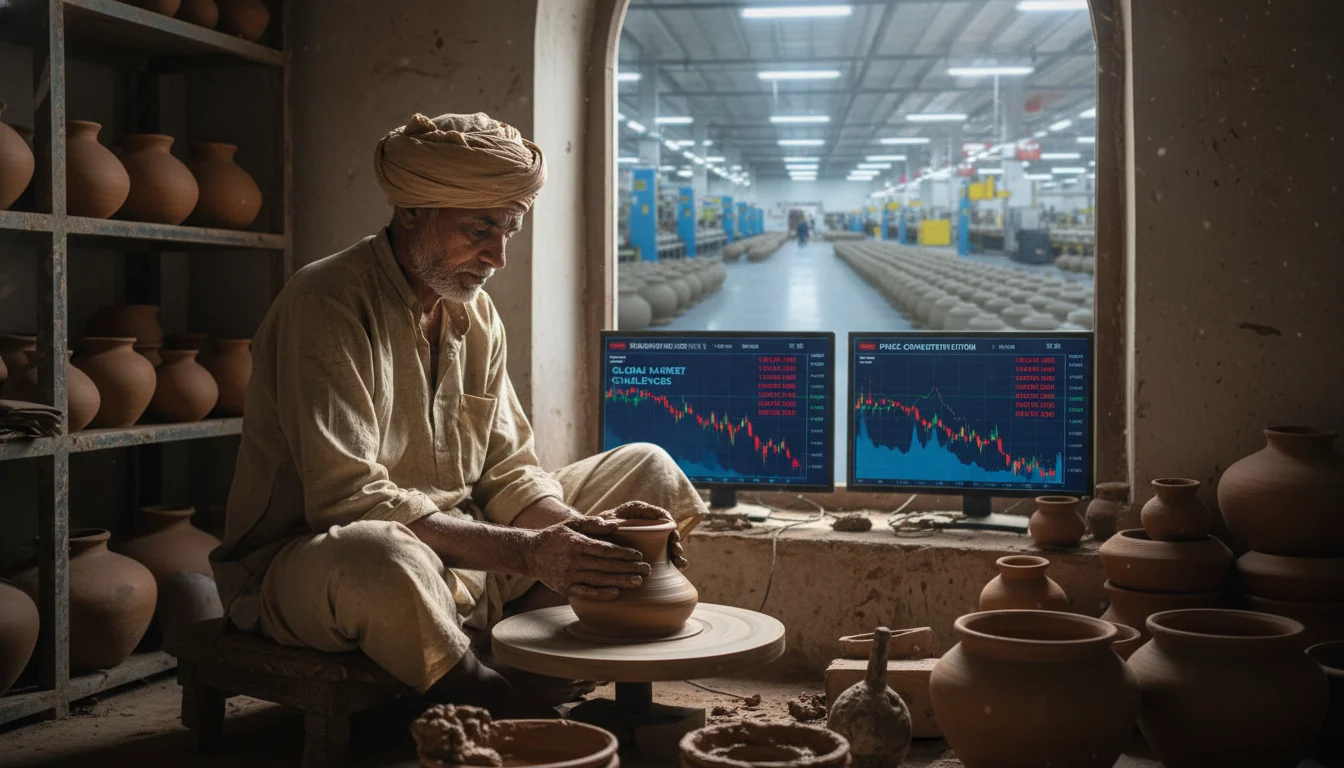
Despite these highly promising macroeconomic indicators, the industry faces profound systemic challenges that threaten grassroots sustainability. The influx of cheap, mass-produced machine-made replicas and imported goods has severely compressed artisan profit margins, rendering the market hyper-competitive and threatening the economic viability of traditional craftsmanship. Artisans and local businesses frequently lack access to formal credit structures, modern digital literacy, and contemporary marketing channels, relying instead on highly fragmented traditional brick-and-mortar retail and temporary exhibitions. This reliance limits geographic reach and creates a dependency on multiple intermediaries, which dilutes the final revenue reaching the creator.
Furthermore, inconsistent supplies of raw materials—such as organic cotton, silk, natural dyes, and high-quality wood—disrupt production efficiency and scalability in handloom and craft clusters. From a commercial perspective, the deficit in modern business acumen among traditional artisans remains a severe bottleneck. Small-scale manufacturers face immense difficulties in establishing strong brand identities, acquiring necessary certifications (such as organic, fair-trade, or Geographical Indication tags), and meeting the stringent packaging standards required for international competitiveness. Consequently, younger generations are demonstrating a rapidly declining interest in pursuing traditional crafts, posing an existential risk to the preservation of these indigenous arts.
The convergence of these economic pressures and operational deficits necessitates a fundamental paradigm shift. Government interventions such as “Vocal for Local,” “Make in India,” and the “One District, One Product” (ODOP) initiative—which has identified over 1,200 unique products across 750 districts—provide crucial policy support and tax relief, such as the reduction of GST on handicrafts and textiles to 5%. However, policy alone is insufficient. The integration of digital commerce and modern performance marketing technologies is an operational imperative. Digital ecosystems empower these businesses to bypass legacy intermediaries, establish direct-to-consumer (D2C) pipelines, and reclaim comprehensive margin control while preserving the cultural integrity of their products.
Digital Landscape in India
The digital landscape in India is undergoing unprecedented acceleration, fundamentally altering the mechanisms through which consumers discover, evaluate, and purchase local products. A proliferation of affordable smartphones and ubiquitous, low-cost mobile data has catalyzed an e-commerce revolution that is actively restructuring the retail economy. Projections indicate that the Indian internet user base will reach nearly 900 million to 1 billion individuals between 2025 and 2030, with the e-retail market primed to encompass 300 million to 350 million active shoppers, propelling online gross merchandise value (GMV) to between US$ 100 billion and US$ 120 billion by 2025. Crucially, this growth trajectory is no longer confined to metropolitan hubs. The emergence of “Middle India”—comprising over 8,000 towns and 600,000 villages—represents a massive, previously untapped demographic for digital brands, with India projected to add 47 million new consumers to its market in 2025 alone.
Within this expansive digital environment, specific social media platforms wield disproportionate influence over the handicrafts, home decor, and regional wellness sectors. Visual discovery platforms are the primary engines of consumer inspiration and latent product discovery. Pinterest, for instance, reported over 70 billion impressions globally for home decor in 2025, reflecting its deep engagement metrics. The platform’s average session duration now exceeds 14 minutes, highlighting its utility as a high-intent research tool rather than a passive scrolling environment. Over 75% of all pins saved in 2025 were image-based product recommendations, establishing a direct correlation between visual inspiration and commercial transaction. Furthermore, Gen Z usage on Pinterest grew by 18%, indicating a generational shift toward visual search behaviors and DIY craft resurgence. Instagram mirrors this trend, serving as critical infrastructure for brand storytelling. Short-form video content, specifically Instagram Reels and YouTube Shorts, dictates aesthetic trends and consumer preferences, shifting the marketing paradigm from static catalog images to dynamic, behind-the-scenes narratives.
Consumer online behavior in India has evolved toward an intersection of value-consciousness, absolute authenticity, and environmental sustainability. A comprehensive 2025 survey conducted by Rukam Capital involving 5,000 Indian respondents across 18 states revealed that 58% prefer shopping from homegrown, local, or small business brands, while a striking 76% actively seek eco-friendly and sustainable products. The modern Indian consumer is increasingly distrustful of mass-produced, faceless commodities. Trust has emerged as the ultimate market differentiator and the primary driver of digital conversion. Research from KPMG indicates that 68% of Indian shoppers exhibit higher loyalty toward brands they connect with emotionally, and 47% of emerging consumers are willing to pay a premium for brands they implicitly trust. Nearly half of the surveyed respondents stated that a strong founder narrative or authentic brand story made a label memorable, superseding mere price competition.
This behavioral shift presents a fertile environment for the Direct-to-Consumer (D2C) model. The Indian D2C market, estimated to reach US$ 12 billion to US$ 15 billion by 2025 and growing at an aggressive 25% to 30% annually, proves that consumers are highly receptive to digital-first brands that communicate transparently. Shoppers demand authentic narratives regarding product origin, artisan welfare, and material sourcing. In sectors like organic foods and regional spices, consumers look for stringent organic certifications, fair-trade practices, and transparent supply chains to guard against greenwashing.
Furthermore, search engine behavior is becoming highly sophisticated and specific. Dual-language searches (mixing English with regional terms) and localized intent queries dominate the search engine results pages (SERPs).
The proliferation of voice search, driven by smart speakers and mobile assistants, has led to a surge in natural, conversational queries such as “where to buy organic vegetables near me”. Additionally, price-modified searches incorporating terms like “cost,” “price,” “under 2000,” and “affordable” dominate local service and product searches, indicating a high commercial intent that hyper-localized digital marketing can efficiently capture.
However, the expectations for digital customer service have simultaneously intensified alongside this digital adoption. Over half of Indian online shoppers now expect brands to respond to digital queries within a rigid two-hour window. Thus, a brand’s digital presence in the handicrafts and local products sector must seamlessly integrate high-fidelity visual marketing with robust, instantly responsive customer relationship management (CRM) systems and automated AI assistance to build and maintain consumer trust.
Digital Marketing Opportunities
Strategic deployment of digital marketing directly mitigates the systemic vulnerabilities of the handicrafts and local products industry. By establishing an omnichannel digital presence, artisans and local enterprises can circumvent traditional, multi-tiered supply chains, eliminating the complex web of intermediaries that historically depressed artisan profit margins and dictated market terms. This direct pipeline allows creators to retain pricing authority, dramatically improve revenue streams, and cultivate long-term, direct brand equity with the end consumer.
The government-backed Open Network for Digital Commerce (ONDC) represents a revolutionary technological and strategic catalyst in this ecosystem. Unlike proprietary, monopolistic marketplaces that dictate visibility through opaque algorithms and exact exorbitant commission structures—often ranging from 25% to 30%—ONDC operates as an open, interoperable network. It democratizes access by allowing sellers to be discoverable across multiple buyer applications simultaneously while maintaining significantly lower commission rates of 5% to 10%. This structural cost reduction inherently improves the financial viability of small-scale sellers, enabling them to reallocate capital toward product innovation, digital marketing initiatives, and sustainable raw material procurement. As of late 2025, over 1.16 lakh retail sellers from over 630 cities and towns were live on the network, expanding the customer reach for local artisans exponentially.
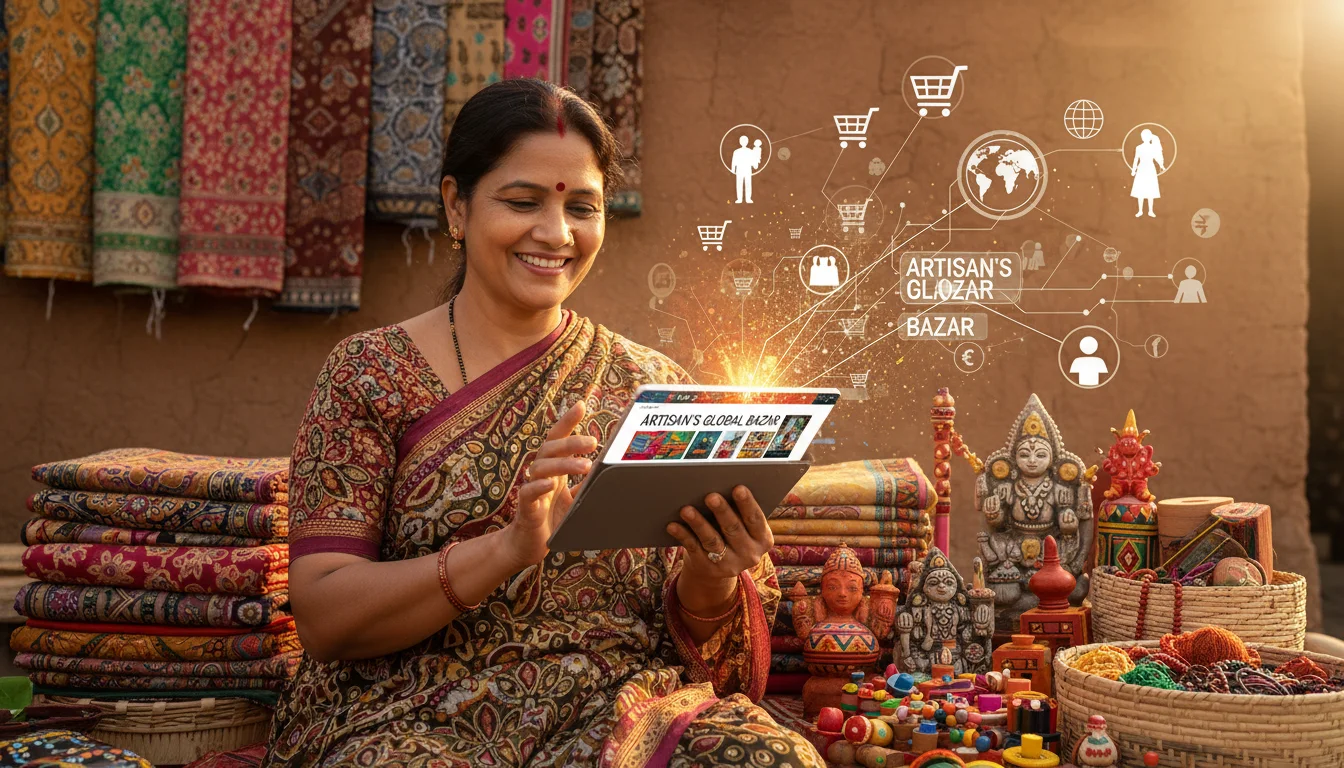
To capitalize on these structural advantages and the D2C boom, businesses must deploy multifaceted digital marketing strategies that address both top-of-funnel discovery and bottom-of-funnel conversion:
Search Engine Optimization (SEO) and Technical Content Architecture
The foundational pillar of this digital strategy is Search Engine Optimization (SEO) and technical content architecture. SEO remains the most sustainable, high-ROI mechanism for capturing high-intent consumer demand. A comprehensive SEO audit and technical restructuring can yield dramatic commercial turnarounds. The case study of Rudhigat, an online store selling handmade Indian handicrafts and home decor, demonstrates this efficacy perfectly. Struggling with slow website speeds, high bounce rates, and poor organic visibility in a highly competitive market, the brand implemented a complete on-page SEO overhaul and technical site restructuring. By utilizing advanced analytics tools to map their content precisely to user search queries, Rudhigat resolved underlying user experience deficits. This systematic approach—addressing core web vitals and semantic search relevance—resulted in enhanced organic traffic and measurable improvements in lead generation and conversion rates. For local products, educational content marketing—such as publishing authoritative blogs detailing traditional craft techniques, organic farming processes, or Ayurvedic wellness benefits—serves a dual purpose. It establishes topical authority for search engine crawling and simultaneously builds the transparent, educational narrative that modern, eco-conscious consumers demand.
Visual and Social Media Marketing
Because handicrafts, regional apparel, and local home decor are inherently aesthetic and culturally rich, visual and social media marketing across platforms like Instagram, Pinterest, and YouTube is non-negotiable. The strategy must fundamentally shift from posting static, highly polished catalog-style imagery to distributing dynamic, raw, short-form video content. Videos demonstrating the meticulous, labor-intensive craftsmanship behind a block-printed fabric or the sustainable harvesting of wild Himalayan honey build an emotional bridge with the consumer. User-generated content (UGC) and micro-influencer collaborations provide necessary social proof in this phase. Influencers act as vital trust proxies, validating the authenticity and quality of products to niche, highly engaged audiences who value sustainability and slow fashion over mass production. Furthermore, empirical data indicates that Indian D2C brands combining robust organic content engines with paid acquisition (Meta Ads, Google Ads) experience a 30% to 40% reduction in customer acquisition costs (CAC) over an 18 to 24-month horizon.
Advanced Technological Integration
Advanced technological integration separates market leaders from traditional retailers attempting to move online. The deployment of Artificial Intelligence (AI) for customer personalization and operational efficiency has shown profound results. The Vanamaala case study illustrates how integrating proprietary AI algorithms into an e-commerce platform provided highly personalized product recommendations to global customers, significantly increasing engagement and revenue for traditional artisans by tailoring the shopping experience. AI chatbots further resolve the demand for instant customer service, handling up to 85% of queries without human intervention, reducing response times to seconds, and boosting sales conversions by 25% to 40%. Furthermore, Augmented Reality (AR) technology addresses the traditional “tactile deficit” of online shopping. By allowing consumers to virtually project a handcrafted wooden table into their living room or virtually try on a regional saree through their smartphone camera, brands reduce purchase friction, enhance buyer confidence, and significantly minimize costly return rates.
Competitive Analysis
An analysis of the leading entities within the Indian handicrafts and regional products sector reveals distinct strategic paradigms, alongside notable operational gaps that agile, digitally native brands can rapidly exploit. Assessing the digital footprints and business models of prominent players such as Fabindia, Jaypore, and adjacent lifestyle brands provides critical benchmarking data for emerging local businesses.
Fabindia
Fabindia stands as the undisputed legacy giant in the ethnic and handicraft retail space, boasting an extensive omnichannel presence with over 350 physical retail stores globally. The brand possesses an unparalleled advantage in legacy brand recognition, consumer trust, and a deeply entrenched ethos of ethical sourcing. It successfully leverages a massive heritage network, partnering with over 70,000 artisans and emphasizing sustainable craftsmanship across apparel, home decor, and personal care. Its customer relationship management strategy, particularly the tier-based “FabFamily” loyalty program, effectively drives long-term customer retention and high lifetime value through personalized rewards based on purchase history.
However, a comprehensive audit of Fabindia’s digital execution exposes significant vulnerabilities that hinder its digital-first scalability. The brand’s primary website suffers from suboptimal loading speeds and an outdated SEO architecture that fails to maximize organic traffic capture from modern search engines. On social media, despite possessing over 1.1 million Instagram followers and 2 million Facebook likes, Fabindia’s engagement rates remain disproportionately low compared to its audience size. This underperformance is directly attributable to an over-reliance on generic, catalog-style imagery and repurposed cross-platform content, critically underutilizing high-engagement formats like Reels and interactive storytelling. Furthermore, their email marketing strategy is frequently characterized as strictly promotional, lacking the deep narrative personalization that contemporary consumers expect from heritage brands.
Jaypore
Conversely, Jaypore (acquired by the Aditya Birla Group) positions itself exclusively within the premium tier of the cultural and lifestyle market.
Its strategic focus explicitly targets the “connoisseur” demographic—typically urban millennials and Gen X consumers aged 28 to 44 residing in Tier-1 and major Tier-2 cities. These consumers actively seek exceptionalness, rarity, and highly authentic Geographical Indication (GI) tagged products. Jaypore’s strategy emphasizes meticulously curated, high-quality aesthetic designs and private label exclusivity, which successfully drives a remarkably high Average Order Value (AOV). Following its acquisition, the brand gained significant corporate capital and robust logistical backing, allowing for expansive scaling. However, Jaypore’s strict focus on a premium, narrow audience segment inherently limits its mass-market scalability and Customer Lifetime Value velocity when compared to broader, more accessible lifestyle brands. The challenge for Jaypore remains balancing corporate scaling mandates with the preservation of its rare, artisan-first brand identity.
In the broader e-commerce landscape, pure-play marketplaces like Thotfy, Amazon Karigar, and Etsy provide essential infrastructure for small artisans. While platforms like Etsy dominate global reach and Amazon Karigar provides massive domestic traffic, these platforms heavily commoditize the artisan, making it difficult for individual creators to build independent brand equity away from the marketplace’s shadow. Meanwhile, fast-fashion ethnic brands like Biba and Nykaa Fashion outpace legacy handicraft brands in digital engagement by utilizing highly relatable influencer-driven trendsetting and aggressive video strategies (Reels), though they lack the deep, authentic grassroots artisan narratives of pure-play handicraft brands.
| Brand / Platform | Core Strategic Strengths | Digital Vulnerabilities & Gaps | Market Positioning |
|---|---|---|---|
| Fabindia | Heritage trust, vast offline footprint, 70K+ artisan network, tiered CRM | Slow site speed, low social engagement, generic email marketing, underutilized video | Mainstream authentic, holistic lifestyle and wellness |
| Jaypore | Premium curation, high AOV, strong visual aesthetics, corporate backing (ABG) | Narrow target audience, restricted volume scalability, potential narrative dilution | Premium connoisseur, rare and authentic design |
| Biba / Nykaa Fashion | High engagement, influencer-driven trendsetting, highly relatable video/Reels strategy | Superficial cultural connection; lack of deep grassroots artisan storytelling | Trend-focused ethnic wear, highly commercialized |
| Marketplaces (Etsy, Amazon Karigar) | Massive built-in traffic, global reach, logistical support for small sellers | High competition, commoditization of the seller, lack of independent brand control | Aggregation platforms; volume over individual brand identity |
The competitive landscape reveals a distinct structural void. Legacy brands are encumbered by slow digital infrastructure and rigid, outdated content strategies, while fast-fashion ethnic brands lack deep, authentic artisan narratives. Emerging businesses can capitalize on these gaps through hyper-personalization, deploying lightweight, lightning-fast e-commerce platforms equipped with AI-driven product recommendations to immediately outclass the sluggish web experiences of larger competitors. Secondly, shifting away from polished, static catalog images to raw, unfiltered storytelling—showing the actual crafting or farming process—builds the exact type of trust modern consumers crave. Finally, agile community building via WhatsApp commerce and highly segmented, value-driven email marketing fosters an intimate community feel that large corporations fundamentally struggle to replicate.
Recommended Strategy for Handicrafts and Local Products in India
To successfully navigate the complex Indian market and overcome the industry’s structural challenges, an emerging handicraft or local product brand must implement a rigorous, data-driven, and highly localized digital strategy. This approach must synthesize authentic cultural narratives with aggressive, technologically enabled performance marketing.
The strategy begins with precise audience segmentation. Data indicates the most lucrative demographic for regional and handcrafted products spans individuals aged 22 to 44, predominantly women, residing in Tier-1 cities (Delhi, Mumbai, Bengaluru) and rapidly digitizing Tier-2 cities (Jaipur, Lucknow, Pune). Within this demographic, two primary personas emerge. The first is the Eco-Conscious Millennial (aged 25-35), who is highly active on visual platforms like Instagram and Pinterest. This persona deeply values sustainability, cruelty-free processes, and fair-trade practices. They are willing to pay a premium for certified organic products and zero-carbon footprints, responding strongly to influencer validation and minimalist, aesthetic packaging. The second persona is the Urban Connoisseur (aged 36-44), who seeks rarity, cultural heritage, and geographical indication (GI) tagged authenticity. This demographic responds to detailed email newsletters, high-fidelity website experiences, and comprehensive product origin stories that validate the premium price point.
To capture these personas, the recommended channel mix must prioritize visual discovery and conversational commerce. Instagram, Pinterest, and YouTube Shorts serve as the primary top-of-funnel acquisition engines. Campaigns must leverage native features like Instagram Shopping and Pinterest Buyable Pins to collapse the sales funnel, allowing seamless in-app purchases directly from inspirational content. Simultaneously, onboarding onto the ONDC network acts as a crucial, low-cost distribution channel, capturing consumers across various buyer apps without the prohibitive commission structures of traditional marketplaces. Furthermore, given the Indian consumer’s expectation for immediate response, deploying AI chatbots via WhatsApp Business facilitates 24/7 conversational commerce, instantly answering product origin queries, resolving logistics issues, and processing orders directly within the chat interface.
Content ideation must pivot entirely toward transparency and cultural education. For traditional crafts, “The Artisan’s Journey” should form the core content pillar, utilizing raw, documentary-style short videos detailing raw material sourcing and the labor-intensive crafting process to directly address the consumer demand for authenticity. Styling guides that educate the consumer on integrating traditional crafts into modern homes (e.g., “Styling Heritage Block Print Cushions in a Minimalist Living Room”) drive product utility and visual desire. For local foods and wellness products, such as makhana or herbal teas, content must demystify the supply chain. Ingredient breakdowns, organic certification explanations, and Ayurvedic principle educational series build absolute, irrefutable brand trust.
Executing this strategy requires strict financial discipline. For Small and Medium Enterprises (SMEs) in India, allocating 7% to 12% of annual gross revenue toward digital marketing is the recommended benchmark, potentially stretching to 15% for high-growth startups. A highly optimized, ROI-focused budget allocation for a growing D2C brand operating with an illustrative annual digital marketing budget of ₹10,00,000 prioritizes scalable performance alongside foundation building:
| Marketing Channel | Recommended Allocation (%) | Annual Budget (₹10,00,000) | Strategic Purpose |
|---|---|---|---|
| Google & Meta Ads (PPC) | 30% | ₹3,00,000 | Immediate traffic generation, retargeting high-intent users, scaling AOV. |
| Content Marketing (SEO, Blogs) | 15% | ₹1,50,000 | Building long-term organic traffic, establishing domain authority and search trust. |
| Social Media Management | 10% | ₹1,00,000 | Fostering engagement, brand storytelling, video creation, influencer collaboration. |
| Website Development, UX & AI Tools | 10% | ₹1,00,000 | Ensuring fast load times, seamless checkout, AR integration, and AI chatbot support. |
| Email Marketing & Automation | 5% | ₹50,000 | Driving repeat purchases, nurturing leads, running CRM loyalty programs. |
(Note: The remaining 30% encompasses auxiliary software subscriptions, advanced analytics tools, logistics integrations, and necessary contingency funds based on dynamic market needs.)
Keywords & SEO Opportunities
The Indian search landscape exhibits highly unique linguistic and behavioral characteristics that require a nuanced approach to Search Engine Optimization. Indian consumers frequently blend English with regional phrasing (e.g., dual-language searches) and exhibit acute price consciousness. Standard modifier terms such as “cost,” “price,” “charges,” “affordable,” and “under [amount]” signify massive commercial intent in the Indian market.
Relying exclusively on broad, high-volume keywords—such as “Indian handicrafts” or “organic spices”—often results in high traffic but dismal conversion rates. These broad terms capture users in the exploratory, educational phase rather than the transactional phase of the buying cycle, leading to high bounce rates and low engagement.
Conversely, long-tail keywords—while possessing lower absolute search volumes—attract users with highly specific, crystallized purchasing intent.
These users spend significantly more time on site, explore product pages deeper, and convert at exponentially higher rates. Furthermore, the rapid proliferation of voice search via smart speakers and mobile assistants necessitates optimizing content for natural, conversational phrasing and question-based queries.
High-Intent Search Term Matrix
To capture users ready to transact, businesses must optimize primary category and product pages with descriptive, commercially driven core keywords.
| Product Category | High-Intent Core Keywords | Strategic SEO Application |
|---|---|---|
| Apparel & Textiles | “Bandhani Saree Manufacturers in Surat”, “buy authentic Kashmiri print saree”, “Plain Kota Sarees online” | Optimized directly on primary category pages, product titles, and meta descriptions to capture definitive purchasing intent. |
| Handicrafts & Home Decor | “handmade woodwork home decor online”, “sustainable floor coverings India”, “buy artisanal crafts online” | Utilized in image alt-text, meta tags, and Pinterest board descriptions. Targets buyers actively furnishing spaces. |
| Regional/Organic Foods | “buy premium organic spices”, “certified organic makhana bulk”, “bulk spice suppliers India” | Applied in comprehensive product descriptions, B2B landing pages, and Google Shopping product feeds. |
Long-Tail & India-Specific Opportunities
To dominate highly profitable niche segments, brands must structure their content architecture around localized, descriptive, and price-anchored long-tail queries that directly address specific consumer scenarios.
| Search Behavior Type | Long-Tail Keyword Examples | Optimization Tactic |
|---|---|---|
| Price-Conscious Intent | “affordable leather handbags under 2000 in India”, “low cost organic spices online” | Create dedicated, permanent collection pages categorized by price brackets (e.g., “Gifts under ₹2000”) to capture exact match queries. |
| Hyper-Local Intent | “best handmade blue pottery in Jaipur”, “organic spices near me”, “authentic woodwork in Mumbai” | Optimize Google Business Profiles meticulously and create location-specific landing pages highlighting regional craft specialties. |
| Voice Search / Conversational | “where to buy authentic Ayurvedic wellness products online”, “how to style traditional Indian handicrafts” | Integrate detailed FAQ schema markup on product pages formatted in natural, question-and-answer structures to capture voice snippets. |
| Problem-Solving Intent | “eco-friendly water bottles for gym workouts”, “low-fat health snacks for office desk” | Develop long-form blog content and lifestyle guides that position the product as a direct solution to specific, everyday lifestyle needs. |
Implementation Roadmap
To execute this comprehensive digital strategy effectively, initiatives must be logically sequenced to balance immediate revenue generation and cash flow stabilization with the establishment of long-term structural digital assets. This phased approach mitigates risk while allowing for data-driven course correction.
Short-Term Quick Wins (Month 1–3)
The initial phase focuses strictly on optimizing existing digital infrastructure, capturing latent market demand, and establishing robust baseline analytics to inform future spend. The first month is dedicated to a rigorous technical and foundational overhaul. A comprehensive technical SEO audit must be conducted to resolve site speed latency, ensure flawless mobile responsiveness, and eliminate broken links, mimicking the critical turnaround strategies seen in the Rudhigat case study. Concurrently, brands must claim and deeply optimize all local listings, primarily Google My Business (GMB), utilizing hyper-local keywords to capture immediate geographic search intent. Integrating baseline AI chatbot functionality across the website and WhatsApp business profiles ensures immediate, 24/7 query resolution, capturing off-hours traffic and preventing drop-offs due to response delays.
Moving into the second month, the focus shifts to catalog optimization and marketplace expansion. Product descriptions across the entire site must be rewritten to seamlessly include high-intent and long-tail keywords, ensuring transparent detailing of material sourcing, organic certifications, and the artisan backstory. Simultaneously, businesses must initiate onboarding onto the ONDC network. This action immediately expands product discoverability across multiple buyer applications nationwide without the heavy upfront capital expenditure associated with traditional marketplace launch campaigns. By the third month, the brand is prepared for targeted paid acquisition. Deploying highly targeted Meta (Facebook/Instagram) and Google Ads, the focus remains strictly on bottom-of-funnel retargeting and high-intent keyword capture to ensure an immediate return on ad spend (ROAS). Alongside paid media, an influencer seeding campaign is launched, distributing products to carefully vetted micro-influencers in the sustainability and home decor space to generate the initial wave of authentic User-Generated Content (UGC).
Long-Term Strategy (Month 6–12)
The secondary phase transitions the focus toward aggressive scaling, brand equity consolidation, and the deployment of advanced technological solutions to secure market leadership. By the sixth month, the brand must establish a robust, video-first content engine. A consistent content calendar across Instagram Reels and YouTube Shorts is deployed, pivoting entirely to raw, documentary-style artisan footage and practical lifestyle styling tutorials. Complementing this organic reach, a comprehensive, value-driven email and WhatsApp marketing sequence is launched. This CRM initiative transitions communications from basic transactional updates to deep narrative storytelling and personalized product curation, solidifying the emotional loyalty required for high customer retention.
Entering the ninth month, the strategy incorporates advanced AI and immersive technology deployment. The e-commerce platform is upgraded with machine learning algorithms designed for predictive product recommendations, maximizing cross-selling opportunities and driving up the Average Order Value (AOV) based on user browsing behavior. For relevant high-ticket categories, such as large wooden decor or premium textiles, Augmented Reality (AR) viewing capabilities are integrated. This allows users to visualize products in their physical space, significantly reducing purchase hesitation and minimizing the logistical nightmare of high return rates. By the twelfth month, the focus broadens to omnichannel synchronization and ecosystem expansion. Data analyzed from the preceding eleven months identifies the most lucrative geographic clusters, allowing the brand to evaluate the feasibility of launching offline pop-up experiences or partnering with boutique physical retail in targeted Tier-1 or Tier-2 cities. Finally, B2B export pipelines are solidified via targeted LinkedIn campaigns and specialized B2B marketplaces (e.g., TradeIndia, Alibaba), utilizing the newly established digital brand authority to secure high-volume international orders.
Conclusion
The Indian handicrafts and local products sector possesses immense, multifaceted economic potential, deeply underscored by a profound macroeconomic shift in consumer preference toward cultural authenticity, environmental sustainability, and highly transparent supply chains. However, the survival, preservation, and scalability of these traditional industries are entirely contingent upon their ability to effectively navigate and dominate the modern digital ecosystem. Traditional reliance on fragmented supply chains and opaque intermediaries is no longer viable. Digital marketing is no longer merely a supplementary promotional vehicle; it is the fundamental operational infrastructure required to bypass exploitative intermediaries, command strict pricing power, and forge direct, emotionally resonant connections with a rapidly expanding global and domestic consumer base. By aggressively embracing advanced SEO architectures, video-first social media strategies, ONDC network integration, and AI-driven conversational customer experiences, local brands can successfully bridge the historical gap between ancient craftsmanship and the hyper-competitive modern digital economy.
To architect and flawlessly execute this complex digital transformation, specialized technological and strategic partnerships are indispensable. Gurkha Technology, a premier digital marketing and technology company operating in Nepal, provides the exact suite of tailored, high-performance solutions required for scaling regional e-commerce and retail brands. Demonstrating proven excellence through comprehensive industry case studies—ranging from the highly successful, exclusive digital launch of global brands like “Pixi” for Soraya’s Luxurious Cosmetics to the rigorous, ROI-focused Facebook marketing optimization for Famous Steel & Home Appliances—Gurkha Technology possesses deep domain expertise. By seamlessly integrating custom e-commerce web development, advanced SEO, sophisticated Performance Max campaign management, and robust AI chatbot implementations, the agency addresses the precise digital vulnerabilities holding back traditional businesses. For handicraft and local product enterprises seeking to modernize their operations and dominate the digital landscape, partnering with Gurkha Technology ensures a secure, data-driven, and highly profitable trajectory toward sustained market leadership.