Indian Beauty Market: Digital Marketing Trends Report 2025
Digital Marketing for Beauty and Cosmetic Brands in India
Industry Overview
The Beauty and Personal Care (BPC) industry in India is currently undergoing one of the most profound structural transformations witnessed within the global consumer goods sector. Historically characterized by a heavy reliance on unorganized retail and a limited selection of mass-market, utilitarian hygiene products, the market has rapidly evolved into a highly sophisticated, multi-segmented ecosystem. Today, this vibrant landscape encompasses highly specialized niches, including advanced derma-cosmetics, organic and clean beauty, men’s grooming, and hyper-personalized premium skincare. This evolution is fundamentally underpinned by shifting demographic realities, primarily a young, highly aspirational population—with over fifty percent of the nation under the age of thirty—and a rapidly expanding middle class experiencing a continuous rise in disposable incomes. The modern Indian beauty consumer views personal care not as a discretionary indulgence, but as an integral component of daily wellness, identity expression, and social capital.
The financial trajectory of the Indian BPC market illustrates a sector in exponential ascent, positioning the nation as a dominant global force. Current valuations and future projections indicate a robust compound annual growth rate (CAGR), driven by urbanization and digital commerce. The market generated a revenue of USD 31.19 billion in 2025 and is projected to reach an impressive USD 48.72 billion by 2034, registering a CAGR of 5.08%. Alternative forecasting models utilizing different inclusion criteria for the unorganized sector suggest an even more aggressive expansion, valuing the market at USD 23.73 billion in 2025 and anticipating it to hit USD 42.54 billion by 2034 with a CAGR of 6.7%. Regardless of the specific economic modeling applied, the consensus establishes India as the fourth-largest beauty and personal care market globally in terms of revenue generation. Furthermore, per capita spending on beauty products, which currently sits lower than global peers at roughly INR 1,200 to INR 1,400, is expected to nearly double to INR 2,300 to INR 2,500 by the year 2030, representing massive untapped headroom for brand expansion.
Several key product and behavioral trends currently define this growth trajectory. The organic and clean beauty pivot is perhaps the most significant, driven by escalating consumer awareness regarding chemical-free formulations and environmental sustainability. Consequently, the organic segment dominates the market, commanding a 42% share in 2025. Concurrently, fueled by rising concerns over urban pollution, atmospheric damage, and ultraviolet (UV) exposure, the skincare and suncare categories lead with a 35% market share. Suncare has distinctly transitioned from a seasonal, vacation-oriented purchase to a daily, non-negotiable essential. Furthermore, there is a distinct shift toward premiumization. However, this is no longer simply about a “priced premium” where high cost dictates luxury; rather, consumers are shifting toward a “perceived premium,” demonstrating a willingness to pay higher prices specifically for demonstrable efficacy, science-backed formulations, and elevated digital retail experiences. The luxury beauty segment alone, while presently representing only 4% of the total cosmetics market, is projected to reach USD 1.6 billion by 2028, growing at an accelerated CAGR of 14%.
| Market Segment / Metric | 2025 Valuation / Share | Projected Valuation (Year) | Key Growth Drivers |
|---|---|---|---|
| Overall BPC Market Size | USD 31.19 Billion | USD 48.72 Billion | Urbanization, rising per capita income, Gen Z demographic influence. |
| Luxury Beauty Segment | 4% of total market | USD 1.6 Billion | Experiential retail, scientific formulations, brand exclusivity. |
| Organic & Clean Beauty | 42% market share | Continued Dominance | Ingredient literacy, toxin-free demand, sustainability initiatives. |
| Skincare & Suncare | 35% market share | Market Leadership | Urban pollution concerns, UV awareness, daily routine integration. |
Despite the highly lucrative macroeconomic outlook, beauty and cosmetic brands operating in India must navigate a labyrinth of systemic and operational challenges that directly impact profitability, brand equity, and market penetration. Economic volatility and persistent price sensitivity among Indian consumers remain a foundational challenge. During periods of macroeconomic fluctuation or inflationary pressure, this sensitivity limits the mass adoption of premium products. Brands operating within the organized sector face intense competitive pressure from unorganized, low-cost alternatives, making it exceedingly difficult to maintain pricing integrity while simultaneously investing in high-quality, sustainable formulations and regulatory compliance.
A critical and ongoing threat to brand equity is the pervasive counterfeit ecosystem. The widespread availability of unauthorized, substandard products moving through informal retail and unregulated digital channels directly undermines consumer trust. These unauthorized replicas not only dilute brand perception but pose severe dermatological risks to consumers. Inadequate regulatory enforcement allows this parallel grey market to thrive, breeding a baseline of consumer skepticism that creates significant friction when authentic brands attempt to launch new, premium innovations.
Geographical and regional diversity presents another formidable operational hurdle. India encompasses extreme climatic variations that fundamentally alter skincare requirements on a regional basis. Formulations that excel in the humid, coastal environments of Mumbai or Chennai frequently underperform—or even exacerbate skin issues—in the arid, dry winters of Delhi, Punjab, or Rajasthan. Furthermore, regional variations in water quality, such as the hard water prevalent in Northern India, dictate different haircare and body care needs. This profound regional diversity exponentially increases research and development costs, severely complicates supply chain and inventory management, and demands highly localized, programmatic marketing strategies rather than a monolithic national approach.
The complexity of product formulation is further amplified by the diverse spectrum of Indian skin tones. Ranging widely across the Fitzpatrick scale (typically from Type III to Type VI), Indian skin requires highly specialized chemistry to address specific dermatological concerns, such as hyperpigmentation, compromised skin barriers due to high pollution, and heightened sebum production in tropical climates. Finally, brands face the escalating challenge of rising digital acquisition costs. As the digital ecosystem becomes hyper-saturated, brands encounter extreme ad fatigue, declining organic reach due to social media algorithmic shifts, and skyrocketing customer acquisition costs (CAC). The heavy reliance on paid media and expensive top-tier influencers is steadily eroding profit margins, forcing a structural rethink of how brands achieve sustainable visibility and customer retention in an increasingly fragmented market.
Digital Landscape in India (Contextual to the Industry)
Understanding the digital ecosystem in India requires acknowledging its sheer scale, rapid evolution, and profound impact on consumer psychology. The landscape is no longer merely a secondary distribution channel; it is the primary arena where brand perception is forged, educational narratives are established, communities are built, and consumer trust is ultimately won or lost.
The connectivity metrics of the Indian digital environment are staggering. The nation currently boasts 806 million active internet users, representing 55.3% of the total population, operating alongside 491 million active social media identities. This internet user base is supported by the widespread affordability of mobile data, with projections indicating that Indian consumers will utilize an average of 46 GB of mobile data monthly by the year 2027. For beauty and personal care brands, this pervasive connectivity translates into unprecedented, direct access to consumer demographics that were previously isolated from global beauty trends and organized retail structures. E-commerce platforms, which accounted for approximately 17% of BPC sales in 2024, are on a steep upward trajectory, projected to capture 45% of total category sales by 2037. The velocity of this shift is starkly illustrated by recent retail data: between June and November 2024, online beauty sales in India surged by 39% in value, heavily outpacing the meager 3% growth witnessed in traditional physical retail environments.
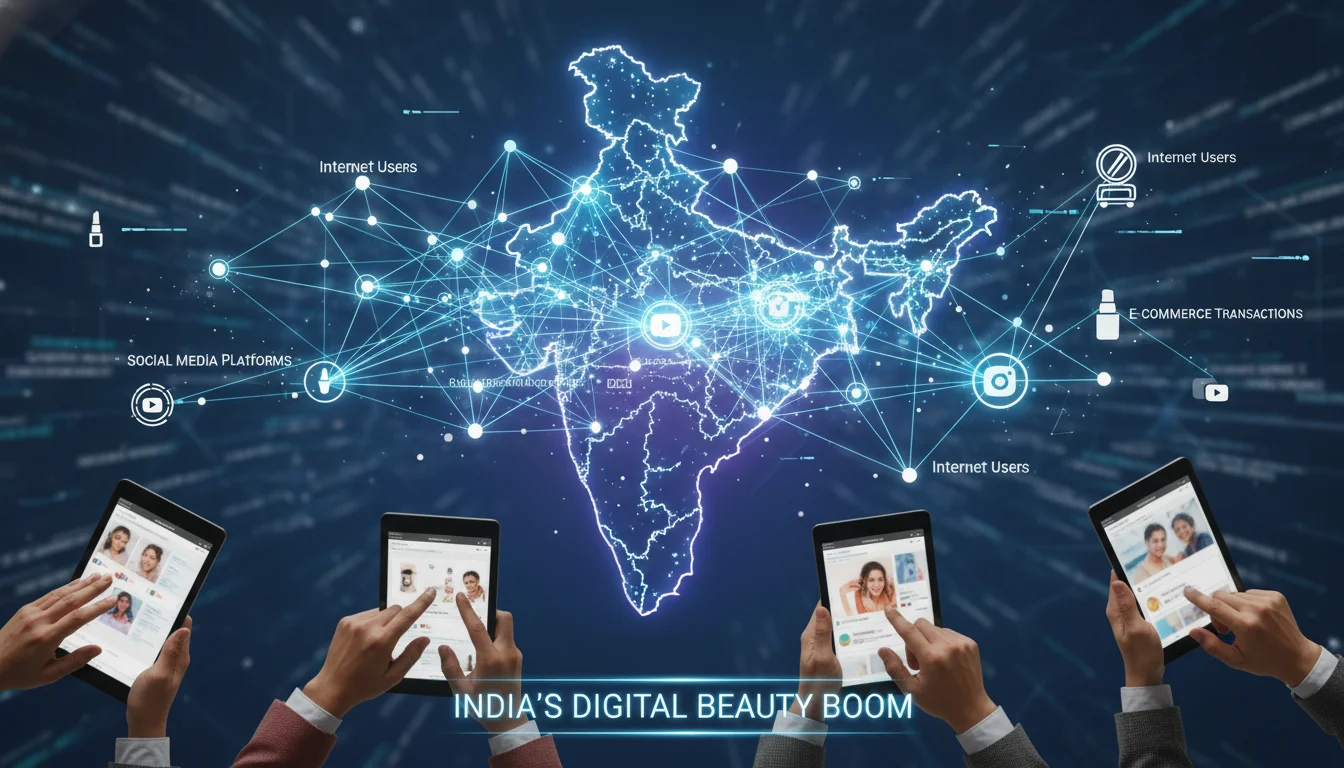
The social media and platform ecosystem in India is highly bifurcated based on format preference, linguistic orientation, and demographic intent. The Meta ecosystem, specifically Instagram, remains the undisputed epicenter for beauty discovery among urban millennials and Gen Z. Driven heavily by visual aesthetics, influencer-led tutorials, and user-generated short-form video content (Reels), Instagram is where premium beauty brands allocate the lion’s share of their marketing budgets, often dedicating 30% to 40% of total ad spend to platforms like Instagram and YouTube.
However, the most disruptive shift in India’s digital consumption patterns is the exponential explosion of regional, short-form video (SFV) platforms.
Platforms such as Moj and ShareChat, which collectively boast over 325 million daily active users, cater specifically to Tier-2, Tier-3, and rural audiences in over 15 native Indian languages. It is estimated that India will possess a 650 million-strong SFV user base by 2025, with an overwhelming 65% originating from non-metro cities. The next wave of beauty consumption is not originating from Mumbai or Gurgaon, but from emerging hubs like Bareilly, Bhilai, and Bhubaneshwar. For beauty brands, these regional platforms offer significantly higher click-through rates (CTR) compared to English-first platforms because they resonate with the authentic, localized realities of the consumer, utilizing creators who reflect their own cultural and linguistic nuances.
Parallel to the evolution of content consumption is the revolution in digital distribution, spearheaded by Quick Commerce. Platforms such as Blinkit, Zepto, and Swiggy Instamart have transcended their origins in grocery delivery to become a dominant, transformative force in beauty retail. These quick commerce platforms are projected to command 30% to 40% of the online BPC market by the year 2030, actively dethroning traditional horizontal marketplaces like Amazon and Flipkart. Catering to a highly impatient demographic, these platforms drive massive volumes of impulse purchases across categories like skincare, sunscreens, and color cosmetics by offering sub-30-minute delivery promises.
Consumer online behavior related to beauty brands has undergone a fundamental psychological reset. The era of blind consumer aspiration, driven purely by high-gloss celebrity endorsements, has been decisively replaced by an era characterized by “ingredient literacy” and the demand for peer-led validation. The modern Indian beauty shopper is an “ingredient intellectual.” Consumers rigorously scrutinize product efficacy, asking highly detailed questions regarding specific active ingredients—such as niacinamide, hyaluronic acid, ceramides, and peptides—and demanding empirical, scientific proof over superficial marketing claims.
Furthermore, the rise of Quick Commerce has fundamentally collapsed the traditional marketing purchasing funnel. The protracted consumer journey—spanning weeks of awareness, consideration, trial, and eventual purchase—has been hyper-compressed into a transactional window that can be as short as 26 seconds. In this high-velocity environment, beauty consumption is increasingly trend-reactive, speed-sensitive, and heavily impulse-driven. Consequently, reliance on social proof has never been higher. Surveys consistently indicate that over 60% of Gen Z consumers rely strictly on digital content, user-generated reviews, and peer validation to inform their beauty purchasing decisions. Authenticity is the paramount currency; consumers actively seek out un-airbrushed, real-world results rather than heavily filtered, highly produced corporate advertising.
Digital Marketing Opportunities
The intricate operational and market-entry challenges of the Indian BPC sector can be systematically dismantled through precision-engineered digital marketing strategies. In this context, digital marketing acts as the great equalizer, empowering brands to bypass traditional distribution gatekeepers, mitigate the damaging impact of the grey market through direct-to-consumer authenticity, and address India’s hyper-regional nuances with surgical efficiency.
Digital interventions offer highly specific solutions to the industry’s most pressing structural challenges. To overcome geographical and climatic diversity, brands can leverage programmatic advertising and data-driven geographic targeting to deploy highly localized campaigns. Rather than a monolithic national message, a brand can simultaneously run advertisements for heavy, ceramide-rich barrier repair moisturizers targeted at users experiencing the cold, dry, and highly polluted winters of North India, while concurrently serving ads for lightweight, sweat-proof, matte-finish sunscreens to users navigating the high humidity and high temperatures of Southern coastal cities.
To combat the proliferation of counterfeit products, brands are utilizing digital platforms to cultivate a robust Direct-to-Consumer (D2C) presence characterized by radical transparency. By deploying content such as behind-the-scenes laboratory tours, ingredient sourcing documentaries, and implementing QR-code authentication systems on packaging, brands can construct a fortress of consumer trust that the unorganized grey market simply cannot replicate. Furthermore, digital marketing serves as the primary mechanism to mitigate pure price sensitivity. By transitioning from overt selling to educational storytelling, brands can meticulously justify premium pricing. When digital content effectively communicates the complex science, safety protocols, and clinical efficacy behind a formulation, the consumer’s perception of value is elevated, overriding baseline price sensitivity.
The most effective digital marketing strategies currently deployed by market leaders focus heavily on community architecture, technological integration, and the recalibration of influencer dynamics. The traditional model of allocating the vast majority of a marketing budget to a single Bollywood macro-celebrity endorsement is increasingly viewed as inefficient. Instead, the optimal strategy involves “micro-influencer seeding.” Seeding products to hundreds of regional micro-influencers (creators possessing between 10,000 and 100,000 highly engaged followers) generates superior authentic reach, substantially higher engagement metrics, and better conversion rates because these localized creators are viewed by their audiences as trusted peers rather than paid corporate mouthpieces.
As digital advertising costs surge, retention has eclipsed acquisition as the ultimate metric of brand health. In India, utilizing the WhatsApp Business API is the cornerstone of modern retention architecture. Leveraging India’s massive WhatsApp user base for personalized order updates, bespoke product recommendations, loyalty reward distribution, and proactive restocking alerts yields unprecedented engagement, with open rates frequently exceeding 90% and click-through rates performing 5 to 10 times higher than traditional email marketing campaigns. Furthermore, optimizing for the Quick Commerce retail media ecosystem is no longer optional. As impulse buying surges on platforms like Blinkit and Zepto, brands must participate aggressively in the “Find-Shop-Repeat” cycle. This requires securing prime digital shelf space, running targeted in-app banner promotions, and utilizing localized data to ensure inventory availability in hyper-local dark stores, capturing the consumer within that critical 26-second purchase window.
Technological differentiation through Artificial Intelligence (AI) and Augmented Reality (AR) is also rapidly shifting from a marketing novelty to a core utility. Virtual try-on tools for color cosmetics and AI-driven diagnostic applications that analyze a user’s skin type through their smartphone camera help bridge the tactile gap between digital convenience and physical trial. These technologies significantly reduce product return rates and dramatically increase consumer purchasing confidence.
Analyzing market success stories reveals the efficacy of these digital frameworks. Sugar Cosmetics entirely disrupted a market historically dominated by legacy FMCG giants not by outspending them on traditional television media, but by outsmarting them through digital community building. Sugar utilized a D2C model intensely focused on its #SugarFam community. By encouraging massive volumes of user-generated content, leveraging thousands of micro-creators, and actively developing products based on community feedback specifically formulated for Indian weather (such as highly pigmented, sweat-proof foundations and bold matte lipsticks), Sugar achieved an industry-leading 70% repeat customer rate.
Similarly, global dermatological giant Cetaphil executed a masterclass in digital media scaling to solidify its market leadership in India. By deploying a calculated 44% increase in strategic digital media spending, coupled with targeted performance marketing, the brand achieved an astonishing 89% growth in sales. This digital acceleration catapulted Cetaphil to the position of the fastest-growing skincare brand in India, resulting in a 37.5% increase in total brand growth. Furthermore, brands like Bioderma India have demonstrated the power of purpose-driven digital reach. Recognizing the shift toward empathetic marketing, Bioderma leveraged its social media channels strictly for public health awareness rather than overt product selling during critical periods. This non-commercial strategy generated massive organic reach and built long-term brand equity by positioning the company as a responsible, consumer-first entity, proving that authentic brand narratives often outperform aggressive sales tactics in the digital sphere. Global beauty brand REFY has also demonstrated the value of community investment by hosting exclusive, offline retreats for their most engaged digital followers, blending digital loyalty with physical experiential marketing.
Competitive Analysis
The competitive landscape of the Indian BPC market is a highly fragmented and fiercely contested battlefield. Global multinational conglomerates, entrenched domestic FMCG legacy brands, and highly agile, digital-native D2C startups are in a constant state of friction, vying for the attention of the increasingly discerning Indian consumer.
Analyzing the digital footprint and strategic posture of the top players reveals distinct paradigms of operational success, alongside significant vulnerabilities that present opportunities for market disruption.
Current Digital Presence of Top Businesses
-
Nykaa
Nykaa stands as the undisputed behemoth of Indian beauty retail, operating a dual model as both a premier horizontal marketplace and a highly successful house of private-label brands. Its digital presence is characterized by overwhelming scale and content authority. Nykaa leverages a massive, proprietary content engine—including Nykaa TV and the Beauty Book blog—that seamlessly blends frictionless commerce with comprehensive editorial education, establishing the platform as the primary search engine for beauty in India.
-
Tira (Reliance Retail)
Backed by the limitless capital of the Reliance conglomerate, Tira is aggressively attempting to capture premium market share by positioning itself squarely at the intersection of luxury and advanced technology. Tira’s digital presence heavily promotes an AI-driven, highly personalized beauty experience. They emphasize virtual try-ons, hyper-personalization algorithms, and an omnichannel strategy that flawlessly links their sophisticated digital application with highly experiential physical retail locations. Tira also strategically secures exclusive digital and physical launches for massive global brands, such as the high-profile introduction of Fenty Beauty to the Indian market.
-
Sugar Cosmetics
Operating a flawless, digitally native D2C model, Sugar’s presence on social media actively eschews traditional, highly polished corporate advertising. Instead, their feeds reflect the chaotic, vibrant reality of internet culture. They utilize snappy, fast-paced Reels, leverage trending meme formats, and feature real, diverse, and often un-airbrushed faces, successfully speaking the native visual language of Gen Z.
-
Pilgrim
A standout success story within the D2C skincare sub-sector, Pilgrim’s digital footprint is meticulously constructed around their core narrative of sourcing the “Beauty Secrets of the World.” They excel in search engine dominance through SEO-concentrated educational blogs, deeply informative “how-to” videos on YouTube, and an aggressive, high-volume micro-influencer review strategy that continuously drives awareness for their vegan, toxin-free formulations.
What the Market Leaders Are Doing Well
The operational excellence of these market leaders is unified by several common strategic threads. Primarily, they excel at owning the narrative rather than just selling the product. Brands like Sugar Cosmetics and Pilgrim do not merely push inventory; they sell specific identities, lifestyle solutions, and cultural alignment. They utilize a distinct, unapologetic tone of voice that resonates deeply with the values of Gen Z and Millennials, creating emotional adherence that transcends product utility.
Secondly, these brands demonstrate mastery over omnichannel synergy. Nykaa and Tira excel at blurring the historical boundaries between online digital discovery and tactile offline experience. Crucially, they do not treat these channels in silos; they utilize granular digital data—such as online heatmaps, localized search trends, and zip-code-level conversion metrics—to optimize the physical location, inventory distribution, and experiential design of their offline retail outlets.
Finally, the leaders deploy highly sophisticated, tiered influencer stacks. Rather than relying on a single, expensive celebrity, they build a pyramid of influence. They utilize vast networks of micro-creators to establish hyper-niche, localized trust; they deploy mid-tier lifestyle influencers for broad volume and visual visibility; they engage category experts, such as board-certified dermatologists, to provide scientific authority and ingredient validation; and they reserve high-cost mega-celebrities exclusively for massive, top-of-funnel brand-building campaigns once the foundational credibility is already secured.
Gaps and Opportunities to Outperform the Leaders
-
The Post-Purchase Retention Void
A widespread vulnerability across many rapidly scaling D2C brands is an obsessive, almost exclusive focus on the top of the marketing funnel—customer acquisition—while severely neglecting the post-purchase experience. Brands that optimize the unboxing experience, utilize the WhatsApp Business API for highly personalized follow-ups and replenishment reminders, and construct seamless, gamified loyalty loops can easily siphon market share from larger giants that treat customers as purely transactional, one-off acquisitions. As industry analysts note, scaling ad spend before proving the unit economics of retention is a fatal flaw; “acquisitions are rented, retention is earned”.
-
Underutilization of Regional Vernacular Platforms
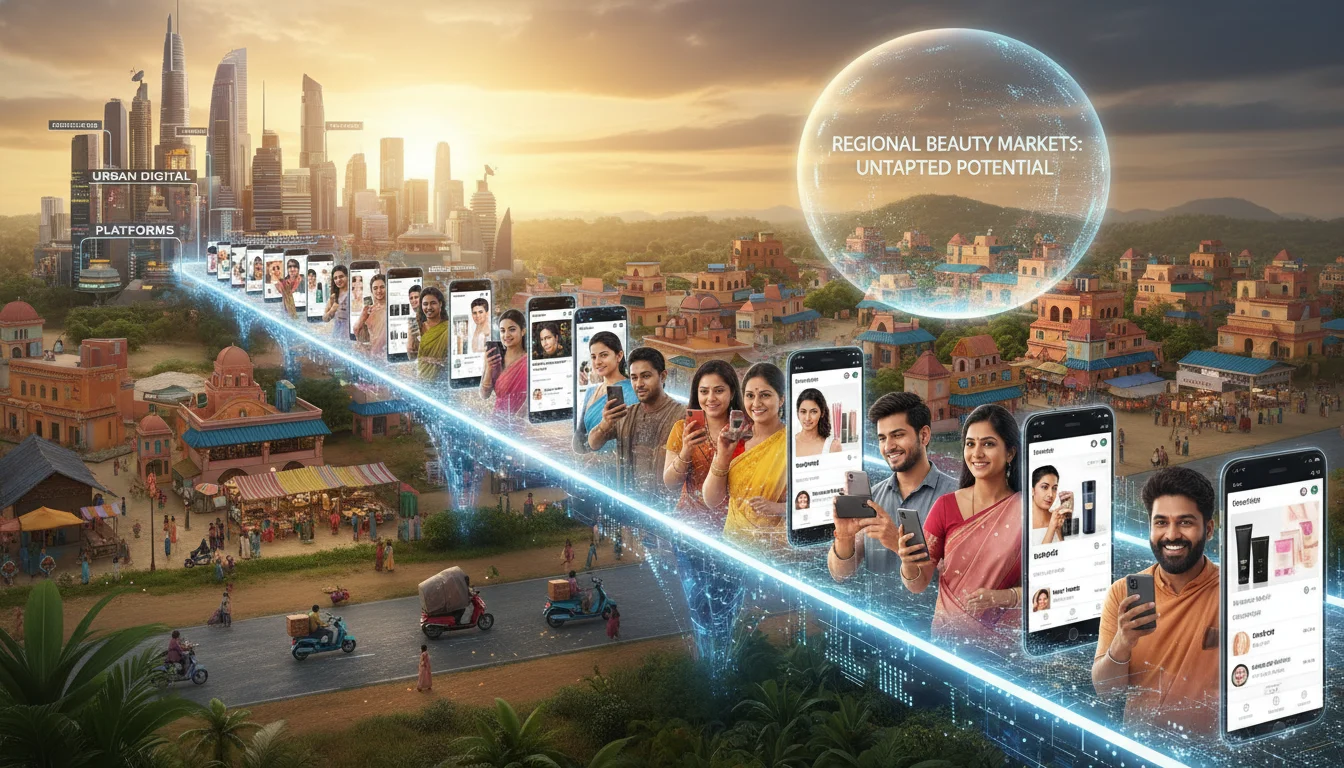
While the market leaders absolutely dominate the English-first Meta ecosystem (Instagram/Facebook), there remains a massive, largely untapped white space on regional platforms like Moj and ShareChat. Competitors can gain a critical first-mover advantage by bypassing the saturated, highly expensive ad auctions of Meta and instead producing high-quality, vernacular content tailored specifically to the linguistic and cultural nuances of Tier-2 and Tier-3 audiences.
-
The “Sea of Sameness” in Clean Beauty Messaging
As claims of being “toxin-free,” “paraben-free,” and “organic” transition from unique selling propositions to baseline table stakes, marketing narratives across the industry are becoming indistinguishable. Many skincare campaigns now read more like sterile chemistry lessons than compelling brand stories. A significant opportunity exists for brands to pivot away from purely clinical, ingredient-obsessed messaging and return to emotional, experiential, and culturally resonant storytelling, thereby breaking the monotonous aesthetic of modern clinical skincare and capturing the consumer’s imagination.
Recommended Strategy for Beauty and Cosmetic Brands in India
Target Audience Personas
Effective digital targeting in India requires segmenting the audience not merely by age or income, but by digital behavior and consumption velocity.
-
The Quick-Commerce Gen Z (Ages 18-25):
- Location: Tier 1 Metros and major urban IT hubs (Bengaluru, Mumbai, Delhi NCR).
- Psychographics & Preferences: This cohort is highly digitally native, with their trend discovery driven almost entirely by viral TikTok/Reels aesthetics and influencer challenges. They demand instant gratification and are the primary engine behind Blinkit and Zepto beauty sales. They place immense value on brand inclusivity, bold and playful aesthetics, and uncompromising cruelty-free/vegan claims.
-
The Ingredient Intellectual Millennial (Ages 26-35):
- Location: Pan-India Urban and emerging Tier-2 tech cities.
- Psychographics & Preferences: Deeply research-oriented and highly skeptical of traditional marketing. They actively scrutinize International Nomenclature of Cosmetic Ingredients (INCI) lists seeking specific actives like Niacinamide, Peptides, and Ceramides. Experiencing high stress and significant exposure to urban pollution, they actively seek dermatologically validated, science-backed routines focused on barrier repair, anti-aging, and hyperpigmentation correction.
-
The Tier-2 Aspirational Consumer (Ages 20-35):
- Location: Tier 2, Tier 3, and Tier 4 regional cities.
- Psychographics & Preferences: This rapidly expanding middle-class demographic consumes digital content primarily in regional languages. They are upwardly mobile, heavily influenced by regional micro-creators rather than Bollywood elite, and deeply value formulations that cater specifically to Indian skin tones and the specific weather conditions of their geographic locale.
Recommended Channels and Campaign Types
To capture these distinct personas, brands must deploy a multi-channel architecture that aligns the platform with the specific intent of the user.
- Always-On Short-Form Video (Top Funnel Awareness): Brands must deploy native, vertical, and sound-off optimized short-form videos across Instagram Reels, YouTube Shorts, Moj, and ShareChat. Campaigns here should not resemble polished television commercials; rather, they should focus on authentic routine building, relatable creator struggles, and user-generated content (UGC) formats that blend seamlessly into the user’s organic feed.
- Quick Commerce Retail Media (Bottom Funnel Conversion): To capture the “I need it yesterday” demographic, performance marketing budgets must be allocated directly into the advertising ecosystems of Zepto, Blinkit, and Swiggy Instamart. This involves bidding on high-intent search terms within the apps to capture impulse buyers actively searching for immediate, specific solutions (e.g., “matte sunscreen,” “hydrating lip balm”).
- WhatsApp Business API Ecosystem (Retention & Lifetime Value): Brands must transition away from traditional SMS and low-open-rate email marketing, moving the entire post-purchase journey to WhatsApp.
This channel should be leveraged for highly personalized communication, including exclusive product drops, automated replenishment reminders based on product lifecycle, and interactive community engagement, turning one-time buyers into loyal brand advocates.
Content Ideas Specific to Beauty Brands in India
Content must address the physiological and environmental realities of living in India. Generic, Western-style beauty content often fails to resonate or provide actual value.
- Hyper-Localized, Climate-Specific Routines: Create educational content addressing local weather realities. Examples include highly specific tutorials such as “How to formulate a sweat-proof makeup base that survives Mumbai’s 40°C coastal humidity,” or “The ultimate ceramide barrier repair routine to combat Delhi’s severe winter air pollution”.
- Debunking Western Skincare Dogma for Indian Skin: Produce scientifically backed content explaining why generic Western practices—such as heavy petroleum slugging or the use of harsh, alcohol-based astringent toners—may actually be detrimental to melanin-rich, high-sebum producing Indian skin. This positions the brand as culturally attuned and biologically authoritative.
- The ‘Skinification’ of Body Care: Capitalize on the emerging trend of treating body care with the same reverence and active ingredients as facial care. Content should demonstrate the efficacy of using AHA/BHA body washes for body acne or retinol-infused lotions for cellular turnover, expanding the brand’s share of the consumer’s bathroom cabinet.
Budget-Friendly Digital Marketing Approaches
For emerging D2C brands, burning venture capital on inefficient ads is no longer viable. Growth must be hacked through capital-efficient strategies.
- Micro-Influencer Affiliate Networks: Instead of paying exorbitant flat fees to mid-tier influencers for a single post, brands should build expansive affiliate networks with nano- and micro-influencers. Compensate these creators through product seeding and performance-based commission structures, ensuring marketing spend directly correlates with revenue generated.
- User-Generated Content (UGC) Bounties: Incentivize the existing, satisfied customer base to become the brand’s primary content creation engine. Gamify the post-purchase experience by offering significant discounts or loyalty points in exchange for honest video reviews, unboxing videos, or routine transformation photos, effectively outsourcing high-converting content creation.
- Data-Driven Heatmapping for Offline Expansion: Utilize digital sales data—specifically identifying pin codes with high organic search volume or superior e-commerce conversion rates—to inform physical retail expansion. Brands should only invest in offline kiosks or modern trade partnerships in geographies where digital data has already proven a high concentration of brand demand.
Keywords & SEO Opportunities
A robust, data-driven Search Engine Optimization (SEO) strategy acts as a critical protective moat against the relentlessly rising costs of paid digital advertising. In the beauty and personal care sector, search intent acts as a precise behavioral barometer, signaling exactly where the consumer resides within the purchasing journey. The strategic imperative for 2026 and beyond necessitates a pivot away from highly competitive, broad “head terms” (which are expensive and low-converting) toward hyper-specific long-tail queries and emerging “breakout” trends.
High-Intent Keywords for Ranking
High-intent keywords indicate that a user has bypassed the educational phase and is currently in the transactional phase, essentially searching with their credit card in hand. These keywords must be aggressively targeted through highly optimized e-commerce product pages, prominent Quick Commerce marketplace listings, and highly structured Google Shopping feeds.
- Category & Solution Specific Intents: Search queries must capture the exact problem the Indian consumer is attempting to solve. Examples include: “Buy ceramide moisturizer online India,” “Best tinted mineral sunscreen SPF 40,” “Non-comedogenic foundation for oily skin,” “Hyperpigmentation serum for Indian skin tone,” and “Sweat-proof makeup India”.
- Generative Engine Optimization (GEO) & AI Overviews: As search engines increasingly utilize AI to generate direct answers (e.g., Google’s AI Overviews, Gemini integration), brands must optimize for “Opportunity Voids.” These are complex, trending consumer questions that currently lack clear, authoritative, and concise answers in the top search results. By structuring content to directly answer queries like, “What is the best active ingredient to prevent breakouts during high humidity?”, brands ensure their proprietary data is scraped and featured prominently by the AI, establishing absolute authority.
Long-Tail Keyword Opportunities (India-Specific)
While long-tail keywords individually possess lower monthly search volumes, they collectively account for over 91% of all web searches. Crucially, they deliver significantly higher conversion rates because they perfectly match highly specific consumer intent. These keywords are best captured through long-form editorial blog content, comprehensive FAQ sections on product pages, and highly specific titles for YouTube tutorials.
- Seasonal & Climatic Stressors: “Makeup for humid weather and oily skin,” “Monsoon skincare essentials for clogged pores,” “Winter hydration routines for hard water damage in Punjab”. Optimal Content Application: Seasonal survival guides, localized email/WhatsApp newsletters, targeted YouTube tutorials.
- Cultural Events & Lifestyle: “Pre-wedding HydraFacial alternatives at home,” “Sweat-proof bridal makeup for destination beach weddings,” “Quick aesthetic treatments for wedding season glow”. Optimal Content Application: Wedding season targeted landing pages, curated high-value product bundles, pre-bridal skincare timelines.
- Ingredient Efficacy & Trends: “Is CTM routine necessary for Indian skin?”, “Skinification of body care routines,” “Biomimetic skincare brands available in India,” “How to layer Niacinamide with Vitamin C”. Optimal Content Application: Deep-dive educational blog posts, board-certified dermatologist-led Instagram Reels, scientific whitepapers on brand websites.
By actively identifying “Breakout” trends—topics that are currently in their high-growth phase but have not yet peaked—brands can publish highly relevant content weeks before competitors notice the shifting data in traditional 90-day aggregate SEO tools. This proactive strategy ensures the brand captures the wave of consumer interest at its absolute zenith.
Implementation Roadmap
Executing this multifaceted, highly technical digital strategy requires a disciplined, phased approach. Brands must balance the immediate need for revenue generation and favorable unit economics with the methodical, foundational work required for long-term brand equity and sustainable market dominance. As industry experts note, the Direct-to-Consumer (D2C) ecosystem is unforgiving; shortcuts during the Go-To-Market (GTM) phase regarding positioning and distribution often result in irreversible brand damage.
Short-Term Quick Wins (1–3 Months)
The initial phase is strictly focused on plugging operational leaks, securing unit economics, and establishing initial digital momentum.
- Month 1: Fix Unit Economics & Retention Infrastructure: Before scaling any top-of-funnel ad spend, brands must ensure their D2C website is flawlessly optimized for mobile site speed, seamless checkout, and frictionless User Experience (UX). Simultaneously, implement the WhatsApp Business API integration. This is critical for immediately recovering abandoned carts, providing proactive order tracking, and offering basic customer support to plug immediate revenue leaks and elevate the post-purchase experience.
- Month 2: Launch Micro-Influencer Seeding & Q-Commerce Integration: Identify, vet, and onboard an initial cohort of 100 to 200 regional micro-creators, seeding them with the brand’s hero products to generate an initial wave of authentic social proof. Concurrently, initiate a robust presence on Quick Commerce platforms like Blinkit and Zepto. Secure necessary listings and run highly targeted, localized retail media ads to immediately capture the impulse-buying demographic in key metro areas.
- Month 3: Seasonal SEO Pivot & Content Recalibration: Conduct a comprehensive audit of all existing content assets and update them strictly for the upcoming season (e.g., publishing heavy winter barrier-repair guides in September, or monsoon acne-prevention guides in May). Shift the overarching social media tone away from highly polished, sterile catalog aesthetics toward relatable, fast-paced, UGC-style Reels and trend-reactive memes that speak the language of the consumer.
Long-Term Strategy (6–12 Months)
The secondary phase focuses on scaling distribution, dominating regional markets, and integrating advanced technology to solidify market leadership.
- Months 4-6: Regional Vernacular Expansion & Community Formalization: Launch dedicated, heavily researched campaigns on vernacular platforms like Moj and ShareChat. Utilize native-language creators to deeply penetrate Tier-2 and Tier-3 markets where English-first campaigns fail to resonate. Furthermore, formalize the brand’s digital community (replicating models like the #SugarFam), creating structured incentivization programs to generate a self-sustaining, continuous loop of User-Generated Content and peer-to-peer social proof.
- Months 7-9: Omnichannel Data Synergy & Offline Expansion: Utilize the wealth of heatmaps and highly specific geographic sales data collected from D2C and Q-commerce channels to inform targeted offline retail expansion.
Brands should partner with modern trade outlets, pharmacies, or open exclusive kiosks strictly in pin codes that have demonstrated a high, sustained volume of digital conversions, thereby entirely de-risking physical expansion.
- Months 10-12: AI Integration & Predictive Inventory Management: Implement advanced, predictive data analytics to master supply chain management. This is critical for navigating the severe seasonal demand spikes inherent in the Indian skincare industry (for example, intelligently anticipating the massive December order surge and mitigating the inevitable February drop to optimize cash flow). Finally, integrate advanced AI and AR virtual try-on software directly onto the brand’s website. This elevates the premium perception of the brand, increases conversion velocity, and further drives down costly product return rates.
Conclusion
The Indian Beauty and Personal Care market is not merely undergoing a period of accelerated growth; it is fundamentally rewriting its own operational and commercial logic. The transition from a legacy market dominated by unorganized offline retail and basic mass-market hygiene to a highly sophisticated, digitally native, and profoundly ingredient-literate ecosystem is absolute. In this dynamic environment, digital marketing has evolved far beyond a promotional afterthought; it now operates as the central nervous system of brand strategy and enterprise growth. Digital mastery is the definitive, non-negotiable mechanism for overcoming India’s extreme geographical and climatic diversity, combatting the erosive effects of the parallel counterfeit market, and building direct, unbreakable trust with an increasingly discerning modern consumer. Brands that fail to innovate beyond rudimentary paid advertising paradigms—specifically those that ignore the tectonic shifts of Quick Commerce, the retention power of WhatsApp architecture, and the explosive demographic growth of regional short-form video—will rapidly find themselves priced entirely out of the market by escalating customer acquisition costs.
Navigating this hyper-complex, multi-layered digital landscape requires an execution partner possessing both global technological fluency and deep, highly localized ecosystem intelligence. Gurkha Technology, a premier digital marketing and web development agency headquartered in Nepal, is uniquely positioned to architect and execute these highly specialized strategies for brands operating in or entering the Indian subcontinent. Founded in 2013, the agency expertly bridges the critical gap between high-level, theoretical brand strategy and granular, on-the-ground technical execution.
Gurkha Technology’s comprehensive suite of services directly addresses the most critical pain points of beauty brands seeking dominance in the region. Their profound expertise in localized Search Engine Optimization (SEO) ensures that brands effectively capture high-intent and long-tail regional queries, establishing a protective organic moat that defends profit margins from an over-reliance on increasingly expensive paid media. Furthermore, their deep, analytical understanding of the “Psychology of the Scroll”—demonstrated through masterful TikTok Ads Management, highly optimized Meta strategies, and compelling short-form video storytelling—empowers brands to successfully penetrate the crucial, high-growth Tier-2 and Tier-3 demographics.
Beyond mere digital visibility, Gurkha Technology excels in constructing the robust technical infrastructure required for modern, high-volume commerce. They provide bespoke, high-performance e-commerce web development tailored for speed and conversion. They implement sophisticated Digital Asset Management (DAM) systems crucial for maintaining strict brand consistency across highly fragmented omnichannel touchpoints, and they leverage Artificial Intelligence to optimize backend operational workflows. Their proven track record of execution in the highly competitive beauty sector—notably demonstrated by their management of the exclusive digital launch and website design for Soraya’s Luxurious Cosmetics (introducing Pixi Skincare to the region)—showcases their unique ability to seamlessly translate global premium aesthetics into localized, highly profitable commercial success. For cosmetic brands determined to transition from mere market participants to absolute category leaders within the dynamic, rapidly evolving Indian BPC market, engaging with Gurkha Technology provides the strategic agility, the technical backbone, and the culturally resonant marketing architecture required to achieve sustained, scalable, and highly profitable growth.