India Auto Repair Digital Marketing Report & Market Trends
Industry Overview
Brief Description of the Automobile Repair and Servicing Centers in India
The automobile repair and servicing industry in India constitutes a foundational pillar of the nation’s broader automotive and transportation sector. Functioning as the critical aftermarket ecosystem, this industry is responsible for the continuous mechanical maintenance, electronic diagnostics, collision repair, and aesthetic detailing of both passenger and commercial vehicles. Historically, the structural dynamics of this sector have been characterized by a stark, deep-rooted bifurcation. At the premium end of the spectrum are the Original Equipment Manufacturer (OEM) authorized service centers. These establishments traditionally command the highest levels of consumer trust due to their direct affiliation with vehicle brands, guaranteed use of genuine spare parts, and employment of factory-trained technicians. However, this premium assurance is invariably accompanied by high service costs, which often alienate price-sensitive consumers once their vehicles exit the mandatory warranty periods.
Conversely, the vast majority of the Indian automotive aftermarket has historically been dominated by the unorganized sector, comprising millions of independent local garages, roadside mechanics, and specialized neighborhood repair shops. These unorganized entities cater to a highly price-conscious demographic, offering unparalleled accessibility and significantly lower repair costs. Yet, this segment is plagued by systemic operational deficiencies. Independent mechanics frequently lack standardized operating procedures, face severe constraints in acquiring authentic diagnostic equipment, and struggle to provide warranties on their labor or the parts they install, thereby generating a persistent undercurrent of consumer mistrust regarding pricing transparency and service quality.
Over the past decade, a transformative third tier has emerged, rapidly capturing market share and fundamentally altering the industry’s landscape: the organized multi-brand car service network. Providers operating within this paradigm act as a strategic bridge between the expensive OEM centers and the unpredictable independent garages. By leveraging digital transformation, aggressive supply-chain integration, and economies of scale, these tech-enabled automotive servicing startups offer OEM-quality repairs at price points that are reported to be approximately 30% to 40% lower than authorized dealerships. This structural evolution is driving a wave of consolidation, forcing traditional garages to either digitize their operations or risk obsolescence in an increasingly formalized market.
Current Market Size, Growth, and Trends
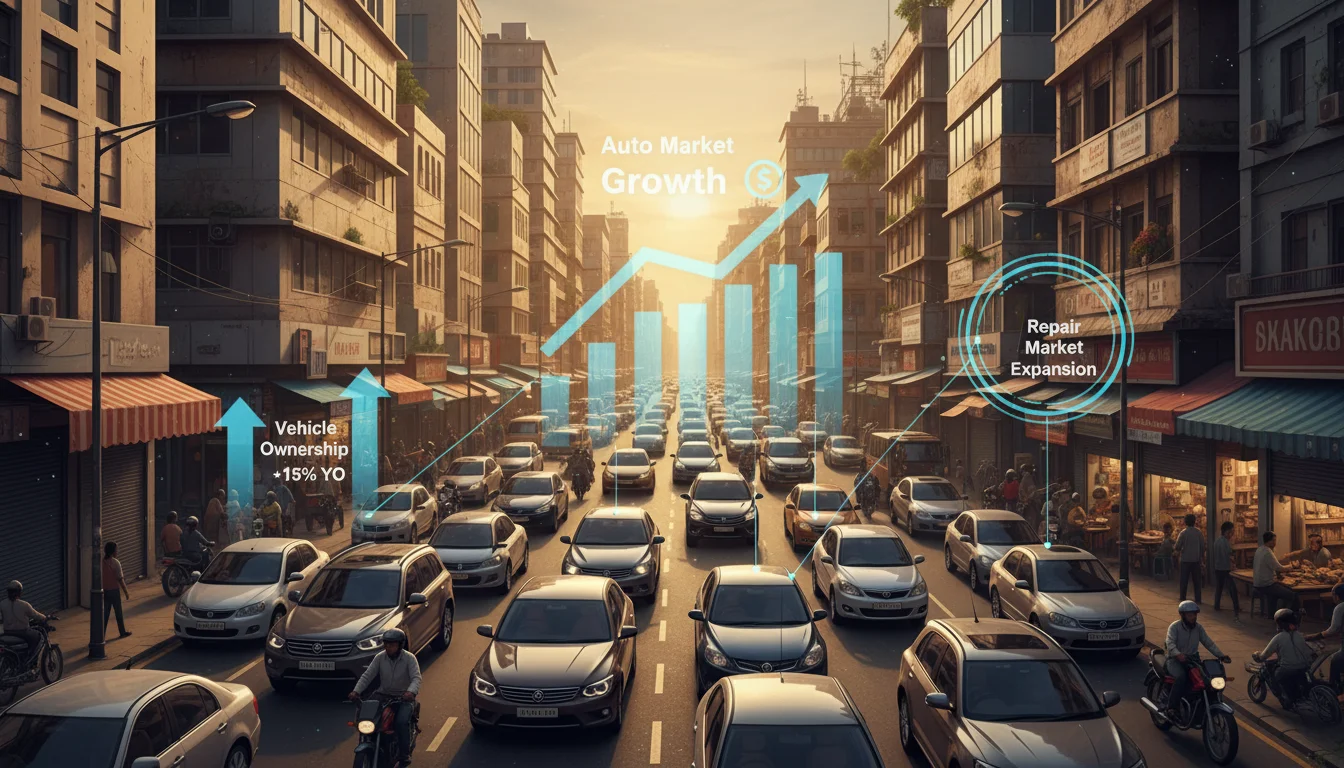
The macroeconomic indicators surrounding the Indian automotive aftermarket present an exceptionally lucrative trajectory, driven by robust domestic consumption and structural economic momentum. The broader India automotive market demand was recorded at over 5.15 million units in 2024 and is projected to expand at a Compound Annual Growth Rate (CAGR) of 7.3%, reaching an estimated 8.36 million units by 2030. Within this expanding universe, the passenger vehicles segment exerts absolute dominance, commanding a 72.2% market share in 2024, with hatchback models maintaining the highest volume.

Consequently, the secondary market dedicated to vehicle repair and maintenance is experiencing parallel, aggressive expansion. The Indian aftermarket servicing industry is poised for significant capitalization, with projections indicating it will reach a market size of $17 billion by the year 2025. In a broader chronological forecast, the India Automotive Repair and Maintenance Service Market is anticipated to grow at a robust CAGR of 8.0% between 2025 and 2032. Globally, the automotive repair and maintenance services market is projected to accelerate at a CAGR of 5.7% from 2024 to 2029, adding over $154.1 billion in value, illustrating that India’s growth rate significantly outpaces the global average.
Several fundamental macroeconomic and demographic trends are catalyzing this aggressive market expansion. The primary driver is the surging volume of Vehicles-in-Operation (VIO). Currently, over 300 million vehicles navigate Indian roads, and this baseline is expanding at a robust annual rate of 8% to 10%. Long-term projections suggest that the total number of vehicles on Indian roads will more than double, escalating from the 2023 level of 226 million to nearly 494 million by 2050. Concurrently, vehicle ownership levels are expected to nearly double from 163 vehicles per 1,000 people to 309 per 1,000 people over the same period.
A secondary, yet equally critical factor, is the increasing average age of the vehicle fleet. The multi-brand car service market is predominantly sustained by vehicles aged between four and ten years. As vehicles cross the threshold of OEM warranty expiration, owners disproportionately migrate toward independent or multi-brand service centers to mitigate exorbitant maintenance costs. This dynamic is further amplified by the explosive growth of the Indian used car market. The pre-owned vehicle sector, a massive pipeline for aftermarket servicing, is projected to surge from $37.6 billion in 2026 to $98.2 billion by 2033, expanding at a CAGR of 14.7%. With over 4 million passenger vehicles sold annually through the used car market, there is an incessant, structural demand for engine tuning, brake inspections, and routine diagnostics, as subsequent owners almost universally rely on non-OEM service providers.
Policy reforms and governmental initiatives are also reshaping market dynamics. The implementation of GST 2.0 has significantly altered the cost of vehicle ownership. With small cars now attracting a reduced GST rate of 18%, acquisition costs have fallen, stimulating entry-level vehicle sales in Tier 2 and Tier 3 cities, thereby expanding the geographical footprint of the servicing market. Furthermore, initiatives such as the PM E-DRIVE scheme, backed by a $1.30 billion budget, are accelerating the adoption of Electric Vehicles (EVs), fundamentally altering the types of services that future maintenance centers must be equipped to provide.
Key Challenges Faced by Businesses in this Industry
Despite the overwhelmingly positive financial outlook, operators within the Indian automotive repair and servicing industry face severe systemic, operational, and technological vulnerabilities.
The most pervasive challenge is extreme market fragmentation, which directly cultivates a profound consumer trust deficit. The unorganized sector, comprising thousands of micro-enterprises, lacks the capital resources to implement standardized quality control or centralized procurement. This fragmentation breeds severe information asymmetry between the mechanic and the vehicle owner. Consumers frequently report deep apprehension regarding pricing opacity, unauthorized upselling, and the utilization of counterfeit or substandard spare parts. This inherent mistrust acts as the primary barrier to customer retention and organic growth for independent operators.
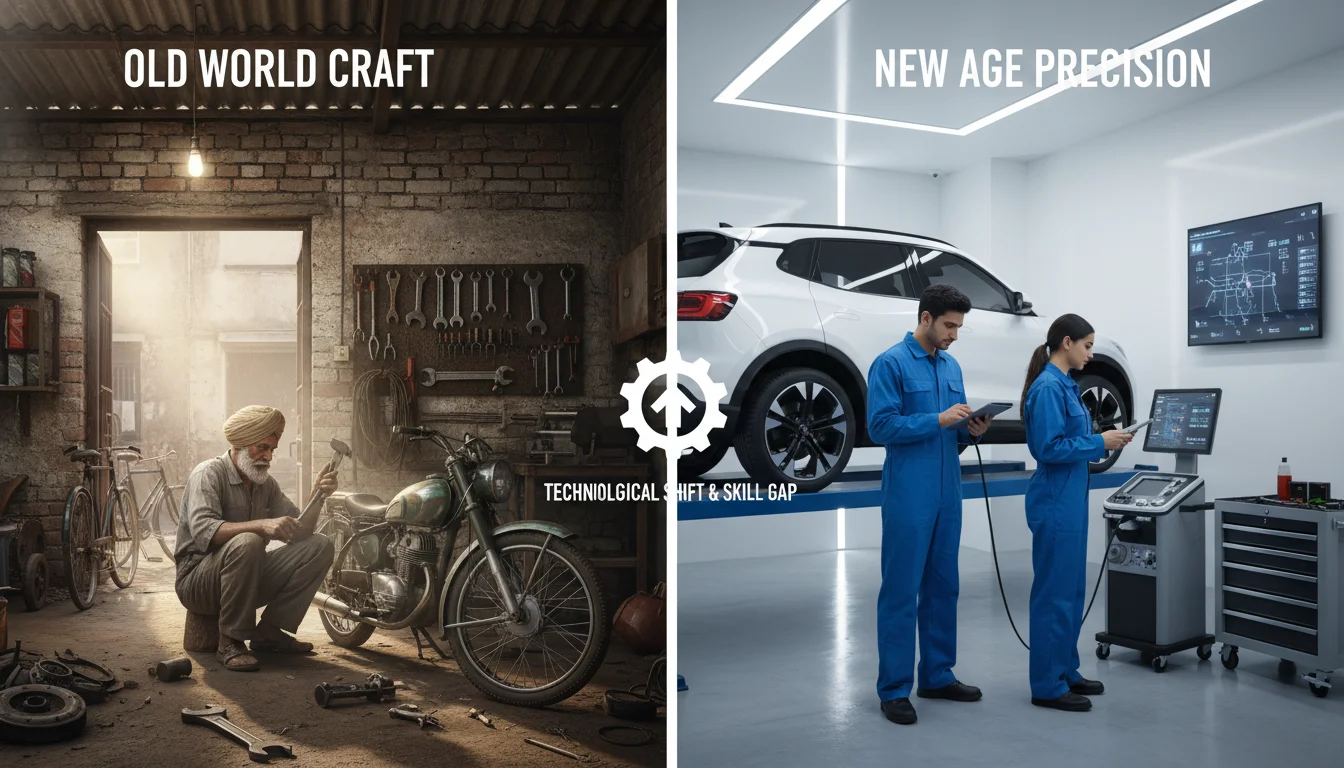
Simultaneously, the industry is confronting an unprecedented technological disruption that threatens to render traditional mechanical skills obsolete. Modern vehicles are increasingly transitioning into software-defined entities. The integration of Advanced Driver-Assistance Systems (ADAS), complex onboard diagnostic computers, and intricate sensor networks demands specialized calibration equipment that the average roadside garage cannot afford. Furthermore, the accelerating pivot toward Electric Vehicles introduces a paradigm where maintenance focuses more on high-voltage battery management, thermal cooling systems, and software updates, rather than traditional internal combustion engine (ICE) mechanical repairs. The vast majority of independent mechanics in India operate without formal technical training or OEM certification, resulting in a severe, widening skill gap that threatens the survival of the unorganized sector.
Operational bottlenecks further stifle profitability. Supply chain disruptions, characterized by erratic fluctuations in raw material prices and chronic shortages of critical micro-components, create unpredictable delays in parts delivery. For an auto repair shop, prolonged vehicle downtime directly translates to diminished bay utilization and severe customer dissatisfaction. Additionally, the broader economic volatility—including fluctuating interest rates and localized inflation—constrains the working capital necessary for service centers to pre-purchase inventory, invest in advanced diagnostic scanners, or execute seasonal marketing campaigns.
Finally, there is a pronounced digital integration hurdle. While the Indian consumer’s purchasing journey has digitized rapidly, a vast segment of the auto servicing industry remains tethered to analog marketing and customer relationship management. The failure to maintain a cohesive digital footprint, optimize for local search algorithms, or deploy automated customer follow-up systems leaves many capable independent garages entirely invisible to the modern, search-driven consumer.
Digital Landscape in India (Contextual to the Industry)
Internet and Social Media Usage Relevant to Automobile Repair
India’s digital ecosystem has undergone a radical transformation, characterized by the world’s most aggressive proliferation of ultra-low-cost cellular data and deep, ubiquitous smartphone penetration. This digitalization has fundamentally dismantled traditional consumer behavior patterns, particularly regarding high-involvement decisions such as automotive purchases and maintenance.
Current empirical data indicates a paradigm shift: an overwhelming 86% of car buyers and owners in India conduct exhaustive online research before committing to an automotive transaction or selecting a service provider. The consumer journey is no longer a linear progression from an offline advertisement to a physical showroom or garage. Instead, it is a complex, multi-touchpoint digital odyssey involving search engine queries, peer review validation, and the consumption of rich media content across multiple platforms.
Within this context, social media consumption in India is heavily skewed toward mobile-first, video-centric environments. For the automotive aftermarket, platforms like YouTube and Instagram have transcended their origins as mere entertainment hubs to become vital engines of commerce and validation. Consumers actively seek out do-it-yourself (DIY) repair tutorials, automotive lifestyle vlogs, and transparent, behind-the-scenes footage of complex vehicle maintenance. Educational content positions service brands as authoritative resources, significantly lowering the psychological barrier of trust. Furthermore, with consumers spending a vast proportion of their leisure time engaging with short-form video content, automotive repair shops utilizing high-definition visual storytelling achieve disproportionately higher engagement metrics compared to those relying on static text-based marketing.
Popular Platforms Among the Target Audience
The digital architecture for automotive marketing in India relies on a specific, highly contextualized hierarchy of platforms, each serving a distinct function in the consumer conversion funnel.
Google Search and the Google Business Profile (GBP) ecosystem serve as the absolute foundation of local discovery. When a vehicle breaks down or a routine service is due, the initial consumer impulse is to query Google with high-intent keywords such as “car service near me” or “dent repair in Bangalore”. The search engine’s algorithm curates a localized “3-Pack” (Map Pack) based on proximity, relevance, and cumulative review authority. Securing a position within this Map Pack is arguably the most valuable digital asset an auto repair shop can possess, as it intercepts the consumer precisely at the moment of highest commercial urgency.
However, the defining characteristic of the Indian digital landscape is the absolute ubiquity of WhatsApp. In the Indian commercial context, WhatsApp has evolved far beyond a peer-to-peer messaging application; it functions as a primary Customer Relationship Management (CRM) interface and a transactional hub. Consumers inherently expect the convenience of initiating service inquiries, receiving precise digital quotations, and tracking vehicle repair status in real-time through WhatsApp. The integration of the WhatsApp Business API allows organized service centers to automate routine communication, distribute multimedia updates (such as photographic evidence of worn brake pads), and execute post-service feedback loops, thereby establishing profound trust through radical transparency.
Instagram and YouTube function as the primary arenas for visual validation and brand equity generation. Instagram, with its emphasis on aesthetics, is unparalleled for showcasing the meticulous outcomes of car detailing, ceramic coatings, and collision restorations through “before-and-after” visual formats. Conversely, YouTube is utilized for long-form, educational content, where service center owners or lead mechanics demystify complex engine diagnostics or explain the nuances of EV battery maintenance, thereby positioning the enterprise as an industry authority.
Consumer Online Behavior Related to Automobile Servicing
The contemporary Indian car owner exhibits highly specific, measurable digital behaviors that must dictate marketing strategies. Foremost among these is a pronounced reliance on high-intent research. Purchasing automotive services is viewed as a high-risk financial decision. Consequently, Indian consumers engage in meticulous digital due diligence, heavily scrutinizing digital reviews, comparing transparent pricing structures across aggregate platforms, and actively seeking community validation before committing their vehicle to a mechanic.
A critical behavioral insight is the transition from digital browsing to the analog “Decision Moment.” While website traffic and social media engagement indicate preliminary curiosity, phone calls remain the ultimate indicator of commercial intent. Data reveals that in the automotive sector, phone leads convert at a rate 10 to 15 times higher than standard web-form submissions. In the Indian market, when a consumer dials a service center, they are typically executing commitment-stage inquiries—demanding exact turnaround times, specific pricing for complex repairs, or confirming the availability of genuine OEM parts. Shockingly, industry data indicates that nearly 23% of inbound dealership calls go unanswered or are routed inefficiently, representing a catastrophic operational leakage of revenue.
Generational shifts are also profoundly altering digital expectations. Millennials and Generation Z consumers exhibit a marked preference for asynchronous, digital-first interactions. They increasingly bypass physical visits for initial consultations, preferring to book service appointments digitally and expecting frictionless, app-based tracking of their vehicle’s service lifecycle. Furthermore, as modern connected vehicles generate vast amounts of telematics data, consumers express significant apprehension regarding data privacy. Over 73% of Indian respondents in a recent Deloitte study cited concerns about personal device data being shared via connected vehicles, indicating a growing demand for robust data governance and transparent privacy policies from service providers.
Digital Marketing Opportunities
How Digital Marketing Can Solve Key Challenges
The fundamental challenges crippling the traditional Indian auto repair industry—mistrust, operational opacity, and extreme geographic fragmentation—can be systematically dismantled through the strategic application of digital marketing.
To combat the deeply entrenched trust deficit, digital marketing offers the mechanism of “radical visibility.” By leveraging content marketing to publish standardized, unalterable pricing charts, sharing explainer videos detailing the exact mechanics of specific repairs, and providing real-time digital tracking of a vehicle’s status on the shop floor, service centers can eliminate the anxiety associated with hidden costs and unauthorized work. When a consumer receives a WhatsApp video demonstrating a leaking suspension strut prior to authorizing the repair, the traditional paradigm of suspicion is instantly replaced by documented trust.
Furthermore, Search Engine Optimization (SEO) acts as a powerful equalizer, leveling the competitive landscape between highly capitalized OEM networks and independent garages. A meticulously optimized Google Business Profile, enriched with authentic, geolocated customer reviews, allows a small independent shop to outrank a multi-million-dollar corporate dealership in hyper-local search queries. By dominating the local search algorithms, an independent operator can overcome physical geographic limitations with digital prominence, intercepting customers who prioritize immediate proximity and high community ratings over corporate branding.
Best Strategies for Automobile Repair and Servicing Centers
To effectively capture market share in this projected $17 billion industry, automotive service centers must transcend isolated marketing tactics and deploy a synchronized, omnichannel digital architecture.
Search Engine Optimization (SEO) and Local Visibility
For an auto repair center, broad national SEO is irrelevant; the strategic imperative is hyper-local domination. Campaigns must aggressively focus on securing citations in authoritative local directories, maintaining absolute consistency of Name, Address, and Phone number (NAP) data, and injecting localized schema markup into the website’s code to explicitly signal geographic relevance to search engine crawlers. The continuous acquisition of positive Google reviews is paramount. Reviews function not merely as social proof but as dynamic SEO fuel; when consumers naturally embed keywords such as “excellent engine diagnostics” or “fast brake repair” into their testimonials, Google algorithms elevate the shop’s ranking for those specific commercial queries.
Content Marketing and Social Media Engagement
Content architecture must pivot away from aggressive, disruptive promotion toward educational, community-centric engagement. Auto repair shops can rapidly build regional authority by consistently posting highly practical content: DIY maintenance guides for extreme Indian summers, walkthroughs of the facility demonstrating cleanliness and organization, and detailed case studies of how a catastrophic engine failure was meticulously resolved. Short-form video content is particularly potent; rapid, visually satisfying clips of a dent being pulled or a cloudy headlight being restored command high retention rates on platforms like Instagram Reels and TikTok, entertaining automotive enthusiasts while simultaneously providing indisputable proof of the technicians’ competence.
Performance Advertising (PPC and Paid Social)
Pay-Per-Click (PPC) advertising through Google Ads allows service centers to capture the absolute “bottom-of-the-funnel” consumer. When a stranded driver searches for “emergency car towing Mumbai,” precisely configured Google Search Ads, utilizing click-to-call extensions, ensure immediate top-of-page visibility. Simultaneously, Meta Ads (Facebook and Instagram) provide unparalleled audience segmentation.
Campaigns can be configured using strict geo-fencing—targeting only users within a specific 5-kilometer radius of the garage—and layered with demographic and behavioral filters, such as targeting individuals who have recently browsed automotive accessory websites or those whose vehicle lease is nearing expiration.
Conversational Commerce via WhatsApp
The integration of the WhatsApp Business API is non-negotiable for scaling Indian auto service centers. It facilitates consent-based, automated lifecycle marketing. Advanced strategies involve utilizing CRM integrations to automatically dispatch service due reminders precisely six months after a customer’s last oil change, initiating automated post-service satisfaction surveys, and facilitating frictionless sharing of diagnostic reports. This transitions the business from reactive repair to proactive, subscription-like customer management.
Influencer Marketing and Borrowed Trust
The Indian digital landscape boasts a highly engaged, rapidly expanding automotive influencer ecosystem. Strategic collaborations with top-tier automotive content creators—such as Faisal Khan, Arun Panwar, or Mehreen Gandhi—can provide immense localized reach and credibility. However, regional garages often find higher ROI by partnering with micro-influencers. By inviting a local lifestyle or automotive vlogger to document a comprehensive car detailing session at the facility, the service center leverages the influencer’s built-in audience trust, effectively bypassing the traditional skepticism directed at independent mechanics.
Local and Global Examples and Case Studies
The efficacy of these digital marketing paradigms is corroborated by robust empirical case studies from both the Indian and global markets.
GoMechanic’s Referral and SMS Architecture (India)
GoMechanic, a dominant force in India’s multi-brand service network, engineered explosive growth by seamlessly merging mobile technology with incentive-based marketing. The company deployed Branch’s mobile linking platform to power an organic app referral program. By offering a frictionless, highly transparent cash incentive (“Earn Rs. 750 for every friend you refer”) distributed via deep-linked SMS and WhatsApp messages, they effectively transformed their existing customer base into an outsourced acquisition engine. This meticulously calibrated digital strategy yielded a staggering 60% referral conversion rate and drove a 138% increase in total order volumes, definitively proving the financial power of integrated digital retention.
AutoCare Garage’s Digital Transformation (Pune, India)
The narrative of AutoCare Garage illustrates the transformative potential of foundational digital tools for micro-enterprises. Operating as a traditional, single-lift roadside workshop relying entirely on analog word-of-mouth, the business struggled to scale beyond immediate neighborhood clientele. Upon creating and rigorously optimizing a Google My Business profile, the owner strategically intercepted consumers executing “mechanic near me” searches. By systematically requesting digital reviews from satisfied local clients, the garage established an imposing digital footprint. This shift in visibility allowed the humble workshop to command premium pricing, attract corporate clients, and eventually scale into a formalized regional franchise, demonstrating that local SEO is an existential imperative for traditional Indian mechanics.
Milex Complete Auto Care (Global SEO Strategy)
Facing severe margin compression due to inefficient digital advertising spend, this global auto repair chain engaged in a comprehensive strategic overhaul. They identified that broad, poorly targeted Pay-Per-Click (CPC) campaigns were generating thousands of low-quality, irrelevant clicks. By aggressively pruning their keyword strategy, eliminating junk traffic, and reallocating capital toward hyper-local SEO and dedicated service landing pages, the results were profound. Despite a significant reduction in overall traffic volume, the hyper-targeted approach yielded a 214% increase in highly qualified inbound phone calls, translating directly to a 31% increase in top-line revenue over a ten-month period. This case study underscores the critical distinction between vanity web traffic and high-intent commercial leads.
The financial imperative of these strategies is further validated by macro-level ROI data. Studies within the automotive sector indicate that meticulously segmented email marketing can deliver extraordinary returns of $40 to $44 for every dollar spent, surpassing almost all other digital media. Furthermore, dealerships utilizing advanced marketing automation architectures realize returns that are 5.44 times higher than those relying on manual outreach. Crucially, despite fixed operations (service and repair departments) accounting for merely 12% of total dealership revenue, they are responsible for generating an astounding 49% of total gross profitability, highlighting that marketing investments directed toward the service bay yield the highest systemic financial returns.
Competitive Analysis
Current Digital Presence of Top Automobile Servicing Businesses
The organized multi-brand car service market in India is a highly contested arena, dominated by heavily capitalized corporate entities, aggressive venture-backed startups, and legacy automotive conglomerates transitioning into the digital aftermarket. The market structure is primarily defined by the oligopoly of GoMechanic, Mahindra First Choice Services, MyTVS, and Bosch Car Service. A structured comparative analysis reveals the distinct digital strategies deployed by these market leaders.
| Competitor Entity | Digital Ecosystem & Infrastructure | Core Value Proposition & Market Positioning | Primary Digital Marketing Focus |
|---|---|---|---|
| GoMechanic | Highly optimized, proprietary mobile application; deep integration with WhatsApp Business API; robust, centralized digital CRM. | Hyper-standardized pricing models (marketed as ~40% cheaper than OEMs); real-time digital service tracking; transparent parts procurement. | Aggressive performance marketing; app-install campaigns; viral, deep-linked referral programs; pervasive social media presence. |
| Mahindra First Choice Services | Extensive corporate web architecture; strong B2B and B2C digital portals; robust online booking and inventory systems. | Institutional brand trust derived from the Mahindra legacy; pan-India warranty networks; OEM-equivalent physical infrastructure. | Heavy reliance on institutional brand equity campaigns; structural SEO focused on regional dominance; franchise lead generation and acquisition marketing. |
| MyTVS | Comprehensive mobile application ecosystem; sophisticated online diagnostic tools; seamless digital workflows for insurance claims. | End-to-end digital vehicle lifecycle management; exceptionally strong market density and brand recognition in Southern India. | Deep regional SEO targeting; continuous social media engagement; extensive B2B digital outreach targeting corporate fleet management. |
What They Are Doing Well
The defining success metric for these industry leaders is their ability to engineer a virtually frictionless, fully transparent digital customer journey. They have successfully identified and systematically eliminated the traditional pain points associated with automotive servicing. Through their digital platforms, consumers can access upfront, algorithmic pricing calculators prior to booking, effectively neutralizing the fear of surprise invoicing. Furthermore, these networks excel in data monetization and predictive marketing. By analyzing vast repositories of historical transaction data, their CRM systems can automatically execute predictive maintenance reminders. For instance, sophisticated algorithms calculate the average mileage accumulation of a specific vehicle model and trigger a highly personalized email or WhatsApp message exactly when the vehicle’s brake pads or timing belt are statistically likely to require replacement.
Moreover, their structural dominance in technical SEO allows them to monopolize high-volume, generic search terms across massive metropolitan areas, capturing the largest segment of top-of-funnel consumer intent.
Gaps and Opportunities to Outperform Them
Despite their massive digital footprints and capital advantages, the aggregate model employed by major multi-brand networks harbors systemic vulnerabilities that nimble, independent, or mid-sized service centers can aggressively exploit.
First, the aggregator business model inherently struggles with quality control at the granular level. Because large entities often route vehicles to disparate, franchised partner garages, the consumer experience is frequently inconsistent. Online automotive forums are replete with consumer grievances regarding delayed vehicle delivery, lack of communication post-booking, and a pervasive feeling of dealing with a “faceless” corporate bureaucracy. An independent local repair center can decisively counter this by building a highly personalized, deeply authentic brand on social media. By regularly showcasing the actual technicians performing the repairs, sharing genuine customer testimonials, and fostering a profound sense of community connection, local garages cultivate a level of emotional trust that massive corporate entities simply cannot manufacture.
Second, while national brands excel at broad SEO, they lack hyper-local agility. An aggregator may dominate the search term “car service India,” but a highly optimized local garage can easily monopolize hyper-specific, high-converting long-tail keywords (e.g., “best Audi suspension repair in Andheri West”).
By meticulously creating specialized location pages and maintaining a dense concentration of highly positive local reviews, smaller businesses can effectively intercept the most lucrative, high-intent traffic in their immediate geographical vicinity.
Finally, the customer service architecture of large networks relies heavily on automated call centers and rigid ticketing systems. A local garage utilizing the WhatsApp Business application to provide instant, unscripted, and transparent updates directly from the shop floor—such as a mechanic recording a 15-second video of a damaged radiator—creates an unparalleled level of customer intimacy, easily winning over clientele fatigued by corporate automated responses.
Recommended Strategy for Automobile Repair and Servicing Centers in India
Target Audience Persona (Age, Location, Preferences)
To architect a high-converting, efficient digital strategy, marketing campaigns must be precisely calibrated toward specific, data-backed consumer segments operating within the complex Indian socioeconomic matrix.
The primary persona is the “Value-Conscious Urban Professional.” Typically aged between 28 and 45, this demographic resides in densely populated Tier 1 or fast-growing Tier 2 cities such as Bangalore, Delhi, Pune, or Ahmedabad. They predominantly own post-warranty vehicles aged between 4 and 10 years, encompassing high-volume models like the Maruti Suzuki Swift, Hyundai i20, or compact SUVs. This consumer is entirely digitally native, executing nearly all commercial discovery via smartphones. They are highly reliant on Google Reviews for validation, deeply sensitive to both pricing opacity and time inefficiency, and actively prioritize digital convenience, such as app-based booking and doorstep pickup/drop-off services.
The secondary persona is the “Automotive Enthusiast and Premium Vehicle Owner.” Ranging in age from 30 to 55, this demographic owns luxury sedans or premium SUVs. They exhibit lower price sensitivity but possess extreme anxiety regarding the technical competence of independent mechanics. Their digital journey is defined by a search for absolute expertise; they require visual, digital proof of specialized diagnostic tools, immaculate shop environments, and technicians with explicit experience handling complex European or high-end Asian vehicle architectures.
Recommended Channels and Campaign Types
To effectively engage these distinct personas, service centers must deploy a synchronized array of digital channels.
- The Local Search Ecosystem (Google My Business & Local SEO) This channel represents the absolute foundational pillar of acquisition. The primary strategic objective is to achieve and continuously defend a top-three ranking within the Google Map Pack for the service center’s immediate geographic radius. Execution requires constant, weekly profile updates, the systematic publication of localized promotional offers directly on the GBP feed, rapid responses to all customer reviews (addressing negative feedback with absolute professionalism to demonstrate accountability), and the rigorous maintenance of Name, Address, and Phone number (NAP) consistency across all secondary digital directories.
- Conversational Commerce (WhatsApp Business API) Given the centrality of WhatsApp to Indian daily life, service centers must construct an end-to-end WhatsApp marketing funnel. Campaign types should heavily feature automated “Service Due” reminders triggered precisely 6 or 12 months after a vehicle’s last recorded visit. Furthermore, automated post-service feedback loops should be deployed, intelligently designed to seamlessly route highly satisfied customers directly to the Google Review submission page, thereby automating the generation of SEO fuel.
-
Paid Search and Geofenced Social Advertising (Google & Meta Ads)
- Google Ads: Deployment of high-intent Search Ads designed to capture immediate, distress-based needs (e.g., searches for “car battery replacement near me” or “emergency towing”). Utilizing localized call extensions ensures that a stranded driver can initiate a phone call with a single tap, bypassing the friction of navigating a website.
- Meta Ads: Execution of hyper-targeted Facebook and Instagram video campaigns utilizing strict geofencing. By restricting ad delivery to users within a defined 5-to-10-kilometer radius, ad spend is highly optimized. These campaigns should feature visually arresting, simple content, such as a rapid time-lapse of a ceramic coating application or the complex teardown of an engine, instantly capturing attention in a scrolling feed.
Content Ideas Specific to Automobile Repair in India
Content strategy must be precisely engineered to address the specific psychological barriers and cultural rhythms of the Indian consumer.
Educational and DIY Diagnostics: Producing short-form video content that empowers the consumer. Topics such as “How to check your vehicle’s tire tread depth before a highway trip” or “Identifying the warning signs of brake pad wear” establish the garage not merely as a transactional business, but as an authoritative, trusted consultant, significantly enhancing long-term brand equity.
Culturally Aligned Seasonal Campaigns: The Indian automotive aftermarket is deeply influenced by severe climatic shifts and massive cultural festivals. Marketing efforts must be timed flawlessly with these cycles.
- The Monsoon Preparation Campaign: Content should focus heavily on critical safety elements such as wiper blade replacements, anti-rust underbody coatings, and tire health. Service centers can emulate successful OEM strategies, such as Volkswagen’s complimentary 40-point monsoon health check, utilizing it as a powerful digital lead magnet.
- The Festive Drive Campaign: In the weeks preceding major festivals like Diwali or Dussehra, vehicle usage for long-distance family travel spikes dramatically. Content should aggressively promote comprehensive road-trip safety checks, deep interior detailing, and aesthetic enhancements.
- Summer Survival Guides: Highlighting the necessity of robust Air Conditioning (AC) servicing, coolant flushes, and thermal management as temperatures peak.
“Car of the Week” and Behind-the-Scenes Operations: Regularly highlighting a particularly challenging repair, or showcasing the meticulous restoration of a classic vehicle, effectively humanizes the corporate brand while providing indisputable, visual evidence of the team’s advanced technical competence.
Budget-Friendly Digital Marketing Approaches
For small to mid-sized independent garages operating with constrained marketing budgets, the strategic focus must pivot away from capital-intensive paid acquisition toward high-ROI organic retention, localized community hustle, and aggressive relationship management.
- Monetizing the Existing Database: The most cost-effective acquisition strategy is retention. Garages should implement a zero-cost digital referral program. By offering a straightforward discount on subsequent services (e.g., a discounted oil change) for every successful new customer referral, tracked via simple, customized WhatsApp promotional codes, the shop turns its satisfied base into active promoters.
- Strategic Cross-Promotion: Forging digital partnerships with non-competing, hyper-local businesses. Collaborating with neighborhood car wash centers, specialized auto parts retailers, or even local insurance agents to cross-promote services on each other’s social media channels effectively doubles digital reach without requiring ad spend.
- Authentic, Low-Fidelity Video Production: It is a misconception that effective digital marketing requires cinematic production values. In the auto repair sector, raw, authentic smartphone videos recorded directly by the lead mechanic, clearly explaining a mechanical fault to the camera in local dialects, frequently generate significantly higher engagement and trust metrics than highly polished, corporate advertisements.
Keywords & SEO Opportunities
In 2025 and beyond, SEO strategies within the automotive aftermarket must strictly adhere to Google’s evolving E-E-A-T (Experience, Expertise, Authoritativeness, and Trustworthiness) guidelines, while simultaneously adapting to the rising prominence of Generative Engine Optimization (GEO) driven by AI search interfaces. To maximize financial returns, keyword targeting must be ruthlessly segmented based on user intent and commercial viability. The modern framework dictates prioritizing the “EAST” methodology—focusing on Engagement, Answers, Solutions, and Topics—rather than merely stuffing web pages with disjointed search terms.
High-Intent Keywords for Ranking
High-intent keywords are search queries that explicitly indicate the user is actively seeking a commercial transaction or requires immediate, actionable assistance. While these terms command high search volumes and are highly competitive, they consistently yield the highest Return on Investment (ROI) and warrant prioritized focus. Bidding on these keywords via Google Ads can be cost-prohibitive for smaller shops (with CPCs ranging from $4.00 to $6.00 in highly competitive metropolitan markets); therefore, securing organic ranking through meticulous on-page optimization, backlink acquisition, and robust technical SEO is absolutely critical.
| Keyword Phrase | Search Intent Classification | Strategic SEO Importance | Search Volume & Trend Context |
|---|---|---|---|
| auto repair services | Broad Commercial / Top of Funnel | Serves as the primary target for the website’s core pillar pages; requires immense domain authority to rank nationally, but highly valuable locally. | Extremely High (~110,000 monthly searches), exhibiting a massive +307.41% upward trend. |
| car repair and services near me | Hyper-Local / Urgent Commercial | The ultimate conversion keyword. |
Must be captured exclusively via rigorous Google Business Profile optimization and dense local citations.
High (~9,900 monthly searches), indicating strong, consistent local demand.
mobile auto repair services near me
Urgent / Convenience / Premium
Highly specific intent indicating a demand for doorstep servicing—a major Unique Selling Proposition (USP) for modern multi-brand networks.
Medium-High (~18,100 monthly searches).
autobody repair shop
Specific Commercial / High-Ticket
Targets lucrative post-accident recovery and collision repair; commands the highest ticket value per conversion.
High (~14,800 monthly searches), with CPCs frequently exceeding $5.00.
car repair and maintenance services
General Maintenance / Research
Captures users looking for routine, preventative care; ideal for routing traffic to dedicated service package landing pages.
High (~27,100 monthly searches).
Long-Tail Keyword Opportunities (India-Specific)
Long-tail keywords are highly specific, multi-word phrases that typically possess lower aggregate search volumes but convert at significantly higher percentages because they precisely match the user’s immediate, specific problem. In the highly diverse Indian market, incorporating regional geographic nuances, specific vehicle models, and exact repair types is paramount for capturing high-quality, niche traffic that broad aggregators overlook.
- Model-Specific Diagnostic Queries: Indian consumers frequently bypass generic terms to search for solutions explicitly tied to their specific vehicle model. Creating dedicated landing pages for high-volume vehicles is highly effective.
- Examples: Maruti Swift diesel engine knocking noise fix, Hyundai i20 AC cooling issue repair cost, Mahindra Scorpio clutch replacement price in [City].
- Hyper-Location Specific Commercial Queries: Targeting specific, high-density neighborhoods and affluent suburbs rather than relying on broad, highly competitive city names.
- Examples: best multi brand car service in Andheri West, doorstep car wash and detailing in Koramangala Bangalore, cheap denting painting service in Gurgaon Sector 29.
- Service-Specific Niches & Emerging Tech: Highlighting specialized technical capabilities that decisively separate the business from generic roadside mechanics, particularly focusing on new automotive technologies.
- Examples: ceramic coating for new cars in South Delhi, EV battery diagnostics and repair Mumbai, ADAS calibration service near me.
- Informational Topics (Top of Funnel Content): These queries are utilized for deep, long-form blog content designed to build domain authority, address user queries, and feed AI-generated search summaries.
- Examples: why is car AC not cooling in Indian summer, BS6 diesel engine maintenance tips, average cost of automatic transmission fluid change in India.
Implementation Roadmap
To successfully transition these complex digital strategies into measurable, sustainable business growth, automobile service centers must execute a disciplined, phased implementation roadmap. This sequential approach ensures that the foundational digital infrastructure is robust and operational before capital is deployed into advanced, highly technical marketing channels.
Phase 1: Short-Term Quick Wins (Month 1–3)
The primary objective of the initial 90-day sprint is to establish definitive digital visibility, aggressively capture low-hanging local search traffic, and immediately plug severe operational leaks in customer communication and lead management.
-
Month 1: Digital Foundation & Local SEO Optimization
- Execute a comprehensive audit, claim, and verification of the Google Business Profile (GBP). Populate the profile exhaustively: ensure precise primary and secondary categorization, upload dozens of high-resolution, geotagged images of the workshop and machinery, and proactively seed the profile with a comprehensive Q&A section addressing common consumer concerns (e.g., warranty policies, pricing structures).
- Conduct a rigorous technical SEO audit of the existing website infrastructure. Prioritize absolute mobile responsiveness and rapid page load speeds, recognizing that over 80% of urgent auto repair searches are executed via mobile devices while the user is actively in transit or stranded.
- Deploy highly specific LocalBusiness Schema markup within the website’s HTML to explicitly communicate the physical location coordinates, precise operating hours, and comprehensive service menus directly to search engine crawlers, ensuring inclusion in localized AI search summaries.
-
Month 2: Conversational Commerce & Review Generation Engine
- Implement and formally integrate the WhatsApp Business Application or the advanced WhatsApp API. Configure automated greeting messages to instantly acknowledge inquiries, establish away messages for after-hours contact, and create templated quick replies for standard pricing inquiries to drastically reduce response times.
- Launch an aggressive, systematic review generation protocol. Utilize WhatsApp to automatically dispatch a direct review request link to every single customer immediately upon vehicle delivery, capitalizing on the peak moment of customer satisfaction.
- Implement call-tracking software to accurately measure phone lead ROI. Given that 62.6% of automotive leads are generated via phone and convert at exponentially higher rates, management must have total visibility over missed calls, call durations, and the specific marketing campaigns driving the highest volume of inbound phone traffic.
-
Month 3: Social Media Activation & Targeted PPC Deployment
- Activate and optimize Facebook and Instagram corporate profiles. Establish a relentless, consistent posting cadence (minimum three times per week), heavily focusing on visually arresting “Before & After” aesthetic detailing photos, rapid time-lapse repair videos, and personalized introductions of the lead mechanics.
- Launch a strictly geo-fenced Google Ads campaign. Target high-intent, urgent keywords (e.g., “car repair near me,” “emergency towing”) within a precise 5 to 10-kilometer radius of the facility, utilizing click-to-call ad extensions to drive immediate, high-converting phone inquiries while minimizing wasted ad spend on out-of-territory clicks.
Phase 2: Long-Term Strategy (Month 6–12)
With the foundational architecture consistently generating localized leads, the strategic focus pivots toward expansive brand building, maximizing Customer Lifetime Value (LTV) through automation, and aggressive market share acquisition.
-
Month 6: Content Architecture and Organic Authority Building
- Initiate the publication of long-form, highly authoritative blog content specifically answering the long-tail queries identified in the SEO research phase (e.g., comprehensive seasonal maintenance guides, detailed cost breakdowns of complex specific repairs). This strategy systematically builds topical authority, captures top-of-funnel educational search traffic, and establishes the center as a regional thought leader.
- Invest in foundational video production infrastructure for YouTube. Produce and publish high-quality, monthly DIY maintenance tutorials and detailed technical explainers to dominate regional video search results.
-
Month 9: Advanced Automation and Lifecycle Marketing Integration
- Seamlessly integrate the physical workshop management software (invoicing and job cards) with digital marketing CRM platforms. Launch hyper-personalized, data-driven email and SMS/WhatsApp campaigns based on explicit customer history.
- Implement complex predictive maintenance triggers. For example, the CRM should automatically message a customer precisely six months after an oil change, or two years after a battery replacement, prompting them to schedule their next preventative visit, thereby transitioning the business model from reactive to highly predictable, recurring revenue.
-
Month 12: Influencer Integration and Performance Auditing
- Execute targeted micro-influencer campaigns. Collaborate with local automotive vloggers, regional lifestyle influencers, or local community leaders to formally review the facility and its services. This strategy expertly leverages the influencer’s deeply entrenched audience trust to penetrate new, highly engaged local demographics.
- Conduct a comprehensive, data-driven evaluation of total digital marketing ROI. Rigorously analyze call-tracking conversion metrics, exact Cost-Per-Acquisition (CPA) data across Google and Meta Ads, and the percentage growth in organic search traffic. Utilize this intelligence to ruthlessly cut underperforming campaigns and aggressively reallocate budgets toward the highest-yielding digital channels.
Conclusion
The Indian automobile repair and servicing industry is currently navigating an era of unprecedented, structural transformation. Fueled by a rapidly expanding national vehicle fleet that is projected to approach a half-billion units by 2050, an aging demographic of out-of-warranty cars, and the aggressive, tech-enabled expansion of the organized multi-brand sector, the financial opportunities available to agile operators are vast. The aftermarket servicing sector is hurtling toward a $17 billion valuation, representing one of the most lucrative segments within the broader Indian economy. However, traditional, analog operational models are no longer sufficient to secure market share.
The modern Indian consumer, armed with ubiquitous internet access and sophisticated smartphones, demands radical transparency, unparalleled digital convenience, and immediate visual validation—expectations that can only be satisfied through the deployment of a sophisticated, meticulously engineered, data-driven digital presence.
For automotive service centers ranging from single-lift independent garages to massive multi-city franchises, digital marketing has ceased to be a peripheral, discretionary activity; it is now the absolute core mechanism for commercial survival and exponential growth. From dominating hyper-local search intent on Google Maps and intercepting stranded drivers, to fostering profound, multi-year customer loyalty through predictive WhatsApp automation and educational social media content, sophisticated digital strategies decisively dismantle the historical trust deficit that has plagued this sector for decades. Independent garages and emerging service chains that successfully implement a synchronized, omnichannel digital architecture will capture the highly lucrative, high-intent “decision moments” of car owners. Conversely, those that resist digital integration, relying solely on legacy word-of-mouth and outdated operational opacity, will inevitably succumb to the absolute commercial invisibility of the offline world.
Executing a flawless, omnichannel digital strategy—one that seamlessly integrates highly technical localized SEO, advanced programmatic performance advertising, complex CRM data integrations, and dynamic social media community management—requires highly specialized, multi-disciplinary expertise. Attempting to build and manage this complex digital ecosystem internally often diverts critical focus away from the core competency of vehicle repair. This is precisely where Gurkha Technology serves as an invaluable, growth-defining partner. As a premier digital marketing and technology agency based in Nepal, possessing profound, data-backed expertise highly applicable to the intricacies of the broader Indian subcontinent market, Gurkha Technology provides the sophisticated technical architecture and strategic vision strictly necessary to scale modern automotive service centers.
Gurkha Technology specializes in the bespoke development of lightning-fast, custom websites meticulously optimized for local SEO and Generative Engine Optimization, ensuring that an auto repair center absolutely commands the digital real estate when high-intent customers are searching for immediate solutions. Their mastery of algorithmic performance marketing—spanning hyper-targeted Google Ads and precisely geofenced Meta and TikTok campaigns—ensures that marketing capital is deployed with maximum efficiency, capturing lucrative local traffic with unparalleled precision targeting. Furthermore, by leveraging their deep expertise in immersive social media management, sophisticated brand identity design, and complex, data-driven analytics, Gurkha Technology possesses the capability to transform a standard, commoditized auto repair shop into a dominant, highly trusted, and exceptionally profitable regional brand. To secure a definitive competitive advantage in the rapidly evolving, hyper-competitive automotive aftermarket, partnering with Gurkha Technology ensures that a service center’s digital infrastructure is as robust, reliable, and high-performing as the complex vehicles they are entrusted to repair.