G Adventures vs. Intrepid Travel: Which Adventure Tour?
Competitive Analysis and Strategic Positioning: G Adventures vs. Intrepid Travel in the Small-Group Adventure Tourism Sector
Macro-Environmental Context of the 2025 and 2026 Travel Landscape
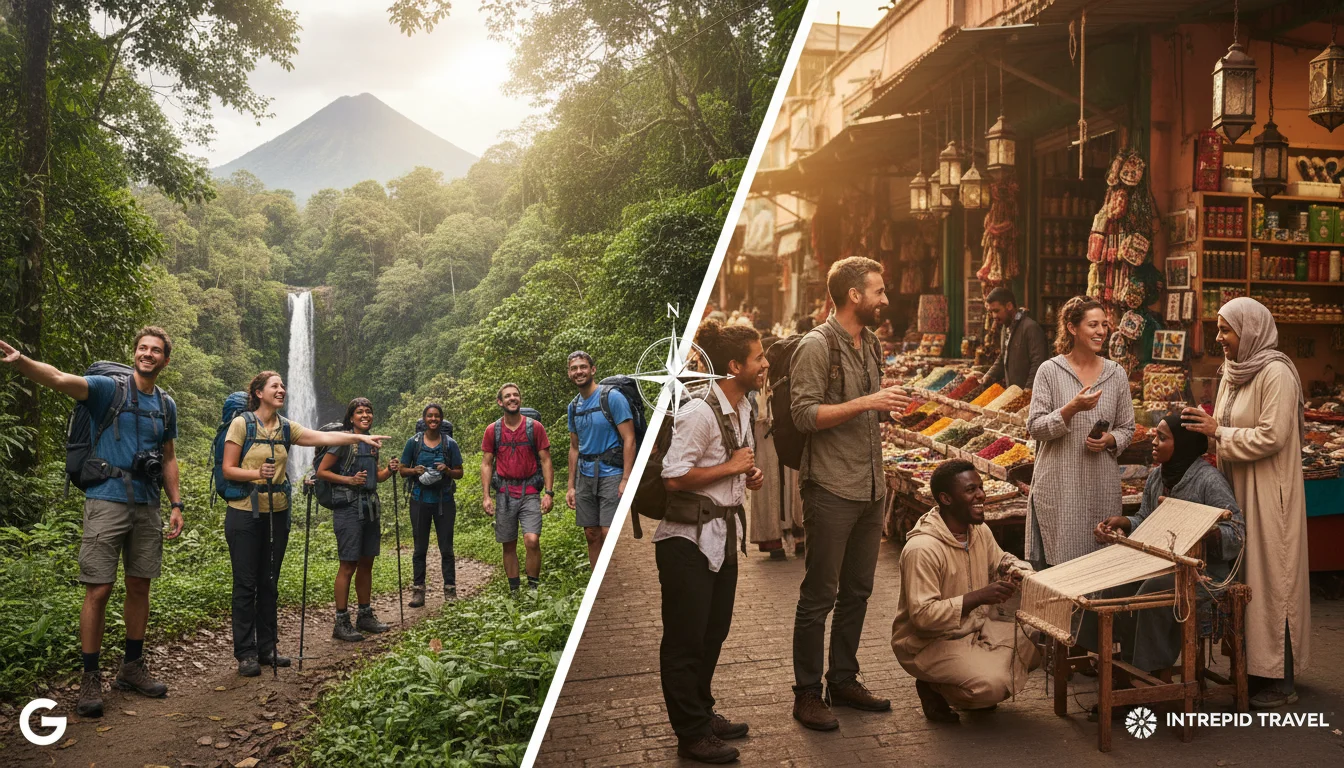
The global travel and tourism sector during the 2025 and 2026 operational seasons is undergoing a profound structural evolution, driven largely by shifting consumer psychographics that increasingly prioritize sustainability, environmental stewardship, and authentic cultural immersion. The era of homogenized, mass-market traditional tourism is steadily giving way to experiential travel models. Within this evolving paradigm, the small-group adventure travel sector has emerged as a dominant and highly lucrative vector for consumers seeking the logistical security of an organized tour combined with the cultural integration typically reserved for independent backpackers. At the vanguard of this multi-billion-dollar market are two pioneering operators: the Canadian-based G Adventures and the Australian-based Intrepid Travel.
Both entities have spent over three decades cultivating intricate global supply chains, refining decentralized operational models, and establishing robust ethical frameworks that seek to transform travel into a mechanism for global wealth redistribution. They share remarkably similar foundational ideologies, focusing on bridging the gap between independent, rugged backpacking and rigid, large-coach tourism. By capping group sizes—averaging 10 travelers and generally maximizing at 15 or 16 for standard itineraries—both operators curate intimate environments that facilitate deeper engagement with host communities while simultaneously minimizing the detrimental environmental and cultural footprints traditionally associated with mass tourism.
However, beneath the surface-level similarities of their geographic reach and product offerings, G Adventures and Intrepid Travel deploy highly distinct strategic methodologies, corporate governance structures, and financial mechanics. This comprehensive research report provides an exhaustive comparative analysis of both organizations. By examining their corporate philosophies, product segmentation, financial frameworks, sustainability metrics, and localized operational execution—with a specific, macro-level case study on the Everest Base Camp trekking routes in Nepal—this report elucidates the nuanced operational differences that define their respective market positions in the modern tourism economy.
Corporate History and Governance Structures
The foundational philosophy of a tour operator dictates its upstream supply chain management, its downstream consumer marketing, and the nature of its localized economic impact. Both G Adventures and Intrepid Travel have engineered their corporate structures to reflect an ideology where travel acts as a catalyst for environmental preservation and cultural protection, yet they operationalize these goals through different corporate governance models.
G Adventures: The Social Enterprise Model
Founded in 1990 by entrepreneur Bruce Poon Tip, G Adventures operates explicitly as a “social enterprise” rather than a traditional travel agency. The company was originally launched under the moniker “Gap Adventures,” which functioned as a double entendre representing “Great Adventure People” and the concept of “bridging the gap” between independent backpacking and conventional tourism. Over the past three decades, G Adventures has expanded massively, currently offering over 700 distinct itineraries across more than 100 countries, supported by a network of 28 global offices.
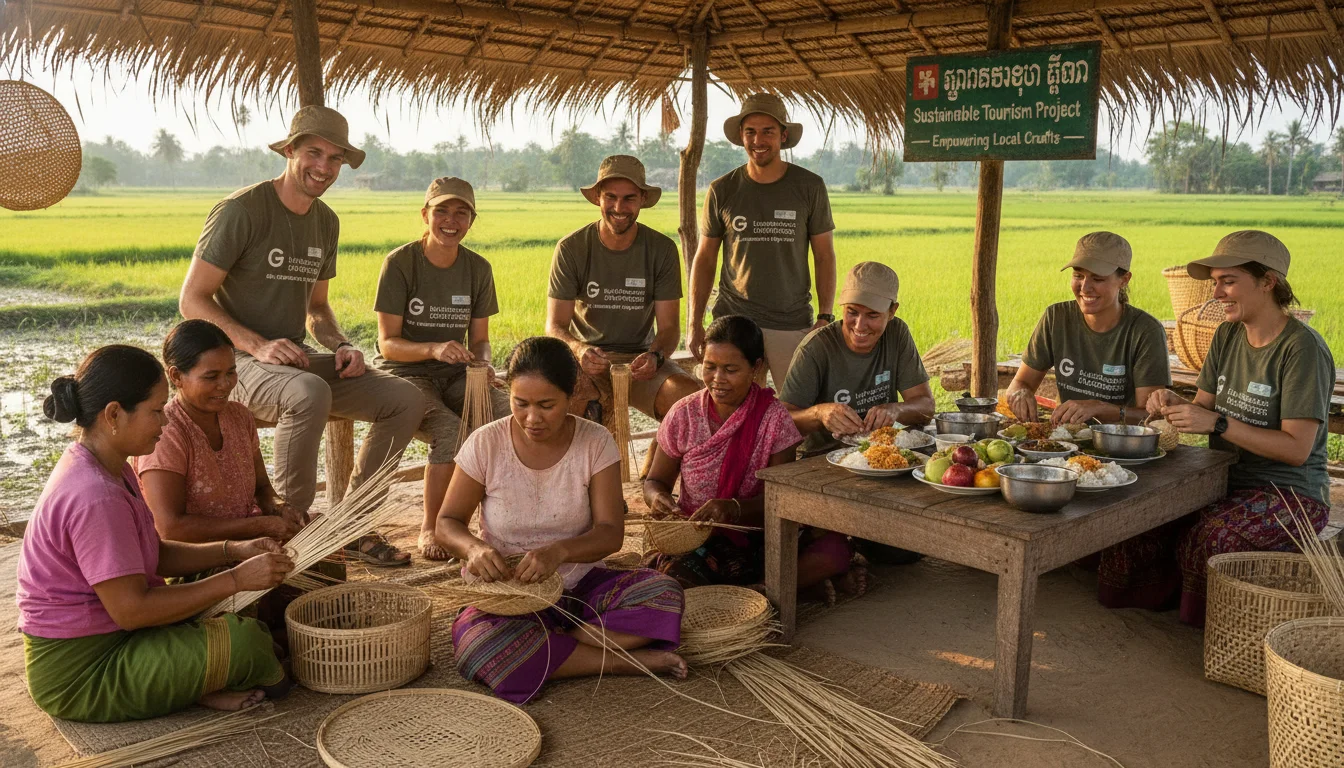
The corporate thesis of G Adventures posits that tourism, when channeled correctly, is the most effective mechanism for wealth distribution in developing economies. To institutionalize this philosophy, G Adventures established the Planeterra Foundation, a non-profit partner that actively manages over 50 social enterprises globally. Planeterra focuses on integrating marginalized communities—particularly women, indigenous populations, and youth—directly into the G Adventures operational supply chain. Rather than merely donating to external charities, G Adventures ensures that its travelers directly consume services (such as meals, transportation, and guided walks) provided by these supported social enterprises, creating a self-sustaining economic loop.
Intrepid Travel: The B Corporation Standard
Intrepid Travel, conversely, pursues a model of external auditing and holistic corporate accountability, epitomized by its status as a certified B Corporation. Achieving this rigorous certification in 2018, Intrepid officially mandated a balance between purpose and profit, subjecting its entire global operation to independent assessments by B Lab, a non-profit organization.
A critical component of the B Corp model is the requirement for continuous improvement. Intrepid has demonstrated a verified trajectory of operational enhancement within this framework, elevating its B Corp Impact Assessment score from 82.7 out of 200 in 2018 to 91.2 in 2021, and achieving an impressive 102.5 in 2024 (where a minimum of 80 points is required to maintain certification). This certification process has driven profound internal policy shifts at Intrepid, including the implementation of expanded paid minimum family leave policies, featuring 10 weeks of paid parental leave and 10 days of paid domestic violence leave for its employees.
Intrepid’s philanthropic arm, The Intrepid Foundation, serves as the primary conduit for its community investments. Established over two decades ago, the foundation has raised in excess of AUD $18 million, supporting more than 160 communities and 45 distinct partners globally. A vital component of Intrepid’s financial philosophy is the dollar-matching of post-trip donations made by travelers, effectively doubling the impact of consumer philanthropy, while the corporate entity independently absorbs 100% of the foundation’s administrative costs to ensure all funds reach the target communities.
Product Architecture and Demographic Segmentation
To capture a broad spectrum of the travel market, both operators have diversified their portfolios into distinct tiers based on comfort levels, physical exertion, and demographic alignment. While neither company enforces strict upper age limits on their core products, their segmentation strategies cater to specific psychographic profiles, financial capacities, and physical capabilities.
Stratification of Travel Styles
Both companies offer a highly granular spectrum of itineraries, ranging from austere, budget-conscious overland travel to premium, highly curated luxury expeditions. The stratification of these products is meticulously designed to manage consumer expectations regarding accommodation quality, transport modes, and the ratio of guided activities to built-in free time.
G Adventures utilizes a categorization system heavily reliant on thematic partnerships and specific activity levels.
Their “Classic” tours form the backbone of the portfolio, balancing reasonable comfort with authentic experiences, typically attracting a diverse age range seeking standard hotel accommodations. For younger, highly budget-conscious travelers, the “18-to-Thirtysomethings” (formerly known as YOLO) tours offer fast-paced, highly social itineraries focusing on unique, low-cost stays and independent exploration. To capture the luxury-adjacent and educational market, G Adventures partners directly with National Geographic to offer “National Geographic Journeys,” which feature significantly upgraded accommodations, increased upfront inclusions, and exclusive interactions with specialized local experts, historians, and scientists. Furthermore, their newly introduced “Geluxe Collection” targets the premium active market, while their “Active” style specifically caters to physically demanding activities such as high-altitude trekking, long-distance cycling, and kayaking.
Intrepid Travel stratifies its offerings primarily by clearly defined comfort levels: Basix, Original, Comfort, and Premium. The “Basix” tier utilizes simple, centrally located 1-to-2-star accommodations (frequently incorporating local guesthouses, camping, and remote homestays), maximizes the use of local public transport to inject funds into the local economy, and features minimal inclusions to keep upfront consumer costs exceptionally low. The “Original” style upgrades to 2-to-3-star tourist-class hotels and includes a balanced mix of guided activities and free time. The “Comfort” and “Premium” tiers elevate the accommodation standards substantially, utilize private transport logistics, and feature exclusive, specialized inclusions, appealing largely to mature travelers or those with higher disposable incomes. Additionally, Intrepid operates specific demographic lines such as youth-oriented “18 to 29s,” specialized “Women’s Expeditions,” and highly physical “Cycling and Walking & Trekking” styles.
Comparative Segmentation Matrix
| Operational Metric | G Adventures | Intrepid Travel |
|---|---|---|
| Youth/Budget Tier | 18-to-Thirtysomethings (18-39 years old) | 18 to 29s (18-29 years old) / Basix |
| Standard/Core Tier | Classic | Original |
| Upgraded/Premium Tier | National Geographic Journeys, Geluxe | Comfort, Premium |
| Physical/Activity Focus | Active Style | Cycling, Walking & Trekking Styles |
| Average Group Size | 10 (Maximum 15 generally) | 10 (Maximum 12-16 depending on region) |
| Family Tour Minimum Age | 5 years old (Specific Family Adventures) | Destination-dependent (Specific Family Adventures) |
| General Minimum Age | 12+ accompanied by an adult, 18+ independent | 15+ accompanied by an adult, 18+ independent |
Demographic Realities versus Marketing Constructs
While the youth-oriented tours enforce strict age boundaries at the time of booking, the core tiers (Classic and Original) are entirely age-agnostic. Independent traveler reviews and industry analyses consistently highlight that the demographic makeup of standard tours is highly variable, often encompassing individuals ranging from their late twenties to their late seventies on the same departure. The critical unifying factor among these cohorts is not generational age, but rather a psychographic alignment toward adventure, cultural curiosity, and a willingness to embrace localized logistical realities.
Financial Mechanics: Pricing Models, Deposits, and Booking Policies
The financial architecture of both operators reveals a subtle but highly significant divergence in how they approach consumer pricing and risk management. The initial advertised sticker price of a tour often obscures the “total cost of ownership” for the traveler, which must factor in mandatory local payments, optional activities, and out-of-pocket meal budgets.
Base Pricing and Inclusion Strategies
Extensive industry analysis indicates that G Adventures frequently presents a lower upfront base price compared to equivalent itineraries offered by Intrepid Travel. G Adventures achieves this lower psychological price point by systematically stripping back upfront inclusions, particularly regarding daily meals and secondary excursions. This model appeals heavily to budget-conscious travelers and highly independent explorers who prefer the financial autonomy to select and fund their own optional activities on the ground. However, this structure requires travelers to budget carefully for out-of-pocket expenses, as participating in the group’s optional activities can rapidly inflate the actual cost of the trip to match or exceed competitors. The average daily cost for a standard G Adventures trip is roughly estimated at $220 USD.
Intrepid Travel generally adopts a more comprehensive inclusion strategy. While their tours often appear marginally more expensive at the point of booking, the upfront cost typically encompasses a greater number of activities, cultural entrance fees, and sometimes additional meals. Consequently, the total overall expenditure upon completion of the trip often reaches near parity between the two operators, minimizing the difference in actual value.
Furthermore, both operators strive to eliminate mandatory single supplements, a historic pain point and financial barrier for solo travelers. Instead, both companies employ a standard room-sharing model, pairing solo travelers with a same-sex companion to avoid extra charges. For those requiring strict privacy, optional “My Own Room” or individual supplements are available for an additional fee.
Deposit Structures, Lifespans, and Cancellation Policies
The deposit and cancellation policies represent a critical area of competitive differentiation, fundamentally impacting consumer risk perception, booking hesitation, and customer lifetime value.
G Adventures requires a standard deposit of $350 USD (or equivalent in local currencies) for most tours, escalating to $1000 USD for highly specialized, high-cost expedition trips such as Antarctic cruises. The absolute cornerstone of their booking policy is the proprietary “Lifetime Deposit”. If a traveler is forced to cancel a trip outside of the severe penalty window, the initial deposit is never forfeited. Instead, it is held indefinitely as a credit that can be applied to any future G Adventures booking, or even transferred to another individual as a gift. This policy, viewed as an industry-leading innovation, virtually eliminates initial booking hesitation and creates massive customer retention and brand loyalty, as the sunk cost is never truly lost to the consumer. Furthermore, G Adventures guarantees all departures once booked and paid in full, explicitly eliminating the risk of a trip being canceled by the operator due to low enrollment.
The cancellation penalty windows for G Adventures are structured sequentially: cancellations made 60 days or more before departure for specialized tours like the Inca Trail result in the Lifetime Deposit being held (minus a $125 USD trail charge), with the remainder refunded. Cancellations between 30 and 59 days result in a 50% refund of the remaining balance, while cancellations under 30 days result in no further refunds. Final payments for standard G Adventures tours are due 90 days prior to departure.
Intrepid Travel requires a slightly higher standard deposit of $400 USD (or CAD/AUD equivalents), though they frequently run promotional campaigns offering reduced deposits as low as $99 USD for youth tours or specific regional campaigns. Unlike G Adventures, Intrepid’s deposit is traditionally classified as non-refundable, as the funds are immediately allocated by their operations team to secure non-transferable local services, such as highly restricted hiking permits or specific boutique accommodations. However, Intrepid offers robust flexibility within its date-change framework. Travelers are permitted to change their travel dates entirely or hold their deposit as a credit for future travel without incurring administrative fees, provided the change is initiated at least 56 days prior to departure.
If a trip is canceled by Intrepid due to a Force Majeure event, the company offers a refund minus unrecoverable costs, or an equivalent travel credit. Final payment for Intrepid tours is due 56 days prior to departure, offering a slightly longer window of financial liquidity for the consumer compared to G Adventures. Furthermore, Intrepid absorbs minor local surcharges up to 2% of the trip price, but if external economic factors force a surcharge exceeding 10%, the consumer retains the right to cancel within 14 days for a full refund.
Financial Policy Comparative Matrix
| Booking Policy Metric | G Adventures | Intrepid Travel |
|---|---|---|
| Standard Deposit Amount | $350 USD ($1000 for expeditions) | $400 USD |
| Youth/Promotional Deposit | Often standard ($350) | Frequently reduced (e.g., $99 USD) |
| Deposit Lifespan & Nature | Lifetime Deposit (Never expires, transferable) | Flexible up to 56 days prior, otherwise non-refundable |
| Final Payment Deadline | 90 days before departure | 56 days before departure |
| Guaranteed Departures | 100% Guaranteed once paid | Subject to minimum numbers and operational confirmation |
| Cancellation Penalty (<30 Days) | No refund payable | Subject to booking conditions; typically heavy penalties |
The Economics of Sustainable Supply Chains
A critical differentiator in the modern adventure travel market is the measurable transparency of a company’s sustainable practices.
Both operators have developed proprietary frameworks to ensure that the influx of tourist capital remains within the host economies, rather than leaking out to multinational hotel conglomerates or foreign-owned transport services.
G Adventures’ Ripple Score Methodology
To quantify its economic impact, G Adventures developed the “Ripple Score,” a transparency metric created in partnership with the Planeterra Foundation and Sustainable Travel International. The Ripple Score evaluates the localized economic retention of a specific tour itinerary by calculating the exact percentage of operational expenditures that remain within the host community through the use of locally owned accommodations, transport providers, and dining establishments.
Across the company’s vast portfolio of tours, the average Ripple Score stands at an astonishing 93 out of 100. This metric indicates that 93 percent of the money spent by G Adventures’ local operations—and the connected spending of its customers—stays entirely with locally-owned businesses, drastically reducing economic leakage. This score was developed based on extensive supply chain audits and survey results from nearly 2,000 local suppliers. By publishing this score on individual trip itineraries, G Adventures provides consumers with a quantifiable metric of their vacation’s positive economic impact.
Intrepid Travel’s B Corp Auditing and Supply Chain Diversity
Intrepid Travel addresses supply chain sustainability through the rigorous auditing requirements of its B Corp status. Every three years, Intrepid undergoes an extensive evaluation managed by B Lab, which scrutinizes how well the company is governed and what it does to benefit local communities. A major focus of Intrepid’s supply chain engagement is ensuring a living wage for all local contractors and working toward a more inclusive, diverse supply chain.
This commitment to inclusivity is operationalized through specific strategic initiatives, such as their “Women’s Expeditions.” These specialized tours prioritize hiring and training female local leaders and actively integrating women-owned businesses into the itinerary. This provides vital employment opportunities and economic independence in regions where female participation in the formal tourism economy is traditionally restricted or culturally discouraged. Furthermore, Intrepid established a Reconciliation Action Plan in 2019, specifically identifying measurable contributions the company can make toward indigenous reconciliation in Australia, while globally expanding “First Nations” experiences to amplify Black, Indigenous, and People of Colour (BIPOC) communities.
Ethical Frameworks Part I: Animal Welfare in Tourism
The evolution of animal welfare in the global tourism industry has shifted dramatically from basic cruelty prevention to proactive behavioral enrichment and the protection of wild habitats. Both G Adventures and Intrepid Travel have collaborated extensively with international non-governmental organizations to codify their guidelines, actively rejecting the exploitation of animals for entertainment.
Intrepid Travel and the Five Domains Model
Intrepid Travel is widely recognized as a historical pioneer in the animal welfare space. In 2014, following a comprehensive study commissioned alongside World Animal Protection that revealed systemic abuse, Intrepid became the first global tour operator to universally ban elephant rides across all of its itineraries worldwide. This bold operational decision catalyzed a movement that forced numerous other operators to follow suit.
Intrepid evaluates all animal interactions using the scientifically backed “Five Domains” model. This advanced framework moves beyond traditional welfare models by assessing not only physical health but also emotional wellbeing. The Five Domains include:
- Nutrition: Ensuring access to sufficient, varied, and clean food and water.
- Environment: Providing a safe, clean, and enriching space.
- Health: Addressing medical needs and ensuring freedom from disease or injury.
- Behavioral Interactions: Offering opportunities for positive social interactions, exploration, foraging, and play.
- Mental State: Assessing the overall emotional wellbeing and reducing stress, recognizing that mental health is a culmination of the four physical domains.
Under these strict guidelines, Intrepid explicitly prohibits lion walks, cub petting, and visiting any venues that breed or commercially exploit wild animals. They advocate for observing animals exclusively in their natural habitats doing what they do best: living in the wild.
G Adventures’ Animal Welfare Policy
G Adventures enforces a similarly stringent Animal Welfare Policy, developed in direct consultation with World Animal Protection, the Jane Goodall Institute of Canada, and the World Cetacean Alliance. Their comprehensive guidelines build upon the ABTA Global Welfare Guidelines and explicitly prohibit a wide array of exploitative practices.
The G Adventures policy completely bans interactions with captive elephants, captive whales, and dolphins. Furthermore, it forbids overt cruelty such as bullfighting, bear baiting, cockfighting, crocodile wrestling, and the ritual slaughter of animals. Crucially, the policy targets the micro-exploitations common in developing tourism markets, banning the use of animals for soliciting money (e.g., snake charming, dancing bears, primates on chains) and strictly prohibiting travelers from taking “selfies” with wild animals or handling sedated tiger cubs. G Adventures directs its travelers to genuine sanctuaries and conservation centers, ensuring that any captive environments meet internationally recognized standards of care and do not involve physical modifications like wing pinioning or claw removal.
Animal Welfare Prohibition Comparison
- Elephant Riding: Both G Adventures and Intrepid Travel ban elephant riding; Intrepid was the first to do so in 2014.
- Captive Cetaceans (Whales/Dolphins): Both G Adventures and Intrepid Travel prohibit interactions with captive cetaceans.
- Lion Walks / Cub Petting: Both G Adventures and Intrepid Travel ban lion walks and cub petting.
- Animal Performances / Shows: Both G Adventures and Intrepid Travel prohibit animal performances and shows.
- Evaluation Framework: G Adventures’ policy is guided by ABTA Guidelines and World Animal Protection, while Intrepid Travel utilizes The Five Domains Model.
Ethical Frameworks Part II: Human Rights and Child Protection
Protecting vulnerable human populations is equally paramount to the operational ethos of both organizations. In regions where tourism represents the primary influx of foreign capital, the risk of child exploitation and cultural degradation is exceptionally high.
G Adventures enforces a strict Child Welfare policy, fundamentally aligned with the ChildSafe Movement, which trains all Chief Experience Officers (CEOs) to recognize and mitigate potential exploitation. The policy establishes a rigorous Code of Conduct for travelers, prohibiting them from engaging in behaviors that could compromise a child’s safety or privacy. This includes strict regulations against photographing naked or partially naked children, taking photos that depict explicit behaviors, or publishing photos online with details about a child’s identity or location. Furthermore, the policy bans travelers from sharing personal contact details with youth or visiting sites that treat children as tourist attractions, thereby undercutting the exploitative “orphanage tourism” industry. G Adventures also maintains a strict Travel Conduct Policy that mandates respect for local cultures and explicitly prohibits all forms of sexual misconduct, racism, homophobia, and transphobia within their tour groups, reserving the right to immediately remove offending travelers.
Intrepid’s community focus is heavily geared toward economic empowerment, diversity, and the amplification of marginalized voices. Their localized leadership model ensures that every trip is led by a locally-based leader, injecting salaries directly into the community. Through deep investments in Community-Based Tourism (CBT), Intrepid incorporates immersive experiences, such as indigenous community-led activities and homestays, ensuring that the financial benefits of tourism stay with the people who actually live there.
Environmental Regeneration and Climate Action
Addressing the massive carbon footprint of global travel, both companies have pivoted away from traditional, passive carbon-offsetting schemes in favor of proactive, community-integrated environmental regeneration and active decarbonization.
G Adventures, via its Planeterra Foundation, operates the highly successful “Trees for Days” program. For every single day a traveler spends on a G Adventures trip, one tree is planted in regions severely impacted by climate change, drought, and deforestation, such as Madagascar, Morocco, and Sri Lanka. Since its inception in 2023, the program has planted over 3.8 million trees. Critically, this is not merely a carbon offset program; the trees and crops planted are specially selected for the region to provide supplementary income for local communities, often benefiting marginalized Indigenous populations, women, and youth, thereby aligning environmental regeneration directly with economic resilience.
Intrepid Travel approaches climate action through the rigid requirements of its B Corp mandate, continuously auditing its supply chain for decarbonization opportunities and aggressively advocating for broader climate legislation. The Intrepid Foundation directly funds large-scale environmental protection projects, such as the Country Needs People initiative in Australia and dedicated missions to protect the Daintree Rainforest.
Macro Case Study: High-Altitude Logistics in Nepal (Everest Base Camp)
To empirically evaluate the operational differences, logistical capabilities, and ethical implementations of the two operators, it is highly instructive to analyze a specific, highly demanding itinerary.
The trek to Everest Base Camp (EBC) in the Himalayas of Nepal serves as the ultimate operational crucible. The route requires complex logistical coordination involving internal flights, strict adherence to safety protocols at extreme altitudes, the management of consumer expectations regarding highly basic infrastructure, and the ethical management of local labor forces.
Itinerary Mechanics, Infrastructure, and Pricing
Both operators offer a standard 15-day EBC itinerary, beginning and ending in the capital of Kathmandu, encompassing the notoriously weather-dependent internal flight to Lukla, the acclimatization ascent through Namche Bazaar, and the final rigorous push to Gorak Shep and Kala Pattar.
G Adventures categorizes its EBC trek (Trip Code: ANEA) under its “Active” travel style and assigns it a “Basic” service level. The 2026 pricing for the G Adventures EBC trek is positioned competitively, listing at a base of approximately $1343 USD to $1679 USD depending on the departure date. True to its overarching pricing philosophy, this base price includes the internal flights to Lukla, essential trekking permits, the professional guide (CEO), and porter services; however, it explicitly excludes almost all meals during the trekking portion. Travelers are entirely responsible for purchasing their own food independently at the high-altitude teahouses along the route, which provides dietary flexibility but requires significant cash budgeting.
Intrepid Travel classifies its standard EBC trek (Trip Code: HNXE) under the “Original” tier and specifically tags it as a “Walking & trekking” theme. The pricing is notably higher than G Adventures, ranging from approximately $1620 USD to $2095 USD. This price variance is partially justified by slightly higher upfront inclusions. For instance, the Intrepid HNXE itinerary includes a total of two breakfasts and one dinner across the 15 days. Specifically, this includes a welcome dinner featuring a Nepalese cultural performance in Kathmandu on Day 1, and breakfasts at Namche Bazaar (Day 3) and Kala Pattar/Pheriche (Day 10). However, travelers still bear the out-of-pocket cost for the vast majority of the mountain meals.
Both operators utilize the exact same standard teahouse network along the route. Teahouse quality in the Everest region is notoriously basic—often lacking central heating, featuring unwashed blankets, and offering highly rustic, communal bathroom facilities. The physical reality of staying in these teahouses, where temperatures can plummet to -25 degrees Celsius, requires strict management of consumer expectations by both operators.
Everest Base Camp Comparative Matrix
| Operational Metric | G Adventures EBC Trek (ANEA) | Intrepid Travel EBC Trek (HNXE) |
|---|---|---|
| Duration | 15 Days (Kathmandu to Kathmandu) | 15 Days (Kathmandu to Kathmandu) |
| Base Price (approx. 2026) | $1343 - $1679 USD | $1620 - $2095 USD |
| Service Tier Classification | Basic / Active | Original / Walking & trekking |
| Meal Inclusions | Almost none (Self-funded at Teahouses) | 2 Breakfasts, 1 Dinner (e.g., Kathmandu Welcome Dinner) |
| Accommodation Infrastructure | Teahouses / Basic Hotels | Teahouses / Tourist-class Hotels |
| Porter Weight Limit | Strictly enforced (~10kg per client) | Strictly enforced (~10kg per client) |
Labor Ethics: The Socioeconomics of Porter Welfare
The most critical ethical component of Himalayan trekking, and a major focal point for both companies, is the treatment and welfare of local porters. The trekking industry has historically relied heavily on the extreme physical exertion of Nepali porters. Academic studies have documented porters carrying up to 125% of their own body weight to supply high-altitude camps, a biomechanical feat that causes severe long-term health degradation. Both G Adventures and Intrepid enforce rigorous guidelines to dismantle these historically exploitative practices.
Intrepid Travel operates a highly transparent and rigorously enforced porter policy. Trek leaders are strictly mandated to ensure porters are never loaded beyond the government-stipulated weight limits (typically a 35kg maximum, though ethical operators like Intrepid aim to restrict client gear to just 10kg per trekker to ensure the porter’s total load remains humane). Furthermore, Intrepid actively combats financial exploitation by ensuring porters are paid compliant wages immediately upon the completion of the trip, rather than forcing them to wait months for disbursement from dubious local agencies. Through the Porter Assistance Project, Intrepid also provides a vital stockpile of technical high-altitude clothing—including wind-resistant jackets, proper footwear, and sunglasses—and funds English language, money management, and first-aid training. Notably, Intrepid is also pioneering the integration of female porters into the heavily male-dominated Annapurna and Everest trekking circuits, actively challenging localized gender norms and providing unprecedented economic opportunities for women in the region.
G Adventures utilizes highly vetted on-ground operators (such as Royal Mountain Trekking) that strictly align with their overarching ethical frameworks. Their policies mandate that porters are treated with the exact same priority as paying passengers in the event of illness or altitude sickness. G Adventures also facilitates and encourages interactions between travelers and the support crew to foster mutual respect, language development, and cross-cultural understanding.
Deep-Rooted Philanthropic Integration in Nepal
The footprint of both companies in Nepal extends far beyond the trekking routes into deep, long-term philanthropic investments within the Kathmandu Valley and the broader region.
Intrepid’s Foundation supports two major, highly impactful initiatives in the country. The first, Sagarmatha Next, is an innovative waste management center located in the Everest region that works tirelessly to remove and upcycle the massive amounts of waste left by the 80,000 annual visitors. In 2024 alone, the initiative successfully removed 13 tonnes of waste from the mountain. The second initiative is Seven Women, a grassroots NGO in Kathmandu that provides vital literacy, numeracy, and vocational skills training to marginalized, disabled, and socially ostracized women. Since its inception in 2006, Seven Women has trained over 5,000 ladies, allowing them to achieve economic independence through textile manufacturing and culinary programs.
G Adventures’ Planeterra Foundation runs parallel empowerment projects in the region, including supporting SASANE, an organization that trains survivors of human trafficking to become certified paralegals and tourism hospitality workers. Additionally, G Adventures’ supply chain specifically mandates the use of ethically vetted social enterprises for arrival transfers (such as the Women With Wheels project) and youth-led cultural walking tours in cities like Delhi and Kathmandu.
Consumer Perception, Quality Control, and Operational Friction
Despite the rigorous corporate policies, ethical frameworks, and meticulous itinerary planning established at their respective headquarters in Toronto and Melbourne, the on-the-ground reality of any global tour operator relies entirely on the competence, emotional intelligence, and geographical knowledge of its local guides. G Adventures refers to its guides as Chief Experience Officers (CEOs), while Intrepid employs Local Leaders. Both companies prioritize hiring local citizens to ensure cultural authenticity and direct economic injection into the host community.
The Challenge of Decentralized Quality Control
An extensive analysis of consumer sentiment across independent review platforms such as Trustpilot, TourRadar, and travel forums reveals that the most significant operational vulnerability for both operators is quality control at the localized, human level. While the vast majority of reviews for both G Adventures and Intrepid Travel are overwhelmingly positive—with travelers routinely praising the logistical ease, the camaraderie fostered within the small group, and the profound cultural insights provided by exceptional guides—negative reviews almost exclusively isolate the behavior, inexperience, or incompetence of a specific, individual guide.
For example, isolated reports on Intrepid tours have cited instances where guides lacked geographical knowledge, failed to utilize navigation tools effectively, or exhibited unprofessional behavior such as consuming alcohol before driving, which heavily impacted the group’s safety and overall experience. Similarly, G Adventures has faced isolated criticisms regarding guides failing to manage administrative tasks efficiently, requiring travelers to pay for water at included meals on premium tours, or displaying unprofessional conduct during post-tour celebrations.
These occurrences highlight the inherent friction in a massive, decentralized business model: centralized corporate mandates and extensive training programs cannot entirely eliminate human error, nor can they guarantee uniform soft skills across thousands of freelance or locally contracted employees operating in highly volatile, unpredictable environments.
Managing Accommodation and Demographic Expectations
Another persistent theme in consumer feedback is the dissonance between traveler expectations and the physical reality of localized accommodations.
Strategic Conclusions
Both G Adventures and Intrepid heavily utilize modest, locally owned hotels, guesthouses, and homestays to fulfill their sustainability and economic leakage mandates. For travelers accustomed to standardized, Western-style hospitality, the basic amenities—such as erratic hot water, lack of air conditioning, or simplistic bedding in remote areas like the high Himalayas or the Amazon basin—can be jarring.
Industry analysts note that consumer satisfaction is highest when travelers actively align their psychographic profile and physical comfort requirements with the correct travel tier prior to booking. A 40-year-old traveler seeking a tranquil, culturally immersive experience may face significant friction if accidentally booked onto a heavily youth-skewed, fast-paced G Adventures 18-to-Thirtysomethings tour, where the focus is on budget maximization and socializing rather than luxury. Conversely, travelers who upgrade to G Adventures’ National Geographic Journeys or Intrepid’s Premium styles universally report much higher satisfaction with the operational logistics, physical comfort, and intellectual depth of the guided lectures, proving that accurate product selection is the primary driver of post-trip satisfaction.
G Adventures and Intrepid Travel occupy the absolute apex of the small-group adventure tourism sector, effectively functioning as a highly competitive duopoly that dictates industry standards for sustainability, ethical operations, and experiential travel. Their operational models definitively prove that commercial viability, massive global scale, and profound social responsibility are not mutually exclusive concepts. Both organizations have successfully gamified sustainable travel, turning environmental stewardship, animal welfare, and human rights into highly marketable assets that resonate deeply with the modern, conscientious consumer.
The strategic choice between the two operators relies heavily on granular consumer preferences regarding financial mechanics, baseline inclusions, and the desired level of on-the-ground autonomy. G Adventures represents the optimal choice for the aggressively budget-conscious or highly independent traveler who prefers a lower barrier to entry, the unparalleled psychological safety net of the Lifetime Deposit, and the autonomy to curate optional activities on a localized, ad-hoc basis. Their integration of the transparent Ripple Score and the deep community ties of the Planeterra Foundation ensures that even the most budget-conscious travel results in highly efficient, localized wealth distribution.
Conversely, Intrepid Travel appeals directly to the traveler seeking a slightly more comprehensive, frictionless experience where the higher upfront cost absorbs more of the logistical friction and daily budgeting requirements. Their prestigious status as a verified B Corporation provides an unparalleled level of external, institutional validation regarding their environmental and social metrics. Furthermore, their highly localized interventions—such as pioneering female portering in the Himalayas and enforcing the Five Domains model for animal welfare—demonstrate a commitment to actively dismantling systemic inequalities in the regions they operate.
Ultimately, the structural and ethical similarities between G Adventures and Intrepid Travel far outweigh their minor operational differences. Both companies provide exceptional, highly refined logistical frameworks that allow travelers to navigate the globe safely, ethically, and immersively, ensuring that the act of exploration serves as a definitive, measurable force for global good in 2026 and beyond.