Fintech India Digital Marketing Report: Trends & Growth
Industry Overview
The Indian financial technology (fintech) sector represents one of the most dynamic, expansive, and rapidly evolving digital economies globally. Driven by the robust foundational architecture of the nation’s Digital Public Infrastructure (DPI)—specifically the Jan Dhan-Aadhaar-Mobile (JAM) trinity—the landscape has fundamentally transitioned from a nascent, experimental ecosystem into a deeply integrated digital finance powerhouse that serves as a benchmark for emerging markets worldwide. The sheer proliferation of startups operating within this space is indicative of its monumental scale; the ecosystem has surged from a mere 502 recognized entities in 2016 to an estimated 1.93 lakh startups by 2025. This exponential quantitative expansion signifies a profound structural shift in how financial services are architected, distributed, monitored, and ultimately consumed across the subcontinent.
The primary catalyst accelerating this paradigm shift has been the Unified Payments Interface (UPI). By democratizing digital transactions and effectively bypassing the expensive, legacy credit card infrastructure that characterizes traditional Western economies, UPI has laid the groundwork for an entirely new financial ecosystem. Consequently, Indian fintech startups are no longer strictly relegated to solving payment friction or facilitating basic peer-to-peer transfers; they are aggressively expanding into highly complex verticals such as digital lending, wealth management technology (wealthtech), insurance technology (insurtech), neobanking, and embedded finance. These entities are creating highly specialized, interoperable solutions tailored specifically for micro, small, and medium enterprises (MSMEs) and a vast array of retail consumers who were previously invisible to the formal banking sector.
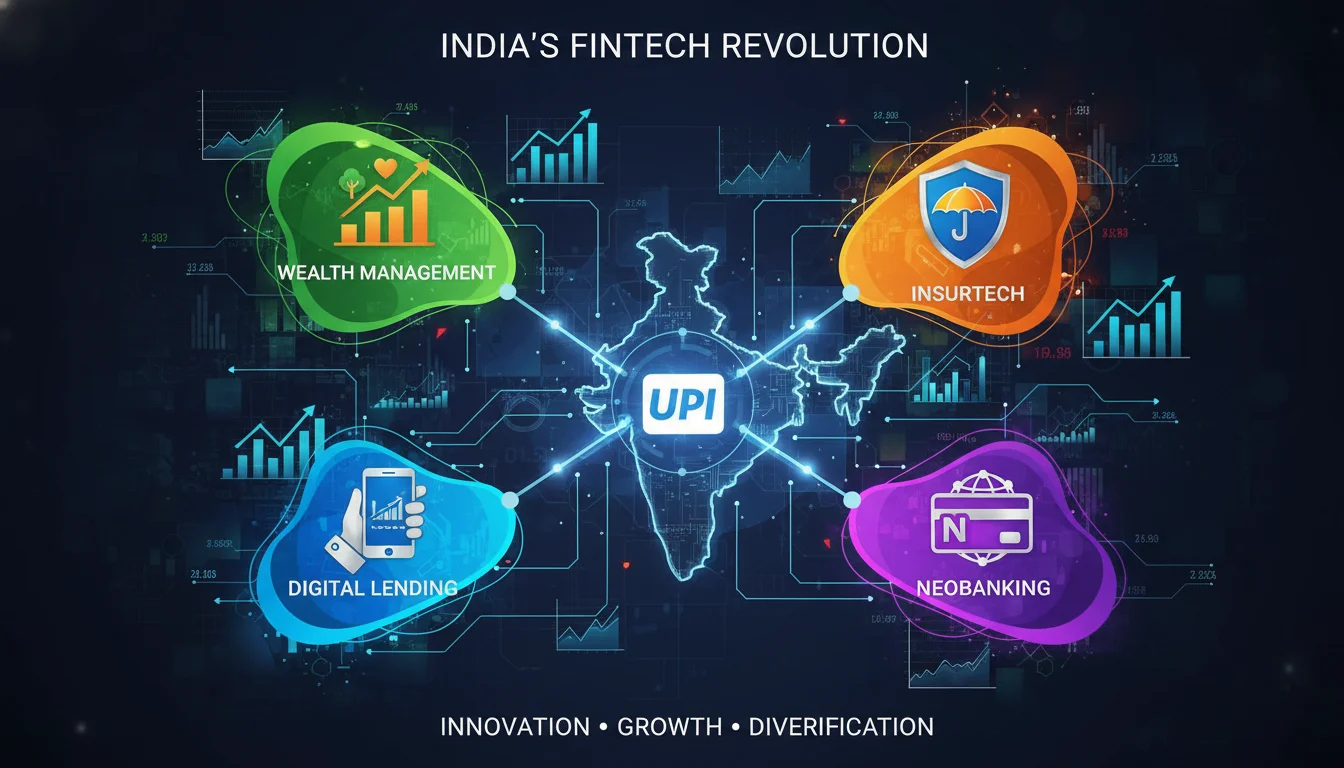
The current market size, its upward trajectory, and the anticipated growth parameters reveal a sector that is poised for unprecedented valuation multiplication over the next decade. Estimates project the Indian fintech market to reach a baseline valuation of USD 51.30 billion by 2026, accelerating at a compound annual growth rate (CAGR) of 16.27% to achieve an estimated USD 109.06 billion by 2031. Alternative institutional assessments are even more aggressive in their forecasting, modeling the market to scale from USD 64.18 billion in FY2024 to a staggering USD 223.06 billion by FY2032, propelled by a sustained expansion rate of 16.85% CAGR. Within this rapidly expanding universe, digital payments continue to lead the service proposition, commanding a 42.87% share of the overall market in 2025. However, neobanking is emerging as the fastest-growing frontier, projected to expand at a 19.64% CAGR as consumers increasingly seek comprehensive, branchless banking experiences. From an end-user perspective, retail consumers account for 66.24% of the market share, though business-facing B2B solutions are rapidly catching up, projected to expand at a 17.52% CAGR through 2031 as enterprises digitize their operational architectures. Unsurprisingly, user interface preferences are overwhelmingly skewed toward mobile applications, which command 67.83% of the market share and are projected to maintain an 18.39% growth trajectory, heavily supported by innovations such as UPI Lite, biometric authentication, and app-first onboarding protocols.

| Market Segment / Economic Indicator | Current Status (2024/2025 Baseline) | Projected Growth & Future Outlook (Through 2031/2032) |
|---|---|---|
| Overall Market Valuation | USD 64.18 Billion (FY2024) | USD 109.06 Billion to USD 223.06 Billion (16.27% - 16.85% CAGR) |
| Digital Payments Ecosystem | 42.87% of total market share | Will continue to dominate overall transaction volume, evolving into offline payments |
| Neobanking Solutions | Emerging challenger sector | Projected to achieve 19.64% CAGR, making it the fastest-growing sub-segment |
| User Interface Dominance | Mobile Applications hold 67.83% share | Expected to grow at 18.39% CAGR, driven by app-first regulatory onboarding |
| End-User Distribution | Retail accounts for 66.24% of market | Business-facing B2B solutions projected to expand at 17.52% CAGR |
The underlying macro-trends shaping this trajectory include the mainstreaming of artificial intelligence within banking operations, the development of offline and voice-based UPI transactions specifically designed to bridge the digital divide for feature phone users, and the seamless integration of embedded finance into non-financial digital platforms such as e-commerce and ride-hailing applications. Additionally, there is a pronounced strategic focus on decentralized finance (DeFi) leveraging blockchain protocols for low-cost peer-to-peer transactions, alongside a pivot toward green finance addressing environmental, social, and governance (ESG) goals, and longevity finance catering to the unique wealth preservation needs of an aging demographic.

However, despite these powerful macroeconomic tailwinds, fintech startups operating in India face a gauntlet of formidable systemic, operational, and psychological challenges that threaten their sustainability. The transition from an era characterized by “growth at all costs” venture capital subsidization to an environment strictly prioritizing sustainable unit economics has introduced severe funding constraints. Capital availability has dropped to levels unseen since 2017, plunging from USD 8 billion in 2021 to USD 3 billion in 2023. Consequently, startups are operating under immense pressure to demonstrate a clear, accelerated path to profitability in order to survive.
Regulatory complexity constitutes another critical barrier to entry and scale. The Reserve Bank of India (RBI) and other financial regulatory bodies such as SEBI and IRDAI have substantially intensified their oversight mechanisms. The implementation of the Digital Personal Data Protection (DPDP) Act, alongside increasingly stringent anti-money laundering (AML) directives, has exponentially increased the operational burden on startups. The ecosystem has witnessed a 49% increase in the volume of penalties imposed by the RBI over a recent three-year period, reflecting an absolute zero-tolerance policy toward operational non-compliance. Regulatory fragmentation across different financial governing bodies further exacerbates operational delays, forcing startups to divert critical capital away from product development and marketing into expensive RegTech compliance solutions.
Cybersecurity remains an existential threat to the entire sector. Because startups process massive volumes of highly sensitive financial and identity data, they are prime targets for sophisticated ransomware syndicates, synthetic identity fraud operations, and systemic API exploitation. With the average cost of a severe data breach exceeding USD 5 million globally, a single cyber incident can obliterate years of meticulously built consumer trust and brand equity. In the Indian domestic market alone, there were an estimated 12 lakh cyber fraud complaints reported in 2024, highlighting the perilous security landscape in which these startups must operate. Compounding the technological challenges is a severe tech talent shortage; cloud-native engineers, machine learning specialists, and regulatory compliance experts remain exceedingly scarce and prohibitively expensive for early-stage ventures.
Finally, deeply ingrained consumer-level challenges significantly impede deep market penetration, particularly beyond metropolitan hubs. Despite the ubiquity of affordable smartphones and cheap data plans, true financial and digital literacy remains alarmingly low. Statistical analyses reveal that less than 30% of rural users fully comprehend the mechanics of mobile finance, and only 43% of the broader Indian population possesses elementary-level financial literacy. Coupled with a deeply entrenched cultural dependency on physical cash—which remarkably still accounts for over half of all retail transactions despite the digital revolution—startups must overcome profound psychological barriers regarding trust, data privacy, and the concept of invisible digital money.
Digital Landscape in India (Contextual to the Industry)
To effectively market complex financial technology products in India, a brand must first systematically deconstruct the distinct digital consumption habits, platform preferences, and psychological triggers of the populace. The Indian digital landscape is overwhelmingly characterized by its mobile-first, and increasingly mobile-only, infrastructure. In FY25, mobile platforms accounted for a dominant 78% of the nation’s total digital media expenditure, maintaining absolute supremacy as the primary device for content consumption, digital commerce, and user engagement. This metric underscores the absolute necessity for fintech startups to engineer flawless, mobile-optimized, app-first onboarding experiences. Desktop platforms, maintaining a steady but comparatively niche 22% share, serve a specific function within the ecosystem, utilized primarily for complex B2B professional services, deep wealth management analytics, and long-form financial research where larger screen real estate is required for data visualization.
The digital attention economy is heavily concentrated within the Meta platform universe, which heavily dictates the initial discovery and consideration phases of the consumer journey.
Comprehensive market research indicates that Meta properties account for three of the top six digital touchpoints utilized during the financial product purchasing process. A substantial 57% of prospective buyers actively rely on Instagram, while 53% utilize Facebook to inform their financial decision-making processes. This marks a radical departure from traditional banking marketing paradigms. Financial advice and brand discovery are no longer restricted to intimidating branch consultations or dense editorial columns in financial newspapers. Instead, financial literacy is actively consumed via highly condensed, creator-led Instagram Reels that expertly demystify complex financial jargon in under sixty seconds. This shift necessitates that fintech marketers become adept at translating dense financial regulatory documentation into highly engaging, bite-sized visual content.
Furthermore, conversational commerce is fundamentally reshaping both customer acquisition and long-term support. Approximately 50% of consumers explicitly utilize WhatsApp to evaluate financial products and seek direct, asynchronous communication with service providers. For fintech startups, the WhatsApp Business API has transitioned from an optional, experimental communication channel to an essential operational hub. It is heavily utilized for seamless customer service enablement, allowing users to check account balances, inquire about personal loans, receive real-time fraud alerts, and interact with automated chatbots to resolve routine queries without navigating complex IVR phone systems.
-
Instagram / Facebook
Primary Fintech Marketing Utility: Top-of-funnel awareness, influencer-led education, aesthetic branding
Consumer Behavior & Engagement Metrics: Relied upon by 57% and 53% of financial buyers respectively. Dominates visual discovery and short-form video engagement.
-
WhatsApp
Primary Fintech Marketing Utility: Conversational banking, vernacular customer outreach, secure transactional messaging
Consumer Behavior & Engagement Metrics: Utilized by 1 in 2 consumers for active product evaluation. Critical for building trust in Tier-2 and Tier-3 geographic segments.
-
YouTube
Primary Fintech Marketing Utility: Deep-dive financial education, SEO-driven organic search visibility
Consumer Behavior & Engagement Metrics: Acts as the secondary search engine. Crucial for long-form wealth management tutorials, credit building guides, and complex product demonstrations.
-
LinkedIn
Primary Fintech Marketing Utility: B2B fintech marketing, corporate networking, talent acquisition, thought leadership
Consumer Behavior & Engagement Metrics: High engagement for SaaS fintech infrastructure, payment gateways, and executive-level positioning.
Online consumer behavior regarding financial services is undergoing a sophisticated, rapid evolution. While foundational trust and data security remain paramount concerns, consumers are increasingly demanding extreme personalization driven by their digital footprints. A highly critical, structural behavioral shift currently underway is the rising reliance on Generative Artificial Intelligence (GenAI). Over 58% of global consumers now state a preference for product recommendations synthesized by GenAI tools over traditional, link-based search engine results. A notable 68% of consumers are prepared to act directly on GenAI recommendations. This presents a unique paradigm shift for fintech marketers, who must now transition from traditional Search Engine Optimization (SEO) designed to generate link clicks, to Answer Engine Optimization (AEO) designed to ensure their structured content is reliably cited by AI summary algorithms.
Simultaneously, the vast regional and cultural fragmentation of the Indian subcontinent dictates immense behavioral variance. Consumer behavior is not monolithic. In northern Indian markets, consumers often associate digital brands with social status, actively seeking premium positioning. Conversely, southern demographics generally prioritize brand trust, institutional stability, and tangible quality markers. Crucially, the “next wave” of internet adopters consists overwhelmingly of non-English speakers. Historical data reveals that 90% of new internet adopters navigate the web in their native tongues, and over half of all urban users express a strict preference for consuming content in vernacular languages. Despite major financial hubs residing in states like Maharashtra, New Delhi, and Karnataka, local populations exhibit strong preferences for vernacular languages (such as Marathi, Hindi, and Kannada) over English. Startups ignoring this linguistic reality and deploying English-only applications face insurmountable friction in scaling beyond metropolitan enclaves.
There is also a profound, enduring trend toward the “phygital” consumer experience. Due to persistent infrastructural gaps in deep rural regions, combined with a lingering, culturally ingrained skepticism of purely digital interfaces, many consumers demand physical touchpoints seamlessly blended with digital efficiency. They expect cutting-edge technology to power the backend processing, but highly prefer interacting with a human agent or a localized physical proxy—such as a Village Level Entrepreneur (VLE), a banking correspondent, or a trusted local Kirana store merchant—to validate the transaction and provide a human face to the digital entity. This behavioral reality necessitates a localized, hyper-targeted digital marketing footprint that bridges online discovery with localized offline trust validation.
Digital Marketing Opportunities
Digital marketing serves as the crucial, connective mechanism bridging the gap between innovative, complex financial architecture and an inherently cautious, highly diverse consumer base. Given the aforementioned systemic challenges of profoundly low financial literacy, escalating customer acquisition costs (CAC), and severe, deeply rooted trust deficits, traditional outbound marketing methodologies (such as television buys and print media) are not only cost-prohibitive for startups but largely ineffective at driving direct conversion. Digital marketing natively solves these complex challenges by utilizing intent-based behavioral targeting, educational content proliferation, and algorithmically driven personalization to systematically build authority, educate the user, and foster long-term cohort retention.
For fintech startups operating with limited venture runway, the strategic, aggressive deployment of Search Engine Optimization (SEO) represents the most sustainable, high-leverage digital marketing opportunity. In a low-trust market characterized by rampant fraud, high organic search visibility serves as an implicit, algorithmic endorsement of credibility that paid advertisements simply cannot replicate. SEO-generated leads historically convert at substantially higher rates compared to outbound tactics because they capture users with immediate, highly defined transactional intent. A user actively searching for an “API-driven payment gateway for e-commerce” or a “zero AMC demat account” has already progressed through the awareness phase and requires minimal convincing to convert, provided the landing page addresses their specific needs. Furthermore, robust content marketing directly combats the societal financial illiteracy barrier. By consistently publishing comprehensive, expert-level analyses on complex topics such as payment infrastructure, taxation compliance, or DeFi protocols, a startup positions itself as a fiduciary thought leader, incrementally building the psychological trust required to convert a skeptic into a depositor.
The industry’s rapid transition to Answer Engine Optimization (AEO) is another critical, emerging frontier. With recent data indicating that around 60% of Google searches now end without a click due to AI-generated overviews directly answering the user’s query, fintechs must fundamentally restructure their content. Traffic alone no longer guarantees growth. Strategies involving well-organized topic clusters, strong internal semantic linking, and highly structured list-based architectures (for example, formatting an article as “7 tax-saving options for salaried professionals”) are statistically far more likely to be referenced by generative AI systems. By structuring data meticulously, financial brands ensure they remain highly visible inside AI-driven, zero-click search environments.
Social media and influencer marketing have also fundamentally altered the customer acquisition paradigm.
Traditional institutional banking relied on architectural grandeur and historical legacy to project authority; modern fintech relies entirely on peer validation, aesthetic trust, and relatable creator content. Strategic collaborations with micro-influencers and regional YouTube creators—who possess the unique ability to communicate complex financial concepts in highly specific vernacular dialects—achieve conversion rates that vastly outperform expensive celebrity endorsements among finance-curious demographics. By utilizing short-form video formats to demystify financial jargon, startups can effectively capture the fragmented attention of Gen Z and Millennials, subsequently driving them into automated WhatsApp funnels for seamless, low-friction onboarding.
Local and Global Case Studies
The profound efficacy of these specialized digital marketing strategies is best illuminated through empirical case studies of industry leaders who have successfully navigated the friction of the digital finance ecosystem through innovative marketing mechanics.
The Gamification and Exclusivity Engine: CRED
CRED, an Indian fintech behemoth currently valued at USD 2.2 billion with a highly engaged user base exceeding 12 million high-net-worth individuals, completely revolutionized the sector through a digital marketing strategy predicated on manufactured exclusivity and profound behavioral gamification. Instead of appealing to the mass market—a strategy that typically incurs massive CAC—CRED artificially restricted platform access exclusively to individuals with credit scores exceeding 750. This gating mechanism naturally manufactured deep intrigue and cultivated a premium brand aura reminiscent of luxury lifestyle brands. Once a user was acquired, the digital product itself became the primary marketing engine. By gamifying the mundane act of credit card bill payments through variable rewards—awarding virtual “CRED Coins” and “Gems” via referral mechanisms and interactive, casino-style “spin-the-wheel” features—CRED successfully hooked its users. This strategy yielded spectacular results, achieving a 50% increase in daily active users and an astonishing 70% retention rate. This masterful integration of product-led growth (PLG) and gamification demonstrates how experiential marketing heavily supersedes traditional feature-based advertising in driving engagement.
Content Authority vs. Paid Acquisition Dominance: Zerodha vs. Groww
The fierce battle for supremacy in the Indian wealthtech sector highlights two divergent but highly successful digital strategies. Zerodha, the pioneer of discount broking in India, relies almost entirely on organic growth, famously spending virtually zero capital on direct marketing or paid customer acquisition. Its marketing strategy is deeply, structurally rooted in educational content marketing, primarily driven through its comprehensive “Varsity” platform. By becoming the definitive, trusted educational resource for trading and investment knowledge in India, Zerodha captures high-intent users purely through SEO dominance, podcasting, and extreme brand loyalty resulting in word-of-mouth acquisition. Conversely, Groww captured market leadership through aggressive digital marketing expenditures, targeted user acquisition campaigns (spending an estimated 30% of their operational expenses on marketing), and a hyper-focus on UI/UX simplicity. By deliberately removing intimidating financial jargon, offering a frictionless, zero-AMC onboarding process, and marketing heavily across digital platforms as the accessible option, Groww successfully appealed to absolute beginners, rapidly acquiring a massive user base and ultimately surpassing Zerodha in total active clients.
Performance and Ecosystem Marketing: PhonePe vs. Google Pay
In the highly commoditized, razor-thin margin UPI payments sector, marketing relies heavily on communicating operational reliability and deep ecosystem integration. PhonePe dominates the Indian market, controlling an impressive 48.4% of transaction volume compared to Google Pay’s trailing 37.3%. While both platforms engage in fierce digital marketing, cashback reward programs, and aggressive user acquisition campaigns, their underlying technical positioning differs. PhonePe aggressively markets its high reliability and advanced site reliability engineering (SRE) capabilities, utilizing digital campaigns to reassure users of flawless transaction stability during high-stress peak load events, such as massive festival days or e-commerce flash sales where UPI networks typically fail. Google Pay, meanwhile, leans on the strength of its UI simplicity and the massive trust inherent in the broader Google ecosystem. This dynamic highlights how explicitly communicating technical superiority through digital channels directly influences consumer trust and market share in payment processing.
Hyper-Localization and SEO Intent: Wise vs. Revolut
On a global scale, the fierce cross-border remittance battle between Wise and Revolut offers a masterclass in hyper-localized digital marketing and precise SEO intent. Wise focuses heavily on highly targeted, programmatic SEO, capturing users with immediate transactional intent by targeting incredibly specific, granular search queries such as “convert 1000 USD to EUR”. Furthermore, Wise directly and aggressively targets comparison searches (e.g., “Revolut vs Wise” or “PayPal vs Wise”) by constructing highly optimized landing pages. This allows them to control the competitive narrative directly rather than ceding valuable search real estate to third-party affiliate review sites. Wise also adapts its digital messaging to the specific regulatory and cultural realities of each market; in India, its campaigns explicitly emphasize UPI integrations and strict RBI compliance, whereas in the US, it highlights sheer transaction speed. Revolut, conversely, markets its product as a comprehensive, aspirational financial super-app, utilizing tiered subscriptions, metal cards, and broader feature marketing encompassing crypto and stock investments. Furthermore, Wise’s brilliant use of TikTok to humanize cross-border payments through relatable user-generated content (UGC) demonstrates how adapting the marketing message to a platform’s native culture drastically reduces Customer Acquisition Cost (CAC).
Global Precedent: Nubank’s Disruption of Incumbents
Looking toward Latin America, Nubank’s meteoric rise in Brazil—scaling to over 75 million customers and achieving a USD 48 billion valuation—serves as a vital case study for Indian startups. Nubank identified that traditional banking was synonymous with extreme friction, exorbitant fees, and terrible customer service. Their marketing strategy entirely focused on “un-banking,” utilizing a highly recognizable purple aesthetic to signal a radical departure from legacy institutions. By offering a zero-fee credit card marketed entirely through a digitally native, invite-only viral loop (similar to CRED’s initial strategy), Nubank acquired millions of users with virtually zero traditional marketing spend, relying instead on intense customer advocacy and an exceptional mobile app experience.
Competitive Analysis
An exhaustive analysis of the current digital presence of top fintech businesses operating in India reveals a highly sophisticated, yet distinctly tiered ecosystem. Market leaders inherently recognize that a digital presence is not merely about maintaining active social media profiles or running fragmented ad campaigns; it involves constructing deeply interconnected digital assets that capture and nurture users at every highly specific stage of the financial decision-making funnel.
What Incumbents Are Doing Well
Top-tier Indian fintechs and legacy banking institutions excel in establishing massive domain authority through rigorous, programmatic SEO frameworks. Brands such as PolicyBazaar, BankBazaar, and Cleartax deploy thousands of dynamically generated, high-intent landing pages that effectively monopolize search engine results pages (SERPs) for long-tail, highly specific queries. Furthermore, these entities have mastered the deployment of interactive, value-driven digital assets. By offering free, highly functional embeddable tools such as SIP calculators, complex EMI estimators, income tax planners, and retirement corpus calculators, these entities capture high-intent users passively. This interactive content strategy allows them to extract incredibly valuable first-party financial data without relying heavily on expensive paid advertising.
Incumbents are also highly adept at leveraging the core principles of E-E-A-T (Experience, Expertise, Authoritativeness, Trustworthiness) in their content strategies. In a financial sector chronically plagued by phishing scams and predatory lending apps, established players prominently display their regulatory compliance badges, explicit RBI approval numbers, and highly detailed security architecture descriptions directly “above the fold” on their landing pages. This compliance-first messaging is intricately woven into their digital ad copy, effectively neutralizing consumer apprehension before it crystallizes into abandonment. Additionally, legacy institutions and heavily funded major fintechs are utilizing massive marketing budgets for holistic omnichannel attribution, seamlessly combining above-the-line (ATL) national television campaigns with hyper-targeted digital performance marketing to achieve absolute brand ubiquity.
Gaps and Opportunities to Outperform
Despite their massive market share and capitalization, large incumbents suffer from systemic operational blind spots and structural rigidities that agile startups can ruthlessly exploit. The most glaring gap in the current ecosystem is the severe under-penetration and misunderstanding of Tier-2 and Tier-3 cities.
While top fintechs focus extensively on English-speaking, metropolitan demographics, the “next wave” of exponential growth—representing an estimated 60% of the market’s forward momentum and producing 51% of all new startups—is emerging precisely from these regional heartlands. Incumbents frequently attempt to simply translate their English applications directly into regional languages without undertaking true cultural localization, resulting in broken user experiences, misaligned tone, and ultimately, profoundly low trust.
Startups have a distinct, highly actionable opportunity to outperform incumbents by executing a hyper-localized, vernacular-first digital strategy. By optimizing content specifically for regional languages (e.g., Malayalam, Tamil, Marathi, Gujarati) using correct technical SEO architectures and precise Hreflang tags, startups can capture highly profitable, low-competition search traffic that legacy banks ignore. A documented case study revealed that a fintech company optimizing Malayalam content specifically for the state of Kerala experienced an immediate 40% surge in regional conversion rates, highlighting the direct financial impact of linguistic precision and cultural localization.
Furthermore, incumbents heavily suffer from “feature bloat.” In their quest to become super-apps, their user interfaces have become increasingly complex, intimidating novice investors and first-time digital borrowers. Startups can explicitly exploit this weakness by developing radically simplified, single-purpose applications marketed entirely through highly educational, jargon-free digital content, heavily emulating Groww’s strategy against legacy brokers. There is also a significant gap in serving specialized, hyper-niche segments—such as embedded finance designed specifically for agricultural supply chains, micro-investment tools tailored uniquely for gig economy workers, or specialized advisory platforms targeting the rapidly expanding senior citizen demographic (longevity finance). Startups can target these niches using highly specific long-tail keywords that large institutions view as too low-volume to pursue.
Finally, large legacy institutions are traditionally slow to adapt to Answer Engine Optimization (AEO) and conversational search trends. Startups that architect their website data using advanced schema markup, ensuring their structured data is perfectly legible to AI crawlers, can bypass traditional SEO hierarchies completely and secure the highly coveted “zero-click” summary citations on emerging GenAI search platforms, effectively leapfrogging institutional competitors.
Recommended Strategy for Fintech Startups in India
To successfully navigate the highly saturated, heavily regulated, and uniquely diverse Indian market, a fintech startup must deploy a surgically precise digital marketing strategy. This strategy must strictly prioritize trust building, sustainable unit economics, and community advocacy over indiscriminate, cash-burning user acquisition.
Target Audience Persona
The primary growth vector for emerging fintechs is no longer the saturated Tier-1 urban professional, but rather the ascending, digitally native consumer class residing in Tier-2 and Tier-3 geographies, alongside the younger, highly skeptical metropolitan demographic.
| Persona Type | Core Demographics | Preferences & Behavioral Traits | Psychographics & Marketing Triggers |
|---|---|---|---|
| The “Bharat” Aspirant | Age 22–35; residing in Tier-2/3 cities (e.g., Indore, Bhopal, Kochi). | Highly price-conscious, entirely reliant on mobile connectivity, consumes content primarily in native vernacular. | High aspirations for wealth creation and formal credit. Hindered by low baseline financial literacy. Requires “phygital” reassurances and high-touch customer support. |
| The Urban Gen-Z Pragmatist | Age 18–28; residing in metropolitan and large urban centers. | Values absolute speed, hyper-personalization, and frictionless UI/UX over traditional brand legacy. Discovers products via short-form video. | Highly skeptical of traditional banks. Receptive to gamification. Views financial management as an integrated lifestyle component rather than a strict utility. |
Recommended Channels and Campaign Types
- Conversational Commerce via WhatsApp Business API Given the statistical reality that 50% of Indian consumers utilize WhatsApp to evaluate complex financial decisions, mastering this channel is non-negotiable. Startups must aggressively deploy automated WhatsApp funnels for lead nurturing, KYC document collection, and seamless onboarding. Marketing campaigns should utilize interactive messages featuring quick-reply buttons written in vernacular languages. This approach dramatically reduces drop-off rates compared to forcing users to download a heavy mobile application immediately.
- Influencer and Creator-Led Micro-Campaigns Traditional digital ad blindness is exceptionally high. Startups must partner strategically with regional “finfluencers” (financial influencers) across YouTube and Instagram. Instead of heavily scripted endorsements, campaigns should focus entirely on transparent, educational breakdowns of the startup’s product. Startups should prioritize micro-influencers who possess exceptionally high engagement rates within specific niches (e.g., explaining mutual funds for beginners in Marathi) rather than spending exorbitant fees on macro-celebrities.
- Programmatic and Intent-Based SEO Marketing budgets should be heavily allocated toward capturing users at the exact moment of transactional intent. Startups must create hundreds of hyper-specific, dynamically generated landing pages targeting long-tail queries (e.g., “compare MSME lending rates in Tamil Nadu”) to capture highly qualified traffic at a fraction of the cost of paid search.
- Phygital Affiliate Networks To achieve deep penetration in Tier-2 and Tier-3 markets, startups must intelligently integrate digital marketing with physical realities. This involves equipping Village Level Entrepreneurs (VLEs) or local Kirana store owners with digital tablets, allowing them to act as physical marketing nodes. These agents build localized trust and assist with digital onboarding, effectively bridging the digital-physical divide that hinders rural adoption.
Content Ideas Specific to Fintech Startups
Content strategy must definitively shift from promotional boasting to radical, transparent education.
| Content Format | Description & Strategic Purpose | Platform Distribution |
|---|---|---|
| Jargon-Busting Series | 60-second vertical videos explaining complex terms (e.g., “What is a repo rate?”) using relatable, everyday analogies to lower barriers to entry. | Instagram Reels, YouTube Shorts, TikTok (where applicable). |
| Interactive Financial Simulators | Embeddable calculators allowing users to intuitively model hypothetical investment returns or loan amortization schedules based on their specific income levels. | Hosted on native website landing pages to capture first-party data and boost SEO dwell time. |
| Founder-Led Transparency Content | In a low-trust environment, founders must regularly publish content detailing the company’s security architecture, regulatory compliance, and unit economics to build deep institutional trust. | LinkedIn articles, long-form Twitter/X threads, branded newsletters. |
| Gamified Learning Modules | Short, interactive financial literacy quizzes that reward users with micro-fractions of digital gold or fee waivers upon completion, mirroring language-learning app mechanics. | In-app experiences heavily promoted via social media ads. |
Budget-Friendly Digital Marketing Approaches
Startups facing the current funding winter must ruthlessly optimize their Blended Customer Acquisition Cost (CAC) and accelerate their Payback Periods.
- Product-Led Growth (PLG) & Viral Referral Loops: Startups should emulate the CRED model by deeply incentivizing existing users to recruit peers. Offering asymmetric rewards (e.g., unlocking premium features, granting higher interest yields, or providing digital coins) for successful referrals inherently lowers CAC by turning the user base into a decentralized marketing team.
- Intelligent Content Repurposing: Rather than constantly creating net-new content, startups should record a single, high-quality, long-form podcast or webinar on financial planning. Using AI editing tools, this single asset can be sliced into dozens of YouTube Shorts, Instagram Reels, and LinkedIn carousels, maximizing content ROI and maintaining consistent visibility.
- Community Building: Create highly exclusive Telegram or WhatsApp groups for early product adopters. By fostering a close-knit community of financially curious individuals, the startup creates a dedicated base of brand evangelists who provide free word-of-mouth marketing, highly detailed product feedback, and peer-to-peer support, significantly reducing traditional customer service costs.
Keywords & SEO Opportunities
A highly structured, dual-pronged SEO strategy is mandatory for achieving sustainable fintech visibility. The strategy must carefully balance the aggressive pursuit of high-intent commercial queries with a comprehensive, expansive net cast for long-tail, localized informational searches.
High-Intent Keywords for Ranking
High-intent queries occur precisely at the bottom of the marketing funnel, exactly when the user is actively comparing solutions or is psychologically ready to convert.
Because the digital fintech landscape is notoriously saturated, attempting to rank for generic, top-of-funnel terms like “personal loan” or “investment app” is a severe misallocation of resources due to extreme keyword difficulty and massive incumbent budgets. Instead, startups must target high-intent, compliance-first, and modifier-heavy keywords where the conversion probability is highest.
In the Indian context, “trust modifiers” are statistically proven to dramatically increase click-through rates. Queries incorporating terms like “RBI-approved,” “zero AMC,” “fastest,” and “compliant” are highly lucrative because they directly address the user’s underlying anxiety regarding fraud and hidden fees.
Keyword Category
Trust & Compliance
Strategic Approach / Psychological Intent: Targets users previously burned by predatory apps or those seeking institutional safety and regulatory validation.
Example High-Intent Keywords: “RBI approved instant loan app”, “SEBI registered wealth management”, “secure payment gateway for MSME”
Cost & Value Metrics
Strategic Approach / Psychological Intent: Appeals directly to the highly price-conscious Indian demographic, capturing users looking to maximize margins.
Example High-Intent Keywords: “Zero AMC demat account”, “free equity delivery trading”, “cheapest cross border remittance to USA”
Alternative & Comparison
Strategic Approach / Psychological Intent: Captures users dissatisfied with legacy incumbents; targets active evaluators looking for superior technology.
Example High-Intent Keywords: “Groww vs Zerodha for beginners”, “PhonePe alternatives for business”, “best neobank for students in India”
B2B Integration
Strategic Approach / Psychological Intent: Targets developers, CTOs, and business owners seeking highly reliable financial infrastructure.
Example High-Intent Keywords: “UPI API integration for e-commerce”, “automated payroll software for startups”
Long-Tail Keyword Opportunities (India-Specific)
The true, massively scalable opportunity for startups lies in long-tail SEO, particularly targeting the vast linguistic diversity and highly specific cultural behaviors of the Indian subcontinent. Because India’s internet expansion is fueled overwhelmingly by vernacular users, a purely English SEO strategy essentially abandons millions of potential consumers to competitors.
Long-tail keywords should address highly specific, localized pain points. For instance, rather than fighting for the generic term “mutual funds,” a startup targeting “micro-investment apps for Indian millennials” dramatically narrows the competition while capturing an incredibly highly qualified audience.
Furthermore, integrating regional languages into the keyword matrix is an an absolute imperative. Users in Tier-2 and Tier-3 cities frequently search using Romanized Hindi (Hinglish) or direct vernacular scripts.
- Vernacular Financial Queries: Optimizing content for terms like “Share bazar me invest kaise kare” (How to invest in the stock market) or “Sabse accha personal loan app” (Best personal loan app) captures massive search volume that legacy institutions and foreign competitors routinely overlook.
- Hyper-Local SEO: Tailoring keywords to specific geographic and socioeconomic corridors is highly effective. Targeting phrases such as “gold loan at home in Kochi” or “agricultural supply chain financing in Punjab” allows startups to dominate regional SERPs. Utilizing proper Meta tags, meticulously updated Google Business Profiles, and precise Hreflang tags ensures search engines serve the correct localized content to the user, driving massive local conversions.
- Educational Long-Tail (AEO Focus): Capturing informational intent through highly structured queries such as “how to save tax for salary above 15 lakhs” or “benefits of UPI Lite for small transactions”. While these users may not convert immediately, highly structured, listicle-based answers to these queries build semantic authority, secure AI-generated summary snippets, and populate retargeting pixels for future paid campaigns.
7. Implementation Roadmap
A disciplined, rigorously tracked execution framework is vital. It ensures that complex digital marketing efforts translate directly into measurable financial outcomes without prematurely depleting venture runway capital.
Short-Term Quick Wins (1–3 Months)
The initial phase must focus relentlessly on establishing digital credibility, repairing technical foundations, and deploying high-ROI, low-friction campaigns that generate immediate cash flow or user acquisition data.
Month 1
Strategic Focus: Technical & Compliance Foundation
Executable Actions & KPIs: Conduct a comprehensive technical SEO audit to ensure lightning-fast load times and flawless mobile responsiveness. Establish strict compliance guardrails for all marketing materials, creating pre-approved creative templates to avoid RBI regulatory penalties regarding false promises. Secure Meta Verification to instantly establish trust across Facebook and Instagram properties.
Month 2
Strategic Focus: Hyper-Local Infrastructure & PLG
Executable Actions & KPIs: Claim and deeply optimize Google Business Profiles for local search visibility, which is crucial for establishing physical legitimacy. Deploy the core product-led growth (PLG) infrastructure: integrate seamless referral codes and variable reward systems (gamification) directly into the user dashboard. Launch foundational WhatsApp API automated flows for rapid customer onboarding and KYC drop-off recovery.
Month 3
Strategic Focus: Micro-Influencer & Content Pilot
Executable Actions & KPIs: Execute targeted pilot campaigns utilizing 5–10 regional micro-influencers to test vernacular messaging resonance and track conversion rates. Publish foundational “Trust Content” on the domain: highly detailed FAQs on data privacy, RBI compliance infrastructure, and transparent fee structures. Implement full-funnel tracking to accurately monitor Blended CAC and Payback Periods.
Long-Term Strategy (6–12 Months)
The secondary phase pivots from foundational setup to aggressive programmatic scaling, advanced marketing automation, and ecosystem dominance.
Months 4–6
Strategic Focus: Programmatic Scaling & Topic Clusters
Executable Actions & KPIs: Scale programmatic SEO infrastructure by dynamically generating hundreds of localized, long-tail landing pages (e.g., comparison matrices, regional service pages). Develop dense, interconnected content topic clusters that establish deep semantic authority around core offerings (e.g., a comprehensive cluster on “Retirement Planning in India”) to optimize for AI-driven Answer Engines.
Months 7–9
Strategic Focus: AI Integration & Advanced Personalization
Executable Actions & KPIs: Integrate Generative AI tools to scale highly personalized email marketing and lifecycle campaigns aimed at maximizing user retention and Customer Lifetime Value (LTV). Shift strategic focus from basic acquisition to predictive cross-selling, utilizing user transaction data to serve hyper-targeted in-app product recommendations (e.g., offering micro-insurance to users actively booking travel).
Months 10–12
Strategic Focus: Ecosystem Integration & Phygital Expansion
Executable Actions & KPIs: Solidify lucrative API partnerships with non-financial platforms to distribute embedded finance products seamlessly. Expand physical touchpoints in Tier-2 and Tier-3 regions by partnering with local aggregators to establish a hybrid phygital marketing presence, thereby cementing dominance in the massive, underserved “Bharat” demographic.
8. Conclusion
The Indian fintech ecosystem currently stands at a highly critical inflection point. While macroeconomic indicators overwhelmingly point toward a staggering market valuation exceeding USD 100 billion by 2031, the operational environment is fundamentally unforgiving to startups that rely on archaic, cash-burning acquisition models. Amidst a severe venture funding winter, increasingly stringent RBI regulatory oversight, and a diverse consumer base that harbors deep-seated skepticism toward invisible digital finance, a startup’s survival and scale are inextricably linked to its marketing efficiency. Digital marketing within this sector is no longer merely a superficial engine for customer acquisition; it is the primary vector for building institutional trust, educating a massive emerging vernacular consumer base, and engineering the product-led growth mechanics that ultimately sustain profitability. A strategy that brilliantly fuses hyperlocal SEO, algorithmic social media distribution, and conversational WhatsApp commerce is the definitive blueprint for penetrating the highly coveted, rapidly expanding Tier-2 and Tier-3 markets.
To successfully execute this sophisticated, multi-layered digital architecture, fintech startups require a technology and marketing partner capable of expertly navigating complex infrastructural, linguistic, and compliance demands. Gurkha Technology, a premier digital marketing and technology agency based in Nepal, is uniquely positioned to empower regional fintech startups to achieve rapid scale. By leveraging their deep expertise in hyper-localized SEO, TikTok Ads management, and bespoke Meta Verification services to establish immediate, unshakeable brand credibility, startups can architect a formidable digital presence. Furthermore, Gurkha Technology’s robust, highly secure web hosting infrastructure guarantees vital data sovereignty and provides the 3-5x faster local loading speeds necessary to support seamless, frictionless digital financial transactions in the region. By partnering with Gurkha Technology, fintech startups can systematically digitize their complex operations, drastically optimize their customer acquisition pipelines, and thrive in the fiercely competitive South Asian financial landscape.