Finding Cheap Flights: 10 Proven Strategies & Tools That Work
Advanced Methodologies for Securing Optimal Airfare: 10 Tools and Strategies That Actually Work
The commercial aviation sector operates on highly sophisticated, algorithmically driven pricing models designed to maximize airline revenue through yield management. In this environment, airfare is not a static commodity; it is a continuously fluctuating asset influenced by historical demand, booking velocity, competitive pricing, complex fare class structures, and macroeconomic variables. For the modern consumer, navigating this highly fragmented landscape requires moving beyond outdated adages and adopting a rigorously data-centric approach.
The proliferation of online travel agencies (OTAs), metasearch aggregators, artificial intelligence (AI) prediction tools, and complex credit card reward ecosystems has created an environment that is simultaneously confusing and ripe for arbitrage. While this fragmentation can obscure the true cost of travel, it also presents distinct opportunities for those equipped with the right analytical frameworks. This comprehensive analysis details the ten most effective tools and strategies for securing cheap flights in 2026, dissecting the underlying mechanisms of flight pricing, evaluating top-tier software platforms, and exploring advanced ticketing architectures.


Strategy 1: Temporal Arbitrage and the Economics of Booking Windows
The foundational principle of securing below-market airfare is temporal flexibility, but this flexibility must be applied strategically against airline pricing algorithms. The pervasive consumer myth that booking flights on a Tuesday at midnight guarantees the lowest fare is demonstrably obsolete and empirically false. Modern airlines utilize continuous pricing software that adjusts fares multiple times a day based on real-time inventory, competitor pricing, and search velocity. To defeat these algorithms, travelers must understand the mathematics of the booking curve.
The Algorithmic Booking Curve and Optimal Purchasing Windows
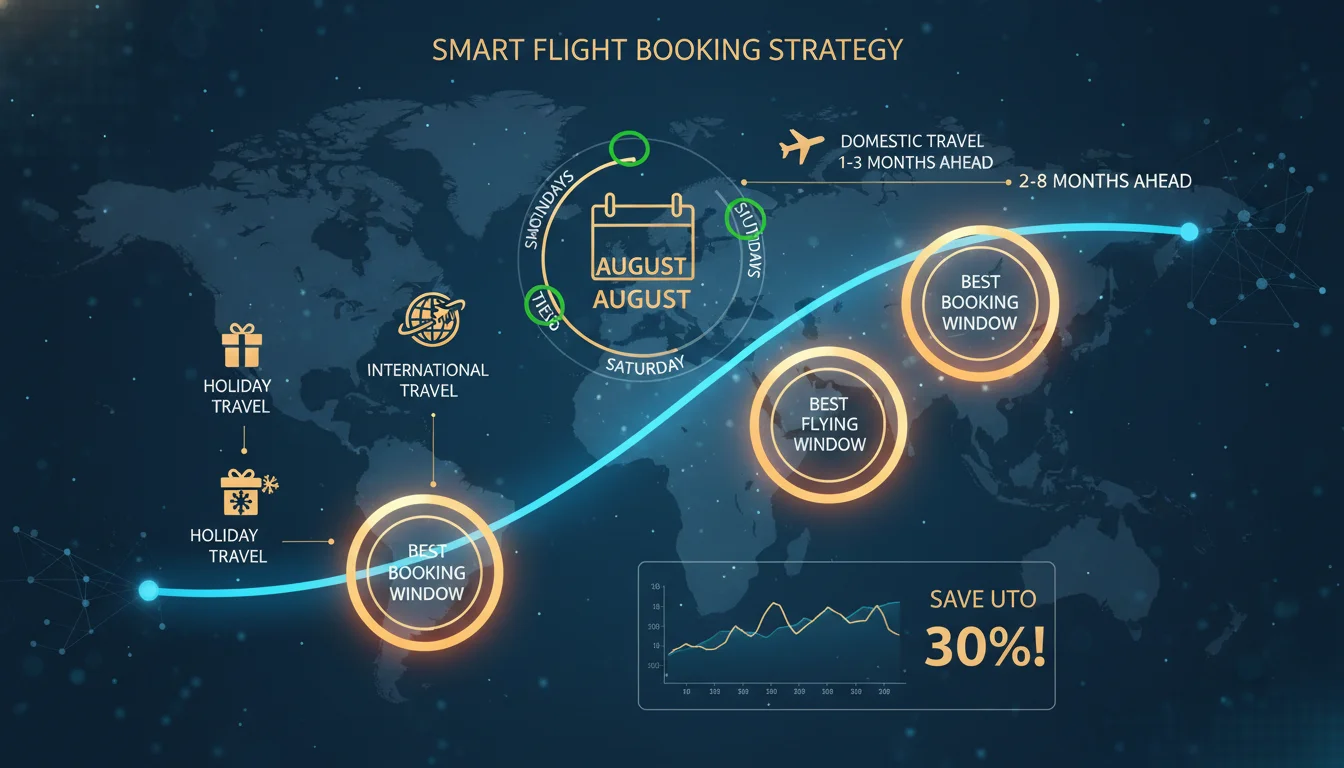
Airlines generally release seat inventory 330 to 350 days in advance of departure. However, purchasing a ticket on the day of release is a sub-optimal financial decision. The optimal booking window represents a parabolic curve where prices are artificially high upon initial release to capture over-eager planners, dip during a specific “Goldilocks window” as the algorithm attempts to establish base load factors, and then skyrocket in the final weeks prior to departure to extract maximum revenue from inelastic business travelers.
Industry data models dictate specific, empirically verified windows for optimal purchasing based on the geographic scope of the itinerary:
- Domestic Travel: The optimal purchasing window is strictly between one to three months prior to the departure date. During this phase, airlines actively compete for price-sensitive leisure travelers.
- International Travel: The pricing curve for long-haul flights is significantly elongated. Securing the lowest fares requires purchasing tickets two to six months in advance, or potentially even earlier for highly competitive global transit corridors.
- Holiday and Peak Season Travel: Due to the massive, inelastic demand surrounding major holidays, the algorithmic price dip rarely, if ever, occurs. Consequently, securing holiday inventory at least two full months ahead of time is a strict financial imperative; waiting inevitably results in purchasing at peak algorithmic pricing.
Temporal and Seasonal Arbitrage Mechanics
The specific day of the week a flight operates significantly impacts the base fare. Tuesdays, Wednesdays, and Saturdays remain the most economically viable days to fly. This is a direct result of corporate travel patterns; these days fall into the trough between outbound corporate travel peaks (Mondays) and returning corporate and weekend leisure travel (Fridays and Sundays).
However, a critical distinction exists between the day one flies and the day one purchases the ticket. While the “Book on Tuesday” rule is a myth, comprehensive 2026 data reveals that booking on Sundays yields highly statistically significant savings. Executing a transaction on a Sunday has been shown to yield average savings of 6% on domestic fares and up to 17% on international fares. This pricing anomaly occurs because corporate travel management systems and business booking portals are largely dormant over the weekend. Recognizing the drop in booking velocity, airline revenue management algorithms temporarily soften prices to stimulate weekend leisure demand.
Seasonality remains a massive macroeconomic pricing lever. August is definitively identified as the cheapest month for travel, offering fares up to 12% lower for domestic flights. For international travel, the savings in late summer are even more pronounced; August fares average 29%—approximately $120 per ticket—less than equivalent flights in December. Furthermore, January represents the cheapest month for domestic travel due to the precipitous drop in demand following the winter holidays.
For maximal savings, aviation economists and travel experts recommend a strategy of reverse-engineering travel plans. Rather than selecting a rigid destination and searching for flights, consumers should utilize aggregate tools to “follow the deal,” letting the availability of cheap geographic nodes dictate the destination. By shifting travel to “shoulder seasons”—such as flying to European capitals in September or October—travelers avoid peak summer pricing algorithms while maintaining favorable environmental conditions.
Strategy 2: Mastery of Metasearch Engines and Aggregator Exploitation
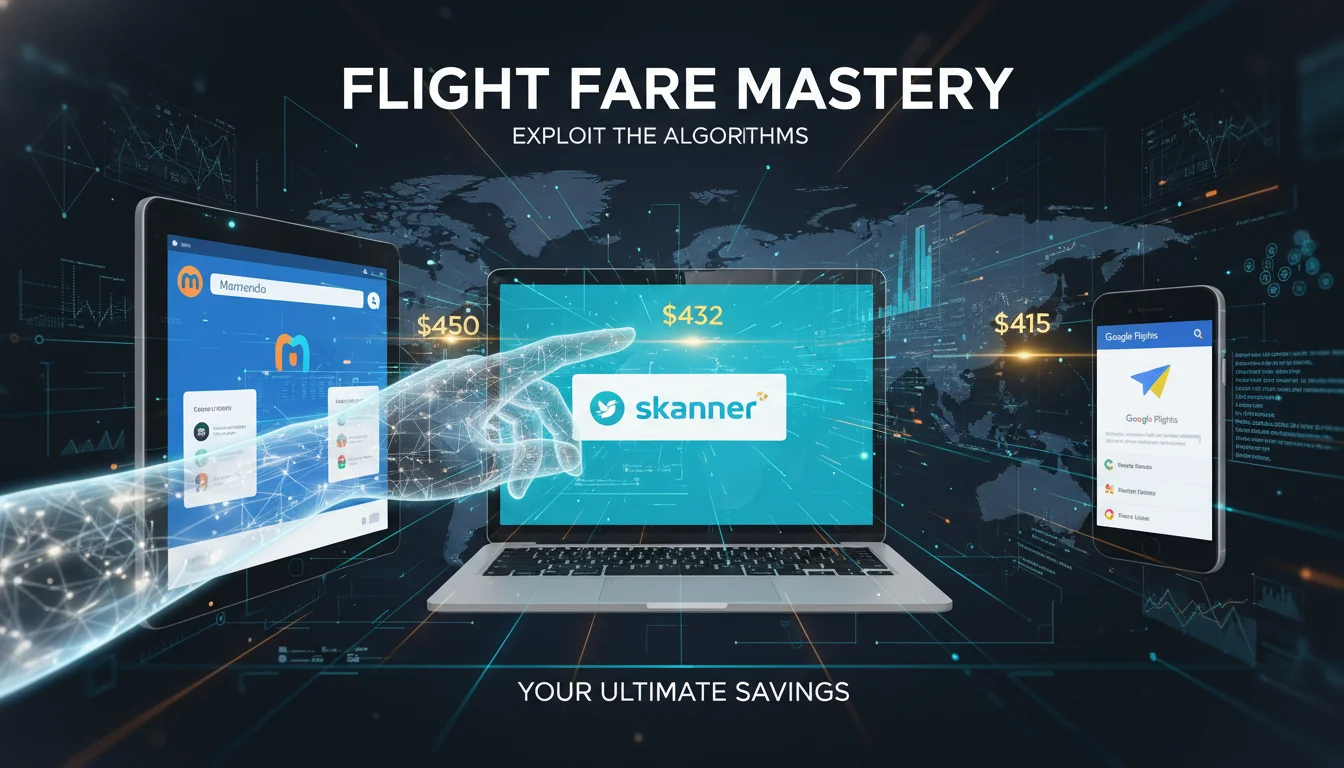
The most critical tools in a proactive traveler’s arsenal are metasearch engines. It is essential to delineate between Online Travel Agencies (OTAs) and metasearch aggregators. OTAs, such as Expedia or Priceline, act as digital storefronts, directly selling tickets and processing payments. Metasearch aggregators, conversely, scrape pricing data from hundreds of individual airlines and OTAs simultaneously, presenting a consolidated, market-wide view without directly processing the transaction. Relying on a single OTA invariably leads to suboptimal pricing.
Based on comprehensive 2026 testing across multiple domestic and international itineraries, the hierarchy of search engines has shifted dramatically, with algorithmic aggregators dominating traditional OTAs.
Top Tier Flight Aggregators and OTAs (2026 Analysis)
The following table details the performance, architectural features, and limitations of the industry’s leading flight search platforms as of 2026.
| Rank | Platform | Category | Core Algorithmic Differentiators | Known Architectural Limitations |
|---|---|---|---|---|
| 1 | Momondo | Aggregator | Best overall performance in 2026. Features a unique “Fee Assistant” to fold baggage fees into initial results. Excellent UI for matching inbound/outbound legs. Unmatched in finding lowest fares on advance-purchase trips. | Slower query load times compared to competitors; the AI “SmartFilter” was observed to be unreliable during rigorous testing. |
| 2 | Skyscanner | Aggregator | Strongest platform for advance-purchase fares, trailing only Momondo. Features highly intuitive color-coded booking calendars and helpful environmental filters, such0 as CO2 emissions tracking. | Underperforms slightly on last-minute fare tracking compared to hidden-city specialists. |
| 3 | Skiplagged | Aggregator | Specializes in controversial hidden-city ticketing. Demonstrates exceptionally high performance on raw, unfiltered pricing. | Can be buggy, requiring separate leg transactions. Adds a 2.3% “Skiplagged Benefits” fee; prone to “bait and switch” price jumps. |
| 4 | Google Flights | Aggregator | The fastest search engine on the market. Excellent price prediction and historical tracking. Superior performance on APEX (Advance Purchase Excursion) fares. | Features surprisingly mediocre filter options, lacking critical toggles such as layover duration filters. |
| 5 | Flight Network | OTA | A Canadian OTA that consistently outperforms major global brands. Highly adept at finding the lowest fares and performs equally well on last-minute and advance bookings. | Lacks the ability to search all airports in a major metropolitan region simultaneously. |
| 6 | Hotwire | OTA | Vastly improved last-minute fare results. Unique among OTAs for showing actual baggage fees in dollars rather than linking to airline policies. | Completely lacks a filter for flight duration, severely hindering complex itinerary planning. |
| 7 | Expedia | OTA | Deep primary source for travel data. Features robust color-coded calendars and integrates deeply with its One Key rewards program. | Can obscure the cheapest basic fares behind package deals. |
| 8 | Booking.com | OTA | Features a highly specific slider filter for layover duration. | Results are deeply average; failed to find the absolute best fare in extensive 2026 testing. |
| 9 | Priceline | OTA | Utilizes “bait-and-switch” tactics where round-trip prices shown on the initial page increase significantly once a return leg is selected. | Dropped significantly in rankings due to poor overall price performance. |
| 10 | Agoda | OTA | Capable of finding innovative international itineraries for trips booked several months out. | Returned the highest prices in top 10 testing; frequently tacks on high taxes and agent fees (up to 12%). |
Deep Dive: The Momondo Advantage
Momondo, claiming the top spot in 2026, differentiates itself fundamentally through its handling of hidden fees and ancillary unbundling. The airline industry’s shift toward Basic Economy has made comparing raw ticket prices inherently deceptive.
Momondo counters this by allowing users to input their specific baggage requirements upfront via its “Fee Assistant.” The algorithm then calculates and displays the true out-the-door price, preventing the deceptive pricing tactics utilized by legacy carriers. Furthermore, Momondo’s interface includes “Fare insights” pop-ups detailing precise price trends, and it uniquely allows users to select matched outbound and return options using checkboxes to instantly winnow and refine complex results. Travel experts universally advise that, regardless of the primary search engine used, consumers should always run a final comparative check on Momondo before executing a purchase.
The Skiplagged Methodology
Skiplagged operates on an entirely different premise, focusing on “hidden-city” ticketing. This aggregator intentionally seeks out structural inefficiencies in airline pricing networks, finding the best or second-best fare 14 times in recent 32-itinerary testing. While its raw pricing power is undeniable, users must be aware of its operational quirks, including the addition of a 2.3% benefit fee and occasional price instability during the final checkout phase.
Strategy 3: Advanced Search Engine Mechanics and Diagnostic Features
While Momondo ranks first in pure pricing tests, Google Flights and Skyscanner remain the most powerful daily research and diagnostic tools due to their speed, massive data infrastructure, and unique exploratory features. Utilizing these tools requires moving beyond basic point-to-point searches and leveraging their advanced analytical overlays.
The Power of Google Flights
Google Flights operates on the ITA Matrix backbone, providing it with an unparalleled processing speed that refreshes data almost instantly as users manipulate dates or filters. While it only secured the absolute lowest price six times out of 32 in recent tests, its contextual features make it indispensable.
Google Flights excels at placing prices into historical context. The platform features a built-in price tracker and fare alert system that displays the average going prices for a chosen route directly on a pop-up calendar. Furthermore, a “fare history” line graph quantitatively assesses whether today’s specific price is statistically lower, typical, or higher than historical averages for that exact route and timeframe.
The “Date Grid” and “Price Graph” functions are vital for travelers with marginal flexibility. The Date Grid compares travel costs three days to either side of the chosen departure and return dates on a single matrix, instantly highlighting the cheapest combination. The Price Graph allows for long-range planning, visualizing pricing trends across entire seasons.
Perhaps the most potent tool within Google Flights is the “Explore” map. This is the ultimate tool for executing the “reverse-engineering” strategy mentioned previously. A user inputs their home departure airport, leaves the destination field entirely blank (or selects “Anywhere”), and Google populates a global map with dozens of possibilities and their corresponding prices. This allows users to instantly identify which global regions are currently experiencing algorithmic price drops. Furthermore, Google Flights permits advanced filtering by specific airline alliances (Oneworld, SkyTeam, Star Alliance), connecting airports, and interests (e.g., skiing, beaches), while deploying advisory icons to warn users of inconvenient itineraries like excessively long layovers.
Skyscanner’s “Everywhere” and “Whole Month” Mechanics
Skyscanner functions as the premier tool for broad, highly flexible exploratory searches. Its “Everywhere search” functions similarly to Google’s Explore map but often pulls in deeper, more localized data from ultra-low-cost carriers (ULCCs) and smaller regional OTAs that Google occasionally misses.
To execute this strategy optimally, a traveler enters their departure airport and types “Everywhere” into the destination box. The algorithm then ranks countries and specific cities by price. Crucially, if travel dates are not rigidly fixed, users can deploy Skyscanner’s “Whole month” tool. Instead of selecting specific days, the user selects an entire month (e.g., October 2026), and Skyscanner generates a color-coded calendar highlighting the cheapest individual days to fly in green, average days in yellow, and expensive days in red.
Skyscanner also excels in granular refinement. Users can isolate non-stop routes by ticking the “Direct flights” box, filter by cabin class to identify anomalies in Premium Economy or Business Class pricing, and automatically widen their search parameters by selecting the “add nearby airports” option for both departure and arrival points. Once an optimal route is identified, users are strongly advised to set up a Skyscanner “Price Alert” to receive push notifications the moment the fare drops.
Strategy 4: Exploiting Pricing Anomalies and Mistake Fares
A mistake fare—also known in the industry as an error fare or a glitch fare—occurs when an airline accidentally publishes a ticket to the Global Distribution System (GDS) at a fraction of its intended algorithmic cost. These anomalies are not scams or marketing stunts; they are the result of complex, highly interconnected software systems failing momentarily.
The Mechanics and Origins of Mistake Fares
Mistake fares manifest through several distinct vectors. Human error is a common culprit, such as an analyst accidentally dropping a zero during manual data entry (e.g., pricing a $1,500 ticket at $150). However, as fare management has grown exponentially more complex, system failures are increasingly to blame. These include currency conversion algorithms experiencing catastrophic rounding errors, or the accidental omission of massive, mandatory fuel surcharges during the dynamic filing of complex international fare classes.
As airlines rapidly transition to AI-driven dynamic pricing tools and attempt to integrate disparate IT systems through new airline codeshare partnerships, these miscommunications have skyrocketed. Industry monitoring platforms like Going.com tracked more than double the amount of mistake fares in 2025 compared to 2024, indicating that software complexity is creating lucrative arbitrage opportunities for vigilant consumers.
Specialized Tools for Identifying Anomalies
Because mistake fares are acutely damaging to airline yields, revenue management teams hunt them aggressively. Consequently, these fares surface and die within extremely short windows—often lasting only a few minutes to a few hours. Manual searching via Google Flights or Skyscanner is mathematically insufficient to capture these deals before they are corrected.
To capitalize on these events, travelers must outsource the monitoring to specialized deal-alert services that scrape GDS data 24/7.
- Going (formerly Scott’s Cheap Flights): The industry standard for mistake fare identification. While Going’s free “Limited” tier provides domestic deals, its Premium and Elite memberships specialize in pushing real-time mistake fare alerts via rapid email and mobile app notifications.
- Secret Flying & Airfarewatchdog: These platforms provide active, highly curated feeds and newsletters dedicated exclusively to massive global savings and glitch fares.
- FlyerTalk: For advanced users willing to parse complex data, aviation forums like FlyerTalk remain the primary ground zero where automated scrapers and industry insiders first post raw anomalies before they reach the mainstream deal sites.
Execution Protocol and the Regulatory Framework
When an error fare alert is received, immediate and precise execution is required. The cardinal rule of booking mistake fares is to execute the transaction directly on the airline’s official website, completely bypassing OTAs. Direct bookings trigger immediate, automated ticket issuance within the airline’s internal system. Conversely, OTAs often batch-process reservations or rely on secondary communication layers. This processing delay provides the airline’s revenue management team with a critical window to flag the error and refuse the OTA’s pending ticketing request.
The regulatory landscape governing these tickets is highly complex and occasionally adversarial. Under the Department of Transportation’s (DOT) 2015 Mistaken Fare Policy, airlines are no longer legally mandated to honor mistake fares if they can conclusively demonstrate the fare was published in error. However, the regulation contains a severe punitive clause for cancellations: if an airline chooses to cancel the ticket, it must not only fully refund the purchase price but also reimburse the consumer for any “reasonable, actual, and verifiable out-of-pocket expenses” made in reliance on the ticket purchase. This includes non-refundable hotel deposits, connecting flights, and expensive visa processing fees.
In practical application, airlines end up honoring between 80% and 90% of mistake fares. The calculus is simple: the catastrophic public relations fallout, the administrative cost of processing tens of thousands of mass refunds, and the legal burden of adjudicating DOT complaints for out-of-pocket expenses routinely exceed the localized revenue lost from simply honoring the cheap tickets.
To safely navigate this dynamic, travelers are advised to implement the “Two-Week Rule.” After successfully booking a mistake fare, travelers must wait a minimum of 14 days before finalizing any subsequent non-refundable ancillary travel arrangements. If an airline is going to cancel an error fare, they almost universally do so within the first 72 hours.
Furthermore, booking directly with the airline grants the consumer access to the federally mandated 24-hour grace period, allowing the traveler to unilaterally cancel the mistake fare ticket without penalty if they experience buyer’s remorse.
Strategy 5: The Architecture of Award Travel and Transfer Partners
For travelers seeking high-value redemptions—particularly in fiercely guarded international business and first-class cabins—the traditional method of paying cash is highly inefficient. Instead, the strategic acquisition and deployment of credit card rewards currency is paramount. The fundamental shift in modern award travel strategy involves moving aggressively away from co-branded airline credit cards toward general travel rewards cards that utilize transferable point currencies.
The Superiority of Transferable Currencies
Co-branded airline cards (e.g., a Delta SkyMiles American Express or a United MileagePlus card) inherently lock the consumer into a single airline’s ecosystem. While these cards offer valuable ancillary perks like free checked bags and priority boarding, the miles earned are highly susceptible to unannounced, dynamic award chart devaluations implemented by the specific airline.
General travel rewards cards, conversely, generate flexible, proprietary points that act as a universal currency. These points can be transferred—typically at a highly favorable 1:1 ratio—to dozens of global airline and hotel loyalty programs. This flexibility allows the consumer to insulate themselves against individual airline devaluations by simply transferring points to whichever partner airline currently offers the best award pricing.
The dominant transferable point ecosystems in 2026 include:
- Chase Ultimate Rewards: A highly versatile currency that transfers 1:1 to vital partners such as United Airlines, Southwest, Air France/KLM (Flying Blue), and Hyatt Hotels.
- American Express Membership Rewards: The broadest ecosystem, partnering with 17 different airlines including Aer Lingus, Delta, and Air Canada. Notably, Amex occasionally charges a small federal excise fee ($0.0006 per point) strictly for transfers to domestic US carriers.
- Capital One Miles & Citi ThankYou Points: Both programs offer extensive international airline partnerships, heavily favoring global carriers and alliance networks.
- Marriott Bonvoy: While primarily a hotel currency, Bonvoy possesses a unique, highly valuable feature: points transfer to dozens of airlines at a 3:1 ratio, with a built-in 5,000-mile bonus for every 60,000 points transferred (yielding 25,000 airline miles). The only notable exceptions to this bonus rule are transfers to American Airlines AAdvantage, Avianca LifeMiles, and Delta SkyMiles.
Maximizing Cent-Per-Point (CPP) Value
To achieve outsized mathematical value, points must be transferred directly to partner airlines rather than redeemed through the credit card issuer’s native travel portal. Portals typically peg point value at a fixed, uninspiring rate (usually 1.0 to 1.5 cents per point). By transferring points, travelers unlock massive arbitrage. For example, a $3,000 international business class seat might be secured for 60,000 transferred miles, yielding a highly lucrative valuation of 5.0 cents per point.
Finding actual award space is the primary bottleneck in this strategy. Historically, airlines utilized static award charts, but the industry has shifted heavily to dynamic pricing, where award costs fluctuate wildly with cash demand. Specialized software tools have emerged to bridge this diagnostic gap:
- Milez.biz: Provides theoretical cost pricing and vital routing mechanisms for distance-based programs, helping users map out exactly how many points a complex route requires.
- AwardsPlanner & Travel Codex Award Maximizer: These platforms ingest real-world data and residual award charts to establish baseline expectations for the typical lowest award prices between two cities, providing a benchmark to evaluate whether a point redemption is actually a good deal.
Top Credit Card Instruments
Securing massive sign-up welcome bonuses is the fastest method to accumulate vast reserves of points. As of early 2026, the premium card market dictates the landscape:
- American Express Platinum Card®: The premier card for luxury perks, offering unmatched airport lounge access. It currently offers a targeted welcome bonus of up to 175,000 points after a $12,000 spend within six months ($895 annual fee), while earning 5x points per dollar on flights booked through Amex.
- Chase Sapphire Reserve®: Highly regarded for its $300 automatic travel statement credit and superior travel protections. It offers a 125,000-point bonus after a $6,000 spend ($795 annual fee).
- Capital One Venture X: Praised for its straightforward 2x points on all purchases and simple portal integration.
- Wells Fargo Autograph Journey: Rapidly emerging as a strong, low-cost contender. With only a $95 annual fee, it offers incredibly rich multiplier categories, including 4x points on airlines and 5x on hotels, alongside a 60,000-point bonus.
Strategy 6: Algorithmic Price Drop Protections
Historically, the consumer assumed all pricing risk the moment an airline ticket was purchased. If the fare dropped the following day, the airline retained the margin. However, the emergence of algorithmic price drop protection programs has fundamentally shifted this dynamic, allowing consumers to capture post-booking price deteriorations automatically. Several major travel platforms have introduced automated price monitoring and refund features, though the mechanisms, caps, and currencies vary significantly.
Hopper: The “Price Freeze” Model
Hopper operates on a preventative model. When a user finds a flight but is not ready to commit, they can utilize the “Price Freeze” feature. The consumer pays a non-refundable upfront deposit (ranging from $1 to $40) to “freeze” the current fare for a period of up to 7 days. During this window, if the price of the flight increases, Hopper’s corporate algorithm covers the difference up to a predetermined cap, and the user pays the frozen price. If the price drops during the 7-day window, the deposit is refunded, and the consumer pays the new, lower price. Critically, if the user ultimately decides not to purchase the ticket, the initial deposit is forfeited.
Google Flights: The Cash Guarantee Pilot Program
Google Flights has implemented a highly lucrative, albeit restricted, “Price Guarantee” pilot program for flights departing from the United States. On select itineraries displaying a specific “Price guaranteed” badge (frequently seen on carriers like Alaska Airlines, Hawaiian, and Spirit), Google assumes the risk.
Once the user books the exact guaranteed itinerary directly with the airline or an eligible OTA, Google automatically monitors the price every single day until the flight takes off. If the price drops by more than $5 USD, Google automatically processes a refund for the difference. The payouts are capped at a generous $500 USD per Google Account per calendar year, and crucially, the refund is paid out in actual cash via Google Pay within 48 hours of the first flight’s departure. The user does not need to file a claim or monitor the price manually; the process is entirely automated.
Capital One Travel: Portal-Based Drop Protection
Capital One Travel incorporates a predictive protection model tied to its internal AI. When a consumer is researching flights within the Capital One portal, the algorithm will occasionally issue a definitive directive: “Book Now”. If the consumer follows this algorithmic advice and purchases the flight through the portal, Capital One automatically applies free price drop protection.
The system then monitors the exact itinerary for 10 calendar days post-booking. If the price drops during this strict 10-day window, Capital One Travel automatically issues the difference in the form of a travel credit, capped at a maximum of $50. This credit can then be applied to future portal purchases.
Expedia: The One Key Infinite Cap Model
Expedia has deeply integrated price protection into its One Key loyalty rewards program. For members holding One Key Gold or Platinum status, purchasing a flight via the Expedia mobile app that displays the “Price Drop Protection” badge triggers continuous monitoring.
Unlike Capital One’s 10-day window, Expedia monitors the exact itinerary from the moment of booking all the way up until the day of scheduled departure. If the price drops multiple times, the refund is calculated based on the absolute lowest Price Check confirmed by the system. There is no stated monetary cap on this refund; however, the difference is paid out exclusively in OneKeyCash (Expedia’s proprietary rewards currency), which cannot be redeemed for actual cash and must be used on future Expedia, Hotels.com, or Vrbo bookings.
Strategy 7: The Manual Rebooking Hack and No-Change-Fee Arbitrage
For travelers who prefer booking directly with airlines to avoid OTA complications, or for those flying on carriers excluded from portal guarantees (such as Southwest Airlines), algorithmic protections are unavailable. In these scenarios, the manual rebooking hack serves as a highly effective, albeit labor-intensive, method to capture post-booking price drops.
The viability of this strategy relies entirely on a massive structural shift in the US aviation market. During the COVID-19 pandemic, major US legacy carriers—including Delta, American, and United—permanently eliminated exorbitant change fees (previously upwards of $200) on all standard economy and premium cabin tickets.
Execution of the Rebooking Hack
This policy shift allows consumers to continuously audit their own purchases.
If a traveler purchases a standard economy ticket for $400, they should immediately navigate to Google Flights or Skyscanner and set up a persistent price alert for their exact travel dates and route.
If the price of that exact itinerary subsequently drops to $250, the traveler simply logs into their airline’s mobile app or web portal, selects their reservation, and clicks “Modify Flight” or “Change Flight”. The traveler then reselects the exact same flights they are already booked on at the new $250 price point. The airline will process the change without penalty. While the airline will not refund the $150 difference to the traveler’s credit card, they will instantly issue a $150 electronic travel certificate (eCredit or flight voucher). This voucher is typically valid for one year from the date of issue and represents pure retained value for frequent travelers.
The Basic Economy Liability
The crucial caveat to this entire strategy is that it completely invalidates the appeal of “Basic Economy” tickets. Basic Economy fares are strictly governed by non-changeable and non-refundable clauses; they are entirely exempt from the no-change-fee policies. Therefore, if a traveler purchases a Basic Economy ticket and the price drops, they are mathematically locked out of capturing the difference. Aviation economists universally advise paying the slight upfront premium for a standard economy ticket if there is even a 1% probability that plans will shift or that prices will drop, as the intrinsic financial value of the modification optionality vastly outweighs the initial cost savings of the Basic fare.
Strategy 8: Geographic Arbitrage and Self-Transfer Ticketing
When traditional point-to-point pricing algorithms generate prohibitively expensive fares, proactive travelers must abandon standard direct-flight searches and physically engineer their own itineraries. This involves utilizing advanced routing architecture, specifically self-transfer ticketing, to exploit massive pricing disparities between global mega-hubs and secondary regional airports.
The Mechanics of Self-Transfer Arbitrage
Self-transferring—also known as hacker faring—involves breaking a long-haul journey into two or more entirely separate, unconnected tickets, often utilizing completely different airlines and alliances that do not codeshare. By doing this, the traveler forces the algorithm to price two distinct, highly competitive segments rather than one monopolized long-haul route.
However, this technique transfers significant logistical responsibility to the consumer. Because the tickets are unlinked, the traveler must act as their own transit agent: they must physically exit the secure zone at the connecting hub, pass through immigration (often requiring an electronic transit visa), claim their checked baggage at the carousel, and completely re-check in at the departures hall for the subsequent flight. Crucially, if the first flight is delayed and the traveler misses the second flight, the second airline has zero legal obligation to rebook them, as the itineraries are legally severed. Consequently, self-transferring requires padding layovers with several hours, or ideally, an overnight stay.
Case Study: The Kathmandu (KTM) Pricing Anomaly
An extensive analysis of 2026 flight patterns to and from Tribhuvan International Airport (KTM) in Kathmandu, Nepal, provides a perfect, data-rich illustration of the massive savings generated by geographic arbitrage.
During peak global travel seasons, single-ticket flights from major western hubs to Kathmandu face severe algorithmic price inelasticity due to limited capacity and high demand. For example, a standard round-trip from New York (JFK) to KTM averages between $1,250 and $1,850, soaring even higher in the month of March. Even using aggressive aggregators, the absolute cheapest recent finds hovered around $869 to $917 on carriers like Qatar Airways and Air India.
To circumvent this premium, savvy travelers deploy a two-step self-transfer architecture:
- Step 1: The traveler secures a highly competitive, commoditized fare from the US or Europe to a major Asian mega-hub with immense competition, such as New Delhi (DEL) or Bangkok (BKK).
- Step 2: The traveler books a completely separate, independent regional ticket from Delhi or Bangkok to Kathmandu.
This strategy works because the regional corridors feeding into Kathmandu are heavily serviced by aggressive Low-Cost Carriers (LCCs) whose fares do not always aggregate efficiently on western OTAs. The Kathmandu-Delhi corridor is intensely competitive, with nonstop flights taking roughly 1 hour and 40 minutes. Round-trip fares on this specific feeder route, utilizing carriers like IndiGo, Nepal Airlines, and Bhutan Airlines, frequently bottom out between $131 and $173.
Alternatively, utilizing Bangkok (BKK) as the transfer hub allows travelers to utilize Thai LionAir or SriLankan Airlines, where self-transfer round trips run approximately $250 to $280. By breaking the ticket in Delhi or Bangkok, securing an inexpensive e-visa, and utilizing regional LCCs, travelers routinely shave hundreds of dollars off the single-ticket premium.
Domestic Hub Arbitrage
This geographic flexibility extends domestically within destination countries. During peak domestic travel periods in Nepal (such as the Dashain festival), direct flights from KTM to Bhairahawa (BWA) can surge to 8,500 NPR. Travelers utilizing geographic pricing arbitrage found that booking a flight from KTM to Pokhara (4,200 NPR), executing a short layover, and taking a secondary flight from Pokhara to Bhairahawa (3,200 NPR), yielded a net savings of 1,100 NPR while entirely circumventing direct-route capacity constraints. The rapid rise of regional LCCs—such as Buddha Air (serving 13 cities directly), Himalaya Airlines (9 cities), Yeti Airlines (7 cities), and Shree Airlines (6 cities)—has created a highly competitive secondary market that heavily rewards travelers willing to route through alternative regional airports rather than relying solely on the primary capital hub.
Strategy 9: Mitigating the Hidden Costs of Basic Economy and ULCCs
Securing the lowest initial price on a search engine is only the first phase of the acquisition cycle; defending that price against aggressive ancillary fee extraction is the second, and often more difficult, phase. The rapid proliferation of Ultra-Low-Cost Carriers (ULCCs) globally, and the subsequent introduction of “Basic Economy” tiers by terrified legacy carriers, has fundamentally altered the economic definition of an airline “ticket.”
The Unbundling of the Aviation Product
Modern airlines essentially treat the physical seat on the aircraft as a loss-leader. The core revenue strategy relies on the systematic unbundling of services—charging separately for carry-on baggage, checked baggage, advance seat selection, priority boarding, and onboard food and beverage.
In a significant legal development in February 2026, the US Court of Appeals for the Fifth Circuit struck down a highly anticipated DOT rule that would have legally required airlines to disclose all ancillary fees upfront the moment passengers began booking flights. The airlines successfully argued that the rule exceeded DOT’s authority, meaning that the burden of calculating the true, final cost of transit remains squarely on the shoulders of the consumer.
Total Cost Normalization
Basic economy tickets frequently strip the traveler of carry-on baggage rights (limiting them to a small personal item that fits under the seat), force random seat assignments (which routinely separates families and groups), and, as discussed, strictly prohibit changes or cancellations. When mandatory baggage fees and seat assignments are mathematically accounted for, a seemingly cheap $150 Basic Economy ticket almost always surpasses the cost of a $200 Standard Economy ticket that inherently includes overhead bin space and modification optionality.
To combat this, travelers must rigorously normalize prices across different fare classes before making a purchasing decision. Utilizing tools like Momondo’s Fee Assistant, which forces the algorithm to calculate the out-the-door price based on specific luggage inputs, is critical to defeating the deceptive pricing tactics employed in the Basic Economy era.
Strategy 10: Operational Defense, DOT Regulations, and Transactional Optimization
Even the most economically sound flight booking can rapidly degrade into a severe financial loss if irregular operations (IROPs) such as weather delays, mechanical failures, or cascading staff shortages occur. Understanding modern traveler rights, leveraging new regulatory frameworks, and optimizing the final financial transaction act as the ultimate defensive perimeter for the budget-conscious traveler.
Regulatory Leverage and Automatic Refunds
In a monumental shift for consumer protection, new DOT rules fully implemented by 2026 require airlines and ticket agents to provide automatic cash refunds when flights are significantly altered or outright canceled, provided the passenger chooses not to accept alternative transportation or travel credits. This eliminates the previous era where airlines would indefinitely hold consumer funds hostage in the form of expiring vouchers following operational meltdowns.
However, regulatory enforcement remains highly fluid and subject to ongoing litigation. As of December 2025, the DOT initiated a formal pause (extending until June 30, 2026) on enforcing these refund requirements specifically for flights that operate under a different flight number than originally booked, provided the change imposes no significant delay to the consumer’s final itinerary.
Operational Defense Mechanisms
To mitigate the probability of ever needing to rely on these DOT protections, aviation experts advise structural defensive booking.
The most potent operational defense is simply booking the absolute first flight of the day. Morning flights operate before the cascading, compounding network effects of delayed inbound aircraft and severe afternoon convective weather systems disrupt the national routing grid.
Furthermore, while direct flights undeniably demand a price premium over connecting itineraries, the elimination of connecting hubs drastically reduces the statistical probability of misconnections and lost baggage. The DOT actively tracks and publishes mishandled baggage and on-time performance data monthly via the Air Travel Consumer Report (ATCR), allowing consumers to statistically weigh the reliability of specific carriers before booking. In an era of high operational volatility, paying a slight premium to fly direct is increasingly justifiable as a form of operational insurance.
Foreign Currency Arbitrage and Payment Gateways
The final tactical layer in securing optimal airfare involves the financial transaction itself. Airlines utilize dynamic currency conversion and aggressive regional point-of-sale (POS) pricing. A ticket from London to Bangkok may price radically differently if the search engine algorithm believes the user is located in the UK (paying in GBP) versus if the algorithm believes the user is located in Thailand (paying in THB).
By utilizing Virtual Private Networks (VPNs) to mask their IP address location and manually switching the OTA’s currency and region settings, travelers can exploit localized currency devaluations. Anecdotal evidence and data from digital nomad communities highlight substantial, repeatable savings—such as a $350 drop on a London-Sydney route—using exactly this POS manipulation method.
However, when successfully transacting in foreign currencies, utilizing the correct payment instrument is absolutely vital. Standard domestic credit and debit cards impose punishing Foreign Transaction Fees (FTFs) of roughly 3%, instantly neutralizing minor price arbitrages and inflating the final cost. Travelers operating heavily in foreign aviation markets must employ specific, travel-optimized banking tools. For US-based consumers, the Charles Schwab High Yield Checking Account or Fidelity’s Cash Management Account are highly recommended by experts. These specific accounts allow for global ATM withdrawals and foreign currency transactions with zero foreign transaction fees, utilizing real-time, wholesale exchange rates, while actively rebating any tertiary fees charged by local operators. Coupling these optimized payment gateways with premium credit cards that offer Priority Pass lounge access ensures that even the most complex, self-transferred, budget-optimized itineraries remain comfortable and financially secure.