eSewa vs Khalti: Which Payment Gateway is Best for Business in Nepal?
In the rapidly growing e-commerce landscape of Nepal, having a reliable digital payment partner is no longer optional—it’s a necessity. For years, eSewa and Khalti have been the two dominant players, battling for the top spot in the digital wallet market.
But for a business owner, the question isn’t just about which app has more users. It’s about integration ease, merchant service fees (MSF), settlement reliability, and customer support.
In this guide, I’ll break down eSewa vs. Khalti from a strict business and developer perspective to help you decide which one (or both) to integrate into your website or app.
1. Market Penetration and User Base
eSewa: The Pioneer
eSewa is the oldest and most widely used digital wallet in Nepal. It has a massive user base, reaching even remote areas.
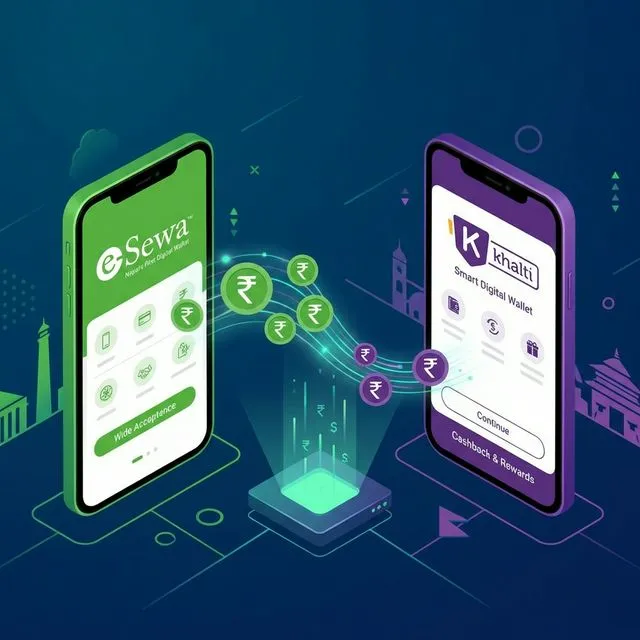
- Pros: Almost every smartphone user in Nepal has an eSewa account. Integrating it guarantees you cover the largest possible segment of customers.
- Cons: The interface can feel dated compared to newer competitors, though they are improving.
Khalti: The Challenger
Khalti entered the market later but gained traction quickly with a modern UI, aggressive cashback campaigns (like the “Khalti Quiz”), and a developer-friendly focus.
- Pros: Very popular among the youth and tech-savvy demographic. Excellent branding and user experience.
- Cons: Slightly smaller reach in rural areas compared to eSewa, though the gap is closing fast.
Winner: eSewa for sheer volume, Khalti for youth demographics.
2. API Documentation and Developer Experience
This is where the differences become stark.
Khalti
Khalti was built with developers in mind.
- Documentation: Their docs are clean, modern, and easy to follow.
- Integration: They offer seamless SDKs for Android, iOS, and Web. Their “E-payment” gateway is straightforward to implement.
- Testing: The sandbox environment is robust and easy to access without jumping through hoops.
eSewa
eSewa has improved significantly with their “eSewa ePay” version 2.0, but legacy issues sometimes persist.
- Documentation: Functional, but sometimes feels fragmented between old and new protocols.
- Integration: Requires a bit more boilerplate code compared to Khalti.
- Testing: Getting merchant credentials for the sandbox or live environment can sometimes involve more bureaucratic steps.
Winner: Khalti. For developers, Khalti is generally a smoother ride.
3. Merchant Service Fees (MSF) and Settlement
Both companies usually negotiate rates based on your transaction volume, but here are the general trends.
Transaction Fees (MSF)
- Standard Rates: Both typically charge between 1% to 2% per transaction for general merchants.
- Negotiation: Large volume merchants (airlines, ISPs, big e-commerce) can negotiate rates down to 0.5% or lower.
- Khalti: Often more aggressive with competitive rates for startups and SMEs to win market share.
Settlement (Getting Your Money)
- eSewa: Usually offers T+1 (Next day) settlement to your linked bank account. Automatic settlement features are reliable.
- Khalti: Also offers T+1, and in some cases, instant transfers to linked cooperative accounts or banks.
Winner: Tie. It comes down to your negotiation skills and monthly turnover.
4. CMS Plugins and Ready-made Support
If you use WordPress/WooCommerce, ease of setup is critical.
- WooCommerce: Both have official and community-supported plugins. The “NPR Currency & Payment Gateways” plugins often bundle both.
- Shopify: Direct integration is tricky for both due to Shopify’s restrictions in Nepal, usually requiring third-party tools or “Manual Payment” methods unless you use a hosted payment page workaround.
-
Laravel/Python: Both offer good libraries, but Khalti’s community packages (like
khalti/khalti-laravel) are excellent.
Winner: Tie. Both are well-supported in the Nepali ecosystem.
5. Customer Support for Merchants
When a transaction fails or a settlement is delayed, you need answers fast.
- eSewa: Support can sometimes be bureaucratic. Reaching the right technical person might take a few transfers.
- Khalti: Generally praised for faster, more personalized merchant support. They often create dedicated Viber/WhatsApp groups for merchant partners.
Winner: Khalti for responsiveness.
Conclusion: Which One Should You Choose?
The honest answer? You should probably integrate both.
In the Nepali market, user preference is split. Some users strictly keep money in eSewa, while others love Khalti’s UI and cashbacks. By offering only one, you risk losing a sale at the final checkout step.
My Recommendation:
- For Startups & Devs: Start with Khalti. The documentation is friendlier, and you’ll get up and running faster.
- For High Volume Sales: You must have eSewa. You cannot ignore their massive user base.
- The Best Strategy: Use a payment aggregator (like Fonepay direct integration if eligible) or simply install plugins that support both wallets.
Pro Tip: Always display the logos of both on your checkout page. Trust is a huge factor in Nepali e-commerce, and seeing familiar logos increases conversion rates.
Need help integrating payment gateways into your website? Contact us for technical support and custom development.