Digital Marketing for Indian Tech Startups: A Comprehensive Guide
Industry Overview
The Indian technology startup ecosystem has evolved into a highly sophisticated, multi-layered digital economy, transitioning rapidly from an era of hyper-growth fueled by abundant venture capital to a mature landscape characterized by rigorous unit economics and sustainable commercialization. As the foundational layer of India’s broader digital transformation, tech startups are fundamentally reshaping commerce, finance, healthcare, and enterprise software both domestically and on the global stage.
Current Market Size, Growth, and Trends
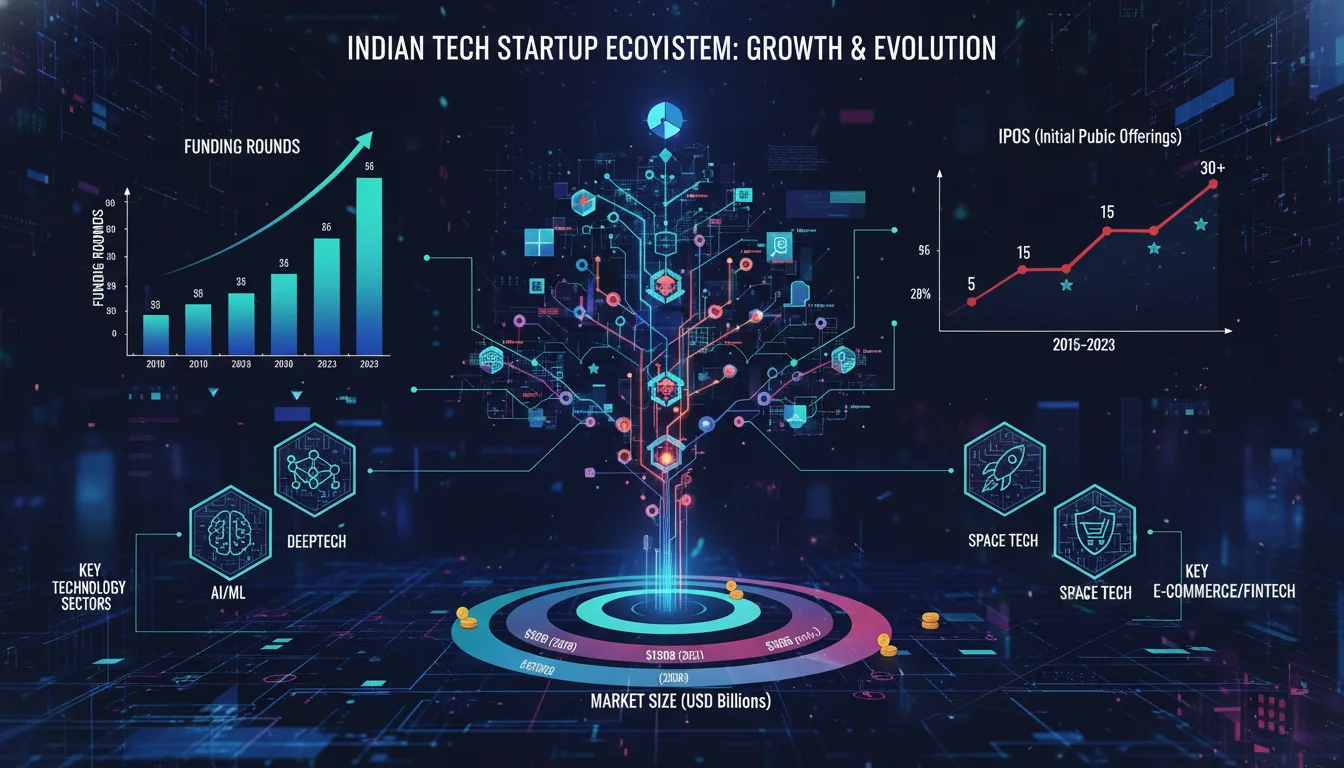
As of the beginning of 2025, India has firmly consolidated its position as the world’s third-largest startup ecosystem. The Department for Promotion of Industry and Internal Trade (DPIIT) recognizes over 1.59 lakh startups nationwide, representing a staggering proliferation of entrepreneurial activity since the inception of formal government initiatives in 2016. Within this vast aggregate, the core technology startup sector is estimated to comprise between 31,000 and 34,000 active enterprises, heavily concentrated in metropolitan innovation hubs such as Bengaluru, Delhi-NCR, and Mumbai, yet increasingly decentralizing into emerging Tier-2 and Tier-3 urban centers.
The funding landscape has undergone a profound structural correction, widely categorized by industry analysts as a “funding winter,” though it is more accurately described as a strategic reset toward qualitative scale. Throughout the 2024–2025 period, Indian tech startups raised between $10.5 billion and $13.6 billion, maintaining the ecosystem’s global ranking directly behind the United States and the United Kingdom. A defining trend within this capital deployment is the aggressive pivot toward advanced innovation; investments in DeepTech enterprises alone reached $2.3 billion in 2025, reflecting sustained global investor confidence in artificial intelligence, space technology, robotics, and advanced manufacturing.
Simultaneously, the ecosystem has reached a historic inflection point regarding exit liquidity and public market maturity. The year 2025 witnessed a record-breaking surge in initial public offerings (IPOs), with 254 companies listing on domestic bourses, commanding an aggregate IPO value of $11.8 billion. This momentum highlights an accelerated pathway to public markets; tech startups are now achieving IPO readiness in an average of 13.3 years, a marked reduction from the 16-year average observed in 2021 and 2022. Concurrently, corporate consolidation accelerated, evidenced by a 71% year-over-year increase in strategic acquisitions as conglomerates and private equity firms aggressively absorbed mature digital-native brands and SaaS infrastructure providers.

| Ecosystem Metric | 2024/2025 Data Point | Strategic Implication for the Market |
|---|---|---|
| Total Recognized Startups | 1,59,157 (DPIIT) | Represents a massive democratization of entrepreneurship, creating over 16.6 lakh direct jobs across diverse sectors. |
| Core Tech Startups | 31,000 – 34,000 | Indicates a deep concentration of intellectual property, particularly in enterprise software, FinTech, and AI. |
| Annual Capital Deployed | $10.5B – $13.6B | Capital remains abundant but highly selective, concentrated in mega-rounds for proven business models rather than speculative early-stage ventures. |
| DeepTech Investment | $2.3 Billion | Signals a shift from derivative consumer service apps to fundamental scientific research and proprietary algorithm development. |
| Public Market Listings | 254 IPOs ($11.8B Value) | Demonstrates strong domestic institutional capital participation and validates the long-term viability of the Indian tech business model. |
Key Challenges Faced by Businesses in this Industry
Beneath the macroeconomic optimism lies a highly volatile operational environment. The ecosystem is experiencing severe attrition, with over 11,223 startup shutdowns recorded in 2025 alone—a 30% increase from the previous year. This mortality rate exposes deep structural challenges that founders must navigate to achieve sustainable scale.
The foremost challenge is the critical bottleneck between technical readiness and commercial viability, particularly during the fragile transition from Seed funding to Series A. Startups frequently succeed in developing robust prototypes but fail to secure early pilot-to-revenue pathways, leading to stalled stage progression. Seed-stage funding contracted by 30% to $1.1 billion in 2025, leaving many early-stage ventures stranded without the necessary capital to execute comprehensive go-to-market strategies.
Furthermore, the venture capital mandate has irrevocably shifted from subsidizing user acquisition to demanding immediate path-to-profitability metrics. Startups that historically relied on aggressive discounting, high cash-burn marketing campaigns, and vanity metrics (such as gross merchandise value without corresponding margins) find themselves unable to secure follow-on capital. This is compounded by an intensely saturated digital advertising space where the Cost Per Click (CPC) on global duopoly platforms (Google and Meta) has risen by nearly 18%, eroding the already thin margins of consumer-facing startups.
Regulatory and compliance friction also presents a formidable barrier, particularly in sectors managing highly sensitive data. Startups operating in FinTech, HealthTech, and EdTech must navigate complex frameworks including evolving Goods and Services Tax (GST) structures, Reserve Bank of India (RBI) mandates, and stringent data localization requirements, which significantly elevate operational overhead and delay time-to-market.
| Primary Cause of Startup Failure | Estimated Incidence | Contextual Drivers within the Indian Market |
|---|---|---|
| Capital Exhaustion / Runway Depletion | 44% - 47% | Driven by weak unit economics, inability to secure transition capital, and an over-reliance on foreign venture capital amid global macroeconomic caution. |
| Lack of Product-Market Fit (PMF) | 34% - 42% | Building technically sound solutions without validated customer demand; failure to achieve commercial readiness before scaling operations. |
| Intense Digital Competition | ~20% | Inability to outbid established conglomerates for digital real estate; saturated market segments leading to prohibitive customer acquisition costs (CAC). |
| Regulatory & Governance Complexities | 19% | High compliance barriers in highly regulated industries, coupled with internal team conflicts and poor corporate governance structures. |
Digital Landscape in India (Contextual to the Industry)
To circumvent the commercialization bottleneck and achieve capital-efficient growth, tech startups must deeply integrate into India’s rapidly expanding digital infrastructure. The nation has emerged as one of the largest and most dynamic digital consumer markets globally, characterized by distinct consumption patterns that dictate how technology products must be engineered and marketed.
Internet & Social Media Usage Relevant to Tech Startups
The penetration of digital connectivity in India has achieved unprecedented scale. By the end of 2025, India’s internet user base expanded to an estimated 806 million to 1.03 billion individuals, pushing national online penetration to between 55.3% and 70.0%. This digital revolution is fundamentally mobile-centric. The country supports over 1.12 billion active cellular mobile connections, with median mobile internet download speeds exceeding 100 Mbps, thereby facilitating seamless consumption of high-bandwidth applications, streaming video, and complex enterprise software via mobile interfaces. Consequently, mobile platforms now account for a dominant 78% share of the nation’s total digital media advertising expenditure.
Social media adoption runs parallel to this internet penetration. India is home to approximately 491 million to 500 million active social media user identities, representing over 43% of the adult population. This ecosystem is highly engaged; the average Indian user spends 48 minutes daily consuming social media video content, significantly outpacing the global average of 28 minutes. This metric underscores a critical reality for tech startups: social media is no longer merely a communication utility, but the primary discovery engine and top-of-funnel acquisition channel for both consumer and enterprise technologies.
Popular Platforms Among the Target Audience
The platform ecosystem in India is highly fragmented, requiring startups to tailor their distribution strategies based on demographic nuances, linguistic preferences, and specific use-case requirements.
Global platforms dominate urban and professional demographics. Instagram serves as the definitive visual storytelling medium, reaching over 51.4% of the local internet user base and driving massive engagement through short-form ‘Reels’. YouTube operates as the de facto search engine for educational and long-form video content, with its ‘Shorts’ feature generating immense daily traffic. For B2B SaaS, FinTech infrastructure, and enterprise solutions, LinkedIn has evolved beyond recruitment into a content-rich ecosystem where founders and C-suite executives engage in high-value thought leadership and account-based networking.
However, the most critical utility for transactional growth in India is WhatsApp.
Boasting billions of monthly active users globally, WhatsApp functions as the operational lifeline for Indian commerce.
Through the WhatsApp Business API, startups execute direct sales, automate customer service workflows, and build intimate community groups, circumventing the lower open rates associated with traditional email marketing.
Simultaneously, a powerful parallel ecosystem of indigenous, vernacular platforms has emerged to serve the rapidly digitizing Tier-2 and Tier-3 cities—collectively referred to as “Bharat.” Platforms such as ShareChat, Moj, and Josh have captured massive user bases by prioritizing regional languages. Data indicates that Hindi content generates 3.2 times more engagement than English content, while languages like Tamil, Telugu, and Bengali show uniquely strong retention rates. Startups targeting mass-market consumer tech, localized EdTech, or agricultural technologies must integrate these vernacular platforms to achieve meaningful market penetration.
Consumer Online Behavior Related to Tech Startups
Indian consumer behavior is defined by a complex intersection of aggressive technological adoption, deep value-consciousness, and an overarching demand for trust and transparency.
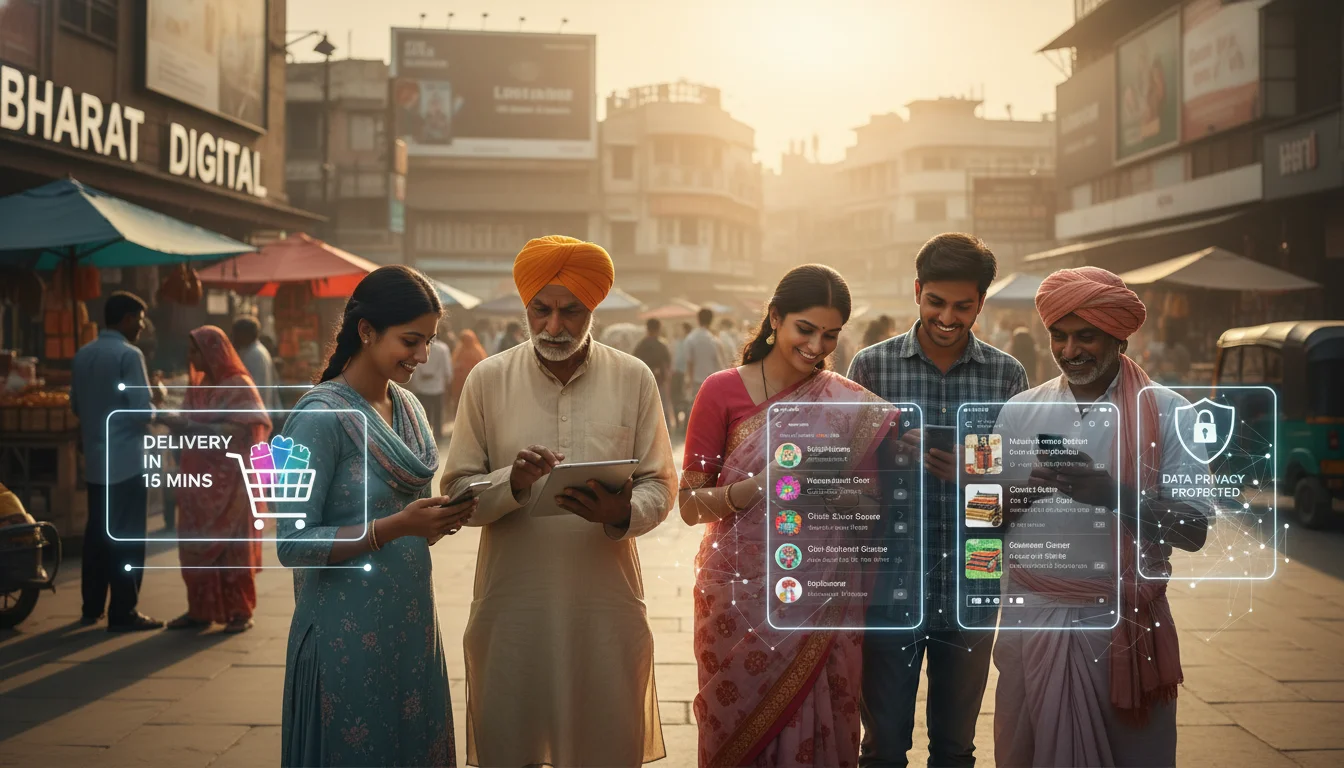
The most visible behavioral shift is the normalization of “quick commerce.” Consumers have evolved beyond seeking mere convenience; there is a prevailing expectation for instant gratification. The quick commerce sector is projected to scale exponentially to $50 billion by 2030, driven by users demanding sub-hour delivery times not only for groceries but for electronics, apparel, and direct-to-consumer (D2C) hardware. This expectation for seamless, instantaneous fulfillment places immense pressure on the supply chain and logistics algorithms of emerging startups.
Artificial Intelligence has also seamlessly integrated into the consumer purchasing journey. A remarkable 62% of Indian consumers report making purchasing decisions based heavily on AI-driven recommendations, a stark contrast to the global average of 30%. Consumers rely on sophisticated algorithms for product discovery, personalized pricing, and customized content curation.
Yet, this reliance on technology does not negate the necessity for human-centric trust. Despite high AI adoption, 77% of Indian consumers harbor profound concerns regarding data breaches, and 78% prefer to engage with platforms that offer accessible human customer service support when resolving complex issues. For tech startups, this dictates a dual mandate: deploy cutting-edge AI for operational efficiency and personalization, while simultaneously engineering highly visible trust signals, robust data privacy compliance (aligning with the DPDP Act), and accessible human touchpoints within the user interface. Furthermore, there is a clear trend toward “premiumization.” Indian households and enterprises are increasingly willing to trade up and invest in higher-priced consumer electronics and premium SaaS subscriptions, provided the technology delivers demonstrable long-term value, durability, and robust after-sales ecosystems.
Digital Marketing Opportunities
In an environment where capital efficiency is the ultimate metric of survival, digital marketing presents the most viable mechanism for Indian tech startups to bridge the commercialization gap. By shifting from high-burn outbound advertising to sophisticated, data-driven inbound architectures, startups can systematically dismantle the barriers to customer acquisition and achieve sustainable profitability.
How Digital Marketing Solves Key Challenges
The primary existential threat to an early-stage startup is the exhaustion of its financial runway due to unsustainable customer acquisition costs (CAC). Traditional mass-media advertising and broad-match digital campaigns operate on a “spray and pray” methodology, wasting precious capital on unquantifiable brand awareness. Digital marketing resolves this by enabling hyper-granular audience segmentation and deterministic performance tracking.
Through the deployment of Account-Based Marketing (ABM) for B2B enterprises or intent-driven Search Engine Optimization (SEO) for consumer applications, startups can intercept users at the exact moment they express a commercial need. This precision ensures that marketing budgets are deployed exclusively toward high-probability conversions, thereby stabilizing unit economics and providing venture capitalists with the predictable revenue cohorts they require for subsequent funding rounds. Furthermore, digital marketing facilitates rapid iteration; startups can utilize A/B testing on ad creatives, landing page copy, and pricing models to validate product-market fit (PMF) using minimal capital before committing to large-scale operational scaling.
Best Strategies for Tech Startups in India
To capitalize on the diverse Indian digital landscape, startups must orchestrate a multi-channel strategy that leverages the unique algorithmic behaviors of different platforms.
Search Engine and Generative Engine Optimization (SEO & GEO)
While traditional SEO remains a cornerstone, the proliferation of Large Language Models (LLMs) necessitates a shift toward Generative Engine Optimization (GEO). Startups must architect content designed to be parsed and cited by AI overviews (such as Google’s AI Overview, ChatGPT, and Perplexity). This involves transitioning from targeting high-volume, generic keywords to capturing hyper-specific, long-tail queries that reflect deep transactional intent. Furthermore, programmatic SEO allows startups to generate thousands of dynamically optimized landing pages targeting specific use-cases, industry verticals, and geographic locations, capturing fragmented demand at a massive scale.
Founder-Led Thought Leadership
In the B2B SaaS, DeepTech, and FinTech sectors, corporate brand pages typically yield minimal organic engagement. However, the personal brands of startup founders possess immense algorithmic leverage on platforms like LinkedIn. By adopting a “build-in-public” methodology—consistently sharing technical insights, market observations, architectural challenges, and transparent revenue milestones—founders cultivate profound parasocial trust. This strategy generates high-quality, warm inbound leads from C-suite decision-makers without the prohibitive costs associated with outbound enterprise sales.
Conversational Commerce and Community Architecture
Given the ubiquity of WhatsApp in India, startups are increasingly abandoning traditional email marketing in favor of conversational commerce. Integrating WhatsApp Business APIs allows for automated lead nurturing, frictionless transaction processing, and instantaneous customer support directly within the user’s preferred messaging environment. Additionally, ethically infiltrating and establishing proprietary micro-communities on platforms like Discord, Reddit, or specialized Facebook Groups allows startups to foster brand evangelism and secure direct feedback loops with early adopters.
Micro and Nano-Influencer Partnerships
The influencer marketing paradigm has shifted away from expensive celebrity endorsements toward highly targeted micro and nano-influencers (creators with 1,000 to 50,000 followers). In the Indian context, partnering with niche technology reviewers, local vernacular content creators, and industry-specific domain experts yields vastly superior engagement rates and authentic trust signaling at a fraction of the cost.
Local and Global Examples/Case Studies
The efficacy of these digital marketing strategies is vividly demonstrated by the growth trajectories of India’s most successful tech unicorns.
Zerodha: The Non-Paid Growth Model
Zerodha, India’s largest discount brokerage, achieved decacorn status and dominated the FinTech sector with virtually zero traditional advertising expenditure. Operating in an industry where competitors burn millions on television campaigns and sports sponsorships, Zerodha engineered a “Trust Engine” via educational content marketing. They launched “Varsity,” an exhaustive, free educational portal detailing stock market mechanics, alongside “TradingQ&A,” an active community forum. This generated massive volumes of long-tail SEO traffic and fostered deep brand loyalty. Consequently, over 60% of Zerodha’s user acquisition is driven by organic referrals and word-of-mouth, proving the monumental ROI of value-driven content marketing.
Zomato: Social Engagement and Gamification
Zomato transformed the food-tech landscape through an aggressive, highly personalized digital marketing strategy. They pioneered hyper-local meme marketing, utilizing culturally relevant humor to achieve viral reach on Instagram and X (formerly Twitter). Beyond social media, Zomato leverages sophisticated data analytics to dispatch highly contextual, personalized push notifications and emails. Crucially, they integrated gamification into their user experience through loyalty programs like Zomato Gold (now Pro), which exponentially increased customer lifetime value (CLTV) and repeat order frequency in a highly promiscuous market.
Freshworks: B2B SaaS Guerrilla Marketing
Freshworks, a Chennai-born SaaS giant that successfully listed on the NASDAQ, utilized highly targeted, cost-effective digital strategies to compete against global behemoths like Salesforce. They executed brilliant guerrilla marketing campaigns, most notably creating high-ranking competitor comparison pages (e.g., SEO-optimized pages detailing “Alternatives to Salesforce” or “Freshworks vs.”
By capturing high-intent, bottom-of-funnel search traffic from users actively dissatisfied with incumbent solutions, and pairing this with a frictionless freemium onboarding model, Freshworks scaled its enterprise user base with remarkable capital efficiency.
Meesho: Vernacular Social Commerce
Meesho identified a massive gap in the market: traditional e-commerce platforms failed to penetrate the socio-economic fabric of Tier-2 and Tier-3 Indian cities due to a lack of digital trust and English-first interfaces. They engineered a social commerce model that empowered local micro-entrepreneurs, primarily women, to act as resellers. Meesho’s digital marketing strategy focused entirely on equipping these resellers with easily shareable digital catalogs optimized for WhatsApp and Facebook Groups. By leveraging pre-existing offline trust networks through digital messaging tools, Meesho achieved unicorn status and became a dominant force in the “Bharat” demographic.
Competitive Analysis
To successfully penetrate the Indian technology market, emerging startups must conduct a rigorous empirical evaluation of the digital footprints maintained by incumbent market leaders. Understanding the digital moats constructed by these unicorns reveals not only the baseline requirements for competitive parity but also the systemic vulnerabilities that agile startups can exploit.
Current Digital Presence of Top Tech Businesses in India
The digital presence of leading Indian tech conglomerates—spanning B2C super-apps, B2B SaaS decacorns, and integrated FinTech platforms—is characterized by sophisticated, multi-layered architectures and omnipresent visibility. These entities deploy massive programmatic advertising budgets, utilizing advanced demand-side platforms (DSPs) to retarget users continuously across the global internet. Their digital properties are rigorously optimized for mobile-first consumption, featuring sub-second load times, intuitive user interfaces (UI), and seamless integrations with India’s robust digital public infrastructure, such as the Unified Payments Interface (UPI) and Aadhaar authentication APIs.
In the search ecosystem, incumbents dominate the high-volume, short-tail “head” keywords (e.g., “food delivery,” “CRM software,” “mutual fund app”) through years of compounding domain authority and aggressive backlink acquisition. On social media, they maintain highly polished, highly responsive profiles, often employing dedicated agencies to manage real-time social listening, reputation management, and viral trend participation.
What They Are Doing Well
| Sector Archetype | Demonstrable Digital Strengths | Strategic Advantage Achieved |
|---|---|---|
| B2C Consumer Tech (e.g., Swiggy, Zomato, Nykaa) | Mastery of personalized push marketing, culturally resonant viral social media campaigns, and aggressive expansion into high-frequency quick commerce. | Ubiquitous brand recall; they have effectively commoditized convenience, ensuring their applications remain on the primary home screen of the Indian smartphone user. |
| B2B SaaS Giants (e.g., Zoho, Freshworks) | Comprehensive ecosystem integrations (API-first architecture), dominance in global capability marketing, and implementation of robust multi-tier pricing strategies. | High customer lock-in; once an enterprise integrates multiple modules (e.g., Zoho CRM, Mail, and Books), the friction of migrating away ensures extremely low churn rates. |
| FinTech Leaders (e.g., CRED, Razorpay, Pine Labs) | Exceptional trust signaling through aesthetic UI design, seamless developer documentation, and high-impact influencer and celebrity marketing. | Rapid establishment of institutional credibility; they project an aura of absolute security and operational scale, overcoming the inherent consumer anxiety surrounding digital finance. |
Gaps and Opportunities to Outperform Them
Despite their vast resources, the scale of these incumbents inevitably breeds structural rigidities. Agile tech startups can exploit these blind spots by deploying surgical digital marketing strategies.
1. The Profitability Paradox and High CAC
Many B2C consumer tech giants are fundamentally trapped in a cycle of subsidized growth. Their digital marketing engines are highly reliant on offering steep discounts and running cash-burning performance ad campaigns to retain highly promiscuous users. This results in unsustainably high Customer Acquisition Costs (CAC) that mask underlying profitability issues.
- The Opportunity: Startups can outperform them by refusing to engage in discount wars. Instead, by focusing on niche communities, deploying hyper-targeted Account-Based Marketing (ABM), and prioritizing organic community building (via Reddit, specialized forums, or WhatsApp), startups can acquire fiercely loyal users with a fraction of the CAC, achieving the sustainable unit economics that modern investors demand.
2. The Vernacular and Hyperlocal Neglect
Despite the rapid digitization of non-metropolitan India, many top tech companies maintain an English-first, urban-centric digital posture. Their marketing materials, UI microcopy, and customer support infrastructure are rarely optimized for the linguistic diversity of Tier-2 and Tier-3 cities.
- The Opportunity: Startups can capture the “Bharat” demographic by deploying deeply localized digital campaigns. This involves executing local SEO strategies (e.g., optimizing for regional voice search queries), producing video content in Hindi, Tamil, or Telugu, and distributing marketing materials on homegrown platforms like ShareChat and Moj, where incumbent competition is significantly lower and engagement rates are substantially higher.
3. The AI and Generative Engine Optimization (GEO) Lag
Large corporations with massive legacy content architectures are often slow to re-optimize their digital assets for the era of Artificial Intelligence. Many continue to rely on outdated keyword-density models rather than structuring their data to be ingested by Large Language Models (LLMs) like ChatGPT or Google’s AI Overviews.
- The Opportunity: Emerging startups can leapfrog incumbents in search visibility by adopting Generative Engine Optimization (GEO). By structuring content with precise schema markup, directly answering complex, multi-variable questions, and utilizing programmatic SEO to address highly specific user intents, startups can ensure their products are recommended directly by AI assistants during the crucial research phase of the buyer journey.
4. The Authenticity Deficit
As digital consumers become increasingly sophisticated, they exhibit growing skepticism toward highly polished, faceless corporate advertising. Incumbents struggle to project vulnerability or authentic human connection.
- The Opportunity: Startups can weaponize transparency. By adopting a “build-in-public” strategy where founders share raw, unvarnished insights on LinkedIn or X—detailing product roadmaps, technical hurdles, and funding realities—they build parasocial relationships. This authenticity generates intense brand loyalty and organic advocacy that large marketing departments cannot manufacture.
Recommended Strategy for Tech Startups in India
To survive and scale within the highly competitive 2026 digital landscape, an Indian tech startup must meticulously align its product messaging with the specific behavioral algorithms of its target audience, utilizing a capital-efficient, hybrid marketing architecture.
Target Audience Persona (Age, Location, Preferences)
A generalized approach is fatal. Startups must segment their audience using a matrix of firmographics, psychographics, and regional nuances.
| Persona Archetype | Demographic Profile | Psychographic Preferences & Digital Behavior |
|---|---|---|
| The “Trend-First” Gen Z | 18–25 years; highly concentrated in Tier-1 & emerging Tier-2 tech hubs. | Mobile-native, heavily influenced by algorithmic video feeds and micro-influencers. Values brand ethics, sustainability, and gamified digital experiences. Prone to impulse purchases driven by visual discovery. |
| The “Value-Conscious” Millennial | 26–41 years; pan-India distribution, representing the core purchasing power. | Highly analytical and research-driven. Actively cross-references product reviews, scrutinizes feature sets, and demands omnichannel consistency. Values subscription models that offer clear ROI and seamless UX. |
| The “Hybrid” Gen X & Boomer | 42+ years; established urban and semi-urban residents. | Possesses high disposable income but exhibits digital caution. Prefers a hybrid journey (online research leading to offline assurance). Prioritizes extreme trust signaling, robust warranties, and accessible, human-led customer support. |
| The B2B Enterprise Decision Maker | CXOs, IT Directors, and MSME Founders. | Decision-making is highly rationalized, focusing on compliance (DPDP Act, RBI guidelines), API interoperability, and long-term scalability. Heavily reliant on peer validation, technical whitepapers, and industry benchmarks. |
Recommended Channels and Campaign Types
The optimal architecture is a “Hybrid Growth Model” that synchronizes short-term tactical acquisition with long-term strategic asset building.
1. Intent-Driven Paid Acquisition (Short-Term)
Startups should avoid broad awareness campaigns on Meta or Google. Instead, budget should be deployed strictly toward high-intent Google Search Ads targeting bottom-of-funnel comparison queries (e.g., “[Competitor Name] alternative pricing India”). For B2B startups, LinkedIn Ads, while carrying a higher Cost Per Lead (CPL), should be utilized surgically to target specific job titles within pre-identified enterprise accounts via Account-Based Marketing (ABM) parameters.
2. Programmatic SEO and GEO (Long-Term)
The website must be transformed into a dynamic acquisition engine.
Implement programmatic SEO to generate hundreds of highly specific, localized landing pages (e.g., “Inventory management SaaS for pharmacies in Pune”). Concurrently, optimize all content for Generative Engine Optimization (GEO) to ensure the startup’s data is cited by AI interfaces like ChatGPT when users research solutions.
Vernacular Social Video (Community Building): For B2C and MSME-focused startups, vertical video is mandatory. Produce high-velocity, short-form content for Instagram Reels and YouTube Shorts. Crucially, translate and culturally adapt this content for regional platforms like Moj and ShareChat to capture the high-engagement Tier-2/3 demographics.
Content Ideas Specific to Tech Startups
Content must transcend promotional copy and provide standalone utility to the user.
- The “Trust Hub” Architecture: Emulating Zerodha’s “Varsity,” startups should build exhaustive, un-gated resource centers. A FinTech startup could publish deep-dive guides on navigating GST compliance or integrating UPI APIs. An EdTech platform could offer comprehensive data on regional employment trends and skill gaps.
- Engineering Free Utilities: Develop lightweight, highly functional web tools that solve an immediate micro-problem. Examples include a “SaaS Customer Acquisition Cost (CAC) Calculator,” an “Employee Attrition Risk Predictor,” or a “Data Privacy Compliance Checklist.” These tools act as perpetual lead magnets, capturing high-intent email addresses without requiring a hard sell.
- “Build-in-Public” Case Studies: The founding team should document the startup’s operational reality on LinkedIn and X. Sharing post-mortems of technical failures, open-sourcing infrastructure decisions, and celebrating transparent revenue milestones builds a cult-like following among early adopters and industry peers.
Budget-Friendly Digital Marketing Approaches
During a funding winter, capital efficiency is the ultimate competitive advantage.
- Freemium and Viral Loop Engineering: Design the core product to inherently facilitate distribution. Offer a freemium tier where the limitations are based on usage thresholds (e.g., storage limits or seat counts) rather than disabling core features. Embed viral loops where users must invite collaborators to extract maximum value from the platform (e.g., sharing a design mock-up or a financial report).
- Ethical Community Infiltration: Identify the digital watering holes where the target persona congregates—specific subreddits, niche Discord servers, LinkedIn Groups, or specialized Slack channels. Founders should embed themselves in these communities, consistently providing high-value, non-promotional answers to technical questions, allowing their reputation to act as a silent acquisition channel.
- Nano-Influencer Barter Economies: Bypass the exorbitant fees of mega-influencers. Identify nano-influencers (1,000–10,000 followers) who possess hyper-engaged, specific audiences (e.g., a software developer reviewing coding tools on YouTube). Offer them free lifetime access to the product or an aggressive affiliate revenue-sharing model in exchange for authentic, detailed product reviews.
Keywords & SEO Opportunities
In 2026, relying on broad, high-volume search terms (e.g., “best software”) is a futile exercise for startups; these terms are fiercely monopolized by legacy conglomerates and offer poor conversion rates. The strategic imperative is to pivot entirely toward high-transactional intent, specifically targeting the “long-tail” of search.
High-Intent Keywords for Ranking
High-intent keywords are semantic signals indicating that a user has bypassed the educational phase of their journey and is actively evaluating solutions with an open wallet. These queries are essential for driving bottom-of-funnel (BoFu) conversions. Startups must structure their keyword strategy around specific intent clusters:
- Transactional Intent: Queries containing action verbs. (e.g., “buy [software category] online,” “pricing plans for [specific tool],” “request demo for [software]”).
- Investigational & Comparison Intent: Users weighing options. These are highly lucrative. (e.g., “[Incumbent Competitor] vs,” “best alternatives to in India,” “affordable software like [Competitor]”).
- Integration & Ecosystem Intent: Users seeking compatibility with their existing tech stack. (e.g., “HR software integrated with Zoho Books,” “Shopify compatible UPI payment gateway”).
- Outcome-Oriented Intent: Users searching for the end result rather than the technical feature. (e.g., “how to automate GST reconciliation,” “software to reduce employee attrition”).
Long-Tail Keyword Opportunities (India-Specific)
Long-tail keywords (phrases of three or more words) represent over 91% of all web searches. They possess lower individual search volumes, but drastically lower Keyword Difficulty (KD), exponentially higher conversion rates, and are the exact conversational phrases parsed by AI engines like ChatGPT.
To dominate the Indian market, startups must append localized modifiers—such as specific regulatory frameworks (RBI, DPDP, GST), geographic locations, and demographic markers—to their long-tail architecture.
| Startup Sector | High-Intent, India-Specific Long-Tail Keyword Examples | Search Intent & Strategic Value |
|---|---|---|
| FinTech (B2B) | “RBI compliant recurring billing software for subscription businesses” | Mid/BoFu: High urgency. User requires a solution that instantly solves complex regulatory compliance issues. |
| FinTech (E-commerce) | “best cross-border payment tools for small eCommerce brands in India” | BoFu: Highly targeted. D2C founder actively seeking a specific infrastructure integration. |
| SaaS (Enterprise) | “affordable AI-powered CRM tools for startups in Bengaluru” | Localized BoFu: User is balancing geographic relevance with strict budgetary constraints. |
| SaaS (Operations) | “project management software for remote engineering teams in India” | Specific Use-Case: Captures niche operational intent that generic tools fail to address. |
| HealthTech (B2B) | “HIPAA and DPDP compliant telemedicine platform for independent clinics Delhi” | Niche B2B: High-value enterprise lead actively seeking localized, legally secure medical software. |
| EdTech (Institutional) | “AI personalized learning management system for private K-12 schools” | Enterprise Evaluation: Academic administrator conducting procurement research for institutional deployment. |
Implementation Roadmap
A meticulously phased implementation roadmap is critical to prevent the premature cash burn that characterizes failed ventures. The strategy must be sequenced to ensure that foundational tracking is established, organic assets begin compounding, and paid marketing scales synchronously with verifiable ROI.
Short-Term Quick Wins (1–3 Months): Foundation, Tracking, and Testing
The immediate objective is to achieve data integrity, secure technical infrastructure, and initiate low-cost, high-signal market experimentation.
Month 1: Infrastructure and Data Integrity
- Technical SEO & Tracking Audit: Implement a robust analytics stack incorporating Google Analytics 4 (GA4), Mixpanel for product analytics, and Meta Pixel for ad tracking. Ensure the website architecture meets Google’s Core Web Vitals, specifically optimizing for mobile load speeds under 2.5 seconds.
- Local Visibility Configuration: Establish and rigorously optimize localized Google My Business (GMB) profiles for hyper-local visibility, ensuring NAP (Name, Address, Phone) consistency across all Indian business directories.
- Founder Branding Initialization: Overhaul the founding team’s LinkedIn profiles and commence a strict publishing schedule (3x weekly) focusing on industry insights and “build-in-public” narratives.
Month 2: High-Intent Content and Asset Deployment
- BoFu Content Sprint: Research and publish 10 to 15 long-form, bottom-of-funnel articles. Focus exclusively on Competitor Alternatives, Pricing Guides, and specific Use-Case Deep Dives.
- Lead Magnet Activation: Deploy a high-value, free utility (e.g., an ROI calculator or industry benchmark report) behind a lightweight capture form to begin aggressively building proprietary email and WhatsApp subscriber lists.
Month 3: Lean Paid Acquisition and Conversion Testing
- Surgical PPC Campaigns: Initiate highly constrained Google Search ad campaigns targeting only exact-match, high-intent comparison keywords. Exclude broad terms via negative keyword lists to prevent budget leakage.
- Micro-Testing Social Ads: Run small-budget A/B tests on Meta Ads (Facebook/Instagram) utilizing User-Generated Content (UGC) style video creatives to establish baseline Customer Acquisition Cost (CAC) metrics and validate messaging resonance.
Long-Term Strategy (6–12 Months): Scaling, Automation, and Market Authority
With baseline conversion data established and early organic traffic flowing, the focus shifts to scaling predictable revenue channels and establishing an unassailable digital moat.
Months 4-6: Programmatic Expansion and GEO Alignment
- Scale Programmatic SEO: Transition from manual content creation to programmatic SEO architectures. Generate hundreds of dynamic, high-quality landing pages targeting specific permutations of features, industries, and geographic locations (e.g., “[Feature] for [Industry] in [City]”).
- Generative Engine Optimization (GEO): Continuously refine schema markup, Q&A formatting, and entity associations to ensure technical content is seamlessly ingested and cited by LLM platforms like ChatGPT and Google’s AI Overviews.
Months 7-9: Advanced Automation and ABM Orchestration
-
Marketing Automation Workflows: Implement sophisticated CRM ecosystems (e.g., HubSpot, LeadSquared) to automate complex email drip sequences.
- Launch responsive WhatsApp chatbot funnels designed to guide prospects from initial inquiry to onboarding, dramatically reducing manual sales friction.
- Account-Based Marketing (ABM) Execution: For B2B startups, shift significant resources toward high-value enterprise accounts. Coordinate hyper-personalized content delivery, targeted LinkedIn outreach, and custom, invitation-only webinars aimed exclusively at decision-makers within a predefined matrix of target corporations.
Months 10-12: Ecosystem Integration and Decentralized Growth
- Platform Marketplace Infiltration: Build native integrations with established global platforms (e.g., Shopify App Store, Zoho Marketplace, Salesforce AppExchange) to organically inherit and capture segments of their massive, pre-existing user bases.
- Affiliate and Evangelist Networks: Scale structured referral programs and affiliate partnerships, effectively transforming the early, successful customer base and niche industry influencers into a decentralized, performance-based sales force.
Conclusion
The Indian technology startup ecosystem is navigating a profound historical inflection point. The era of cheap capital subsidizing inefficient, growth-at-all-costs marketing models has definitively concluded. In its wake, a mature, rigorously disciplined environment has emerged where unit economics, capital efficiency, and sustainable commercialization are the ultimate arbiters of a startup’s survival. Within this paradigm, digital marketing transcends its traditional role as a mere promotional vehicle; it is the fundamental architecture by which a startup achieves product-market fit, drives down customer acquisition costs, and scales operations across a highly diverse, mobile-first, and increasingly AI-reliant population.
The empirical data dictates that startups relying on generic, broad-match advertising will inevitably exhaust their capital runways against entrenched incumbents. Conversely, startups that master inbound methodologies—deploying programmatic SEO, leveraging localized vernacular platforms, executing surgical Account-Based Marketing, and optimizing their digital assets for both human intent and Large Language Model ingestion—will systematically dismantle the barriers to entry. By adopting the hybrid growth frameworks detailed in this report, emerging tech ventures can achieve the scalable profitability required to dominate the next decade of India’s trillion-dollar digital economy.
To execute this sophisticated level of digital transformation, technological infrastructure and strategic execution must be flawless. Gurkha Technology, a premier full-service digital marketing and web development agency based in Kathmandu, Nepal, provides the exact suite of bespoke services required by high-growth startups operating in the Indian and global markets. By combining deep regional insights into the South Asian demographic with world-class technical engineering, Gurkha Technology empowers businesses to deploy highly scalable digital architectures.
Whether an enterprise requires high-speed, localized premium WordPress hosting (delivering 3-5x faster load times for regional audiences), custom UI/UX development to signal absolute trust, or intricate, data-driven SEO and Meta/TikTok advertising frameworks, Gurkha Technology possesses the specialized capabilities to execute the mandate. From specialized brand identity consultation to the strategic integration of remote project management ecosystems for distributed workforces, Gurkha Technology ensures that a startup’s digital presence translates directly into sustained, measurable commercial growth. Establish a resilient digital foundation and secure a definitive competitive advantage by partnering with Gurkha Technology to digitize, optimize, and thrive.