Indian NGOs Digital Marketing Report: Strategy & Trends
Industry Overview
Brief Description of NGOs and INGOs in India
The Non-Governmental Organization (NGO) and International Non-Governmental Organization (INGO) sector in India represents a highly dynamic, multifaceted, and indispensable ecosystem that is critical to the nation’s socio-economic development. Defined formally as non-government entities dedicated to inclusive and sustainable public welfare, this sector excludes profit-driven institutions, member-exclusive groups, and sect-specific religious bodies. The landscape is vast; while India is home to an estimated three million nonprofit organizations, the government’s official NGO Darpan portal currently tracks over 265,000 active, registered entities. These organizations operate predominantly under three primary legal frameworks—societies, trusts, and Section 8 companies—providing them with distinct governance and compliance mandates.
The sectoral architecture is built upon three foundational pillars of engagement. The first pillar is knowledge building, which encompasses conducting empirical research, supporting policy formulation, and disseminating information to foster widespread awareness. The second pillar is service delivery, involving the direct provision of essential services such as grassroots education, primary healthcare, and crisis response to underserved communities. The third pillar focuses on ecosystem development, which involves strengthening systemic infrastructure and fostering multi-stakeholder collaborations to drive large-scale, sector-wide change. Indian NGOs frequently pivot between these pillars, employing strategies to scale “deep” (intensifying direct support for a specific underserved community) or scale “wide” (replicating models across broader geographies). Their primary thematic focus areas align closely with national priorities, specifically concentrating on education and early childhood care, arts, culture and heritage, rural development, health and nutrition, and livelihoods and skilling.
Despite India’s aggressive macroeconomic trajectory, wherein the government targets an 8% to 10% share of global GDP by 2040, the developmental infrastructure remains underfunded by the state. The GDP allocated to social services currently stands at 7.8%, falling significantly short of the NITI Aayog’s recommended 14% threshold required to meet the 2030 Sustainable Development Goals (SDGs). Consequently, NGOs serve as the critical bridge compensating for these systemic deficiencies, facilitating the last-mile delivery of development initiatives, and pioneering innovative grassroots solutions such as the Childline 1098 service.
Current Market Size, Growth, and Trends
The financial and technological architecture supporting India’s social sector is expanding rapidly, yet it remains characterized by profound structural imbalances. India’s aggregate social sector funding has experienced a steady compound annual growth rate (CAGR) of approximately 13% over the past five years, reaching an estimated INR 25 lakh crore ($300 billion), which is equivalent to 8.3% of the national GDP in FY 2024. However, this aggregate figure masks a heavy reliance on the state, as public sector spending accounts for an overwhelming 95% of total funding. Looking forward to FY 2029, aggregate funding is projected to reach INR 45 lakh crore ($550 billion, or 9.6% of GDP).

Despite this robust trajectory, the sector operates under a massive funding deficit. It is currently INR 14 lakh crore ($170 billion) short of the minimum estimates required by the NITI Aayog to achieve foundational developmental milestones, a critical gap that is projected to widen to INR 16 lakh crore ($195 billion) by FY 2029. To bridge this formidable gap, private spending is emerging as the most critical engine for future sustainability. Private philanthropic spending grew by 10% from FY 2023 to FY 2024, reaching INR 1.31 lakh crore ($16 billion). This growth is driven predominantly by family philanthropy, ultra-high-net-worth individuals (UHNIs), high-net-worth individuals (HNIs), and an expanding retail donor base. The UHNI and HNI cohorts are expected to accelerate private spending growth to 10%–12% annually over the next five years, fueled by a demographic explosion of upper-mid and high-income households, which are projected to grow from 61 million in 2018 to 168 million by 2030. High-profile philanthropic contributions, such as those led by Shiv Nadar and Azim Premji, have significantly catalyzed this upward trajectory.
Concurrently, the technological infrastructure supporting the NGO sector is undergoing a profound transformation. The non-profit organization technology spending market in India, which generated USD 10,597.7 million in 2024, is forecast to grow at a CAGR of 5.9%, reaching a projected revenue of USD 14,965.5 million by 2030. While hardware historically accounted for the largest revenue segment as organizations built basic IT infrastructure, software and digital solutions are now registering as the fastest-growing technology segments. This indicates a structural paradigm shift away from mere hardware procurement toward sophisticated digitization, customer relationship management (CRM) adoption, and cloud-based data analytics.
Key Challenges Faced by Businesses in this Industry
Despite macro-level funding growth, the operational reality for individual NGOs in India is fraught with severe resource constraints, structural instability, and an increasingly complex, restrictive regulatory environment. These challenges can be systematically categorized into financial asymmetry, regulatory hostility, and acute digital deficits.
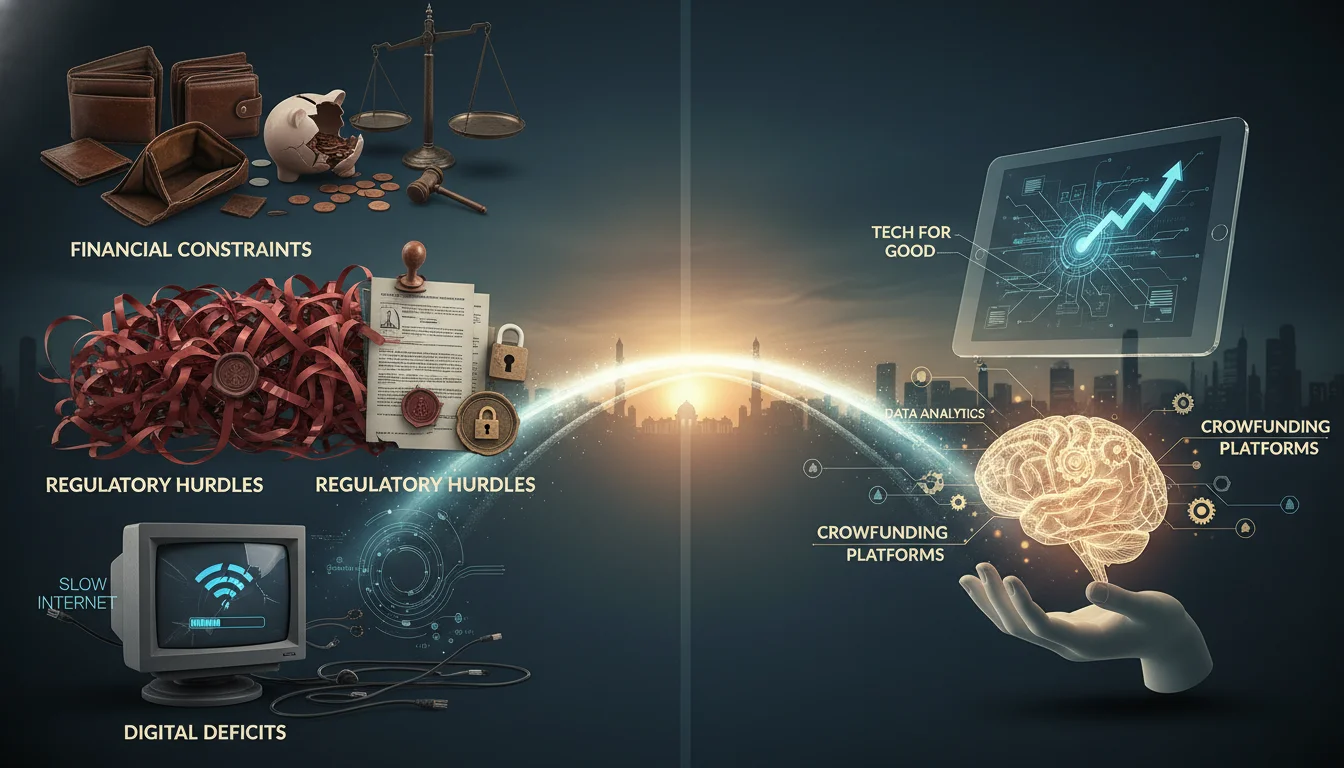
The wealth distribution within the Indian NGO sector is highly asymmetrical, leading to widespread financial instability. An overwhelming 91% of Indian NGOs operate with micro-budgets, reporting annual expenditures below INR 10 crores, while a mere 1% surpass the INR 50 crore threshold. Financial stability remains the most acute operational hurdle, with 72% of Indian NGOs experiencing recurrent funding deficits, a stark contrast to the 32% deficit rate observed in the United States according to the Center for Effective Philanthropy. Furthermore, the erratic nature of grant cycles and corporate funding means that only 22% of NGOs maintained a financial corpus in the last financial year. This lack of reserve capital severely limits their capacity to plan long-term strategic interventions, forcing the majority to operate reactively at localized levels (30% hyperlocal, 44% regional), and preventing them from achieving the “scale” demanded by large institutional donors.
Compounding this financial fragility is an increasingly stringent regulatory landscape, particularly concerning foreign capital. The sector faces significant barriers to resource mobilization due to heavy restrictions imposed under the Foreign Contribution Regulation Act (FCRA) 2010 and its highly restrictive 2020 amendments. These stringent compliance frameworks have led to the barring of over 20,600 NGOs from accepting foreign donations. Furthermore, civil society organizations report an increasingly hostile operating environment marked by enforcement Directorate raids, anti-money laundering scrutiny, and new income-tax bill complexities. This regulatory pressure reflects a broader global trend of government crackdowns on civil society, wherein authoritarian and democratic governments alike view independently funded NGOs with mistrust, severely restricting their ability to engage in political or legislative advocacy. Consequently, foreign private funding is growing at a highly muted rate of approximately 3%, forcing organizations to pivot aggressively toward domestic retail and HNI fundraising to ensure survival.
Finally, the sector suffers from operational and digital deficits that hinder impact communication. While 99% of NGOs attempt to measure their programmatic impact, more than 80% cite severe resource constraints as the primary barrier to effective, data-driven impact assessment and transparent reporting. The “State of Nonprofits Digitization Report 2025” reveals that the average digital maturity score among Indian NGOs is a critically low 5 out of 10. This digital divide threatens to isolate traditional NGOs from a rapidly digitizing donor base, resulting in missed opportunities for scalable impact, efficient donor management, and automated digital fundraising.
Digital Landscape in India (Contextual to the Industry)
Internet & Social Media Usage Relevant to NGOs
India’s digital economy is expanding at an unprecedented rate, creating a highly fertile, albeit highly competitive, environment for digital philanthropy. According to the CHIPS (Connectedness, Human capital, Innovation, Policy, and Society) framework, India’s elevated ranking as a digital economy is driven not only by its massive population advantage but also by the sheer depth and absolute size of its US$ 3.9 trillion economy. The Indian digital landscape is fundamentally a “mobile-first” reality, where over 85% of internet users access the web primarily through smartphones. For nonprofits, this mobile dominance dictates that all digital outreach, donation gateways, and programmatic impact reports must be relentlessly optimized for mobile interfaces to capture audiences effectively.
Digital advertising has officially surpassed traditional media in India, reflecting a macro shift that is mirrored in the social sector. Digital engagement has transitioned from an optional public relations tool to an absolute operational necessity.
Approximately 89% of nonprofits globally acknowledge that digital communications are critical to achieving their core missions, yet there is a significant expectation gap: 75% of nonprofits report that their beneficiaries and program participants are demanding far more digital communication options than the organizations currently provide. The integration of the Unified Payments Interface (UPI) has drastically reduced the friction inherent in digital transactions, enabling seamless, instant micro-donations that form the technological backbone of modern retail fundraising in India.
Popular Platforms Among the Target Audience
The fragmentation of social media requires NGOs to adopt a highly nuanced, omnichannel approach tailored to the specific demographic behaviors of different donor segments.
Facebook and YouTube remain the dominant platforms for broad demographic reach, unique in their ability to capture a majority across all age groups, geographical locations, and socioeconomic backgrounds. Facebook is particularly effective for large-scale community building and running targeted paid ad campaigns utilizing its sophisticated demographic segmentation tools. Conversely, Instagram has become the critical battleground for engaging Millennials and Gen Z. Its highly visual nature makes it the primary channel for emotional storytelling, micro-influencer collaborations, and short-form video content (Reels), which are essential for driving virality and grassroots awareness.
In the unique context of the Indian digital market, WhatsApp transcends mere peer-to-peer messaging to function as a primary business, community management, and marketing tool. It is highly effective for localized donor updates, volunteer coordination, and direct, conversational fundraising. For business-to-business (B2B) engagement, corporate CSR partnerships, and major donor prospecting, LinkedIn is rapidly solidifying its position as the platform of choice, currently observing the highest follower growth rates for international organizations globally. Additionally, while traditional platforms command the bulk of users, forward-looking international organizations are carefully diversifying their presence into emerging platforms like Threads and Bluesky, mitigating risks associated with the structural shifts and audience uneasiness observed on X (formerly Twitter).
Consumer Online Behavior Related to NGOs
The philanthropic paradigm in India is deeply rooted in ancient cultural and religious traditions, which are now seamlessly translating into sophisticated digital behaviors. Historically, concepts like ‘Daan’ (Hinduism), ‘Dasvandh’ (Sikhism), and ‘Zakat’ or ‘Sadaqa’ (Islam) mandated offline, localized giving. Today, these deeply ingrained traditions are fueling a massive surge in online, structured philanthropy. In 2024, India exhibited remarkable generosity, with 84% of individuals reporting that they donated money—a figure that drastically exceeds the global average of 64% and the continental average of 69%. Indian donors demonstrated a diversified approach to giving, allocating their contributions fairly evenly across registered charities (38.3%), direct help to individuals in need (36.3%), and religious organizations (25.4%).
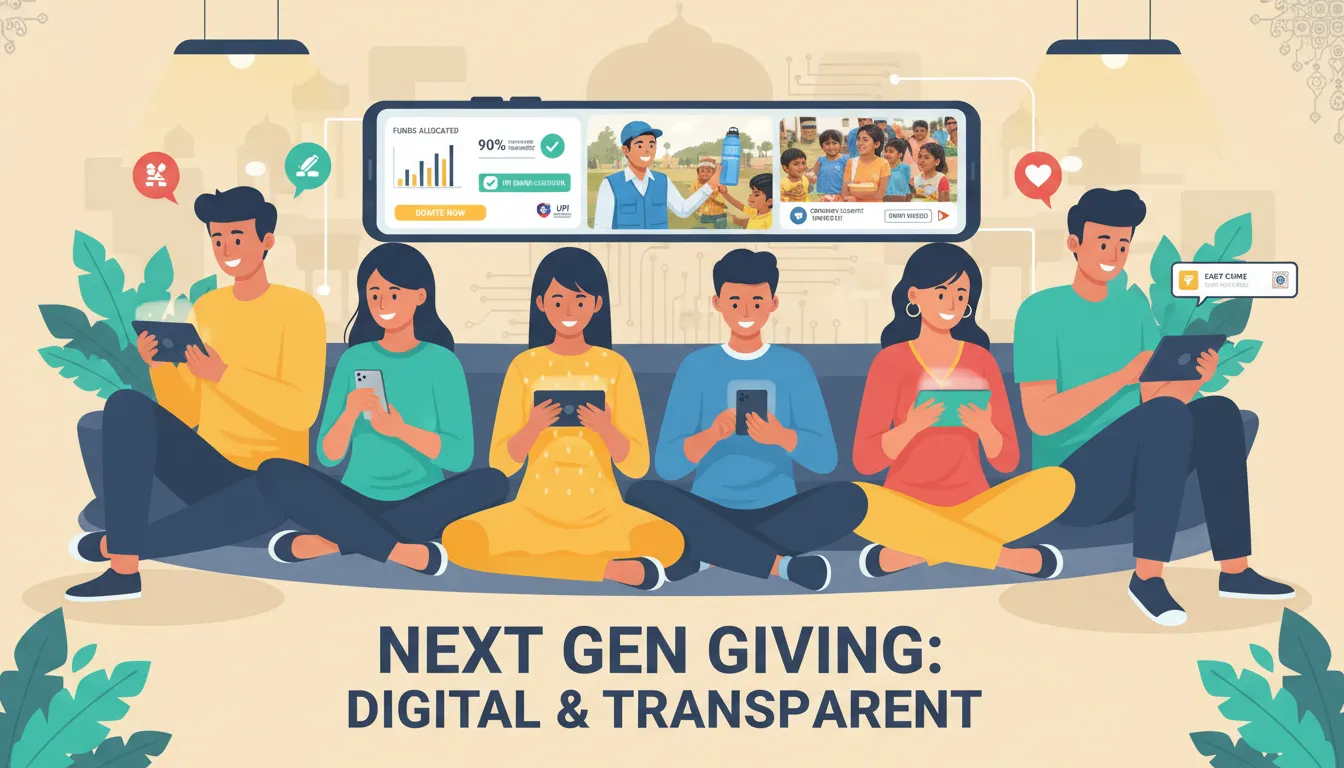
The modern donor landscape is increasingly defined by significant generational demographic shifts. Millennials and Gen Z in India represent the largest youth population globally. By 2040, this “Next Gen” cohort is projected to represent 35% of the ultra-high-net-worth demographic, up from merely 8% today. These Next Gen donors exhibit fundamentally different philanthropic behaviors compared to Baby Boomers. They prioritize radical transparency, digital engagement, and measurable programmatic impact over traditional institutional loyalty. They actively seek empirical proof of efficacy, responding highly to user-generated content, interactive digital pledges, and campaigns that integrate seamlessly into their digital lifestyles.
Furthermore, the integration of digital payment ecosystems has normalized impulse giving. Donors now operate with high expectations regarding the user experience; they demand frictionless payment gateways, transparent tracking of how their specific funds are utilized, and immediate digital gratification, such as automated tax receipts and personalized thank-you communications. A significant behavioral driver among older, affluent demographics is tax optimization; high search volumes related to “80G tax exemption” and “12A registered NGOs” indicate a highly pragmatic subset of donors who strategically combine philanthropic intent with personal financial planning.
Digital Marketing Opportunities
How Digital Marketing Can Solve Key Challenges
The existential threats facing Indian NGOs—namely chronic funding deficits, severe regulatory restrictions on foreign capital, and the prohibitively high costs of achieving grassroots scale—can be systematically mitigated through the strategic application of digital marketing.
The most pressing utility of digital marketing lies in mitigating the devastating impact of FCRA foreign funding restrictions. By deploying localized Search Engine Optimization (SEO), programmatic advertising, and viral social media campaigns, NGOs can pivot their acquisition strategies toward the massive, largely untapped domestic retail market and the expanding local HNI segment. This strategic pivot democratizes fundraising, reducing reliance on highly scrutinized international grants. Furthermore, addressing the sector’s low digital maturity score (5/10) through the adoption of accessible SaaS technologies—such as CRM platforms like Salesforce—enables NGOs to radically streamline donor management. Automated digital workflows can convert expensive one-time acquisitions into reliable recurring monthly donors, significantly stabilizing cash flows and lowering the blended cost of acquisition.
Additionally, digital marketing directly resolves the challenge of resource-constrained impact reporting. Artificial intelligence (AI) and data visualization tools allow NGOs to bypass the need for massive administrative reporting teams. AI-driven insights can segment audience datasets based on donation patterns or content preferences, enabling organizations to deploy highly personalized, automated email impact updates that prove programmatic efficacy to donors at scale.
Best Strategies for NGOs and INGOs in India
The most effective digital strategies in India do not merely replicate global best practices but contextualize them to leverage unique local market dynamics.
Inbound Content Marketing and SEO
The transition from broad brand awareness to donor conversion relies heavily on narrative empathy and inbound utility. Content marketing for NGOs must deliberately avoid moralistic shaming or messaging that blames society, focusing instead on empowering, solution-oriented storytelling. Developing a robust blogging platform serves a dual strategic purpose: it builds long-term SEO domain authority around core developmental causes while providing an owned repository of long-form “Stories of Change,” entirely bypassing the need for expensive external PR agencies.
Short-Form Video and Visual Storytelling
Given India’s overwhelming smartphone penetration, video represents the most potent medium for engagement. High-quality documentaries demonstrating field impact, combined with raw, unedited short-form content (Reels, YouTube Shorts), create a powerful perception of grassroots authenticity. Video marketing is particularly effective when seamlessly integrated with direct calls-to-action (CTAs) utilizing UPI payment links, turning passive viewership into immediate transactional support.
Influencer Marketing and Digital Advocacy
The influencer marketing ecosystem in India is highly robust, projected to grow by 25% in 2025, driven by the reality that 78% of consumers inherently trust influencer recommendations over direct brand advertisements. For NGOs, leveraging micro and nano-influencers (creators with 1,000 to 50,000 followers) is a highly strategic, budget-friendly approach. These smaller creators consistently yield 2 to 3 times higher engagement rates than celebrities and foster deeper authentic community trust. The critical success factor is brand alignment; NGOs must partner with creators whose personal values naturally intersect with the organization’s mission to ensure the integration feels authentic rather than like a transactional promotional gimmick.
SMS and Automated Direct Messaging
In India, Short Message Service (SMS) and WhatsApp marketing possess unparalleled direct-response metrics.
SMS marketing boasts an incredible open rate of over 98%, compared to the standard 20% open rate for email marketing. Leveraging SMS for succinct programmatic updates, emergency relief appeals, and text-to-give campaigns provides an immediate, high-conversion communication channel, particularly effective for engaging younger, mobile-dependent audiences.
Local and Global Examples/Case Studies
A thorough analysis of both global benchmarks and local executions provides a clear roadmap for effective digital deployment.
Charity: Water (Global Benchmark)
Charity: Water revolutionized digital philanthropy globally through its “100% model,” leveraging transparent digital ledgers to guarantee donors that all operational and administrative costs are funded entirely separately from project execution funds. Their highly successful #TheDrop campaign utilized multi-channel social media engagement, emphasizing high-quality visual content optimized meticulously for mobile user experiences. The organization effectively utilizes email automation platforms like Chamaileon to guide donors through an experiential journey, resulting in a highly robust monthly giving program where the average online recurring donation ($624/year) significantly outpaces one-time gifts ($128).
Save the Children (Global/India Implementation)
Demonstrating the immense power of data-driven digital marketing, Save the Children executed a behavioral science-led campaign on Meta (Facebook/Instagram) titled ‘This is our shot’. The objective was to combat COVID-19 vaccine hesitancy in low-income regions, including India. By rigorously analyzing the cognitive barriers to vaccination, the campaign deployed contextual video and static ads featuring trusted messengers—such as children and medical professionals—alongside simple, factual CTAs linking to national registration sites. Over eight weeks, the campaign reached 150 million people. Consequently, India saw the highest positive shift in attitudes toward vaccine side effects globally, driving an estimated 6.4 million adults closer to vaccination. Domestically, their offline-to-online ‘Every One’ campaign generated over 100,000 digital thumb impressions on an online portal in just three weeks, brilliantly merging digital engagement with physical wall activations in Delhi and Mumbai. However, it is crucial to note the risks of poorly managed outreach; online forums like Reddit indicate severe brand backlash against the organization’s outsourced telemarketing practices, with users complaining of aggressive spam calling and the selling of phone data, highlighting that digital inbound marketing is far superior and less damaging than intrusive cold-calling.
CRY (Child Rights and You) (Domestic Implementation)
CRY exemplifies digital agility through hybrid awareness and conversion strategies. Their #LetsTalkAboutPeriods campaign utilized digital pledge systems to systematically dismantle menstruation stigmas, heavily encouraging user-generated content and social sharing to amplify organic reach. Furthermore, to commemorate its 40th anniversary, CRY utilized a music-driven video collaboration (#BachpanKiDhun) featuring top artists like Ankur Tewari and Jonita Gandhi, effectively tapping into the entertainment preferences of the younger demographic while driving their core message of child rights.
Corporate Equivalents (Titan/Stayfree)
Commercial marketing case studies offer highly valuable analogues for the nonprofit sector. Titan Watches successfully shifted its brand perception among younger demographics by moving away from traditional advertising and heavily utilizing digital storytelling and user-generated content. Similarly, Stayfree India tackled the cultural taboo of menstruation through a bold digital campaign featuring interactive polls and prominent women influencers. Both cases demonstrate that deeply engaging, interactive digital content can successfully shift deeply ingrained societal perceptions—the exact objective of most NGO advocacy work.
Competitive Analysis
To establish strategic benchmarks within the sector, it is necessary to analyze the digital performance, trust markers, and engagement funnels of top-tier NGOs operating in India.
Current Digital Presence of Top NGOs in India
The following table synthesizes the digital standing and impact metrics of leading Indian NGOs.
| NGO Name | Primary Focus Area | Estimated Reach (Millions) | Innovation Score | Digital Transparency & Trust Markers |
|---|---|---|---|---|
| Smile Foundation | Education, Health, Livelihoods | 2.0+ | 8.8 | High (Extensive Governance documentation, Platinum Certifications) |
| Akshaya Patra | Nutrition, Mid-day Meals | 2.0+ | 7.0 | Very High (Financial Audits, Live Project Tracking) |
| CRY (Child Rights & You) | Child Education, Rights | Multistate | 8.5 | High (GuideStar Platinum, Trust Research Advisory Report) |
| Pratham Education | Grassroots Education | 10.0 | 9.0 | High (Data Visualization tools) |
| GiveIndia | Donation Platform | 15.0 | 8.0 | Very High (Platform Funnels tracking) |
| HelpAge India | Elderly Care | 2.5 | 6.5 | Moderate to High (85% Transparency Score) |
| Nanhi Kali | Girl Child Education | 0.7 | 7.0 | High (88% Transparency Score) |
What They Are Doing Well
1. Smile Foundation: Smile Foundation operates as a highly sophisticated digital marketing powerhouse. Their strategy hinges on maintaining a comprehensive “Resource Center,” which acts as an inbound marketing hub featuring high-production-value documentaries and a regularly updated blog. Their campaign architecture is highly compartmentalized, creating specific, conversion-optimized landing pages for distinct initiatives like Shiksha Na Ruke (education) and Tayyari Kal Ki (youth skilling). This segmentation allows for highly targeted, high-ROI ad spend. Furthermore, they feature an advanced corporate engagement portal, offering seamless digital integration for B2B CSR projects, payroll giving, and cause marketing.
2. Akshaya Patra Foundation: Akshaya Patra excels in technical SEO and trust-building architecture. Their website utilizes keyword-rich metadata and is structured hierarchically to benefit search engine crawlers. They capitalize heavily on localized SEO by maintaining state-specific pages (e.g., Gujarat, Karnataka), effectively capturing regional search queries. Crucially, they solve the transparency challenge by prominently displaying financial reports, FCRA compliance, and exact breakdowns of “How your money is spent,” effectively mitigating donor skepticism. Their use of dynamic progress trackers on specific campaigns (e.g., “First Crowd-funded Kitchen - 95% raised”) utilizes the psychological principle of goal proximity to drive immediate conversions.
3. CRY (Child Rights and You): CRY’s digital infrastructure is built entirely around Conversion Rate Optimization (CRO). They offer heavily diversified, frictionless payment options, seamlessly integrating UPI, mobile wallets, net banking, and even the innovative redemption of credit card reward points. They prioritize the “monthly giving” subscription model to stabilize cash flow. From an SEO and trust perspective, their site aggressively highlights tax exemption benefits (Section 80G) and security certifications (CRY Assured, GuideStar Platinum) exactly at the point of transaction, drastically reducing cart abandonment rates. Furthermore, they excel in B2B digital networking, showcasing strategic corporate partnerships with entities like Liaison International, Hurst Review, QGenda, and Scrubin Uniforms to validate their institutional credibility.
4. Employer Branding Excellence: Organizations like Brooke Hospitals For Animals, Deepak Foundation, and Ekta Shakti Foundation excel in digital employer branding. By achieving and promoting “Great Place to Work” certifications, they use their digital presence not just for fundraising, but to attract top-tier talent in a highly competitive human resources market.
Gaps and Opportunities to Outperform Them
While the top tier performs exceptionally well, the broader sector—and even mid-tier competitors—leaves significant strategic vulnerabilities to exploit:
- Underutilization of Long-Tail SEO: Many NGOs compete furiously for generic, high-difficulty keywords (e.g., “donate,” “NGO in India”). There is a massive opportunity to dominate low-competition, high-intent, long-tail queries (e.g., “tax exemption under 80G for education donation in Mumbai”). Long-tail keywords have been proven to drive 2.5x higher conversions.
- Poor Post-Donation Journeys: A widespread deficiency across the sector is the lack of automated, personalized post-donation nurturing. Many organizations fail to segment their email lists effectively, treating one-time donors identically to recurring supporters. Implementing AI-driven email automation to send customized impact reports can significantly outperform competitors in donor retention and Lifetime Value (LTV).
- Lack of Conversational Marketing: Very few NGOs have integrated sophisticated chatbots or automated WhatsApp business funnels to handle donor queries in real-time. Establishing an always-on communication channel provides a distinct competitive edge in capturing impulse donations and answering compliance questions instantly.
- Reputational Damage from Outdated Tactics: As evidenced by public discourse regarding outsourced NGO telemarketing, aggressive offline tactics generate significant brand fatigue. NGOs that pivot entirely to respectful, permission-based inbound digital marketing will secure much higher brand affinity.
Recommended Strategy for NGOs and INGOs in India
To bridge the gap between an average digital maturity score of 5/10 and top-tier performance, NGOs must adopt a systemic, audience-centric digital strategy.
Target Audience Persona
A monolithic approach to donor marketing is obsolete.
Persona 1: The “Next Gen” Retail Donor (Millennials & Gen Z)
- Demographics: Aged 22–38, urban professionals, highly mobile-dependent. By 2040, this demographic will command 35% of the ultra-high-net-worth pool.
- Preferences: They demand radical transparency, immediate digital feedback, and visual proof of programmatic impact. They exhibit low loyalty to traditional institutions but high loyalty to specific thematic causes (e.g., climate action, grassroots education).
- Behavior: Highly responsive to influencer advocacy, short-form video (Reels/Shorts), and peer-to-peer crowdfunding. They strongly prefer UPI and digital wallet transactions over traditional banking.
Persona 2: The Tax-Conscious Pragmatist (Gen X & Emerging HNIs)
- Demographics: Aged 40–55, upper-middle management, entrepreneurs, or business owners. This group’s share of UHNW wealth will still represent nearly 45% of individuals by 2040.
- Preferences: Philanthropy is viewed as a blend of cultural duty and strategic financial planning. They actively search for 80G and 12A tax-exempt organizations.
- Behavior: Relies heavily on search engines (Google) to find established, trustworthy NGOs. They require detailed annual reports, impact metrics, and corporate governance transparency before committing large block funds.
Persona 3: The Corporate CSR Decision Maker
- Demographics: Corporate executives and board members responsible for deploying the legally mandated 2% CSR funds.
- Preferences: Requires highly structured grant proposals, scalable ecosystem development initiatives, and rigorous legal compliance tracking.
- Behavior: Engages almost exclusively on LinkedIn and through direct B2B email outreach. Looks for NGOs with a proven institutional capacity to handle large tranches of capital.
Recommended Channels and Campaign Types
- Search Engine Optimization (SEO) & Google Ads: This must be the anchor of the acquisition strategy to capture high-intent search traffic. Organizations must utilize the Google Ad Grants program to dominate Search Engine Results Pages (SERPs) without exhausting their operational cash reserves.
- Omnichannel Social Media: Utilize Instagram and YouTube for top-of-funnel brand awareness and highly emotional visual storytelling. Use Facebook for highly targeted lead-generation ads (e.g., petition sign-ups that feed into automated email sequences). Utilize LinkedIn exclusively for brand authority building and initiating B2B CSR partnerships.
- WhatsApp Marketing: Deploy the WhatsApp Business API to send direct programmatic updates, localized event invitations, and frictionless UPI donation links directly to smartphones.
- Advanced Email Automation: Implement highly segmented drip campaigns. For example, a new subscriber receives a sophisticated “Welcome Series” detailing the NGO’s mission over a week, followed by a soft ask for a donation, while existing monthly donors receive exclusive, data-rich “impact reports”.
Content Ideas Specific to NGOs in India
-
The “Impact Ledger” Content Series: Short, highly graphic videos breaking down exactly where a ₹1,000 donation is allocated (e.g., ₹600 for textbooks, ₹300 for midday meals, ₹100 for administration). This directly satisfies the Next Gen transparency requirement.
 - Beneficiary and Field Worker Takeovers: Allow frontline field workers or programmatic beneficiaries to “take over” the NGO’s Instagram Stories for a 24-hour period, providing raw, unfiltered insight into the organization’s daily operations, fostering massive grassroots authenticity.
 - Tax-Season Campaigns (February/March): Execute heavy, performance-marketing pushes in Q4 of the Indian financial year emphasizing the dual benefit of tangible social impact and immediate 80G tax deductions.
- Interactive Myth-Busting: Develop polls, quizzes, and infographic carousels addressing social stigmas or misconceptions related to the NGO’s specific cause, mirroring the highly successful corporate models seen with Stayfree.
Budget-Friendly Digital Marketing Approaches
- Google Ad Grants: Acquiring the $10,000/month Google Ad Grant is the single most critical, budget-friendly strategy available to registered nonprofits. While it requires rigorous management to maintain a minimum 5% Click-Through Rate (CTR) and structural campaign compliance, it effectively provides enterprise-level search visibility completely free of charge.
- Google My Business (Local SEO): Claiming, verifying, and meticulously optimizing Google My Business listings for every physical office or project site ensures immediate visibility in “NGO near me” localized searches at absolute zero cost.
- Nano-Influencer Barter Collaborations: Instead of paying prohibitive agency fees for celebrity endorsements, partner with socially conscious nano-influencers (1k-10k followers) who are highly willing to amplify NGO content in exchange for the social capital and prestige of being associated with a noble, developmental cause.
6. Keywords & SEO Opportunities
Effective SEO for NGOs requires a paradigm shift away from hyper-competitive, broad industry terms, moving toward dominating high-intent, long-tail search queries. Google algorithms increasingly prioritize semantic context and user intent; therefore, ranking for specific phrases yields highly qualified traffic with vastly superior conversion rates.
High-Intent Keywords for Ranking
High-intent keywords indicate that the search engine user is firmly in the “consideration” or “action” phase of the donor journey. They have already established philanthropic intent and are actively seeking a trustworthy organizational vehicle for their funds. The following table details core high-intent targets based on global and regional search volume analytics.
| Keyword Category | Target Keywords | Est. Monthly Search Volume | Strategic Search Intent & Value |
|---|---|---|---|
| Broad Industry (High Competition) | “charities”, “non profit organization”, “nonprofit” | 246,000 / 201,000 / 74,000 | Informational Intent. Highly competitive, requires massive domain authority to rank. |
| Direct Donation (Action) | “best charities to donate to”, “donations for nonprofits” | 8,100 / 2,900 | High Action Intent. Users are ready to transact. Requires conversion-optimized landing pages. |
| Local Search (Proximity) | “non profit organizations near me”, “local nonprofits” | 74,000 / 3,600 | Local Intent. Crucial for mobilizing physical volunteers and local corporate engagement. |
| Tax-Optimization (Value) | “80G registered NGOs”, “tax exemption donation India” | Niche / High Conversion | High Pragmatic Intent. Captures Gen X HNIs and professionals finalizing end-of-year tax planning. |
| Operational Support | “google workspace for nonprofits”, “salesforce for nonprofits” | 4,400 / 1,600 | B2B/Ecosystem Intent. Useful for ecosystem-building NGOs offering sector capacity training. |
Long-Tail Keyword Opportunities (India-Specific)
Long-tail keywords represent extended, highly specific search phrases. While they command lower individual search volumes, they face drastically lower SEO competition and match exact user needs, leading to significantly faster sales and donation conversions. A well-executed long-tail strategy is projected to drive 2.5x higher conversions in 2026.
- Cause & Geography-Specific Queries: Instead of fighting for “child education,” NGOs must target phrases like “best NGO for girl child education in rural India” or “organizations working for stray dog rescue in Mumbai”. This directly captures donors passionate about specific regional interventions.
- Informational & Compliance Queries: “what is the difference between trust and society in India”, “how much of my donation goes to the actual cause”, or “what are the benefits of 80G certificate”. Creating high-quality content answering these questions establishes the NGO as a transparent authority.
- Crisis & Event-Driven Queries: “donate to Assam flood relief fund”, “COVID 19 oxygen cylinder donation India”. These are highly contextual, ephemeral keywords that require rapid SEO agility to capture sudden surges in philanthropic intent during national emergencies.
By structuring regular blog posts around these exact long-tail queries—for example, publishing a detailed article titled “How Your 80G Donation Supports Girl Child Education in Rural India”—NGOs can sustainably capture targeted organic traffic that translates seamlessly into high-value donor acquisition.
7. Implementation Roadmap
Achieving digital transformation within the constraints of NGO operations requires a rigorously structured, phased approach. Organizations must prioritize immediate, low-cost “quick wins” to build internal momentum and secure early ROI, followed by systemic long-term infrastructure development.
Short-Term Quick Wins (1–3 Months)
Month 1: Infrastructure Audit, Stewardship & Goal Setting
- Strategic Planning: Initiate the year by hosting strategy sessions to define Specific, Measurable, Achievable, Relevant, and Time-bound (SMART) marketing goals. For example, “Increase online monthly recurring donations by 20% within 12 months” rather than vague aspirations. Update case statements and outline funding sources.
- Technical SEO & UX Audit: Conduct a full technical audit of the existing website. Immediately resolve slow load times, broken links, and ensure total mobile responsiveness, which is an absolute prerequisite for India’s mobile-first market.
- Grant Applications: Register the organization for Google for Nonprofits.
Month 2: Conversion Optimization, CRM Integration, & Donor Relations
- Once verified, immediately initiate the complex application and setup process for the $10,000/month Google Ad Grants program.
- Local SEO: Claim and fully optimize all Google My Business listings for headquarters and regional project offices.
- Gateway Friction Reduction: Overhaul the digital donation gateway. Integrate multiple payment options—specifically UPI, Net Banking, and digital Wallets—to ensure a frictionless, rapid checkout experience.
- CRM Deployment: Implement an accessible, scalable CRM platform (e.g., Salesforce for Nonprofits). Set up fundamental email marketing list segmentation based on communication preferences, volunteer status, and past donation patterns.
- Relationship Building: Focus on strengthening donor relationships by sending personalized thank-you videos, impact reports, and Valentine’s Day “share the love” social campaigns to recurring contributors. Develop an automated “Welcome Series” email drip campaign for all new website subscribers.
Month 3: Content Piloting, Prospecting, and Paid Activation
- Search Ad Launch: Launch the first iteration of Google Ad Grant campaigns. Focus heavily on targeting high-intent and long-tail keywords (e.g., “tax saving donations India”) while strictly monitoring to maintain the mandatory 5% CTR.
- Paid Social Piloting: Deploy a highly targeted, low-budget Meta (Facebook/Instagram) advertising campaign. Utilize “lookalike audiences” generated from the CRM’s existing donor database to ensure ad spend is highly efficient.
- Institutional Prospecting: Utilize tools like Foundation Directory Online or GrantStation to conduct prospect research for larger institutional grants and build a comprehensive submission calendar.
- Content Deployment: Publish three foundational, highly-researched, SEO-optimized blog posts directly addressing the core long-tail queries identified in the keyword strategy.
Long-Term Strategy (6–12 Months)
Months 4–6: Advanced Storytelling, Influencer Marketing, and Workflow Automation
- Visual Storytelling Scale-Up: Shift content production resources heavily toward high-quality video storytelling. Develop ongoing “Impact Ledgers” and short-form Reels documenting daily on-ground activities to satisfy Next-Gen transparency demands.
- Influencer Integration: Initiate a structured nano and micro-influencer outreach program. Partner with local Indian creators to amplify specific fundraising campaigns natively, leveraging their engaged communities without resorting to hard-selling.
- Email Optimization: Refine email automation sequences utilizing rigorous A/B testing on subject lines, CTA button placements, and optimal send times. Implement automated “win-back” campaigns targeted specifically at cold or lapsed donors.
- Budget Scaling: As digital maturity increases, systematically scale monthly optimal ad spend based on organizational capacity. Small NGOs should target ₹50,000 - ₹1,00,000 in optimal spend, while larger, multi-state NGOs should push toward ₹3,00,000 - ₹10,00,000 to maximize lead generation.
Months 7–12: Generative AI, Omnichannel Scaling, and Major Donor Prospecting
- AI & Predictive Analytics: Integrate AI-driven insights to analyze complex datasets, predict programmatic outcomes, and identify donor churn patterns before they occur. Utilize machine learning tools to dynamically tailor website content to specific user behaviors.
- Conversational Commerce: Launch the WhatsApp Business API to establish an always-on communication channel for automated donor servicing, instant programmatic updates, and frictionless event registration.
- Major Donor Funnels: Develop a highly structured major donor and CSR prospecting funnel via LinkedIn. Leverage executive thought leadership content and highly detailed, interactive digital annual impact reports to attract the expanding pool of UHNW capital.
- Grant Optimization: Continuously optimize and audit Google Ad Grant campaigns. Ensure strict, ongoing adherence to all policy compliances while systematically scaling keyword coverage to dominate organic search real estate.
Conclusion
The Indian social sector is currently navigating a profound and critical inflection point. While macro-level funding is expanding, stringent regulatory frameworks—particularly regarding foreign capital—and a systemic reliance on traditional, offline operational methodologies have created a deep structural vulnerability for individual NGOs. Operating with an average digital maturity score of just 5 out of 10, the sector risks severely alienating a rapidly expanding demographic of digital-native, Next-Gen donors who explicitly demand radical transparency, frictionless digital engagement, and verifiable programmatic impact.
Digital marketing is no longer an optional administrative overhead or a secondary public relations tool for NGOs and INGOs in India; it is an absolute existential imperative. Implementing robust digital strategies—from securing and optimizing Google Ad Grants and dominating long-tail, tax-intent SEO, to executing empathetic, micro-influencer-backed social media campaigns—directly resolves the industry’s most acute challenges regarding financial stability, donor acquisition, and cost-effective impact reporting. Organizations that aggressively act to bridge this digital divide will secure disproportionate access to the rapidly expanding pools of private family philanthropy, retail donations, and corporate CSR funding.
Navigating this complex digital transformation requires highly specialized expertise that perfectly balances technical marketing proficiency with a deep, nuanced understanding of philanthropic narratives and regulatory compliances. Gurkha Technology, a leading digital marketing company in Nepal, possesses the exact strategic acumen required to architect and execute these bespoke digital ecosystems. By partnering with Gurkha Technology, NGOs can seamlessly integrate advanced SEO frameworks, meticulously manage complex Ad Grant compliances, and deploy data-driven, omnichannel campaigns that exponentially amplify programmatic impact, foster unwavering donor trust, and ensure absolute long-term financial sustainability in the modern digital era.