Digital Marketing for Indian Media: Strategy & Market Analysis
Industry Overview
The media and entertainment sector in India represents one of the most dynamic, multifaceted, and rapidly evolving macroeconomic ecosystems globally. Transitioning from a historically rich tradition of print journalism, cinema, and radio broadcasting into a highly digitized, mobile-first market, the industry has undergone a profound structural metamorphosis. According to extensive industry analyses mapping the twenty-five years from 1999 to 2024, the Indian media and entertainment sector has expanded more than sixteen times, exhibiting a compound annual growth rate of 12% over that period. This historical trajectory reveals a monumental shift; in 1999, advertising was overwhelmingly dominated by the print segment, which commanded 55% of total ad revenues, while television held 36%, and digital was virtually non-existent. Fast forward to the current era, and the landscape has been fundamentally rewritten.
The current market size and growth indicators underscore the sheer scale of this transformation. In 2025, the Indian media and entertainment sector experienced a robust 9% year-on-year growth, culminating in a valuation of INR 2.78 trillion, a figure that is projected to exceed INR 3.3 trillion by 2028 while growing at a compound annual growth rate of over 7%. This expansion outpaced India’s per capita gross domestic product growth, signaling exceptionally strong industry momentum. For the first time in the sector’s history, digital media has emerged as the largest single segment, crossing the INR 1 trillion revenue threshold and overtaking traditional television. Digital advertising alone surged by 26% to reach INR 947 billion, effectively constituting 63% of total advertising revenues across all mediums, a staggering acceleration from just two years prior when its share stood at 50%.
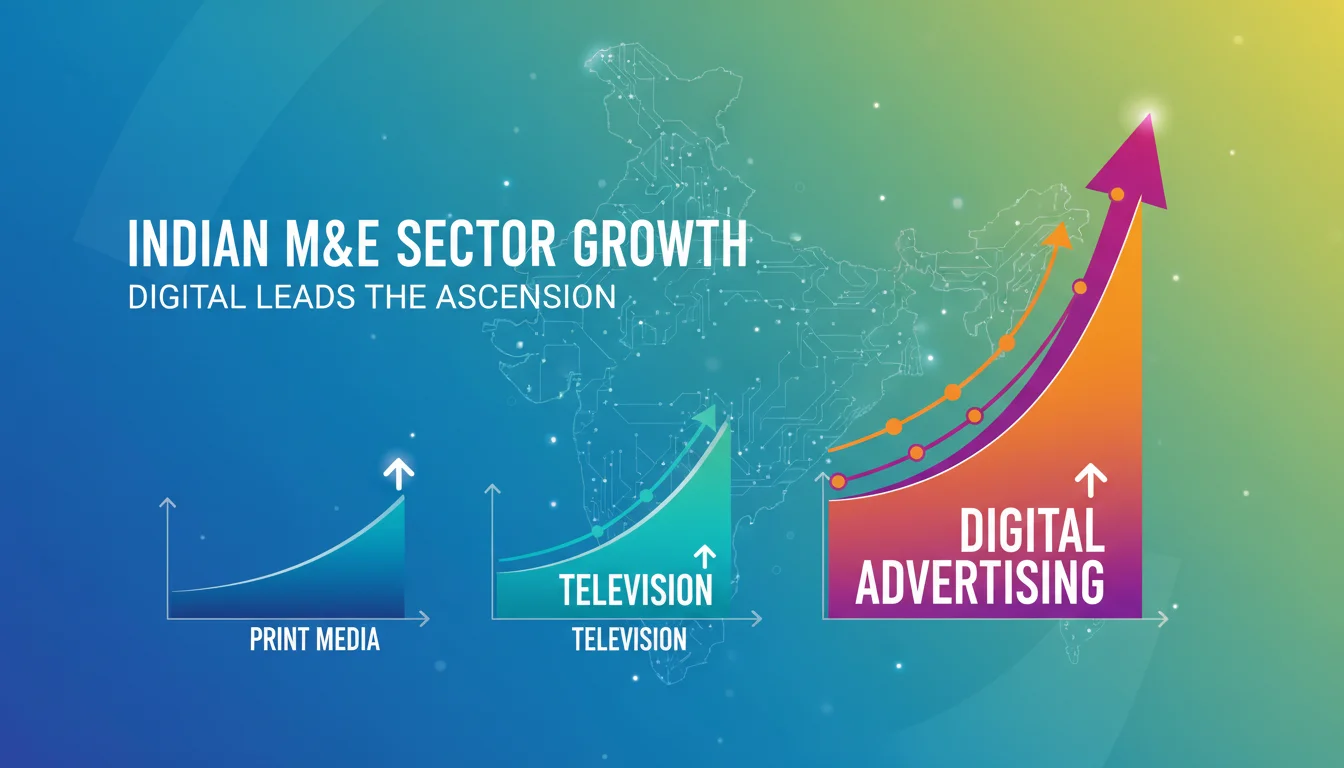
Other segments within the ecosystem exhibit varied trajectories. The organized live events segment experienced a massive 44% increase in 2025, fueled by higher spending on ticketed concerts and public gatherings, while out-of-home media grew by 13%, and the Indian music sector saw a 10% revenue increase. The film segment reached record revenues of INR 205 billion. Conversely, radio segment revenues declined by 7% due to reduced ad rates, and the video games segment saw a 17% decrease following regulatory interventions regarding money gaming. Despite this digital surge, the Indian market exhibits a unique characteristic: it is fundamentally an “AND” market rather than an “OR” market. Unlike Western environments where digital adoption precipitated the collapse of legacy media, India’s traditional print news industry remains resilient, anchored by economic advantages such as highly subsidized subscription costs and deeply ingrained cultural habits surrounding the morning newspaper delivery. From a corporate structural perspective, the industry remains highly fragmented, with 50% of the media ecosystem functioning as proprietorship firms, 23% as private companies, and only 18% as public companies.
Despite the macroeconomic boom, digital news portals operate within a highly hostile microeconomic environment characterized by severe structural challenges. The foremost challenge is the monetization paradox and the overarching dominance of global technology conglomerates. While digital advertising is growing exponentially, the dividends are highly skewed. Of the INR 41,469 crore generated in digital advertising revenues excluding e-commerce in the year ending March 2024, digital news publishers received a mere 5.7% (INR 2,345 crore), a figure significantly lower than the 10% to 11% share they command on traditional television. Unlike Australia, which implemented a landmark News Media Bargaining Code resulting in an estimated AU$250 million per year flowing back into the media ecosystem, India lacks a comparable regulatory framework, leaving newsrooms to scrape the plate while the platform pie expands. Consequently, only 56% of digital news outlets are currently profitable.
Furthermore, news organizations grapple with systemic copyright infringement and piracy, where premium journalistic output, investigative reports, and exclusive video content are routinely scraped and republished across social media and aggregator blogs without attribution, severely diluting the original publisher’s traffic and monetization potential. Linguistic and hyper-local fragmentation also imposes immense operational overhead; delivering high-quality, real-time news across numerous official languages and hundreds of dialects stretches the resources of independent media houses attempting to scale. Finally, political pressures and press freedom constraints remain significant hurdles. Media ownership is heavily concentrated among a few wealthy tycoons, creating a vacuum for critical, adversarial reporting. Independent platforms frequently face regulatory harassment, censorship, and the blocking of digital assets. Regional analyses, such as those conducted during the Bihar elections, highlight an environment where journalists face physical threats, detention, and systemic pressure to downplay corruption in favor of the establishment, further complicating the operational landscape for independent news portals.
Digital Landscape in India (Contextual to the Industry)
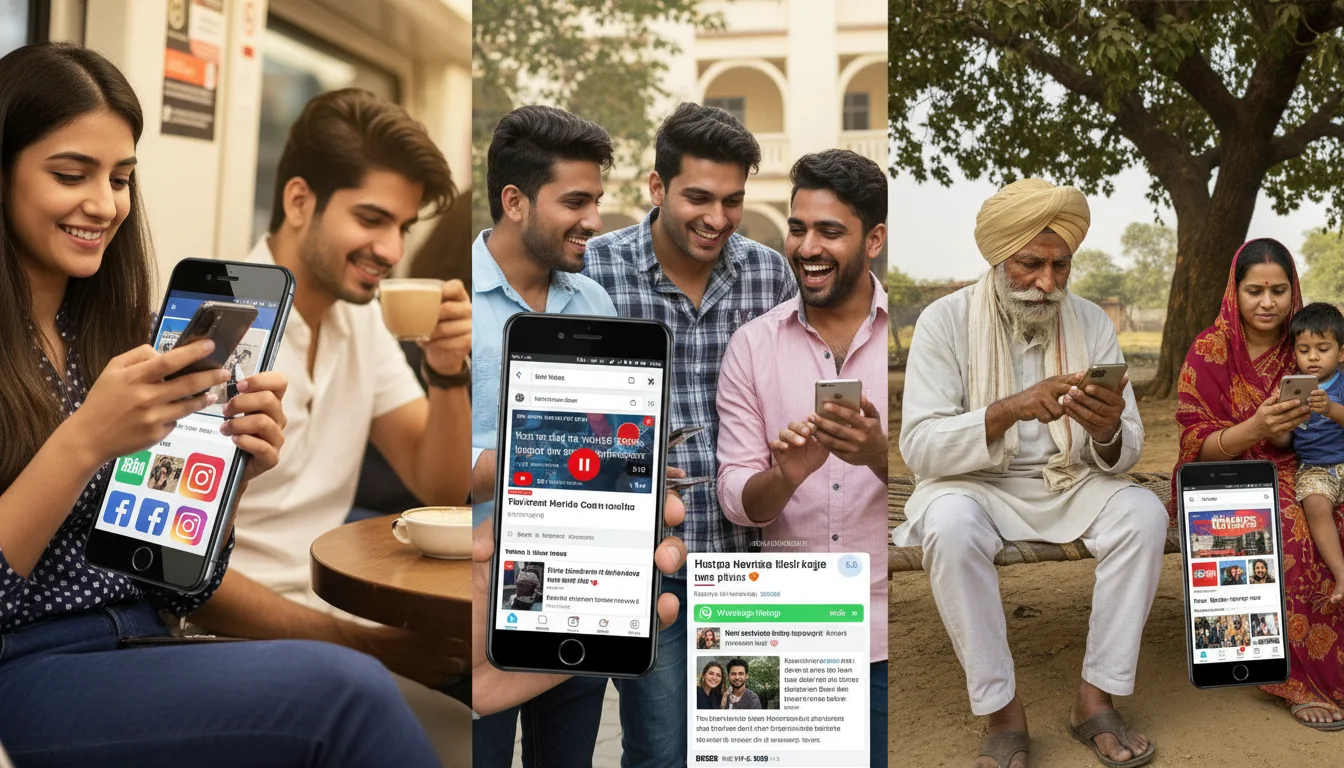
Understanding the digital consumer in India requires moving beyond aggregate penetration metrics to analyze the specific pathways, technological constraints, and behavioral paradigms through which information is consumed, shared, and trusted. India boasts an internet user base exceeding 850 million individuals, with digital traffic overwhelmingly dominated by mobile devices, which account for more than 70% of total digital consumption. The nation is intrinsically mobile-first; research indicates that 68% of news consumers identify smartphones as their primary device for accessing online news, and 31% state they rely exclusively on mobile devices for this purpose.
This mobile-centricity is fundamentally reshaping the demographic center of gravity within the country. Rural India now leads the nation in internet news consumption, housing 90 million more active digital users than urban centers. This demographic shift is shifting the locus of power away from English-centric metropolitan news paradigms toward hyper-local, vernacular content consumption. However, the technological infrastructure supporting this consumption is highly stratified. While 5G networks are expanding across major metropolitan areas, a vast portion of the country relies on patchy 4G, 3G, or even 2G networks, interacting with the internet via budget Android smartphones characterized by limited processing power and constrained storage capacities. In this environment, heavy, unoptimized applications are severely penalized by the consumer base; an application that consumes 200MB of storage and requires a constant high-speed connection is essentially dead on arrival for the majority of the potential market.
The platform preferences of the Indian digital news consumer highlight a profound reliance on distributed discovery algorithms rather than direct website navigation. News consumption is deeply entangled with social media and messaging application usage. Survey data underscores the absolute dominance of these platforms, with WhatsApp emerging as the primary vector for communication and information dissemination. The encrypted messaging application is utilized by 82% of the surveyed population, with a staggering 52% explicitly using it to acquire, discuss, and share news content. Facebook exhibits a similar scale, utilized by 75% of the population, matching WhatsApp with 52% of users leveraging it for news discovery. Furthermore, an accelerating shift toward visual consumption is supercharging a fragmented alternative media landscape; YouTube acts as a primary news engine for 55% of the audience, while Instagram captures 37% of the news-seeking demographic, particularly among younger generational cohorts.
This reliance on WhatsApp and social media represents a complex duality for the Indian media ecosystem. On one hand, it allows for highly personalized, direct-to-consumer news delivery that bypasses traditional search engine algorithms. Conversely, it operates as a dark social channel where misinformation, political propaganda, and unverified rumors proliferate rapidly, often circumventing established fact-checking mechanisms. Quantitative analyses of WhatsApp usage in rural Indian villages reveal a high prevalence of content focused on national politics, frequently laden with misinformation and highly polarized rhetoric that recycles previously debunked claims. Acknowledging this vulnerability, over half of Indian news consumers identify WhatsApp as the greatest threat regarding the spread of false and misleading information, scoring higher on this metric than any other global market.
Consumer online behavior related to news consumption is also evolving from prolonged, deep-reading sessions toward highly fragmented, short-burst interactions. The average human attention span has measurably contracted, forcing media houses to adopt short-form video storytelling to remain relevant in a crowded digital arena. Furthermore, a recent touchpoint study revealed that the modern Indian consumer navigates a highly fragmented attention economy; it requires approximately 1.3 times more touchpoints for a brand to drive the same impact in India as it does in other regional markets, highlighting the difficulty of maintaining sustained audience engagement. Despite a historical reluctance to pay for digital news, a structural shift is occurring regarding monetization.
Driven by the frictionless nature of digital payment infrastructures like the Unified Payments Interface, consumers are demonstrating a willingness to pay for premium, exclusive, or highly specialized content. This is evidenced by a 60% surge in digital subscription revenues for the media sector, alongside massive growth in paid video and music subscriptions, indicating that while generic news remains commoditized, high-value content possesses strong commercial viability.
Digital Marketing Opportunities
The structural challenges facing Indian news portals, particularly the monopolization of advertising revenues by global technology conglomerates and the pervasive fragmentation of consumer attention, simultaneously create vast opportunities for platforms that leverage sophisticated digital marketing strategies and cutting-edge technological infrastructure. By pivoting from traditional display advertising paradigms toward advanced performance marketing, first-party data capitalization, and hyper-targeted alternative distribution channels, media houses can reclaim their revenue sovereignty and audience ownership.
The fundamental shift in digital marketing within the Indian landscape involves transitioning from measuring success through vanity metrics such as aggregate impressions and broad reach toward a rigorous focus on tangible outcomes, specifically cost per qualified lead, return on ad spend, and customer lifetime value. The legacy approach of relying solely on programmatic banner advertisements induces banner blindness, degrades the mobile user experience, and ultimately results in diminished yields. To circumvent this, media houses are rapidly adopting native advertising strategies. Native advertising, which seamlessly blends sponsored content into the editorial feed to match the design and behavior of the specific platform, provides a non-intrusive alternative that dramatically improves lead quality and engagement times. Furthermore, publishers utilizing native ad networks benefit from the news trust halo, as empirical data suggests that 84% of consumers maintain or increase their trust in brands that advertise within credible, high-quality journalistic environments.
A premier opportunity lies in the aggressive capitalization of WhatsApp broadcasting and newsletter marketing. Given the platform’s ubiquitous presence among 82% of Indian internet users, WhatsApp represents the highest-return communication channel available, generating 89% higher purchase and engagement rates per user compared to traditional marketing channels. By deploying the WhatsApp Business Platform, news portals can transition audiences from passive social media scrollers to active subscribers, sending curated daily news summaries, breaking news alerts, and hyper-local updates directly to users’ lock screens. Successful implementations dictate specific timing and thematic strategies; for instance, high-intent messages during morning commutes or dedicated weekend summaries yield optimal engagement.
The integration of artificial intelligence within the newsroom and the marketing department constitutes another massive growth vector. Artificial intelligence is no longer an experimental feature; it has become the foundational infrastructure for modern media operations in South Asia. AI can analyze browsing histories, location data, and time-of-day interactions to deliver hyper-personalized content feeds, ensuring that a user in Chennai receives geographically and culturally relevant news differently from a user in Delhi. Furthermore, AI-driven automation allows for the rapid generation of multimedia content; independent portals are already utilizing URL-to-MP4 tools that extract text and media from an article to generate shareable video files in under three minutes, enabling instantaneous syndication across short-form video platforms. However, industry executives stress that AI must function as an enabler rather than a replacement for journalistic integrity, requiring stringent governance to mitigate biases and prevent the dilution of core journalistic values.
Local and global case studies provide compelling blueprints for executing these strategies. Inshorts, a digital-native news application, identified the modern consumer’s severe time deficit and launched a mobile-first platform delivering news in concise, sixty-word summaries. By prioritizing a user-centric design and leveraging robust cloud infrastructure to improve streaming latency, they achieved exponential growth. Expanding on this, their hyper-local application, Public, amassed ten million users in just six months by offering community updates and local news at the district level across dozens of Indian languages, proving the immense viability of vernacular, location-based tech platforms. Similarly, Dailyhunt engineered its entire growth and marketing strategy around capturing the non-English speaking demographics of rural and semi-urban India. By utilizing an AI-driven feed that curates content from thousands of local publishers, Dailyhunt secured its position as a dominant news aggregator, effectively bridging the content gap for the next half-billion internet users.
In the realm of messaging platform strategies, the financial news outlet Bloomberg Quint provides a masterclass in audience segmentation. To reach high-value business executives and decision-makers, they bypassed the noise of traditional social media and launched a dedicated WhatsApp channel, successfully capturing over 200,000 highly engaged readers and demonstrating the power of niche, closed-network distribution for premium content. Another vital use case is Newschecker, which utilized WhatsApp marketing specifically to combat misinformation, providing an essential public service while simultaneously building deep institutional trust among a population grappling with low digital literacy and rampant fake news. Finally, independent digital portals such as The Wire, Scroll.in, and Newslaundry demonstrated the efficacy of collaborative, community-driven marketing. By pooling resources to host ad-free, day-long analytical broadcasts on YouTube during the elections—funded entirely by subscriber donations—they proved that a loyal, ideologically aligned audience will financially support high-quality, independent journalism when directly engaged outside of traditional corporate media structures.
Competitive Analysis
To formulate a highly effective digital marketing strategy, it is imperative to conduct a rigorous competitive analysis of the current digital footprint of India’s legacy media behemoths, assessing their structural strengths while identifying the technological and content-related vulnerabilities that emerging digital portals can exploit to gain market share.
The digital news market in India remains heavily skewed toward legacy print and broadcasting brands that have successfully ported their offline brand equity and institutional trust into the digital sphere. Quantitative tracking of Google Mobile Search Visibility in the highly coveted Top Stories carousel reveals the dominance of these legacy institutions. Among English-language news portals, the highest visibility scores are commanded by The Indian Express (75.25), Hindustan Times (74.50), and The Times of India (72.75). They are closely followed by financial and general news portals such as Mint (69.00), The Hindu (69.00), and NDTV (67.50). This dominance is not static; visibility is driven by a dynamic set of keywords based on trends that are tracked and optimized by these publishers every fifteen to thirty minutes, indicating highly sophisticated, real-time search engine optimization operations. In terms of weekly online reach across the population, NDTV online leads the market at 28%, followed by India.com at 25%, BBC News online at 23%, and The Times of India at 21%.
These incumbent organizations excel in several critical dimensions. First, they possess massive, historically entrenched domain authority, supported by decades of trusted journalism and vast, organic backlink profiles, ensuring they rank almost instantaneously for high-volume breaking news keywords. Second, they operate at an omnichannel scale that is difficult for startups to replicate, employing enormous editorial teams capable of generating thousands of articles daily across every conceivable category, from national politics and global finance to hyper-local sports and entertainment. Third, legacy media houses have successfully conditioned a substantial segment of their core audience to download and utilize their proprietary mobile applications, establishing a direct line of communication that minimizes their reliance on the capricious algorithms of third-party search engines and social media networks.
Despite their massive operational scale, incumbent media giants suffer from profound structural rigidities, technical debts, and content blind spots that agile, digital-native portals can aggressively exploit. The most glaring vulnerability is the widespread degradation of the user experience.
The relentless pursuit of programmatic advertising revenue has rendered many legacy news websites and applications virtually unusable on average mobile devices. These platforms frequently suffer from excruciatingly slow load times due to unoptimized, high-resolution multimedia elements, highly intrusive interstitial advertisements, and auto-playing video players. In a market where users are highly conscious of data consumption and battery life, an overly heavy application leads directly to rapid user attrition. Furthermore, these legacy platforms generally ignore digital accessibility standards; they lack fundamental features such as text resizing, high-contrast modes, and seamless screen reader compatibility, alienating a rapidly aging demographic. Emerging news portals that engineer lightweight, fast-loading, ad-light interfaces with robust accessibility features can rapidly steal market share by offering a vastly superior reading experience.
Content gaps present another massive opportunity. While national media conglomerates cover metropolitan areas and central government politics exhaustively, their coverage of Tier 3 cities, rural districts, and highly specialized niches is often superficial, relying heavily on generic wire agency copy. Independent portals can dominate the market by executing deep, investigative, hyper-local journalism that legacy media ignores, focusing on micro-economies, local agricultural policies, and regional real estate developments. Additionally, there is a profound gap in adversarial, independent reporting. With mainstream media ownership highly concentrated and often aligned with the political establishment, there is a massive, unfulfilled consumer demand for rigorous, independent analysis that holds local and national power accountable. Collaborative digital platforms have already begun filling this void through subscriber-funded investigative projects and video podcasts, proving that alternative monetization models based on trust and independence are highly viable.
Recommended Strategy for Media Houses and News Portals in India
Target Audience Personas
Comprehensive consumer research segments the Indian digital market into distinct behavioral clusters, each requiring a tailored engagement approach:
Consumer Segment
Demographic Profile & Preferences
Strategic Marketing Approach
The Aspiring Middle Class
Projected to encompass over 580 million individuals by 2025. Defined by growing disposable income, upward mobility aspirations, and an intense focus on education, personal health, and financial literacy.
Focus content marketing on actionable intelligence (e.g., investment strategies, educational technology trends, real estate insights). Highly receptive to structured newsletter formats and tiered subscription models that offer exclusive utility.
Gen Z & The Mobile Natives
The youngest demographic with rapidly expanding purchasing power. Characterized by an eight-second attention span and heavy reliance on social commerce and visually driven platforms.
Deploy short-form video storytelling via Instagram Reels and YouTube Shorts. Integrate culturally relevant humor, such as localized memes, to foster organic sharing and brand relatability.
Tier 2/3 & Rural Consumers
Predominantly non-English speaking users accessing the internet via budget smartphones on volatile network connections. Deeply invested in hyper-local events, agricultural economics, and regional politics.
Execute rigorous vernacular content strategies. Prioritize ultra-lightweight mobile web experiences, progressive web apps, and localized WhatsApp broadcast groups to ensure accessibility under bandwidth constraints.
Young Professionals & Decision Makers
Time-poor, high-intent readers seeking rapid, accurate intelligence regarding global markets, policy shifts, and industry trends.
Utilize high-level executive summaries delivered via LinkedIn newsletters, exclusive Telegram channels, and gated, premium analytical reports.
Recommended Channels and Campaign Types
To effectively reach these diverse segments, media houses must orchestrate a multi-channel digital distribution architecture that reduces reliance on any single algorithmic platform. The cornerstone of this strategy is dark social distribution, specifically utilizing the WhatsApp Business Platform. Media houses should establish highly segmented WhatsApp channels (e.g., dedicated feeds for technology news, local city updates, or financial markets) to push curated summaries directly to the user’s lock screen. Successful WhatsApp campaigns must adhere to strict formatting rules: messages should be kept under four short lines to respect the mobile interface, personalize early using data such as the user’s name or city, and employ a single, unambiguous call to action to prevent cognitive overload. Optimal broadcast timings are highly specific, with peak engagement occurring during morning commutes (9:30 AM to 11:30 AM) and early evenings (5:30 PM to 8:30 PM).
In parallel, short-form video storytelling must be adopted as a primary top-of-funnel discovery engine. Acknowledging the contracted human attention span, media houses should routinely convert top-performing textual journalism into dynamic, sixty-second vertical videos for YouTube Shorts and Instagram Reels, utilizing striking visuals and immediate hooks to capture transient audiences. Furthermore, to build sustainable revenue, portals should execute community-driven funding campaigns. Emulating the success of independent journalistic collaborations, portals can launch crowdfunding campaigns for specific investigative deep dives, transparently marketing these initiatives as a defense of press freedom to cultivate fierce brand loyalty and recurring financial contributions.
Content Ideas Specific to the Indian Market
Content production must pivot from commoditized national headlines to specialized, high-value verticals. First, portals must dominate hyper-local utility content. Instead of competing on national political commentary, news organizations should provide actionable local data, such as live updates on regional transit delays, real-time air quality indices for specific neighborhoods, and localized agricultural commodity pricing. Second, establishing a rigorous, highly visible fact-checking desk is paramount. With the rampant spread of political misinformation via encrypted messaging platforms and the uncertainty surrounding big tech fact-checking initiatives, dedicating resources to debunking viral rumors builds immense institutional credibility and serves a critical public need. Finally, integrating conversational artificial intelligence interfaces allows users to query complex news events (e.g., “Summarize the implications of the new telecommunications act in three points”) rather than forcing them to parse through dense, multi-page articles, directly addressing the modern consumer’s demand for friction-free information retrieval.
Budget-Friendly Digital Marketing Approaches
For smaller, independent news portals operating with constrained capital—often functioning on monthly marketing budgets between INR 5,000 and INR 15,000—capital efficiency is critical. These organizations must bypass expensive programmatic ad buying and focus on organic, high-return strategies. The foundational step is aggressive local search engine optimization. By claiming and rigorously optimizing Google Business Profiles, small portals can ensure they appear in highly valuable “near me” search results when local users look for regional news. Email marketing remains one of the most cost-efficient instruments available; utilizing free tiers of platforms like Mailchimp or Brevo allows portals to cultivate a dedicated subscriber base without preliminary costs. Additionally, collaborating with regional micro-influencers and citizen journalists provides highly authentic, grassroots reach at a fraction of the cost of traditional public relations campaigns, embedding the news portal deeply within the local digital community.
Keywords & SEO Opportunities
The paradigm of search engine optimization in 2025 has shifted dramatically from rudimentary keyword density manipulation toward the highly sophisticated satisfaction of precise user search intent. The proliferation of voice search, hyper-local queries, and generative artificial intelligence platforms has fundamentally altered the syntactical structure of how Indian consumers query search engines, requiring news portals to rethink their entire organic discovery architecture.
High-Intent Keywords for Ranking
High-intent keywords signify a user who is actively seeking a specific outcome, whether informational, navigational, or transactional, rather than casually browsing. For digital news portals, capturing high-intent traffic during massive national events or localized crises is the primary mechanism for generating significant spikes in readership and subsequent monetization. The most dominant high-intent category in India remains sports, specifically cricket. Keywords surrounding major tournaments, such as “IPL 2025 match schedule,” “Asia Cup live scores,” or “ICC Champions Trophy highlights,” generate massive, albeit cyclical, search volume that can be captured through rapid, live-updating blog formats.
Beyond sports, utility and crisis-driven searches represent extremely high-intent interactions.
The 2025 search data reveals that queries driven by immediate environmental or geographical needs—such as “Earthquake near me” or “Air Quality near me”—are surging. Portals that dynamically optimize their content for the “near me” syntax, combined with structured geographic data, will capture immediate, highly localized traffic. Furthermore, definitional and exploratory queries are experiencing unprecedented growth. Google’s data indicates that searches beginning with “Tell me about…” have jumped by 70% year-over-year. Additionally, queries seeking to understand complex geopolitical events (e.g., “What is a ceasefire”) or attempting to decode viral cultural phenomena (e.g., the meaning of the slang term “Pookie” or numerical codes like “5201314”) represent a highly engaged audience seeking comprehensive context and explanation rather than just a superficial headline.
Long-Tail Keyword Opportunities (India-Specific)
Attempting to rank for broad, high-competition root keywords, such as “Indian news,” “election results,” or “stock market,” is an exercise in futility for emerging portals, as these terms are heavily monopolized by legacy media houses possessing impenetrable domain authority. The strategic opening lies entirely within the realm of long-tail keywords—search phrases containing three or more words that reflect specific, nuanced, and highly motivated user needs. Because voice searches on mobile devices closely mimic natural conversational language, these long-tail queries are expanding rapidly across the Indian digital landscape.
News portals must pivot toward hyper-localized and regional language long-tail phrasing. Instead of targeting generic terms, optimization efforts should focus on highly specific geographical and linguistic intersections, such as “Latest political news in Marathi 2025” or “Real estate market updates in Pune”. Content must be structurally engineered to directly answer the specific questions users are voicing to their devices. For instance, rather than a generic article on taxation, an article titled and structured around the query, “How will the new tax laws affect middle-class families in India?” perfectly aligns with conversational search intent. Furthermore, targeting niche industry intersections, such as “Top educational technology startups in Bengaluru 2025” or “Impact of climate change on Kerala agriculture,” allows portals to capture highly qualified traffic. Targeting these precise, long-tail terms significantly reduces cost-per-click metrics if the portal utilizes paid search campaigns, drastically improves conversion rates for newsletter and subscription signups, and systematically builds topical authority in the eyes of algorithmic search engines.
Implementation Roadmap
Transitioning a media organization from a traditional publishing mindset into a dominant, technologically advanced digital media force requires a meticulously phased execution strategy. The following implementation roadmap outlines the critical milestones required to stabilize technological infrastructure, establish direct audience pipelines, and ultimately achieve ecosystem dominance.
Short-Term Quick Wins (Month 1–3)
The immediate operational focus must center on foundational technical repair, eliminating user experience friction, and capturing easily accessible audience segments to generate rapid momentum.
Technical SEO Audit & CWV Optimization
Execute a rigorous technical audit utilizing diagnostic tools such as Google Lighthouse to evaluate and enhance Core Web Vitals. Operations must include aggressive compression of multimedia assets, deferral of off-screen images, and streamlining of JavaScript architecture.
Search engines disproportionately prioritize fast-loading, mobile-friendly pages within the Top Stories carousel. Minor improvements in mobile latency dramatically reduce bounce rates and instantly boost organic search visibility.
WhatsApp Channel Activation
Formally establish an official WhatsApp Business Channel. Initiate the migration of passive social media followers and website visitors to this closed network via prominent, frictionless call-to-action buttons embedded within all high-traffic articles.
Bypasses volatile third-party social algorithms, guarantees high-visibility placement directly on the user’s mobile lock screen, and initiates the creation of a highly monetizable first-party audience database.
Hyper-Local Content Siloing
Architect dedicated website sections, robust metadata tags, and comprehensive Google My Business profiles specifically tailored to distinct Tier 2 and Tier 3 cities, or highly specialized localized topics (e.g., regional agriculture, local municipal policy).
Systematically captures highly motivated, high-intent regional organic search traffic that is routinely ignored by national media conglomerates focusing solely on macro-level narratives.
Native Advertising Integration
Methodically strip the platform of intrusive, user-hostile interstitial and banner advertisements. Replace these legacy formats with sophisticated native advertising widgets, such as in-feed placements and content recommendation engines.
Fundamentally repairs a degraded user experience, significantly reduces reader friction and bounce rates, and aligns monetization strategies with the editorial aesthetic, thereby retaining the invaluable news trust halo.
Long-Term Strategy (Month 6–12)
With the foundation stabilized, the long-term objective shifts toward deep technological integration, the diversification of monetization models, and securing capital through government-backed startup initiatives.
AI Newsroom Automation Integration
Systematically deploy generative artificial intelligence protocols for editorial workflow automation. Utilize AI architectures to rapidly summarize long-form investigative pieces, generate dynamic SEO metadata, and automatically synthesize multi-language short-form videos for social syndication.
Exponentially scales content output and format diversification without requiring proportional, capital-intensive increases in editorial headcount. Facilitates the real-time personalization of news feeds tailored to individual user behaviors.
Dynamic Paywall & Subscription Rollout
Engineer and introduce intelligent, dynamic paywall architectures. Maintain free access to commoditized daily news to sustain top-of-funnel traffic, while strictly gating premium investigative journalism, ad-free reading experiences, and highly specialized financial and policy analysis behind subscription tiers.
Crucially diversifies the organizational revenue matrix away from highly volatile programmatic advertising markets, capitalizing on the proven 60% year-over-year growth in the Indian digital subscription economy.
First-Party Data Monetization via CDPs
Architect and implement robust Customer Data Platforms to facilitate the transition away from deprecating third-party tracking cookies. Systematically collect explicit user preferences, behavioral data, and zero-party data to structure highly targeted programmatic direct ad deals.
Future-proofs the media portal against impending global and national data privacy regulations (e.g., the Digital Personal Data Protection Act) while offering premium advertisers highly verified, high-converting audience segments at premium CPM rates.
Strategic Capital Acquisition via SISFS
Formally apply for financial assistance through the Startup India Seed Fund Scheme, leveraging the platform to secure up to INR 50 Lakhs in investment specifically earmarked for market entry, commercialization, and scaling technological infrastructure.
Provides non-dilutive or highly favorable capital injections essential for funding advanced AI integration, nationwide marketing campaigns, and extensive vernacular application development without exhausting internal operational reserves.
Conclusion
The Indian media and entertainment sector is undergoing an aggressive, structural, and historically unprecedented digital pivot, propelled by an increasingly affluent, mobile-first population exceeding 850 million internet users. However, as the ecosystem’s overarching valuation surges past INR 2.78 trillion and aims for INR 3.3 trillion by 2028, independent media houses and digital news portals find themselves navigating an incredibly precarious microeconomic reality. They face the dual existential threats of the monopolization of digital advertising revenue by a handful of global technology platforms and the continuous, relentless fragmentation of consumer attention across a myriad of social and visual media networks.
In this hyper-competitive environment, digital marketing is no longer merely a peripheral accessory utilized for audience dissemination; it has evolved into the fundamental mechanism required for institutional survival and journalistic independence.
To reclaim financial sustainability, media houses must aggressively circumvent third-party algorithmic dependencies by constructing direct, highly personalized, and owned relationships with their readership. This necessitates a highly sophisticated orchestration of hyper-local search engine optimization, robust vernacular content production, closed-network distribution via the WhatsApp Business Platform, and the disciplined deployment of artificial intelligence to drive predictive user experiences and workflow automation. Furthermore, organizations must unequivocally transition their monetization models away from user-hostile, intrusive display advertising toward seamless native integrations and premium, value-driven subscription tiers.
Executing this complex, multi-tiered digital transformation requires highly specialized technological engineering, deep analytical acumen, and cutting-edge marketing expertise. This is where Gurkha Technology, a premier digital marketing and technology agency based in Nepal, serves as an invaluable, strategic partner for media houses operating across the South Asian subcontinent. With profound expertise in comprehensive search engine optimization, custom user interface and user experience web development optimized for low-bandwidth mobile environments, advanced social media management, and the integration of artificial intelligence workflows, Gurkha Technology is uniquely positioned to help Indian news portals architect resilient, high-performance digital infrastructures. By partnering with dedicated experts who intimately understand both the linguistic and cultural nuances of the regional market and the rigorous technical demands of modern performance marketing, media houses can successfully transcend the limitations of legacy publishing and forge highly profitable, future-proof digital news ecosystems.