Boost Sales: Digital Marketing for Indian Electronics Stores
Industry Overview
The consumer electronics and gadget retail sector in India represents one of the most dynamic, expansive, and rapidly evolving commercial markets on the global stage. Historically characterized by fragmented local distribution and extreme consumer price sensitivity, the industry is currently undergoing a profound structural metamorphosis. Driven by a confluence of rising disposable incomes, aggressive urbanization, deep internet penetration, and a demographic dividend heavily skewed towards a young, technology-fluent population, the Indian consumer electronics sector has transitioned from a utility-driven marketplace into a highly complex ecosystem defined by aspirational lifestyle upgrades and digital integration. The physical and digital convergence of this industry has necessitated a fundamental reimagining of retail paradigms, forcing traditional brick-and-mortar entities to adopt sophisticated digital marketing architectures to remain solvent and competitive against monolithic e-commerce platforms.
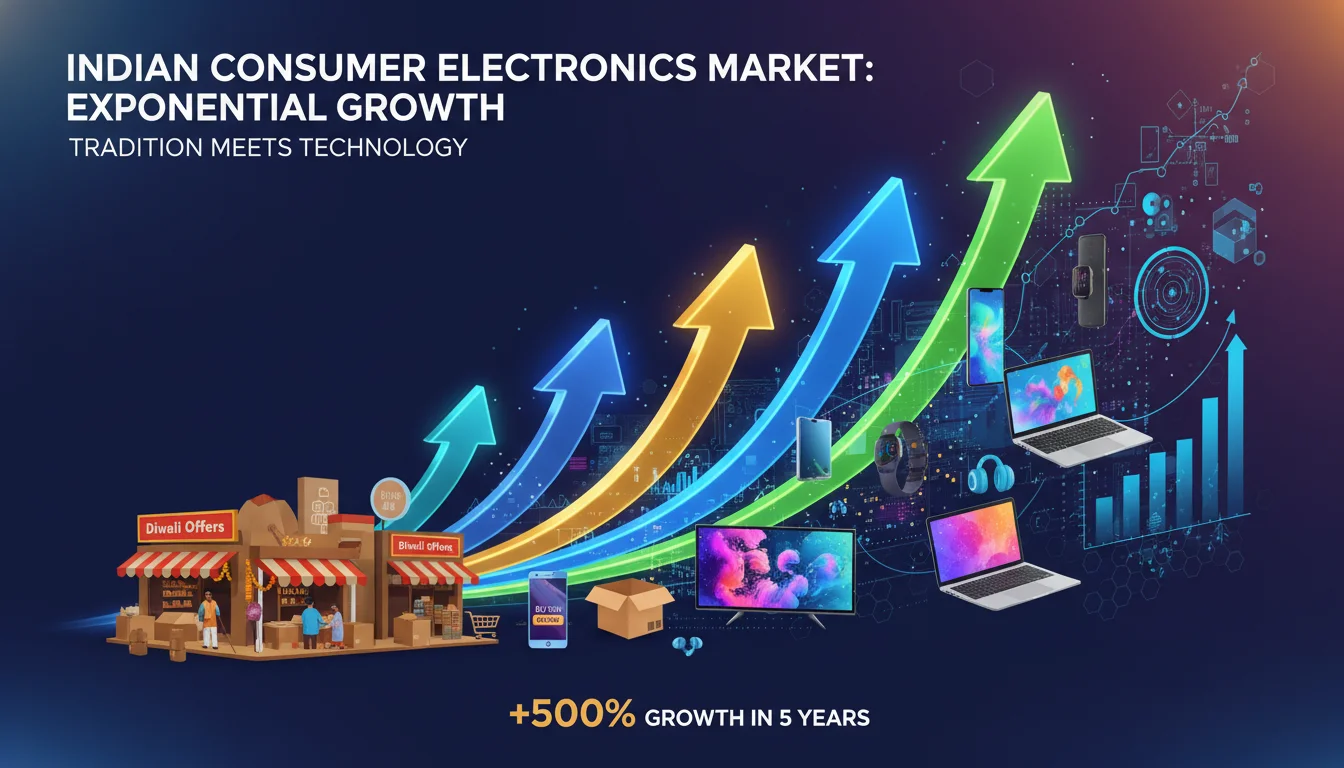
The absolute scale of the Indian consumer electronics market provides a fertile, albeit fiercely competitive, ground for extensive retail expansion. In the year 2024, the comprehensive market size was valued at approximately USD 83.90 billion, and long-term predictive economic models anticipate this figure will escalate to an astounding USD 162.74 billion by the year 2034. This trajectory represents a robust compound annual growth rate (CAGR) of 6.85% over the forecast period stretching from 2025 to 2034. Alternative industry analyses utilizing different methodological frameworks forecast a slightly different, yet equally optimistic, short-term trajectory, predicting the total market to reach USD 86.08 billion by 2030, propelled by a more aggressive CAGR of 12.83% between 2025 and 2030, heavily influenced by the exponential growth of the online sales segment. Concurrently, the offline physical retail electronic market alone generated around USD 66 billion in 2024. This specific valuation indicates that while digital purchasing channels are accelerating, brick-and-mortar stores continue to play a foundational and critical role in the Indian retail ecosystem, particularly in facilitating high-value electronics purchases where tactile product experience, immediate possession, and in-person validation remain paramount consumer desires.
The structural growth of this industry is deeply underpinned by several macroeconomic and behavioral trends that have crystallized in the post-pandemic era. The most profound psychological shift observed leading into 2025 and 2026 is the definitive pivot from extreme affordability to a “value-over-price” consumer mindset. Indian consumers are exhibiting a clear, sustained movement toward premium products, smart conveniences, and health-focused technology. Purchasing decisions within the electronics store environment are no longer strictly governed by the lowest available price tag; rather, they are increasingly shaped by the holistic user experience, everyday utility, ecosystem integration, and the perceived long-term value a product delivers. This indicates that the Indian market has effectively “come of age,” transitioning into a phase where technology is deeply intertwined with personal identity, creativity, and lifestyle aspirations.
This premiumization trend is highly visible and quantifiable across various product categories within the retail space. In the smartphone segment, which currently commands roughly a forty to forty-one percent share of the overall consumer electronics market, there has been an exceptional and sustained surge in the mid-premium and flagship tiers. Data reveals that breakout price bands, specifically devices priced between fifty thousand and fifty-eight thousand rupees, witnessed an unprecedented year-on-year surge of over three hundred percent. Consumers are actively trading up, viewing smartphones not merely as basic communication devices but as critical tools for high-resolution content creation, mobile gaming, professional productivity, and artificial intelligence-driven photography.

Similarly, the personal computing category is witnessing an “AI-first” revolution. The market has observed significant double-digit growth driven heavily by a demand for premium, high-performance laptops featuring advanced graphics, integrated artificial intelligence processing units, and ultra-thin form factors that balance immense computational power with extreme portability. This demand is highly concentrated in regional technology hubs such as Bengaluru, Mumbai, and Delhi, reflecting the requirements of urban professionals and the younger demographic participating in the modern hustle economy.
Home appliances and entertainment systems are also moving aggressively up the value curve. There is a pronounced consumer preference for larger screens in home entertainment, with specific markets like Gurugram emerging as highly “future-ready” hubs exhibiting strong preferences for 8K-ready televisions. Furthermore, cooling solutions reflect a growing intersection of climate consciousness and economic efficiency. One in four air conditioners sold nationwide is now a highly energy-efficient 5-star rated model, and roughly thirty-two percent of all units sold are “Smart ACs” featuring application-based control and automated energy optimization. The health and wellness focus has also permeated the electronics retail space, driving exponential growth in sub-categories previously considered niche. Air fryers recorded year-on-year sales growth of nearly thirty-eight percent, while air purifiers and automated robotic vacuum cleaners have seen their adoption rates spread rapidly from Delhi-NCR into cities like Mumbai and Bengaluru, positioning smart convenience and health-first choices at the center stage of the Indian household.
Despite this highly optimistic macro-growth narrative, businesses operating within the Indian electronics retail space face profound systemic and operational challenges. The market remains characterized by an exceptionally high dependency on foreign imports, with over seventy percent of total consumer demand fulfilled by international manufacturing ecosystems, exposing Indian retailers to severe supply chain vulnerabilities, geopolitical friction, and currency exchange fluctuations. Furthermore, while primary urban centers are rapidly embracing premiumization, the vast semi-urban and rural markets remain fiercely price-sensitive, demanding razor-thin margins and high-volume sales strategies that strain operational profitability. Retailers also face immense logistical hurdles in maintaining seamless omnichannel inventory visibility, a strict necessity in a contemporary era where consumers expect fluid, uninterrupted transitions between online digital browsing and offline physical purchasing. The existential threat posed by giant e-commerce marketplaces forces local and regional electronics stores to continuously innovate their digital marketing strategies, optimize their localized supply chains, and redefine their customer experience paradigms to avoid systemic obsolescence.
Consumer Electronics Market Metrics
- Aggregate Market Value USD 83.90 Billion
- Projected Aggregate Market Value USD 162.74 Billion
- Anticipated CAGR 6.85%
- Alternative CAGR Projection 12.83%
- Offline Retail Market Value USD 66.00 Billion
- Smartphone Segment Market Share ~40% - 41%
- Television Segment Market Share ~20%
- Offline Retail Distribution Share ~55%
Digital Landscape in India (Contextual to the Industry)
A nuanced understanding of the digital behavior exhibited by the modern Indian consumer is an absolute prerequisite for deploying effective marketing capital within the electronics retail sector. India has successfully crossed the monumental demographic threshold of one billion active internet users, representing a sweeping national digital penetration rate of approximately seventy percent. This massive digital citizenry, however, is not a monolithic entity that can be targeted with generalized marketing communications. Rather, it is characterized by deep regional, generational, and socioeconomic heterogeneity. The Indian digital landscape is fundamentally a mobile-first environment, heavily reliant on localized vernacular content, and increasingly driven by immersive visual experiences, peer-to-peer validation, and conversational artificial intelligence interfaces.
The contemporary consumer journey for electronics in India is profoundly and irreversibly omnichannel. Analytical research indicates that an overwhelming ninety-six percent of Indian shoppers actively research products online before completing a financial transaction, regardless of whether that final purchase occurs on a digital e-commerce platform or within the physical confines of a local store. The traditional demarcation between physical and digital retail environments has effectively dissolved in the mind of the Indian consumer.
Strikingly, behavioral surveys reveal that eighty-five percent of shoppers in India actively use their smartphones while physically standing inside a retail store to look up detailed product reviews, compare current prices with online competitors, and seek external validation from their digital networks before finalizing a high-value electronics purchase. Furthermore, nearly half of all consumers—forty-six percent—actively verify local store inventory online before deciding to commute to a physical retail location. This specific behavior underscores the absolute operational necessity for electronics retailers to maintain precise, real-time digital visibility of their localized physical stock across search engines and mapping applications.
Demographic segmentation reveals striking variances in digital engagement and purchasing psychology. Generation Z, encompassing individuals born between 1997 and 2012, now represents roughly forty percent of India’s total e-retail shopper base. This specific cohort exhibits a 1.5 times higher spending share on electronics, gadgets, and lifestyle technology compared to older demographic groups. Their purchasing psychology is intrinsically linked to product aesthetics, gamified experiences, and rigorous validation by digital influencers. Social media platforms, particularly Instagram, YouTube, and specialized technology forums, serve as their primary engines for brand discovery and exhaustive product research. Furthermore, Generation Z demands entirely frictionless checkout experiences, overwhelmingly preferring the Unified Payments Interface (UPI) for digital and physical transactions. The scale of this preference is massive, with the UPI network processing a staggering 18.3 billion transactions in a single recent month, effectively removing traditional financial friction from the purchasing funnel.
In sharp contrast, Generation X and older millennial demographics possess the highest aggregate spending capacity for planned, high-ticket electronics such as large capacity refrigerators, advanced washing machines, and premium home theater systems, yet they exhibit markedly different digital behaviors. These mature consumers prioritize long-term durability, comprehensive warranties, brand legacy, and robust after-sales service infrastructure. Their digital journey is characterized by a “hybrid shopping trend,” where they utilize digital search platforms for deep technical research, feature comparisons, and reading extensive peer reviews, but frequently prefer to complete the final transaction within a physical store. Alternatively, they highly favor “click-and-collect” modalities, allowing them to secure online pricing while ensuring product authenticity, immediate possession, and face-to-face interaction with retail staff.
The geographic expansion of digital commerce in India is equally telling and presents massive new frontiers for electronics retailers. Digital growth is aggressively decentralizing from primary metropolitan hubs into Tier-2, Tier-3, and even deeper rural markets. Since the year 2020, three out of every five new online shoppers in India have originated from Tier-3 or smaller cities. This dramatic shift is unlocking immense access and purchasing power for consumers residing in historically brand-starved areas. Interestingly, the e-retail spending patterns in these emerging smaller cities are rapidly approaching parity with Metro and Tier-1 cities, driven by an escalating appetite for premium brands, the democratization of rapid logistics, and the critical availability of cash-on-delivery payment options.
Furthermore, socioeconomic and cultural factors deeply influence regional digital search behaviors across India’s diverse geography. Market data illustrates that consumers in North India frequently associate brands with social status, driving higher shares of branded searches. Conversely, shoppers in South India traditionally view brands as strict markers of intrinsic quality, which manifests in a significantly higher volume of branded search queries specifically within the electronics and gadget categories. Additionally, regions like the Northeast, despite historical logistical challenges, demonstrate a 1.2 times higher overall e-retail shopper penetration compared to the rest of the country, highlighting the immense pent-up demand for technology access in remote locales.
Social media usage relevant to the electronics sector is heavily skewed toward high-resolution video consumption and interactive formats. Short-form video content on platforms such as Meta’s Instagram Reels and YouTube Shorts, alongside long-form technical teardowns and reviews on main YouTube channels, serve as the primary battlegrounds for capturing consumer attention. Indian consumers rely heavily on a vast network of technology influencers to decode complex hardware specifications, validate the real-world performance of gadgets, and verify marketing claims before making a significant financial commitment. Consequently, the digital landscape for electronics retail is not merely a transactional space, but a highly complex, content-rich environment where education, entertainment, and commerce are inextricably linked.
Digital Marketing Opportunities
The multifaceted challenges confronting electronics and gadget stores in India—ranging from intense, margin-eroding pricing wars initiated by major national e-tailers to the complex logistical realities of omnichannel inventory management—can be systematically neutralized through the deployment of precision digital marketing architectures. Digital channels offer unparalleled opportunities for traditional retailers to bypass legacy retail friction, forge direct-to-consumer relationships at scale, and drive highly measurable, data-backed returns on marketing investments. By leveraging specific digital methodologies, localized electronics stores can successfully compete against multinational digital giants.
Bridging the Omnichannel Gap via Local Search
To solve the critical challenge of stock visibility and local product discovery, progressive electronics retailers must aggressively leverage hyper-local digital infrastructures. Google My Business (GMB) and the Google Merchant Center stand as the foundational pillars of this defensive and offensive strategy. By synchronizing real-time physical store inventory databases with Google’s search ecosystem, retailers can directly capture the forty-six percent of consumers who verify stock availability online before visiting a store. When consumers execute high-intent, localized queries such as “buy iPhone 15 near me” or “smart TV store in [City],” local inventory advertisements can display the exact product availability, real-time pricing, and driving distance to the nearest physical outlet. This seamlessly bridges the digital intent with immediate physical fulfillment, effectively neutralizing the delivery-time advantage held by pure-play e-commerce platforms, as consumers can secure the product instantly rather than waiting for shipping.
Conversational Commerce and WhatsApp Marketing
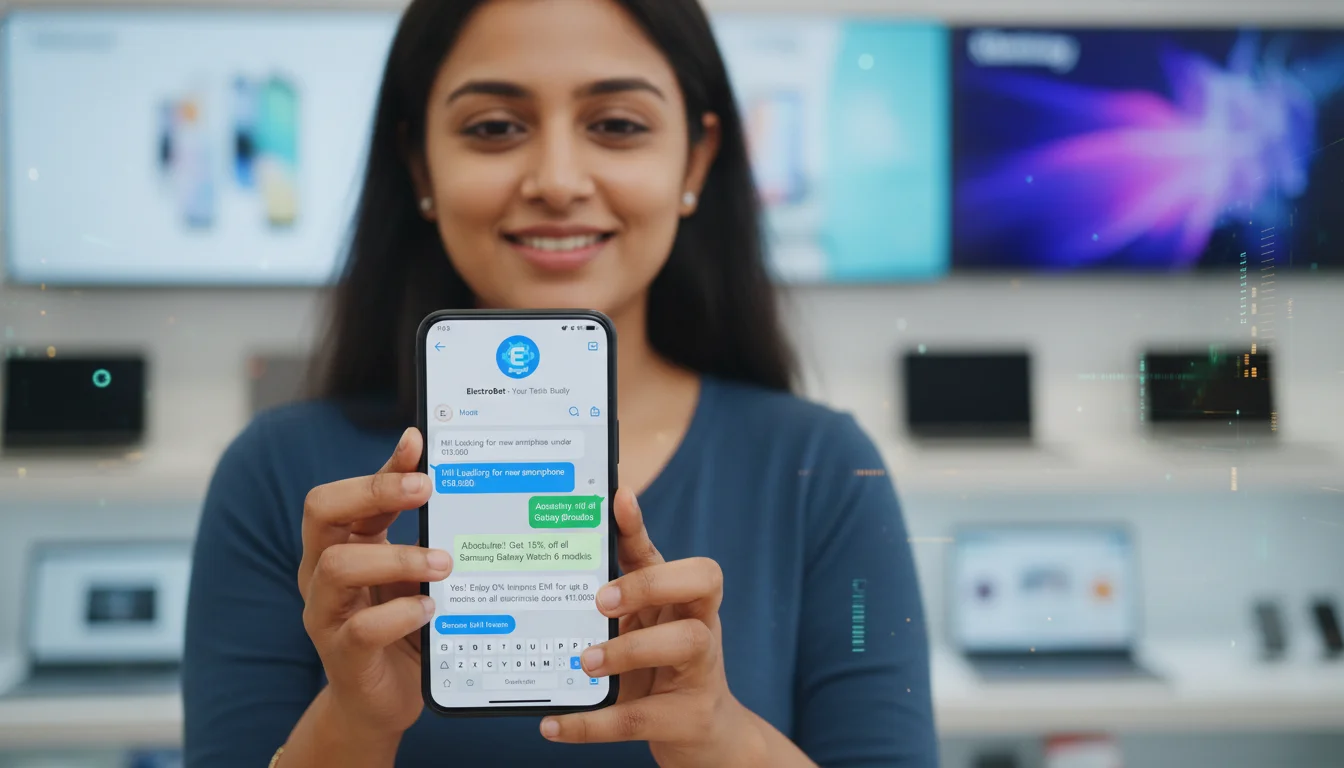
In the Indian digital ecosystem, WhatsApp has evolved far beyond a simple peer-to-peer messaging utility; it has transformed into a sophisticated, full-funnel marketing, customer service, and commerce platform. With unparalleled message open rates, WhatsApp marketing allows electronics retailers to engage customers intimately and directly on their most used application. Forward-thinking brands utilize WhatsApp Business APIs to deploy automated conversational chatbots that facilitate vast product catalog browsing, handle complex customer support inquiries regarding specifications, and trigger highly effective abandoned cart recovery sequences.
The power of this channel is heavily documented in the Indian retail space. Big Bazaar, one of India’s oldest and largest hypermarket chains, revolutionized its retail marketing strategy by deploying WhatsApp chatbots to disseminate weekly localized offers, drastically increasing direct consumer engagement and footfall compared to traditional, low-conversion SMS or expensive print media. Similarly, specialized e-commerce brands like Care N Cure have utilized automated WhatsApp flows to seamlessly collect post-purchase product reviews and drive repeat reorders through personalized discount distribution. For electronics retailers, this means the ability to automate post-purchase messages offering lucrative extended warranties, or sending highly personalized festive discount codes for mobile accessories to customers who recently purchased a smartphone, effectively driving high-margin repeat business without the exorbitant customer acquisition costs associated with cold advertising.
Strategic Lessons from E-Commerce Giants
Local electronics stores can glean massive strategic insights from the localized digital marketing deployments of major e-commerce players like Amazon and Flipkart, adapting these methodologies for localized dominance.
Amazon India’s success was heavily predicated on creating a seamless, localized online shopping experience tailored specifically to the Indian market’s infrastructural realities. They developed mobile applications optimized for low-bandwidth connections and introduced multiple vernacular language options, including Hindi, to tap into the massive non-English speaking consumer base. Furthermore, Amazon expanded aggressively into Tier-2 and Tier-3 cities through innovative logistical partnerships like the “I Have Space” program, which partnered with small local stores to serve as pickup and delivery points.
Similarly, Flipkart’s immense growth is driven by one of the most well-oiled digital marketing machines in the country, backed by deep data analytics, artificial intelligence, and a fundamental understanding of Indian cultural nuances, which culminated in the highly successful “Big Billion Days” campaigns and secured a massive sixteen billion dollar investment from Walmart. Local electronics retailers must mimic this localized approach: ensuring their websites load flawlessly on slow mobile networks, translating their marketing copy into regional dialects, and utilizing programmatic AI to serve relevant advertisements.
Search Engine Optimization (SEO) and B2B Digitalization
The Indian consumer’s propensity for extensive online research dictates a robust SEO and content marketing strategy. Electronics retailers must transcend generic, manufacturer-provided product descriptions and develop deep, highly informative content clusters that answer specific consumer queries and build topical authority. A compelling case study illustrating the transformative power of targeted SEO involves a prominent mobile battery supplier based in the Karol Bagh market of New Delhi. Historically reliant entirely on physical B2B footfall in the epicenter of India’s mobile business hub, the supplier faced obsolescence due to the rise of digital e-commerce. By deploying a highly cost-effective, WordPress-based e-commerce platform and launching a rigorous, localized SEO strategy targeting high-intent B2B keywords like “mobile battery wholesale India,” the business completely transformed its operational reach, achieving nationwide B2B sales without the necessity of a massive custom development budget or expensive continuous ad spend.
Influencer and Affiliate Marketing Synergy
The electronics sector is uniquely reliant on third-party validation and technical demonstration. Partnering with technology influencers across video platforms provides retailers with immediate, borrowed credibility. India boasts a vibrant and highly influential ecosystem of tech reviewers, ranging from massive macro-influencers like Rajiv Makhni, Technical Guruji (Gaurav Chaudhary), and Trakin Tech (Arun Prabhudesai)—who command subscriber bases in the tens of millions and wield immense power over national brand perception—to a vast network of hyper-local micro-influencers who review products in specific regional dialects. An effective, budget-conscious strategy for regional retail chains involves collaborating with local tech vloggers for in-store walk-throughs, exclusive unboxing events at the retail location, and affiliate-linked review videos. This strategy not only generates highly localized brand awareness but directly attributes physical foot traffic and online sales to specific creator partnerships, providing highly measurable influencer ROI.
Competitive Analysis
The Indian electronics retail landscape is a highly contested arena, characterized by intense competition between massive national corporate conglomerates, deeply entrenched legacy chains, and highly aggressive regional disruptors. A critical, detailed analysis of their digital footprints reveals distinct positioning strategies, significant operational strengths, and profound market gaps that agile, localized competitors can exploit through precision digital marketing.
National Conglomerates: The Battle of Premium vs. Value
The macro-battle among national retailers is largely defined by a strict dichotomy between premium experiential positioning and volume-driven value pricing, dominated by Croma and Reliance Digital.
Croma, backed by the financial and reputational weight of the Tata Group, has meticulously cultivated a premium brand identity within the electronics space. Boasting an annual turnover of approximately INR 4,000 crores, Croma’s digital and physical strategy heavily emphasizes high-quality, curated product assortments, exclusive brand partnerships, and exceptional customer service. Digitally, Croma has successfully implemented a highly sophisticated omnichannel architecture. Recognizing that modern digital consumers demand immediate inventory data, Croma integrated its vast product catalog seamlessly with the Google Merchant Center. Initially reflecting store-based inventory for small appliances, this strategic integration created a fluid online-to-offline customer experience, effectively bridging the digital discovery phase with physical fulfillment. Croma’s digital advertising aesthetics heavily feature premium products, emphasize eco-friendly packaging initiatives, and utilize dynamic digital signage, systematically attracting a discerning, quality-conscious demographic. However, this strict adherence to premium pricing and high-end curation creates a strategic gap, occasionally alienating highly price-sensitive, budget-conscious consumers who make up a massive segment of the Indian market.
Reliance Digital, conversely, operates on an entirely different scale, leveraging the vast resources of the Reliance Industries conglomerate to generate an estimated revenue of around INR 8,000 crores—double that of Croma. Its digital marketing strategy is aggressively anchored in a “value-driven” and mass-market accessibility proposition. Reliance Digital appeals directly to price-sensitive consumers by heavily promoting exceptionally broad product assortments across all price tiers, budget-friendly options, aggressive bundle deals, and steep festive discounts designed to drive sheer sales volume. Their digital footprint is characterized by high-frequency, price-led promotional messaging. While this volume-centric approach is highly effective at capturing vast market share and driving foot traffic, it frequently dilutes the personalized, premium customer experience sought by high-end gadget enthusiasts, leaving a gap for boutique retailers to offer superior, white-glove service.
Vijay Sales relies significantly on its historical legacy reputation, everyday low pricing strategies, and exceptionally strong point-of-purchase in-store experiences facilitated by highly experienced executive staff. However, analytical models and behavioral insights indicate that Vijay Sales experiences significant systemic gaps in robust digital footfall generation and seamless online engagement when compared directly to its more digitally integrated corporate peers. Their heavy reliance on traditional marketing models and physical presence, particularly in Tier-2 and Tier-3 regions, leaves a massive digital vacuum. Localized competitors who deploy aggressive local SEO and targeted social media campaigns can easily outmaneuver them in the digital discovery phase.
Regional Disruptors: The Quick-Commerce Counter-Offensive
While national players dominate the macro-narrative, regional chains in South India—specifically Sangeetha Mobiles, Poorvika Mobiles, and BigC—have orchestrated highly sophisticated defensive and offensive digital strategies against the existential threat of e-commerce giants like Amazon and Flipkart.
Recognizing that they could not possibly out-spend global e-tailers in pure digital advertising or national logistical infrastructure, these regional chains radically altered the battlefield. They successfully turned their extensive physical store networks into hyper-local “dark store” fulfillment centers. By pooling their resources, these three chains—which collectively control over sixty-five percent of the offline smartphone retail market in the south via 765 stores—pioneered a revolutionary “quick-commerce” model for high-value electronics. Utilizing their physical locations, they now deliver smartphones within an astonishing 15 to 20 minutes across more than 700 regional pin codes. This logistical feat dwarfs the delivery speeds of Tier-1 city coverage by Amazon and and Flipkart, completely neutralizing the convenience factor of traditional e-commerce.
Digitally, Sangeetha Mobiles further differentiated itself by focusing its web and application user experience entirely on empathy, trust, and value-added services rather than engaging in a race to the bottom on price. Sangeetha reimagined their digital cart experience to prominently feature unique selling propositions such as guaranteed two-hour delivery, comprehensive price-drop protection, and unique home-service for screen guard applications. This strategic, digitally communicated positioning effectively convinced consumers to choose Sangeetha over cheaper online alternatives, proving that superior local service and digital empathy can override pure price competition.
Strategic Gaps and Opportunities to Outperform
A comprehensive analysis reveals several exploitable vulnerabilities across both national and regional competitors:
- Over-reliance on Transactional Relationships: The majority of major players focus their digital marketing almost exclusively on price drops and technical product specifications. There is a massive, untapped opportunity for an emerging retailer to build a community-driven digital presence focused on post-purchase education, continuous technical support, and lifestyle integration.
- Vernacular and Cultural Disconnect: National corporate campaigns are frequently highly Anglicized and metro-centric in their messaging.
Independent retailers can heavily outperform major chains in specific geographic pockets by deploying highly localized, culturally resonant digital campaigns utilizing regional languages and dialects.
Customer Experience Friction:
While major players drive massive top-of-funnel traffic, their online customer service is frequently highly automated and deeply impersonal. Smaller stores can leverage personalized WhatsApp video consultations and hyper-responsive social media management to provide a concierge-level digital shopping experience that conglomerates cannot scale.
Competitor Profile
| Primary Positioning Strategy | Core Digital/Operational Strength | Identified Strategic Gap | |
|---|---|---|---|
| Croma (Tata Group) | Premium, Curated, High-Service | Deep Omnichannel Google Merchant Integration | Premium pricing alienates the massive budget-conscious demographic. |
| Reliance Digital | Value-driven, Broad Assortment | Massive ad spend on high-volume promotional deals | Lacks personalized, premium digital customer experiences. |
| Vijay Sales | Everyday Low Pricing, Legacy Trust | High in-store conversion and legacy brand recall | Deficient digital footfall and modernized online engagement. |
| Sangeetha / Poorvika | Regional Dominance, Empathy UX | Quick-Commerce (15-20 min delivery) via app integration | Limited national brand footprint and reliance on regional loyalty. |
Recommended Strategy for Electronics and Gadget Stores in India
To successfully navigate this highly complex, competitive ecosystem, an electronics retailer must deploy a meticulously segmented, omnichannel digital strategy that respects strict budget constraints while maximizing algorithmic leverage across global search and social platforms.
Target Audience Personas and Psychographics
The marketing strategy must be surgically divided across distinct psychographic and demographic profiles to ensure message resonance:
The Aspirational Gen Z (Ages 18-26):
This demographic is driven by mobile gaming, digital content creation, and aesthetic social appeal. They are surprisingly less price-sensitive if a product elevates their perceived social identity or integrates seamlessly with their digital lifestyle. Marketing to this cohort requires highly engaging gamified digital experiences, aggressive utilization of short-form video content (Instagram Reels, YouTube Shorts), dynamic influencer collaborations, and the prominent digital display of flexible payment options or “Buy Now, Pay Later” (BNPL) EMI schemes.
The Rational Millennial (Ages 27-42):
This demographic focuses heavily on detailed hardware specifications, long-term return on investment, and seamless integration into professional remote-work environments and smart home ecosystems (e.g., IoT devices, ultra-thin AI-laptops). This persona requires highly personalized marketing based on complex data analytics, detailed technical comparison guides, and highly targeted Google Search advertisements addressing specific use-cases.
The Security-Seeking Gen X (Ages 43-59):
Representing the highest aggregate spending power for large, family-oriented appliances, this demographic prioritizes brand legacy, comprehensive warranties, and reliable post-purchase service. The strategy here involves hybrid omnichannel touchpoints—using digital advertisements to establish trust and drive foot traffic directly to physical stores, heavily emphasizing trust signals (reviews, certifications), and facilitating easy “click-and-collect” purchasing models to bridge the gap between digital discovery and physical assurance.
Recommended Channels and Campaign Architecture
A balanced, algorithmically sound media mix is critical for sustaining a profitable marketing funnel.
- Top of Funnel (Awareness - 30-40% Budget Allocation): Retailers must utilize Meta Ads (Facebook and Instagram) optimized primarily for Video Views and massive geographic Reach. The creative assets at this stage should avoid hard selling, focusing instead on aspirational lifestyle imagery, exciting new product launch announcements, and broad brand storytelling to fill the top of the funnel.
- Middle of Funnel (Consideration - 30-40% Budget Allocation): Deploy sophisticated Meta Catalog Ads and highly interactive “Click-to-WhatsApp” campaigns. This captures users who have shown initial interest by watching videos or visiting the website, allowing the retailer to engage them in a conversational chat environment or serve them dynamic product carousels featuring the exact items they previously browsed, maximizing relevancy.
- Bottom of Funnel (Conversion - 20-30% Budget Allocation): Implement highly targeted Google Search Ads capturing high-intent transactional queries (e.g., “buy [Product] online”). Simultaneously, utilize Meta Lead Generation forms for high-ticket items (like premium home theater systems) that require a follow-up sales consultation from an in-store expert.
Content Strategies for High Engagement
Content production must shift from being strictly product-centric to highly solution-centric and experiential.
- Vernacular Educational Video Content: Produce localized “How-To” videos, genuine unboxing experiences, and honest product comparisons. Utilizing “Hinglish” or specific regional languages (Tamil, Marathi, Bengali) will drastically increase engagement and completion rates compared to purely formal English content.
- User-Generated Content (UGC): Actively encourage existing customers to post reviews, unboxing videos, and photos of their home setups using a store-specific digital hashtag. Feature these authentic, customer-created testimonials prominently on the store’s website and social media channels to build massive peer-to-peer trust, which is critical for driving conversions in India.
- Immersive Immersive Tech and AR: For high-end appliances and televisions, utilizing basic Augmented Reality (AR) filters on Instagram that allow users to virtually visualize a 65-inch television or a specific refrigerator model in their own physical living space can significantly reduce purchase anxiety and drive higher engagement.
Budget-Friendly Implementation and Tool Stacks
For small to medium-sized Indian retailers, marketing capital efficiency is paramount to survival.
- The Minimum Viable Spend Principle: Retailers must avoid the trap of spreading marketing budgets too thin across too many campaigns. A Meta campaign spending a mere ₹200 per day will completely fail to provide the machine-learning algorithms with sufficient data to optimize. Instead, consolidate budgets to achieve a strict minimum of 50 conversions per week per ad set. For example, if a target Cost Per Acquisition (CPA) is ₹100, the daily budget must be set to at least ₹700. A concentrated, adequately funded daily spend targeted at a highly specific urban radius yields significantly better ROI than a diffused, underfunded national campaign.
- Algorithmic Bidding Strategies: When launching Google Ads on a restricted budget, initiate campaigns using the “Maximise Clicks” bidding strategy. This cheaply harvests initial traffic and crucial behavioral data. Once the advertising account registers a statistically significant 30-50 conversions over a month, the strategy must pivot to “Maximise Conversions” to allow Google’s sophisticated AI to optimize budget deployment for actual sales.
- Leveraging Affordable Software Stacks: Retailers do not need enterprise software to succeed. They must utilize powerful, low-cost tool stacks.
| Digital Marketing Function | Recommended Budget-Friendly Tool | Core Benefit for Indian SMEs |
|---|---|---|
| Website / E-commerce CMS | WordPress / WooCommerce | Highly affordable, massive plugin ecosystem, excellent for local SEO integration. |
| Search Engine Optimization | Ubersuggest / RankMath | Low monthly cost (₹0–₹3,000), excellent for beginners managing WordPress SEO. |
| Design & Branding | Canva | Eliminates the need for expensive graphic designers; AI design tools, drag-and-drop. |
| Email Marketing & Automation | Mailchimp | Cost-effective scaling for newsletters and abandoned cart emails. |
| CRM & Sales Pipeline | Zoho CRM / HubSpot (Free Tier) | Affordable, AI-based suggestions, visual workflow builders for tracking in-store leads. |
| Analytics & Tracking | Google Analytics / Search Console | Completely free, enterprise-grade tracking of website traffic and campaign insights. |
Keywords & SEO Opportunities
In an aggressive digital environment where over sixty percent of all e-commerce traffic originates directly from search engines, relying solely on paid advertising is mathematically unsustainable due to continuously rising ad costs. A robust, organically ranked digital presence dramatically reduces overall Customer Acquisition Costs (CAC). The specific SEO strategy for an Indian electronics retailer must carefully balance highly competitive, high-volume head terms with hyper-specific, localized, and conversational long-tail phrases.
High-Intent Commercial Keywords
High-intent commercial queries signal a consumer situated at the absolute bottom of the digital purchasing funnel, credit card in hand, actively seeking to finalize a transaction.
While massive national chains dominate broad, generic terms like “buy smartphone online” or simply “electronics,” regional and localized stores can intercept massive traffic by targeting location-modified and brand-adjacent commercial keywords.
Strategic terms include precise variations of:
- “electronics store near me” (Staggering Search Volume: ~246,000)
- “electronics shop near me” (Massive Search Volume: ~368,000)
- “reliance digital near me” (Search Volume: ~135,000) - Bidding on or organically targeting competitor-adjacent local terms is a highly effective strategy to capture aggressive comparison shoppers within a specific geographic radius.
- “tech stores near me” (Search Volume: ~27,100)
- “bajaj electronics near me” (Search Volume: ~22,200)
These high-intent keywords must be heavily and naturally integrated into the retailer’s Google My Business profile description, specific location-based landing pages on the primary website, and the structural metadata of the store locator sections.
Long-Tail and Conversational Keyword Strategies
The true competitive advantage in 2026 and beyond lies in entirely dominating long-tail keywords. Long-tail phrases are highly specific, multi-word search queries that, while possessing lower individual search volumes, boast conversion rates up to two to three times higher than broad terms because they perfectly match exact user intent.
Furthermore, the exponential rise of Voice Search via mobile AI assistants (Google Assistant, Siri, Alexa) has fundamentally altered query syntax across the Indian subcontinent. Users no longer type fragmented queries like “laptop price India”; they ask their devices full, conversational questions. Voice search and AI engines (like ChatGPT and Google’s AI Overviews) thrive on these long-tail queries because they mimic natural human conversation.
Examples of highly lucrative, high-conversion long-tail targets include:
- “best lightweight gaming laptop under 60000 in India”
- “which is the best 5 star inverter AC for large living room”
- “exchange old smartphone for new iPhone 15 in [City Name]”
- “best waterproof smartwatches for swimming under 5000”
Keyword Strategy Type: Broad Head Term
Example Query: “smartphones”
Primary Intent: Informational / Browsing
Expected Conversion Rate: Very Low
Keyword Strategy Type: High-Intent Local
Example Query: “electronics shop near me”
Primary Intent: Navigational / Transactional
Expected Conversion Rate: High
Keyword Strategy Type: Competitor Local
Example Query: “reliance digital near me”
Primary Intent: Comparison / Transactional
Expected Conversion Rate: Medium-High
Keyword Strategy Type: Conversational Long-Tail
Example Query: “best gaming laptop under 60000”
Primary Intent: Deep Consideration / Ready to Buy
Expected Conversion Rate: Exceptionally High
Regional Language and Hinglish SEO Optimization
To successfully capture the massive, ongoing influx of Tier-2 and Tier-3 internet users, the underlying SEO architecture must wholeheartedly embrace linguistic localization. Indian search behavior frequently and seamlessly utilizes “Hinglish”—a fluid, colloquial amalgamation of Hindi and English vocabulary. Optimizing website content, meta descriptions, and blog posts for queries such as “sasta AC repair near me,” “sabse acha budget smartphone 2026,” or “EMI pe smart TV kaise le” directly targets the linguistic reality of the broader Indian demographic.
By creating dedicated, highly informative FAQ pages or technical blog posts that explicitly use these conversational Hinglish structures and regional dialects (like Tamil or Bengali for specific state-wide campaigns), an electronics retailer will secure highly coveted featured snippets and dominate voice search results. This localized linguistic strategy captures immense volumes of high-intent traffic that rigid, grammatically formal English corporate websites entirely miss.
Implementation Roadmap
Digital transformation within a retail environment is a highly phased, strategic evolution. Attempting to deploy all complex digital marketing tactics simultaneously invariably leads to rapid capital exhaustion, operational chaos, and unmeasurable results. The following structured roadmap details the rigorous digital integration for an electronics store over a comprehensive 12-month horizon, designed to build sustainable growth.
Phase 1: Foundational Architecture & Quick Wins (Months 1–3)
The primary objective of the first fiscal quarter is to establish dominant local digital visibility, eliminate user-experience friction on existing assets, and capture existing, low-hanging local search demand.
- Month 1 (Local SEO & GMB Supremacy): The absolute first priority is to claim, meticulously verify, and exhaustively populate the Google My Business (GMB) profile. Retailers must upload a minimum of twenty high-resolution images detailing the store interior, exterior storefront, staff members, and premium product displays. Furthermore, ensure complete Name, Address, and Phone Number (NAP) consistency across all major Indian local directories (JustDial, Sulekha, Yelp India, IndiaMart) to establish unshakeable algorithmic trust with Google’s local search protocols.
- Month 2 (Technical Website Optimization): Conduct a rigorous technical audit of the existing WordPress or e-commerce website focusing heavily on mobile responsiveness, minimization of heavy tracking scripts, and core page load speeds—critical ranking factors for Google’s Core Web Vitals and essential for mobile-first consumer retention in India. Implement hyper-specific, location-based landing pages (e.g., “Premium Electronics Store in Andheri West”) meticulously tailored with local schema markup.
- Month 3 (Pilot Paid Campaigns & Conversational Commerce): Launch highly localized, strictly budget-constrained Meta Ads (starting at ₹500 to ₹1000 per day). Utilize precise geo-fencing technology to target users exclusively within a 5-10 kilometer radius of the physical store to maximize foot traffic probability. Simultaneously, deploy a WhatsApp Business API integration to handle all incoming digital leads, utilizing automated greetings, quick-reply FAQ menus, and digital catalog sharing to capture consideration-stage buyers instantly.
Phase 2: Content Scaling & Omnichannel Integration (Months 4–8)
With the foundational technical architecture secure, the strategic focus shifts toward middle-of-the-funnel consideration, building immense localized authority, and bridging the online-to-offline gap.
- Months 4-5 (Content Authority & Review Generation): Initiate a systematic, automated campaign to generate genuine user reviews, as reviews are a primary ranking factor for local SEO. Implement automated SMS or WhatsApp messages immediately post-purchase, kindly requesting Google reviews from satisfied customers. Simultaneously, launch a rigorous, SEO-driven content marketing strategy focusing entirely on long-tail, educational tech content, Hinglish buying guides, and localized product comparisons designed to rank for conversational voice searches.
- Months 6-7 (Omnichannel Synchronization): Execute the complex technical integration of the physical point-of-sale (POS) inventory system directly with the website’s backend and the Google Merchant Center. This critical step enables the deployment of Local Inventory Ads, allowing nearby searchers to see exact, real-time stock availability on Google Maps and Search, effectively driving immediate, high-intent foot traffic into the store.
- Month 8 (Micro-Influencer Partnerships): Identify, vet, and collaborate with regional technology vloggers and micro-creators on Instagram and YouTube. Host exclusive, invite-only in-store unboxing events for new flagship smartphone launches, or provide loaner review units in exchange for affiliate-linked video content that drives highly validated, demographically targeted local traffic back to the store’s digital and physical properties.
Phase 3: Advanced Optimization & Predictive Scaling (Months 9–12)
The final phase of the first-year roadmap focuses aggressively on maximizing Return on Ad Spend (ROAS), automating customer retention, and leveraging advanced artificial intelligence tools.
- Months 9-10 (Advanced Paid Media & AI Bidding): Transition the now-established Google Ads campaigns from manual, exploratory bidding strategies to advanced, AI-driven “Maximise Conversions” and comprehensive Performance Max campaigns, allowing Google’s algorithms to find the cheapest conversions across its entire network. Concurrently, implement highly sophisticated dynamic retargeting infrastructure on Meta to automatically serve personalized advertisements of specific, abandoned products directly to previous site visitors.
- Month 11 (Loyalty & Lifecycle Marketing): Deeply leverage accrued Customer Relationship Management (CRM) data to deploy highly segmented, personalized email and WhatsApp marketing campaigns. Target previous buyers with logical, complementary accessory offers (for example, utilizing automation to send a high-margin protective case and wireless audio offer to a customer exactly thirty days after they purchased a flagship smartphone).
- Month 12 (Comprehensive Audit & Strategic Iteration): Conduct an exhaustive annual review of all digital analytics, search console data, and sales figures. Reallocate all marketing budgets for the subsequent fiscal year based purely on data-verified Customer Acquisition Costs (CAC) and channel-specific profitability, scaling the tactics that proved most effective for the specific regional demographic while ruthlessly cutting underperforming campaigns.
Conclusion
The Indian consumer electronics and gadget retail market is currently undergoing a profound, irreversible metamorphosis.
The Evolving Indian Retail Landscape and Digital Imperative
The operational narrative has decisively shifted from a historical landscape dominated by basic utility and extreme price sensitivity to a highly sophisticated ecosystem characterized by aspirational premiumization, a demand for smart conveniences, and highly complex omnichannel consumer purchasing behaviors. With an internet user base exceeding one billion individuals driving relentless demand, the modern Indian consumer is digitally fluent, hyper-informed by social media influencers, and expects a completely frictionless confluence of online product discovery and offline, immediate physical fulfillment.
For electronics and gadget stores operating within India, deploying a comprehensive digital marketing strategy is no longer a discretionary expenditure or a secondary, experimental promotional channel; it is the fundamental infrastructure required for commercial survival. Physical retailers can no longer rely passively on favorable geographic proximity, walk-in traffic, or legacy brand recall to drive necessary revenue. As explicitly demonstrated by the sophisticated, multi-million dollar strategic maneuvers of national corporate conglomerates like Croma, and the highly agile, quick-commerce digital counter-offensives launched by regional disruptors like Sangeetha Mobiles, modern retail success is entirely predicated on the ability to intercept consumer intent at the exact micro-moment of digital inquiry.
Strategic Digital Implementation for Independent Retailers
By meticulously optimizing local search engine visibility to capture high-intent localized queries, deploying automated conversational commerce through WhatsApp to build direct consumer relationships, and executing highly targeted, algorithmically optimized advertising campaigns across Meta and Google, independent electronics retailers can effectively neutralize the immense logistical advantages of giant e-commerce platforms. Implementing these strategies transforms traditional physical storefronts into highly profitable, digitally integrated, hyper-local fulfillment and customer experience centers.
Partnering for Digital Transformation: Gurkha Technology
Navigating this highly intricate digital transition requires specialized technical expertise, continuous adaptation to rapidly shifting search engine algorithms, and a profound cultural understanding of the Indian digital consumer’s psychology. Gurkha Technology stands as a premier digital marketing and technical development partner uniquely equipped to engineer this exact transformation. With decades of combined industry experience in driving data-centric, measurable growth, Gurkha Technology offers an expansive, full-stack suite of services meticulously tailored to elevate retail brands. From architecting high-converting WordPress e-commerce platforms and executing precision regional SEO strategies, to managing highly sophisticated Performance Max Google Ads and hyper-targeted, budget-efficient Meta advertising campaigns, Gurkha Technology possesses the comprehensive, end-to-end capabilities required to digitize and optimize physical retail operations. By partnering strategically with Gurkha Technology, electronics and gadget stores can confidently leverage enterprise-grade digital strategies on a highly scalable, budget-friendly basis, ensuring they not only survive the ongoing digital retail revolution but decisively dominate their respective local markets.