Digital Marketing for Indian Certifications: 2026 Strategy
Industry Overview
The ecosystem encompassing Professional Certification and Licensing Bodies operating within the Republic of India is currently navigating a period of unprecedented structural, regulatory, and technological transformation. This sector includes a diverse taxonomy of organizations, ranging from statutory regulatory authorities established by parliamentary acts—such as the Institute of Chartered Accountants of India and the Institute of Company Secretaries of India—to specialized government-backed educational trusts like the National Institute of Securities Markets. Furthermore, the landscape is heavily populated by global credentialing powerhouses, including the Association of Chartered Certified Accountants and the Project Management Institute, which view the Indian subcontinent as a critical growth frontier. These entities serve as the gatekeepers of professional competence, tasked with developing rigorous curricula, administering secure examinations, enforcing ethical paradigms, and issuing credentials that function as vital signaling mechanisms within a highly competitive labor market. The transition from traditional, localized instruction to highly scalable digital learning platforms has fundamentally rewired how these bodies attract, engage, and retain professional candidates.
The economic magnitude of the credentialing, compliance, and professional education sector in India is substantial and characterized by robust, sustained growth metrics. The foundational Testing, Inspection, and Certification market within India is currently valued at USD 12.80 billion in 2025 and is projected to expand at a Compound Annual Growth Rate of 6.46% through the year 2030. Within this broader macroeconomic category, certification services specifically represent the most dynamic segment, posting an accelerated 6.8% expansion rate as domestic exporters and professionals face increasingly stringent international compliance and competency standards. Concurrently, the digital delivery of these professional competencies is scaling at an exponential rate. The technical courses segment of the Indian professional online education market was independently valued at USD 2.46 billion in 2024. This sub-sector is propelled heavily by the urgent need for individual learners to acquire specialized competencies in rapidly digitizing fields, including artificial intelligence, machine learning, and complex cloud architecture. Taking a broader view, the global professional certification market is valued at USD 8.1 billion in 2025 and is anticipated to reach an impressive USD 16.8 billion by 2032, expanding at a remarkable 10.8% growth rate. The underlying software infrastructure supporting this digital ecosystem is also experiencing a parallel surge; the Indian license management market is forecast to grow from USD 89.8 million in 2024 to USD 176.75 million by 2030.
Several sweeping macroeconomic policies and legislative frameworks act as powerful catalysts for this exponential growth trajectory. The implementation of the National Education Policy 2020 has fundamentally altered the paradigm of educational development across the subcontinent. By placing a heavy emphasis on continuous teacher professional development, the integration of multilingualism, and a shift toward competency-based learning paradigms, the regulatory environment has institutionalized the necessity for ongoing, lifelong credentialing. Furthermore, the establishment of the National Professional Standards for Teachers mandates that career progression and salary increments rely on empirical appraisals of competency rather than traditional seniority metrics, effectively cementing the demand for standardized certifications within the public sector. Additionally, the introduction of the National Credit Framework offers a unified structure for credit accumulation and transfer across diverse learning environments, facilitating unprecedented interdisciplinary mobility. Government-backed liquidity initiatives, notably the PM VidyaLakshmi Scheme, which provides collateral-free loans for higher education backed by a budget of ₹3,600 crore, are indirectly increasing the purchasing power of the demographic seeking advanced professional education, thereby expanding the total addressable market for credentialing bodies.
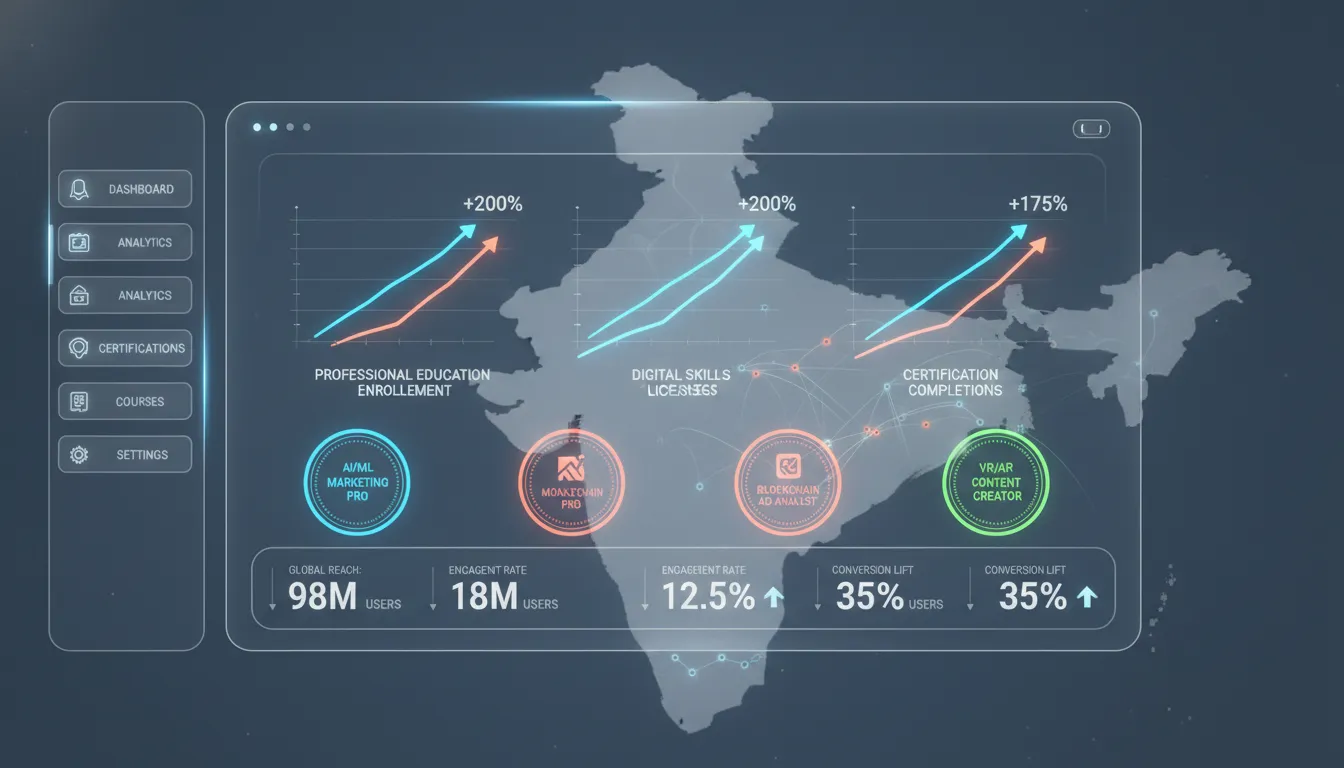
Despite this highly lucrative growth trajectory, organizations operating within the Indian credentialing space face a unique, multifaceted matrix of operational, cultural, and regulatory challenges that vastly complicate digital marketing and expansion efforts. One of the most historically entrenched barriers has been the draconian regulatory and ethical constraints imposed on advertising by statutory bodies. For decades, entities operating under the Chartered Accountants Act of 1949 were strictly prohibited from soliciting work through direct or indirect advertisements, limiting their marketing apparatus to rudimentary digital brochures and passive word-of-mouth networks. However, a landmark regulatory shift occurred on December 12, 2025, during the 447th Council meeting of the governing body. The approval of the revised 13th Edition of the Code of Ethics, which officially comes into effect on April 1, 2026, permits Indian financial firms and networks to utilize modern “push technology” and digital visibility campaigns for non-exclusive services. This monumental deregulation creates a new, highly competitive digital marketing frontier, forcing historically conservative institutions to rapidly adopt sophisticated digital marketing frameworks to maintain market share against aggressive global entrants.
Beyond regulatory hurdles, infrastructural and cultural deficits present significant operational bottlenecks. While metropolitan centers exhibit deep digital penetration, fragmented technological infrastructure and uneven broadband accessibility in rural and semi-urban regions continue to hinder the equitable nationwide reach of digital certification campaigns. Furthermore, India’s profound linguistic and cultural heterogeneity requires highly localized marketing content. Delivering complex professional educational messaging that resonates authentically across multiple dialects and distinct cultural contexts remains a formidable barrier for multinational organizations attempting to penetrate the Indian market. The rapid proliferation of educational technology platforms has also precipitated a severe trust deficit; aggressive marketing by unverified platforms has resulted in widespread consumer skepticism regarding the true value and credibility of newly minted digital certifications. Complicating this landscape further are stringent intellectual property challenges and emerging data privacy regulations, which force marketers to navigate dense compliance frameworks when executing targeted, data-driven campaigns. Finally, the Indian consumer base is uniquely characterized by extreme price sensitivity and a deeply ingrained discount culture. Maintaining healthy operational profitability while attempting to outbid well-funded competitors for high-intent digital advertising inventory presents an ongoing, complex challenge for marketing executives operating in this space.
Digital Landscape in India (Contextual to the Industry)
A thorough comprehension of the digital behavioral patterns exhibited by the Indian professional is an absolute prerequisite for formulating an effective, high-yield digital outreach framework. The digital landscape in India is defined by a mobile-first user base, a strong reliance on communal and peer validation, and a profound cultural emphasis on educational attainment as the primary vehicle for socioeconomic mobility and wealth generation. The mechanisms through which professionals discover, evaluate, and ultimately purchase certification courses have migrated almost entirely from physical seminars to complex, multi-touchpoint digital journeys.
Social media platforms have undergone a radical evolution, transforming from casual networking utilities into the primary engines for professional discovery, career advancement, and high-value corporate lead generation. The professional networking platform LinkedIn, in particular, has achieved massive market penetration, currently boasting over 100 million active users within the Indian subcontinent. Statistical data extracted from the 2025 Sprout Social Index indicates that 43% of the broader consumer base maintains an active profile on the platform, making it a critical nexus for B2B and B2C marketing efforts. Furthermore, the platform’s utility is underscored by the fact that 77% of corporate recruiters utilize it regularly for talent acquisition, meaning that professionals are heavily and continuously incentivized to update their profiles with new, verifiable credentials. Labor market data indicates a remarkable 140% increase in the rate at which users have been adding newly acquired skills to their profiles since 2022, highlighting a surging cultural demand for continuous micro-credentialing.
The nature of content consumption on these professional platforms is also experiencing a rapid paradigm shift. Traditional text-based posts are suffering from severe algorithmic depreciation.
Contemporary engagement metrics reveal that native video content generates five times more engagement from members compared to text-only publications, while live interactive broadcasts yield an astonishing twenty-four times more interaction. Conversely, standard text reach has plummeted by 200% between 2024 and 2025, and heavily automated, AI-generated interactions receive significantly lower response rates than authentic, human-authored commentary. This data signals a clear consumer demand for high-fidelity, visually engaging, and distinctly authentic educational content.
The distribution of attention spans across the digital ecosystem requires organizations to master a diverse array of platforms. LinkedIn remains the undisputed leader for professional credential marketing, serving dual functions as an aggregator for industry thought leadership and a direct conversion engine for high-ticket enrollments. YouTube acts as the primary search engine for complex educational inquiries, hosting long-form tutorials, detailed syllabus breakdowns, and comprehensive comparative analyses. It is heavily utilized by prospective candidates who are rigorously comparing the career trajectories of competing certifications. Platforms such as Instagram and messaging applications like Telegram are highly popular among younger undergraduate demographics for micro-learning, rapid exam updates, and peer-to-peer community building. Statutory bodies have adapted to this; the national accounting institute, for instance, maintains a highly active, centralized presence on Telegram to broadcast real-time examination updates directly to student mobile devices. Furthermore, search behavior is fundamentally evolving with the integration of generative artificial intelligence tools. Advanced AI assistants have soared in usage, fundamentally altering how prospective students query information. Traditional Search Engine Optimization strategies must now evolve to account for Generative Engine Optimization, structuring institutional data to be easily digested, interpreted, and cited by AI-driven search interfaces.
The psychographic profile of the Indian certification-seeker reveals an intense, almost singular focus on immediate employability and measurable Return on Investment. The broader macroeconomic environment contextualizes this drive: India, while possessing a rapidly expanding economy, maintains an employment-to-population ratio of just 52.8% and a challenging labor dependency ratio, resulting in a fiercely competitive, hyper-saturated job market. Consequently, extensive survey data indicates that 96% of Indian students possess a strong conviction that earning a recognized professional certificate is critical to distinguishing themselves to corporate employers. This belief is empirically validated by the demand side of the labor market, with 92% of Indian employers confirming that a relevant professional certification actively strengthens a candidate’s application—a figure notably higher than the global average of 88%.
Indian professionals across all demographics exhibit a distinct “continuous learning” mindset, driven by the rapid obsolescence of legacy technical skills. Approximately 88% of the Indian workforce expects to engage in rigorous upskilling initiatives throughout the entirety of their careers to remain commercially relevant. The 2025 Global Workplace Skills Study highlights that 81% of Indian professionals reported actively advancing their skills in the past twelve months, vastly outpacing the global average of 61%. This urgency is largely propelled by the artificial intelligence revolution and the escalating corporate demand for sustainable “green skills,” positioning technology and sustainability as the dominant, high-growth fields for modern credentialing. However, executing marketing campaigns targeting this demographic requires acute cultural sensitivity. Indian professionals utilizing American-built platforms like LinkedIn often face a unique cultural friction point: the inherent conflict between the platform’s algorithmic demand for aggressive personal branding and deep-seated societal norms emphasizing modesty and collective achievement. This cultural dissonance often leads to a high rate of creator attrition, with many professionals abandoning content creation efforts within six to eight weeks due to a perceived lack of immediate algorithmic reward and discomfort with overt self-promotion.
Digital Marketing Opportunities
The digital ecosystem presents highly scalable, data-driven solutions to the complex operational, geographical, and cultural challenges faced by credentialing organizations. By systematically shifting from traditional, highly restricted outbound marketing techniques to sophisticated, inbound methodologies, certification bodies can dramatically secure higher enrollment rates, drastically lower their cost per acquisition, and construct robust, unassailable institutional authority in the minds of the consumer.
The strategic application of digital marketing directly addresses the most pressing industry bottlenecks. Digital distribution platforms allow educational bodies to entirely bypass physical infrastructure limitations and geographic boundaries. By utilizing hyper-localized search optimization and programmatic advertising networks, institutions can deliver highly tailored, regional-language content directly to the mobile devices of consumers residing in rural and tier-2 municipalities. For example, prominent financial institutes have successfully launched foundational literacy courses in regional languages such as Tamil and Hindi, effectively bypassing the fragmented physical laboratory and testing center networks that typically constrain expansion. Furthermore, to combat the profound trust deficit inherent in the modern, unregulated educational technology landscape, organizations must deploy sophisticated content marketing architectures. By publishing long-form, meticulously researched, authoritative content—such as macro-economic risk reports or global project management trend analyses—institutions successfully transition their public perception. They cease to be viewed as mere vendors of examinations and are instead recognized as absolute industry authorities, thereby justifying premium pricing models and generating organic, inbound demand.
To navigate the extreme price sensitivity of the Indian consumer base, digital marketing enables the implementation of highly granular, tiered conversion funnels. High-volume, exceptionally low-cost lead generation can be achieved by offering free introductory micro-credentials, financial literacy quizzes, or highly informative digital webinars. Once a user enters the digital ecosystem through these frictionless entry points, they are systematically nurtured toward premium, high-ticket certifications through automated, behaviorally triggered email marketing sequences and targeted retargeting advertisements.
Executing these strategies requires a commitment to specific, high-yield digital methodologies tailored for the Indian educational sector. Influencer and educator marketing has proven to be exponentially more effective than corporate broadcasting. In the Indian academic and professional sector, individual educators and subject-matter experts frequently possess higher localized credibility and parasocial influence than massive, monolithic institutions. Innovative domestic educational technology brands have demonstrated that partnering with these micro-influencers and revered instructors builds rapid, authentic trust that traditional advertising cannot replicate. Credentialing bodies should identify, sponsor, and elevate highly respected industry practitioners to serve as brand ambassadors on visual platforms like YouTube and Instagram.
Given the algorithmic preference for dynamic media, organizations must adopt a stringent “video-first” content syndication strategy. The production of a high-value, long-form masterclass or expert panel discussion hosted on a primary channel can be systematically disassembled and repurposed into dozens of short-form, vertical video assets. These micro-assets, tailored for maximum engagement on mobile-centric feeds, serve as potent lead magnets that continually funnel highly qualified traffic back to primary registration landing pages. Concurrently, the approach to search visibility must evolve into Search Everywhere Optimization. Discoverability is no longer confined solely to traditional search engines; it encompasses visibility across video platforms, professional networking search bars, and emerging AI aggregates. Organizations must focus heavily on structuring their web data utilizing advanced schema markup, developing comprehensive, natural-language frequently asked questions, and rigorously ensuring that technical site speed parameters are optimal, given that nearly half of all mobile users will abandon a domain that requires more than four seconds to render.
The empirical success of these digital strategies within the Indian market is thoroughly documented. A leading domestic digital marketing agency successfully architected and executed a digital campaign for a prominent educational institute that generated an astounding volume of over 14,000 highly qualified leads.
Simultaneously, through rigorous audience segmentation and continuous multivariate testing, the agency managed to reduce the Cost Per Acquisition from ₹420 down to an incredibly efficient ₹293, demonstrating the profound financial impact of an optimized digital funnel. Similarly, a targeted campaign designed for an international study abroad consultancy yielded 14,500 high-quality inquiries at unprecedented cost efficiency. On a broader scale, a recent analytical study highlighted the trajectory of an emerging educational startup that initially suffered from critically low brand awareness and stagnant organic reach. By implementing a cohesive, unified digital strategy encompassing technical search engine optimization, aggressive social media community building, and precision paid advertising, the enterprise achieved a 150% sustained increase in organic web traffic and a 200% surge in qualified leads within a mere six-month window, fundamentally transforming its commercial viability. Global credentialing bodies also provide powerful operational templates; leading international management institutes have successfully utilized virtual event marketing—creating massive, on-demand virtual symposiums that offer required continuing education credits to attendees. By removing all geographic and logistical barriers and making high-value content globally accessible, these organizations continuously and automatically feed their lucrative certification renewal pipelines.
Competitive Analysis
A rigorous, multifaceted examination of the dominant credentialing entities currently operating within the Indian market reveals distinct strategic approaches, varying levels of digital maturity, and clear, exploitable gaps that nimble, digitally native competitors can aggressively leverage to capture market share.
The digital presence of the leading organizations demonstrates how legacy authority is being translated into digital infrastructure. The following matrix delineates the core digital assets, engagement methodologies, and primary marketing mechanisms of the top-tier institutions:
| Organization | Core Digital Assets & Portals | Social Media & Content Strategy | Primary Marketing Mechanism |
|---|---|---|---|
| Global Accounting Body (ACCA) | Comprehensive localized portals, digital learning hubs, computer-based exam practice platforms, interactive career navigators. | Highly active omnichannel presence. Produces dedicated student podcasts, global economic research applications, and digital magazines. | B2B employer partnerships and specialized university integration pathways. Heavily utilizes aspirational, forward-looking branding. |
| National Securities Institute (NISM) | Centralized proprietary eLearning platform, specialized certification dashboards, real-time regulatory alert systems. | Operates dedicated educational blogs. Focuses heavily on free investor awareness webinars and interactive video modules. | Leverages immense statutory authority. Markets mandatory compliance certifications alongside niche academic degrees via corporate partnerships. |
| National Accounting Authority (ICAI) | Centralized distribution systems, advanced digital learning hubs, proprietary video broadcasting, digital document verification. | Utilizes high-velocity messaging applications (Telegram, WhatsApp) for direct, real-time student updates and announcements. | Historically reliant on a statutory monopoly. Currently executing a massive pivot toward global network promotion following the historic December 2025 advertising deregulation. |
| Global Project Management Institute (PMI) | AI-powered career coaching interfaces, exclusive global job boards, digitized standard access. | Extensive community-driven engagement, robust newsroom publications, massive regional virtual and physical conferences. | Focuses on member retention via continuous education gamification, elite enterprise solutions, and hyper-specialized capability training (AI, Agile). |
s>
The established incumbents demonstrate several distinct areas of operational excellence. Their primary strength lies in the creation of complete, inescapable digital ecosystems. Organizations with deep global backing excel at constructing holistic digital environments; they do not merely sell an isolated examination registration. Instead, they provide comprehensive study hubs, interactive career mapping tools, exclusive job boards, and mandatory continuous learning portals. This vast infrastructure effectively locks the professional into their proprietary ecosystem for the entirety of their working life, maximizing long-term customer lifetime value. Furthermore, they excel at establishing unassailable authority through high-level thought leadership. By funding and publishing massive, macroeconomic research reports—such as detailed analyses on the future of global project economics or comprehensive guidelines on international environmental, social, and governance reporting standards—these entities position themselves as intellectual pioneers. This perceived intellectual superiority effortlessly justifies the premium pricing associated with their core credentials. Domestically, government-backed bodies display a masterclass in market penetration through tiered pricing and accessibility. By offering highly affordable, bite-sized digital modules—often priced below ₹500—alongside completely free, vernacular-language financial literacy courses, they effectively widen their total addressable market, capturing millions of users at the very top of the marketing funnel.
However, despite their immense resources and historical dominance, several critical vulnerabilities and strategic gaps exist within the operations of these legacy organizations, presenting highly lucrative opportunities for agile competitors.
- There is a pervasive underutilization of long-tail search optimization. Many legacy bodies rely almost exclusively on their massive brand-name search volume. There exists a significant, untapped opportunity in capturing hyper-specific, long-tail commercial queries. While an incumbent may rank first for a broad term, they frequently ignore complex, localized queries. Competing bodies can easily siphon highly qualified, high-intent traffic by aggressively developing content that specifically targets these niche, conversational search strings.
- Legacy content delivery often suffers from a severe lack of hyper-personalization. While global bodies possess vast financial resources, their marketing materials and website copy often feel monolithic, corporate, and detached from local realities. Regional or specialized institutions can significantly outperform them by developing highly personalized, regional-language marketing campaigns that speak intimately to the specific localized cultural, economic, and logistical realities faced by professionals in tier-2 and tier-3 Indian cities.
- Massive institutions often lack agility in adapting to modern advertising formats and regulatory shifts. With national statutory bodies only recently deregulating advertising for their members and affiliated networks (effective April 2026), there is a fleeting, massive first-mover advantage. Nimble financial training institutes, alternative credentialing bodies, and advisory networks have a brief window to aggressively dominate the digital advertising inventory and establish digital supremacy before the massive, traditional accounting and legal firms fully mobilize their newly permitted marketing budgets.
- The pedagogical delivery mechanisms of older institutions remain largely reliant on static, outdated formats. Many incumbents still depend heavily on text-heavy PDF documents and long, unengaging traditional webinar formats. New entrants can dramatically disrupt the market by integrating interactive, AI-driven learning previews, gamified micro-learning assessments, and high-production-value, short-form video content distributed strategically across contemporary social networks.
Recommended Strategy for Professional Certification Bodies in India
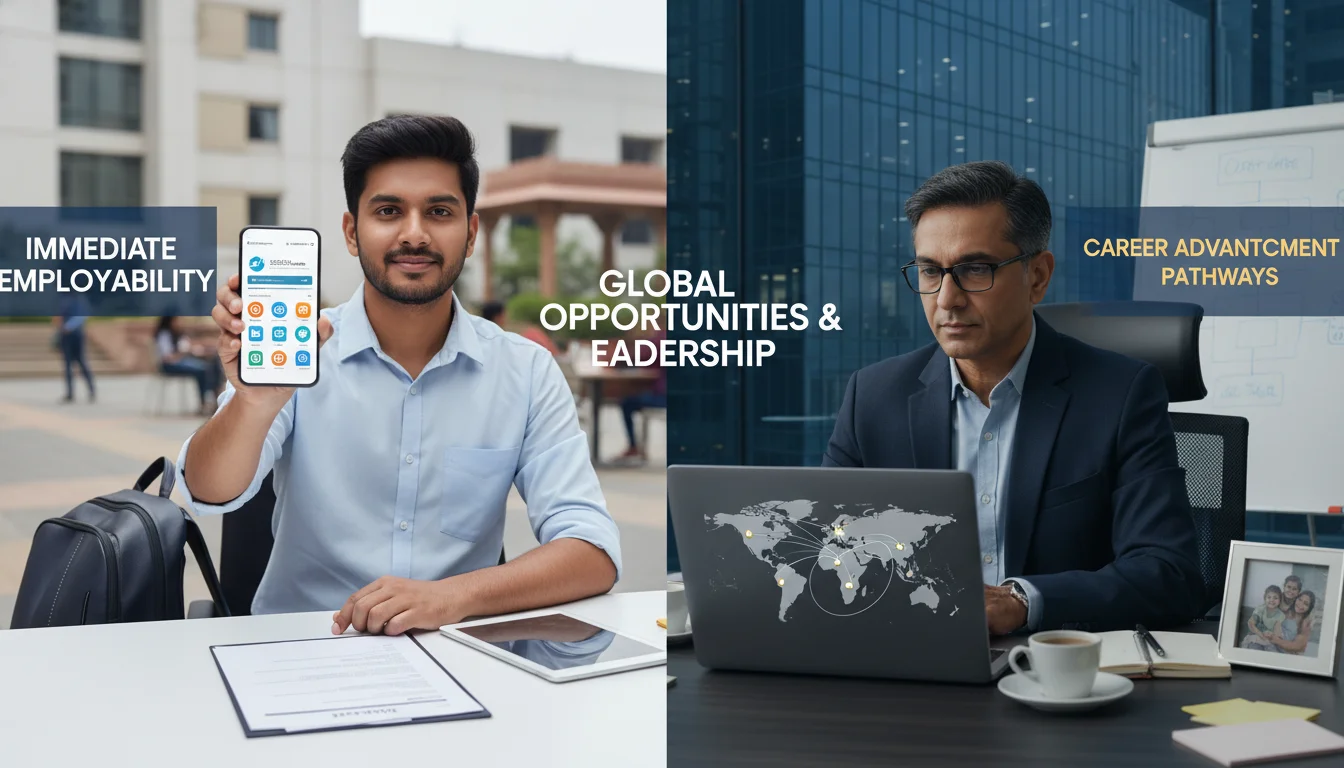
To successfully capture and retain market share in this rapidly evolving and highly competitive environment, organizations must execute a deeply bifurcated digital marketing strategy. This approach must meticulously address the vastly different psychological motivations, financial constraints, and career aspirations of both emerging graduates and seasoned, mid-career executives. A uniform, monolithic marketing message will result in severe budget inefficiencies; precision targeting is mandatory.
Effective digital marketing architecture requires precise psychographic alignment.
Extensive labor market data and consumer behavioral research suggest the necessity of dividing the Indian market into two primary, distinct target personas:
Persona Attribute
- Persona Alpha: The Aspiring Graduate
- Persona Beta: The Mid-Career Professional
- Demographic Profile
-
- Persona Alpha: Ages 18–25, predominantly located in Tier 1 and Tier 2 cities, currently pursuing or recently graduated with foundational degrees (B.Com, B.Tech, BBA). - Persona Beta: Ages 28–45, clustered in major urban commercial hubs, firmly established in finance, IT, engineering, or corporate management.
- Core Psychological Motivations
-
- Persona Alpha: Immediate employability, overcoming the lack of practical experience, and standing out in a hyper-crowded entry-level job market (96% firmly believe specialized certs secure initial employment). - Persona Beta: Strategic career pivoting, facilitating global mobility, securing senior executive salary increments, and urgently adapting to AI or sustainability transitions to avoid obsolescence.
- Key Product Preferences
-
- Persona Alpha: Heavily values direct placement assistance, extreme affordability or financing options, highly interactive video-based content, and relies entirely on peer reviews and influencer validation. - Persona Beta: Values elite global recognition, maximum logistical flexibility (asynchronous, self-paced e-learning), high-level networking opportunities, and exclusive executive alumni status.
- Primary Information Sourcing
-
- Persona Alpha: YouTube educational tutorials, Instagram micro-influencers, university campus seminars, and peer-to-peer validation on forums like Quora. - Persona Beta: LinkedIn corporate thought leadership, specialized industry publications, corporate HR department recommendations, and elite B2B professional webinars.
To effectively engage these distinct personas, organizations must deploy a highly orchestrated, full-funnel channel strategy utilizing specific campaign typologies. For professional, business-to-business engagement targeting Persona Beta, LinkedIn is the uncompromising priority. Organizations must enforce a strict culture of consistent publishing among their internal subject matter experts and leadership. Marketing campaigns on this platform should heavily prioritize data-driven carousel documents—which empirical data shows earn nearly double the standard engagement—and native video content that explicitly details the quantifiable return on investment and salary implications of specific advanced certifications. To capture top-of-funnel educational intent from Persona Alpha, YouTube must be leveraged as a massive search engine. Organizations should launch dedicated, high-production series comparing various career trajectories and dissecting complex syllabi to capture users in the earliest stages of their informational research. To secure bottom-of-funnel conversions, organizations must deploy high-precision Google Search and Performance Max campaigns targeting strictly transactional search queries. These highly optimized paid campaigns must direct users to lightning-fast, mobile-optimized landing pages that eliminate friction and feature decisive, action-oriented directives. Binding these channels together requires sophisticated email marketing automation. Organizations must implement complex, behavior-triggered email sequences; for instance, if a user downloads a syllabus brochure, the CRM must automatically deploy a multi-week sequence delivering alumni success narratives, detailed curriculum breakdowns, and time-sensitive enrollment incentives.
The specific content deployed across these channels must be highly tailored to the credentialing sector. Organizations should prioritize the production of high-fidelity “Alumni Transition Stories.” These are not standard testimonials; they are detailed, documentary-style video interviews showcasing professionals who successfully transitioned from stagnant, operational roles into highly lucrative, strategic leadership positions directly as a result of their certification. This specific format perfectly addresses the core ROI motivation of the mid-career demographic. Additionally, deploying “Regulatory Decoders” represents a massive opportunity for rapid authority building. By publishing immediate, rapid-response analytical articles and videos simplifying complex new governmental regulations—such as decoding the implications of new securities frameworks or explaining the nuances of the newly minted accounting advertising guidelines—the organization positions itself as an indispensable, real-time educational resource for the entire industry.
For emerging credentialing bodies, or those operating with constrained initial marketing budgets, deploying massive capital into paid advertising is neither required nor recommended. Budget-friendly digital marketing approaches can yield immense returns if executed with strategic discipline. Focusing heavily on User-Generated Content is highly cost-effective and inherently carries massive psychological trust. By actively incentivizing successful candidates to post high-quality images of their physical certificates or share their digital badges on platforms like LinkedIn, organizations generate exponential, free organic reach and powerful social proof. Furthermore, dedicating internal resources to consistently answering highly technical, niche questions on public forums establishes deep, localized authority and drives high-intent referral traffic without requiring premium advertising expenditures.
Keywords & SEO Opportunities
A truly robust and future-proof Search Engine Optimization strategy in 2026 relies entirely on deeply understanding the psychological intent behind consumer search behavior and simultaneously capturing both the massive volume of broad, informational queries and the exceptionally high conversion rates of specific, hyper-focused phrasing. The integration of artificial intelligence tools into the marketing stack has fundamentally revolutionized this process, allowing marketers to utilize predictive semantic clustering to identify trends before they fully materialize in the market.
High-Intent Keywords for Ranking
High-intent keywords are the absolute most valuable assets in search marketing; they clearly signal that the user has concluded their broad informational research and is actively prepared to execute a transaction or make a definitive commitment. While these terms are fiercely competitive and expensive to bid on, they yield the highest measurable return on investment. Credentialing bodies must focus their primary optimization and paid budget on two specific categories of intent:
- Commercial Investigation Queries: These users are comparing final options before purchasing. Examples include highly competitive phrases such as “best professional certification for corporate finance,” “ACCA vs CA salary comparison in India,” or “top agile project management courses online”.
- Transactional Intent Queries: These users have selected their path and are looking for the portal to pay or register. Examples include explicit phrases like “Register for NISM Series VIII exam,” “Buy advanced PMP exam prep materials,” or “Enroll in digital marketing pg diploma”.
To successfully capitalize on these high-value queries, the destination landing pages must be subjected to rigorous technical optimization. They must load almost instantaneously on mobile networks, feature undeniable, immediately visible trust signals including official accreditation logos and verifiable alumni statistics, and utilize highly specific, commanding calls-to-action.
Long-Tail Keyword Opportunities (India-Specific)
While high-intent head terms drive conversions, long-tail keywords—search phrases containing four or more highly specific words—account for approximately 70% of all search queries conducted in India. These extended phrases naturally possess significantly lower monthly search volume, but they feature dramatically lower competition and boast exceptionally high conversion rates because they perfectly reflect highly specific, contextualized user needs and pain points.
Organizations must systematically generate dedicated, long-form content architectures to capture uniquely Indian, highly contextual queries. Examples of high-value, long-tail search strings include:
- “Affordable financial modeling certification for engineering graduates in Pune”
- “How to get maximum ACCA exemptions with an Indian B.Com degree”
- “Are digital marketing certificates recognized under the new ICAI professional guidelines”
- “Best online mock test series for SEBI research analyst exam preparation 2026”
By meticulously mapping these complex, long-tail queries to specific, high-quality blog posts, comprehensive guides, or highly structured FAQ schemas, organizations can systematically build massive topical authority. This process definitively signals to both traditional search engine algorithms and emerging generative AI interfaces that the institution is the absolute, definitive informational resource on professional education within the Indian subcontinent. To identify these terms, marketers must utilize a combination of enterprise intelligence platforms like Ahrefs or SEMrush for deep competitive analytics, alongside free, real-time insights derived from Google Autocomplete and the “People Also Ask” matrices.
Implementation Roadmap
Transforming an organization’s digital presence from a passive informational repository into an aggressive, automated revenue-generating engine requires a highly phased, rigorously disciplined approach. Attempting to execute all digital channels simultaneously invariably leads to severe resource exhaustion, disjointed messaging, and an inability to accurately measure return on investment.
The following implementation roadmap outlines the critical, sequential path to achieving sustainable digital maturity.
Short-Term Quick Wins (Month 1–3)
The primary objective of the initial ninety-day phase is to conduct comprehensive diagnostic audits of existing infrastructure, establish unassailable data tracking mechanisms, and aggressively capture low-hanging commercial opportunities.
Month 1: Infrastructure Diagnostics and Analytics Integration
The foundational step requires the implementation and rigorous configuration of advanced tracking protocols via Google Analytics 4 and Google Search Console. This is mandatory to accurately measure current baseline traffic flows, map user journeys, and establish definitive starting metrics. Concurrently, development teams must execute a technical audit to guarantee the primary domain is flawlessly mobile-responsive and that core web vitals strictly maintain load times under the critical three-second threshold to prevent mobile abandonment.
Month 2: On-Page Optimization and Content Refurbishment
Marketing teams must utilize analytics to identify existing high-value web pages that are currently languishing between positions 11 and 20 on search engine results pages. By injecting thoroughly researched high-intent and long-tail keywords, rewriting meta descriptions to improve click-through rates, and deploying advanced schema markup, organizations can frequently push these pages onto the highly visible first page of results with minimal capital expenditure.
Month 3: Performance Piloting and Professional Activation
Organizations should launch tightly controlled, highly targeted Google Search advertising campaigns focused strictly on bottom-of-the-funnel transactional keywords. Utilizing modest initial budgets, these pilot campaigns serve to rigorously test landing page conversion rates and determine accurate customer acquisition costs before scaling. Simultaneously, executive leadership must enforce a mandate for key internal subject matter experts to begin a highly consistent publishing schedule on LinkedIn, utilizing a structured content pillar strategy to immediately begin cultivating organic, top-of-funnel institutional reach and brand awareness.
Long-Term Strategy (Month 6–12)
The secondary, extended phase shifts the operational focus toward massively scaling proven campaigns, automating repetitive lead nurturing processes, and establishing deep, unassailable topical and cultural authority within the target demographic.
Month 6: Ecosystem Automation and CRM Integration
Marketing technology teams must roll out sophisticated, multi-stage email marketing and SMS automation sequences. Utilizing rigorous database segmentation, the organization must begin delivering highly personalized, dynamic content based entirely on specific user behavior—for example, automatically deploying vastly different nurturing sequences and value propositions to an undergraduate student inquiring about entry-level certificates versus a senior executive downloading a syllabus for advanced agile methodologies.
Month 9: Strategic Influencer and Academic Partnerships
The organization must identify, vet, and formally onboard credible micro-influencers, specialized domain experts, and highly respected academic educators to serve as localized brand ambassadors. By establishing joint digital webinars, co-authored industry research papers, or sponsored tutorial series, the institution effectively borrows the established trust of these individuals and seamlessly integrates their fiercely loyal followings into the organization’s proprietary digital ecosystem.
Month 12: Advanced Search Experience and Predictive Modeling
The final phase requires a complete strategic shift toward optimizing for the future of search. Organizations must ensure all digital assets are structured to be seamlessly ingested, understood, and cited by Generative AI search assistants. Furthermore, data science teams should begin utilizing AI-driven predictive analytics tools to forecast trending educational demands and identifying emerging skill gaps before they fully peak in the mainstream market. This predictive capability allows the organization to develop, accredit, and launch highly lucrative new micro-credentials months ahead of sluggish competitors. Finally, leadership must conduct a comprehensive, data-backed annual review of Cost Per Lead and Return on Advertising Spend to ruthlessly eliminate inefficient channels and optimally recalibrate budgets for the upcoming fiscal year.
Conclusion
The professional certification and licensing sector within India is currently positioned at a highly critical, once-in-a-generation inflection point. Driven by sweeping, progressive legislative modernizations—such as the structural reforms introduced by the National Education Policy 2020 and the unprecedented, historic relaxation of advertising and solicitation guidelines by major statutory bodies—the market is fundamentally primed for explosive, sustained expansion. Furthermore, the demographic realities of the subcontinent present a massive, highly motivated consumer base that exhibits a fierce, culturally ingrained appetite for continuous professional upskilling. The empirical data unequivocally dictates that modern Indian professionals view rigorous credentialing not merely as an optional academic luxury, but as an absolute, non-negotiable mechanism for economic survival, job security, and upward corporate mobility.
However, commercial success in this rapidly expanding, hyper-saturated, and heavily regulated market is no longer guaranteed by reliance on legacy institutional prestige or historical monopolies. Organizations must aggressively and systematically transition away from passive operational models toward highly sophisticated, data-driven, omnichannel digital marketing architectures. Institutions that successfully master the complexities of Search Experience Optimization, deploy highly authentic and localized influencer partnerships, and cultivate deeply engaging, proprietary digital communities will inevitably secure the highest quality candidates and dominate market share. Conversely, legacy organizations that fail to recognize the urgency of this digital transition will inevitably face dwindling enrollment figures, skyrocketing acquisition costs, and a fatal erosion of their institutional relevance in the eyes of the modern professional.
Executing this scale of comprehensive digital transformation requires a depth of specialized technical expertise, acute regional market intelligence, and a proven, verifiable track record of high-level digital execution that most internal organizational teams simply do not possess. Gurkha Technology, an established, award-winning digital marketing and technology solutions provider based in Nepal, is uniquely positioned to architect, manage, and seamlessly execute this complex transition for credentialing bodies operating in India and the broader South Asian economic region. Having established its operations in 2017 with a core mission to drive transformative growth through innovative digital strategies, the agency possesses highly specialized, deep-domain experience in the educational technology sector. This expertise is clearly demonstrated by their successful launch and scaling of massive educational platforms and the management of high-profile corporate clientele. Gurkha Technology offers the critical strategic counseling, robust full-stack technological development, and sophisticated, data-driven performance marketing necessary to elevate legacy educational brands into modern digital powerhouses. By establishing a strategic partnership with Gurkha Technology, professional certification bodies can effectively bridge the perilous gap between traditional, analog prestige and cutting-edge digital dominance, thereby ensuring sustainable revenue growth and unparalleled, unassailable market leadership for decades to come.