Digital Marketing Research: India's Beverage & Water Market
Industry Overview
The intersection of the water purification and beverage industries in the Indian domestic market represents one of the most dynamic, rapidly evolving, and structurally significant consumer sectors globally. Driven by shifting macroeconomic factors, an aggressive digital transformation, rising public health awareness, and the structural formalization of the Indian retail landscape, both sectors are experiencing unprecedented paradigmatic changes. Businesses operating within these spaces are no longer merely competing on physical shelf space; they are competing for digital real estate, consumer mindshare, and algorithmic visibility in a highly fragmented ecosystem.
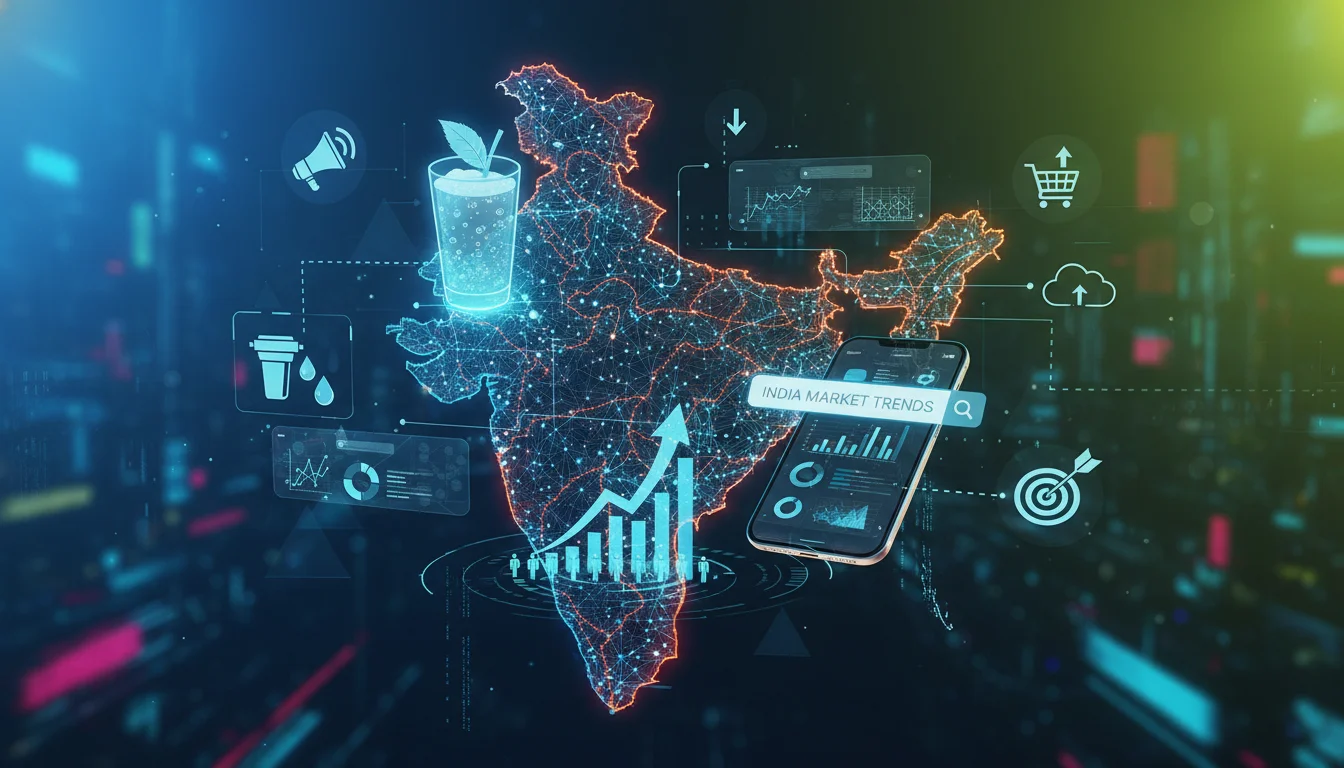
The current market size, growth trajectories, and underlying trends indicate a period of sustained, hyper-accelerated expansion. The Indian water purifier market, serving as a critical healthcare intervention masquerading as a consumer durable, is experiencing robust double-digit growth. Valuations for the water purification sector stood at approximately USD 2.19 billion in 2024, with conservative estimates projecting a rise to USD 2.54 billion in 2025. Long-term macroeconomic forecasts suggest the market will scale to an impressive USD 7.72 billion by the year 2032, expanding at a Compound Annual Growth Rate (CAGR) of 17.2% during the forecast period. Alternatively, other econometric models that weight the industrial and commercial segments differently project the market to reach USD 3.35 billion by 2024, scaling to USD 7.11 billion by 2033 at an 8.7% CAGR. Despite the variance in forecasting models, the consensus remains that the sector is on an aggressive upward trajectory. The non-alcoholic beverage sector—encompassing soft drinks, juices, functional energy drinks, and bottled water—exhibits a similarly immense scale but operates under distinct consumer behavioral paradigms. The market was valued at USD 30.84 billion in 2023 and is projected to climb to USD 64.24 billion by 2033, registering a steady CAGR of 7.66%. Within this broader category, the organic and health-focused beverage segment is surging disproportionately, projected to reach USD 1.37 billion by 2030 at an accelerated CAGR of 20.9%.
| Market Segment | Base Valuation (Year) | Projected Valuation (Year) | Estimated CAGR |
|---|---|---|---|
| Water Purifiers | USD 2.19 Billion | USD 7.72 Billion | 17.2% |
| Non-Alcoholic Beverages | USD 30.84 Billion | USD 64.24 Billion | 7.66% |
| Organic Beverages | USD 443.7 Million | USD 1.37 Billion | 20.9% |
Several profound macroeconomic, demographic, and sociological trends underpin this growth trajectory. Foremost among these is heightened health consciousness. An estimated 1.5 million deaths occur globally each year due to waterborne diseases such as cholera, typhoid, and diarrhea. In India, the legacy of inadequate municipal water infrastructure has prompted consumers to view advanced water purifiers not as luxury appliances, but as fundamental, non-negotiable household necessities. This identical health consciousness is driving the pivot in the beverage sector. The traditional reliance on high-sugar, carbonated multinational soft drinks is gradually giving way to a preference for organic juices, functional fortified waters, and traditional ethnic beverages packaged in modern, sterile formats. Furthermore, rapid urbanization and middle-class expansion are serving as powerful catalysts. By 2036, it is projected that 40% of India’s population will reside in urban centers, a demographic shift that will severely strain existing municipal water treatment facilities and distribution pipelines. Concurrently, the Indian middle class is projected to reach an unprecedented one billion individuals by 2047, unlocking massive discretionary spending power and fueling the premiumization of both consumer durables and FMCG (Fast-Moving Consumer Goods). Finally, expansive government infrastructure initiatives have inadvertently accelerated private market growth. Programs such as the Jal Jeevan Mission, which allocated substantial federal funding to provide universal access to clean water, have paradoxically boosted the purifier market. As access to piped water increased from 16.8% in 2019 to 77.2% in 2024, the fundamental requirement for point-of-use (POU) filtration systems expanded accordingly, as consumers seek to polish and secure the quality of the newly available piped supply.
Despite these overwhelmingly favorable macroeconomic tailwinds, brands operating in the water purification and beverage sectors face distinct operational, logistical, and marketing hurdles. For the water purification industry, the primary challenge revolves around the total cost of ownership, cognitive friction during the purchase cycle, and post-purchase lifecycle management. Advanced Reverse Osmosis (RO) and Ultraviolet (UV) filters carry high initial capital expenditures and require frequent, costly maintenance. Point-of-use filters must be replaced every 6 to 12 months, creating a persistent point of friction for consumers who often delay maintenance due to cost or inconvenience. Furthermore, ecological and regulatory concerns are mounting regarding RO systems, which can waste up to 75% of the water they process, prompting intense scrutiny from environmentally conscious consumers and municipal authorities. Finally, the industry suffers from a severe technical skill gap. Designing, marketing, and maintaining these complex, localized units requires a distributed, highly trained workforce, making geographical scale remarkably difficult for emerging challenger brands to achieve.
Conversely, for the beverage and Direct-to-Consumer (D2C) industry, the challenges are fundamentally tied to unit economics, supply chain physics, and the difficulties of digital sensory marketing. D2C beverage brands operate on incredibly tight gross margins, meaning that high Customer Acquisition Costs (CAC) driven by expensive digital advertising can rapidly erode profitability if not carefully managed. Unlike cosmetics, apparel, or consumer electronics, beverages have notoriously short shelf lives—often restricted to 6 to 9 months—necessitating flawless inventory synchronization and rapid inventory turnover. Additionally, overcoming the “taste barrier” in an exclusively online environment is notoriously difficult. While fashion can be sold effectively via visual representation, conveying subtle flavor profiles, mouthfeel, and refreshment requires sophisticated, highly evocative sensory marketing, aggressive sampling strategies, and profound brand trust.
Digital Landscape in India (Contextual to the Industry)
To deploy effective digital marketing interventions and capture sustainable market share, brands must first fundamentally understand the tectonic shifts in Indian digital consumer behavior. India’s digital ecosystem has entirely bypassed the emerging phase; it is now fully mainstream, characterized by profound structural depth, deep smartphone penetration, and ubiquitous, low-cost high-speed internet access.
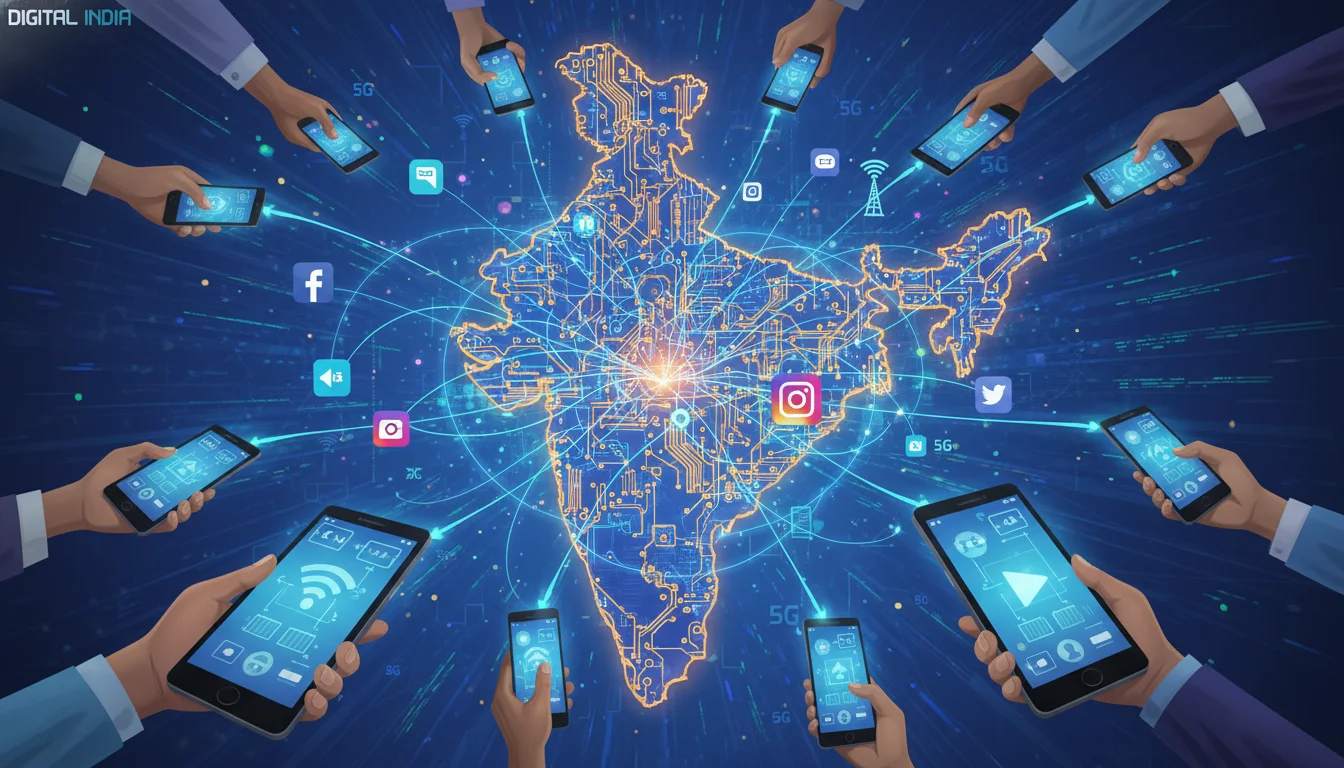
India boasts over 700 million active internet users as of 2023, a staggering figure that is fully expected to surpass 900 million by the year 2025. This connectivity is overwhelmingly mobile-first, heavily influencing how FMCG products, traditional beverages, and high-ticket consumer durables like water purifiers are researched, discovered, and ultimately purchased. Social media has effectively replaced the traditional physical storefront as the primary engine for product discovery. Current data indicates that nearly 80% of Indian shoppers now discover new products and brands via social platforms, entirely eclipsing traditional in-store shelf discovery mechanisms.
The popular platforms among the target audience reflect a highly fragmented but deeply engaging media diet. Engagement rates across these platforms vary significantly, dictating where brands should allocate their media budgets. In 2025, industry benchmark engagement rates reveal that TikTok and similar short-form video networks yield incredibly high engagement, hovering between 7% and 10%. YouTube maintains a solid, intent-driven engagement rate of 3% to 5%, while legacy text-based platforms like X (formerly Twitter) yield a mere 0.5% to 1%. Crucially, the influence of localized, authentic content cannot be overstated. Micro-influencers consistently outperform massive celebrity endorsements by a factor of 2x to 3x in terms of raw engagement metrics, and regional, vernacular content generated in native Indian languages generates 15% higher engagement than homogenized, English-only content. WhatsApp has also evolved from a mere peer-to-peer messaging application into a formidable enterprise tool, with the WhatsApp Business API serving as the backbone for automated customer relationship management, localized service booking, and D2C order tracking.
Consumer online behavior related to water purification and beverage companies reveals the complete fracturing of the traditional linear marketing funnel. The classic journey—from awareness to consideration, culminating in a physical store visit and purchase—has been replaced by a highly fragmented, non-linear, and digitally native pathway. Approximately 96% of Indian e-shoppers extensively research products online prior to purchase, and 46% utilize digital tools to check local inventory before committing to a physical store visit.
For the water purifier segment specifically, consumer behavior is heavily analytical and inherently risk-averse.
Nearly 70% of consumers conduct exhaustive online research before committing to a water purifier purchase. Because these systems represent high-involvement durable goods with direct implications for family health, prospective buyers seek out deep technical reviews, laboratory test results, comparative breakdowns (such as the highly searched “Kent RO vs Aquaguard” paradigm), and unboxing content on long-form platforms like YouTube. The search behavior in this sector is highly intent-driven and deeply localized. During system breakdowns, consumers immediately turn to search engines with localized queries such as “RO repair near me,” highlighting the urgent, direct-response nature of the lucrative aftermarket service and maintenance sector.
For the beverage segment, consumer behavior is distinctly bisected into “impulse” and “habitual” purchasing pathways. Impulse buys are increasingly dominated by the meteoric rise of Quick Commerce (Q-commerce) platforms such as Blinkit, Zepto, and Swiggy Instamart, which have revolutionized supply chain expectations by delivering groceries and beverages in under 10 to 30 minutes. Currently, an astounding 68% of urban consumers expect food and beverage products to arrive within a 30-minute window, effectively forcing brands to integrate deeply with these specific digital delivery ecosystems. Conversely, habitual purchases—such as weekly organic juice subscriptions, bulk mineral water deliveries, or specialized artisanal teas—are shifting heavily toward automated D2C websites. In these controlled digital environments, deep personalization, loyalty programs, and frictionless subscription models thrive, catering to the 76% of consumers who cite digital convenience as their primary motivation for bypassing traditional physical retail stores.
3. Digital Marketing Opportunities
The maturation of the digital ecosystem provides robust, highly measurable mechanisms to directly solve the core operational and financial challenges of both the water purification and beverage industries. By leveraging precision marketing, sophisticated data analytics, and automated communication protocols, brands can systematically bypass traditional distribution gatekeepers, radically lower their acquisition costs, and build highly predictable recurring revenue models.
The primary operational challenge for the water purification industry—managing the high cost of maintenance and combating post-purchase customer churn—can be effectively mitigated through predictive, retention-focused digital marketing. By utilizing automated Customer Relationship Management (CRM) systems tightly integrated with the WhatsApp Business API, brands can mathematically track the exact lifecycle and degradation curve of a customer’s RO membrane or UV lamp. Rather than waiting for the customer to experience a system failure, brands can deploy automated, highly personalized WhatsApp alerts precisely at the 6-month or 12-month mark. Including a frictionless, one-click “Book Service” button within the message drastically reduces churn and recaptures the lucrative aftermarket service revenue that is so frequently lost to unorganized, hyper-local third-party technicians.
For D2C beverage brands struggling to survive the crushing mathematics of tight margins and high logistics costs, the solution lies in a pivot away from broad demographic targeting toward sophisticated performance marketing and community-led growth strategies. Instead of deploying expensive, generalized brand-awareness campaigns, beverage brands must utilize data-driven personalization to target highly specific micro-segments. For example, deploying custom Meta (Facebook/Instagram) advertisements targeting lactose-intolerant urban professionals with oat-milk-based traditional Indian beverages, or targeting fitness enthusiasts with zero-calorie fortified waters. By subsequently integrating omnichannel loyalty programs across both their proprietary D2C websites and third-party Q-commerce platforms, brands can systematically increase the Customer Lifetime Value (LTV). Expanding the LTV is the only mathematically viable way to justify the initial Customer Acquisition Cost (CAC) in the modern FMCG landscape.
The best strategies for these sectors involve a holistic orchestration of SEO, Social Media, Paid Advertising, and Content Marketing, driven by empirical global and local case studies that demonstrate profound efficacy.
Paper Boat: “Blue Ocean” Storytelling Strategy
A premier example of the “Blue Ocean” storytelling strategy is the Indian beverage brand Paper Boat. Paper Boat executed a masterful, category-defining digital marketing strategy by entirely bypassing direct competition with global cola giants. Instead of competing on utility, hydration, or price, Paper Boat commoditized nostalgia. Their digital campaigns utilized a fiercely consistent, distinct visual identity that instantly evoked visceral childhood memories of traditional Indian summer drinks like Aam Panna and Jaljeera. By running highly targeted Facebook advertising campaigns aimed specifically at active e-commerce users who demonstrated a preexisting interest in premium FMCG products, they bypassed the insurmountable barriers of traditional offline retail distribution. They built a massive, emotionally invested cult following online before utilizing that leverage to scale to 48 SKUs and secure deeper offline distribution partnerships. The profound insight here is that highly emotive, culturally resonant digital content can artificially lower the cost of customer acquisition by generating massive organic shareability and earned media.
Vahdam Teas: Visual Consistency and Cross-Border D2C
In the realm of visual consistency and cross-border D2C execution, Vahdam Teas stands as a monumental success story. Vahdam disrupted the archaic, middleman-heavy tea and beverage supply chain by establishing itself as a digitally native, vertically integrated brand. Their marketing strategy relied heavily on Instagram, cultivating a visually striking, undeniably premium aesthetic that appealed equally to affluent consumers in India, the United States, and Europe. By rigorously optimizing their creative digital assets for a sophisticated global audience, Vahdam improved their Click-Through Rate (CTR) by 30% and simultaneously reduced their Cost Per Acquisition (CPA) by 20% across Meta’s advertising platforms. Furthermore, Vahdam displayed advanced technical marketing prowess by utilizing Web Push Notifications to re-engage users who had abandoned their shopping carts, achieving an astonishing 91.7X Return on Investment (ROI) on that specific, highly targeted channel.
The Perfect Water: Omnichannel Journey Unification
The concept of omnichannel journey unification is beautifully illustrated by the digital growth of The Perfect Water. Recognizing the fragmentation of modern consumer behavior, The Perfect Water utilized a unified marketing approach to meticulously map and control the entire consumer journey. Rather than managing paid search, organic SEO, and social media advertising in isolated silos, they strategically linked every digital touchpoint. High-intent Google Search advertisements were deployed to move users smoothly from the research phase into the active consideration phase. Once in the consideration phase, reliable, trust-building messaging was deployed via multi-platform retargeting. This holistic, structurally integrated approach resulted in a 28% increase in multichannel engagement, a 34.79% boost in overall revenue, and a remarkable 38% increase in their website conversion rate, driven by rigorous, data-led A/B testing.
Brita: Global Market Leadership Through Hybrid Strategy
On a broader, global scale, Brita maintains its formidable market leadership in water filtration through an aggressive hybrid digital-traditional strategy that Indian brands would do well to emulate. In 2024, Brita deliberately increased its digital advertising expenditure by 15%, heavily prioritizing Search Engine Optimization (SEO), high-value content marketing, and deep social media engagement, which subsequently rose by 10%. They accurately recognized the permanent shift in consumer purchasing behavior, focusing intently on their proprietary e-commerce channels. This digital-first focus is projected to contribute 40.6% of their total market share by 2025, generating USD 11.8 million directly from their primary domain. Brita’s content strategy explicitly highlights the intersection of personal health and environmental sustainability, directly addressing the modern consumer’s growing eco-anxiety regarding single-use plastic bottles.
4. Competitive Analysis
A rigorous, empirical analysis of the digital posturing of top Indian brands within these sectors reveals distinct vulnerabilities, overlapping strategies, and massive strategic opportunities for new market entrants, agile startups, or aggressive market challengers.
The Indian water purifier landscape is a fiercely contested oligopoly, historically dominated by monolithic legacy brands such as Eureka Forbes (Aquaguard), Kent RO Systems, Hindustan Unilever (Pureit), Livpure, and A.O. Smith. Historically, Eureka Forbes overtook Kent RO by aggressively leveraging an immense direct-to-home physical sales force (which accounted for over 60% of RO sales at its peak) and adopting a slightly lower, highly penetrative pricing strategy. However, as the battlefield has definitively shifted to the online arena, both brands have been forced to pivot their positioning. A detailed perceptual mapping analysis of the industry reveals a distinct, highly calcified positioning divide. Brands like Pureit and Aquaguard are positioned heavily on the “affordability” and “mass-market” axis, catering to the vast, price-sensitive demographic. Conversely, Kent RO has successfully insulated its margins by positioning itself strictly on the “premium” axis, scoring highest in consumer perception regarding operational reliability and technological superiority.
The digital content strategies of these titans reflect their respective market positions.
On visual platforms like YouTube, there is a staggering volume of user-generated content, affiliate marketer comparison videos, and deep-dive technical reviews (e.g., the perpetually trending “Kent Grand RO vs Aquaguard Delight” search queries). Shrewd brands capitalize on this specific search behavior by quietly sponsoring tech reviewers to break down complex topics such as TDS (Total Dissolved Solids) controllers, the scientific debate between UV and RO filtration, and long-term maintenance cost projections.
In the beverage space, legacy brands such as Bisleri and Coca-Cola’s Kinley are facing fierce, asymmetric digital competition from agile D2C startups. While legacy brands rely almost entirely on their massive, capital-intensive offline physical distribution networks and traditional supply chains, D2C brands like Raw Pressery, Paper Boat, and Vahdam rely on hyper-targeted performance marketing, aggressive influencer seeding, and immediate, data-rich feedback loops to iterate rapidly on consumer tastes and preferences.
Despite the dominance of these market leaders, profound gaps and lucrative opportunities exist to outperform them.
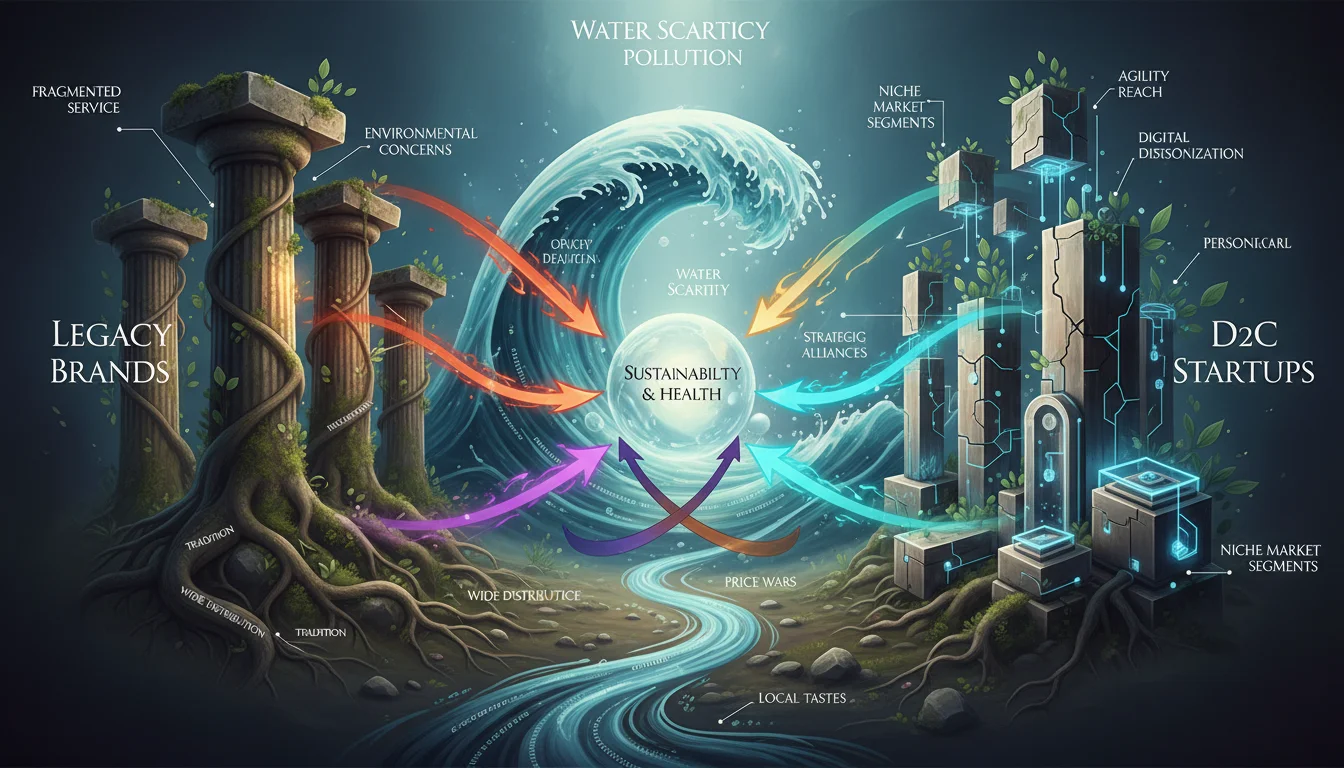
First, there is a massive, unexploited Environmental Gap in the water purifier market. An objective analysis reveals a complete lack of alignment with environmental friendliness among the top brands. While Indian consumers are becoming increasingly eco-conscious, leading brands like Aquaguard, Pureit, and A.O. Smith have fundamentally failed to successfully integrate environmental sustainability into their core digital messaging or product development. Given that standard RO systems are notorious for wasting significant amounts of water during the filtration process, a nimble challenger brand that heavily markets a proprietary “zero-water-waste” technology, or launches a robust, highly visible environmental CSR initiative via digital channels, could capture significant market share from ethically motivated consumers.
Second, the Overlapping Mass-Market Positioning of giants like Pureit and Aquaguard creates a structural vulnerability. Because both brands suffer from extreme brand overlap in the affordable segment, they are frequently forced into destructive, head-to-head price wars that erode margins. This lack of premium differentiation opens a lucrative window for highly niche, targeted brands. For example, a brand explicitly targeting “Smart Home Enthusiasts” with heavily designed, IoT-enabled purifiers, or a brand focusing exclusively on high-aesthetic, under-the-counter (UTC) minimalist designs, could easily dominate the premium, high-margin urban demographic without ever engaging in a price war with the legacy titans.
Third, the Local Aftermarket Fragmentation presents perhaps the most immediate digital opportunity. The aftermarket repair and service sector is incredibly fragmented and highly disorganized. While major national brands aggressively push their official, often highly-priced Annual Maintenance Contracts (AMCs), millions of users actively search for localized, third-party repairs to save money (e.g., executing localized searches like “RO service near me” or “water purifier repair Bangalore”). Small to mid-sized local service companies can completely dominate their respective local digital ecosystems by outbidding national brands on highly localized Google Ads and maintaining flawless, highly reviewed Google My Business profiles—a hyper-local operational area where massive, centralized national brands structurally struggle to compete.
5. Recommended Strategy for the Indian Market
To successfully capture and defend market share in this high-growth, high-stakes environment, brands must abandon generalized marketing and adopt a highly targeted, precision-led omnichannel digital strategy that respects the deep nuances, economic realities, and cultural specificities of the modern Indian consumer.
Target Audience Personas
Understanding the distinct psychological and economic drivers of specific consumer segments is the foundation of any successful digital intervention.
Persona 1: The Health-Conscious Urban Millennial (Beverages & Premium Purifiers)
- Demographics: Individuals aged 19 to 35, residing primarily in high-density Tier 1 metropolitan areas such as Delhi, Mumbai, and Bangalore.
- Economic Profile: Upper-middle class, characterized by dual-income households with steadily rising discretionary disposable income.
- Preferences and Psychographics: This demographic views both water consumption and beverage selection through the highly curated lens of holistic wellness and lifestyle aesthetics. For water purification, they explicitly prefer advanced systems offering mineral-added or alkaline functionalities, typically gravitating toward models priced significantly above ₹15,000. Furthermore, they display a strong aesthetic preference for minimalist, space-saving under-the-counter (UTC) designs that align with modern modular kitchen architecture. In the beverage category, they are fiercely demanding regarding transparency, demanding clean labels, organic ingredients, and functional benefits. They are highly impatient, heavily utilizing Q-commerce applications for immediate, sub-30-minute delivery fulfillment.
- Digital Behavior: They are exceptionally active on highly visual platforms like Instagram and YouTube. Crucially, they exhibit profound skepticism toward traditional corporate advertising, placing immensely higher trust in the authentic recommendations of specialized micro-influencers.
Persona 2: The Value-Driven Suburban Family (Mass-Market Purifiers & Habitual Beverages)
- Demographics: Individuals aged 35 to 55, residing in rapidly expanding Tier 2 cities and upwardly mobile semi-urban/rural areas.
- Economic Profile: The core Indian middle class, highly sensitive to inflation and long-term capital depreciation.
- Preferences and Psychographics: For this persona, sheer utility, product longevity, and the Total Cost of Ownership (TCO) are paramount. They require heavily fortified, robust RO systems capable of handling the heavily contaminated, high-TDS (Total Dissolved Solids) municipal or borewell water prevalent in their regions. They are highly pragmatic buyers, exceptionally responsive to strategic discounts, bundled offers, and comprehensive extended warranty plans that mitigate future financial risk.
- Digital Behavior: Their digital footprint is heavily concentrated on Facebook and WhatsApp. They conduct extensive, cautious research on Google prior to large capital expenditures and rely heavily on digital peer reviews, local community forums, and the trusted recommendations of hyper-local technicians.
Recommended Channels and Campaign Types
To effectively reach these distinct personas, brands must deploy a calibrated mix of digital channels.
- 1. Search Engine Optimization (SEO) & High-Intent Search Ads: This is the bedrock for capturing consumers at the very bottom of the purchasing funnel. For water purifiers, this translates to ruthlessly dominating exact-match, transactional keywords for “best RO purifier” and deploying highly aggressive local search advertisements specifically designed to capture immediate installation, service, and repair intent.
- 2. Quick Commerce (Q-Commerce) Native Advertising: For beverage brands, relying solely on traditional e-commerce platforms or physical retail is no longer sufficient. Brands must aggressively allocate marketing budget to native advertising within rapid-delivery apps like Zepto, Blinkit, and Instamart to intercept and capture the highly lucrative impulse-buyer segment at the exact moment of physiological need.
- 3. WhatsApp Business API Integration: This is a mission-critical infrastructure requirement for both sectors. Water purifier brands must utilize the API to fully automate routine service reminders, process complex warranty claims, and facilitate frictionless direct technician bookings, thereby locking the consumer into their proprietary service ecosystem. Beverage brands can utilize the exact same infrastructure for automated subscription renewals, highly personalized promotional broadcasts, and managing post-purchase customer feedback loops.
- 4. Influencer and Affiliate Marketing: This requires a bifurcated approach. Water purifier brands should partner with highly technical, authoritative reviewers on YouTube to empirically demonstrate the efficacy of their systems through live TDS tests, internal component breakdowns, and transparent unboxing videos. Beverage brands should partner with health, fitness, and lifestyle micro-influencers on Instagram to organically and aesthetically integrate their healthy beverages into desirable daily routines.
Content Ideas Specific to the Industry
Content must transcend basic product promotion and aim to establish the brand as a culturally relevant, authoritative voice.
- The “Invisible Threat” Educational Series: Brands should produce high-quality, data-driven infographics and highly produced short-form videos detailing the hidden, microscopic dangers of high TDS and microbiological contaminants in local municipal water supplies. By weaponizing data, the brand elevates itself from a mere appliance vendor to a trusted public health authority.
- Nostalgia & Heritage Campaigns: Borrowing heavily from Paper Boat’s phenomenally successful playbook, modern beverage brands should create highly emotive, cinematic digital campaigns that deeply connect indigenous, traditional ingredients (e.g., turmeric, kokum, specialized regional teas) with cultural heritage and modern, scientifically backed wellness.
- Transparent Maintenance Videos: Brands should produce highly polished, step-by-step video tutorials showing consumers exactly how to clean external purifier parts, recognizing when to change vital filters, and demonstrating how to verify water purity at home using inexpensive TDS meters.
This radical transparency builds immense consumer trust, demystifies the product, and significantly reduces the operational overhead associated with basic customer support queries.
Budget-Friendly Digital Marketing Approaches
For emerging challenger brands, specialized local repair services, or regional beverage startups, multi-million rupee marketing budgets are entirely unnecessary if surgical precision is applied to their digital strategy.
- Hyper-Local Landing Pages: Instead of investing massive capital into building complex, bloated corporate websites, regional businesses should create highly specific, lightning-fast landing pages tailored to distinct, hyper-local neighborhoods (e.g., creating a dedicated page titled “Gaur City RO Repair and Service”). When paired with tightly geofenced Google Search Ads, this strategy yields exceptional ROI by eliminating wasted ad spend on unqualified, out-of-territory clicks.
- Google My Business (GMB) Optimization: A fully optimized, meticulously maintained GMB profile backed by a continuous stream of authentic customer reviews remains the single most potent, entirely free lead-generation tool for localized water purification sales and aftermarket service brands.
- User-Generated Content (UGC) Amplification: Brands should systematically incentivize their existing, highly satisfied customers to post authentic reviews or unboxing videos on their personal social feeds in exchange for tangible rewards, such as warranty extensions on durables or substantial discounts on recurring beverage subscriptions. This UGC serves as highly effective, low-cost, inherently trustworthy creative material that can be repurposed for paid social advertising campaigns.
Keywords & SEO Opportunities
A dominant, unshakeable organic search presence is non-negotiable in an industry where 70% of consumers conduct pre-purchase research. An effective, modern SEO strategy must move beyond simplistic keyword stuffing and target both high-volume informational queries (to capture top-of-funnel awareness) and low-volume, hyper-specific transactional queries (to capture bottom-of-funnel conversions).
High-Intent Keywords for Ranking
High-intent keywords mathematically indicate that a user is in the final, decisive stages of the consideration funnel and is prepared to transact immediately. Ranking for these terms requires robust, technically flawless product pages, highly transparent pricing structures, and an optimized, frictionless UI/UX that facilitates immediate checkout.
- reverse osmosis filter: Estimated Search Volume: 165,000, User Intent: Transactional / Research, Strategic Value: High volume, requires deep educational content to convert.
- water filtration system:000, User Intent: Transactional / Research, Strategic Value: Broad appeal, requires strong category landing pages.
- whole house water filter: Estimated Search Volume: 135,000, User Intent: Transactional, Strategic Value: High ticket value, target affluent suburban homeowners.
- water purifier price: Estimated Search Volume: 33,100, User Intent: Transactional, Strategic Value: Extreme bottom-funnel. Must display immediate price comparisons.
- best water purifier online: Estimated Search Volume: High (Trend-based), User Intent: Transactional, Strategic Value: Critical for e-commerce dominance. Requires strong third-party reviews.
Long-Tail Keyword Opportunities (India-Specific)
While national giants battle for the expensive, high-volume keywords, long-tail keywords are where regional battles are quietly won, and where massive ROI is generated. These queries are highly specific, carry significantly lower competition, and exhibit vastly superior conversion rates because they perfectly match the user’s highly specific intent.
- “best RO water purifier under 15000”: Develop a dedicated, comprehensive “Best of” blog post or interactive comparison matrix landing page catering specifically to the rigid budget constraints of the Indian middle class.
- “RO service near me”: Crucial for local repair businesses. Aggressively optimize local GMB profiles and deploy hyper-local Google Search Ads with immediate “Call Now” extensions.
- “RO repair [City Name]”: E.g., “Kent RO repair Bangalore.” Create highly specific geo-targeted landing pages for every major metropolitan area in the operational radius.
- “water purifier not dispensing water”: Create high-quality troubleshooting blog content or YouTube technical tutorials. Capture the frustrated user via a targeted CTA offering a heavily discounted immediate service visit.
- “buy water purifier in India”: Optimize the primary domain homepage and all sub-category pages with localized schema markup to communicate geographical relevance directly to search engine crawlers.
Strategic Note on Implementation: Modern algorithms actively penalize keyword stuffing. Brands must employ advanced semantic SEO and topic clustering methodologies. Rather than producing dozens of disjointed articles, brands must create a massive, centralized “Pillar Page” (e.g., an exhaustive 3000-word guide titled “The Ultimate Guide to Water Purification Technologies in India”) and interlink it with dozens of specialized, highly focused cluster articles addressing specific long-tail queries. This structural approach establishes insurmountable domain authority over time.
Implementation Roadmap
Achieving total digital dominance in the water purification and beverage sectors requires phased, disciplined, and highly methodical execution. It is impossible to win on all fronts simultaneously. The following strategic roadmap outlines a highly structured 12-month timeline for brands seeking to sustainably scale their digital operations and capture measurable market share.
Phase 1: Short-Term Quick Wins and Infrastructure Hardening (Months 1–3)
Objective: Establish foundational technical infrastructure, capture existing high-intent local demand, and achieve immediate, verifiable ROI to fund future expansion.
- Comprehensive Technical Infrastructure Audit: Before driving traffic, the destination must be flawless. Conduct a rigorous overhaul of the website’s UI/UX to ensure sub-3-second mobile load times, as Indian consumers will abandon slow sites immediately. Ensure the underlying platform architecture can handle seamless e-commerce transactions, secure payment gateways, and highly optimized lead-capture forms without errors.
- Hyper-Local SEO & Google My Business Dominance: Claim, mathematically verify, and aggressively optimize Google My Business profiles across all physical distribution nodes or service territories. Proactively seed initial positive reviews by directly soliciting feedback from existing, highly satisfied clients via automated SMS or email.
- Direct-Response Advertising Deployment: Launch highly targeted, tightly constrained Google Search campaigns directed exclusively at single-focus landing pages (e.g., targeting the query “Emergency RO repair Pune”). Ensure the Call to Action (CTA) is immediate, frictionless, and mobile-friendly (e.g., “Call Now” or “Book via WhatsApp”).
- Aggressive Q-Commerce Onboarding: For beverage brands, traditional retail takes months to negotiate. Prioritize immediate digital onboarding with ultra-fast delivery platforms like Blinkit, Zepto, and Instamart. Initiate small-scale, highly optimized native advertising campaigns within these specific platforms to intercept and capture impulse search traffic.
Phase 2: Medium-Term Growth and Ecosystem Expansion (Months 4–6)
Objective: Expand top-of-funnel brand awareness, build irrefutable social proof, and automate customer retention mechanics.
- Video-First Social Media Activation: Shift entirely away from static, basic posting to an aggressive, video-first strategy utilizing Instagram Reels and YouTube Shorts. For water purifiers, focus relentlessly on educational, “show-don’t-tell” content (e.g., live TDS testing of competitor water). For beverages, focus on high-end lifestyle integration, recipe generation, and establishing aesthetic superiority.
- Micro-Influencer Seeding and Affiliate Structuring: Begin systematic collaborations with highly vetted micro-influencers (ranging from 10k to 50k highly engaged followers). Supply them with the product and rigorously track their conversion efficacy via unique affiliate discount codes to measure the exact CPA of each influencer relationship.
- WhatsApp Automation and CRM Integration: Deploy the WhatsApp Business API to fully automate the post-purchase customer journey. Set up automated algorithmic triggers for filter replacement reminders, warranty expirations, or beverage subscription renewals. This automated, personalized communication actively reduces churn and maximizes LTV without requiring human customer support intervention.
Phase 3: Long-Term Strategy and Market Consolidation (Months 7–12)
Objective: Achieve total omnichannel integration, drive massive market share expansion, and build an unassailable community moat.
- Advanced Content Marketing & Semantic SEO Scaling: Roll out comprehensive, heavily researched topic clusters based on the keyword analysis. Begin aggressively ranking organically for high-volume, highly competitive industry terms by systematically out-publishing legacy competitors with superior, data-rich, formatting-optimized content.
- Unified Omnichannel Journeys and Data Merging: Achieve the holy grail of retail: integrating offline and online behavioral data. If a customer buys a single beverage in a physical retail store, incentivize them via on-pack QR codes to join a digital loyalty program. This mathematically shifts their next, inevitable purchase to the significantly higher-margin D2C website, bypassing retail margins entirely.
- Relentless A/B Testing & Conversion Rate Optimization (CRO): Move from intuition-based marketing to purely statistical marketing. Continuously test and refine landing page copy, ad creatives, color psychology, and cart checkout flows.
Small, scientifically proven incremental improvements in conversion rates (e.g., systematically reducing friction as demonstrated by The Perfect Water’s staggering 38% conversion lift) compound over time, resulting in massive long-term revenue gains and a structurally lower CAC.
Conclusion
The Indian market for water purification and fast-moving consumer beverages is currently undergoing a profound, irreversible digital metamorphosis. As archaic, traditional physical retail funnels permanently fragment and modern consumer product discovery shifts almost entirely to social media algorithms, intent-driven search engines, and hyper-fast quick-commerce platforms, analog marketing strategies are no longer merely inefficient; they are an existential threat to business survival.
For water purifier brands, sophisticated digital marketing is the only infinitely scalable mechanism available to educate cautious consumers on complex health and technical metrics. It is the primary weapon to differentiate agile brands from deeply entrenched, well-capitalized legacy competitors, and it serves as the essential infrastructure required to seamlessly manage the highly lucrative, yet logistically complex, aftermarket repair and maintenance lifecycle. Without a digital strategy, purifier brands are doomed to compete solely on physical distribution and price—a race to the bottom.
For modern beverage brands, mastering digital performance marketing and achieving total omnichannel integration is an absolute, non-negotiable necessity. It is the only mathematical way to overcome razor-thin gross margins, continuously lower acquisition costs through data optimization, and build enduring, emotionally resonant brand equity in a hyper-competitive, easily commoditized D2C landscape.
Success in this unforgiving, high-velocity environment requires immense technical precision, rapid creative agility, and deep, systemic data integration across all operational touchpoints. Brands that fail to rapidly adopt these advanced digital ecosystems will swiftly and permanently lose market share to digitally native, highly aggressive challengers who intimately understand how to capture algorithmic intent, ruthlessly reduce consumer friction, and automate long-term customer retention.
To successfully execute a digital transformation of this immense magnitude and complexity, partnering with a highly specialized, technically proficient technology and marketing firm is highly recommended. Gurkha Technology, a leading digital marketing company operating out of Nepal, provides the exact technical architecture, strategic foresight, and creative infrastructure required to rapidly scale brands within the highly complex, cutthroat South Asian markets.
Gurkha Technology offers a comprehensive, battle-tested suite of services specifically tailored for the exponential growth of FMCG and consumer durable brands:
- Advanced SEO & Semantic Content Strategy: Utilizing cutting-edge semantic SEO principles, deep topic clustering, and advanced structured data markup to ensure maximum organic visibility and sustained ranking dominance for high-intent, highly lucrative search queries.
- Precision Performance Advertising: Expert, mathematically driven management of Google Ads and massive Meta platform campaigns, focusing relentlessly on rigorous conversion rate optimization, multivariate A/B testing, and continuously driving down the Cost of Customer Acquisition (CAC).
- Enterprise Web Development & UI/UX Design: Architecting and building lightning-fast, infinitely scalable, and visually immersive e-commerce platforms and high-converting, hyper-local landing pages that serve as flawless, 24/7 automated sales engines.
- Social Media Management & Brand Identity Curation: Crafting compelling, highly emotive visual narratives and managing highly engaging, community-driven social ecosystems (including complex Meta verification protocols and high-engagement TikTok advertising strategies) to build lasting, unshakeable consumer trust and brand loyalty.
By leveraging the elite digital execution capabilities, deep regional market understanding, and technical prowess of Gurkha Technology, ambitious water purification and beverage brands can successfully bridge the perilous gap between theoretical market potential and sustainable, highly profitable, long-term operational growth.