Digital Marketing for Indian Banks Report 2026
Industry Overview
The Banking, Financial Services, and Insurance (BFSI) sector in India represents one of the most dynamic and rapidly evolving economic ecosystems globally. As of early 2026, the industry is navigating a profound transformation, moving decisively from traditional, branch-centric operational models toward agile, digitally-native architectures. This landscape encompasses a highly diversified mix of public sector banks, private sector institutions, foreign banks, small finance banks, non-banking financial companies (NBFCs), and a burgeoning fintech sector that currently ranks as the third-largest globally, boasting over 10,000 recognized startups. The integration of advanced digital public infrastructure—most notably the Unified Payments Interface (UPI), the Account Aggregator (AA) framework, and the Open Credit Enablement Network (OCEN)—has democratized financial access, creating a massive new consumer base for financial products ranging from micro-credit to premium wealth management.
The current market size and growth trajectories reflect a sector in robust expansion. The Indian retail banking market, a critical pillar of the BFSI ecosystem, generated revenues of USD 113.5 billion in 2024 and is projected to nearly double to USD 216.2 billion by 2033, expanding at a Compound Annual Growth Rate (CAGR) of 7.5%. Within this space, private sector banks currently generate the highest revenue, although public sector banks are registering the fastest growth rates. Concurrently, the BFSI Business Process Outsourcing (BPO) services market in India is forecast to grow from USD 4.10 billion in 2024 to USD 7.32 billion by 2033 at a CAGR of 6.70%, driven by an acute industry need for cost-effective automation, risk management, and customer experience enhancement.
Macroeconomic indicators from the final quarters of the 2024–2025 fiscal year underscore the sheer scale of the banking sector, which reported total assets of INR 252 trillion and generated interest income of INR 19 trillion. Total deposits scaled to INR 224 trillion, while total bank credit stood at INR 179 trillion. Underlying this aggregate growth is a distinct structural shift in credit demand. The market is witnessing a pronounced migration from unsecured lending to secured products, with gold loans surging by 44.1% Y-o-Y and auto loans growing by 14.6% Y-o-Y, significantly outpacing the 11.6% growth in personal loans and 1.6% growth in credit card outstanding balances. Furthermore, there is a clear trend of “premiumization” across lending categories. The average ticket size for home loans jumped to ₹33 lakh, and the share of mortgage loans exceeding INR 3.5 million surged to 68.9% in the first half of fiscal 2026, up drastically from 46.7% in fiscal 2020. The private credit market also experienced explosive growth, recording USD 12.4 billion across 166 transactions in calendar year 2025, representing a 35% growth in value over the previous year. Concurrently, the government’s financial inclusion mandates continue to drive massive volume; the Pradhan Mantri Jan Dhan Yojana (PMJDY) successfully opened 57.78 crore accounts by early 2026, amassing deposits of ₹2.94 lakh crore, thereby laying the foundation for broad-based financial inclusion.
Despite these formidable growth metrics, the industry is grappling with severe, multifaceted challenges that threaten long-term profitability and operational stability. Foremost among these is acute margin compression. Recent data indicates that the Net Interest Margin (NIM) for banks fell by 21 basis points Y-o-Y, driving a corresponding decrease in the Return on Assets (RoA) by 8 basis points to 1.34%. This profitability squeeze is exacerbated by rising operating expenses, reflected in a 50 basis point worsening of the cost-to-income ratio for Scheduled Commercial Banks (SCBs). Lenders are locked in a fierce battle to mobilize low-cost Current Account and Savings Account (CASA) funds, as systemic credit growth continues to aggressively outpace deposit accumulation.

Beyond financial metrics, regulatory compliance and technological risks present formidable hurdles. The Reserve Bank of India (RBI) has instituted increasingly stringent frameworks governing digital operations and marketing. For instance, the RBI’s Digital Lending Directions of 2025 mandate explicit, revocable borrower consent for data collection, require comprehensive privacy policies, and stipulate that all data processed offshore must be deleted and restored to Indian servers within 24 hours. Furthermore, institutions are tasked with navigating the complexities of integrating Artificial Intelligence (AI) safely, managing third-party operational risks, and combating escalating cybersecurity threats.
A particularly pressing challenge lies in the realm of consumer protection and digital ethics. Aggressive cross-selling and poorly designed digital interfaces have led to the proliferation of “dark patterns”—deceptive UI/UX designs that trick users into unintended actions, such as enrolling in unwanted insurance policies or recurring services. In response, the RBI has mandated that all banks must ensure their digital platforms are entirely free of dark patterns by July 2026. This regulatory pivot highlights a broader industry crisis of trust; the RBI has noted that unresponsive customer support, inadequate grievance resolution, and persistent app glitches remain the primary pain points for users of fintech and banking applications.
Digital Landscape in India (Contextual to the Industry)
Understanding the digital behavior of the Indian consumer is the foundational prerequisite for any successful BFSI marketing strategy. The nation’s digital ecosystem is expanding at an unprecedented rate, fueled by a concerted governmental and private sector push toward a USD 1 trillion digital economy by 2025–2028. This infrastructure expansion has fundamentally altered how financial products are discovered, evaluated, and consumed.
At the onset of 2025, India recorded 1.12 billion active cellular mobile connections, representing 76.6% of the total population, alongside 806 million active internet users, yielding an online penetration rate of 55.3%. Social media identities reached 491 million, capturing 33.7% of the total population, with a demographic split indicating a strong male dominance at 65.5% compared to 34.5% female. The financial implications of this connectivity are profound. Digital advertising has consolidated its position as the largest advertising medium in India, surpassing traditional television. In the 2024 fiscal year, digital advertising reached a valuation of ₹40,800 crore, accounting for 41% of total advertising expenditure, with projections for FY25 estimating a rise to ₹48,900 crore, or 44% of total ad spend. Crucially, 78% of this digital media spend is allocated directly to mobile platforms, underscoring the absolute necessity for mobile-first financial marketing strategies.
Indian Digital Ecosystem Metrics (Early 2025)
- Active Internet Users: 806 Million (55.3% Penetration)
- Cellular Mobile Connections: 1.12 Billion (76.6% Penetration)
- Active Social Media Identities: 491 Million (33.7% Penetration)
- Digital Advertising Spend (FY24): ₹40,800 Crore
- Mobile Share of Digital Ad Spend: 78%
The digital platforms dominating the Indian landscape dictate the channels through which BFSI brands must operate. Meta’s properties, specifically Facebook and Instagram, maintain unparalleled reach, each capturing approximately 25% of the total population. YouTube remains a critical hub for long-form educational content, while LinkedIn is essential for corporate banking and high-net-worth individual (HNI) targeting. Furthermore, messaging applications, primarily WhatsApp, have evolved beyond peer-to-peer communication to become foundational channels for conversational commerce and customer servicing.
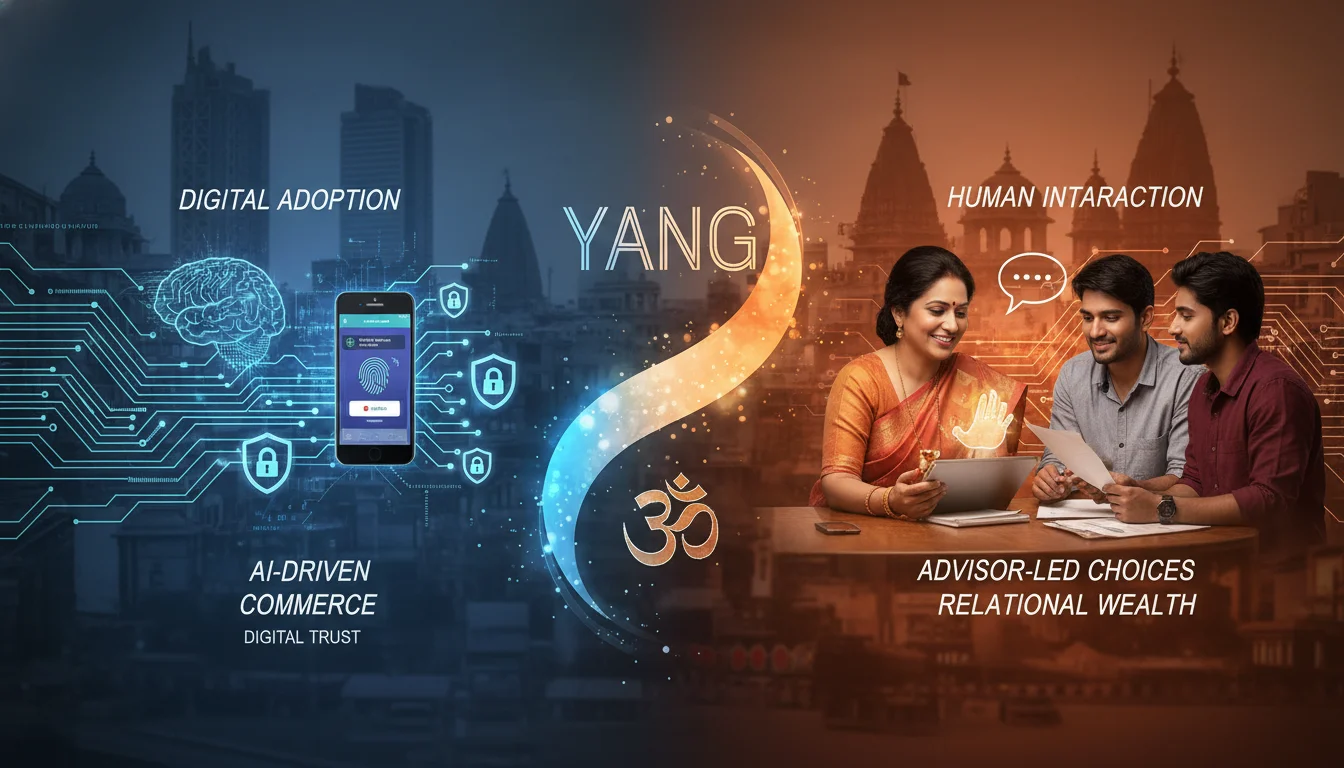
Consumer online behavior regarding financial services reveals a complex dichotomy: Indian consumers exhibit an incredibly high willingness to adopt new technologies, yet they retain a deep-seated demand for human reassurance when making financial decisions. A 2024 EY Future Consumer Index study illuminated this paradox, revealing that 62% of Indian consumers have made purchases influenced by AI recommendations—more than double the global average of 30%. However, this technological embrace is shadowed by intense anxiety regarding data security; 77% of consumers expressed profound concern about the possibility of data breaches, and 73% worry about their private information being disclosed. Consequently, the desire for human connection remains overwhelmingly strong. The report revealed that 78% of consumers prefer to shop on online platforms that provide human customer service support, and 61% are more inclined to share personal information with a human rather than through automated processes.
Generational cohorts display starkly divergent banking behaviors.
The youth segment, comprising Gen Z and Millennials, accounts for over 50% of India’s population and is driving a massive shift toward digital-only platforms. Over two-thirds of Gen Z and Millennials in India currently utilize neo-banks, prioritizing convenience, seamless UI/UX, and digital agility. For these demographics, the legacy and reputation of traditional banks—historically the cornerstone of financial trust—was ranked as the top priority by merely 3% of respondents. Furthermore, brand loyalty is highly transient among younger consumers; 31% of urban Indians claim to have changed their primary bank in the past five years, with millennials acting as the most visible switchers. They migrate primarily in search of better digital convenience, superior interest rates, and integrated rewards ecosystems. Despite their digital fluency, 42% of Gen Z users find current financial application user interfaces lacking, and only 7% trust traditional bank representatives for financial advice, indicating a massive gap in how traditional institutions engage the next generation of wealth creators.
Digital Marketing Opportunities
In an era characterized by compressed net interest margins and escalating operational costs, digital marketing offers the exact strategic levers required to solve the BFSI sector’s most pressing challenges. Traditional, branch-based customer acquisition is highly capital-intensive and geographically constrained. By deploying targeted, data-driven digital strategies, financial institutions can dramatically lower their Customer Acquisition Cost (CAC), mobilize CASA deposits at scale, and effectively cross-sell high-margin secured lending products. The transition to digital channels enables banks to shift from reactive service provision to proactive, hyper-personalized engagement.
Best Strategies for Indian BFSI Businesses
The most effective digital marketing strategies for Indian financial institutions in 2026 require a sophisticated blend of technological automation, rigorous regulatory compliance, and authentic storytelling.
The evolution of Search Engine Optimization (SEO)
The evolution of Search Engine Optimization (SEO) dictates that financial institutions must adopt a “Search Everywhere Optimization” methodology. SEO in the BFSI sector is highly regulated, falling under Google’s “Your Money or Your Life” (YMYL) category. Consequently, algorithms heavily weigh E-E-A-T (Experience, Expertise, Authoritativeness, and Trustworthiness). Marketing teams must produce high-quality, legally vetted thought leadership—such as whitepapers on treasury management or comprehensive guides on MSME cash flow—to rank organically. For regional and rural banking penetration, hyper-local SEO remains crucial for driving foot traffic to physical branches for complex advisory services.
Conversational AI and WhatsApp banking
Conversational AI and WhatsApp banking represent the most significant paradigm shift in customer engagement for 2026. The industry has moved beyond simple cost-saving chatbots to “Agentic Commerce,” where AI agents act as proactive growth engines. Advanced conversational AI platforms can securely authenticate clients within a chat interface, retrieve account balances, detect and escalate fraud alerts, and process loan upgrade requests in under 60 seconds. However, to satisfy the 78% of Indian consumers demanding human support, banks must deploy a hybrid model. AI should handle routine triage and immediately seamlessly escalate high-stakes or emotionally sensitive interactions to human advisors, passing along the full conversational context to avoid customer frustration.
Influencer marketing
Influencer marketing remains a highly potent tool for the BFSI sector, capable of generating a 30% increase in new account openings and a 40% growth in insurance policy purchases. However, the regulatory environment has tightened dramatically. The Advertising Standards Council of India (ASCI) has enforced strict guidelines requiring mandatory, clear disclosures for any sponsored content, penalizing influencers heavily for non-compliance. An April 2025 addendum to the ASCI guidelines specifically targets the health and finance sectors, mandating that any influencer providing advice in the BFSI space must hold verifiable qualifications and certifications. Furthermore, the Securities and Exchange Board of India (SEBI) instituted rules in July 2025 that ban unregistered influencers from providing direct investment advice, mandate standard disclaimers, and require audit trails for sponsored content. Therefore, financial brands must pivot their strategies to collaborate exclusively with SEBI-registered professionals, focusing campaigns on financial literacy and brand building rather than direct, aggressive product promotion.
Experiential and “phygital” marketing strategies
Experiential and “phygital” marketing strategies are also gaining immense traction. As digital fatigue sets in, brands are bridging the gap between digital convenience and physical trust by hosting live events, community-building initiatives, and utilizing physical spaces augmented by digital interfaces to foster long-term brand affinity.
Local and Global Case Studies
The Indian market provides several compelling case studies demonstrating the efficacy of these strategies. HDFC Bank, India’s leading private sector bank, successfully executed the “#StartDoing” campaign, which utilized a multi-channel digital approach to target goal-oriented consumers. By combining performance marketing for loan and card acquisition with extensive social media community engagement, the campaign effectively drove online applications while reinforcing the bank’s market-leading reputation.
ICICI Bank and RBL Bank have demonstrated the power of premiumization and seasonal digital campaigns. ICICI Bank successfully launched its “Expression Cards” and “Gemstone Cards” through highly personalized, lifestyle-oriented digital storytelling that resonated deeply with premium consumer segments. Similarly, RBL Bank ran a highly successful Valentine’s Day campaign utilizing the hashtag #OffersKaPyaar. By amplifying credit card offers through targeted digital channels, the campaign achieved a 2.5x increase in organic reach and a 1.5x increase in overall engagement.
Within the NBFC and SME lending space, FlexiLoans utilized a series of short, animated explainer videos on social media to demystify the borrowing process, successfully building trust and driving engagement among SME owners seeking collateral-free loans. Purnartha, a SEBI-registered equity investment advisor, effectively deployed targeted paid advertising to generate high-intent B2B leads, demonstrating the viability of performance marketing in the highly regulated wealth management sector.
Competitive Analysis
An exhaustive analysis of the digital presence of India’s top financial institutions reveals distinct strategic postures, inherent strengths, and critical vulnerabilities that agile competitors can exploit. The digital battleground is fiercely contested by public sector behemoths like the State Bank of India (SBI) and private sector innovators such as HDFC, ICICI, and IDFC FIRST Bank.
Current Digital Presence and Strengths
The State Bank of India (SBI) leverages its massive scale and legacy trust to dominate digital reach. Its social media footprint is unparalleled in the sector, boasting 18 million followers on Facebook, 4.8 million on Twitter, and 3 million on LinkedIn. SBI’s digital marketing strategy successfully bridges the urban-rural divide, utilizing digital channels to enhance customer outreach while maintaining a relationship-oriented communication style that appeals to the broader Indian demographic.
HDFC Bank relies on a highly structured, performance-driven digital marketing mix. It leverages its website as the primary conversion engine, supported by a robust social media presence including 2.9 million Facebook followers, 2 million LinkedIn followers, and a highly active YouTube channel. HDFC excels in techno-driven personalization and automation, utilizing targeted performance marketing for aggressive customer acquisition in the loans and cards segments, while employing personalized email and SMS marketing for customer retention.
ICICI Bank differentiates itself through a strategy of premiumization and lifestyle marketing. With 5.3 million Facebook followers and an aggressive presence on visually-driven platforms like Instagram, ICICI focuses on delivering seamlessly integrated digital journeys. The bank effectively markets premium credit cards to high-net-worth individuals and frequent travelers by emphasizing luxury, rewards, and lifestyle integration.
IDFC FIRST Bank provides a masterclass in segmented product marketing. The bank has aggressively expanded its credit card portfolio to cater to both the ultra-premium and beginner segments. For high spenders, IDFC heavily markets its “Metal” credit cards, such as the invite-only Gaj card (₹12,500 fee, 0% forex markup), the Mayura card (₹5,999 fee, cultural symbolism), and the Ashva card. Conversely, to capture Gen Z and credit beginners, it aggressively promotes the FIRST WOW! credit card—an FD-backed, lifetime free card that guarantees assured approval and helps build credit history while offering zero forex markups for travel.
| Financial Institution | Facebook Followers | Twitter Followers | LinkedIn Followers | Core Digital Strategy & Positioning |
|---|---|---|---|---|
| State Bank of India (SBI) | 18 Million | 4.8 Million | 3 Million | Scale, Legacy Trust, Rural-Urban Integration, Brand Storytelling |
| HDFC Bank | 2.9 Million | 612,000 | ~2 Million | Techno-driven Personalization, Performance Marketing, Lead Generation |
| ICICI Bank | 5.3 Million | 325,000 | 3 Million | Premiumization, Lifestyle Content, Seamless UI/UX |
| IDFC FIRST Bank | N/A (Segment Data) | N/A (Segment Data) | N/A (Segment Data) | Aggressive Tiering (Metal Premium Cards vs. |
Gaps and Opportunities to Outperform
Despite the massive resources deployed by incumbent banks, their digital strategies leave significant gaps that mid-sized banks, regional players, and agile NBFCs can exploit to gain market share:
The most glaring vulnerability is the industry’s reliance on coercive user interfaces. Major banks have frequently utilized dark patterns to drive cross-selling and bundle services deceptively. A challenger institution that explicitly markets its digital application as “100% Transparent,” “Dark-Pattern Free,” and strictly compliant with the forthcoming RBI 2026 mandates can rapidly capture highly frustrated consumers who feel manipulated by legacy apps.
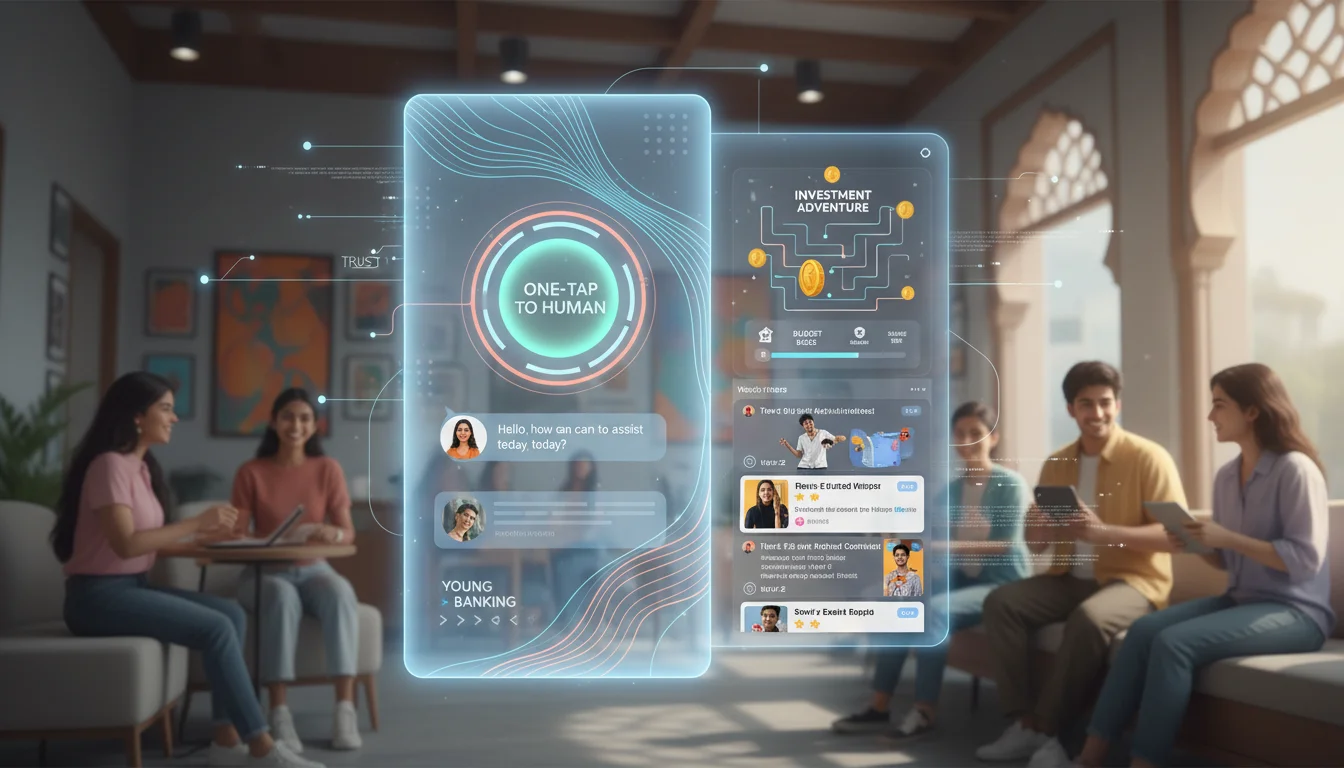
Secondly, there is a profound opportunity to bridge the AI-Human gap. While large banks aggressively push customers toward chatbots to slash operational costs, these bots frequently trap users in frustrating conversational loops. A financial institution that markets a “One-Tap to Human” feature—leveraging AI strictly for instant routing and contextual data gathering rather than customer deflection—will directly appeal to the 78% of Indians who demand human customer service, instantly differentiating its brand on the basis of empathy and support.
Thirdly, traditional banks fundamentally fail to engage Gen Z on their own terms. Legacy institutions rely heavily on corporate jargon and their historical reputations, which young consumers view as irrelevant. Opportunities abound to capture this demographic by abandoning sterile corporate communications in favor of gamified financial literacy content, flexible and transparent credit solutions, and content that integrates seamlessly into their peer-to-peer (P2P) lifestyle and UPI ecosystems.
Finally, the market is ripe for authentic, employee-driven content. The BFSI sector is saturated with generic stock imagery. Institutions that pivot to User-Generated Content (UGC) and authentic employee-advocacy videos can build significantly more trust and relatability, cutting through the sterile corporate noise that dominates financial advertising.
Recommended Strategy for Banks and Financial Institutions in India
To navigate the complexities of the 2026 digital landscape, financial institutions must abandon siloed, generic marketing efforts in favor of a highly integrated, omnichannel strategy that speaks directly to distinct consumer segments.
Consumer Personas and Segmentation
Persona 1: The Urban Digital-Native (Gen Z & Millennials) This demographic comprises individuals aged 18 to 35, predominantly located in metropolitan and tier-1 cities. They are fundamentally mobile-first, demanding hyper-convenience, instant gratification, and flawless user experiences. They demonstrate virtually no loyalty to legacy banking brands, readily switching institutions for better digital services, zero-fee structures, seamless UPI integration, and experiential rewards. Their primary pain points include clunky UI/UX, hidden fees, complex onboarding processes, and traditional advisory models that feel condescending or out of touch.
Persona 2: The Wealth Builder and Premium Consumer Encompassing high-income earners, established professionals, and business owners aged 30 to 55, this segment values premiumization and exclusivity. They are the target market for specialized products like IDFC FIRST’s Mayura and Ashva metal credit cards. They prioritize robust data security, zero forex markups for international travel, and highly personalized human advisory for complex wealth management and commercial borrowing. Their main frustrations involve time-consuming grievance redressal, the lack of dedicated relationship managers, and deep-seated fears regarding digital fraud and data privacy.
Persona 3: The Emerging Bharat (Tier 2/3 & Rural Consumers) This segment includes consumers aged 25 to 60 located in semi-urban and rural areas. They represent the engine of volume growth for the Indian economy. They prioritize institutional trust, localized vernacular language support, the proximity of physical branches, and access to government-backed financial schemes such as PMJDY, Mudra loans, and affordable micro-insurance. They rely heavily on familiar platforms like WhatsApp and Facebook for digital interaction. Their primary pain points are digital illiteracy, a pervasive fear of online fraud, and a historical lack of access to formal credit.
Recommended Channels and Campaign Types
To effectively reach these diverse personas, financial institutions must deploy a tailored mix of channels and campaign methodologies.
WhatsApp must be elevated from a mere notification tool to a primary marketing and servicing channel. Leveraging Agentic AI, banks should send localized, interactive messages offering pre-approved micro-loans or credit card limit increases. The campaign architecture must be fully conversational, allowing the user to review the offer, accept it, verify their identity via OTP, and complete the transaction entirely within the WhatsApp interface in under 60 seconds.
For the Urban Digital-Native and Emerging Bharat segments, video content is paramount. Banks should partner with SEBI-registered micro-influencers to create long-form, educational content on YouTube, addressing topics such as “Understanding Sovereign Gold Bonds” or “How to avoid unauthorized loan apps.” This approach satisfies Google’s E-E-A-T requirements, builds long-term organic search authority, and ensures compliance with ASCI disclosure guidelines.
Performance marketing must be highly targeted to manage Customer Acquisition Costs. Institutions should utilize Google Search Ads to capture high-intent, bottom-of-the-funnel queries. On Meta platforms (Facebook and Instagram), the strategy should focus on utilizing highly refined lookalike audiences—based on existing high-Lifetime Value (LTV) customers—to promote secured loan products and premium metal cards through dynamic display advertising.
Content Ideas Specific to Indian BFSI
Content must pivot from self-promotion to utility and transparency. To address the 77% of consumers worried about data breaches, banks should produce “Behind the Scenes” transparency videos detailing the exact encryption and security protocols used to protect customer funds and personal data.
To align with the RBI’s cyber awareness objectives and build goodwill, institutions should produce financial literacy snippets in short-form vertical video formats (Instagram Reels, YouTube Shorts) explaining how to detect phishing scams or identify predatory, unauthorized lending applications.
Interactive digital assets, such as SIP return calculators, EMI affordability simulators, and retirement corpora planners, serve as incredibly effective, high-value lead magnets that provide immediate utility to the consumer while capturing valuable first-party data.
For the Emerging Bharat persona, all content must be produced in regional vernacular languages, utilizing simple infographics and voice-assisted formats to explain the tangible benefits of integrating their PMJDY accounts with micro-insurance schemes like the Pradhan Mantri Jeevan Jyoti Bima Yojana.
Budget-Friendly Digital Marketing Approaches
For NBFCs, small finance banks, and regional players lacking the multi-million dollar marketing budgets of the tier-1 incumbents, cost-efficiency and high ROI are critical.
These institutions must prioritize hyper-local SEO, focusing intensely on optimizing Google Business Profiles for their physical branches to capture high-converting “near me” searches (e.g., “business loans near me”) at zero advertising spend.
Rather than engaging in expensive, broad-based brand awareness campaigns, smaller players should utilize specialized B2B lead generation agencies that operate on performance-based or pay-per-lead models. Outsourcing lead generation to specialized Indian agencies can reduce customer acquisition costs by 40-60% compared to maintaining an in-house sales development team, ensuring that marketing spend is tied directly to verifiable, high-quality prospects.
Implementing robust referral programs is another highly cost-effective strategy. Incentivizing existing, satisfied customers to refer peers significantly lowers CAC and generates highly qualified leads, as trust is transferred directly from the referrer to the prospect. Finally, leveraging affordable, cloud-based SaaS tools for marketing automation, email sequencing, and CRM integration allows small teams to nurture leads efficiently without the overhead of a massive sales force.
Keywords & SEO Opportunities
A scientifically structured SEO strategy is vital in the BFSI sector. Given the YMYL nature of financial products, search engines demand exceptional content quality, and regulatory bodies demand absolute accuracy in advertising copy. Financial institutions must balance aggressive commercial targeting with compliant, educational content to build domain authority and capture traffic across the entire consumer journey.
High-Intent Keywords for Ranking (Transactional)
High-intent keywords target consumers at the very bottom of the marketing funnel who are actively seeking to apply for a product or make a transaction.
The competition for these terms is fierce, and ranking requires not only perfect on-page SEO but also fast-loading, highly secure, and mobile-optimized landing pages. Search engine marketing (PPC) is often required alongside organic efforts to secure visibility for these highly competitive terms.
Product Category
High-Intent Keyword Targets (India Specific)
Credit Cards
- Apply for lifetime free credit card online
- Best credit card for salary person
- Zero forex markup metal cards India
- Top credit cards in India 2026
Lending & Loans
- Instant personal loan lowest interest rate
- Apply for home loan online
- Business loans near me
- Collateral free SME loan provider
Banking Services
- Open zero balance savings account online
- Best banks for business owners
- High interest fixed deposit rates 2026
- FD backed credit card assured approval
Long-Tail Keyword Opportunities (Informational)
Long-tail keywords are less competitive, highly specific search queries that target consumers in the awareness or consideration phases of the funnel. By comprehensively answering these queries, financial institutions fulfill E-E-A-T criteria, build immense trust, and capture prospective leads long before they begin searching for transactional keywords.
Content Theme
Long-Tail Keyword Targets (India Specific)
SME & Corporate Finance
- How to manage cash flow in a seasonal business
- Treasury management best practices 2026
- Mudra loan eligibility criteria and application process
Government & Financial Inclusion
- How to open PMJDY account online step by step
- Pradhan Mantri Jeevan Jyoti Bima Yojana benefits 2026
- How to link Aadhaar to bank account online
Digital Banking & Security
- How to link credit card to UPI safely
- What to do if UPI transaction fails but money deducted
- Is WhatsApp banking safe in India for large transfers
Implementation Roadmap
Transitioning from theoretical strategy to tangible execution requires a meticulously structured, phased implementation roadmap. A phased approach ensures that critical compliance vulnerabilities are addressed immediately, resources are optimally allocated, and digital capabilities are scaled systematically to support long-term revenue growth.
Phase 1: Short-Term Quick Wins and Compliance (Months 1–3)
The immediate priority for the first quarter of implementation is to audit existing digital assets, eradicate compliance risks, and optimize existing channels for immediate lead capture.
Month 1: Audit & Compliance
Conduct a rigorous, forensic UX/UI audit across all web and mobile applications to identify and completely eradicate any “dark patterns.” This ensures proactive compliance with the RBI’s July 2026 mandate. Simultaneously, overhaul privacy policies, data retention schedules, and explicit consent mechanisms to strictly align with the RBI’s Digital Lending Directions 2025 (ensuring local data storage and 24-hour offshore deletion protocols).
Month 2: Asset Optimization
Claim, verify, and aggressively optimize Google Business Profiles for all physical branches to immediately capture hyper-local search traffic. Consolidate digital assets, execute technical SEO audits to guarantee fast page load speeds, and ensure flawless mobile optimization. Launch highly targeted, small-scale Google Search ad campaigns focusing exclusively on bottom-funnel commercial keywords to generate immediate ROI.
Month 3: Agentic AI Deployment
Deploy baseline Conversational AI (AgentOS) via WhatsApp and website chat interfaces. Configure the AI to handle high-volume, routine inquiries—such as balance checks, mini-statement downloads, and basic FAQ resolution—while establishing strict protocols for instant, seamless escalation to human agents for complex queries.
Phase 2: Long-Term Strategy and Scaling (Months 6–12)
With a compliant and optimized foundation secured, the focus shifts toward building sustainable organic growth engines, fostering deep brand affinity, and executing sophisticated omnichannel marketing.
Months 4-6: Content & Authority
Establish a centralized, SEO-driven financial education hub on the institution’s website. Begin publishing high-quality, legally vetted articles, infographics, and interactive calculators that address the identified long-tail informational queries, establishing the brand as a trustworthy authority in the YMYL space.
Months 7-9: Influencer & Omnichannel
Build a vetted roster of SEBI-registered micro-influencers and financial educators. Co-create transparent, educational campaigns that strictly adhere to all ASCI disclosure guidelines, avoiding the severe reputational and legal risks associated with unregulated “finfluencers”. Break down internal data silos to create unified customer profiles, utilizing this data to trigger predictive, omnichannel marketing campaigns (e.g., sending an automated email followed by a WhatsApp push notification for an auto loan when predictive analytics indicate the customer is vehicle shopping).
Months 10-12: Phygital Scaling
Launch experiential marketing campaigns that seamlessly combine digital reach with physical, community-based interactions. This could include hosting financial literacy camps in tier-2 cities supported by vernacular digital advertising, or organizing premium, invite-only networking events for corporate clients holding top-tier metal credit cards, thereby cementing long-term brand loyalty and advocacy.
Conclusion
The Banking, Financial Services, and Insurance sector in India is operating within a crucible of unprecedented digital acceleration. The landscape in 2026 is defined by soaring internet and mobile adoption, fiercely stringent regulatory evolution aimed at consumer protection, and fundamentally shifting generational demographics that demand hyper-convenience alongside absolute transparency. In this environment, digital marketing has evolved far beyond an alternative customer acquisition channel; it is the central nervous system of institutional growth and survival. As net interest margins continue to compress and operational expenses mount, the ability of a financial institution to leverage digital platforms to acquire high-value customers at a fraction of traditional costs, efficiently mobilize CASA deposits, and foster enduring loyalty through personalized, trust-centric communication is the ultimate determinant of market leadership. The strategic imperative is unequivocal: institutions must integrate Agentic AI responsibly, eradicate deceptive UX practices, comply rigorously with RBI, SEBI, and ASCI guidelines, and deliver seamless omnichannel experiences that resonate with the distinct personas comprising the modern Indian economy.
Executing this intricate matrix of technological integration, consumer psychology, and strict regulatory compliance requires highly specialized, battle-tested expertise. Gurkha Technology, an established, award-winning digital marketing and technology agency based in Nepal, offers a unique and highly potent strategic advantage for Indian financial institutions seeking to dominate this space. Possessing a profound understanding of the South Asian economic and cultural ecosystem, Gurkha Technology provides comprehensive, end-to-end digital solutions ranging from advanced Search Engine Optimization and nuanced Social Media Marketing to complex B2B lead generation and secure web development.
By partnering with Gurkha Technology, Indian financial institutions can leverage elite digital marketing expertise coupled with the inherent advantages of cross-border collaboration—including exceptional adaptability, shared time zones for real-time execution, and highly cost-effective resource allocation. Their proven track record of delivering verifiable ROI and driving digital transformation across diverse, regulated sectors ensures that your institution’s digital strategy is not only compliant and secure but aggressively positioned to capture the massive growth opportunities defining the 2026 Indian financial landscape. Contact Gurkha Technology today to architect a resilient digital strategy that transforms market complexity into sustained commercial dominance.