Digital Marketing for Indian Art Institutions & Galleries
Industry Overview
Brief Description of Art Galleries and Cultural Centers in India
The Indian art ecosystem represents a complex, multi-layered intersection of ancient cultural heritage and rapid contemporary modernization. Art galleries, museums, and cultural centers in India serve as the primary custodians and commercial conduits for this immense aesthetic wealth. Historically defined by a few select patrons and institutions in metropolitan hubs like New Delhi and Mumbai, the landscape has evolved into a dynamic network of commercial galleries, non-profit foundations, and expansive cultural centers that command global attention.
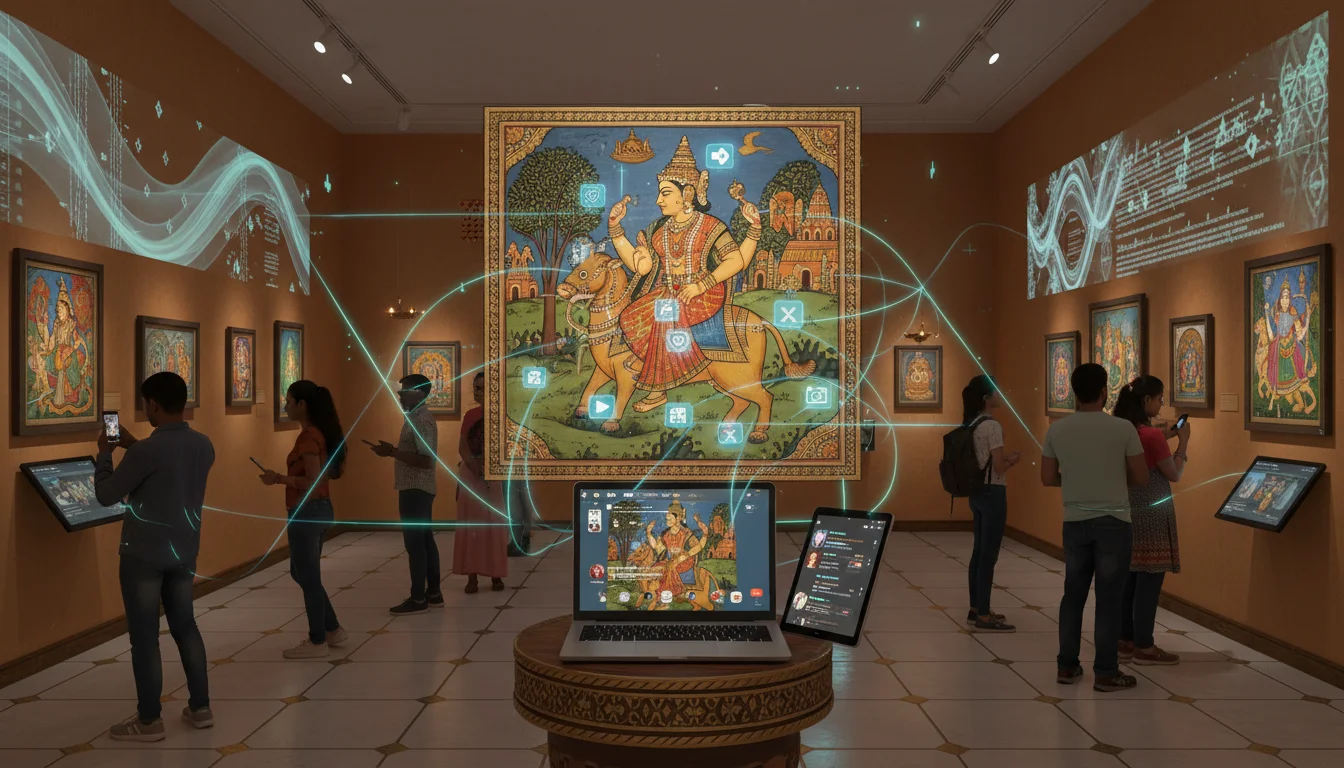
Institutions such as the National Centre for the Performing Arts (NCPA) in Mumbai, the Kiran Nadar Museum of Art (KNMA), and the recently established Nita Mukesh Ambani Cultural Centre (NMACC) act as pivotal cultural anchors. These institutions successfully blend traditional Indian art forms with global, multidisciplinary exhibitions, functioning not merely as exhibition spaces but as comprehensive cultural ecosystems.
Simultaneously, commercial entities like Vadehra Art Gallery, DAG (Delhi Art Gallery), and Nature Morte have expanded their roles far beyond traditional commercial boundaries. In the absence of robust state-sponsored museum infrastructure, these galleries frequently act in an institutional capacity, fostering curatorial experiments, archiving historical works, and promoting South Asian art on the global stage through international art fairs and digital exhibitions.
This intricate ecosystem is further supported by prominent domestic auction houses such as Saffronart and AstaGuru, as well as international events like the India Art Fair and the Kochi-Muziris Biennale. These platforms collectively drive both cultural dialogue and commercial momentum, establishing Indian art as a formidable soft power and a highly lucrative asset class on the global stage.
The modern Indian art gallery is thus a hybrid entity, tasked with preserving history, nurturing avant-garde contemporary talent, and navigating a rapidly digitizing global marketplace.
Current Market Size, Growth, and Trends
The Indian art market is currently experiencing a period of unprecedented and explosive growth, defying broader global economic slowdowns and establishing itself as a highly resilient alternative asset class. While the global art market witnessed a 12% decline in 2024—totaling an estimated USD 57.5 billion—the Indian art market recorded a robust 19% increase in sales during the exact same period. This remarkable surge is heavily driven by rising national affluence, an expanding base of young millionaires, and a fiercely strong domestic demand that has matured beyond purely decorative purchasing into serious, portfolio-driven collecting.
According to the Hurun India Art List 2024, sales generated by the top 50 Indian artists reached ₹301 crore (approximately USD 36.2 million). The financial entry point for the top 10 artists skyrocketed by nearly 300%, moving from an accessible ₹1.99 crore in 2021 to a staggering ₹7.70 crore in 2024. Record-breaking auction results further highlight this aggressive momentum; for instance, a monumental evening sale at the New Delhi auction house Saffronart generated USD 40.2 million, while Modernist master M.F. Husain’s 1954 painting Gram Yatra became the first Indian painting to shatter the USD 10 million ceiling, selling for USD 13.8 million at Christie’s.
The digital and online segments of this industry are expanding at an even more accelerated pace. The India online art market generated USD 238.2 million in 2024 and is meticulously projected to reach USD 501.3 million by 2033, growing at a Compound Annual Growth Rate (CAGR) of 8.6%. Similarly, the broader art tourism market in India, of which galleries and museums form the single largest revenue-generating segment, was valued at USD 3,395.6 million in 2024 and is expected to reach USD 4,578.4 million by 2030, representing a CAGR of 5.1%.
| Market Segment | 2024 Valuation | Projected Valuation | CAGR | Key Growth Drivers |
|---|---|---|---|---|
| Total Indian Art Sales (Top 50 Artists) | ₹301 Crore ($36.2M) | N/A | 19% (YoY) | Rapid wealth creation, HNWI alternative investments, shattering of historical auction records. |
| Online Art Market | USD 238.2 Million | USD 501.3 Million | 8.6% | Digital platforms, younger digitally-native demographics, increased e-commerce trust. |
| Art Tourism Market | USD 3,395.6 Million | USD 4,578.4 Million | 5.1% | Cultural festivals, expanding museum infrastructure, experiential pop-up events. |
Furthermore, the market is witnessing a profound diversification in collector preferences. While Modernist masters (such as V.S. Gaitonde and Tyeb Mehta) continue to dominate the highest pricing tiers, contemporary art has shown incredibly strong growth with a 31.8% increase in demand. Emerging artists witnessed a massive 99.3% jump in market interest, highlighting a new collector appetite for undiscovered, reasonably priced talent. The market also observed a fourfold increase in tribal and folk art sales, indicating a growing, sophisticated appreciation for India’s diverse, indigenous artistic traditions beyond the mainstream urban narratives. This growth is further supported by favorable macroeconomic policies, such as the Indian government’s recent reduction of the Goods and Services Tax (GST) on art and cultural goods from 12% to 5%, which has significantly incentivized domestic transactions.
Key Challenges Faced by Businesses in this Industry
Despite the booming valuations and unprecedented global visibility, art galleries and cultural centers in India face a myriad of systemic, infrastructural, and operational challenges that complicate their growth and transition into the digital era.
Foremost among these is the pervasive issue of authenticity and forgery. In a market where high-value transactions are increasingly initiated online, the absence of a standardized, technologically secure framework for determining the authenticity of an artwork remains a critical barrier. The proliferation of art forgeries significantly damages consumer confidence, making potential buyers highly hesitant to complete high-value transactions without exhaustive physical inspection and ironclad provenance documentation. The digital space, while expanding reach, simultaneously amplifies the risk of fraud, cyberattacks, and the unauthorized duplication of digital assets, presenting a severe risk to gallery reputations.
Secondly, the Indian art market suffers from acute digital inequality and extreme geographic concentration. The ecosystem remains heavily centralized in Tier-1 metropolitan cities, particularly New Delhi and Mumbai. Artists hailing from rural backgrounds, as well as practitioners of traditional and folk art disciplines, often lack the fundamental digital literacy, hardware, and technological access required to participate in modern online marketplaces. This digital divide ensures that a massive portion of India’s cultural heritage remains economically disenfranchised, commanding less than 15% of the total market share despite its immense historical value.
Thirdly, the sector operates with a profound infrastructure and policy deficit. Unlike basic social infrastructure such as schools and hospitals, cultural infrastructure lacks comprehensive, systemic policy support in India. Many galleries operate as independent commercial entities with exceedingly tight budgetary constraints, limiting their ability to invest in high-impact digital marketing, advanced Customer Relationship Management (CRM) systems, or state-of-the-art virtual exhibition technologies. Furthermore, the market operates under the specter of complex sociopolitical dynamics. Art schools and contemporary galleries often navigate a delicate balance regarding politically challenging or ideologically sensitive work, which can prove unpopular with cautious domestic buyers or attract unwanted regulatory scrutiny.
Finally, industry analysts warn of market saturation and the precarious nature of the current buyer demographic. The proliferation of digital platforms has led to an endless supply of online art, resulting in digital fatigue and over-commercialization that makes it exceedingly difficult for galleries to cut through the algorithmic noise. Moreover, experts caution that the current art boom is intrinsically tied to a “real estate phenomenon,” wherein the construction of luxury skyscrapers drives a temporary, decorative demand for large-scale art. If this current crop of affluent buyers does not mature into serious, institutionally minded collectors, the primary market risks a severe contraction once initial interior design needs are met.
Digital Landscape in India (Contextual to the Industry)
Internet and Social Media Usage
India’s digital infrastructure has undergone a tectonic shift over the past decade, creating an environment that is highly conducive to advanced digital marketing, content distribution, and e-commerce. As of early 2025, India recorded a staggering 806 million internet users, representing a national penetration rate of 55.3%. This massive connected population is supported by 1.12 billion cellular mobile connections, emphasizing that the Indian digital ecosystem is overwhelmingly mobile-first. Mobile devices completely dominate the advertising and consumption landscape, accounting for 78% of the total digital media advertising spend in the country, reflecting the primary method through which Indians consume content, research luxury products, and engage with aspirational brands.
Within this highly connected population, social media adoption is phenomenal.
India boasts 491 million active social media user identities as of January 2025, equating to 33.7% of the total population. The social media user base is growing at a rate of 5.23% year-over-year, making India the fastest-growing major social media market globally, standing in stark contrast to the slight global average decline of -0.81%. Indian users are deeply engaged, spending an average of 141.6 minutes (approximately 2 hours and 30 minutes) daily across an average of 7.6 different social platforms. The demographic breakdown of these users skews young and male, with 65.5% male and 34.5% female users, though data indicates that female users often exhibit higher rates of active engagement. Crucially, Generation Z (Gen Z) dominates the landscape, comprising 40% of the user base and wielding an estimated spending power of ₹1.2 trillion, representing a massive future collector base for the art market.
Digital Metric (India 2025)
Total Internet Users: 806 Million (55.3% penetration). YoY Growth / Trend: +6.5% (49M new users). Market Implication: Massive expansion of the addressable digital market for online art sales.
Active Social Media Users: 491 Million (33.7% penetration). YoY Growth / Trend: +5.23% (Fastest globally). Market Implication: Hyper-connected audience primed for visual and cultural storytelling.
Daily Social Media Engagement: 141.6 Minutes. YoY Growth / Trend: Consistent. Market Implication: High opportunity for long-form narrative engagement and brand building.
Mobile Ad Spend Share: 78%. YoY Growth / Trend: Dominant / Stable. Market Implication: Marketing strategies must be exclusively mobile-first and optimized for vertical screens.
Popular Platforms Among the Target Audience
For art galleries and cultural institutions, understanding platform-specific dominance and usage psychology is crucial for precise audience targeting and budget allocation.
WhatsApp: Serving as the undeniable digital connective tissue of the country, WhatsApp enjoys a massive 80.8% penetration rate among internet users, making it the most utilized digital platform in India. For the luxury and art sectors, WhatsApp transcends simple peer-to-peer messaging. The WhatsApp Business API allows for the direct, intimate distribution of exhibition catalogs, personalized high-value client communication, and immediate customer service. It effectively acts as a highly personalized, algorithm-proof CRM tool that Indian consumers implicitly trust for high-value transactional conversations.
Instagram: Functioning as the visual pulse of modern India, Instagram is the premier platform for aesthetic, cultural, and lifestyle-driven content. With approximately 516.9 million active users in India (reaching 74.7% of internet users), it is the primary channel for art discovery, artist storytelling, and behind-the-scenes gallery content. Short-form video content, specifically Instagram Reels, generates 87% more engagement than traditional static feed posts. Instagram is where younger collectors build parasocial relationships with artists and where galleries cultivate aspirational brand identities.
YouTube: As the undisputed king of long-form video and the second-largest search engine, YouTube captures 97% of connected Indians who consume video online. For cultural centers, it provides the ideal medium for in-depth artist interviews, high-definition virtual gallery walkthroughs, archival footage, and educational art history documentaries that require deeper narrative engagement than Instagram allows.
LinkedIn: While often overlooked in direct-to-consumer marketing, LinkedIn is quietly powerful for the B2B side of the art market. It is highly effective for building institutional thought leadership, attracting corporate art buyers, securing museum partnerships, and engaging with high-net-worth individuals (HNWIs) whose professional identities intersect with philanthropic or cultural patronage.
Consumer Online Behavior Related to Art Galleries
The democratization of the art market through digital channels has fundamentally altered buyer demographics and online purchasing behaviors. The traditional gatekeeping of the physical gallery has been circumvented by digital access. Millennials and Generation Z, who contribute heavily to social media conversations (52.3% and 28.4% respectively), are driving a massive transition toward digital art purchases. These younger, digitally native collectors are redefining value in the art market; they view art not merely as a decorative asset, but as a profound expression of lifestyle, personal identity, and social awareness. They actively seek artworks that reflect contemporary themes such as sustainability, identity politics, and climate activism, moving away from purely classical motifs.
Consumer behavior in the Indian digital space is increasingly aesthetic and trend-driven. This is evidenced by the explosive rise of designer toy collecting (e.g., Labubu figures, blind boxes) and the integration of niche lifestyle choices into mainstream digital culture. For the fine art market, this translates into a demand for highly curated, visually appealing online experiences that merge entertainment with commerce. Consumers show a strong preference for localized, vernacular content, with posts in Hindi generating 45% higher engagement rates than English-only content, indicating a desire for cultural authenticity.
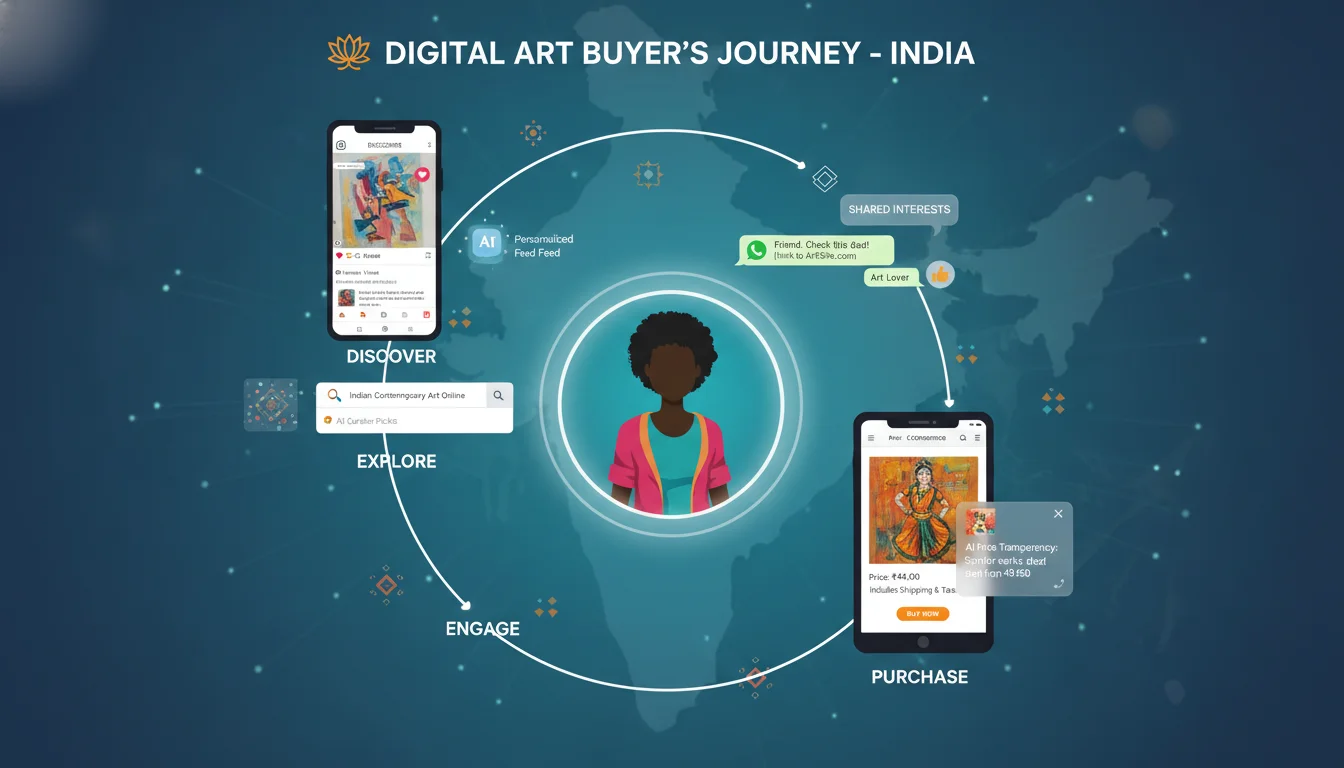
Furthermore, data indicates that the modern art buyer requires a complex, multi-touchpoint journey before making a purchase. The customer journey is no longer linear; a buyer may discover an artwork via an Instagram Reel, verify the artist’s credentials and exhibition history through a Google search, consume an educational video on YouTube, receive a digital PDF catalog via WhatsApp, and finally complete the transaction on an e-commerce platform. Transparency is a critical behavioral driver in this journey. Collectors increasingly demand clear pricing structures, detailed artist biographies, and high-resolution condition reports before engaging. They view the traditional gallery practice of “Price on Request” (POR) as a frustrating friction point and a barrier to online purchasing, significantly favoring platforms that offer transparent, upfront information. Additionally, there is a growing acceptance of AI in the shopping experience, with 71% of consumers open to AI recommendations and 68% having made purchases based on AI-curated suggestions, pointing to a future where generative AI assists in art discovery and curation.
Digital Marketing Opportunities
How Digital Marketing Can Solve Key Challenges
Digital marketing provides concrete, scalable solutions to the systemic challenges that have historically hampered the Indian art sector.
Bridging the Geographic Divide: The concentration of physical galleries in Mumbai and New Delhi severely limits audience reach. Digital marketing—through virtual exhibitions, high-definition 360-degree viewing rooms, and localized programmatic advertising—breaks down these geographic barriers. By leveraging targeted social media campaigns, galleries can reach affluent, art-curious audiences in emerging Tier-2 and Tier-3 cities, democratizing access to high-quality art and significantly expanding the addressable market.
Overcoming the Authenticity Barrier: The fear of forgery is a major deterrent to online art sales. Integrating digital marketing with blockchain technology and Non-Fungible Tokens (NFTs) provides immutable proof of provenance and ownership. Galleries that actively market their use of digital certificates of authenticity build immediate, verifiable trust with online buyers, mitigating the fear of fraud and encouraging high-value digital transactions.
Combating Art Fatigue with Education: The scarcity of comprehensive, accessible scholarship on South Asian art histories leaves many potential buyers intimidated by the gallery ecosystem. Content marketing focused heavily on art education—explaining the historical context, the artist’s creative process, the cultural significance of a piece, and the basic principles of art investment—transforms passive social media scrollers into confident, informed collectors. Education becomes the ultimate inbound marketing tool.
Best Strategies for Art Galleries and Cultural Centers
To capitalize on the vast digital landscape, art institutions must deploy sophisticated, multi-channel marketing strategies that respect the nuances of the art buyer’s journey.
A. Hyper-Localized and Intent-Driven SEO: Search Engine Optimization (SEO) in 2025 has evolved far beyond basic keyword stuffing; it is entirely focused on deciphering user intent, semantic search, and AI-driven algorithms (like Google’s Search Generative Experience). Galleries must heavily optimize their Google Business Profiles to capture high-intent “near me” searches (e.g., “art exhibitions near Kala Ghoda”) to drive physical footfall. Simultaneously, they must produce long-form, authoritative content to capture informational queries (e.g., “how to invest in modern Indian art”). Aligning all website content with Google’s E-E-A-T (Experience, Expertise, Authoritativeness, and Trustworthiness) principles is paramount for outranking global competitors and building institutional credibility.
B. Social Media Storytelling and Video-First Content: The strategy on platforms like Instagram must shift from purely promotional, static cataloging to dynamic narrative storytelling. Video-first strategies, particularly Reels that showcase the tactile creation of an artwork, time-lapse studio visits, or the chaotic energy of an exhibition installation, create the emotional resonance required to justify high-ticket purchases. Furthermore, integrating regional languages into social media copy creates a deeper cultural connection and significantly boosts engagement metrics in non-metro regions.
C.
Conversational Marketing via WhatsApp
WhatsApp marketing represents the most critical bottom-of-the-funnel conversion tool in India. Utilizing “Click to WhatsApp” ads on Meta platforms directs high-intent users immediately from a social feed into a personalized, private chat. Galleries must utilize the WhatsApp Business API to send segmented broadcast messages containing rich-media PDF exhibition catalogs, exclusive preview invitations to VIP collectors, and real-time multimedia updates. This approach fosters a profound sense of exclusivity and provides the one-on-one consultation expected in luxury art sales.
Micro-Influencer Integration and Community Building
Traditional celebrity endorsements are highly ineffective in the nuanced art market. Instead, galleries should collaborate with micro and nano-influencers (10,000–50,000 followers) within the specific niches of contemporary design, luxury architecture, and cultural critique. These influencers provide highly targeted, authentic access to potential collectors who trust their curatorial taste. Furthermore, fostering community through dedicated Facebook or WhatsApp groups generates significantly higher engagement than standard brand page posts.
Immersive “Phygital” Experiences
The integration of Augmented Reality (AR) into a gallery’s digital presence allows potential buyers to project artworks onto their own walls via mobile apps before purchasing, significantly reducing buyer hesitation and return rates. Blending these digital tools with physical events creates a powerful “phygital” marketing loop, where online campaigns drive offline foot traffic, and physical exhibitions generate high-quality user-generated content (UGC) for subsequent online amplification.
3.3 Local and Global Case Studies
Nita Mukesh Ambani Cultural Centre (NMACC) - Mumbai
Since its highly anticipated launch, NMACC has executed a masterclass in experiential and digital marketing. By positioning itself as a hybrid cultural destination that seamlessly blends indigenous Indian arts with grand, Broadway-style global productions, NMACC utilized highly visual, multi-channel digital campaigns. Their strategy integrated massive social proof through global celebrity attendance (e.g., Zendaya, Tom Holland), leveraging vast influencer networks and user-generated content to create viral, aspirational FOMO (Fear Of Missing Out). This approach rapidly positioned NMACC as a premier global cultural hub, driving unprecedented online engagement and massive physical footfall, proving the efficacy of blending high-culture with high-visibility pop-culture marketing.
The MAP Academy - Bengaluru
The Museum of Art & Photography (MAP) recognized the significant barrier of art illiteracy and launched a comprehensive, digital-first initiative long before their physical doors opened. By creating the ‘Encyclopedia of Art,’ MAP utilized content marketing to democratize South Asian art history. This strategy not only served a profound educational purpose but functioned as a highly effective inbound marketing tool. By providing high-quality, easily searchable digital resources, they established the institution’s supreme digital authority, ranking highly on search engines for art-historical queries, and drawing a massive, engaged global audience to their digital museum platform.
India Art Fair - New Delhi
The India Art Fair has consistently leveraged digital innovation to expand its reach beyond the physical fairgrounds. A standout initiative is their “Digital Artists in Residence” program, which directly melds technology with art. By commissioning artists like Shreni, who uses digital systems to explore urban ecologies, and integrating AI interpretations like ‘Goji’ into traditional installations, the fair creates highly shareable, futuristic content. This strategy not only attracts a younger, tech-centric demographic but also provides endless, highly engaging multimedia content for their social media channels, keeping the brand relevant year-round.
4. Competitive Analysis
4.1 Current Digital Presence of Top Indian Art Businesses
The competitive landscape of Indian art galleries reveals a stark dichotomy between legacy institutions relying primarily on traditional prestige and agile, forward-thinking entities fully embracing comprehensive digital ecosystems.
| Institution | Core Digital Strategy | Digital Strengths | Primary Focus |
|---|---|---|---|
| Vadehra Art Gallery (VAG) | E-commerce integration & digital archiving. | Comprehensive online shop featuring accessible prints and books; robust mailing list ecosystem; detailed virtual viewing rooms. | Post-modern and contemporary South Asian art. |
| DAG (Delhi Art Gallery) | Educational content & museum-style documentation. | The ‘Collection Online’ mimicking a digital museum; extensive scholarly publications (The Journal); Art Lab educational video series. | Pre-modern and modern Indian masters. |
| Saffronart | High-end auction digitization & mobile accessibility. | Seamless proprietary mobile app bidding; ‘StoryLTD’ segment for affordable entry points; extensive online provenance and condition reporting. | Fine art, luxury jewelry, and antiquities auctions. |
| Nature Morte | Minimalist aesthetic & global art fair amplification. | Leveraging high-profile international collaborations and large-scale installation photography across visually driven social channels. | Conceptual, lens-based, and installation art. |
| Chemould Prescott Road | Sociopolitical engagement & youth outreach. | Cultivates younger audiences via the ‘Chemould CoLab’ space with accessible price points; active social media amplification of politically nuanced artists. | Contemporary Indian art and emerging talent. |
4.2 What They Are Doing Well
The most successful institutions in the Indian art market share several highly effective digital traits:
- Omnichannel Consistency: Leaders like Vadehra Art Gallery seamlessly connect their physical exhibitions in New Delhi with beautifully designed digital viewing rooms and robust e-commerce portals, ensuring that a collector in London receives the same curatorial experience as a walk-in visitor.
- Strategic Value Tiering: Platforms like Saffronart effectively use brand segmentation to capture the entire market. While their main brand handles high-net-worth, record-breaking auctions, their subsidiary platform ‘StoryLTD’ targets younger, millennial collectors with more affordable, editioned works and collectibles, capturing future high-value clients early in their collecting journey.
- Unshakeable Content Authority: DAG’s massive investment in deep, scholarly content—including interviews with modern masters, historical timelines, and high-quality digital journals—establishes unshakeable domain authority. This academic approach significantly boosts their organic SEO rankings for research-based queries, positioning them as the definitive voice on Indian modern art.
4.3 Gaps and Opportunities to Outperform Them
Despite the notable successes of top-tier galleries, several critical gaps remain across the broader industry, presenting distinct, actionable opportunities for new or mid-tier galleries to gain a competitive advantage:
- Poor Local SEO and Fragmented User Experience: Many galleries fail to optimize for local search intent. Their websites frequently suffer from exceedingly poor Core Web Vitals—characterized by slow loading speeds due to uncompressed high-resolution images and clunky navigation. Google heavily penalizes these metrics, resulting in poor mobile search rankings. Optimizing technical SEO provides an immediate competitive edge.
- Underutilized Interactive Technology: While global galleries are rapidly adopting AR for virtual art placement and VR for immersive walkthroughs, adoption in the Indian domestic market remains shockingly low. Implementing simple, web-based AR tools that allow online buyers to visualize a painting to scale in their own living room can dramatically reduce purchase anxiety and increase conversion rates.
- Over-reliance on Static Catalogs on Social Media: A vast majority of Indian galleries use Instagram merely as a static digital noticeboard, posting flat images of paintings rather than cultivating an “interactive community”. There is a profound lack of engaging, short-form video content (Reels) that details the artist’s technique, the emotional backstory of the work, or the gallery’s curatorial process. Galleries that master video storytelling will easily outcompete static feeds.
- Opaque Pricing Models: The traditional, exclusionary gallery model relies heavily on “Price on Request” (POR). Digital native collectors view POR as an elitist friction point and a significant barrier to entry. Galleries that adopt transparent, tiered pricing—especially for emerging art and editioned prints—will immediately capture the millennial demographic that values seamless, transparent e-commerce experiences.
5. Recommended Strategy for Art Galleries and Cultural Centers in India
5.1 Target Audience Personas
To ensure high conversion rates and avoid wasted ad spend, digital strategies must be meticulously tailored to distinct, data-backed buyer personas:
| Persona | Demographics & Location | Psychographics & Preferences | Ideal Digital Approach |
|---|---|---|---|
| The Traditional HNWI Collector | Age 45-65+. Resides in Tier-1 metros (South Mumbai, Lutyens’ Delhi) or diaspora hubs (London, Dubai). | Values historical provenance, blue-chip modernists (Raza, Husain), investment stability, and extreme discretion. | Highly curated, personalized emails; private WhatsApp API outreach with high-res PDFs; secure, password-protected digital viewing rooms. |
| The Millennial Aesthetic Seeker | Age 28-40. |
Tech-entrepreneurs
Creative directors in Tier-1 and emerging Tier-2 cities (Bengaluru, Pune, Ahmedabad).
- Values contemporary narratives, social commentary, sustainability, and visual appeal for luxury real estate. Highly trend-aware.
- Mobile-first discovery via Instagram Reels and design influencers; transparent e-commerce pricing; seamless online checkout with AR visualization.
The Institutional/Corporate Buyer
Age 35-55. Interior architects, corporate art consultants, luxury hotel curators.
- Seeks thematic coherence, large-scale installations, bulk acquisition protocols, and detailed dimension/material specifications.
- LinkedIn networking and thought leadership; Pinterest mood-boarding; highly detailed, downloadable technical catalogs and B2B portal access.
5.2 Recommended Channels and Campaign Types
A successful strategy requires a synchronized, multi-channel approach:
- Instagram (Top of Funnel - Awareness & Discovery): Transition completely to a video-first strategy. Utilize Instagram Reels to showcase visceral studio tours, macro shots of intricate brushwork, and the vibrant energy of exhibition opening nights. Deploy carousel posts to educate followers on the historical context of specific art movements, fulfilling the audience’s desire for cultural knowledge.
- WhatsApp Business API (Middle/Bottom of Funnel - Consideration & Conversion): Treat WhatsApp as the ultimate conversion engine. Utilize Meta’s “Click to WhatsApp” ads to drive high-intent users from Instagram directly into a private chat. Segment the audience and use broadcast features to send personalized PDF catalogs to VIPs 48 hours before public release, fostering a sense of urgency and exclusivity.
- Google Search Ads (Intent Capture): Run highly targeted Pay-Per-Click (PPC) campaigns targeting specific, high-value artist names or highly localized queries (e.g., “contemporary art gallery near me”, “buy Subodh Gupta sculpture”). This ensures visibility at the exact moment of purchase intent.
- LinkedIn (B2B Relationship Building): Publish rigorous thought leadership articles authored by the gallery director discussing art as a resilient asset class, targeting wealth managers, family offices, and luxury architects.
5.3 Content Ideas Specific to Indian Art Galleries
Content must pivot from mere promotion to value-driven storytelling:
- “The Anatomy of an Artwork”: A short-form video series breaking down the symbolism, medium, and cultural context of specific traditional forms (e.g., the intricate details of a Pichwai or Gond painting) or the conceptual framework of contemporary installations.
- Collector Testimonials and Social Proof: High-production video content featuring established, respected collectors discussing their journey in acquiring Indian art. This provides crucial social proof and normalizes the investment for hesitant newcomers.
- Virtual Studio Visits: Live-streamed or professionally pre-recorded Q&A sessions with artists in their chaotic, authentic workspaces. This fosters a powerful parasocial relationship between the creator and the collector, making the eventual purchase deeply personal.
- Art Investment Education: A dedicated blog or infographic series breaking down recent auction records, explaining secondary market trends, and outlining the fundamentals of starting an art collection. This directly addresses the market’s knowledge gap and positions the gallery as a trusted advisor.
5.4 Budget-Friendly Digital Marketing Approaches
For mid-sized galleries or regional cultural centers, maximizing ROI requires capital-efficient, high-impact tactics:
- Hyper-Optimization of Google Business Profile: A fully optimized, regularly updated Google Business profile—complete with high-quality interior photos, current exhibition listings, accurate hours, and customer reviews—is the single most cost-effective method to dominate local search algorithms and drive immediate footfall.
- Micro-Influencer Barter Partnerships: Instead of pursuing exorbitant celebrity endorsements, partner with local design, architecture, and lifestyle micro-influencers (10k-50k followers). Offer them exclusive, early-access exhibition previews or small editioned prints in exchange for authentic, dedicated coverage on their channels.
- Engineering User-Generated Content (UGC): Design highly “Instagrammable” moments or specific architectural lighting within the physical gallery. Create specific event hashtags and actively encourage visitors to post their experiences. This effectively outsources content creation and leverages the organic networks of gallery visitors.
- Aggressive Email List Building: Cultivating an organic email list through website pop-ups, gated educational content, and physical visitor guestbooks provides a direct, zero-cost, algorithm-proof line of communication to a highly engaged, captive audience.
6. Keywords & SEO Opportunities
6.1 The Shift Towards Intent and AI-Powered Search
Search Engine Optimization for the art market in 2025 is no longer about keyword density; it is fundamentally driven by user intent, semantic search, and the rise of AI-powered Search Generative Experiences (SGE). Search engines now prioritize contextual relevance and authoritative depth over sheer volume. Art galleries must ensure their technical SEO is flawless—particularly Core Web Vitals (LCP, FID, CLS), which govern mobile page loading speeds—and strictly adhere to Google’s E-E-A-T guidelines. Furthermore, galleries must utilize Schema markup to ensure their events, artist profiles, and product pricing are clearly categorized for search algorithms. Because art discovery is inherently visual, meticulous image SEO—including descriptive alt-text, optimized file names, and compressed formats—is vital for ranking in Google Image Search and AI-driven visual queries.
6.2 High-Intent Keywords for Ranking
High-intent keywords (Bottom of Funnel) target users who have completed their research and possess a high readiness to purchase, visit, or bid.
| Keyword Category | Target Keyword Example | Search Volume / Difficulty | Strategic Action |
|---|---|---|---|
| Transactional | “buy Indian contemporary art online” | Moderate Vol / High Intent | Direct traffic to highly optimized, transparent e-commerce landing pages with seamless checkout. |
| Investigational | “M.F. Husain paintings for sale price” | Low Vol / Very High Intent | Direct to specific artist collection pages featuring verifiable provenance, auction history, and condition reports. |
| Navigational | “art gallery in Kala Ghoda Mumbai” | High Vol / Local Intent | Optimize Google Business Profile, ensure local directory citations are accurate, and embed Google Maps on the contact page. |
| Product Specific | “large abstract canvas wall art India” | High Vol / High Intent | Optimize product descriptions with exact dimensions, color palettes (e.g., earth tones), and framing options. |
6.3 Long-Tail Keyword Opportunities (India-Specific)
Long-tail keywords represent highly specific, multi-word phrases. While they carry lower overall search volumes, they boast significantly higher conversion rates due to their exactness and lower competition.
- Local & Event SEO: “best contemporary art gallery near me”, “upcoming modern art exhibition in South Delhi”, “weekend cultural events and art shows in Bengaluru”.
- Educational/Trust-Building: “how to identify authentic Indian tribal art”, “investment value of emerging Indian contemporary artists 2026”, “what is the difference between modern and contemporary Indian art”.
- Aesthetic/Thematic (Interior Design focus): “biophilic nature-centered Indian art for living room”, “large scale textured impasto paintings India”, “vintage-inspired retro Indian landscape paintings”.
Implementation Roadmap
Executing a comprehensive digital transformation requires a meticulously phased approach, balancing immediate, low-cost revenue generation with the long-term building of unshakeable brand equity.
Short-Term Quick Wins (1–3 Months)
| Phase | Strategic Action | Technical Execution | Expected Outcome |
|---|---|---|---|
| Month 1: Foundation | Digital Infrastructure Audit | Audit website Core Web Vitals via PageSpeed Insights; optimize mobile responsiveness; compress all image files; claim, verify, and fully populate the Google Business Profile. | Immediate boost in local search visibility, faster load times, and significantly reduced website bounce rates. |
| Month 2: Connectivity | Social & CRM Setup | Transition the gallery’s primary contact number to the WhatsApp Business API; launch automated greeting and FAQ flows; integrate Meta Pixel on the website; establish a rigid 3x/week Instagram Reel schedule. | Enhanced data capture for future retargeting; highly organized subscriber lists ready for direct, personalized marketing broadcasts. |
| Month 3: Activation | Launch Paid Acquisition | Initiate highly localized Meta “Click-to-WhatsApp” ad campaigns targeting HNWIs and design professionals with exclusive, early-access catalog previews. | Direct, measurable lead generation; immediate initiation of sales pipelines through private, high-touch conversations. |
Long-Term Strategy (6–12 Months)
| Phase | Strategic Action | Technical Execution | Expected Outcome |
|---|---|---|---|
| Months 4-6: Authority | Content Engine Activation | Launch long-form, SEO-optimized blog content targeting educational long-tail keywords (e.g., artist deep-dives, investment guides); initiate micro-influencer barter partnerships for upcoming physical exhibitions. | Sustained organic search traffic; improved domain E-E-A-T scores; diversified audience reach beyond traditional collector circles. |
| Months 7-9: Innovation | E-Commerce & Tech Integration | Integrate transparent, visible pricing models for select emerging artists to capture millennial buyers; implement web-based AR tools allowing users to virtually place art in their homes. | Dramatically increased conversion rates for younger demographics; significantly reduced friction and anxiety in the online purchasing journey. |
| Months 10-12: Expansion | Omnichannel Global Scaling | Execute programmatic advertising campaigns targeting the international Indian diaspora (US, UK, UAE); host fully immersive virtual exhibitions concurrent with physical shows to capture global footfall. | Premier global brand positioning; a significantly expanded international collector base; robust, data-driven sales forecasting. |
Conclusion
The Critical Imperative of Digital Transformation
The Indian art market stands at a historic and highly lucrative inflection point. With the sector poised to consistently breach multi-million dollar valuations and digital platforms fundamentally altering the traditional mechanisms of discovery, validation, and acquisition, operational complacency is no longer viable. The digital divide in the art world is rapidly expanding; institutions that cling solely to legacy networks, opaque pricing models, and purely physical exhibitions risk irrelevance in a globally connected marketplace. Conversely, galleries and cultural centers that fully embrace transparent e-commerce, immersive multimedia storytelling, and data-driven CRM systems—particularly the WhatsApp Business API—are uniquely positioned to capture the burgeoning, immensely powerful demographic of digitally native, high-net-worth millennial and Gen Z collectors. Digital marketing is no longer a peripheral promotional tool; it is the central nervous system of a modern art institution, absolutely essential for establishing global authority, educating new markets, and driving sustainable, scalable commercial growth.
Strategic Call-to-Action
Navigating the immense complexities of high-end digital marketing, algorithmic technical SEO, AR integration, and automated CRM deployment requires highly specialized, industry-specific expertise. A misaligned digital strategy can inadvertently cheapen a luxury brand’s equity. For art galleries and cultural centers in India aiming to transcend local boundaries and secure a commanding, authoritative digital presence, strategic technological partnerships are crucial.
Gurkha Technology, a leading digital marketing company based in Nepal, possesses the exact technological acumen, regional understanding, and specialized digital architecture capabilities required to execute this complex transformation. From developing high-performance, visually stunning e-commerce platforms with AR capabilities to executing precision-targeted omnichannel ad campaigns and deploying advanced WhatsApp CRM systems, partnering with Gurkha Technology ensures that your institution’s unique artistic vision translates seamlessly into measurable, global digital success.