Indian Appliance Repair: Digital Marketing Market Research Report
Industry Overview
The appliance repair service industry in India represents a highly complex, rapidly evolving sector situated at the intersection of traditional household management and modern technological consumption. Historically characterized by highly localized, informal networks of neighborhood technicians, the sector is currently undergoing a massive structural and economic transformation. This evolution is primarily driven by the exponential proliferation of consumer durables, the integration of smart technologies within household appliances, and shifting macroeconomic realities.
Current Market Size, Growth, and Trajectory
The foundational driver of the appliance repair market is the broader Indian home appliances sector, which serves as the primary market generating secondary repair demand. The Indian home appliances market is projected to expand significantly, growing from USD 51.68 billion in 2025 to USD 54.60 billion in 2026, and is forecast to reach a staggering USD 71.85 billion by 2031. This represents a robust compound annual growth rate (CAGR) of 5.65% over the forecast period. This expansion is actively catalyzed by macroeconomic factors including steady income growth, rapid urbanization, rising middle-class aspirations, and governmental interventions. Notably, the Production Linked Incentive (PLI) scheme for white goods, which encompasses critical components for air conditioners and LED lights, has successfully attracted committed investments totaling approximately INR 4,121 crore (USD 48 million).
Consequently, the secondary market—the home appliance repair service sector—is scaling proportionally to service this vast, newly installed base of electronics. The global home appliance repair service market is estimated at USD 12,284.45 million in 2025 and is expected to reach USD 28,591.92 million by 2034, registering a CAGR of 9.85%. Within the Indian context specifically, the home appliance repair service market size is projected to expand at a CAGR of 8.18% between 2024 and 2030, reaching a valuation of USD 1,493.42 million by the end of the decade. This growth is heavily propelled by the increasing necessity for the maintenance and repair of essential household appliances, predominantly refrigerators, washing machines, and air conditioners.
Market Metric
| Market Metric | 2025 Valuation | Projected Valuation | Target Year | CAGR |
|---|---|---|---|---|
| India Home Appliances Market | USD 51.68 Billion | USD 71.85 Billion | 2031 | 5.65% |
| Global Appliance Repair Market | USD 12.28 Billion | USD 28.59 Billion | 2034 | 9.85% |
| India Appliance Repair Market | N/A | USD 1,493.42 Million | 2030 | 8.18% |
Key Challenges Faced by Businesses in this Industry
Despite the overwhelmingly positive growth projections, the Indian appliance repair industry is constrained by severe systemic and cultural bottlenecks that threaten the viability of traditional business models.
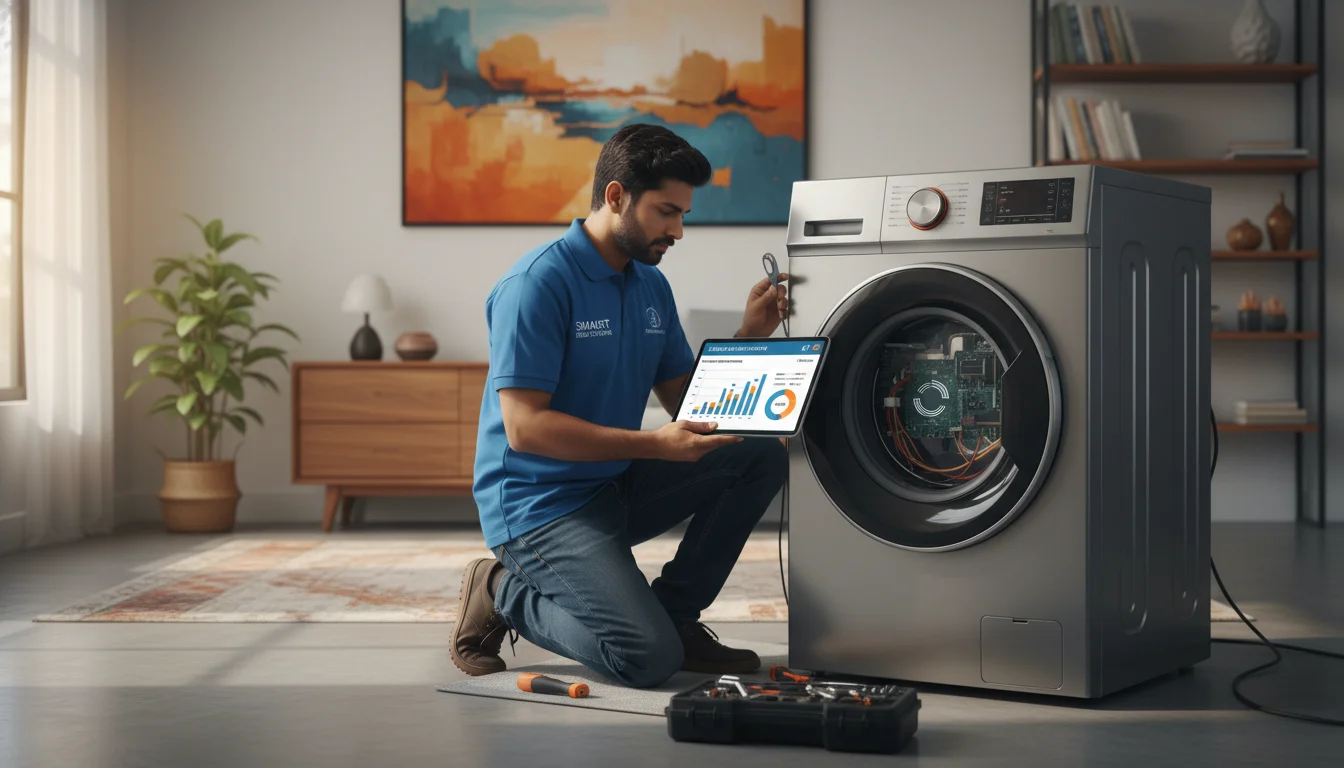
The most acute vulnerability is the profound deficit in skilled human capital. As the market expands, the demand for certified technicians is projected to exceed 500,000; however, the current labor pool contains only an estimated 200,000 certified professionals. This labor shortage is further complicated by increasing product complexity. Modern appliances—such as smart refrigerators, Wi-Fi-enabled washing machines, and advanced ovens—are heavily integrated with Internet of Things (IoT) sensors, touchscreens, and complex network protocols. Repairing these devices requires sophisticated knowledge of electronics, software diagnostics, and network connectivity, rendering traditional mechanical repair methodologies obsolete. Unfortunately, current training programs are often outdated, offering technicians little exposure to smart home devices or advanced interconnected systems.
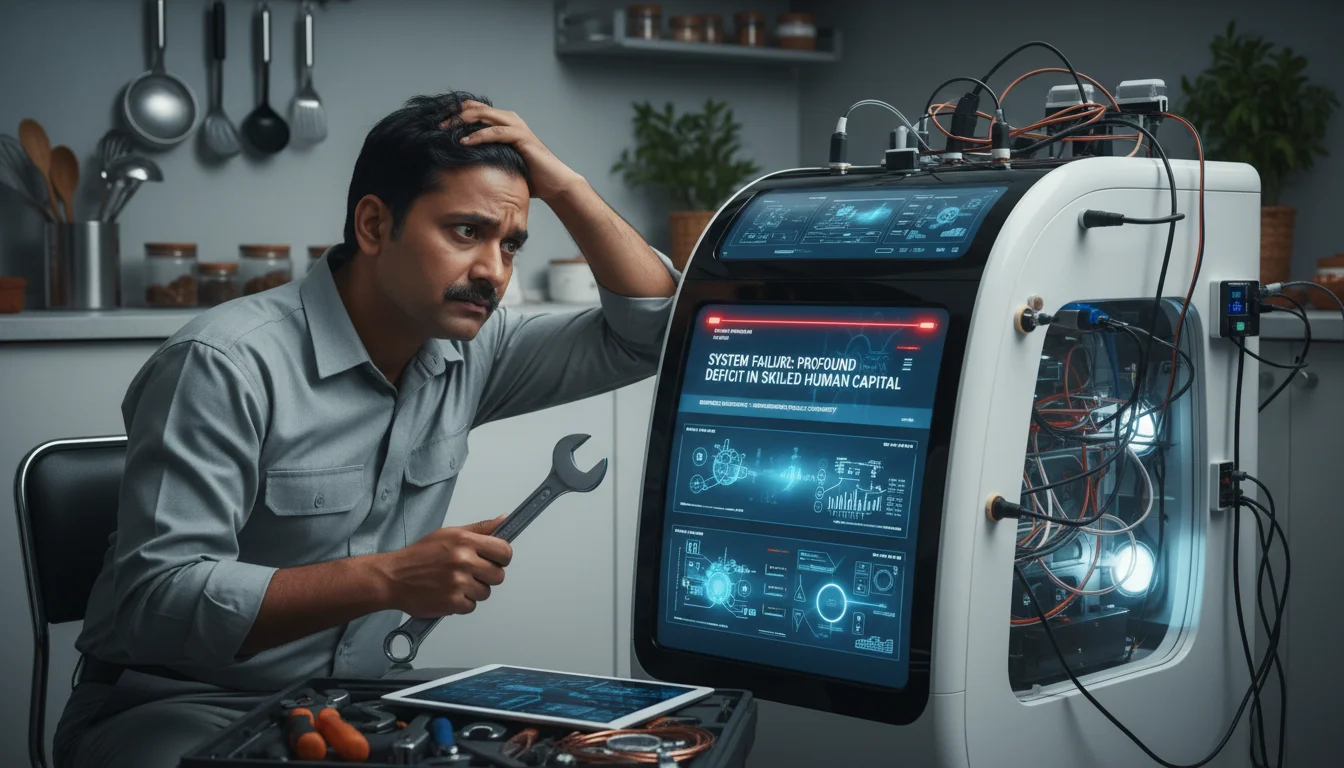
Consequently, there is a stark economic disparity within the labor force. While highly skilled workers capable of navigating IT and complex household appliances can earn between Rs 35,000 and Rs 70,000 monthly, less experienced technicians frequently earn marginal wages ranging from Rs 8,000 to Rs 12,000, creating precarious income stability and discouraging new entrants into the trade.
Simultaneously, the industry is battling the pervasive infiltration of counterfeit spare parts. The unorganized nature of the sector allows for a massive influx of substandard components, which routinely lead to subpar repairs, repeated mechanical breakdowns, and severe damage to the reputation of repair service providers. For independent businesses, the logistics of procuring genuine, verifiable parts—especially for international brands—remain cumbersome and cost-prohibitive.
Furthermore, the industry is facing an existential threat from shifting consumer mentalities, specifically the rise of the “replacement economy.” Comprehensive research, including a study titled ‘Stitch in Time’ by the environmental advocacy organization Toxics Link, indicates a strong replacement trend across all income groups in metropolitan areas like Delhi and Hyderabad. The study reveals that high repair costs, an acute shortage of reliable spare parts, a lack of trust in technician training, and rising disposable incomes have fostered a culture where consumers frequently prefer to discard and replace malfunctioning appliances rather than seek repairs. This cultural pivot forces repair businesses to compete not merely against local competitors, but against the sheer convenience of the broader consumer electronics retail sector.
Finally, the market is characterized by intense saturation at the lower end. Over 1,500 new, largely unorganized repair service providers enter the Indian market annually. This immense influx of unsophisticated competition intensifies hyper-local price wars, severely reducing profit margins for established players and creating a race to the bottom regarding service quality and pricing.
Digital Landscape in India (Contextual to the Industry)
To understand how appliance repair services must position themselves, one must critically analyze the broader digital consumption habits of the Indian populace, specifically regarding the procurement of localized home services. The digital transition in this sector is highly dynamic, characterized by rapid adoption rates juxtaposed against a deeply entrenched traditional offline market.
Internet & Social Media Usage Relevant to Home Services
The COVID-19 pandemic served as a permanent catalyst for the digitization of the Indian consumer. Subjected to stringent lockdowns beginning in early 2020, consumers were forced to utilize the internet as their primary conduit for commerce, socialization, and service procurement, fundamentally permanently altering online behavioral patterns. This digital reliance has birthed the “Instant Economy,” a phenomenon initially pioneered by quick-commerce grocery delivery platforms.
This expectation of rapid, frictionless fulfillment has now migrated into the service sector, creating a new behavioral paradigm termed “Instant Home Services”. Urban households, particularly dual-income nuclear families, are increasingly conditioned to expect rapid, application-based resolution for their domestic needs. Consequently, the online on-demand home services market in India generated revenues of USD 217.1 million in 2022 and is projected to expand at an astonishing CAGR of 22.4%, reaching USD 1,092.5 million by 2030. The primary medium for this growth is the mobile smartphone, which remains the most lucrative and fastest-growing platform segment for service procurement.
However, this market remains astonishingly untapped. Despite the aggressive growth projections, online penetration within the broader home services industry stands at less than 1% of the net transaction value as of the 2025 fiscal year. The digital segment, currently valued at ₹41-43 billion, exists within a massive overall home services market valued at approximately ₹5,100-5,210 billion. This indicates that traditional, informal offline networks still hold a monopolistic grip on the industry, signaling vast, unprecedented headroom for digital disruption.
Currently, India’s eight largest metropolitan cities account for an overwhelming 85% to 90% of all online home services demand. Yet, macroeconomic forecasts indicate a massive decentralization of consumer wealth. Over the next fifteen years, 93% of the growth in India’s urban consumer class will occur outside the top five megacities. By 2035, India is projected to harbor 499 “consumer cities”—urban centers where the majority of the population meets specific discretionary spending thresholds. This demographic shift necessitates that digital marketing efforts expand beyond tier-1 cities to capture the emerging demand in tier-2 and tier-3 urban environments.
Popular Platforms Among the Target Audience
The digital ecosystem facilitating appliance repair discovery is currently dominated by aggregator platforms, digital directories, and specialized mobile applications.
Legacy digital directories such as Sulekha and Justdial act as primary search conduits for consumers. Sulekha, which boasts over 12 years of industry experience and operations across all major Indian metros, serves as a digital bridge connecting users with localized, verified professionals. Sulekha’s massive platform traffic—exceeding 20 million unique monthly visitors—demonstrates the sheer volume of digital intent existing for home services.
Concurrently, specialized mobile applications are capturing the high-end urban market.
Applications like Repair India offer multibrand appliance repair services with sophisticated user interfaces. These platforms provide critical modern conveniences, including real-time tracking of technicians, transparent upfront pricing, and seamless appointment scheduling, catering directly to the expectations established by the quick-commerce habit loop.
Consumer Online Behavior Related to Appliance Repair
Despite the technological sophistication of these aggregator platforms, consumer sentiment analysis reveals a complex paradox regarding online booking behaviors. The central currency of the appliance repair industry has always been, and remains, interpersonal trust. The digital aggregation of these services often inadvertently commoditizes the technician, leading to significant consumer friction.
Discourse on community platforms such as Reddit highlights the consumer disillusionment that can accompany the “convenience revolution”. Consumers note that while aggregator applications provide fixed pricing and live tracking, the actual quality of the repair frequently remains inconsistent. Users report instances of unverified technicians, spare parts falling outside of service packages, and automated customer support that fails to resolve complex mechanical disputes. The prevailing consumer sentiment questions whether the premium paid on these platforms is for superior technical repair or merely for a smoother user interface and prettier notifications.
This behavioral insight is critical: consumers utilizing online search for appliance repair are in a state of high anxiety and vulnerability. They are not merely seeking a transactional laborer; they are desperately searching for a trustworthy expert who will not exploit their lack of technical knowledge. Therefore, the digital platforms that will ultimately dominate the market are those that can successfully replicate the accountability, reputation, and trust inherent in the traditional neighborhood technician, combined with the frictionless booking experience of the modern internet.
Digital Marketing Opportunities
Digital marketing represents the primary mechanism through which independent appliance repair businesses can surmount the industry’s systemic challenges. By deploying strategic, intent-focused campaigns, repair businesses can systematically address the trust deficit, navigate the skilled labor shortage, and combat the replacement economy by proving the economic and operational value of high-quality repairs.
Solving Key Challenges Through Digital Architecture
The pervasive fear of counterfeit parts and fraudulent technicians can be actively neutralized through rigorous content marketing and digital transparency. When an appliance repair brand publishes highly detailed visual evidence of its repair processes—such as side-by-side photographic comparisons of genuine versus counterfeit printed circuit boards (PCBs)—it immediately shifts the consumer’s perception of the business from a mere transactional vendor to an authoritative, educational entity. Furthermore, a meticulously managed digital presence utilizing verified customer reviews and ratings empowers consumers to make informed decisions, directly combating the uncertainty that drives the replacement economy.
Additionally, digital marketing solves the customer acquisition cost crisis caused by the annual influx of 1,500 new, unorganized competitors. Traditional offline advertising (such as local print or flyers) relies on disruptive marketing, reaching consumers when they do not need the service. Conversely, search engine optimization (SEO) and high-intent paid advertising ensure that a business is visible exclusively at the precise moment of consumer distress—when an appliance critically fails.
Best Strategies for Appliance Repair Services
The most effective digital marketing frameworks for the appliance repair sector bypass generalized brand awareness in favor of hyper-local, high-intent lead generation.
- Search Engine Optimization (SEO) & Local Dominance: Because appliance repair is inherently constrained by geographic proximity, localized SEO is the bedrock of digital visibility. Developing a robust Google Business Profile (GBP) is mandatory. Businesses must optimize for “near me” queries, as these represent urgent, high-conversion mobile searches where Google’s algorithm heavily favors geographic proximity. This involves maintaining consistent Name, Address, and Phone Number (NAP) citations across all digital directories (including Sulekha, Justdial, and Indiamart) to signal localized authority to search engines.
- High-Intent Paid Advertising (PPC): Pay-per-click advertising, particularly Google Ads, allows businesses to capture users actively searching for immediate solutions. The strategy here relies on negative keyword filtering and exact-match targeting. Bidding on broad terms like “appliance repair” can drain budgets rapidly; however, utilizing platforms like Google Performance Max to target specific, problem-based queries (e.g., “emergency GE oven repair in Miami” or “Samsung refrigerator compressor replacement cost”) ensures high return on ad spend (ROAS).
- Visual Content Marketing & Social Media: Social media for appliance repair should not aim for viral entertainment, but rather serve as a repository of digital proof. The strategy relies on three elements of trust-building: showing up visually (featuring real technicians rather than stock photos), speaking simply (avoiding heavy technical jargon in favor of clear problem-solution narratives), and showcasing trust signals (integrating customer testimonials directly into image graphics). Platforms like Instagram and Facebook are ideal for posting before-and-after repair documentation, serving as visual evidence of competence.
- WhatsApp Business Marketing: In the Indian context, WhatsApp is ubiquitous. For local service businesses, migrating from a personal WhatsApp account to the WhatsApp Business API is a transformative strategy. This enables businesses to create a digital product catalog of common repair services, utilize click-to-WhatsApp advertisements on Facebook and Instagram to drive leads directly into a chat interface, and deploy automated chatbots to handle initial symptom diagnostics and appointment scheduling, functioning as a 24/7 digital concierge.
Local and Global Examples/Case Studies
The efficacy of strategic digital positioning in the Indian market is profoundly illustrated by the trajectory of Urban Company. Faced with the fundamental consumer hesitation of allowing unknown laborers into urban homes, Urban Company refused to position itself merely as a lead-generating aggregator. Instead, they invested heavily in standardizing the service delivery process, conducting background checks, and visibly promoting their training infrastructure to build immense brand trust.
From a marketing perspective, Urban Company successfully executed the #HomeForEveryone influencer campaign. This campaign featured lifestyle and home-decor micro-influencers who documented their experiences utilizing the app for everyday needs, such as Diwali deep-cleaning or fixing a clogged sink. By framing the service through the relatable, trusted lens of a micro-influencer, Urban Company normalized the behavior of booking home services online, effectively bypassing the trust barrier and driving massive app adoption. Furthermore, they utilized Net Promoter Scores (NPS) to dictate campaign focus, ensuring that marketing budgets were dynamically allocated to services that naturally generated the highest organic word-of-mouth.
Similarly, in the broader appliance sector, the cookware and appliance brand Wonderchef demonstrated the power of emotionally resonant content marketing. Understanding that their primary demographic—Indian women—spends an average of 300 minutes daily in the kitchen compared to a mere 29 minutes for men, the brand launched the #DearManHoldThePan video marketing campaign. Based on a social experiment and promoted through digital influencers, the campaign sparked national conversations regarding gender equality in domestic labor. While Wonderchef operates in appliance retail rather than repair, the underlying digital marketing principle remains identical: brands that utilize digital channels to establish empathetic, socially aware narratives capture market share far more effectively than those relying on purely transactional advertising.
Competitive Analysis
The current Indian appliance repair landscape features a distinct bifurcation. On one end exist massive, highly capitalized national aggregators and digital directories; on the other, thousands of fragmented, regional independent repair businesses. Analyzing the digital footprints of the market leaders provides a critical blueprint for smaller entities to identify operational gaps and capture localized market share.
Current Digital Presence of Top Businesses in India
| Competitor / Platform | Primary Digital Strategy & Core Strengths | Operational Model |
|---|---|---|
| Urban Company | Aggressive category-led marketing, high-production influencer campaigns, massive SEO authority, and a highly optimized app-centric UX. Heavy focus on trust signaling through verified professionals. | Commission-based aggregator taking 20%-30% per booking. Supplements income through “UC Plus” memberships and selling branded repair kits to technicians. |
| Sulekha | Dominant Search Engine Optimization (SEO). Vast localized directory structure generating over 20 million unique monthly visitors and 100 million page views. Highly advanced automated user engagement via WebEngage APIs. | Freemium directory model. Users search for free; businesses pay a subscription fee (Sulekha Pro) for enhanced visibility and lead access. |
| Housejoy | Comprehensive service bundling, aggressive promotional discounting to acquire initial user base. |
_
- Strong multi-category presence in top-tier metros.
- Aggregator model connecting users with verified professionals for home, beauty, and repair services.
Repair India
Specialized mobile application focusing exclusively on multibrand appliance repair. Strengths include transparent upfront pricing, real-time tracking, and a clear, uncluttered user interface.
Direct booking platform connecting users to a network of vetted multibrand appliance technicians.
What Market Leaders Are Doing Well
Category-Led and Seasonal Marketing Agility
Urban Company excels in dynamically allocating marketing budgets based on highly specific seasonal intelligence. They prioritize marketing spend for AC services explicitly between March and June, while shifting resources to deep cleaning services prior to Diwali. This category-led marketing ensures that their advertising spend is deployed precisely when consumer intent naturally peaks. Backed by an ₹80 crore marketing budget set aside from their IPO, they maintain a constant presence across digital ads, Over-The-Top (OTT) platforms, and seasonal marketing activities, ensuring top-of-mind brand recall.
Programmatic SEO and Lead Nurturing
Sulekha’s dominance relies on an impenetrable technical SEO infrastructure. They deploy millions of programmatic landing pages targeting hyper-local long-tail keywords (e.g., “Washing machine repair in Gurgaon,” “Home Appliances Repair in Mumbai”). To maximize conversions from this massive organic traffic, Sulekha utilizes sophisticated marketing automation platforms, such as WebEngage, integrating API calls to send highly contextual, automated engagement campaigns to daily users visiting the portal.
Gaps and Opportunities to Outperform Them
Despite the vast resources of these aggregators, their business models harbor structural vulnerabilities that independent, regional appliance repair businesses can aggressively exploit.
-
The Commoditization of the Technician (The Trust Deficit)
The primary flaw of the aggregator model is the destruction of the continuous technician-client relationship. Aggregator algorithms prioritize rapid fulfillment; consequently, consumers receive a different, unknown technician for every service request. A regional independent business can outperform these giants by highlighting the human element. By digitally featuring the same master technicians, showcasing their specific certifications, and guaranteeing continuity of service, independent brands can reclaim the profound interpersonal trust that apps fail to provide.
-
Lack of Hyper-Local Nuance
National platforms deploy broad, generalized advertising campaigns that frequently fail to address highly specific regional infrastructural issues. For example, an independent business in a locality suffering from severe power grid issues can create content specifically addressing printed circuit board (PCB) burnouts caused by local voltage fluctuations. Such granular, empathetic content resonates much deeper with local consumers than generic national advertising.
-
Friction in the Booking Funnel
Aggregators focus intensely on forcing consumers to download their proprietary applications, creating friction in the booking process. Local businesses can bypass this entirely by establishing a robust presence on WhatsApp. By offering immediate, conversational booking via the WhatsApp Business API, independent providers engage consumers on the platform they already use daily, drastically reducing the friction of customer acquisition.
5. Recommended Strategy for Appliance Repair Services in India
To successfully navigate this fiercely competitive terrain, independent and regional appliance repair services must adopt a digital strategy that maximizes interpersonal trust, targets precise search intent, and leverages highly cost-effective, localized digital channels.
Target Audience Persona
The primary consumer persona for modern appliance repair services is the Urban Middle-Class Nuclear Family. Driven by rapid urbanization and rising economic aspirations, traditional multi-generational joint families have fragmented. Consequently, small, independent nuclear households now constitute a dominant 50% of the Indian demographic. This demographic is characterized by a high reliance on consumer durables to manage daily domestic chores amidst time-constrained, dual-income professional lifestyles. Psychologically, these consumers operate within a “value-conscious but convenience-driven” paradigm. While they seek competitive pricing, their definition of value has evolved; they are increasingly willing to pay a premium for speed, reliability, and the convenience of outsourcing menial tasks. They are highly connected to digital ecosystems, rely heavily on peer reviews and community validation, and expect interactions to be seamless and immediate. Crucially, the target geography for marketing campaigns must systematically expand beyond the saturated top 8 metropolitan hubs to actively target the 499 emerging tier-2 and tier-3 “consumer cities,” where wealth generation and smart appliance ownership are currently exploding.
Recommended Channels and Campaign Types
-
The Hyper-Local Search Infrastructure
The absolute priority is capturing localized search intent. This requires an aggressively managed Google Business Profile (GBP) functioning as a dynamic micro-website. The GBP must be updated weekly with posts detailing current promotions, real-time operating hours, service area expansions, and a constant influx of verified customer reviews.
-
WhatsApp Business Ecosystem
Instead of developing expensive, low-retention standalone applications, businesses must deeply integrate the WhatsApp Business API. By establishing a comprehensive WhatsApp product catalog, consumers can view structured repair packages, diagnostic fees, and book appointments directly within a conversational interface. Utilizing click-to-WhatsApp advertisements on Facebook and Instagram allows businesses to drive high-intent leads directly into an environment where automated chatbots can handle initial symptom triage and scheduling, functioning as a 24/7 digital front desk.
-
3. Climatic and Seasonal Marketing Campaigns
Appliance breakdowns in India are highly correlated with extreme seasonal variations. Marketing budgets must be deployed dynamically to match these environmental triggers:
-
Monsoon Campaigns
Heavy rains induce high humidity and severe power grid instability, leading to a surge in electrical faults. According to the National Crime Records Bureau (NCRB), electrical short circuits caused 3,375 fire incidents in a single year. Marketing should focus heavily on educating consumers about voltage surges, which cause rapid PCB damage and compressor failures. Campaigns should proactively promote the installation of surge protectors alongside diagnostic electrical checks.
-
Summer Campaigns
Capitalizing on ambient temperatures frequently exceeding 40°C, campaigns must aggressively target AC repair, refrigeration stabilization, and cooling system maintenance, leveraging the extreme urgency of the heatwave.
-
Festive Campaigns (Diwali)
The extended pre-Diwali period (mid-August through October) is culturally synonymous with home renewal, deep cleaning, and aesthetic upgrades. Campaigns must shift focus from reactive mechanical repair to proactive maintenance, offering comprehensive deep-cleaning and appliance tuning packages. Utilizing loyalty marketing tactics—such as offering “VIP early access” maintenance slots to previous customers—secures revenue before the festive rush overwhelms the labor supply.
-
Content Ideas Specific to Appliance Repair Services
Digital content must actively transition the business’s perception from a reactive, transactional vendor to a proactive, authoritative home maintenance advisor.
-
The “Visual Proof” Repository
Produce side-by-side photographic evidence demonstrating severe appliance degradation next to the successfully repaired state. For example, showcasing heavily calcified water heater elements destroyed by regional hard water, adjacent to the newly installed, clean element.
-
Diagnostic Demystification Series
Create short-form videos (optimized for Instagram Reels and YouTube Shorts) explaining common, cryptic appliance error codes. Content titled “What does Error E20 on your Bosch Front-Load Washer mean?” establishes immediate technical authority.
-
Infrastructural Education Content
Publish highly detailed blog posts and infographics detailing how local municipal water hardness degrades washing machine drums, or how localized voltage drops silently strain refrigerator motors, shortening their lifespan. Such granular, empathetic content resonates much deeper with local consumers than generic national advertising.
Budget-Friendly Digital Marketing Approaches
For small and medium enterprises with restricted marketing budgets, broad brand awareness campaigns are financially ruinous. Budgets must be focused entirely on bottom-of-funnel conversions.
-
Negative-Keyword Heavy PPC
Pay-Per-Click (PPC) campaigns on Google must exclusively target exact-match problem queries (e.g., “LG washing machine won’t drain”) and aggressively utilize negative keywords to exclude users searching for free DIY repair manuals or parts.
-
Micro-Influencer Collaborations
Collaborating with regional home-decor and lifestyle micro-influencers (e.g., creators with 10k-50k followers in a specific city) allows businesses to tap into highly engaged, localized audiences. These collaborations are significantly more cost-effective than macro-influencers and generate highly authentic, scenario-based endorsements.
-
Organic Retention via WhatsApp
Utilizing WhatsApp broadcast lists to message previous customers with monthly maintenance reminders or seasonal discounts provides a high-conversion communication channel with near-zero marginal cost.
Keywords & SEO Opportunities
A scientifically structured Search Engine Optimization (SEO) strategy is the most cost-effective mechanism for long-term customer acquisition. Search queries must be meticulously categorized by user intent, allowing the website architecture to serve the exact psychological and practical need of the consumer precisely at the moment of search.
High-Intent vs. Informational Intent Classification
Understanding the dichotomy between keyword intents is vital. High-intent (transactional) keywords are utilized by consumers experiencing an immediate mechanical crisis who are prepared to book a service instantly. Conversely, informational keywords are used by consumers seeking DIY solutions or general knowledge. While both are necessary, transactional keywords drive immediate revenue, whereas informational keywords slowly build domain authority and trust.
| Keyword Category | User Intent & Psychology | Strategic Execution | Example Keywords (India-Specific) |
|---|---|---|---|
| High-Intent / Emergency | Consumer faces an immediate crisis (e.g., flooding dishwasher) and requires urgent intervention. | Target via aggressive Google Ads. Landing pages must feature prominent “Call Now” and WhatsApp CTAs above the fold. | “emergency refrigerator repair near me”, “AC mechanic in Delhi immediate”, “same day washing machine repair”. |
| Service + City (Navigational) | Consumer requires a specific service within a defined geographic boundary. The most common local search. | Core foundation of Local SEO. Create dedicated location pages for specific municipal zones and IT corridors to capture hyper-local traffic. | “washing machine repair Whitefield”, “appliance repair Electronic City”, “microwave repair Mumbai”. |
| Brand + Service (Specific) | Consumer owns a premium or specific brand appliance and requires specialized, verified expertise. | Develop dedicated brand-repair landing pages highlighting specific technician certifications and genuine part availability. | “Samsung refrigerator repair near me”, “LG washing machine mechanic”, “Bosch technician Electronic City”. |
| Problem-Based (Long-Tail) | Consumer is experiencing a specific mechanical symptom but may lack the technical vocabulary to diagnose the issue. | Target via deep-dive blog posts and troubleshooting guides. Extremely high conversion rate due to exact matching of the user’s specific anxiety. | “fridge not cooling but lights on”, “washing machine making loud noise during spin”, “dishwasher leaking from door”. |
Long-Tail Keyword Opportunities (India-Specific Geographic Hyper-Localization)
To effectively compete with the programmatic SEO dominance of national aggregators like Sulekha, independent SEO efforts must drill down to the micro-neighborhood level. Broad keywords like “Appliance repair” (generating 165,000 monthly searches) are highly competitive and offer poor conversion rates.
Instead, a robust strategy involves creating distinct, highly optimized landing pages for specific residential and tech corridors. For example, within Bangalore, distinct pages must be created for “Whitefield ITPL,” “Whitefield Kadugodi,” “Electronic City Phase 1,” and “Brookefield”. Content on these pages must mention the specific region extensively (e.g., incorporating the region name naturally over 300 times across a comprehensive page) to achieve optimal keyword density. These pages must also contain localized schema markup, embedding precise geographic coordinates to signal extreme relevance to search engine algorithms, ensuring the business captures the exact local search traffic driven by high-density residential complexes and expatriate communities.
Implementation Roadmap
To transition successfully from a traditional offline service model to a digitally dominant enterprise, appliance repair businesses must sequence their digital marketing rollout meticulously. This phased approach ensures early cash flow generation to sustain operations while simultaneously building the architectural foundation for long-term organic equity.
Phase 1: Short-Term Quick Wins (Months 1–3)
The immediate objective during the primary phase is to capture existing high-intent demand and establish a frictionless, trustworthy digital booking ecosystem.
-
Month 1: Digital Foundation & Local SEO Optimization.
- Claim, verify, and exhaustively optimize the Google Business Profile (GBP). Ensure all service categories, localized operating hours, and comprehensive coverage areas are meticulously detailed.
- Deploy a mobile-responsive, high-speed website featuring clear Calls to Action (CTAs) directing users to book via direct phone lines or WhatsApp interfaces.
- Implement the WhatsApp Business API. Establish the digital product catalog featuring standardized repair diagnostic fees, and configure automated greeting and routing messages to handle incoming queries.
-
Month 2: High-Intent Paid Acquisition & Lead Capture.
- Deploy highly targeted Google Search Ads, utilizing exact-match parameters for “Emergency” and “Near Me” transactional keywords.
- Strictly apply negative keyword lists (e.g., “DIY,” “parts,” “manual”) to prevent ad budget exhaustion from users seeking free informational resources.
- Initiate a systematic, automated review-generation campaign, incentivizing highly satisfied customers to leave detailed 5-star reviews on the GBP immediately following a successful repair execution.
-
Month 3: Social Proof Generation & Geographic Landing Pages.
- Begin consistently posting visual evidence (high-resolution before/after repair photographs) across the GBP update feed and Instagram profile.
- Publish the initial cluster of hyper-local SEO landing pages targeting specific high-density neighborhoods and IT corridors within the primary city of operation.
Phase 2: Long-Term Strategy (Months 6–12)
The subsequent phase shifts focus toward establishing impregnable brand authority, capturing organic search traffic, and maximizing customer lifetime value through retention strategies.
-
Months 4–6: Content Authority & Seasonal Campaign Agility.
- Launch a localized content marketing hub on the primary website. Publish comprehensive, technically accurate articles addressing regional appliance threats, such as municipal hard water scaling, the impact of high humidity on internal wiring, and voltage fluctuation damage.
- Execute highly coordinated seasonal campaigns aligned strictly with the Indian climate calendar (e.g., launching pre-summer AC maintenance pushes in February/March, and monsoon electrical safety awareness in June).
- Implement targeted WhatsApp broadcast campaigns aimed at previous customers, offering discounted biannual maintenance checks to stimulate recurring revenue.
-
Months 7–9: Micro-Influencer Integration & Video Marketing.
- Initiate collaborations with regional home-decor and lifestyle micro-influencers. Sponsor scenario-based content demonstrating the ease, cleanliness, and reliability of the service to build localized, authentic trust.
- Develop a dedicated YouTube presence featuring short-form diagnostic videos. Embed these specific videos into the corresponding problem-based keyword landing pages on the website to drastically increase user time-on-site, a critical positive SEO ranking factor.
-
Months 10–12: Advanced Data Analytics & Subscription Scaling.
- Conduct a comprehensive audit of SEO performance, utilizing tools like Google Search Console to identify emerging long-tail search trends and geographic anomalies.
- Implement a formalized loyalty and referral program via WhatsApp, rewarding existing clients with discounts for referring neighbors within their localized gated communities.
- Strategically evaluate the viability of transitioning the high-frequency, high-trust user base into Annual Maintenance Contracts (AMCs), successfully shifting the core business model from reactive emergency repair to predictable recurring revenue.
Conclusion
The appliance repair service industry in India has reached a critical, irreversible inflection point. The traditional reliance on informal, localized neighborhood networks is rapidly deteriorating, superseded by a digital-first consumer base that operates within the “Instant Economy.” This demographic demands absolute immediacy, transparent pricing, and uncompromising technical reliability. While the total addressable market is expanding exponentially—driven by aggressive urbanization, rising disposable incomes, and the massive proliferation of complex smart appliances—the survival of independent service providers hinges entirely upon their capability to digitize their operations and completely overhaul their marketing ecosystems.
Digital marketing in this sector is no longer a supplementary, optional tactic; it is the fundamental operational infrastructure required to establish market authority. In a sector plagued by deep consumer anxieties regarding counterfeit parts, fluctuating labor quality, and the rising propensity to simply discard and replace broken appliances, digital transparency is the ultimate currency. By meticulously executing hyper-local Search Engine Optimization, leveraging the frictionless conversational commerce of the WhatsApp Business API, and deploying visually compelling, highly educational content, independent appliance repair businesses can successfully outmaneuver heavily capitalized, national aggregator platforms. The ultimate objective of this digital architecture is not merely to generate transient leads, but to digitally replicate, scale, and broadcast the profound interpersonal trust and accountability of the traditional repair artisan.
For appliance repair businesses seeking to navigate this complex, highly technical digital transition, partnering with specialized technological experts is a strategic imperative.
Gurkha Technology, a premier digital marketing and technology firm based in Nepal but operating with global capabilities, offers a comprehensive suite of services specifically designed to help businesses “Digitize, Optimize, and Thrive”. With deep operational expertise in executing tailored localized Search Engine Optimization (SEO) strategies, high-conversion Social Media Marketing (spanning Facebook, TikTok, and Meta Verification), and advanced, AI-driven Google Ads (Performance Max) management, Gurkha Technology engineers holistic digital strategies that surgically target high-intent consumers.
Furthermore, their robust technical capabilities in Custom Website Development, mobile application development, and secure, high-speed regional Web Hosting ensure that an appliance repair business presents a flawless, authoritative digital storefront capable of converting search traffic into sustained revenue. By aligning strategically with Gurkha Technology, appliance repair enterprises can seamlessly execute the sophisticated, multi-channel frameworks outlined in this report, transforming profound operational challenges into an engine for scalable, enduring market dominance.