Digital Marketing Agency India Research: Strategies & Market Trends
Industry Overview
The Modern Digital Marketing Agency in India
The Indian digital marketing ecosystem has evolved from a peripheral support function into the central nervous system of corporate strategy. Digital marketing agencies in India are no longer mere executors of display advertisements or social media posts; they are complex business transformation consultancies. These entities architect full-funnel customer acquisition pipelines, engineer data-driven retention models, and deploy sophisticated omni-channel communication architectures. Operating within the world’s largest digital democracy, these agencies serve a vast spectrum of commercial entities—from highly funded direct-to-consumer (D2C) startups and legacy fast-moving consumer goods (FMCG) conglomerates to a sprawling network of Micro, Small, and Medium Enterprises (MSMEs). The modern Indian digital marketing agency operates at the intersection of behavioral psychology, advanced data analytics, creative storytelling, and predictive technological modeling.
Current Market Size, Growth, and Trajectory
The macroeconomic indicators defining the Indian digital marketing industry illustrate a landscape undergoing hyper-acceleration. The global digital marketing market size reached a staggering valuation of approximately USD 598.58 billion in 2024, projected to grow at a Compound Annual Growth Rate (CAGR) of 9.20% to reach USD 1.44 trillion by 2034. However, the Indian domestic market is outpacing this global average by a significant margin. The India digital marketing market size was estimated at USD 5.15 billion in 2024 and is forecast to experience a phenomenal CAGR of 30.20% between 2025 and 2034, ultimately reaching an estimated valuation of USD 72.10 billion.
Isolating the specific subset of digital advertising reveals equally compelling data. The digital advertising market in India generated a revenue of USD 13.63 billion in 2024, with projections indicating a surge to USD 32.33 billion by 2030 at a CAGR of 15.3%. In the fiscal year 2024–2025, the total advertising expenditure across all mediums in India expanded by 11% to reach INR 1,11,000 crore. Within this expanding financial ecosystem, digital platforms have firmly cemented their dominance, accounting for 44% of total advertising spend, or approximately INR 49,000 crore. This seismic shift is driven by the rapid penetration of affordable 5G infrastructure, an e-commerce boom, and mobile-first content consumption patterns, allowing India to outpace global counterparts like China in terms of internet consumption growth rates.
Key Challenges Faced by Businesses in this Industry
Despite the lucrative macroeconomic projections, digital marketing agencies operating in India must navigate a labyrinth of structural, operational, and regulatory challenges that continually threaten client retention and operating margins.
The most prominent hurdle is the immense cultural and linguistic fragmentation inherent to the Indian subcontinent. With over two dozen officially recognized languages and thousands of regional dialects, deploying a standardized, monolithic national campaign is fundamentally ineffective. Agencies face the resource-intensive task of localizing content to resonate with diverse cultural nuances, particularly as brand audiences expand rapidly into Tier II and Tier III cities. A narrative that performs exceptionally well in urban Bengaluru may entirely fail to engage a consumer in rural Bihar, necessitating highly fragmented creative production and regionalized media buying strategies. Furthermore, while urban connectivity is near-ubiquitous, significant pockets of rural India still suffer from low internet penetration, hindering the absolute reach of purely digital campaigns.
Simultaneously, agencies are confronting unprecedented pressure from corporate boardrooms regarding measurement, attribution, and proven Return on Investment (ROI). The contemporary Chief Marketing Officer (CMO) operates under intense scrutiny; 51% of surveyed CMOs identify their top challenge as proving marketing’s direct value to the business, while 46% are prioritizing immediate profitability over long-term brand equity. The era of reporting “soft” vanity metrics—such as arbitrary impressions, superficial likes, or unverified shares—has permanently closed. CMOs now demand rigorous, full-funnel attribution models that directly correlate digital ad spend with top-line revenue growth, expanded distribution, and brand premiumization.
Compounding these attribution challenges is the evolving data privacy landscape. The imminent phase-out of third-party cookies, combined with stringent data privacy regulations (such as India’s Digital Personal Data Protection Act), poses a severe threat to traditional targeted advertising. As probabilistic tracking models become obsolete, agencies are experiencing rising customer acquisition costs (CAC) and are being forced to architect complex, first-party data collection infrastructures for their clients.
Finally, the industry is battling severe talent acquisition bottlenecks and rapid technological obsolescence. The convergence of Artificial Intelligence (AI), Machine Learning, and programmatic retail media networks requires agencies to constantly overhaul their technological stacks. Finding, training, and retaining professionals who possess deep expertise in these advanced, highly technical domains remains a critical barrier to sustainable agency scaling.
Digital Landscape in India (Contextual to the Industry)
Internet & Social Media Usage Relevant to Digital Marketing Agencies
To devise and execute effective marketing strategies, digital marketing agencies must possess an intimate understanding of the behavioral topography of their target demographics. In the context of agencies marketing their own services, this demographic consists of enterprise CMOs, B2B procurement committees, and SME business owners.
The foundation of the Indian digital landscape is its massive, highly engaged user base, which has now surpassed 800 million internet users. For the general populace, the internet has become the primary utility for online learning, financial transactions, entertainment, and commerce, resulting in users spending an average of five hours daily surfing digital and social platforms. Within this demographic expanse lies Generation Z, a cohort wielding an estimated INR 860 billion in spending power. This demographic is fundamentally altering digital engagement; they are not passive consumers of corporate messaging but active co-creators of brand narratives who demand authenticity, purpose over polish, and community-driven engagement.
However, when examining the digital usage patterns of corporate decision-makers procuring agency services, the paradigm shifts entirely from passive consumption to intensive, independent research. The traditional, linear B2B sales funnel—where a prospect moves sequentially from awareness to consideration under the controlled guidance of a vendor’s sales representative—is entirely defunct. Information scarcity has been replaced by information ubiquity.
Consumer Online Behavior Related to Procuring Agency Services
Today’s B2B buyer in India initiates their purchasing journey long before any digital marketing agency is aware of their existence. It is estimated that by the time a corporate buyer directly engages with a vendor, they have already completed roughly 67% of their decision-making process. This hidden phase involves consuming peer review platforms, analyzing independent comparison articles, scrutinizing technical documentation, and participating in private digital communities (often referred to as “dark social”). This creates a highly complex, non-linear, channel-agnostic buying journey where buyers constantly loop back through research phases as new information surfaces.
Macroeconomic volatility has further complicated this behavior. Due to fluctuating budgets and economic uncertainty, 34% of B2B buyers report experiencing purchase delays due to budget freezes. Consequently, the procurement process has become highly scrutinized. Enterprise buying committees for complex B2B solutions have expanded, typically involving six to ten independent decision-makers, each bringing their independently gathered research to the table. This extends the enterprise sales cycle to an average of six to nine months.
Despite this stringent environment, the demand for digital solutions remains robust, with 77% of buyers indicating they have made a significant digital purchase within the past twelve months. To navigate this rigorous vetting process, 26% of buyers emphasize the need for a highly consultative environment requiring more hands-on attention and deep strategic engagement from solution providers. Buyers now prioritize trust, established through verifiable peer recommendations and in-depth content credibility, far above purely feature-based or aggressively priced pitches.
Popular Platforms Among the Target Audience
The platform consumption patterns of these business leaders dictate where digital marketing agencies must establish their presence:
- LinkedIn: LinkedIn has solidified its position as the undisputed vanguard for B2B engagement in India. Over 89% of Indian B2B marketers rely heavily on the platform to generate qualified leads and establish thought leadership. It provides unparalleled access to a vast network of decision-makers and facilitates highly advanced targeting via tools like Sales Navigator.
- Google (Search Engine Ecosystem): Search engines remain the primary mechanism for high-intent vendor discovery.
When enterprise leaders or SME owners experience a specific operational bottleneck, their immediate reflex is a highly specific search query (e.g., “Performance marketing agency for Shopify in Delhi”). Capturing this intent through robust organic ranking and paid search dominance is critical.
The Meta Ecosystem (WhatsApp, Facebook, Instagram)
While traditionally viewed through a B2C lens, the Meta ecosystem is highly potent for targeting the Indian MSME sector. WhatsApp has evolved into a primary commercial communication protocol, while hyper-local Facebook and Instagram advertisements serve as highly efficient mechanisms for capturing regional business owners who may not be active on enterprise networks like LinkedIn.
Digital Marketing Opportunities
The systemic challenges confronting the Indian market—ad fatigue, data fragmentation, rigorous ROI demands, and complex buyer journeys—simultaneously present asymmetric opportunities for digital marketing agencies. Agencies that can successfully engineer solutions to these exact challenges, and effectively communicate this capability through their own self-promotion, will capture disproportionate market share.
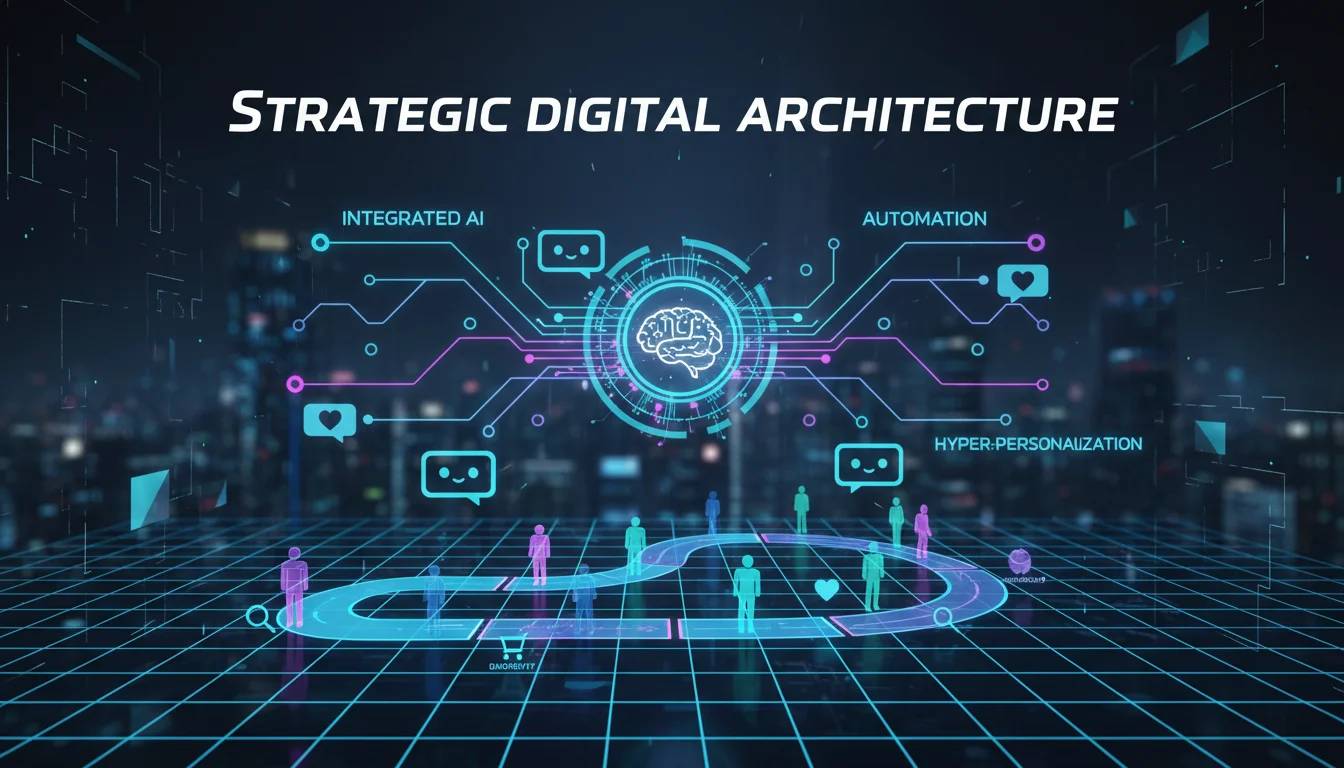
Solving Key Challenges Through Strategic Digital Architecture
To resolve the CMO’s demand for verified profitability, agencies must transition their service models from isolated, tactical performance marketing toward holistic “growth marketing”. While performance marketing focuses narrowly on immediate metrics like Click-Through Rates (CTR) and initial conversions, growth marketing encompasses the entire customer lifecycle. It aligns sales enablement, customer retention strategies, and lifetime value (LTV) optimization, thereby directly addressing the boardroom’s demand for sustainable revenue impact.
To counter ad fatigue and navigate the deprecation of third-party cookies, agencies must aggressively adopt Artificial Intelligence (AI) and automation to power hyper-personalization at scale. AI algorithms can analyze vast datasets to optimize campaign delivery in real-time, ensuring that messaging is highly relevant and contextually aware. Furthermore, the deployment of conversational marketing through Large Language Model powered chatbots provides an immediate mechanism to capture and qualify inbound traffic 24/7, satisfying the modern buyer’s demand for instant, frictionless engagement.
Optimal Strategies for Digital Marketing Agencies in India
To acquire highly lucrative corporate clients, digital marketing agencies must deploy an omnichannel matrix of strategies, ensuring their brand intersects with the B2B buyer’s complex, non-linear journey at multiple digital touchpoints.
Account-Based Marketing (ABM) and LinkedIn Domination
Given the expanding size of enterprise buying committees, broad-spectrum, untargeted advertising is highly inefficient. Agencies must utilize Account-Based Marketing (ABM), a strategy that treats individual high-value target companies as distinct markets. By utilizing LinkedIn Sales Navigator, agencies can map the entire organizational structure of a target enterprise and deploy multi-touch campaigns specifically tailored to the unique pain points of each stakeholder. A critical tactic within this ecosystem is the deployment of “Zero-Click Content”. Because enterprise buyers are time-poor and hesitant to leave their native social feeds, agencies must deliver high-value, comprehensive insights directly within the feed (e.g., a detailed LinkedIn carousel or native video) without requiring a click-through to a landing page. This generates immense psychological reciprocity and positions the agency as a trusted authority before the buyer ever initiates formal contact.
Advanced Search Engine Optimization (SEO) and Search Engine Marketing (SEM)
While SEO drives long-term organic authority, SEM provides immediate visibility for high-intent commercial queries. The future of search in India requires optimization for Artificial Intelligence Search Integration. As search engines deploy generative AI models (like Google’s Search Generative Experience), agencies must utilize advanced schema markups to structure their data, ensuring their technical content is synthesized and presented as the definitive “Featured Answer” by the AI assistant.
Video Synergies and Influencer Amplification
The consumption of short-form video content has skyrocketed in India. Agencies must utilize platforms like YouTube Shorts and Instagram Reels to distribute highly authentic, relatable content that addresses the rapidly changing industry environment. Furthermore, B2B influencer marketing is gaining massive traction. By collaborating with respected industry analysts, technology commentators, and niche business consultants, agencies can borrow established credibility and access highly engaged, pre-qualified audiences at a fraction of the cost of traditional media buying.
Local and Global Examples/Case Studies
| Campaign / Brand | Agency Involved | Strategic Execution | Measurable Outcomes |
|---|---|---|---|
| Salesforce India (B2B Expansion) | Internal / LinkedIn Marketing Partners | Executed a highly localized, multi-channel brand campaign targeting Indian mid-market decision-makers. They deployed LinkedIn “Thought Leader Ads” featuring local voices. | By adding hyper-personalized copy (“Indian retail companies like yours are growing…”), they doubled their engagement rate and achieved CTRs 2x higher than platform benchmarks. |
| KitKat “Catch a Break” | Social Panga | Recognizing digital burnout among creators, the agency invited over 100 influencers to pause their schedules and document their “break” with a KitKat. | The empathy-driven campaign generated over 1 billion impressions, 878 million video views, and a massive 2.77% lift in brand recall. |
| Titan Watches (Brand Repositioning) | Unnamed Top Indian Agency | Aiming to shed a traditional image for younger consumers, the agency crafted compelling, modern storytelling narratives amplified by user-generated content (UGC) and micro-influencers. | Successfully repositioned the brand’s contemporary appeal, resulting in a significant surge in targeted demographic engagement and shifting brand perception. |
| B2B Tech Startup (Lead Velocity) | Unnamed Local Lead Gen Agency | A startup suffering from low conversion rates utilized the agency to deploy SEO-optimized content, customized LinkedIn outreach, and tailored email sequences targeting IT decision-makers. | Within six months, the startup experienced a 200% growth in high-quality leads, improved conversion rates by 40%, and secured multiple enterprise-level contracts. |
| Indian E-commerce Brand (AI Personalization) | Unnamed Digital Marketing Company | Faced with high traffic but weak purchasing, the brand partnered with an agency to integrate AI systems for real-time, hyper-personalized product suggestions. | The implementation of behavioral analytics and personalization drove a 35% growth in sales revenue within the first three months. |
Competitive Analysis
The digital marketing agency landscape in India is immensely competitive and highly fragmented. Current estimates suggest there are over 5,000 active digital marketing companies operating within the country, with the sector expanding at an annual rate of 20–25% to meet the insatiable demand for online visibility. To achieve market dominance, an agency must meticulously analyze the operational architectures of the top-tier incumbents.
Current Digital Presence of Top Businesses in India
The vanguard of the Indian digital marketing sector comprises a mix of highly specialized independent shops and massive global conglomerates. An analysis of their digital footprint reveals distinct strategic positionings:
| Agency Name | Core Competencies & Service Offerings | Key Clientele Portfolio | Market Positioning & Digital Presence |
|---|---|---|---|
| Growth Hacker Digital | Organic SEO, App Store Optimization (ASO), Performance Marketing, Content Marketing, Analytics. | Decathlon, ICICI Bank, Paytm, Aditya Birla Capital. | Positions itself fiercely on data-driven ROI and explosive growth hacking. Heavily leverages global awards (Clutch, The Manifest) to project absolute empirical authority. |
| Social Panga | Creative digital strategy, UI/UX design, Influencer management, Media planning. | Amazon, Flipkart, Zepto, ITC Limited, Cure.fit. | Cultivates a highly distinct, rebellious brand persona (referring to their team as “Mafias”). Their digital presence is dominated by highly visual, viral, and culturally resonant B2C experiential marketing case studies. |
| FoxyMoron | High-volume content production, Omnichannel commerce consulting, Technology services. | Nykaa, Lenovo, Ford, Shell Vogue. | Focuses on technological integration and large-scale audience engagement, utilizing listening and response systems to drive brand interactivity. |
| ROI Minds | Shopify Digital Marketing, Direct-to-Consumer (DTC) scaling, Local SEO, Native Advertising. | BMW, ASOS, Jindal. | Operates with a hyper-focus on bottom-line financial metrics. Their digital presence explicitly targets e-commerce founders seeking immediate Return on Ad Spend (ROAS) optimization. |
| iProspect | Programmatic advertising, Data analytics, Paid search, E-commerce marketing. | Microsoft, Adidas, Under Armour. | A massive global entity with over 300 employees in India. |
They project immense technical authority, focusing on highly complex, data-centric performance media buying for multinational enterprises.
WebChutney
- Product marketing, Advertising, WordPress development, Social media.
- Clients: IKEA, Uber, Swiggy, Red Bull.
Relies heavily on its reputation for global creative excellence, highlighting accolades like the Cannes Lions Global Agency of the Year to attract top-tier consumer brands.
What the Market Leaders are Doing Well
The defining characteristic of these top-tier agencies is their refusal to operate as generic, full-service vendors. Instead, they have cultivated intense micro-specializations (e.g., ROI Minds focusing exclusively on D2C/Shopify scaling, or Social Panga dominating influencer-led virality).
Furthermore, these agencies excel in comprehensive multichannel integration. They understand that the modern Indian consumer navigates fluidly between Google Search, Instagram Reels, and offline experiences. Therefore, they architect frictionless brand ecosystems rather than isolated ad campaigns. They have also been the earliest adopters of advanced Marketing Technology (MarTech). Market leaders are heavily leveraging AI-driven predictive modeling for campaign optimization, automated programmatic media buying, and advanced conversational chatbots to capture intent instantly. Their self-promotional marketing relies exclusively on verifiable, data-rich case studies that explicitly detail the revenue impact and overarching business transformation achieved for their clients, thereby directly addressing the CMO’s demand for ROI validation.
Gaps and Opportunities to Outperform the Incumbents
Despite the high level of sophistication among the market leaders, severe structural vulnerabilities exist within the broader industry that agile, newly emerging agencies can exploit for rapid growth:
- The “Reporting vs. Revenue” Disconnect: A pervasive and highly vocalized frustration among Indian corporate clients is the abundance of mid-tier agencies that focus entirely on delivering voluminous, incomprehensible analytical reports filled with vanity metrics, rather than driving actual, localized revenue. Agencies that can completely discard vanity reporting and instead offer service-level agreements tied to specific business outcomes—such as guaranteed Cost-Per-Acquisition (CPA) targets or qualified pipeline generation—will instantly disrupt competitors who are trapped in the traditional reporting paradigm.
- The Massive MSME Underservice: While the elite agencies lock themselves in fierce bidding wars for multi-million dollar enterprise contracts (which require grueling 6-9 month sales cycles), the Indian MSME sector remains drastically underserved. India possesses over 63 million MSMEs, and staggering reports indicate that 80% of these entities still operate without a dedicated, coherent digital strategy. This represents a massive blue-ocean opportunity. These businesses do not need expensive, omnichannel brand architectures; they require low-friction, high-impact localized strategies, such as Google My Business (GMB) optimization and WhatsApp-integrated lead generation.
- The Need for Strategic Business Partners, Not Just Vendors: CMOs are increasingly exhausted by agencies that only know how to execute media buys. They are facing hard business questions from their boards regarding brand premiumization, distribution expansion, and market penetration. Agencies that elevate their positioning from “digital executors” to strategic “Fractional CMOs”—actively working to align internal sales and marketing silos, conducting voice-of-customer research, and guiding go-to-market strategies—will command premium retainer fees and forge unbreakable, multi-year client loyalty.
Recommended Strategy for Digital Marketing Agencies in India
To successfully penetrate the market and achieve sustainable, high-margin growth, a digital marketing agency in India must deploy a highly targeted, bifurcated strategy. This approach must speak directly to the distinct psychological, operational, and financial realities of two primary buyer personas: the Enterprise Executive and the SME Founder.
Target Audience Personas
| Attribute | Persona 1: The Enterprise CMO (The ROI Validator) | Persona 2: The D2C / SME Founder (The Growth Hacker) |
|---|---|---|
| Demographics | 35–55 years old; located in major Tier 1 metropolitan hubs (Mumbai, Bengaluru, Delhi NCR). | 25–45 years old; operating in both Tier 1 cities and rapidly emerging Tier 2/Tier 3 economic centers. |
| Operational Reality | Operates within a highly structured corporate hierarchy. Must manage complex buying committees consisting of 6-10 stakeholders. | Operates with extreme agility but highly constrained resources. Wears multiple hats and makes autonomous purchasing decisions. |
| Pain Points | Subjected to intense boardroom scrutiny regarding marketing profitability and the correlation of digital spend to enterprise valuation. Plagued by fragmented data systems and unclear ROI attribution. | Battling predatory marketplace commission rates (15-30% on Amazon/Flipkart). Struggling to build direct consumer relationships and manage high customer acquisition costs (CAC) amid severe digital saturation. |
| Primary Purchasing Motivator | Mitigating professional risk. Proving marketing as an enterprise growth engine rather than an operational cost center. Requires extensive, data-heavy proof of competence. | Immediate, measurable sales velocity and cash flow generation. Requires scalable frameworks to compete against heavily funded legacy conglomerates. |
Recommended Channels and Campaign Types
The tactical deployment of capital must be tailored specifically to the targeted persona:
For the Enterprise CMO: Account-Based Marketing (ABM) via LinkedIn When targeting enterprise accounts, the fundamental strategy must shift from broad “lead generation” to precise “account capture.” Agencies should utilize LinkedIn Sales Navigator to map the entire organizational chart of the target enterprise, identifying every member of the buying committee. Campaigns should be structured around highly personalized, multi-touch cadences. Crucially, agencies should leverage “Thought Leader Ads” on LinkedIn. Data indicates that promoting content through the personal profiles of the agency’s founders or senior executives generates engagement rates and click-through rates up to 2x higher than content promoted through faceless corporate brand pages. This humanizes the agency and establishes peer-to-peer executive trust.
For the D2C / SME Founder: Intent-Driven Search and Social Conversion SME founders are actively searching for immediate solutions. Agencies must maintain a relentless presence on bottom-of-funnel (BOFU) search engine marketing (Google Ads), bidding on high-intent queries like “Shopify marketing agency India” to intersect with active buying behavior. Concurrently, agencies should deploy hyper-local Meta Ads (Facebook/Instagram) targeting specific regional radii. These ads should be integrated directly with short-form lead capture mechanisms or WhatsApp API integrations to minimize friction and capture immediate interest from local business owners.
Content Ideas Specific to Digital Marketing Agencies
Content marketing cannot rely on generic, easily replicable advice; it must serve as an undeniable, asymmetric demonstration of the agency’s technical superiority and strategic depth.
- The “Tear-Down” Audit Video Series: The agency should produce detailed, highly technical video audits of popular Indian brands (or anonymized prospects). These videos should explicitly highlight the brand’s wasted ad spend, technical SEO flaws, and UI/UX friction points, followed by a prescriptive, actionable blueprint to rectify them. This establishes immediate, unassailable authority.
- Predictive Industry Briefings (Zero-Click Framework): To cater to time-poor executives, the agency must publish high-value, data-dense insights natively on social platforms without requiring the user to click a link. For example, publishing a detailed LinkedIn carousel analyzing “How the DPDP Act Will Impact Indian D2C Customer Acquisition Costs in Q4,” providing all the strategic value directly in the feed.
- Financial Reality Case Studies: Discard case studies that boast about “impressions.” Instead, publish aggressive, financially focused narratives. A case study titled “How We Decreased CAC by 42% for [Client Name] While Scaling Monthly Recurring Revenue to ₹50 Lakhs” directly addresses the exact fiscal metrics that validate agency competence.
Budget-Friendly Digital Marketing Approaches
For agencies targeting the MSME sector, or for nascent agencies managing their own limited operational capital, highly efficient marketing strategies are required:
- Hyper-Local SEO Dominance: Capitalizing on the Google My Business (GMB) ecosystem is highly effective and essentially free. By consistently updating the profile, soliciting structured local reviews, and utilizing localized keyword integration, an agency can secure dominance for “near me” searches, effectively bypassing heavily funded national competitors within their immediate geographic radius.
- Automated Conversational Pipelines: Implementing AI chatbots and automated WhatsApp nurture sequences transforms a static website into a continuous, 24/7 lead qualification engine. This allows the agency to instantly engage and qualify inbound traffic without the immediate overhead of a large human sales development team.
- Micro-Influencer Partnerships: Rather than allocating vast sums to premium influencer endorsements, agencies should form strategic partnerships with local business creators, niche industry commentators, or B2B podcasters. Co-hosting webinars or exchanging value (barter arrangements) taps into highly targeted, pre-warmed audiences with minimal financial outlay.
Keywords & SEO Opportunities
A dominant organic search presence is the ultimate, visible proof of concept for any digital marketing agency. If an agency cannot rank its own website, a prospective client will inherently doubt its ability to rank theirs. The SEO strategy must meticulously map to user intent, ensuring the agency captures traffic across the entire spectrum—from broad educational queries to highly specific transactional demands. Furthermore, optimization must heavily account for the rapid rise of conversational voice search, which is projected to dominate up to 70% of all mobile queries by 2027.
High-Intent Keywords for Ranking (Transactional & Commercial Investigation)
| Keyword Category | Target Keywords | Search Intent & Strategic Value |
|---|---|---|
| Broad Commercial Authority | digital marketing agency India, best SEO company in India, PPC agency India. | Users evaluating top-tier national providers. These keywords possess massive search volume but extreme competition. Ranking here requires significant long-term backlink generation and domain authority. |
| Service-Specific Expertise | B2B lead generation agency India, ecommerce performance marketing India, Shopify SEO experts. | Users seeking specialized, niche expertise. These offer moderate search volume but exceptionally high conversion rates, as the intent is highly focused. |
| Local & Regional Dominance | SEO services in Bangalore, best digital marketing agency in Delhi, top-rated ad agency in Mumbai. | Geographically constrained intent. These are essential for capturing local enterprise budgets and MSME clients who prefer geographical proximity to their agency partners. |
Long-Tail Keyword Opportunities (India-Specific & Voice Search)
| Keyword Category | Target Long-Tail Phrases | Strategic Application & Optimization Tactic |
|---|---|---|
| Question-Based (Voice & AI Search) | Which is the best digital marketing company in India?, How to choose the best ad agency in Chandigarh?. | These queries must be optimized using FAQ schema markups. This structure allows Google’s AI Overviews and Search Generative Experience (SGE) to fetch the agency’s content as the definitive “Featured Snippet,” preempting traditional organic links. |
| Cost & Value Driven | affordable digital marketing agency India, low cost lead generation tactics India. | Directly targets the vast MSME and startup demographic that operates with constrained budgets and seeks highly efficient capital deployment. |
| Niche Strategic Authority | marketing roadmap for business growth B2B, how Indian SMEs can compete using digital marketing. | Serve as anchor text for in-depth, pillar blog posts. These pages should be gated with lead-capture forms, allowing the agency to collect high-quality top-of-funnel email addresses in exchange for downloadable whitepapers. |
Implementation Roadmap
To transition from theoretical strategy to operational execution, a digital marketing agency must follow a rigidly phased implementation blueprint. This roadmap is specifically designed to secure immediate cash flow and operational stability through quick wins, while simultaneously architecting the complex infrastructure required for long-term, scalable enterprise acquisition.
Phase 1: Short-Term Quick Wins & Infrastructure (Months 1–3)
The objective of the first quarter is to establish absolute foundational digital hygiene, plug any existing lead leakage across the agency’s digital properties, and initiate high-velocity, low-cost outbound campaigns.
- Month 1: Rigorous Infrastructure Audit and Analytics Alignment. The execution begins with a ruthless audit of the agency’s current digital assets. Agencies must completely eliminate vanity metrics and configure advanced analytics to track full-funnel attribution, ensuring every marketing rupee is tracked to pipeline generation. The agency must redefine its Ideal Customer Profile (ICP) and update buyer personas to accurately reflect current macroeconomic realities and budget constraints. Concurrently, the agency website must be highly optimized for technical SEO, ensuring rapid page load speeds, mobile responsiveness, and ADA compliance.
- Month 2: Local Dominance and Asset Optimization. The agency must aggressively claim, verify, and hyper-optimize its Google My Business (GMB) listings to capture immediate local search intent. To handle anticipated inbound traffic, the agency must implement automated conversational agents (AI chatbots) on the website to qualify leads 24/7. Simultaneously, the executive team must begin consistently deploying “Zero-Click” thought leadership content organically across LinkedIn to initiate brand authority building.
- Month 3: Outbound Velocity and LinkedIn Activation. With the foundation secure, the agency launches targeted outbound campaigns utilizing LinkedIn Sales Navigator. Crucially, the strategy must focus on amplifying the founder or CEO’s personal profile to drastically increase engagement and connection acceptance rates. The agency will deploy intent-matched lead magnets (e.g., offering a free, highly detailed industry-specific SEO audit) to capture mid-funnel evaluators who are currently dissatisfied with their incumbent agencies.
Phase 2: Long-Term Strategy & Enterprise Scaling (Months 6–12)
With baseline revenue stabilized and short-term lead pipelines functioning, the operational focus shifts to establishing unassailable national market authority, automating pipeline velocity, and securing complex, high-retainer enterprise contracts.
- Months 4-6: The Content Ecosystem and ABM Orchestration. The agency transitions from tactical social media posts to producing comprehensive pillar content. This involves launching high-production-value webinars or podcasts featuring respected industry leaders, thereby building reciprocal authority and capturing “dark social” engagement. Concurrently, the agency officially launches full-scale Account-Based Marketing (ABM) campaigns targeting pre-identified, high-value enterprise accounts. This requires utilizing multi-touch attribution software to track engagement precisely across the prolonged 6-9 month enterprise sales cycle.
- Months 7-9: Programmatic Expansion and Predictive Analytics. The agency injects capital into advanced programmatic advertising and complex retargeting sequences. This ensures the agency brand remains omnipresent across the web in front of corporate prospects who have previously engaged with their digital assets. To achieve maximum efficiency, the agency integrates AI-powered predictive scoring software (such as 6sense or similar enterprise tools) into their CRM. This technology analyzes digital body language to identify anonymous high-intent accounts exhibiting buying signals before they explicitly request a consultation, allowing the sales team to intercept the buyer early in their journey.
- Months 10-12: Omnichannel Synergy and Client Retention Loops. The final phase solidifies the total integration of all marketing channels—ensuring that email nurturing, social media engagement, paid search, and outbound sales efforts operate in seamless, orchestrated synchronization. The agency implements automated referral and loyalty workflows, transforming highly satisfied existing clients into a predictable, low-cost acquisition channel. Finally, the agency conducts a comprehensive annual review to recalibrate the 12-month strategy against rapidly emerging technological paradigms, such as deeper generative AI search integrations and evolving data privacy legislation.
Conclusion
The Indian digital marketing landscape has evolved far beyond the rudimentary deployment of targeted advertisements and basic social media management; it is now a highly complex, technologically dense ecosystem that serves as the primary engine for corporate revenue growth and market expansion. With the digital advertising market in India projected to reach an astounding USD 32.33 billion by 2030, and an internet base exceeding 800 million highly engaged users, a sophisticated digital marketing strategy is no longer a luxury for Indian agencies or their clients—it is an absolute existential imperative.
However, as the expansive data and analysis within this report illustrate, the path to sustained profitability is laden with severe systemic challenges. Chief Marketing Officers are demanding highly stringent ROI validation amidst tightening corporate budgets and economic volatility. The B2B buying journey has become fractured, non-linear, and highly elusive, requiring extensive multi-touch attribution models. Furthermore, the profound technological expertise required to execute advanced 2026 strategies—such as AI-driven predictive lead scoring, omni-channel Account-Based Marketing, and programmatic retail media integrations—is increasingly difficult and exceptionally expensive to acquire and retain in-house. For many Indian businesses, and indeed for many digital marketing agencies themselves, the sheer financial burden of scaling an elite, internal digital technology team to navigate these complexities severely erodes operating margins and hinders agile growth.
Strategic Recommendations and The Outsourcing Imperative
To maintain competitive supremacy, accelerate digital transformation, and optimize profitability without compromising on technological execution, an increasingly validated strategic maneuver is cross-border outsourcing to specialized regional hubs.
By leveraging the geographic and economic arbitrage available in neighboring digital ecosystems, Indian businesses and agencies can access elite technological execution while radically optimizing their financial architecture.
In this precise context, Gurkha Technology, a premier digital marketing and technology agency based in Nepal, represents an unparalleled strategic partner. Partnering with Gurkha Technology and its renowned digital marketing expert, Arjan KC, offers specific, highly quantifiable advantages for entities targeting dominance within the Indian market:
- Uncompromising Cost Efficiency Paired with Premium Quality: Nepal’s rapidly expanding IT sector—which recently exceeded USD 500 million in service exports—offers a highly compelling economic proposition. Outsourcing intensive digital operations, including advanced technical SEO, full-stack web and application development, and complex programmatic ad management to Nepal allows Indian firms to drastically reduce fixed human resource and operational overhead expenses. This capital efficiency enables Indian agencies and enterprises to reallocate funds toward aggressive media buying and expansive market penetration.
- Cultural Alignment and Deep Regional Adaptability: Unlike distant offshore hubs that often struggle with the nuances of the South Asian market, Nepalese professionals possess profound cultural adaptability, exceptionally high English proficiency, and an innate, intrinsic understanding of Indian socio-economic dynamics. This ensures that all brand messaging, content creation, and campaign execution remain highly authentic, hyper-localized, and deeply resonant with complex Indian demographics.
- Advanced Technological Fluency: Gurkha Technology operates at the forefront of digital innovation. The agency is powered by a highly skilled, tech-savvy youth workforce fully capable of executing complex, modern mandates—from navigating Generative Engine Optimization (GEO) and AI integration to architecting sophisticated, data-driven marketing ecosystems.
- Frictionless Collaboration and Seamless Integration: Operating within an ideal time zone that perfectly synchronizes with Indian corporate hours, Gurkha Technology ensures real-time collaboration, rapid agile deployment, and seamless, uninterrupted communication channels. They do not operate merely as an outsourced vendor, but as an integrated, high-performance extension of the client’s internal team.
In an era where market dominance in India requires executing highly sophisticated, data-driven marketing architecture, attempting to build every capability internally is strategically inefficient and financially burdensome. Engaging Gurkha Technology empowers Indian businesses and agencies to instantly deploy world-class digital strategies, transforming technological disruption from a systemic threat into an unassailable, highly profitable competitive advantage.