Cyber Hygiene for Teachers: How to Project Your School's Data (And Yours)
Digitalization is great. Until you click the wrong link and lose all your Lesson Plans. Or worse, until a student’s personal information gets leaked.
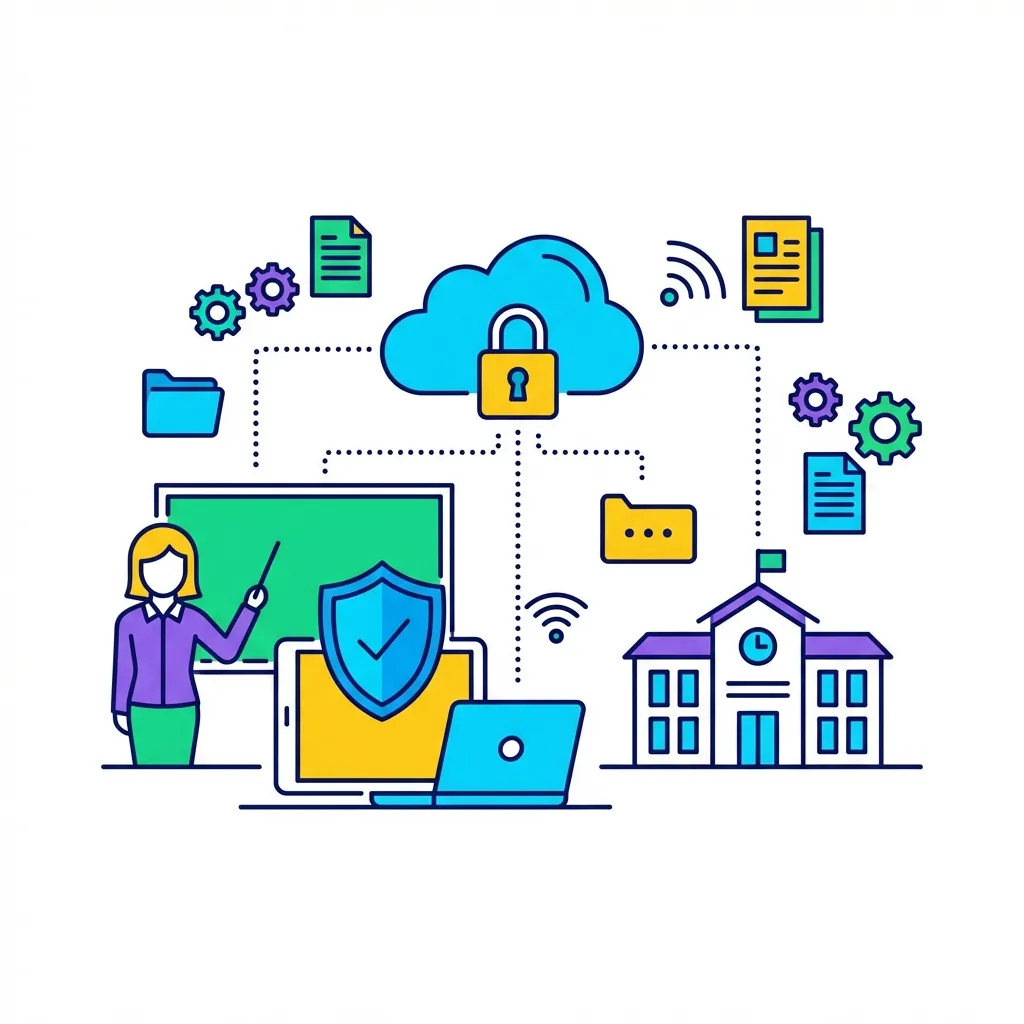
In Nepal, we often treat “Computer Security” as something for banks. But schools hold sensitive data: phone numbers, addresses, grades, and medical info.
As a Teacher Developer, it is your duty to protect that data.
The “SchoolAdmin123” Problem
Be honest. Is your password SchoolName123? Or Nepal123?
If so, you are leaving the door wide open.
Rule 1: Passphrases > Passwords
Don’t use complex nonsense like Xy7#z!9. You will forget it and write it on a sticky note.
Instead, use a Passphrase: 4 random words strung together.
- Example:
GreenElephantEatingMomo - It is easy to remember, but impossible for a computer to guess.
Rule 2: Don’t Trust the “Principal”
Cybercriminals are smart. They will send you an email that looks like it is from your Principal. “Subject: URGENT. Please send all grade sheets attached immediately.”
Before you reply, check the email address. Is it principal@school.edu.np or principal.school@gmail.com?
When in doubt, call them.
The Public Computer Trap
Most teachers share computers in the staff room.
- Never save your password in the browser on a shared computer.
- Always log out.
- Don’t insert your personal pendrive without scanning it first. (Or better yet, stop using pendrives. Use Google Drive).
Protecting Your Students
It is not just about you.
- Don’t post photos of students on your personal Facebook without permission.
- Don’t leave grade sheets lying on your desk.
- Don’t share student phone numbers in a WhatsApp group unless necessary.
The Lesson
Cyber hygiene is like washing your hands. It takes 20 seconds, but it prevents a lot of sickness. Teach this to your students, too. A digital citizen who doesn’t know safety is like a pedestrian who doesn’t look both ways.
Related Posts and Resources
- Low-Tech, High-Impact Teaching in Nepal
- Coding for Teachers in Nepal
- Data-Driven Grading for Educators
- Open-Source Schools in Nepal
- Gamification in Nepali Classrooms
- Flipped Classroom in Nepal
- CS Unplugged Activities in Nepal
- School Wi-Fi Budget Planning
- AI-Based Assessment in Nepal
- Digital Marketing in Nepal (Complete Guide)