Craft Beverage Digital Marketing India Report: Strategy & Analysis
Industry Overview
The Indian alcoholic and non-alcoholic beverage sector is navigating a profound paradigm shift, transitioning from a historical reliance on mass-produced, high-alcohol-by-volume (ABV) spirits and conventional lagers toward nuanced, experiential, and flavor-forward craft beverages. Historically, the Indian beer landscape was dominated by heavily hopped ales imported during the colonial era, specifically designed to survive the long sea voyage from Britain. However, the modern craft beer revolution began taking shape around 2008 with the establishment of the first indigenous microbreweries in urban hubs like Pune and Bangalore. Today, the craft beverage ecosystem is not merely a manufacturing sector; it operates as a sophisticated lifestyle industry inextricably linked with urban socialization, experiential dining, culinary exploration, and a growing emphasis on health and wellness.
Current Market Size, Growth, and Trajectories
The macroeconomic indicators surrounding the Indian beverage industry highlight unprecedented expansion, fueled by a demographic dividend, accelerating urbanization, rising disposable incomes, and the expansion of the urban middle class. India is now the most populous country globally, boasting over 1.4 billion citizens, which presents a massive, largely untapped consumer base for localized, artisanal products.
The broader Indian beer market was valued at approximately USD 4.50 billion (INR 383 billion) in 2022 and reached an estimated USD 4.77 billion (INR 406 billion) by the end of 2023, with consumption hitting 345 million cases. Market projections indicate that the overarching beer sector will expand to USD 7.31 billion (INR 622 billion) by 2028, reflecting a robust compound annual growth rate (CAGR) of 8.1%. Looking further ahead, the total beer market in India is forecasted to reach a staggering INR 1,240 billion by 2034, growing at a CAGR of 9.9% throughout the coming decade.
Within this overarching ecosystem, the craft beer and artisanal beverage segment is demonstrating explosive, vastly accelerated growth compared to traditional mass-market products. The Indian craft beer market achieved a valuation of USD 5.8 billion in 2025 and is projected to skyrocket to USD 37.9 billion by 2034, exhibiting an extraordinary CAGR of 23.20%. This rapid expansion is fundamentally driven by a shift in consumer valuation from absolute quantity and alcohol content to quality, complex flavor profiles, and brand authenticity.
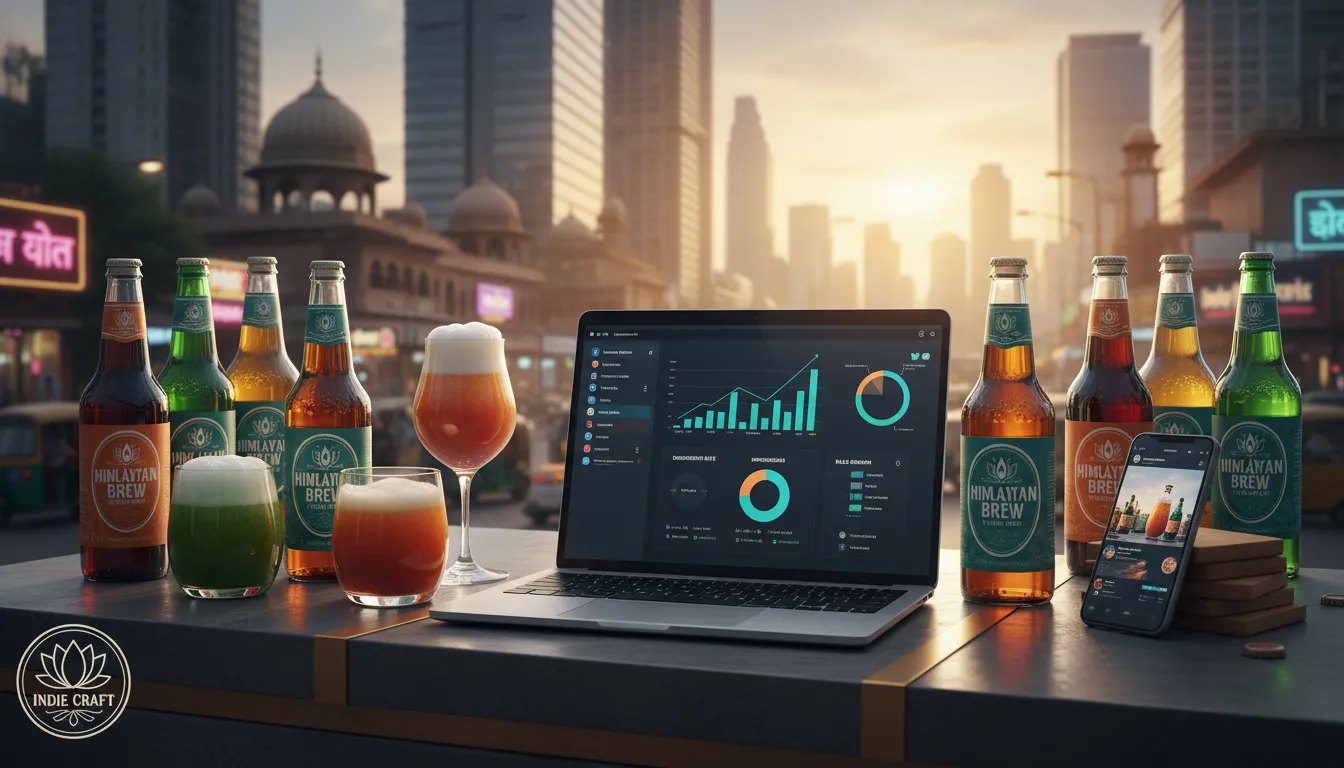
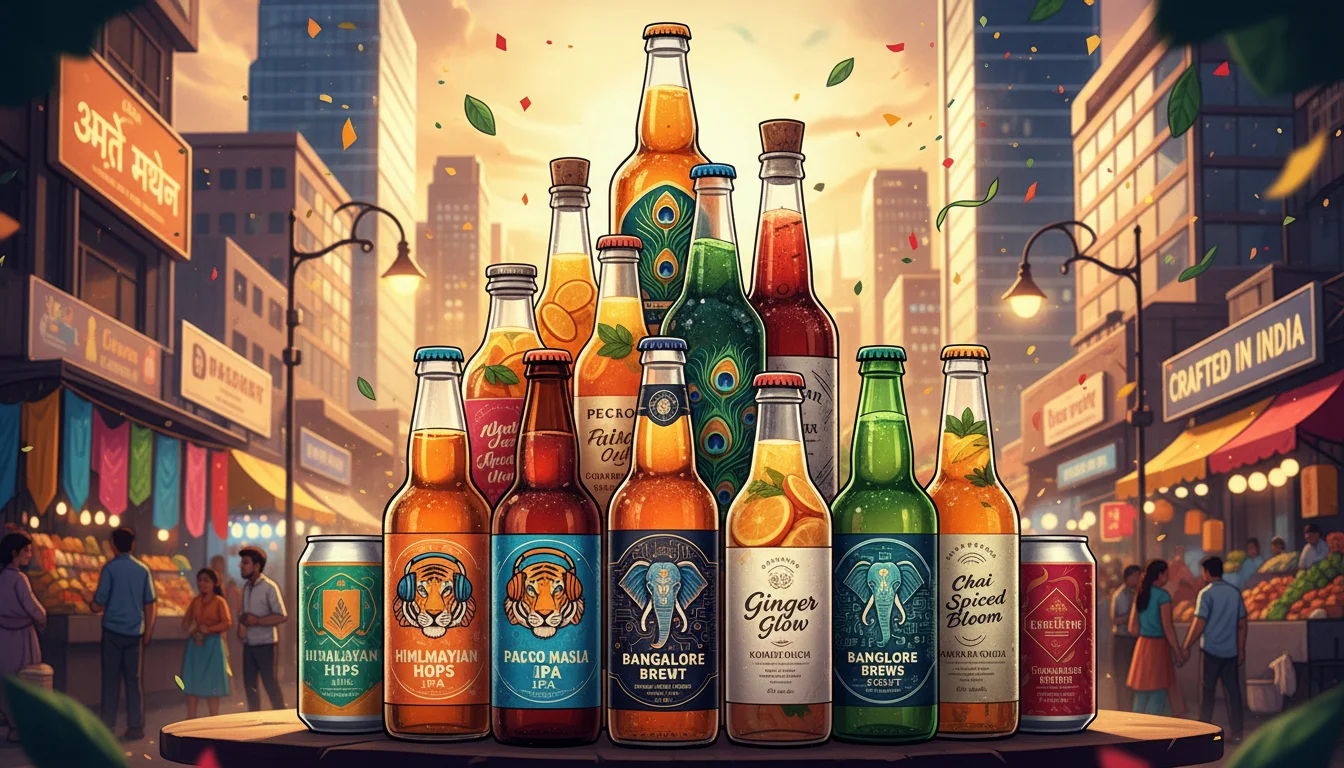
Concurrently, the non-alcoholic craft beverage sector—particularly the kombucha and functional beverage market—is experiencing a parallel surge. Driven by post-pandemic health awareness, consumers are increasingly seeking probiotic, gut-friendly alternatives to conventional carbonated soft drinks. The Indian kombucha market, valued at USD 100.8 million in 2024 and USD 119.89 million in 2025, is expected to expand to between USD 439.8 million and USD 462.19 million by 2033–2034, registering a CAGR of 16.18% to 17.8%. The conventional kombucha segment currently dominates with a 76% market share, favored for its established brewing processes and clean-label natural alignment.
The following table synthesizes the current valuations, growth projections, and underlying drivers across the primary segments of the Indian craft beverage industry.
Overall Beer Market: Base Valuation (USD 4.77 Billion / INR 406 Billion), Projected Valuation (USD 7.31 Billion / INR 622 Billion), Projected CAGR (8.1% - 9.9%). Primary Growth Drivers and Market Characteristics: Expanding demographics, rising middle-class income, tropical climate, shift in societal views on alcohol consumption.
Craft Beer Market: Base Valuation (USD 5.8 Billion), Projected Valuation (USD 37.9 Billion), Projected CAGR (23.20%). Primary Growth Drivers and Market Characteristics: Premiumization trends, rise of experiential dining, millennial preferences for unique flavor profiles, rapid expansion of local microbreweries.
Kombucha Market: Base Valuation (USD 119.89 Million), Projected Valuation (USD 462.19 Million), Projected CAGR (16.18% - 17.8%). Primary Growth Drivers and Market Characteristics: Heightened health and wellness consciousness, demand for low-sugar functional benefits, emergence of hard kombucha, expanding quick commerce distribution.
These figures reveal a critical industry insight: craft beverage production is transitioning from a localized subculture into a primary economic engine within the Indian hospitality sector. The demand for localized, small-batch products with unique ingredients—such as Alphonso mango wheat ales or Himalayan apple ciders—demonstrates a maturing consumer base that values provenance and craftsmanship.
Key Challenges Faced by Businesses in this Industry
Despite the highly favorable growth trajectories, microbreweries and craft beverage producers face severe structural, regulatory, and operational bottlenecks that threaten to stifle scaling efforts and erode profit margins.
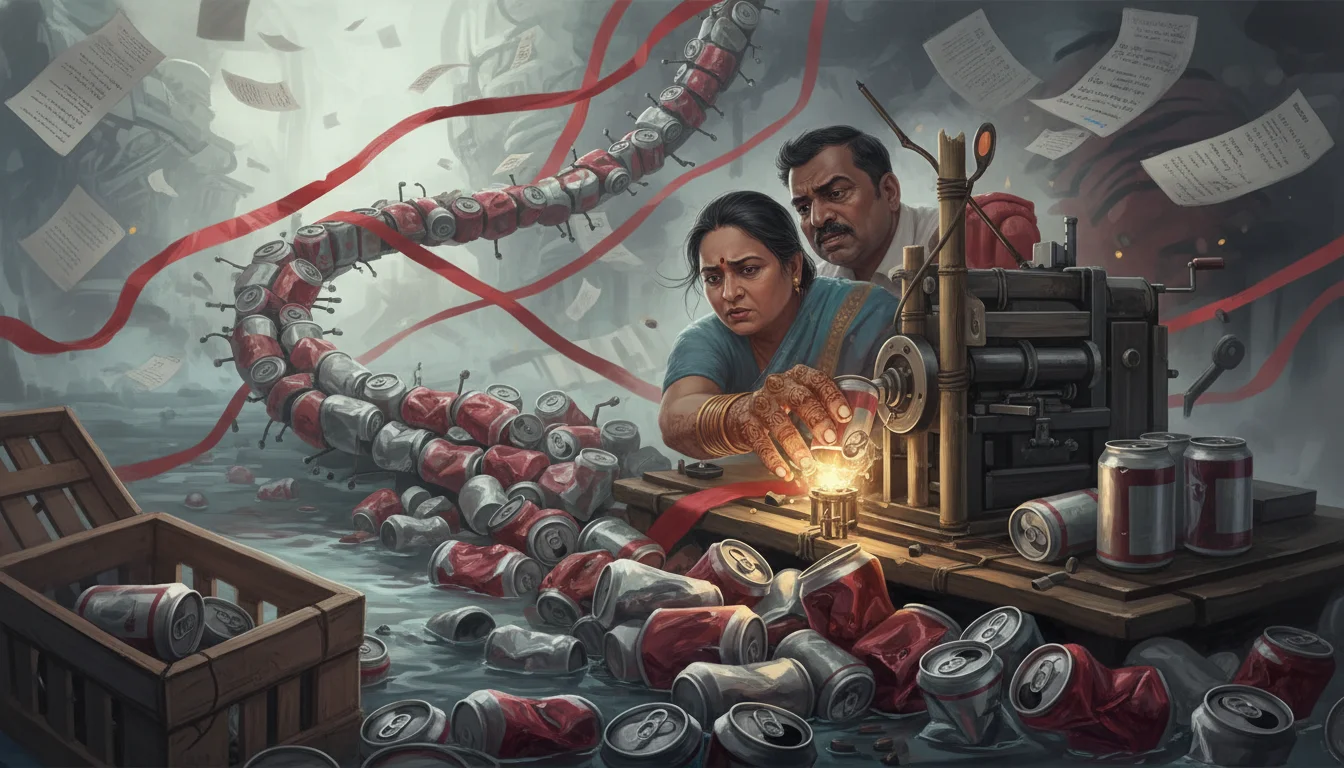
The most pressing immediate challenge is a severe disruption within the packaging supply chain. The Indian beer industry is currently confronting a massive shortage of aluminum cans, directly resulting from federal regulatory interventions. The implementation of Quality Control Orders (QCO) brought aluminum cans under mandatory Bureau of Indian Standards (BIS) certification effective April 1, 2025. Due to this strict certification requirement, the domestic beer industry is currently prohibited from importing cans from foreign vendors, as BIS certification processing is highly protracted. Meanwhile, domestic packaging suppliers, such as Ball Beverage Packaging India and Can-Pack India, have already reached maximum production capacity and cannot scale output for at least 6 to 12 months. The Brewers Association of India anticipates an annual deficit of 120 to 130 million units of 500ml cans—a shortage impacting roughly 20% of India’s total beer sales. This bottleneck forces producers to pivot heavily toward on-trade (taproom) sales rather than off-trade retail distribution, placing an immense burden on localized venue marketing.
Regulatory fragmentation further complicates expansion. The Indian regulatory landscape regarding alcohol is notoriously localized; state excise laws dictate licensing, distribution networks, and taxation parameters. A microbrewery operating successfully in Maharashtra faces entirely different legal and operational frameworks if attempting to expand into Karnataka or Delhi.
Compounding these operational hurdles is the stringent restriction on marketing. The Cable Television Networks Rules and the Advertising Standards Council of India (ASCI) strictly prohibit the direct and indirect promotion of alcoholic beverages across mass media. To navigate this, brands must rely heavily on “surrogate advertising”—the practice of promoting brand extensions like mineral water, soda, music events, or apparel that carry the same visual identity as the restricted alcohol product. However, this strategy is under increasing regulatory scrutiny. The Central Consumer Protection Authority (CCPA) has released guidelines allowing them discretionary power to ban surrogate advertisements if the surrogate products lack independent existence, mimic alcohol branding too closely, or fail to exhibit visible retail shelf presence.
Finally, the industry is battling market saturation in tier-1 urban hubs and persistent operational inefficiencies. Cities like Bangalore, Mumbai, and Pune are witnessing an oversaturation of microbreweries, making it exceedingly difficult for new entrants to differentiate themselves solely on the quality of their beer. Internally, breweries often struggle with undertrained manpower. A highly trained staff is essential to communicate the brand’s brewing story and flavor nuances; an uneducated workforce damages the premium experiential premise upon which craft breweries rely.
Digital Landscape in India (Contextual to the Industry)
Understanding the nuances of the Indian digital landscape is paramount for circumventing the severe physical and regulatory challenges inherent to the beverage industry. Digital platforms act as the ultimate democratizing force, allowing local, independent microbreweries to establish brand equity and compete effectively against multinational corporate conglomerates such as AB InBev, Carlsberg, and United Breweries (Heineken).
Internet & Social Media Usage Relevant to the Industry
India’s digital ecosystem is fundamentally characterized by mobile-first connectivity, driven by deeply affordable data penetration and widespread smartphone adoption across both urban centers and tier-2 cities. For craft beverage producers, the digital landscape must be leveraged as a highly visual, community-centric domain. Consumers in this sector do not merely purchase a beverage; they are buying into an aspirational lifestyle and a cultural aesthetic. Consequently, digital usage patterns that prioritize visual storytelling, peer validation, and community engagement are the most relevant.
The aesthetic nature of the craft beverage industry—characterized by vibrant beer colors, industrial taproom designs, and elaborate food pairings—aligns perfectly with visual-first platforms. Social media usage has transitioned from static image consumption to an overwhelming preference for short-form video content, requiring brands to pivot their digital resource allocation accordingly.
Popular Platforms Among the Target Audience
The platform landscape is distinctly stratified based on consumer intent and the stage of the marketing funnel.
Instagram currently dominates the top-of-funnel discovery space for craft breweries and artisanal beverage producers.
Its algorithmic features—specifically Reels for broadcasting behind-the-scenes brewing processes and Stories for real-time, localized taproom updates—align flawlessly with the dynamic nature of hospitality marketing. The platform allows for geographic tagging, making it a powerful tool for local discoverability. While platforms like TikTok boast massive global reach, their younger demographic skew is often less aligned with the premium pricing and legal drinking age requirements of craft beer, though they remain highly relevant for non-alcoholic kombucha and craft soda brands seeking viral exposure. YouTube, while valuable for establishing long-term brand authority through detailed brewing documentaries, generally lacks the algorithmic precision and direct, localized engagement tools required for a single-location microbrewery’s daily marketing operations.
However, while Instagram drives discovery, WhatsApp has emerged as the definitive platform for middle and bottom-of-funnel conversion in India. WhatsApp is ubiquitous in the Indian digital diet; it transcends basic messaging to function as a primary infrastructure for commerce. Businesses increasingly utilize the WhatsApp Business API for initiating conversational commerce. This involves sending direct, personalized notifications regarding new seasonal beer releases, handling pre-purchase inquiries, managing taproom reservations, and facilitating digital loyalty programs. Because Indian consumers exhibit a strong preference for quick, chat-based interactions over navigating complex websites or filling out web forms, WhatsApp provides a highly efficient, frictionless pathway from digital discovery to physical taproom visitation.
Consumer Online Behavior
The modern Indian craft beverage consumer exhibits specific, highly predictable digital behavioral patterns that marketers must target.
First, there is a massive reliance on hyper-local search intent. Approximately 81% of consumers utilize Google Search and Maps specifically to find local businesses, heavily relying on queries with high localized intent such as “best craft brewery near me,” “pet-friendly breweries in Bangalore,” or “kombucha on tap in Pune”. Appearing within the coveted Google Local Map Pack is often the primary determining factor between a fully booked taproom and an empty venue on a Friday night.
Second, consumer behavior is heavily dictated by peer validation. The craft beverage market is heavily influenced by User-Generated Content (UGC) and aggregated online reviews. Before committing to a visit, consumers actively seek out reviews on Google Business Profiles, Zomato, and specialized global platforms like Untappd to validate the quality of the beer and the ambiance of the taproom.
Finally, post-pandemic behavior has permanently solidified the expectation for seamless digital-physical integration within hospitality spaces. Consumers expect contactless digital touchpoints within physical taprooms, including QR-code menus, digital ordering systems, and instant online feedback mechanisms linked directly to their smartphones. This behavior provides breweries with an unprecedented opportunity to capture first-party data the moment a customer sits at a table.
Digital Marketing Opportunities
Digital marketing provides the precise, surgical toolkit required to neutralize the beverage industry’s inherent operational and regulatory challenges. Where physical distribution is hindered by the severe aluminum packaging shortage, targeted digital hyperlocal marketing can pivot consumer behavior, driving foot traffic directly to physical on-trade taprooms. Where direct advertising is legally restricted, digital content marketing allows for sophisticated brand-building through storytelling and lifestyle association.
Solving Key Challenges Through Digital Innovation
The strict prohibition on direct alcohol advertising under Indian law forces brands to innovate through digital surrogate and content marketing. The success of this strategy relies on promoting a legally compliant product or experience that shares the exact visual identity, typography, ethos, and brand name of the restricted alcoholic product. Digital channels allow brands to execute this flawlessly and dynamically. A microbrewery can heavily promote a weekend indie music festival, a proprietary line of branded sustainable apparel, or an educational masterclass on the science of fermentation. Through strategic content marketing, the brand creates an indelible psychological association in the consumer’s mind. When the consumer eventually walks into a retail store or a bar, the brand recall generated by the digital content translates directly into a purchase of the restricted product.
Furthermore, digital marketing allows brands to pivot from promoting the restricted product to promoting the compliant process. Documenting the brewing process, highlighting the sourcing of local Indian ingredients, and profiling the brewmasters creates engaging, educational content that entirely bypasses advertising restrictions by focusing on artisanal craftsmanship rather than alcohol consumption.
Best Strategies for Microbreweries and Craft Beverage Producers
To capitalize on these opportunities, a multi-disciplinary digital approach is required.
Search Engine Optimization (SEO) and Hyperlocal Targeting
For a physical microbrewery, the Google Business Profile (GBP) is the most critical digital asset. Optimizing the profile with high-quality images, accurate operational hours, geo-tagged posts, and rapid responses to customer reviews directly influences visibility in local search queries. Beyond GBP, breweries must invest in programmatic and hyperlocal SEO, creating dedicated landing pages for specific neighborhoods to capture highly targeted search traffic.
Social Media and User-Generated Content (UGC)
The strategy must transition from treating social media as a static poster board to utilizing it as a dynamic storytelling medium. Brands must heavily utilize video-first content (Reels) to showcase the taproom atmosphere. More importantly, they must incentivize User-Generated Content. Reposting customer stories acts as authentic social proof, which algorithms reward with higher organic reach.
Conversational Commerce via WhatsApp
Deploying the WhatsApp Business API allows breweries to maintain a direct line to their most loyal customers. By segmenting audiences, breweries can send highly targeted broadcast messages regarding new seasonal beer releases, exclusive tasting events, and loyalty program updates, effectively bypassing the crowded social media feed.
QR Code Ecosystem Integration
QR codes act as the vital bridge between offline consumption and online marketing. Beyond touchless menus, QR codes placed on coasters, table tents, or beer packaging can trigger interactive taproom trivia games, direct users to leave a Google review instantly, or seamlessly enroll them in a WhatsApp-based loyalty program.
Micro-Influencer Partnerships
In a market driven by taste and lifestyle, partnerships with local food and beverage influencers, lifestyle bloggers, and micro-influencers yield exceptionally high returns. Unlike traditional, expensive celebrity endorsements, micro-influencers offer highly targeted, localized audiences with deep trust metrics. Hosting exclusive tasting events for a curated group of local influencers generates massive, authentic hyper-local buzz.
Local and Global Case Studies
Global Benchmark: BrewDog
The Scottish multinational brewery BrewDog provides a masterclass in community-driven digital marketing. BrewDog positioned itself as an “anti-corporate, punk” alternative to mass-market beers. Through their “Equity for Punks” crowdfunding campaigns, they turned consumers into financial investors and fervent brand evangelists. Their digital strategy heavily utilized provocative content marketing, an uncompromised brand personality, and highly targeted Connected TV (CTV) advertising, which achieved a 95% view-through rate by targeting specific audience interests. The underlying insight is that a polarizing, highly authentic digital identity generates significantly more loyalty than safe, sanitized corporate messaging.
Local Success: Simba Beer
Simba, an Indian craft beer brand, successfully penetrated a market dominated by heritage brands through aggressive digital PR and influencer management. Instead of relying on traditional advertising, they seeded their products with prominent food, lifestyle, and fashion influencers across Delhi and Mumbai, leveraging their highly active social media accounts for organic, authentic reviews. They also utilized the founder’s profile to establish credibility, placing thought-leadership articles in major digital business publications. This strategy educated the consumer on the nuances of craft beer, firmly establishing Simba as a premium, homegrown alternative.
Local Success: Bira 91
Bira 91 successfully navigated India’s strict advertising laws by focusing heavily on guerrilla marketing, distinctive visual branding featuring their iconic monkey mascot, and word-of-mouth amplification through digital channels. By hosting interactive, community-driven events like the “April Fools’ Fest” and heavily promoting them digitally, Bira 91 boosted customer engagement by 20% and established a youthful, vibrant brand identity without ever running a direct television advertisement for alcohol.
Local Success: Bombucha and Mountain Bee
In the non-alcoholic space, Indian kombucha brands are thriving through targeted digital positioning. Bombucha utilizes a “fermentation-first” digital approach, marketing kombucha alongside kimchi to establish a holistic gut-health brand identity.
Conversely, Mountain Bee pushes heavy digital messaging regarding sustainability and bottle returns, keeping their operation grounded in real-world environmental responsibility rather than empty marketing slogans, which resonates deeply with the eco-conscious digital consumer.
Competitive Analysis
To formulate a winning strategy, it is essential to analyze the digital footprint of existing top-tier players, identify their core strengths, and systematically exploit the operational marketing gaps left by the broader market.
Current Digital Presence of Top Businesses and What They Are Doing Well
The leading craft beverage producers in India excel at comprehensive brand ecosystem building. They recognize that they do not just sell beer or kombucha; they curate a community experience. Top brands heavily utilize Instagram Reels to capture the energetic ambiance of their taprooms, the intricate details of their brewing processes, and the faces behind the brand.
Furthermore, top brands have recognized the profound consumer shift toward environmental consciousness and have integrated it into their digital identity. Brands implementing and digitally highlighting sustainability campaigns—such as zero-waste brewing processes, recycling spent grain, or promoting reusable packaging—have reported up to a 15% increase in quantifiable brand loyalty.
These leaders also excel in omnichannel event marketing. By digitally promoting physical events—such as live music, trivia nights, yoga and beer sessions, and brewery tours—they create continuous, recurring revenue streams and provide patrons with fresh incentives to return weekly. Finally, heritage brands excelling in surrogate marketing, such as Imperial Blue’s “Men will be Men” campaigns or McDowell’s No.1 strategic event sponsorships, demonstrate the power of associating a restricted product with high-visibility cultural touchpoints.
Gaps and Opportunities to Outperform the Market
Despite the success of the top tier, the vast majority of Indian Small and Medium Enterprises (SMEs) in the microbrewery space commit critical digital marketing errors. Industry data reveals that over 60% of SMEs are not utilizing digital analytics effectively, operating without structured plans or SMART goals. These foundational errors present massive opportunities for new or optimized entrants.
The following table outlines the most common digital marketing failures among Indian SMEs and the corresponding strategic opportunities they present.
| Common SME Digital Marketing Mistake | Operational Consequence | Strategic Opportunity for Competitors |
|---|---|---|
| Ignoring Local & Hyperlocal SEO | Invisibility in Google Map Packs; loss of high-intent foot traffic from consumers searching nearby. | Implement aggressive GBP optimization, consistent local citation building, and dedicated location-specific landing pages. |
| Lack of Clear Funnels & Analytics | Wasted ad spend; inability to measure ROI, track customer acquisition costs, or understand what drives conversions. | Deploy end-to-end tracking using UTM parameters, QR-code attribution, and CRM integration to build predictive revenue models. |
| Treating Social Media like a “Poster Board” | Low engagement; algorithms actively suppress content that only broadcasts discounts or static promotional flyers. | Pivot to immersive storytelling, video-first content (Reels), highlighting user-generated content, and community-centric engagement. |
| Over-Reliance on a Single Channel | Extreme vulnerability to algorithmic changes (e.g., relying purely on Instagram for all visibility). | Diversify into high-retention, algorithm-proof channels like the WhatsApp Business API, Email newsletters, and programmatic SEO. |
| Generic Targeting & Messaging | Attempting to appeal to “everyone,” resulting in diluted messaging that resonates with no specific demographic. | Develop highly specific buyer personas and tailor digital content to niche segments (e.g., targeting fitness enthusiasts specifically for Kombucha). |
By actively addressing these gaps, a craft beverage producer can achieve a disproportionate share of digital visibility relative to their actual marketing spend.
Recommended Strategy for Microbreweries and Craft Beverage Producers
A successful digital marketing strategy for the Indian craft beverage sector must be holistic, seamlessly bridging the digital-to-physical divide. It requires a meticulous understanding of the evolving audience, the deployment of the right mix of channels, the creation of engaging, compliant content, and a disciplined approach to budget allocation.
Target Audience Personas
The Indian market has evolved significantly past the monolithic “beer drinker” stereotype. A precise strategy must target highly specific demographic segments:
- The Millennial / Gen Z Explorer (Age 21-35): This core segment views craft beverages as social currency. They are adventurous, highly active on Instagram, and deeply influenced by aesthetics, taproom ambiance, and unique flavor profiles (e.g., mango wheat ales, spicy regional kombuchas). They are less concerned with high ABV and more concerned with the experiential and “Instagrammable” qualities of the venue.
- The Established Connoisseur (Age 35-55+): Typically urban professionals with higher disposable incomes. They appreciate the technical aspects of brewing, the nuances of flavor, and overarching premiumization. They respond well to detailed educational content, behind-the-scenes brewery tours, and sophisticated food pairing masterclasses.
- The Health-Conscious Optimizer (Age 25-45): This rapidly expanding demographic drives the kombucha and low-ABV market. They scrutinize ingredients, actively seek functional benefits like gut health and probiotics, and prefer clean-label, organic, and locally sourced products. They are highly responsive to content detailing health benefits, sugar reduction, and sustainable production.
- The Emerging Female Consumer: Historically underserved by traditional, hyper-masculine liquor marketing, female consumers in India are increasingly driving the growth of premium spirits, craft cocktails, and artisanal beers. Marketing must be inclusive, focusing on sophisticated flavor profiles, lifestyle integration, and safe, vibrant taproom environments.
Recommended Channels and Campaign Types
To effectively capture these diverse personas, a synchronized multi-channel approach is mandatory:
- Google Business Profile & Apple Maps (Foundation): Absolute necessity for local discovery. Campaigns should focus on incentivizing reviews via QR codes placed on tables, generating a high volume of recent, positive, and keyword-rich customer feedback to dominate the local Map Pack.
- Instagram (Primary Social Engine): Transition from static images to short-form video. Campaigns should focus on a “Day in the Life of a Brewer,” showcasing raw ingredients, highlighting the taproom atmosphere, and broadcasting live acoustic sessions to drive weekend footfall.
- WhatsApp Business API (CRM & Retention Engine): The ultimate tool for localized customer retention. Implement conversational campaigns for frictionless table reservations, push notifications for limited-edition seasonal brews, and automated post-visit feedback requests. WhatsApp boasts open rates significantly higher than traditional email in the Indian market.
- Influencer & UGC Campaigns: Launch targeted micro-influencer campaigns. Instead of paying exorbitant fees to national mega-influencers, host an exclusive, immersive tasting event for 10-15 local food and lifestyle bloggers. Their collective, authentic content generates massive hyper-local buzz and valuable backlinks.
Content Ideas Specific to the Industry
Content is the vehicle for surrogate marketing. It must provide genuine value, entertainment, or education without violating national advertising norms.
- The Science of the Sip: Educational video series breaking down the complex fermentation process, explaining the chemical differences between an Ale and a Lager, or demystifying the SCOBY (Symbiotic Culture of Bacteria and Yeast) used in kombucha production.
- Culinary Synergy (Food Pairings): High-quality, visually stunning content demonstrating how specific craft beers or kombuchas pair with regional Indian cuisine. For example, creating a “Desi Guide” that pairs a crisp Pilsner with spicy Chettinad chicken, or a ginger kombucha with street-style chaat.
- Sustainability Chronicles: Documenting the brand’s eco-friendly practices, such as recycling spent grain into baked goods for the taproom menu, utilizing zero-plastic packaging, or implementing water conservation techniques. This builds immense, quantifiable brand equity.
- Surrogate Lifestyle Drops: Heavily promoting branded merchandise (premium t-shirts, bespoke glassware), sponsoring local indie music events, or launching a proprietary line of sparkling water, ensuring the core brand logo, typography, and aesthetic are front and center in all digital assets.
Budget-Friendly Digital Marketing Approaches
For smaller, independent microbreweries, massive multinational ad spends are not feasible. Industry benchmarks indicate a realistic digital marketing budget for small to medium businesses in India ranges from 5% to 12% of annual revenue. For a growing startup, this translates to a typical monthly digital marketing spend of ₹50,000 to ₹2,00,000, while a smaller local service business might spend between ₹15,000 and ₹40,000 monthly. Spending below ₹10,000 per month is strongly discouraged, as it severely limits algorithmic reach and platform learning phases.
To maximize Return on Investment (ROI) on a constrained budget, brands should rely on strategic allocation and guerrilla tactics.
Utilizing free tools like Google Keyword Planner and Google Trends for SEO research eliminates the need for expensive software subscriptions. Maximizing User-Generated Content by reposting customer stories provides free, highly authentic marketing material that acts as crucial social proof. Furthermore, utilizing free or low-cost QR code generators to link to digital menus and review sites eliminates recurring printing costs while simultaneously driving digital engagement.
The following table provides a recommended budget breakdown for an established microbrewery allocating 5-8% of its revenue to marketing (e.g., an annual budget of ₹10 lakh to ₹16 lakh).
| Budget Category | Recommended Allocation | Strategic Purpose & Channel Focus |
|---|---|---|
| Paid Campaigns (Ads/Boosts) | 35% - 40% (₹4.2 - ₹4.8 lakh) | Immediate visibility, lead generation, and event promotion via Meta Ads and highly targeted local Google Search Ads. |
| Content Creation & SEO | 20% - 25% (₹2.4 - ₹3 lakh) | Long-term organic growth, high-quality blog writing, video production (Reels), and professional taproom photography. |
| Social Media Organic & Community | 15% - 20% (₹1.8 - ₹2.4 lakh) | Daily engagement, responding to comments/DMs, managing local influencer relations, fostering UGC. |
| WhatsApp/Email CRM & Tech | 10% - 15% (₹1.2 - ₹1.8 lakh) | WhatsApp API costs, loyalty software subscriptions, and automated messaging platforms to drive repeat business. |
Keywords & SEO Opportunities
In a hospitality industry heavily reliant on local foot traffic and physical visitation, Search Engine Optimization (SEO) is not a luxury; it is a fundamental, non-negotiable utility. Consumers actively search for beverage experiences online, and appearing at the top of the Search Engine Results Page (SERP) guarantees a steady, predictable stream of patrons.
High-Intent Keywords for Ranking
High-intent (transactional and navigational) keywords indicate that the user is situated at the bottom of the marketing funnel, actively looking to make a purchase or visit a physical location immediately. For microbreweries, these are predominantly “Hyperlocal” keywords. Hyperlocal SEO targets specific neighborhoods or micro-geographic intersections rather than broad city-level terms. This drastically reduces competition while significantly increasing conversion rates.
| To capture these, the brewery’s website architecture must include dedicated landing pages for each physical location, optimized title tags (e.g., Best Craft Brewery in Koramangala | ), and comprehensive schema markup to feed menus and operating hours directly to search engines. |
| Hyperlocal Keyword Cluster | Target Intent | SEO Implementation Strategy |
|---|---|---|
| “best craft brewery in [Neighborhood]” | Immediate taproom visit. | Optimize Google Business Profile; include keyword in website H1 tags and location pages. |
| “microbrewery near me with outdoor seating” | Facility-specific requirement. | Update GBP amenities attributes; highlight patios and beer gardens in meta descriptions. |
| “buy organic kombucha online India” | E-commerce transaction. | Optimize product pages; emphasize “organic” and “shipping” in product schemas. |
| “craft beer shop [Neighborhood]” | Off-trade purchase. | Programmatic SEO for local delivery areas; build dedicated local landing pages. |
Long-Tail Keyword Opportunities (India-Specific)
Long-tail keywords are highly specific phrases (typically comprising 3 to 5 or more words) that yield lower search volumes individually but boast much higher cumulative conversion rates because the user’s intent is crystal clear. Crucially, long-tail keywords account for 70% to 92% of all search queries in India and are vastly easier for a new or growing website to rank for compared to highly competitive short-tail terms like “beer” or “brewery”.
These keywords are ideal for building a comprehensive content strategy, populating educational blog posts, FAQ sections, and surrogate marketing material, which draws users into the brand’s ecosystem much earlier in the buying cycle.
| Long-Tail Keyword Category | India-Specific Examples | Content Strategy Application |
|---|---|---|
| Informational / Educational | “how is craft beer made in microbreweries”, “difference between ale and lager beer”, “health benefits of drinking kombucha daily”. | Long-form blog posts detailing the brewing process; scientific breakdowns of SCOBY and gut health; embedded video tutorials. |
| Event / Experience Based | “pubs with live music on weekends in Delhi NCR”, “pet friendly breweries in Bangalore”, “corporate party venues with craft beer in Hyderabad”. | Dedicated event landing pages; FAQ sections highlighting taproom amenities; targeted Google Ads during peak booking seasons. |
By systematically mapping these long-tail queries to specific blog posts or service pages, a craft beverage brand can build massive topical authority in the eyes of search engines, dominating the SERPs for all related queries.
Implementation Roadmap
To successfully execute this exhaustive strategy, a structured, phased approach is required to prevent operational overwhelm, ensure efficient budget utilization, and guarantee steady, measurable growth.
Phase 1: Short-Term Quick Wins (Months 1–3)
The initial phase focuses on capturing existing local demand, optimizing foundational digital infrastructure, and establishing a legally compliant surrogate marketing baseline.
| Objective | Key Tactics & Actions | Expected KPI / Outcome |
|---|---|---|
| Local Search Dominance | Claim, verify, and fully populate the Google Business Profile. Upload high-quality photos/videos, current menus, and accurate business hours. | Top 3 ranking in the Google Local Map Pack for brand and immediate neighborhood search queries. |
| Frictionless Taproom Tech | Deploy branded QR codes on all taproom tables linking directly to touchless digital menus, review platforms, and social media pages. | 30% increase in monthly Google reviews; complete elimination of paper menu printing costs. |
| Social Foundation & UGC | Transition the primary social strategy from static images to Reels. Create specific “Instagrammable” physical spaces within the taproom to naturally encourage UGC. | Steady growth in follower count and a baseline generation of 5-10 organic UGC tags per week. |
| Surrogate Setup | Define the surrogate brand extension (e.g., sustainable merchandise, weekend music nights, or sparkling water) and launch initial content campaigns. | Establishment of a legally compliant marketing vehicle ready for future paid advertising scaling. |
Phase 2: Long-Term Strategy & Ecosystem Scaling (Months 6–12)
The secondary phase transitions from merely capturing demand to actively generating it, utilizing advanced technology, automated retention loops, and deep community building.
| Objective | Key Tactics & Actions | Expected KPI / Outcome |
|---|---|---|
| Conversational Commerce | Integrate the WhatsApp Business API. Launch automated reservation flows, abandoned cart recovery (for merchandise or kombucha delivery), and post-visit feedback loops. | 20%+ increase in repeat customer visits; significant reduction in customer service response times. |
| Programmatic SEO Growth | Execute the comprehensive long-tail keyword strategy. Publish high-quality blogs targeting educational and experience-based queries. | Massive increase in organic website traffic; consistent page 1 rankings for niche local and product queries. |
| Micro-Influencer Network | Develop an ongoing partnership program with local food/lifestyle influencers. Host exclusive tasting events rather than paying for single transactional posts. | High-trust local brand awareness; creation of a dedicated, localized brand ambassador network. |
| Data-Driven Personalization | Utilize predictive analytics and CRM data to optimize supply chains and personalize marketing messages based on seasonal trends and local events. | Maximized taproom capacity during off-peak hours; optimized inventory preventing spoilage. |
Conclusion
The Indian microbrewery and craft beverage sector is traversing a critical, highly lucrative inflection point. As consumer preferences shift decisively from mass-market homogenization toward artisanal, flavor-forward, and health-conscious experiences, the economic potential is staggering. With the craft beer market projected to reach USD 37.9 billion by 2034 and the functional kombucha sector experiencing parallel exponential growth, the opportunity for agile, localized producers is unprecedented.
However, success in this hyper-competitive landscape is no longer determined solely by the quality of the brew in the glass. In an industry constrained by severe surrogate advertising laws, crippling packaging supply chain bottlenecks, and fierce urban market saturation, a sophisticated, highly localized digital marketing strategy is the ultimate differentiator.
Strategic digital marketing allows craft beverage producers to transcend physical and regulatory limitations through creative storytelling, educational content, and compliant surrogate lifestyle branding. By dominating Hyperlocal SEO to drive taproom footfall, deploying frictionless QR-code ecosystems to capture in-house data, leveraging the unparalleled conversational commerce power of the WhatsApp Business API for retention, and cultivating a community through authentic, user-generated social media content, producers can transition from mere beverage manufacturers into vital cultural touchstones.
Executing a multi-disciplinary, highly technical digital roadmap requires specialized expertise and relentless optimization.
Navigating the granular nuances of programmatic SEO, algorithm-compliant surrogate advertising, complex API integrations, and data-driven CRM systems demands a dedicated technical partner. Gurkha Technology, a premier digital marketing and technology agency based in Nepal, possesses the precise technical acumen, creative bandwidth, and regional market understanding required to digitize, optimize, and scale craft beverage brands across the South Asian market. From advanced SEO optimization and bespoke web development to mastering social media narratives and managing highly targeted, budget-efficient ad campaigns, Gurkha Technology provides the comprehensive digital infrastructure necessary to ensure that your craft beverage brand not only survives the intense competition but actively defines the culture and palate of the modern Indian consumer.