Coworking India Digital Marketing Report 2024-25
Industry Overview
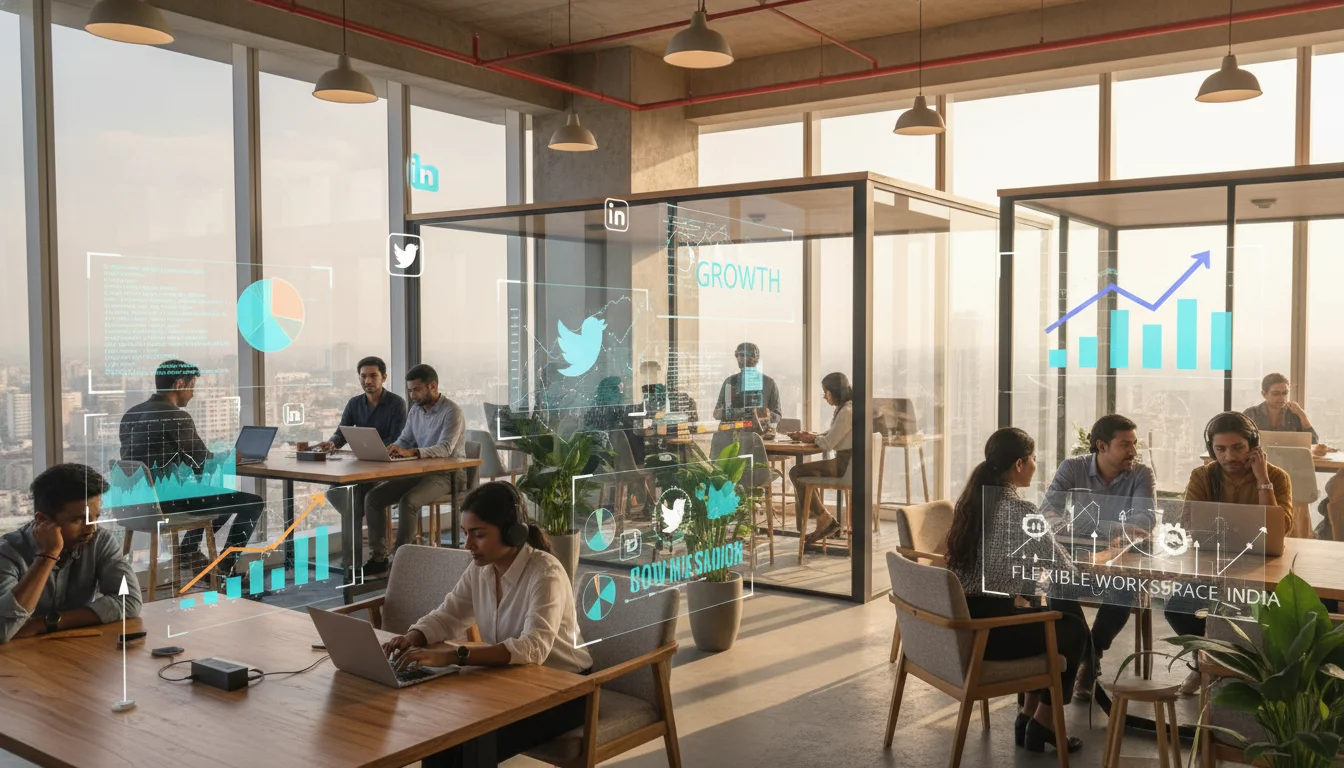
The commercial real estate and professional workspace ecosystem in India is undergoing a profound and irreversible structural transformation. Historically, the concept of a professional workspace in the Indian subcontinent was synonymous with rigid, long-term commercial leases, geographically constrained central business districts, and inflexible 9-to-5 operational models. However, driven by macroeconomic expansion, sweeping technological adoption, and a post-pandemic shift in global corporate culture, the market has pivoted aggressively toward flexible, technology-driven coworking spaces. Initially perceived as a niche real estate solution catering exclusively to bootstrapping startups, independent freelancers, and digital nomads, the Indian coworking sector has rapidly matured into a foundational pillar of the modern corporate infrastructure. Today, it serves as a critical enabler for Global Capability Centers (GCCs), multinational corporations (MNCs), and large enterprises seeking agility, talent retention, and significant reductions in capital expenditure. This paradigm shift requires a deep understanding of the market’s trajectory, its underlying drivers, and the complex operational challenges that operators must navigate.
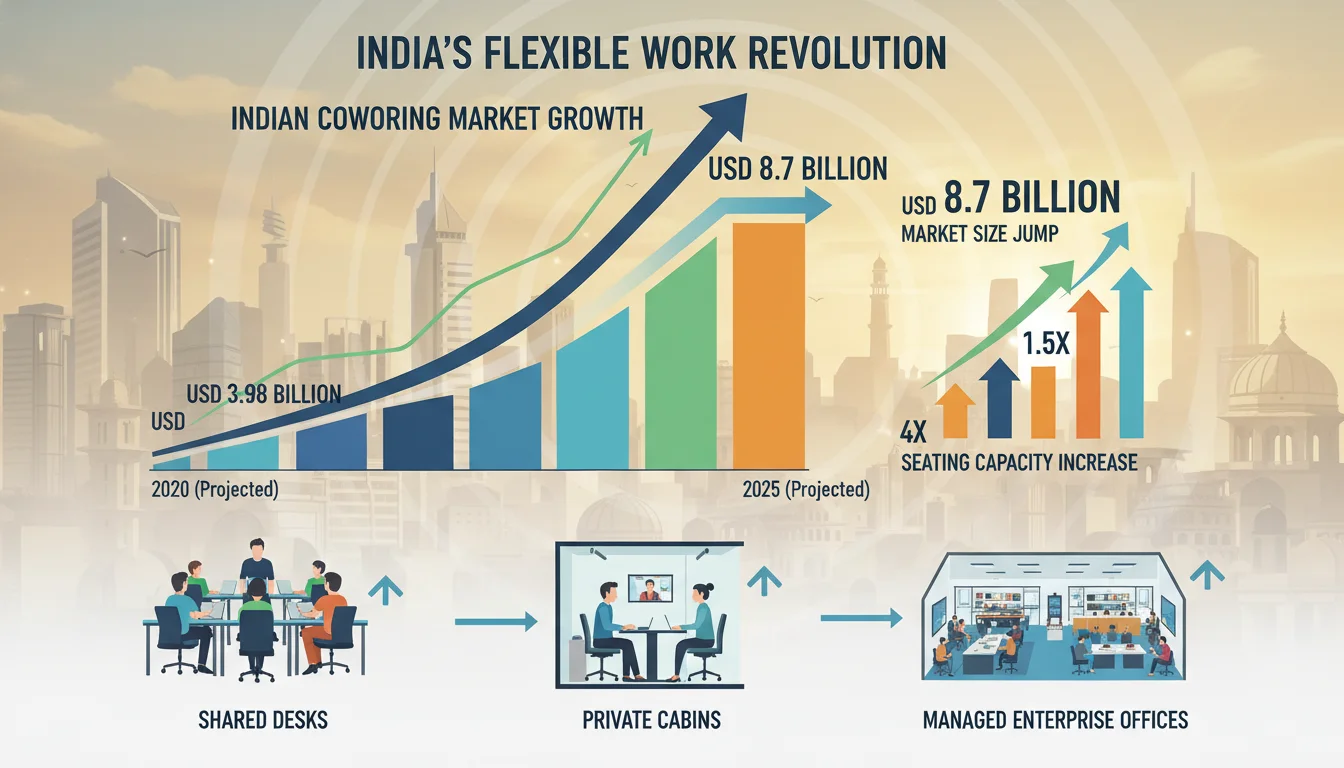
The quantification of the Indian coworking space market varies depending on the methodological inclusion of pure-play shared desks versus large-format managed enterprise offices, but all financial projections indicate an exceptionally robust, hyper-growth trajectory. Base estimates for the industry valued the Indian coworking and flexible workspace market at USD 271.7 million to USD 0.71 billion in the 2024 to 2025 fiscal period. However, when encompassing the broader spectrum of flexible office spaces, including enterprise-grade managed facilities, the base year market size for 2025 is estimated at a staggering USD 3.98 billion. The long-term projections highlight a market in aggressive expansion. Conservative models project the core coworking market to reach USD 829.2 million by 2033, while broader macroeconomic analyses forecast a surge to USD 1.96 billion by 2032, and potentially USD 8.7 billion by 2031, reflecting an impressive Compound Annual Growth Rate (CAGR) ranging consistently between 13.2% and 15.48% across various forecast periods.
This explosive growth is propelled by a confluence of macroeconomic and socio-cultural drivers. Government-backed initiatives such as “Startup India” and “Digital India” have catalyzed the world’s third-largest startup ecosystem, boasting over 80,000 recognized startups that inherently demand low-cost, scalable, and plug-and-play office infrastructure. Concurrently, the adoption of hybrid work models has forced large enterprises to optimize their real estate portfolios. Rather than maintaining massive, underutilized headquarters, corporations are decentralizing their operations, driving the demand for enterprise-managed offices. By 2025, enterprises accounted for 50.55% of the total demand for coworking spaces, eclipsing the foundational freelancer demographic, while the Information Technology (IT) sector commanded 44.15% of the industry’s total revenue.
Geographically, while Tier-1 metropolitan hubs such as Bengaluru, Delhi-NCR, and Mumbai continue to dominate the aggregate market share due to their dense concentrations of tech firms and global connectivity, the most aggressive growth vectors are emerging in Tier-2 and Tier-3 cities. Cities including Pune, Hyderabad, Jaipur, Indore, Kochi, Coimbatore, and Bhubaneswar are experiencing a coworking boom driven by improved local infrastructure, lower real estate acquisition costs, and a massive reverse migration of skilled talent seeking better work-life balances away from congested metros. By 2028, industry analysts predict that over 40% of India’s total flexible workspace demand will originate from these emerging markets, shifting the geographic focus of expansion.
Despite the staggering influx of capital and consumer demand, businesses operating within this sector face intense operational, logistical, and perceptual challenges that threaten long-term profitability and brand equity. The fundamental business model of a coworking space relies on algorithmic capacity management and yield optimization; operators must sell more memberships than their physical capacity permits, anticipating that not all members will utilize the space simultaneously. Managing the daily “ebb and flow” of attendance to maximize revenue without triggering overcrowding requires sophisticated technological intervention. Furthermore, accommodating highly diverse member expectations within a shared environment creates inherent friction. The juxtaposition of aggressive sales teams conducting loud calls alongside software developers requiring deep focus leads to acoustic pollution, which remains the primary complaint among coworking consumers. Studies indicate that noise pollution in shared workspaces can reduce individual productivity by up to 66%, elevating stress levels and drastically increasing membership churn rates.
Additionally, operators struggle with complex facility management challenges, including inefficient space utilization, scaling security protocols and access controls across multiple geographically dispersed locations, and providing enterprise-grade, redundant internet connectivity. Market saturation poses a severe threat to unit economics; as the barrier to entry lowers, local geographic markets become crowded with undifferentiated spaces. Without a compelling digital value proposition, operators are forced into a race to the bottom regarding pricing, severely impacting their return on investment. Resolving these operational and market-positioning challenges requires more than physical architectural changes; it demands a highly sophisticated, data-driven digital ecosystem.
| Market Metric | 2024 / 2025 Estimate | 2031 / 2033 Projection | Projected CAGR | Primary Growth Drivers |
|---|---|---|---|---|
| Core Coworking Valuation | USD 271.7 Million | USD 829.2 Million | 13.2% | Startups, SMEs, and Freelancer base expansion |
| Broad Flex Space Valuation | USD 3.98 Billion | USD 8.7 Billion | 13.94% | Enterprise GCCs, IT Sector decentralization |
| Enterprise Demand Share | 50.55% | Expanding consistently | N/A | Hybrid work mandates, CapEx reduction strategies |
| Top Tier-1 Hubs | Bengaluru, Delhi-NCR, Mumbai | Dominant Market Share | Steady | Tech ecosystem density, global corporate presence |
| Emerging Tier-2 Hubs | Jaipur, Indore, Kochi, Pune | Fastest Expanding Segment | 15.48% | Reverse migration, talent retention, cost optimization |
Digital Landscape in India (Contextual to the Industry)
To engineer and deploy effective marketing strategies that drive measurable occupancy rates, coworking operators must deeply understand and align with the specific digital consumption habits, platform preferences, and behavioral psychology of the Indian populace. India’s digital ecosystem is not a mere replication of Western markets; it possesses distinct linguistic, technological, and behavioral characteristics that dictate how consumers research, evaluate, and ultimately purchase commercial real estate services.
By the commencement of 2025, the Indian digital infrastructure had reached unprecedented scale. The nation supported 1.12 billion active cellular mobile connections, a figure equivalent to 76.6% of the total population. Concurrently, there were 806 million active internet users, marking an online penetration rate of 55.3%, and 491 million active social media identities, representing 33.7% of the demographic. Crucially, the Indian digital experience is fundamentally and overwhelmingly “mobile-first.” Mobile platforms absolutely dominate the digital advertising sector, accounting for a staggering 78% of total digital media spend, a dominance sustained by the proliferation of affordable smartphones and ubiquitous 4G and emerging 5G connectivity. Desktop usage, which represents a steady 22% share of digital spend, remains highly relevant for specific high-value actions, particularly in B2B categories, professional services, and the long-form research typical of enterprise clients searching for managed office spaces. Furthermore, Indian mobile users exhibit voracious data consumption habits, utilizing an average of 11 gigabytes of data each month, driving the explosive popularity of short-form video content and visual storytelling.
Understanding the platform preferences of the Indian workforce is paramount for optimizing marketing budgets and ensuring message resonance. Instagram has evolved into a powerhouse for brand visibility, lifestyle curation, and community building. In early 2025, Instagram’s adult advertising reach encompassed 37.6% of the adult population in India, with a demographic split of 29.2% female and 70.8% male. For coworking spaces, Instagram serves as the primary vehicle for visual validation, allowing operators to highlight the “vibe,” architectural aesthetics, and community networking events that inherently attract millennials, Gen Z professionals, and creative agencies. Conversely, LinkedIn represents the critical engine for B2B lead generation. As the coworking industry pivots toward Enterprise and GCC clients, LinkedIn serves as the premier platform for targeted Account-Based Marketing (ABM), allowing operators to reach decision-makers, facility managers, and corporate real estate directors seeking flexible, compliance-ready solutions.
Google’s ecosystem, encompassing both Search and Maps via the Google Business Profile, forms the foundational layer for intent-driven customer acquisition.
With an overwhelming 97% of consumers relying on online searches to discover nearby services, and 76% of mobile users acting upon local queries by visiting a physical location within twenty-four hours, local search dominance is a non-negotiable operational imperative. Finally, conversational commerce is deeply ingrained in Indian consumer behavior. Over 10.6% of adults actively use Messenger, and WhatsApp usage is nearly ubiquitous among the digitally active population. Marketing automation via WhatsApp and direct messaging platforms is critical for rapid lead response, seamless booking experiences, and ongoing member retention.
The online search and evaluation behavior of Indian consumers regarding flexible workspaces has transitioned from purely transactional inquiries to highly experiential and validation-driven journeys. This behavior is characterized by several distinct phenomena.
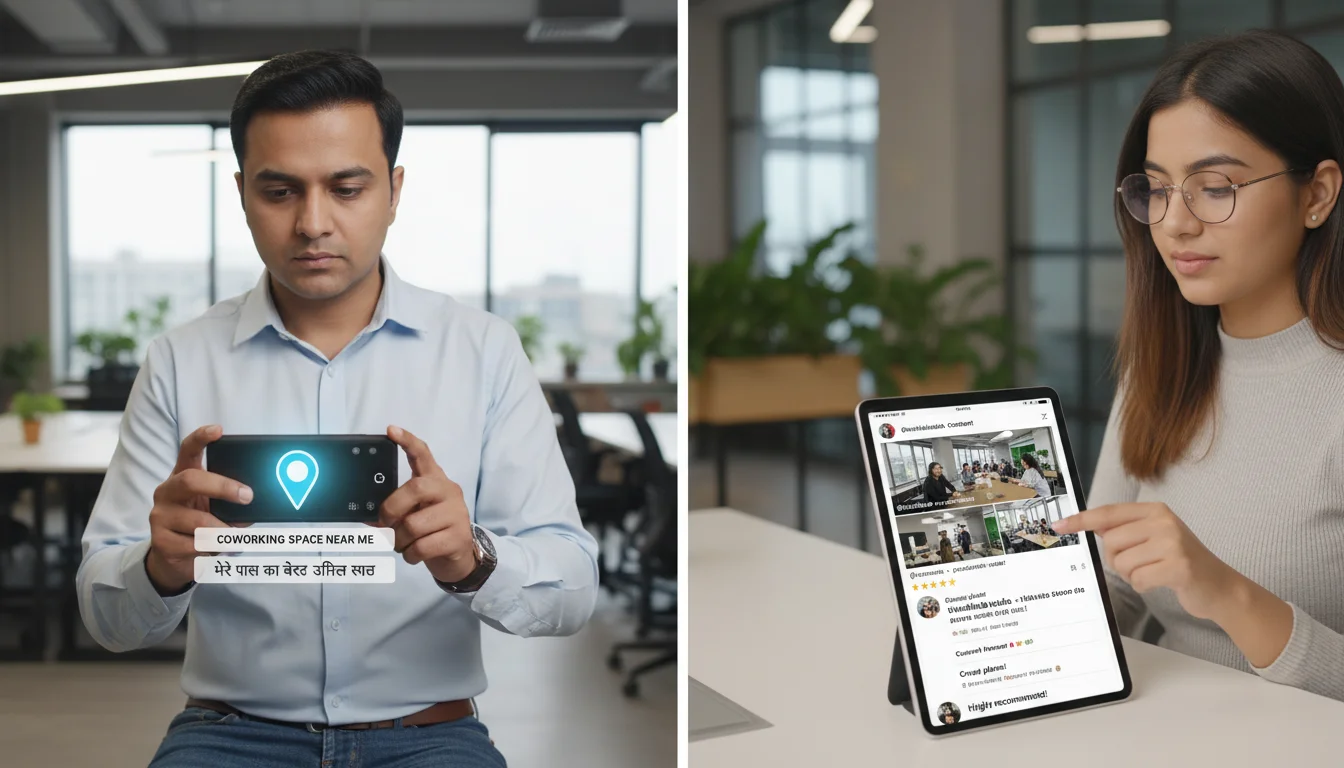
The “Near Me” Paradigm
Hyperlocal searches such as “coworking space near me,” “shared office in Koramangala,” or “affordable managed office in Andheri” dominate search volumes. Proximity to transit hubs, local infrastructure, and minimizing commute times dictate the initial consideration set for prospective members.
Vernacular Search and Voice-Assisted Queries
Over 500 million Indians access the internet primarily in their native regional languages. Voice search and text queries in Hindi, Tamil, Telugu, Bengali, and Marathi (for example, conversational queries like “mere paas ka best office space” or “startup ke liye office space Delhi mein”) are growing at an exponential rate, particularly in the rapidly expanding Tier-2 and Tier-3 geographic markets. Operators who rigidly adhere to English-only digital strategies are actively surrendering massive market share to competitors who optimize for regional linguistic nuances and “Hinglish” transliterations.
Zero-Click Validation
Prospective members validate the brand’s authenticity through interactions that often do not result in a direct website click—they scroll through Instagram Reels for a virtual walkthrough, meticulously check Google reviews for recurring complaints about internet speed or acoustic management, and scan third-party aggregator platforms for pricing transparency. If the digital representation appears overly sanitized, lacks authentic user-generated content, or highlights unresolved grievances, the prospect will abandon the evaluation process instantly, resulting in lost revenue without the operator ever capturing a lead.
| Digital Landscape Metric | 2025 Data Point | Implication for Coworking Marketing |
|---|---|---|
| Mobile Connections | 1.12 Billion (76.6% penetration) | Mandates a mobile-first website architecture and localized ad targeting. |
| Internet Users | 806 Million | Massive addressable market for digital awareness and lead generation. |
| Digital Ad Spend Share | 78% Mobile / 22% Desktop | Shift budgets to mobile for top-of-funnel; retain desktop for complex B2B enterprise conversions. |
| Monthly Data Consumption | 11 Gigabytes per user | Prioritize high-definition video content, virtual tours, and short-form Reels. |
| Vernacular Internet Users | 500+ Million | Critical need for multi-lingual SEO and localized content in Tier-2/Tier-3 expansion. |
Digital Marketing Opportunities
Digital marketing possesses the unique, scalable capacity to solve the structural and operational challenges of the Indian coworking industry by aligning localized real estate supply with high-intent digital demand. By moving beyond traditional commercial real estate brokerage models and embracing direct-to-consumer (D2C) agility alongside targeted B2B frameworks, operators can drastically reduce their reliance on expensive third-party aggregators and build highly resilient, profitable brands.
Digital mechanisms offer precise solutions to the industry’s most pressing hurdles. To mitigate the chronic issue of inefficient space utilization and erratic occupancy yields, operators can deploy programmatic advertising and dynamic Search Engine Marketing (SEM) campaigns tied directly to real-time inventory management. For instance, if enterprise private cabins are operating at maximum capacity while open-plan hot desks remain vacant, marketing algorithms and ad budgets can immediately pivot to target local freelancers with highly specific “Day Pass” or “Trial Week” promotions, thereby optimizing revenue per square foot dynamically.
Furthermore, the widespread consumer anxiety regarding acoustic friction, hidden operational costs, and internet reliability can be systematically neutralized through proactive Content Marketing and User-Generated Content (UGC) architectures. Instead of relying on static, generic architectural photography, operators can deploy authentic video testimonials from current members that specifically focus on the space’s acoustic management protocols, soundproof phone booths, and high-speed network redundancy. This preemptive digital transparency directly answers primary consumer objections before they are formally raised during a sales tour. Additionally, as operators execute aggressive expansion strategies across multiple Tier-2 cities, robust local SEO architectures allow for rapid, localized market penetration without the prohibitive capital expenditure associated with mass media or above-the-line (ATL) advertising.
Multi-Channel Strategy
To capture market share effectively in this landscape, coworking spaces must employ a cohesive, multi-channel strategy.
Hyper-Local Search Engine Optimization (SEO) and Answer Engine Optimization (AEO)
Establishing absolute dominance in the Google Local Pack requires relentless, ongoing optimization of the Google Business Profile (GBP), ensuring strict consistency of NAP (Name, Address, Phone) citations across local directories like Justdial and Sulekha, and engineering systems to generate a high velocity of positive customer reviews. Furthermore, optimizing content for AEO ensures that emerging AI-driven search engines and voice assistants recommend the specific coworking space when users ask complex, conversational questions about local amenities and pricing.
Performance Marketing
Performance Marketing, encompassing Pay-Per-Click (PPC) and Meta advertising, serves as the primary engine for immediate lead velocity. Deploying high-intent Google Ads targeting specific transactional keywords (e.g., “Enterprise managed office Mumbai” or “Meeting room rental Pune”) efficiently captures bottom-of-the-funnel demand. Concurrently, running highly targeted, geo-fenced Meta campaigns on Facebook and Instagram within a strict 5-kilometer radius of the facility drives top-of-funnel localized awareness and captures passive job-seekers transitioning to freelance or remote work.
B2B Hub-and-Spoke Content Architecture and Partnerships
For lucrative enterprise client acquisition, a B2B Hub-and-Spoke content architecture is required. Publishing in-depth, authoritative whitepapers focusing on corporate data security, hybrid work regulatory compliance, and CapEx reduction strategies, and subsequently distributing these assets via LinkedIn targeted ads to corporate decision-makers, elevates the operator’s positioning from a mere desk rental service to a strategic corporate real estate partner. Finally, integrating influencer and micro-community partnerships by collaborating with local tech incubators, startup founders, and industry thought leaders to host high-value workshops provides authentic, low-cost digital amplification and solidifies the space as a central hub of innovation.
Empirical Case Studies
For example, a prominent coworking space company located in Bangalore executed a focused six-month performance marketing campaign aimed specifically at freelancers and emerging startups. By optimizing their digital channels, increasing their organic search sessions, and successfully ranking target keywords in the top three positions on Google, the operator achieved a massive 40% increase in qualified leads and a substantial, measurable boost in overall return on investment (ROI).
In a more comprehensive transformation, a premium large-format coworking brand based in Bengaluru, competing in a market heavily dominated by entrenched local monopolies, partnered with a digital marketing agency to architect its brand presence entirely from scratch. The agency orchestrated a holistic strategy encompassing website user-flow architecture, sophisticated marketing automation, and a targeted direct-to-consumer digital approach aimed at young entrepreneurs and enterprise clients. This meticulously executed campaign channeled over 35,000 digital engagements, yielding 1,500 highly qualified sales leads. This digital velocity allowed the brand to successfully disrupt the market, fill its capacity, and firmly establish itself as a premium, luxury workspace provider across more than 20 centers in major Indian cities. Similarly, implementations focused strictly on localized SEO frameworks and Google Business Profile enhancements have consistently demonstrated dramatic increases in neighborhood visibility, driving direct foot traffic, inquiries, and client appointments without the need for perpetual advertising spend.
Competitive Analysis
The Indian flexible workspace market is characterized by a unique structural dichotomy: a high degree of capital concentration and brand dominance at the absolute top, juxtaposed with intense fragmentation and fierce competition at the hyper-local neighborhood level.
Industry Landscape and Competitor Analysis
The industry is effectively led by a cohort of major players—frequently referred to as the “Big Three”—comprising WeWork India, Awfis, and Smartworks, followed closely by highly agile, niche competitors such as 91Springboard and IndiQube. Each of these entities employs distinct operational models, target demographic focuses, and consequently, vastly different digital marketing postures.
WeWork India operates firmly at the premium apex of the market, focusing intensely on Grade A commercial real estate and catering predominantly to large Enterprises, multinational corporations, and GCCs. Financially, WeWork India is a standout anomaly in the sector; it is the only major player delivering sustainable, high-margin profitability, boasting a robust Return on Net Worth (RONW) of 63.8%, a net margin of 6.6%, and an impressive 84% occupancy rate across its 68 centers, all while maintaining a highly conservative debt-to-equity ratio of 0.65. Digitally, this financial firepower allows WeWork India to dominate “Top of Mind” (TOM) recall and outspend competitors in aggressive enterprise-focused Pay-Per-Click (PPC) campaigns. Their digital footprint heavily leverages aspirational, high-quality, lifestyle-oriented visual content that appeals directly to human-centric design desires, positioning their spaces not just as offices, but as premium networking ecosystems.
Conversely, Awfis commands the market through unmatched geographic scale and cost efficiency. Operating an asset-light aggregation model, Awfis boasts India’s largest flexible workspace network, featuring over 232 centers and 1.52 lakh seats spread across 18 cities. While Awfis maintains high occupancy (84%) and operates profitably, its RONW of 14.8% is significantly lower than WeWork’s, reflecting its volume-driven, mass-market approach aimed heavily at SMEs, startups, and budget-conscious freelancers. From a digital marketing perspective, Awfis demonstrates mastery in localized scalability and Tier-2 market penetration. Their digital strategy capitalizes on broad, long-tail local SEO footprints and volume-based social media advertisements. By capturing bottom-of-the-funnel search demand in emerging Tier-2 cities where premium competitors have zero presence, they position themselves as the definitive accessible option, with dedicated seats starting at ₹6,500/month compared to WeWork’s ₹12,000/month average.
Smartworks, the third major player, focuses almost exclusively on large-scale managed campuses and bespoke enterprise solutions. While it commands the largest absolute desk capacity in the country (1.83 lakh desks) and an expansive leasable area, the company struggles with the financial conversion of scale, currently operating at a loss with negative Earnings Per Share (EPS) and a heavy debt burden. Their digital marketing strategy eschews broad consumer appeal in favor of highly targeted, B2B heavy LinkedIn enterprise outreach, promoting their ability to execute 60-day custom setups for Fortune 500 companies.
Among the agile competitors, 91Springboard has successfully differentiated itself by leveraging “community as content.” Targeting startup founders specifically, their digital presence minimizes the promotion of physical desks and maximizes the promotion of their startup ecosystem, including ₹20 Lakh member benefit packages, incubator programs, and networking events, thereby generating powerful word-of-mouth and organic digital referral loops. IndiQube operates on a hub-and-spoke model hyper-targeted to IT corridors, utilizing an “office-in-a-box” digital messaging strategy that resonates strongly with mid-sized technology firms requiring rapid scalability.
Competitor Overview
-
WeWork India
- Primary Focus & Model: Premium Grade-A, Enterprise GCCs
- Key Financial / Operational Metrics: 63.8% RONW, 6.6% Net Margin, 0.65 D/E Ratio
- Digital Marketing Posture: High TOM awareness, aspirational visual content, aggressive PPC
- Competitive Strengths: Brand prestige, predictable enterprise cash flows, global consistency
-
Awfis
- Primary Focus & Model: Asset-light, Tier-2 expansion, SMEs
- Key Financial / Operational Metrics: 14.8% RONW, 232+ Centers, 18 Cities
- Digital Marketing Posture: Broad local SEO network, mass-market social ads, aggregator presence
- Competitive Strengths: Unmatched geographic reach, cost efficiency, SME dominance
-
Smartworks
- Primary Focus & Model: Large-format Managed Campuses
- Key Financial / Operational Metrics: 1.83 Lakh Desks, Loss-making (-₹6.18 EPS), Heavy Debt
- Digital Marketing Posture: B2B heavy, targeted LinkedIn corporate outreach
- Competitive Strengths: Massive scale capabilities, rapid custom fit-outs for Fortune 500s
-
91Springboard
- Primary Focus & Model: Startup Founders, Ecosystem Incubation
- Key Financial / Operational Metrics: 27 Hubs, Community-focused
- Digital Marketing Posture: Event marketing, community-led content, organic referral loops
- Competitive Strengths: Authentic startup integration, extensive partner benefit packages
-
IndiQube
- Primary Focus & Model: Tech Parks, Hub-and-Spoke
- Key Financial / Operational Metrics: 105 Centers, 85% Occupancy, Highly Leveraged
- Digital Marketing Posture: Hyper-targeted to IT corridors, tech-centric messaging
- Competitive Strengths: Scalability for mid-sized IT firms, proximity to tech hubs
Market Gaps and Opportunities
While the market leaders possess undeniable advantages in scale, capital expenditure, and institutional relationships, profound gaps exist in their localized digital execution, presenting highly lucrative opportunities for emerging, independent, or mid-sized operators to outperform them on a neighborhood-by-neighborhood basis.
The most glaring gap is the “Authenticity Deficit.” Large operators rely heavily on highly sanitized, heavily produced corporate digital imagery and stock-like architectural photography. Prospective Indian consumers are increasingly wary of “Instagram vs. Reality” disparities. Operators who utilize authentic User-Generated Content (UGC), unedited virtual video tours shot on smartphones, and highly transparent communications regarding specific amenities will build consumer trust significantly faster than polished but generic corporate advertisements.
Secondly, massive gaps exist in Reputation Management and localized complaint resolution. Across the board, large national operators suffer from localized negative reviews pertaining to systemic issues such as overcrowding, noise pollution, and inconsistent internet redundancy. Because their marketing is centralized, they often fail to address these local complaints effectively. A smaller, agile operator can systematically outperform a Goliath by hyper-optimizing their Google Business Profile, aggressively curating positive reviews, and publicly, professionally, and rapidly resolving any negative feedback, thereby establishing superior local credibility and capturing the “near me” search traffic.
Furthermore, the major players exhibit severe “Vernacular Blind Spots.” Their national campaigns are predominantly formulated in English. Mid-sized operators expanding into Tier-2 cities (such as Indore, Bhubaneswar, Kochi, or Coimbatore) can completely outmaneuver these national giants by deploying targeted vernacular SEO and localized content marketing in Hindi, Tamil, Telugu, or Bengali. This strategy captures the massive, underserved demographic of regional business owners and professionals who prefer searching and transacting in their native languages.
Lastly, rather than adopting a “catch-all” approach, smaller operators can achieve niche dominance. By creating highly secure, compliance-ready spaces exclusively for legal or fintech firms, or aesthetically driven, high-energy spaces solely for creative agencies, operators can align their digital marketing strictly to these specific personas, achieving higher conversion rates and lower acquisition costs than broad-market competitors.
Recommended Strategy for Coworking Spaces in India
To effectively navigate this hyper-competitive landscape, coworking spaces must abandon monolithic marketing approaches and adopt a highly segmented, data-driven, and community-centric digital strategy. This strategy must seamlessly blend hyper-local search visibility with aspirational, narrative-driven brand storytelling, tailored precisely to distinct behavioral profiles.
The strategy must partition budgets, messaging, and content across three primary buyer personas, each with unique demographics, preferences, and digital consumption habits:
- 1. The Solopreneur and Agile Freelancer: This demographic typically ranges from 22 to 35 years old and is highly mobile, price-sensitive, and community-seeking. They prioritize absolute flexibility (avoiding long-term lock-ins), high-speed internet reliability, networking opportunities, and aesthetically pleasing environments that cater to “Instagrammability”. Their digital behavior is mobile-centric, spending significant time consuming short-form video on Instagram Reels and YouTube Shorts. Crucially, they rely heavily on peer recommendations, user-generated content, and Google Maps to evaluate proximity and community vibe. The optimal product offerings to market to this segment are hot desks, daily or weekly passes, and virtual office registrations.
- 2. The High-Growth Startup and SME: Comprising teams of 5 to 50 employees, these businesses are led by founders aged 28 to 45 who view their workspace as an extension of their company culture. They prioritize talent attraction, scalable infrastructure, guaranteed meeting room availability, and a professional aesthetic suitable for hosting investor pitches and client meetings. Digitally, these decision-makers are highly active on LinkedIn, actively search for operational efficiencies, and read industry-specific blogs and startup ecosystem news. Marketing efforts should heavily target them with dedicated desks, private lockable cabins, and access to premium event spaces.
- 3. The Corporate Enterprise and GCC: This segment involves large teams of 50 to 500+ employees and is managed by corporate decision-makers such as Facilities Managers, HR Directors, and Procurement Officers.
Their priorities are vastly different: strict corporate data security, brand customization within the space, regulatory compliance, employee wellness amenities, and overall reduction of capital expenditure. Their digital evaluation process is highly research-driven, utilizing desktop search to consume long-form content, detailed whitepapers, and webinars. They require a heavy, professional LinkedIn ABM approach. The target offerings are custom managed offices, entire enterprise suites, and hub-and-spoke satellite office configurations.
To reach these personas, operators must deploy a balanced mix of recommended channels and campaign types. The Google Ecosystem (Search and Local Maps) must form the absolute foundation of the strategy. Operators should allocate approximately 35-40% of their digital budget to Google Ads, targeting high-intent, bottom-of-the-funnel keywords (e.g., “managed office in [City]”) alongside rigorous, continuous optimization of the Google Business Profile to capture active local demand.
Meta Platforms (Instagram and Facebook) are essential for visual storytelling and top-of-funnel awareness. Operators must utilize Instagram Reels and Stories for atmospheric marketing, deploying carousel ads that showcase different amenities. To drive immediate footfall, lead-generation campaigns offering specific incentives—such as a “Free Trial Day”—should be heavily geo-fenced within a 5 to 10-kilometer radius of the physical facility. LinkedIn Marketing must be reserved strictly for B2B Enterprise and SME acquisition. Running Account-Based Marketing (ABM) campaigns that target specific job titles (e.g., “Head of Real Estate”) within targeted IT or financial firms in the region, while promoting thought leadership on hybrid work trends, is highly effective. Furthermore, WhatsApp Automation is critical in the Indian market. Leveraging the WhatsApp Business API for automated lead nurturing allows operators to instantly send virtual video tours, pricing brochures, and seamless booking links directly to a prospect’s mobile device, capitalizing on India’s deep preference for conversational commerce.
Content ideation must pivot away from sterile real estate promotion toward authentic “community cultivation.” Authentic Video Tours generated by users (UGC) or staff are far more effective than highly produced corporate videos. Pinning a raw, 60-second vertical video walkthrough—showing the entrance, the coffee station, the private offices, and the soundproof phone booths—to the top of social profiles authentically answers the prospective member’s primary question: “What does it actually feel like to work here?”. Member Spotlights and Success Stories serve to humanize the brand. Highlighting a specific startup that landed major venture funding while incubating in the space provides unparalleled social proof and feeds directly into the aspirational startup narrative. Event-Led Marketing Content is also a powerful acquisition engine. Hosting themed pop-up days—such as a “Women in Tech Networking Breakfast,” “Taco Tuesday Co-Work,” or “AI Tools for Freelancers Workshop”—and promoting these heavily via social media draws non-members into the physical space, generating massive organic digital buzz and foot traffic. Finally, producing Educational Authority Content, such as in-depth blogs and LinkedIn articles on topics like “Navigating data compliance in a hybrid workspace” or “How to scale your SME in Tier-2 India,” positions the operator as a thought leader to enterprise clients.
For independent or mid-sized operators, massive advertising spends are not a prerequisite for generating substantial yield. A budget-friendly approach allocating 5% to 8% of annual revenue to digital marketing provides a solid, sustainable benchmark. For a facility generating ₹2 crore in revenue, an annual budget of ₹10 lakh to ₹16 lakh is optimal. This budget should be structurally divided: 35-40% toward paid performance campaigns (Google/Meta Ads) for consistent lead flow, 20-25% toward high-value content marketing and SEO, 15-20% for organic social media and community management, and 10-15% for email and WhatsApp retention marketing.
Low-cost, high-impact tactics within this budget include relentless Google Business Profile management, which is essentially free but yields the highest ROI. Ensuring complete consistency of NAP (Name, Address, Phone) across the web and systematically requesting reviews from satisfied members builds immense local authority. Operators can also utilize Incentivized User-Generated Content, turning existing members into micro-influencers by offering a free specialty coffee or extra meeting room hours in exchange for posting an Instagram Story tagging the space. Establishing Local Community Partnerships and SEO Citations by cross-promoting with nearby cafes, gyms, and tech bootcamps, and ensuring the business is listed on Indian directories like Justdial and Sulekha, builds vital local link authority without heavy financial investment. Finally, Email and WhatsApp Marketing for Retention is crucial; sending weekly community updates, networking introductions, and event calendars keeps current members deeply engaged and drastically reduces churn rates.
Budget Allocation Strategy
| Percentage Share | Estimated Spend (Based on ₹15 Lakh Budget) | Primary Objective | |
|---|---|---|---|
| Paid Campaigns (Google/Meta) | 35% - 40% | ₹5.25 - ₹6.0 Lakh | Immediate visibility, high-intent lead generation, geo-fenced awareness |
| Content Marketing & SEO | 20% - 25% | ₹3.0 - ₹3.75 Lakh | Long-term organic traffic, blog creation, vernacular landing pages |
| Social Media Organic & UGC | 15% - 20% | ₹2.25 - ₹3.0 Lakh | Community building, brand authenticity, managing Instagram Reels |
| Email & WhatsApp Retention | 10% - 15% | ₹1.5 - ₹2.25 Lakh | Nurturing leads, communicating with members, reducing churn |
Keywords & SEO Opportunities
A highly structured, data-driven Search Engine Optimization (SEO) taxonomy is the absolute lifeblood of sustainable, low-cost lead generation in the commercial real estate sector. The keyword strategy for coworking spaces in India must delicately balance highly competitive, high-intent transactional search terms with highly specific, niche, long-tail, and vernacular queries that capture localized intent.
High-intent keywords target users residing at the absolute bottom of the digital sales funnel—individuals or corporations who have completed their preliminary research and are actively prepared to book a facility tour or execute a lease agreement. While these terms are fiercely competitive and often require corresponding Pay-Per-Click (PPC) budgets to guarantee immediate visibility, ranking organically for them ensures a steady stream of highly qualified, conversion-ready traffic. For freelancers and remote workers, target keywords include “coworking space near me” and “day pass coworking [City],” which should seamlessly direct users to a hyper-local GBP listing or a frictionless ‘Day Pass’ booking landing page. For SMEs and startups, terms like “meeting room rental [City]” and “private office space [City]” must lead to dedicated architectural pages detailing cabin capacities and A/V equipment. Enterprise and GCC clients utilize terms such as “managed office space in India” or “enterprise workspace [City],” necessitating landing pages that explicitly detail data security, compliance standards, and custom fit-out capabilities. Finally, for virtual teams, queries like “virtual office address [City]” or “business registration address” must map to specific virtual service pages.
However, the true secret weapon for outmaneuvering national giants lies in Long-Tail and Hyper-Local Keyword Opportunities specifically tailored to the Indian market. Long-tail keywords (phrases containing four or more words) generally represent lower aggregate search volumes but possess exceptionally high conversion rates due to the specificity of the user’s intent. In the context of India’s sprawling metropolises, this mandates extreme geographic and neighborhood specificity. Broad targeting such as “coworking space in Mumbai” is highly inefficient; instead, operators must target specific micro-markets where severe traffic congestion limits daily mobility. Keywords such as “affordable coworking space in Andheri East,” “premium managed office in Koramangala,” or “startup shared office in Gurgaon Sector 44” capture exact local demand.
Furthermore, integrating Price and Amenity Modifiers into the long-tail strategy captures highly specific consumer requirements. Search queries such as “coworking space under 5000 in Pune,” “24/7 access shared office Hyderabad,” or “pet friendly coworking space Bangalore” address specific pain points and lifestyle preferences that broad campaigns ignore.
Crucially, the Vernacular Advantage represents a massive, untapped frontier in Indian digital marketing. With voice search proliferating rapidly across mobile devices, optimizing for regional languages and phonetic “Hinglish” transliterations provides a massive competitive moat against national operators who solely optimize their digital assets for English. Operators must optimize for conversational, natural language queries such as “mere paas ka best office space” (best office space near me), “startup ke liye office space Delhi mein” (office space for startup in Delhi), or “sasta coworking space near metro” (cheap coworking space near metro). Execution of this strategy requires creating dedicated vernacular landing pages or comprehensive FAQ sections that mirror precisely how local populations speak and interact with voice-assisted search engines, particularly critical for capturing the exploding demand in Tier-2 and Tier-3 markets like Jaipur, Coimbatore, and Indore.
To prioritize SEO efforts effectively, operators should deploy the ICE (Impact, Confidence, Ease) scoring methodology.
Keywords are rated from 1 to 5 based on their potential business Impact, the Confidence in ranking against current competitors, and the Ease of content creation. Multiplying these factors produces a priority score, ensuring resources are deployed toward keywords that offer the fastest path to visibility and revenue.
Keyword Category
High-Intent Transactional
Keyword Strategy Examples: “Managed office space [City]”, “Meeting room rental near me”
Target Persona & Intent: Enterprise / SME; Ready to book a tour or lease
Recommended Digital Asset: High-converting landing page with direct inquiry form.
Hyper-Local Long-Tail
Keyword Strategy Examples: “Premium coworking in Andheri East”, “Shared office Gurgaon Sector 44”
Target Persona & Intent: Professionals avoiding long commutes; Location-specific intent
Recommended Digital Asset: Neighborhood-specific service pages linked to GBP.
Amenity & Price Modifiers
Keyword Strategy Examples: “Coworking space under 5000 Pune”, “24/7 access office Hyderabad”
Target Persona & Intent: Price-sensitive freelancers; specific operational needs
Recommended Digital Asset: Pricing tier pages and detailed facility amenity lists.
Vernacular & Voice (Hinglish)
Keyword Strategy Examples: “Mere paas ka best office space”, “Startup ke liye office space Delhi”
Target Persona & Intent: Tier-2/Tier-3 entrepreneurs; Voice search users
Recommended Digital Asset: Regionally translated FAQ sections and vernacular landing pages.
Implementation Roadmap
To prevent marketing budget bleed, ensure measurable ROI, and maintain stakeholder confidence, the digital marketing execution must be strictly phased. The implementation roadmap prioritizes immediate cash-flow generation through high-intent lead capture in the short term, followed by the systematic construction of long-term brand equity, organic authority, and enterprise B2B relationships.
Phase 1: Short-Term Quick Wins (Month 1–3)
The objective of the first 90 days is to establish a flawless foundational digital visibility, capture pre-existing local search demand, and aggressively fix critical friction points within the conversion funnel.
During Month 1, the focus is entirely on Infrastructure and establishing a Local SEO Baseline. Operators must conduct a comprehensive technical audit of their website, ruthlessly optimizing mobile responsiveness, reducing page load speeds, and repairing any broken links that damage search rankings. Simultaneously, the Google Business Profile (GBP) must be claimed, verified, and hyper-optimized. This includes uploading high-resolution, well-lit photos of all amenities, ensuring operating hours are strictly accurate, and seeding the profile with keyword-rich service descriptions. Operationally, an automated WhatsApp or Email workflow must be implemented to ensure that any inbound digital lead receives an immediate, automated response containing pricing or virtual tour links, preventing lead decay.
Moving into Month 2, the strategy shifts to High-Intent Paid Acquisition. The operator will launch highly targeted Google Search Ads focusing strictly on bottom-of-the-funnel keywords (e.g., “private office rental [neighborhood]”) to capture immediate commercial intent. Concurrently, localized Meta (Instagram and Facebook) retargeting ads will be deployed. Any user who visits the website but fails to book a tour will be served an advertisement offering a low-friction incentive, such as a “Free Trial Day,” to force a physical visit. Internally, a systemic operational campaign must be initiated to generate Google reviews, actively soliciting feedback from the most satisfied existing members to rapidly build local social proof.
By Month 3, the focus expands to Content and Event Seeding. The space should host its first themed “open house” or targeted community networking event. The primary marketing objective of this event is to capture raw, authentic vertical video (User-Generated Content) for deployment on Instagram Reels and TikTok. A rigorous social media calendar must be enforced, ensuring consistent, daily posting that highlights different micro-aspects of the workspace experience—such as high-speed internet redundancy, acoustically isolated quiet zones, and the quality of the communal coffee.
Phase 2: Long-Term Strategy and Brand Authority (Month 6–12)
With baseline lead generation stabilized and immediate operational cash flow secured, the focus shifts to lowering the overall Customer Acquisition Cost (CAC) through organic search authority, expanding aggressively into B2B enterprise segments, and dominating regional niche markets.
During Months 4 to 6, the operator will ramp up the Organic Authority and Vernacular Expansion engine. The SEO content engine will begin publishing in-depth, authoritative blog posts targeting informational long-tail keywords (e.g., detailed cost-benefit analyses of “Setting up a private office versus coworking in [City]”). Crucially, vernacular landing pages targeting the dominant regional languages of the facility’s specific geographic location will be launched, specifically designed to capture the rising volume of voice-search traffic. Local link-building efforts will commence, acquiring high-quality backlinks through digital PR, sponsorships of local tech events, and partnerships with adjacent local businesses.
In Months 7 to 9, the strategy pivots toward B2B Enterprise Acquisition utilizing a Hub-and-Spoke model. A dedicated portion of the marketing budget will be reallocated toward LinkedIn Account-Based Marketing (ABM). Ads featuring comprehensive whitepapers on “Optimizing Hybrid Work Real Estate Costs” will specifically target HR heads, Facility Managers, and Chief Financial Officers of regional IT and financial firms. To manage the influx of diverse leads, AI-driven lead scoring systems will be implemented, assisting the sales team in prioritizing high-value, multi-seat enterprise leads over single-desk inquiries, thereby optimizing pipeline efficiency.
Finally, in Months 10 to 12, the operator will solidify an Omnichannel Ecosystem and focus intensely on Retention. A robust, digitally tracked referral program will be established, incentivizing current members with membership discounts to bring new business into the ecosystem, leveraging the highest-converting marketing channel: word of mouth. The marketing posture transitions from executing static, isolated campaigns to managing a fully integrated digital ecosystem. Social media community management, vernacular SEO, and automated paid media will function in perpetual synergy, entirely supported by rigorous data analytics that constantly track Customer Lifetime Value against Customer Acquisition Cost (CAC) to ensure sustainable, long-term profitability.
Conclusion
The coworking and flexible workspace industry in India is experiencing a period of unprecedented, exponential growth, fundamentally reshaping how businesses of all scales—from independent, bootstrapping solopreneurs to vast, multinational Global Capability Centers—approach commercial real estate infrastructure. However, as the physical supply of flexible workspaces increases rapidly across both Tier-1 metropolises and emerging Tier-2 hubs, differentiation can no longer be achieved through mere aesthetic interior design, ergonomic furniture, or basic internet infrastructure. The definitive battleground for maintaining high occupancy rates, optimizing revenue yields, and securing lucrative enterprise contracts has shifted entirely to the digital realm.
A sophisticated, highly localized digital marketing strategy is no longer an optional overlay for coworking spaces; it is the core operational engine required to survive and thrive in this rapidly saturating market. Operators who fail to digitize their acquisition funnels and rely solely on traditional real estate models will inevitably be forced into a race to the bottom on pricing, or remain entirely dependent on margin-eroding third-party aggregators for foot traffic. Conversely, those who aggressively implement hyper-local SEO, leverage authentic, community-driven visual social content, capitalize on India’s burgeoning vernacular and voice-search internet revolution, and deploy highly targeted B2B enterprise campaigns on platforms like LinkedIn will secure dominant market positions and highly resilient profitability.
To successfully navigate this complex, multifaceted digital ecosystem, flexible workspace operators require a strategic technology and marketing partner capable of executing high-level, data-driven omni-channel campaigns. Gurkha Technology, a leading digital marketing company based in Nepal, provides the precise blend of technical SEO expertise, performance marketing execution, and advanced strategic planning required to transform physical office spaces into highly sought-after, fully occupied digital brands. By partnering with Gurkha Technology, coworking operators can flawlessly implement the comprehensive digital roadmaps outlined in this exhaustive analysis, ensuring they capture localized demand, absolutely dominate search visibilities, outmaneuver entrenched national competitors, and rapidly scale their vibrant professional communities across the Indian subcontinent.